Midwest
‘Schemes stacked upon schemes’: $1B public benefits fraud fuels scrutiny of Minnesota’s Somali community

NEWYou can now listen to Fox News articles!
A series of sprawling fraud schemes involving hundreds of millions of dollars stolen from Minnesota taxpayers — from COVID-relief programs to housing and autism services — have placed the state’s Somali community under a renewed, intense spotlight, raising uncomfortable questions about whether some who found refuge here are robbing their new neighbors blind.
These swirling fraud cases — and claims that some ill-gotten gains were diverted to the Somali terrorist organization Al-Shabaab — have now prompted a House investigation, a Treasury Department probe and mounting political pressure on state leaders, including Democrat Gov. Tim Walz, over why Minnesota failed to safeguard taxpayer money.
The fraud revelations, combined with a string of violent crimes and revived terror concerns involving Somali-linked defendants, have shaken public confidence and raised urgent questions about why Minnesota failed to stop the schemes sooner. The developments have also deepened public unease and revived long-standing questions about assimilation, oversight and public safety in Minnesota.
INSIDE ‘LITTLE MOGADISHU’: MINNESOTA’S BELEAGUERED SOMALI COMMUNITY UNDER A CLOUD OF FRAUD AND TRUMP ATTACKS
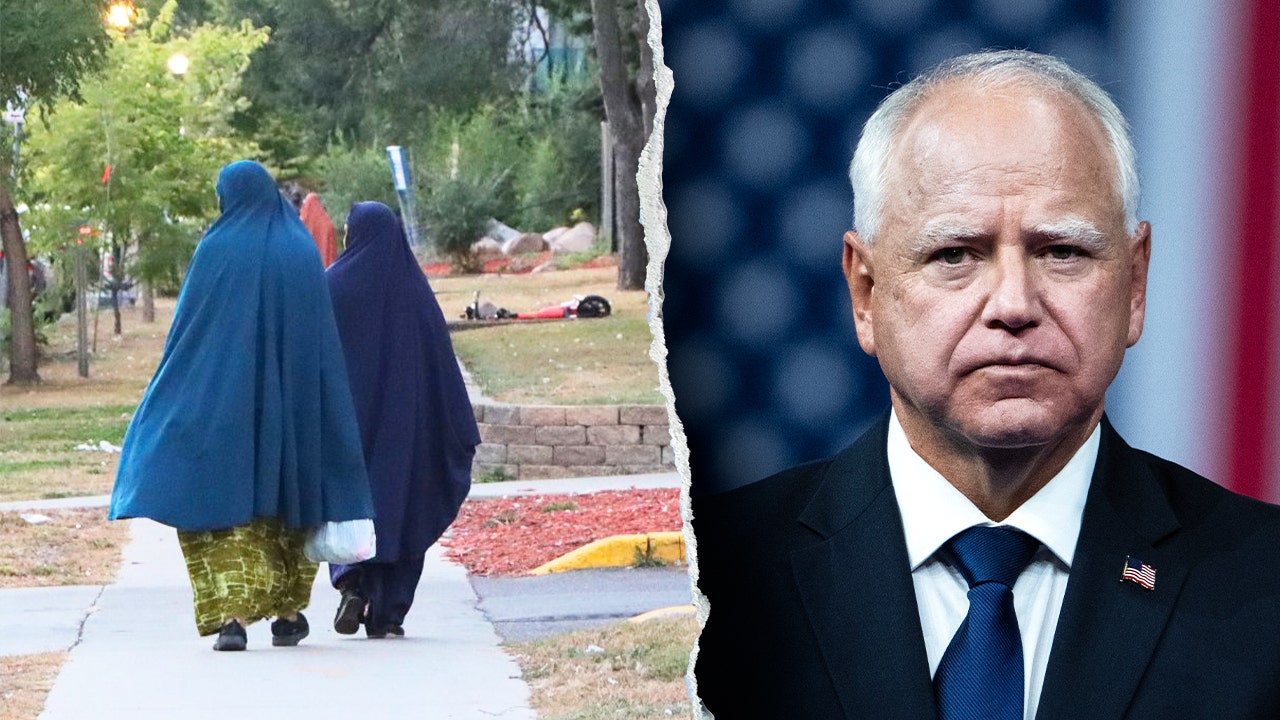
Two Somali women walk through a Minneapolis neighborhood as Minnesota Gov. Tim Walz appears in a split image. Lawmakers say the state’s oversight failures and political sensitivity around Somali-run nonprofits helped fuel the $1 billion welfare fraud scandal now under federal investigation. (Williams/CQ-Roll Call, Inc via Getty Images; Michael Dorgan/Fox News Digital)
House Majority Whip Tom Emmer, R-Minn., told Fox News Digital that the fraud scandal represents “a catastrophic failure of oversight” under Walz and characterized some of the culprits involved as a “Somali criminal enterprise crew.”
“People can focus on an ethnic group if they want, but the real issue is the lack of leadership and accountability in the state of Minnesota with Tim Walz and his administration. This wasn’t about Somalis; this was about government incompetence and lack of accountability,” Emmer said.
“We have been trying to sound the alarm on this fraud… for more than three years.”
‘Schemes stacked upon schemes’
The centerpiece scandal is the Feeding Our Future case, where approximately $300 million intended to feed low-income children during the pandemic was siphoned away in what federal prosecutors describe as the largest pandemic-relief fraud scheme charged in U.S. history. Some of the shell companies and meal sites were operated by Somali Minnesotans, prosecutors say, though the alleged ringleader — Aimee Bock — is a White American.
That sprawling case has now grown to at least 78 defendants, according to the U.S. Attorney’s Office in Minnesota.
U.S. Attorney Andrew Luge, pictured in 2022, outlines federal charges against people accused of participating in the Feeding Our Future fraud scheme that diverted child-nutrition funds into luxury spending, real estate and kickbacks. (Glen Stubbe/Star Tribune via Getty Images)
Prosecutors say criminals also bilked millions of dollars from Minnesota’s Housing Stabilization Services program — which pays for help finding and keeping housing — as well as the state’s autism-services program by billing for appointments, therapy and casework that never took place.
Former Acting U.S. Attorney Joseph Thompson described the scams as “schemes stacked upon schemes” that drained tens of millions of dollars from Medicaid. At least some of those defendants also have ties to the Somali community.
“It feels never-ending,” Thompson said in September, when announcing that eight people had been charged with defrauding the housing stabilization services program of around $8.4 million in total. “I have spent my career as a fraud prosecutor and the depth of the fraud in Minnesota takes my breath away. The fraud must be stopped.”
Thompson said the eight were part of the “first wave” of prosecutions in the case. The fraudsters, in many instances, spent the cash on luxury cars, lavish lifestyles and purchasing property at home and in places like Kenya.
Riverside Plaza looms over the Cedar Cultural Center in Minneapolis’ Cedar–Riverside neighborhood, a hub of Somali immigrants. Minnesota fraud schemes from COVID relief and social programs have intensified scrutiny of the state’s Somali community. (Michael Dorgan/Fox News Digital)
State Sen. Jordan Rasmusson, the lead Republican on the state Senate’s Human Services Committee, told Fox News Digital he believes the Feeding Our Future scandal grew to historic levels because state leaders were afraid to investigate Somali-run nonprofits and unwilling to confront obvious fraud.
“Concerns of political correctness halted the Walz administration from doing the investigations they needed to protect Minnesota’s tax dollars,” Rasmusson said.
He said state DHS dysfunction “from the time that Gov. Walz took office” created an environment where criminals were able to exploit human-services programs for years.
“The administration has been asleep at the wheel,” he said.
A widely circulated DHS whistleblower account alleged that staff who raised internal fraud concerns were ignored, reassigned or sidelined — which tracks with Rasmusson’s account.
House Majority Whip Tom Emmer criticized Minnesota Gov. Tim Walz for his handling of the widespread fraud. (Getty Images)
Feeding Our Future swindle unravels
Bock, the founder and executive director of Feeding Our Future, and Salim Said, a local restaurant owner, were found guilty of their roles in the scheme, with prosecutors stating that they splashed their cash on luxury homes and cars, as well as their lavish lifestyles.
They claimed to have served 91 million meals, for which they fraudulently received nearly $250 million in federal funds, according to the U.S. Attorney’s Office in Minnesota. It’s unclear how many Somalis were involved in the scheme, as prosecutors don’t release the nationalities of defendants.
One witness reportedly claimed that Said disclosed a gang affiliation and threatened to kill that person if they reported the fraud to authorities, Thompson said.
Additionally, five people were also charged with offering a cash bribe to a juror and preparing written arguments for the juror. One argument read, “We are immigrants: they don’t respect or care about us.”
In 2021, when the Minnesota Department of Education grew suspicious and tried to stop the flow of funds, Feeding Our Future sued, alleging racial discrimination. A judge ordered the state to restart reimbursements — a ruling prosecutors said enabled the scheme to escalate.
Prosecutors say Aimee Bock, founder of Feeding Our Future, and Salim Said helped orchestrate one of the largest pandemic-relief fraud schemes in U.S. history. Both were found guilty of diverting federal child-nutrition funds into luxury homes, vehicles and other personal spending, according to the U.S. Attorney’s Office. (Sherburne County Sheriff’s Office)
The lawsuit drew political support from Somali-American State Sen. Omar Fateh, who appeared at a community celebration of the ruling and later acknowledged receiving — and returning — campaign donations from individuals indicted in the case.
While investigating the scandal, federal agents discovered that one scammer, Asha Farhan Hassan, had pocketed about $465,000 but was also operating a much larger scheme: defrauding the state’s autism-treatment program of roughly $14 million. Hassan billed Medicaid for fake therapy sessions, used untrained staff and paid parents $300 to $1,500 a month to keep their kids in the program. She sent hundreds of thousands of dollars abroad, including to purchase real estate in Kenya, prosecutors said.
The scale of program growth stunned federal officials. The Housing Stabilization Services program was projected to cost $2.6 million annually but paid out more than $100 million last year. The autism program’s budget jumped from $3 million in 2018 to nearly $400 million in 2023, according to Dr. Mehmet Oz, the administrator of the federal Centers for Medicare and Medicaid Services.
The unraveling fraud schemes intensified scrutiny of Walz’s administration, with critics arguing basic safeguards were ignored even as theft ballooned.
Crime and terror
A recent City Journal article claimed some stolen welfare money has flowed to Al-Shabaab in Somalia through informal “hawala” networks. That report has intensified scrutiny and stirred old fears, given that about 20 young Somali-Americans left Minnesota in the late 2000s to join the terrorist group, with one, Shirwa Ahmed, becoming the first known American Islamist suicide bomber when he detonated a car bomb in Somalia in October 2008.
Rasmusson said he was concerned about money ending up with terrorists.
“Because there’s more than a billion dollars that’s been stolen and a significant portion of those dollars have been directed overseas, there are concerns this money could be either directly or indirectly funding terrorist organizations like al-Shabaab,” Rasmusson told Fox News Digital.
Newly trained al-Shabab fighters perform military exercises south of Mogadishu, in Somalia, Feb. 17, 2011. (AP Photo/Farah Abdi Warsameh, File)
Former Hennepin County Sheriff Rich Stanek, who testified before Congress about Somali-American radicalization, said Minnesota ignored early warning signs once before.
“We really got a wake-up call in 2010-11,” Stanek said. “Young people were going back to Somalia to participate in terrorist training camps and terrorist actions when they had no clear ties back to their culture. They were born here in the U.S. but felt a need or were radicalized to go back.”
“Minnesotans had no idea what was even going on until the FBI and Joint Terrorism Task Force stepped in.”
He said the threat has declined but not disappeared.
“I’m not saying it still doesn’t happen, because I know it does,” he said.
Last year, Abdisatar Ahmed Hassan, 23, pleaded guilty to attempting to provide material support to ISIS after twice trying to travel to Somalia.
Crime cases shaking public confidence
For many Minnesotans, the fraud cases are only the latest chapter in a longer pattern of violence and instability tied to small pockets of the Somali community. Public unease has also grown recently in response to a string of recent violent crimes tied to the community in the Twin Cities.
Somali national Abdimahat Bille Mohamedis, a man with two previous sex crime convictions, was charged this week with kidnapping and raping a woman at a hotel while on probation.
In July, Qalinle Ibrahim Dirie, a Somali migrant, was jailed for 12 years for sexually assaulting a child. The case sparked fury when a local mosque gave a character-reference letter praising the pedophile’s “good conduct” and urged leniency.
During a two-week stretch over the summer, a 15-year-old was killed in a mall shooting, while two high-school graduation ceremonies left a 49-year-old father with a head wound and a 19-year-old man injured. All three incidents involved members of the Somali-American community, according to reports, while Emmer said the incidents were gang-related.
Qalinle Ibrahim Dirie, who was jailed for sexual assault of a 12-year-old girl, and Michael Lual Nhial, who was charged with second-degree intentional murder in the death of David Stuart Chant. (Minnesota Department of Corrections; Dakota County Sheriff’s Office)
In May, Michael Lual Nhial, who had a history of erratic and aggressive behavior, was charged with killing David Chant, a 59-year-old man who used walking sticks to get around and was found beaten to death at a park in Burnsville, a city 15 miles south of downtown Minneapolis.
Stanek said Somali-related violence began surfacing between 2005 and 2010, initially involving first-generation immigrants but later drawing in U.S.-born youth, with most shootings traced back to a small network of repeat offenders — young men cycling through probation and short jail terms.
Groups such as the Somali Outlaws and 10th Street Gang were never tightly organized criminal syndicates but loose crews of young men whose crimes stemmed more from personal rivalries than organized criminal enterprises, he said.
Minnesota does not track crime by ethnicity, and violent crime statewide has fallen, but the visibility of Somali suspects in these cases has amplified and revived old narratives about crime within Minnesota’s Somali community.
DEMOCRAT MAYOR BLASTED FOR VOWING TO MAKE MAJOR CITY ‘SAFE HAVEN’ FOR ILLEGAL IMMIGRANTS
A woman selling bottles of water near a street sign for “Somali St” with the Riverside Plaza towers in the background in Cedar-Riverside, Minneapolis. (Michael Dorgan/Fox News Digital)
Leadership and oversight failures
Rasmusson said Walz has “lost the confidence of Minnesotans and the legislature in his ability to lead,” given the size of the fraud and the administration’s repeated failure to intervene when irregularities were clearly visible.
He pointed to one glaring example investigators missed.
“They were claiming to feed 6,000 kids a day, seven days a week, in a community of only 2,500 people,” he said. “And so you don’t need to be an FBI analyst to figure out that there’s probably fraud occurring.”
But community leaders are pushing back, saying Minnesota’s Somali population is overwhelmingly law-abiding and hardworking — and that a handful of offenders are being used to smear an entire community. They say the above incidents do not define them and that most Somali immigrants in the state are hardworking and deeply patriotic toward the United States.
Jaylani Hussein, executive director of CAIR–Minnesota, told Fox News Digital that while the crimes are real and serious, he rejects the idea of collective blame for criminal activity. Hussein did not defend the crimes but placed their actions in the broader context of American immigrant history — drawing parallels to Irish and Italian communities once linked to organized crime.
“We have a history in this nation of identifying crime and associating it with communities — whether it’s the Italian mafia or Irish gangs,” Hussein said. “Crime is an individual act. It’s an act of betrayal of our trust. When someone steals money from food at a school, they’re not stealing from anybody else — they’re stealing from their own community, from children who need it. Especially in the Somali-American community, which is still a poor community.”
A woman in a maroon abaya crosses the street near a mosque in Minneapolis’ Cedar–Riverside neighborhood. (Michael Dorgan/Fox News Digital)
Rasmusson said the failures were so significant that Walz, who intends to run for a third term in 2026, may no longer be able to lead the state.
“The Walz administration has failed and they’ve utterly failed to protect Minnesota taxpayers,” he said. “And I think he’s lost the confidence of Minnesotans and the legislature in his ability to lead as governor of this state.
“And I think that he should recognize the position that he’s in and that it will be very challenging for him to have the confidence of Minnesotans again.”
Read the full article from Here



We are managing the land to preserve native vegetation and reduce invasive species. Perhaps the greatest invasive will now be the MariBell project’s huge metal stanchions.

How reliable is the US power grid right now?
The U.S. power grid is under strain. Aging infrastructure, rising demand and extreme weather are testing reliability.
How much power do we really need and where should it come from?
Across the state people are being asked to sacrifice precious land for the construction of massive 765kV transmission lines that are mounted on erector set-like structures that soar 200 feet into the air and cut a swath 250 feet wide across the landscape of both western and eastern Wisconsin. Land and resources that cannot be replaced.
One of these lines is the MariBell transmission line that will cut through the heart of the Driftless region. This line, if it were to go through the Driftless area as proposed, will cross miles of land that avoided the assault of glaciers eons ago to now be destroyed by bulldozers to erect gigantic metal towers for the worship of greed.
This line would replace existing 161 kV lines with 765 kV lines that are more than double the width of existing lines. This means taking out trees, prairies, farms and homes for not only people but endangered wildlife.
Wisconsin wants more power, but at what cost?
The metal towers that soar 200 feet up in the air will be seen for miles away, some on ridgetops may need lights at night. Lights that could harm nocturnal animals and bring diffuse light for all of us who would prefer to see stars at night and occasionally the Northern Lights.
There has not been an established need for this massive line nor is the Driftless region a location worth destroying. This project will place an ever increasing financial burden on utility users who do not even benefit from the line and adversely affect property values in Crawford and Vernon counties. It will cause irreparable damage to the land, air and water as well as the beauty of the Wisconsin landscape that we all love.
It is past time for all Wisconsinites and all those we elect to take a step back and really identify what it is we value and what we want our future to look like. Then act to protect those values! Do electric power utilities, and the regulatory Public Service Commission, only have a responsibility to provide power and not the responsibility to do no harm to the people and native landscape?
Stewardship of Driftless landscape becoming more difficult
We are landowners in Crawford County, Wis., that currently has a 161kV power line going over it and will most likely be right on the route of this new 765kV powerline. We have a cabin that is not connected to electricity, as we are trying to have as small of a footprint on the land as possible.
We are managing the land to preserve native vegetation and reduce invasive species. Perhaps the greatest invasive will now be the huge metal stanchions. The challenge of being responsible, sustainable stewards of the land has just become harder.
Tim Eisele and Linda Eisele have a cabin on 100 acres of land in the Town of Seneca.
Detroit, MI
Ken Roczen wins second race of 2026 in Detroit, Hunter Lawrence crashes and loses points lead

DETROIT, Michigan: Ken Roczen won the second race of the 2026 season at Ford Field in Detroit, Michigan, as Hunter Lawrence and Eli Tomac struggled. With this victory, Roczen is firmly in championship contention with a 14-point gap to the leader.
Chase Sexton secured second in his first race back after suffering an injury in a practice crash prior to Daytona. Sexton continued to get stronger during each session as he climbed his way through the ranks.
Malcolm Stewart secured his first podium of the season one week after getting his first top-five in Birmingham.
Justin Cooper stole a point from Tomac in the closing laps, but Tomac’s fifth-place finish along with Lawrence’s problems gave him the championship lead by four.
Tomac had to fight hard to stay in the top five as Cooper Webb challenged on the white flag lap. Webb crossed under the checkered flag in sixth.
450 Feature Results
In-Race Notes
Jorge Prado has been hot on the gate drop and he earned another holeshot in Detroit.
Meanwhile, Lawrence and Tomac both got poor starts and had to come through the field together.
Roczen stole the lead from Prado on Lap 2, bringing Webb with him.
Webb crashed with Prado and handed second to Sexton.
Incredibly, Lawrence was up to third on Lap 3; Tomac was fifth and gradually losing contact with the points leader. Tomac cannot afford to lose any more ground to Lawrence.
Stewart was the man in the middle of the two points challengers.
Webb settled into eighth. Prado fell to 14th.
Tomac was five seconds behind Lawrence at the halfway mark.
Dylan Ferrandis was in seventh on Lap 7. He was also returning from injury along with Sexton this week.
Lawrence crashed on Lap 10, hurting his bike in the crash. Lawrence had a 12-point lead at the time. Lawrence had not finished worse than fourth all year and was second or better in all but two races.
With the incident, Tomac moved up to fourth in the running. Lawrence was 19th at the time. This would give Tomac the points lead.
Lawrence had to pull into the mechanics area to replace his front wheel.
Roczen was in command of the race on Lap 15.
Tomac didn’t have the pace to fully take advantage of Lawrence’s crash and lost fourth to Cooper on Lap 18.
Roczen finished 7.8 seconds ahead of Sexton.
Milwaukee, WI
!$+∇√$[+[!LIVESTREAMs!]+] San Antonio Spurs vs Milwaukee Bucks Live Free Streams On Tv Channel 2026-03-29
![!$+∇√$[+[!LIVESTREAMs!]+] San Antonio Spurs vs Milwaukee Bucks Live Free Streams On Tv Channel 2026-03-29](https://i2.wp.com/encrypted-tbn0.gstatic.com/images?q=tbn%3AANd9GcReQZPBURuIIuh0fPF6YTAqOY-y1_BeWJWzPA&s&ssl=1 "!$+∇√$[+[!LIVESTREAMs!]+] San Antonio Spurs vs Milwaukee Bucks Live Free Streams On Tv Channel 2026-03-29")
San Antonio Spurs vs Milwaukee Bucks
HERE’S (*WAY TO WATCH*) San Antonio Spurs VS Milwaukee Bucks Free LIVE 2026-03-29 Rose Bowl Parade 2026 live: Rose Bowl Parade 2026 look to seize control of thrilling Rose Bowl Parade 2026. Every team in the Rose Bowl Parade 2026 has two wins apiece as we go into the final two game weeks. Rose Bowl Parade 2026 will host Rose Bowl Parade 2026 at Live NBA mAtch Durban’s Kings Park Stadium with the Rose Bowl Parade 2026 a single point ahead of Rose Bowl Parade 2026 in the standings and just one behind leaders Rose Bowl Parade 2026.

POST-GAME: André Tourigny 3.28.26 | Utah Mammoth

Skier dies after fall at Sugarbush Resort
West Virginia Lottery results: See winning numbers for Powerball, Lotto America on March 28, 2026

Washington Capitals VS Vegas Golden Knights LIVE | Watch on ESPN 2026-03-29

Add massive transmission towers to list of invasive species | Opinion

Florida High School Football Rankings: Top 25 teams – Oct. 21

How old is Bo Nix? What to know about Oregon quarterback ahead of 2024 NFL Draft

Cleary's 21 help Le Moyne down Central Connecticut State 69-64 in OT

99th annual Pony Swim held in Virginia

Indiana Members Credit Union announced as new anchor tenant at Bottleworks District

JD Vance says he was ‘obsessed’ with UFOs, believes aliens are actually ‘demons’
The EU's recipe for trade deals : easy on beef, tough on wine

Photos: ‘No Kings’ protests across the country

Jeffries declines to break with indicted Democrat after ethics panel’s guilty verdict

Hundreds of thousands march through London in stand against the far right
-

 Sports1 week ago
IOC addresses execution of 19-year-old Iranian wrestler Saleh Mohammadi
-

 New Mexico7 days ago
Clovis shooting leaves one dead, four injured
-

 Tennessee6 days ago
Tennessee Police Investigating Alleged Assault Involving ‘Reacher’ Star Alan Ritchson
-

 Technology7 days ago
YouTube job scam text: How to spot it fast
-

 Minneapolis, MN3 days ago
Boy who shielded classmate during school shooting receives Medal of Honor
-

 Science1 week ago
Record Heat Meets a Major Snow Drought Across the West
-

 Texas1 week ago
How to buy Houston vs. Texas A&M 2026 March Madness tickets
-

 Politics1 week ago
Schumer gambit fails as DHS shutdown hits 36 days and airport lines grow