Midwest
Pritzker claims you ‘can’t believe anything ICE is doing,’ suggests it’s committing ‘felonies’

NEWYou can now listen to Fox News articles!
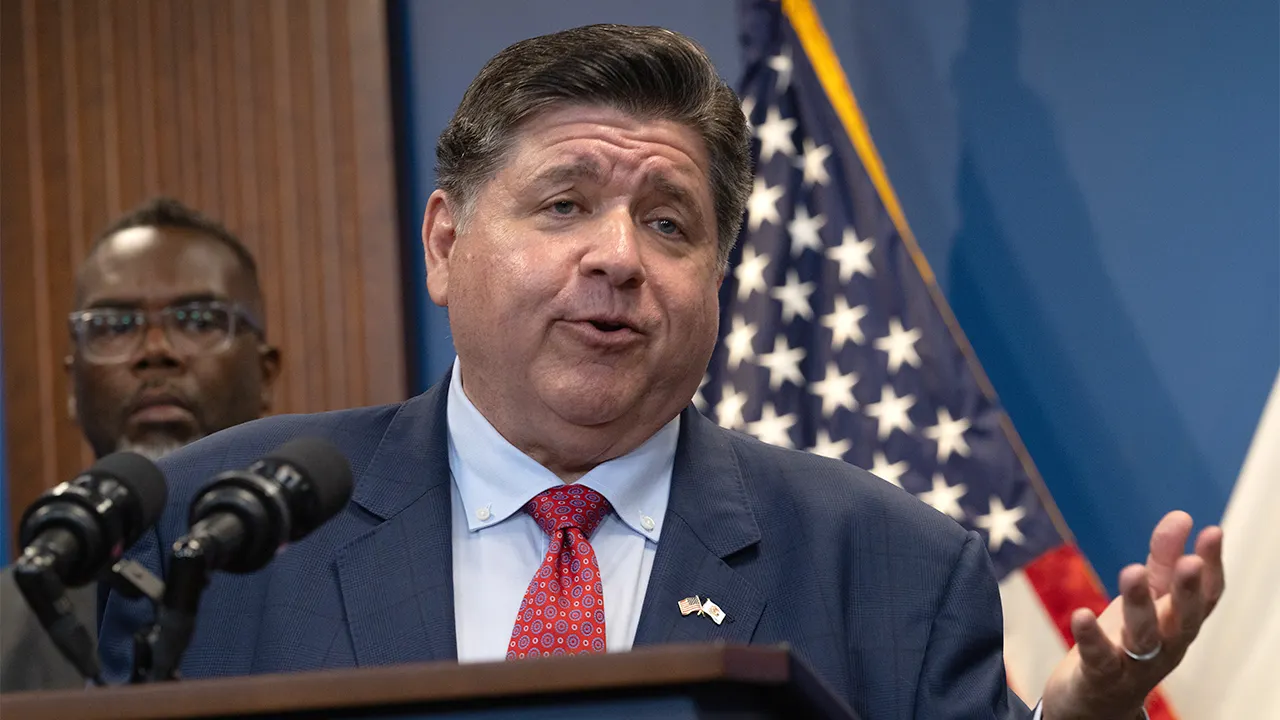
Illinois Democratic Gov. JB Pritzker said Tuesday he “can’t believe anything” that the U.S. Immigration and Customs Enforcement (ICE) says and suggested ICE officers were breaking the law.
Pritzker told the “Raging Moderates” podcast that he has encouraged prosecutors to investigate ICE activity in Chicago.
He claimed one example that needed to be investigated was a recent report of an armed woman being shot by ICE officers during a protest in Chicago.
According to Department of Homeland Security (DHS) Assistant Secretary Tricia McLaughlin, the woman, a U.S. citizen identified as Marimar Martinez, was accused of ramming into a law enforcement vehicle, blocking officers from moving. Pritzker claimed that ICE officers antagonized her.
CHICAGO POLICE SOURCES BLAST DEPARTMENT’S RESPONSE AFTER OFFICERS WERE TOLD NOT TO HELP FED AGENTS: ‘COVER THEIR A–‘
Illinois Gov. JB Pritzker has repeatedly criticized President Donald Trump for deploying federal officers to Chicago. (Scott Olson/Getty Images)
“Well, it now comes out her attorney says there is bodycam footage that shows that actually she was rammed by an ICE agent in their vehicle and that ICE agent started yelling at her, calling her the b- word and other things,” Pritzker said. “And right after that, there was this shooting that ensued. They claimed in their release from ICE that she was the aggressor and that she was pointing a gun or pulling out an automatic weapon.”
He continued, “So you can’t believe anything ICE is doing, and I believe that we can go after ICE and those agents when they are committing felonies or any kind of breach of the law in the state of Illinois.”
DHS TAKES ON PRITZKER’S ‘SMORGASBORD OF LIES,’ RELEASES LIST DEBUNKING HIS CLAIMS
Gov. JB Pritzker said a recent report of ICE agents shooting an armed woman will likely be investigated. (Dominic Gwinn/Getty Images)
Fox News Digital reached out to Pritzker’s office for comment.
The DHS pointed to its original statement on the incident when reached for comment.
DHS also reported that Martinez allegedly doxxed agents and posted online, “Hey to all my gang let’s f— those motherf—–s up, don’t let them take anyone” prior to the protest. McLaughlin said no law enforcement officers were seriously injured during the incident, adding that the woman involved drove herself to the hospital to receive care.
Pritzker has frequently criticized President Donald Trump for deploying ICE officers to his state and doubled down on his attacks after learning about plans to deploy hundreds of National Guard troops to several states, including Illinois.
WHITE HOUSE MOCKS ‘SLOB’ PRITZKER AFTER HE REJECTS TRUMP’S NATIONAL GUARD PLAN
Illinois Gov. JB Pritzker criticized President Donald Trump’s decision to deploy 400 Texas National Guard troops to Illinois and Oregon. (Getty Images)
He sued to stop Trump from deploying the troops, calling it part of “Trump’s invasion” to “punish his political enemies.”
During the podcast, Pritzker reiterated he also believed that the “militarizing” of U.S. cities is likely a pretext to take over polling places and intimidate voters ahead of the 2026 midterm elections.
“I do think though that that’s the intention, to have these kinds of troops or people that are dressed as troops like ICE and CBP, so that when the election comes, they can effectuate if they think they’re losing, or will lose, two things,” Pritzker said. “One is the intimidation of people going to the polls, and the other is, as Michael Flynn back in 2020 suggested, actually confiscating the ballot boxes claiming that there’s fraud and counting the ballots themselves.”
Read the full article from Here



(WXYZ) — The highly-anticipated premiere of “The Odyssey” is officially here, with showtimes starting Thursday across metro Detroit.
The epic, directed by Christopher Nolan, was shot entirely with IMAX cameras, the first film to be shot with them. It will be available to watch in a variety of formats in the area and across the state.
On the website for the film, it lists all of the premium format options and where you can find them. Check out the details below.
IMAX 70mm
This is the premiere format to watch the film, presented in IMAX’s 1.43:1 expanded aspect ratio, according to the website.
“It is the largest and highest-resolution format available and gives you an unparalleled sense of immersion as the image fills IMAX’s signature floor-to-ceiling screen,” the website reads.
Across the country, there are only a 30 theatres that are capable of playing IMAX 70mm, and only one in Michigan. To see the film in that format, you’ll have to go to Celebration! Cinema in Grand Rapids.
IMAX
As we’ve said, “The Odyssey” is the first feature film shot entirely on IMAX cameras. “The film was shot and designed to be experienced on the biggest screen possible, and IMAX delivers on this,” star Anne Hathaway said.
It comes in the 1.90:1 expanded aspect ratio, filling your entire field of vision.
There are several theatres showing the film in IMAX in metro Detroit. They are:
- MJR Southgate
- MJR Troy
- AMC Forum 17 in Sterling Heights
- AMC Livonia 20
- AMC Star Great Lakes
- Cinemark Ann Arbor
70mm
The 70mm film is a large format that “offers a bright, clear image up to 3 times the resolution of standard digital projection formats,” according to the website. It’s shown at a 2.20:1 aspect ratio.
In metro Detroit, there are three theatres showing it in 70mm. They are:
- MJR Southgate
- AMC Forum 17 in Sterling Heights
- AMC Livonia 20
35mm
35mm is the classic film format shown at a 2.39:1 aspect ratio. “It projects light through the entire 35 millimeter frame to deliver clear, high resolution images with rich analog color,” the website reads.
Only the Michigan Theater in Ann Arbor is showing the film in 35mm.
Dolby Vision
According to the film’s website, The Dolby Vision projection system has a 1,000,000:1 contrast ratio.
“Dolby Vision allows you to experience every detail and nuance captured by the large format film cameras Christopher Nolan used in production,” the website reads.
You can see the film in Dolby Vision at AMC in Clinton Township, Sterling Heights and Great Lakes.
Premium Large Format
The premium large format movie will be in either 2.39:1 or 1.85:1 aspect ratio, depending on the theatre. “It features larger wall-to-wall screens, superior projection technology, including laser projection,” the website reads.
Here are places you can see “The Odyssey” in Premium Large Format.
- MJR Southgate
- Emagine Royal Oak
- Cinemark in Taylor
- MJR in Sterling Heights
- Emagine Woodhaven
- MJR Westland
- The Riviera in Farmington
- Emagine Canton
- MJR Partridge Creek
- Emagine Rochester Hills
- Emagine Macomb
- Emagine Novi
- MJR Chesterfield
MJR Waterford - Phoenix Theatres in Monroe
- Emagine Saline
- MJR Brighton
- Emagine Hartland

MILWAUKEE – The National Weather Service has issued a heat advisory for Milwaukee and all of southeastern Wisconsin from noon Tuesday through 8 p.m. Wednesday, with heat index values expected to reach the upper 90s to around 100 degrees.
While the advisory is expected to end Wednesday evening, hot and humid conditions are forecast to continue through the remainder of the week.
Forecast conditions can change, so everyone is encouraged to monitor local forecasts and follow guidance from the National Weather Service.
Milwaukee County cooling sites
What we know:
Cooling sites are available throughout Milwaukee County.
For an updated list of cooling locations, heat safety information, and resources on preventing heat-related illness, visit the City of Milwaukee website or call 211.
FREE DOWNLOAD: Get breaking news alerts in the FOX LOCAL Mobile app for iOS or Android
Staying safe during extreme heat
What you can do:
Stay cool
- Limit outdoor activities, especially during the hottest part of the day.
- Spend time in air-conditioned buildings whenever possible such as libraries, shopping centers, or community centers.
- If you have an air conditioner, make sure it is installed and working properly.
- Wear lightweight, light-colored, loose-fitting clothing.
- Take cool showers or baths, or use cool, wet towels to lower body temperature.
- Fans may provide comfort but should not be relied upon as the primary cooling method during extreme heat.
Stay hydrated
- Drink water regularly, even if you do not feel thirsty.
- Avoid alcohol and excessive caffeine, which can contribute to dehydration.
- Encourage children, older adults, and others at higher risk to drink fluids throughout the day.
Protect yourself and others
- Never leave children, older adults, or pets unattended in vehicles. Temperatures inside a parked vehicle can become deadly within minutes.
- Check on older neighbors, family members, and others who may need assistance staying cool.
- Many public cooling sites are located along Milwaukee County Transit System (MCTS) routes. Visit RideMCTS.com for transit information.
Know the Signs of Heat-Related Illness
Heat exhaustion may include:
- Heavy sweating
- Weakness or fatigue
- Dizziness
- Nausea
- Fainting
Heat stroke is a medical emergency. Symptoms may include:
- High body temperature
- Hot, dry skin or profuse sweating
- Confusion
- Rapid pulse
- Loss of consciousness
Call 911 immediately if someone is experiencing signs of heat stroke.
For additional hot weather safety information, visit the City of Milwaukee website.
The Source: City of Milwaukee Health Department sent FOX6 the information.

INDIANAPOLIS (WISH) — Central Indiana is bracing for a prolonged stretch of intense heat as a strong ridge of high pressure becomes firmly established over the region. High temperatures are expected to climb into the low to mid-90s through Thursday, while heat index values — the combination of heat and humidity — will reach between 100 and 105 degrees each afternoon.
Today Through Thursday: Sustained Heat
A well-entrenched upper-level ridge will maintain hot, dry conditions through Thursday. Daytime heating coupled with suppressed atmospheric mixing will keep dew points elevated, and thus heat indices high, especially during peak afternoon hours between noon and 6 p.m.

Storm chances during this period are expected to remain very low as the stable, dry air mass suppresses convective development.
Late Week: Transition and Storm Chances
The heat will begin to subside by the end of the workweek as the high-pressure ridge weakens and shifts eastward. This opens the door for increased moisture return and the development of scattered showers and thunderstorms, particularly Friday and Saturday afternoons.
Models currently show some variation on the timing and extent of this moisture return, so forecasts may adjust as the weekend approaches.
Residual scattered storms will be possible into Sunday and Monday, but the main story shifts away from oppressive heat to more typical summer storm activity.
7 Day Forecast:
-
 Sports3 minutes ago
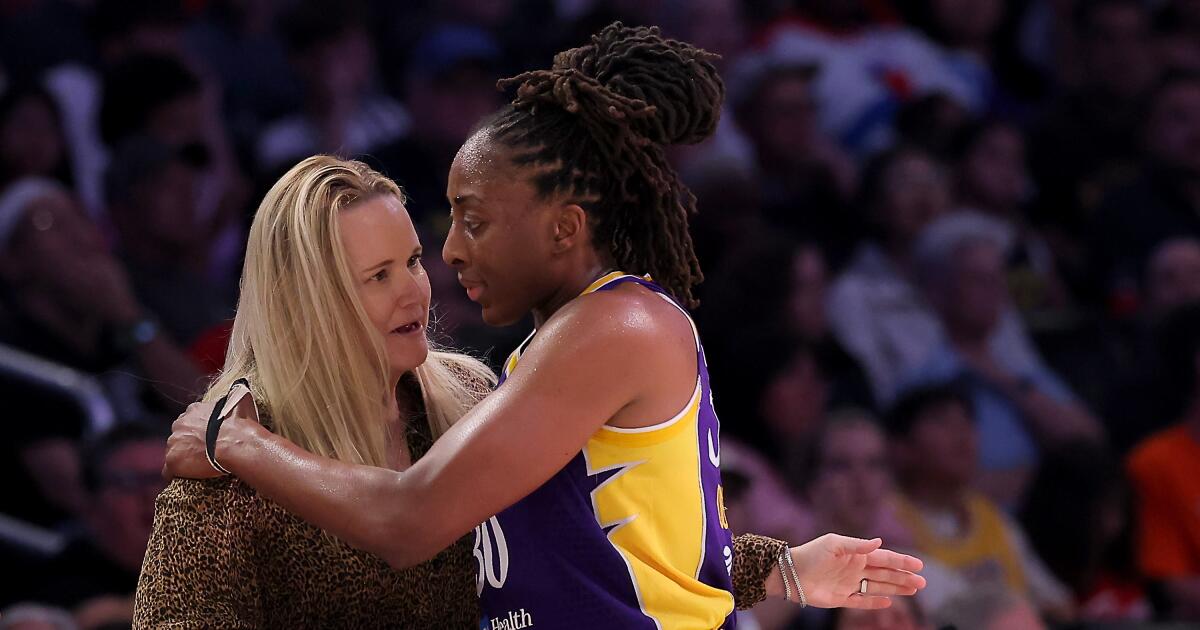
What will the Sparks do next? The franchise is at a crossroads after firing its GM
-
World15 minutes ago
Euronews explains: can Hungary's PM Magyar really remove president Sulyok from office?
-

 News45 minutes ago
Mexico files criminal complaints in US over migrant deaths in custody
-

 Videos2 hours ago
New explosions near Iranian port cities, says state media | BBC News
-

 Los Angeles, Ca2 hours ago
Big rig crash spills cinder blocks on 101 Freeway; lanes blocked in Tarzana
-
Detroit, MI3 hours ago
How to watch ‘The Odyssey’ in IMAX, 70mm and more in metro Detroit
-

 San Francisco, CA3 hours ago
Sold-Out SF Marathon 2026: The Races, Routes and Road Closures (Plus How to Watch It All) | KQED
-

 Dallas, TX3 hours ago
Top 10 Dallas Cowboys of 2026: Rashan Gary is Complete EDGE Dallas Needed

