Ohio
Ohio State Offensive Line Struggles Without Josh Simmons, Creating Major Concern for Penn State Showdown


Instead of finding Zen on the offensive line, Ohio State is battling even more chaos.
Residual fear about offensive line play off a poor showing in 2023 bubbled to the surface for Buckeye fans following a season-ending injury to Josh Simmons at Oregon, and those worries boiled over as the front five was dismal without its starting left tackle against Nebraska.
Zen Michalski started his first career game in Simmons’ place and – no offense to the man beneath the shoulder pads – imitated a parking cone for three quarters and change before exiting with an injury. His struggles sent shockwaves down the entire offensive line as Ohio State turned in easily its worst rushing performance of the season and allowed quarterback Will Howard to come under frequent pressure.
“We didn’t run the football,” Ryan Day said when asked about the offensive line. “Not even close to what we’re averaging. Under three yards per carry with Quinshon (Judkins) and TreVeyon (Henderson). That’s not getting it done. We’ve got to do better than that.”
With an elite defensive front staring Ohio State down in its pivotal matchup against No. 3 Penn State next week, the Buckeyes are left scrambling for solutions on their offensive line after it was a major reason for the razor-thin margin of OSU’s 21-17 win over Nebraska on Saturday.
“Yeah, I got to go back and watch the film and figure that all out myself,” Day said. “It seemed like a little bit of both (poor execution and Nebraska playing well), quite honestly. It’s not good enough when we’ve gotta be able to run the football. We didn’t do that today. That’s why we put the defense in bad spots. That’s why we were 1-for-10 on third down.”
Ohio State averaged a meager 2.1 yards per carry against the Huskers, less than half its previous low on the season of 4.3 yards per rush at Oregon two weeks ago. Nebraska collected two sacks and forced Howard off his spots consistently as the Buckeyes’ offense failed to pick up a first down on its first four possessions of the second half.
With just 285 yards of offense total, it’s the first time Ohio State’s been held under 400 this year, let alone 300.
Neither of the Buckeyes’ touted tandem at running back found much footing. Henderson picked up 15 yards on his second run of the day and had nine carries for 10 yards otherwise. Judkins finished with 29 yards on 10 attempts. Both proven ball carriers were breaking tackles and trying to find holes, but the hog mollies did them few favors.
“I would say for our offensive line, it definitely wasn’t our best day up front,” Judkins said. “But I think those guys will get it corrected. Coach (Justin) Frye does great for our offensive line as far as coaching, I think he’ll fix it for next week. But I think everyone could improve.”
The thing about offensive line injuriesis they’re often a cascade. It’s such a codependent position group, more than any other in football, that one major downgrade is enough to make the whole group suffer as everyone loses cohesion and has to provide help to different places. The offensive line’s success is something the entire offense depends on, and so it snowballs.
That’s not to say that Josh Fryar, Tegra Tshabola, Seth McLaughlin and Donovan Jackson don’t share responsibility for the failures of the front five against the Huskers, but it underscores the importance Simmons held on the Buckeyes’ roster.
As mightily as Michalski struggled, there was a thought that Ohio State could consider other options at left tackle as the game progressed, one of which included sliding Donovan Jackson out from left guard as the Buckeyes did after Michalski went down. But Day seemed assured in sticking with the first-time starter through thick and thin.
“Felt like, for his first start, we wanted him to play through it,” Day said. “We didn’t want to just panic and pull him out because it’s your first start. So there’s some things you’re going through. Whether it’s first-time jitters or whatever it might be, you’re pressing. You’re trying to get your feet underneath you. So we wanted him to play through that and see how that went. We’ll see how he is now after the game.”
Michalski exited with a lower-body injury in the fourth quarter. Escorted off the field by trainers, he was later seen on Ohio State’s sideline standing with the aid of crutches. His status is being evaluated, but assuming he can’t play against Penn State, the Buckeyes will have to review whether they want Jackson to start at left tackle next week. Sophomore Luke Montgomery took his spot at left guard after Michalski’s injury, though redshirt freshman Austin Siereveld started the first two games of the year at that position when Jackson was sidelined by injury.
Right guard Tegra Tshabola is another candidate to kick outside while George Fitzpatrick is the next true tackle on Ohio State’s depth chart.
“We’re gonna have to talk about it and figure that out,” Day said. “We knew that if that happened in (the Nebraska) game, (Jackson) was our answer and solution to get out of the game. Now we’re going to have to go back and figure out what’s next.”
For his part, Howard said he felt unaffected by the shuffles on the offensive line, even as it was clear he came under more duress than he’s accustomed to this season. He finished 13-of-16 passing for 221 yards and three touchdowns with one interception, adding a sack-adjusted 24 rushing yards.
“It didn’t affect my decision-making at all,” Howard said. “That’s not something I think about when I’m in the game. I’ve got all the trust in the world in Zen and whoever is out there at left tackle for me. It’s not affecting anything that I’m doing at all. It’s next man up mentality and you’ve got to have full faith in that guy. … Definitely when you lose a tackle with first-round potential, it’s tough. That’s a dude that we’re going to miss, but I think Zen stepped up and he’s got to continue to work and hopefully he’s all right.”
Judkins thought the inexperience of the new pieces played a factor in the offensive line’s issues as well.
“When you have new guys in the rotation, they have to get used to the tempo and how things go up front,” Judkins said. “Especially in-game tempo compared to a walkthrough and everything like that. So having those guys mentally dialed in and getting those reps that they need, I think that’s the biggest part.”
The Buckeyes still won the game thanks to a strong performance from their defense. Trailing 17-14 in the fourth quarter, the offense cobbled together enough blocks to go on an eight-play, 75-yard go-ahead touchdown drive that proved game-winning.
“I kept saying that, ‘Go win.’ Like, ‘How are we going to win the game?’ And we talked about that in the off week,” Day said. “We did that. So that, we can build on. But certainly, if we’re going to go 1-for-10 on third down, if we’re going to run the football the way we did in this game, we’re going to be in a tough spot in terms of putting the defense in the situations they were in.”
The urgency in Ohio State’s offensive line woes is the opponent on its marquee for next Saturday. The Buckeyes face No. 3 Penn State on the road in a game with massive Big Ten and College Football Playoff implications, and the Nittany Lions possess an elite defensive front. Spearheaded by Abdul Carter, one of the most dynamic edge rushers in the country, Penn State is No. 9 nationally in scoring defense (14.5 points allowed per game), No. 6 in total defense (262.5 yards allowed), No. 11 in run defense (95 yards allowed) and No. 15 in pass defense (167.5 yards allowed).
Thus, the Buckeyes must find the answer to their offensive line dilemma in the next week if they want to win in Happy Valley and keep all of their goals on the table.



How to Access the eNewspaper
How to access over 200 local eNewspapers across the USA TODAY Network.
USA TODAY
The Ohio EPA is spending more than $77,000 to help keep drinking water reliable for residents along the U.S. 30 corridor.
Those funds will complete four upgrades throughout Richland, Crawford and Ashland counties, the agency announced.
Water-system allocations include: $33,000 for the village of Crestline, $23,163 for Hidden Acres Mobile Home Park near Ashland, $11,506 for an Aqua Ohio project in Mansfield and $9,500 for Colonial Hills Mobile Home Park in Mansfield.
The four projects in North Central Ohio focus on emergency generators.
“Ohio EPA prioritized emergency generator projects to help water systems maintain service and protect the water supply during power outages,” the agency noted. “The grants will reimburse systems for the initial costs of generators and necessary accessories.”
Statewide, 38 water systems were awarded $1.28 million for emergency generators.
So far this year, Ohio EPA has awarded more than $2.8 million to 122 public water systems in 58 counties for improvements.
Those grants are funded through the U.S. EPA’s Drinking Water State Revolving Fund Capitalization Grants, designed to help public water systems maintain a continuous supply of safe drinking water, strengthen the protection of the water source, properly close inactive wells and invest in emergency generators.
“Being able to offer this funding to more than 120 water systems across the state is the definition of a win-win,” Ohio EPA Director John Logue said. “It helps these systems to have the capability of enhancing what they do and how they do it at no extra cost to them — but, more importantly, it helps Ohio families have access to more reliable, safer, healthier drinking water.”
ztuggle@gannett.com
419-564-3508

The most recent basketball season might be over for Ohio State, but in the modern era of college basketball, what happens off the court is almost just as chaotic as what happens on it. The main culprit for this is the transfer portal, and on Sunday, Ohio State’s offseason seems to have gained some traction.
According to a report, Ohio State forward Devin Royal plans to enter the transfer portal after three seasons with the Buckeyes, perhaps ending a career that began with high expectations and finished with a strong junior season. The 6-foot-6, 230-pound Pickerington Central product leaves with one season of eligibility remaining after appearing in 96 of 102 games at Ohio State.
Royal arrived in Columbus as a consensus four-star recruit and Ohio’s Mr. Basketball in 2023, becoming the 12th player in Ohio State basketball history to earn that honor. At Pickerington Central, he helped lead the program to a state title-game appearance in each of his final two seasons and earned first-team All-Ohio recognition as a junior and senior.
As a freshman in 2023-24, Royal played in 33 of 36 games and averaged 4.7 points and 2.4 rebounds per game, emerging as more of a threat as the season progressed. He had a nice sophomore leap, starting 27 games and averaging 13.7 points and a team-best 6.9 rebounds per game while shooting 52.5 percent from the floor. Royal delivered a breakout season with six 20-point games, three double-doubles, and a career-high 31 points and 15 rebounds against Valpo. He followed that with another solid season in 2025-26, starting all 32 games he played and averaging 13.7 points, 5.7 rebounds, and 1.6 assists per game.
Royal’s potential departure is a significant roster move because he developed into one of Ohio State’s most reliable interior scorers and rebounders. Ohio State finished No. 8 in the Big Ten this season, with a record of 21-13 and 12-8 within the conference. However, with the arrival of 5-star forward Anthony Thompson, his starting spot would seem to be very much in jeopardy.
For the Buckeyes, it may close the book on a homegrown player who went from top in-state recruit to everyday starter in three years. As of now, there aren’t any suitors known, but as all of this becomes more official, we’ll bring you further news.
Contact/Follow us @BuckeyesWire on X (formerly Twitter) and like our page on Facebook to follow ongoing coverage of Ohio State news, notes, and opinion. Follow Sunny on X:@thesunnyv

COLUMBUS, Ohio (WCMH) — Ohio artist David Griesmyer said the colorful, resilient Cuba he’s frequented looked different his most recent trip as the island nation continues under a U.S.-induced blackout.
“To see the whole nation just plunge into darkness, it was odd,” Griesmyer said. “But then to see all the grandmas holding up battery powered lights in the dark and seeing children kicking a makeshift ball down the streets through the city, everybody was outside talking … It didn’t stop them. They’re there. There’s a fire inside of that. But it was dark. It was dark.”
The darkness was brought on by an American fuel blockade that has created a nationwide blackout and brought the tourism industry to a screeching halt. President Donald Trump has commented about a possible takeover of Cuba, where residents are living without power, heat or clean water.
The issue is front of mind for 60 Ohio artists, business and government leaders who traveled to the Havana Bienal last year, a prestigious international art festival. Ohio artists with close ties to the Cuban art scene want Ohioans to think about Cuba’s people, not its politics, as the blackout goes on.
“They are so resilient,” Michael Reese, Columbus art consultant, said. “And I just believe tomorrow’s going to be better because if they don’t go down the rabbit hole, they’ll never get out. So they just push on.”
The U.S. has maintained an economic embargo on Cuba since the 1960s, when Cuba became the center of a Cold War confrontation between two superpowers. In 1962, the Soviet Union attempted to deploy nuclear weapons to Cuba, which sits 90 miles away from the southern tip of the U.S. The attempt led to the 16-day Cuban Missile Crisis, considered the closest the Cold War came to using nuclear arms.
Cuba has been under U.S. embargo since, but the situation turned dire in January when the U.S. cut off access to Venezuela, Cuba’s main oil supplier. The U.S. has also blocked fuel and product deliveries from trading partners like Mexico.
In capital city Havana, home to 2 million people, residents are living without ways to keep food cold or operate water treatment plants. Residents can only cook using charcoal grills and have no internet access. Ohio documentarian Tariq Tarey is making a film about the Cuban people and said outside Havana, resources are scarcer.
“It is literally dark ages. Water scarce, internet is gone for weeks on end. Horse and buggy is the only thing that’s moving,” Tarey said. “It is dire. It’s absolutely dire.”
It had already been difficult to get items before the blackout. The coalition who attended the Bienal each brought a second suitcase stuffed with necessities to give away. Tarey recalled visiting a Cuban clinic and noting medical equipment that read “Made in East Germany,” a nation that has not existed for 36 years.
Columbus City Councilmember Lourdes Barrosa de Padilla was among those who traveled to the Bienal last year, accompanied by her mother and daughters. Barrosa de Padilla’s parents fled Fidel Castro’s regime in Cuba, and she showed her daughters the small village her parents grew up in. Now, family tells her conditions are difficult.
“The challenge is that there’s not petroleum, there’s not cash. You cannot run a generator either,” Barrosa de Padilla said, adding a cousin had just three hours of power for a week due to the blockade.
Griesmyer was in Havana in mid-March and said the streets were empty of the thousands of tourists he’d grown used to seeing. While there, he watched the city go dark. He also witnessed an afternoon where Elon Musk used StarLink technology to temporarily give everyone in Cuba free Internet.
“This was history,” Griesmyer said. “And one of the people said to me, ‘Yes, we want electricity, but we want the freedom to be able to communicate and to to talk to people and know what’s going on.’ Because that’s scarier than not having electricity, just to not know.”
Starlink is not officially permitted to be used in Cuba, and Cuban officials allege Musk is breaking U.S. trade restrictions by providing free internet. Cuban officials are also worried about possible aggression from the U.S. as Trump threatens military intervention.
“I do believe I’ll be … having the honor of taking Cuba,” Trump said in mid-March. “Whether I free it, take it – think I could do anything I want with it. You want to know the truth. They’re a very weakened nation right now.”
Barrosa de Padilla said Trump’s threats to take over Cuba are complicated. She said the people of Cuba know their current government isn’t working, but feels American intervention in other countries’ governments is not putting America First.
While visiting Cuba, Barrosa de Padilla’s mother died from a heart attack. Barrosa de Padilla said her mother took her final breath in the homeland she loved, surrounded by the poverty she fled.
“It was a beautiful end to my mother’s story because she died in her hometown with her sister, her last living sibling,” Barrosa de Padilla said. “And the place where she first opened her eyes, she closed.”
Reese and Griesmyer said despite the darkness, lack of resources and uncertainty, the people of Cuba believe things will get better. Griesmyer said neighbors share the food he brings to the island so everyone can eat. He said people are dancing through the darkness.
There is much more to the story of Ohio, art, life and Cuba. See the full story on Sunday Briefing at 10 a.m.

The Man Behind Saint Bread, the Wayland Mill, and Tivoli

Deputy ID’d Who Died In Baker Run | Jeep Launches Off Bridge | Protest Turns Violent: SoCal In Brief

Milwaukee police search for suspect after fatal shooting near 105th and Villa

Good Day Atlanta viewer information: March 30, 2026

Minneapolis Parks Equity Plan Ahead of Schedule 2026

Florida High School Football Rankings: Top 25 teams – Oct. 21

How old is Bo Nix? What to know about Oregon quarterback ahead of 2024 NFL Draft

Cleary's 21 help Le Moyne down Central Connecticut State 69-64 in OT

99th annual Pony Swim held in Virginia

Indiana Members Credit Union announced as new anchor tenant at Bottleworks District

Video: Iran to Allow More Oil Ships Through Strait of Hormuz, Trump Says

Dem senator warns deportation could let Virginia woman’s illegal immigrant killer ‘escape accountability’

Newsletter: G7 ministers to hold talks on war’s economic fallout
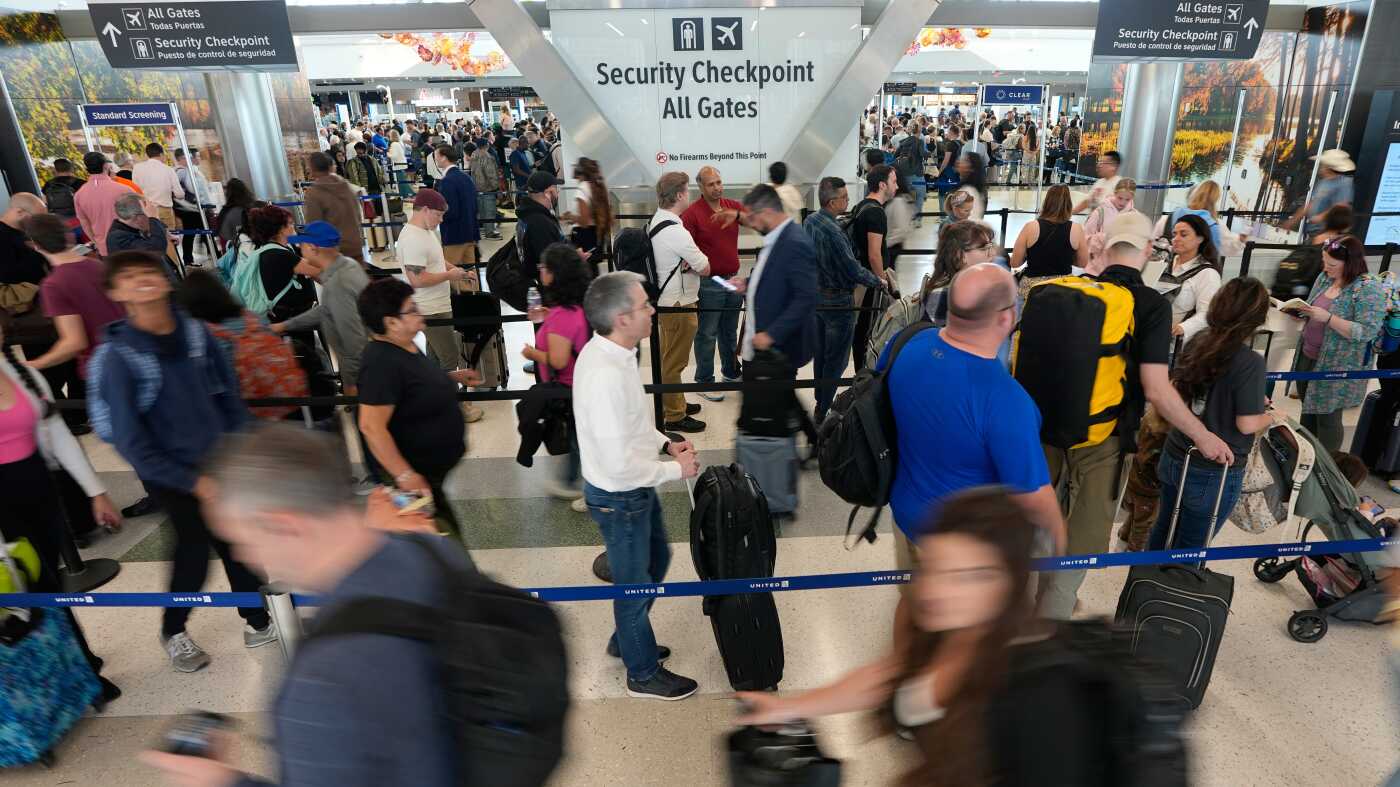
ICE officers could remain at airports after TSA workers are paid

Scathing report claims nation’s oldest labor union ‘betrayed’ MAGA members through ‘shocking’ spending
-

 Sports1 week ago
IOC addresses execution of 19-year-old Iranian wrestler Saleh Mohammadi
-

 Miami, FL4 days ago
Jannik Sinner’s Girlfriend Laila Hasanovic Stuns in Ab-Revealing Post Amid Miami Open
-

 New Mexico1 week ago
Clovis shooting leaves one dead, four injured
-

 Politics1 week ago
Schumer gambit fails as DHS shutdown hits 36 days and airport lines grow
-

 Tennessee7 days ago
Tennessee Police Investigating Alleged Assault Involving ‘Reacher’ Star Alan Ritchson
-

 Minneapolis, MN4 days ago
Boy who shielded classmate during school shooting receives Medal of Honor
-

 Science1 week ago
Record Heat Meets a Major Snow Drought Across the West
-

 Politics1 week ago
Trump gives Iran 48-hour ultimatum to reopen Strait of Hormuz or face strikes on power plants