North Dakota
Bill proposes new office to regulate guardianships across North Dakota


BISMARCK — North Dakota legislators heard testimony on a bill that would overhaul the way guardianships and conservatorships are overseen — something the judiciary has been working toward for more than a decade.
Senate Bill 2029
would create an Office of Guardianship and Conservatorship with broad powers to oversee such matters statewide. The office would license and maintain a registry of professional guardians and conservators, set regulations and policies, oversee legal and disciplinary actions, and manage state funding for guardianship and conservatorship programs.
Those in support of the bill believe it will address the shortage of guardians and conservators facing North Dakota while enforcing greater accountability. Those in opposition to the bill are concerned it will syphon funds from existing programs.
Chief Justice Jon Jensen said the creation of the Office of Guardianship and Conservatorship was a main priority of the legislative session for the state Supreme Court during his recent
State of the Judiciary address.
According to South Central District Judge Cynthia Feland, who testified in favor of the bill, the state currently has no licensing program for professional guardians and conservators, making it difficult to monitor who is claiming to be a professional and what their qualifications are.
Tanner Ecker / The Bismarck Tribune
President of the Guardianship Association of North Dakota Margo Haut, who testified against the bill, said that guardians are already required to obtain a national certification from the Center of Guardianship Certification and must be certified by the state courts system to act as a guardian in North Dakota.
Feland said the licensing component of the bill is important because complaints against guardians and conservators are handled on a case-by-case basis in the court system. Feland said this has created instances in which a professional guardian is removed from a case for misconduct without any mechanism to investigate other cases they are handling. The proposed bill would fix this, according to the judge.
“If we now have a procedure for licensing and we can remove them, then notification goes throughout the state to all of the district courts that this person’s license has been revoked,” she said.
If a guardian’s license is revoked, Feland said the Office of Guardianship and Conservatorship would be able to find other guardians to step in and take over the cases from the de-licensed guardian.
Donna Byzewski is the program director of the corporate guardianship program for people with intellectual disabilities at Catholic Charities North Dakota. She said during her neutral testimony that she was concerned the budgets of guardianship services would be devastated by legal costs when guardians were brought before the proposed office’s review board.
Byzewski did, however, say the bill would give the court tools to protect people in the case of exploitation or neglect by a guardian and remove the offending guardian in a timely manner, something that has taken months — if not years — to accomplish previously.
Feland said the judiciary is already preparing to implement the office should the bill pass.
“I don’t wait for this stuff to pass. We’re doing it now. So as we are speaking right now, we are actually putting together the rules for the Supreme Court to create these things” Feland said. “This is a problem that’s been there for over a decade and is getting worse. So the best way, then, to resolve it is to start doing these things right away.”



GRAND FORKS, N.D. (UND Sports Information)– Fighting Hawk track and field is set to split between California and North Dakota for a pair of meets this week, with competition occurring from Thursday to Saturday for UND.
It all begins out west at the Bryan Clay Multis where action will begin at 1 p.m. CT on both Thursday and Friday in Azusa. The Fighting Hawks overlap on Friday as action kicks up at the NDSU Spring Classic at 1 p.m. CT on Friday and 11 a.m. CT on Saturday in Fargo.
Last Time Out
North Dakota track and field collected four total broken school records over the weekend, with two more coming in Saturday competition as the Fighting Hawks took on two meets out in California
MIKE FANELLI TRACK CLASSIC
Saturday competition began for UND in the women’s 10,000-meter run where Elle Sondag crossed the finish line in 36:28.89 in her event debut to take eighth in section one and finish eighth overall. In the men’s portion of the same event, Ethan Adams finished 23rd in section over for 26th overall behind a PR time of 31:19.28 that now ranks ninth in school history.
In the 800-meter run, Gabriella Ruggeri ran a time of 2:10.65 (PR, fifth all-time) to finish fourth in section four and 25th overall in 21 heats of competing athletes. Aleksa Milanovic represented the men and finished second in section six and 13th overall out of 27 heats of competition with a time of 1:51.63.
Then the history-making turned up a notch. Olivia Correale broke the program record in the women’s mile run with her time of 4:47.47 to take first place overall in the event. And the domination continued in addition to the new school history. Katie Rogers took second in 4:52.51 with the second-best time in UND history as Marie-Louise Jorgensen finished fourth with a time of 4:56.93 in her event debut that now ranks third in the record books. Frida Giersdorff rounded out the speedy performances with her 4:57.59 clocking for seventh place and the fourth-best time at UND.
The men’s mile run race followed with the same kind of headlines as Louis-Lys Fanucchi added to the weekend success. He also broke the men’s mile run record with his time of 4:07.75 as Henrik Lindstrot followed in fifth place with a time of 4:10.97, marking a new PR and the third-best time in school history.
TRITON INVITATIONAL
The throwing results continued for North Dakota in San Diego with Fighting Hawks competing in the shot put and discus throw. Julia Matthews tied her outdoor personal best of 46-4 1/4 (14.13m) in the women’s shot put, which ranks eighth in school history, to finished 13th in the event.
STANFORD INVITATIONAL
Late results from yesterday’s competition at Stanford came in with historical performances for North Dakota on Friday evening.
It all began with Giersdorff besting her own school record by over 12 seconds in the women’s 3000-meter steeplechase. She ran a new PR time of 10:06.17 to rewrite history and take seventh place in the event. Over in the men’s half of the event, Fanucchi emerged victories with his clocking of 8:42.15, which marks a new PR and the second-best time in school history. Lindstrot came fifth in 8:49.08 for a new personal best and the third-best time in the UND record books.
Another school record fell in the women’s 10,000-meter where Keeler broke another one of her own top marks. She took fourth overall in the event with her time of 31:56.03, which improves her previous school record by nearly 10 seconds. Her locking now sits as the 20th-fastest time in NCAA history.
In section two of the event, Shewaye Johnson ran a 33:44.70 (PR) for the third-best time in UND history and ninth place. Naja Weiler clocked a 33:51.36 (PR, 13th place), which now sits fourth in school history and marks a new freshman record.
Summit League Accolades
Peak Performer of the Week
– Jadyn Keeler – Women’s Track (April 7)
Fight ‘em Hawks!
The Fighting Hawks have already achieved a plethora of new top-10 indoor marks in program history this season, including four chart-topping school records:
*Olivia Correale – Mile Run (No. 1 – 4:47.47)
*Louis-Lys Fanucchi – Mile Run (No. 1, 4:07.75)
*Frida Giersdorff – 3000-meter Steeplechase (No. 1 – 10:06.17)
*Jadyn Keeler – 10,000-meter Run (No. 1 – 31:56.03)
On Tap
North Dakota track and field will take on a plethora of meets next weekend with the Pacific Coast Invitational, Beach Invitational and Bryan Clay Invitational out in California as well as the Tom Tellez Alumni Invitational in Texas.
For updates and more information on North Dakota track and field, follow on social media @UNDtrackfieldXC or visit FightingHawks.com.
North Dakota
HHS reminds North Dakotans that services and support are available to prevent child abuse during Child Abuse Prevention Month

North Dakota Health and Human Services (HHS) is reminding North Dakotans that services are available to strengthen families in recognition of Child Abuse Prevention Month. Read the Child Abuse Prevention Month proclamation.
North Dakota reported 532 confirmed cases of child abuse and/or neglect in calendar year 2025.
“Although even one case is one too many, based on the number of assessments completed, the percentage of confirmed cases remains consistent compared to the previous year,” said HHS Children and Family Services Prevention and Protection Administrator Kirsten Hansen.
To help children and youth remain safely at home, HHS offers FamilyFirst Services, which are designed to strengthen families through support for both children and their parents or caregivers. Services are based on the specific needs of the family and focus on practical support for parents; behavioral health, including both mental health and addiction; and other needs. Visit FamilyFirst Services for more details.
Throughout April, several agencies across North Dakota will be hosting in-person and virtual events in recognition of Child Abuse Prevention Month. Visit Families Flourish ND for more information about upcoming events.
April is also a time to remind people that North Dakota has a law that allows parents to turn to approved Baby Safe Haven sites if they are unable to safely care for their infant. Parents can safely surrender an infant up to 1 year of age without fear of prosecution or questions. Infants must be unharmed and given to an on-duty staff member at a hospital or other approved location.
Reporting suspected child abuse or neglect
HHS reminds individuals that if they suspect a child in North Dakota is being abused or neglected, they should call the statewide toll-free Child Abuse & Neglect Reporting Line at 1-833-958-3500. If it’s an emergency and a child is in immediate danger, call 911.

Coming into his sophomore season at the University of North Dakota, Mac Swanson was facing more uncertainty than at any point in his young hockey career.
By his own admission, Swanson, 20, struggled at times on the ice as a freshman. And after the 2024-25 season, the Fighting Hawks had replaced their head coach, introducing another variable.
But first-year coach Dane Jackson has now led UND to a 29-9-1 record, and Swanson has added multiple dimensions to his game in his second year of college hockey.
Now Swanson and UND are among the final quartet of teams playing for a national championship this weekend at the Frozen Four in Las Vegas.
The Hawks take on Wisconsin on Thursday at 4:30 p.m. Alaska time with a chance to advance to the championship. That game will be preceded at 1 p.m. by the first semifinal, pitting Michigan against Denver, which is coached by Anchorage’s David Carle. Both games are scheduled to be broadcast on ESPN2.
A mainstay on UND’s second line, Swanson has added strength, improved his scoring and taken on more responsibility on defense.
“I felt confident throughout the year,” Swanson said. “My goal-scoring has improve and obviously we have a great team this year. It’s easy to play with those guys.”
When UND announced it was replacing longtime coach Brad Berry, Swanson said players were in a holding pattern. But Jackson, who was on the UND staff for nearly two decades before taking the head coaching role, helped maintain continuity for the players after a couple weeks of wondering who would lead the team.
“There was a lot of uncertainty in the program for the first time in a while,” Swanson said. “It was definitely a weird time for all of us that were kind of deciding whether to stay or transfer out. But when coach Jackson got the job, we all felt pretty confident in him and his abilities, so we really did think that we would have a good team this year.”

Swanson described Jackson as a “hard but fair coach” and said the announcement secured his future with UND.
“I love my time here,” he said. “I love playing at The Ralph (Engelstad Arena), and I didn’t really want to leave at all. So I’m happy with where I’m at.”
Swanson’s production this season has been consistent. He’s seventh on the team in scoring, with 11 goals and 17 assists in 39 games. He showed a major uptick in his goal-scoring ability, after notching just two as a freshman.
Swanson believes his progression at UND is similar to what he was able to accomplish with the Fargo Force, where he played before signing with the Fighting Hawks. There he developed into a much more dynamic offensive player in his second season with the USHL team. Swanson has been especially effective the last half of the season with 13 points in his last 15 games.
“I think (my game) has evolved a little bit,” he said. “I’ve really tried to round out my two-way game. I started penalty killing this year too, which just adds another dimension to my game and makes me more valuable to the team.”
Mac’s dad, Brian, had a standout hockey career at Colorado College and was a finalist for the Hobey Baker Award in 1999. Having his dad as a sounding board has been invaluable as he’s progressed through his college career.
“He’s always there for me,” Swanson said. “But he never forces anything upon me, which I think is a good thing. He obviously is there for me whenever I need to talk or just a quick text before or after a game. … It’s great to have someone who’s been through everything I’m going through.”
Part of Swanson’s offseason mandate was to add strength. In Alaska over last summer, he worked out independently as well as at Mac’s Strength & Power in Eagle River, operated by his cousin.
“It gave me a good opportunity to grow in some areas I needed to,” he said.
The Frozen Four is shaping up to be one of the most interesting in recent history. The four teams have the four most NCAA championships in history, led by Denver’s 10 and followed by Michigan (9), UND (8) and Wisconsin (6).
“It’s really cool it’s kind of all these blue-blood programs,” he said. “Obviously we’ll try not to focus on too much of the stuff going on in Vegas and just focus on us.”
UND was dominant in reaching the Frozen Four, winning a pair of games by a combined 8-0 score in the Regional at Sioux Falls, South Dakota. He had family in attendance for those games and in the week and a half since has received plenty of messages from friends and family.
“Obviously you feel that support being from Alaska,” he said. “When someone is doing well, everyone is happy for them, which I think’s pretty cool about the hockey community back home.”

Meta, Oracle and Qualcomm share details on layoffs across California

Tell us: What’s the best book you’ve ever read in a book club?

How Selfridges Plans to Lock in the 1%

Commentary: In Texas and beyond, a political impulse: If you don’t like it, leave
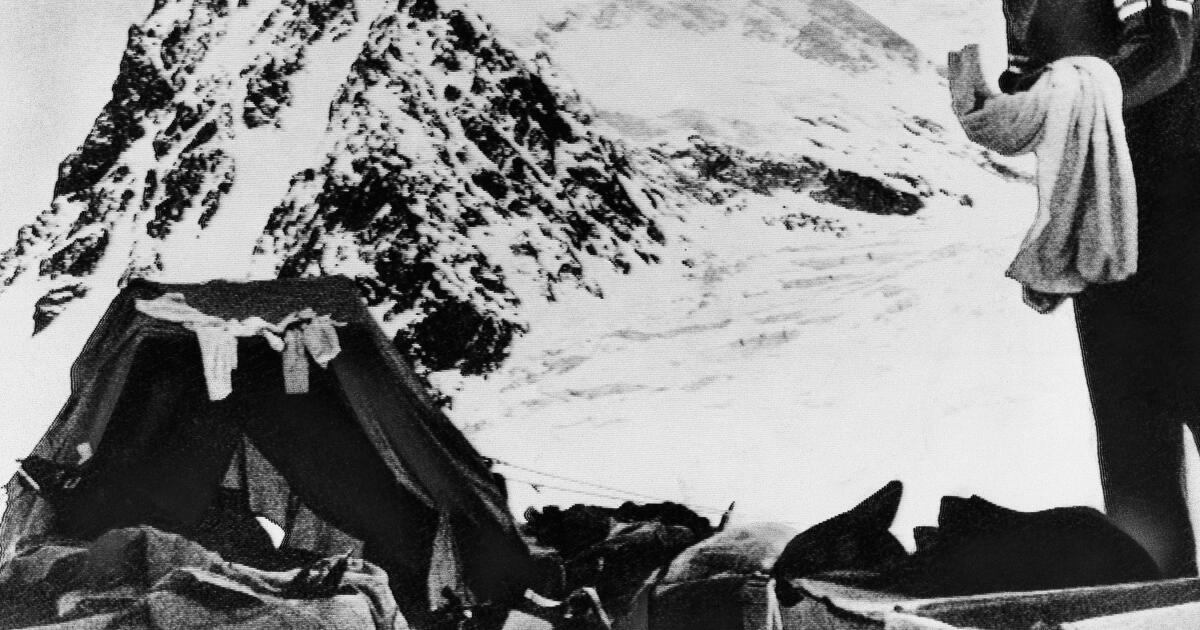
Jim Whittaker, first American climber to scale Mount Everest, has died

Florida High School Football Rankings: Top 25 teams – Oct. 21

How old is Bo Nix? What to know about Oregon quarterback ahead of 2024 NFL Draft

Cleary's 21 help Le Moyne down Central Connecticut State 69-64 in OT

99th annual Pony Swim held in Virginia

Indiana Members Credit Union announced as new anchor tenant at Bottleworks District

Newsletter: NATO holds amid fragile Iran ceasefire

Jim Whittaker, the first American to summit Mount Everest, dies at 97

Video: Military Families Bear the Burden of War, Again

Fox News Poll: Record number say taxes are too high; government spending seen as wasteful

‘Even the street cats ran’: Inside Israel’s deadliest attack on Beirut
-

 Atlanta, GA4 days ago
1 teenage girl killed, another injured in shooting at Piedmont Park, police say
-

 Culture1 week ago
Do You Know Where These Famous Authors Are Buried?
-

 Movie Reviews7 days ago
Vaazha 2 first half review: Hashir anchors a lively, chaos-filled teen tale
-

 Georgia2 days ago
Georgia House Special Runoff Election 2026 Live Results
-

 Pennsylvania2 days ago
Parents charged after toddler injured by wolf at Pennsylvania zoo
-

 Education1 week ago
Video: We Put Dyson’s $600 Vacuum to the Test
-
 Milwaukee, WI3 days ago
Potawatomi Casino Hotel evacuated after fire breaks out in rooftop HVAC system
-
 Entertainment1 week ago
Inside Ye’s first comeback show at SoFi Stadium