Midwest
New look at 'Mad Butcher’s' murder victims could uncover more about mysterious serial killer

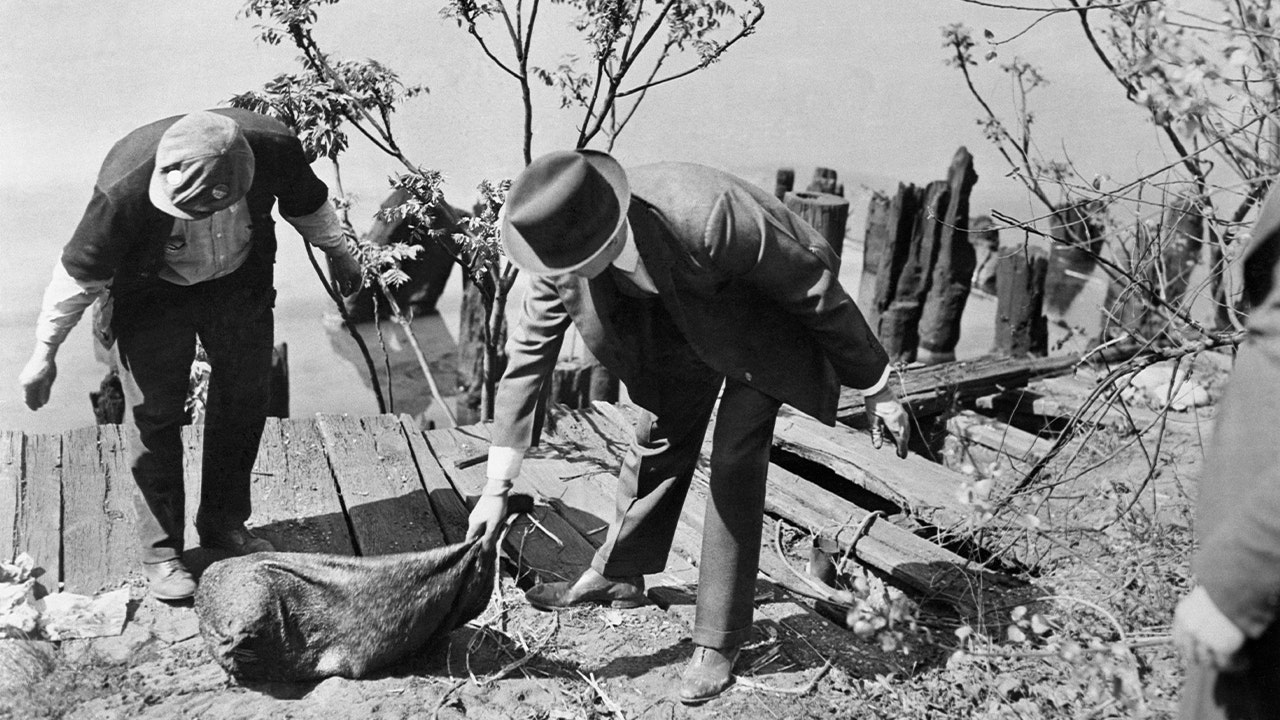
Authorities in Cleveland are pairing with a nonprofit to identify body parts left behind by one of America’s oldest known serial killers using genetic genealogy almost a century after they were found.
The “Torso Killer,” also known as the “Mad Butcher of Kingsbury Run,” murdered at least 12 people between 1935 and 1938, according to the Cleveland Police Museum website. But recent research has suggested there could have been 20 or more total victims, Cleveland.com reported.
Just two of the killer’s victims were identified. The bodies were rarely found whole, often missing heads that were never recovered.
Those who did have heads, which were located a distance from the rest of their bodies, according to the Cleveland Police Museum, are believed to have been drifters who weren’t recognized in disseminated sketches.
MOM OF NEW YORK GIRL WHO WAS KIDNAPPED RESCUED OVER 47 HOURS REFLECTS ON YEAR SINCE TERRIFYING EXPERIENCE
Cleveland Police, puzzled since 1934 about the identity of Cleveland’s “Mad Torso Murderer,” had a new problem to solve when bridge tenders on the murky Cuyahoga River dragged from the water five portions of a woman’s body. (Bettmann/Getty Images)
Two victims tied to the unknown killer were positively identified, according to the museum, as Edward Andrassy and Florence Polillo.
Andrassy, a 28-year-old white man, was found decapitated, emasculated, wearing only socks and drained of blood in July 1939. His fingertips identified him, the museum said.
HOUSES OF HORROR: MURDERS LEAVE HAUNTS PASTS IN THESE HOMES
Police searching the crime scene found the corpse of a woman, likely in her 40s, who was never identified. Parts of Polillo, a waitress and barmaid, were found wrapped carefully in newspaper in January 1936. The rest of her body, with the exception of her head, was recovered in another location 10 days later. She was also identified by her fingerprints.
Dental records allowed for the “unofficial” identification of a third victim, Rose Wallace. But, according to the museum, police were unable to make a definitive determination.
Although an arrest was never made, police believe a surgeon named Francis E. Sweeney, who would have had the expertise and equipment to dismember bodies, was responsible for the killings. He was questioned by police for a week but never confessed, according to the Cleveland Police Museum. However, after he committed himself to an institution, the murders came to a halt.
The DNA Doe Project, a nonprofit organization that carries out and helps fund genetic genealogy testing in cold cases, has paired with the Cuyahoga County Medical Examiner’s Office in an attempt to put names to some of the 10 unidentified victims.
CRIME SCENE CLUE COULD HELP SOLVE YOUNG DAD’S CAMPING TRIP MURDER AS KILLER REMAINS ON THE LOOSE
Detectives and a coroner examine bones of two murder victims found at the East 9th Street Lakeshore Dump Aug. 16, 1938, in Cleveland. (Bettmann/Getty Images)
Genetic genealogist CeCe Moore told Fox News Digital there is a “very high likelihood that the DNA Doe project will be successful in identifying these individuals.”
SIGN UP TO GET TRUE CRIME NEWSLETTER
“In 1938, there was no such thing as DNA testing. It was not even something they probably could have imagined. And, so, the advancements that we’ve seen over the almost 100 years are just unfathomable to the people who originally worked on this case, undoubtedly,” she said.
“You know, in the ‘80s is when DNA started being looked at for criminal applications. In the ’90s is when it really started coming into use in the United States. But it really took quite a while before it was accepted. I mean, we can look just back at the O.J. Simpson case, for instance, you know, where the jury didn’t understand DNA well enough to really weigh it as heavily as we would today. So, it has really come leaps and bounds. And then, in the last six years, we’ve had another leap forward with investigative genetic genealogy.
“Direct to consumer DNA testing was introduced in the year 2000 by a company called Family Tree DNA. It was the first time that we could test our own DNA to learn more about our family tree and our genetic heritage,” Moore explained. “That became what is now called genetic genealogy. That is the marriage of using DNA testing and genealogical records.
“So people have been genealogists for decades, for hundreds of years, really using records to build family trees. And we’re really fortunate today that we have billions of records online that are digitized so most of us can build our family trees way back in time from the comfort of our own home.”
GET REAL-TIME UPDATES DIRECTLY ON THE TRUE CRIME HUB
Thus far, two of the bodies have been exhumed. One, which WOIO-TV characterized as the killer’s “most famous” victim, is known as the “Tattooed Man.”
Left near railroad tracks in the summer of 1936, the unknown man’s head was found about 1,500 feet away from his body. Even after police fingerprinted him and widely disseminated pictures of his six tattoos, including the names “Helen” and “Paul,” according to the Cleveland Police Museum, he was never identified.
At the Great Lakes Exposition of 1936, more than 100,000 people saw a display featuring a plaster cast of the man’s head and images of his tattoos, but no one reported recognizing him.
The second body that will be tested was found on Cleveland’s lakefront in the summer of 1938 and is believed to be the killer’s sixth victim.
Kingsbury Run is indicated on this map by dots locating 10 of the 11 torso murders, which occurred there in the 1930s. (Bettmann/Getty Images)
A single anonymous donor is funding the lab costs, DNA Doe told CBS News. Although the remains may be contaminated or degraded because of their age, Jennifer Randolph, the nonprofit’s executive director of case management, said that DNA Doe has identified older remains before.
“We’ll figure out who the DNA relative matches are. We’ll build their trees, find those common ancestors and, then, you know, build forward or maybe look a little bit back, to see who the unidentified individual is,” Randolph told WOIO-TV.
“So, there could still be living people who know, you know, that these are individuals who were missing from their family and nobody knew whatever happened to them,” Randolph said. “And regardless of that piece, especially given how, you know, they died, they deserve the dignity and justice of being memorialized with their names.”
Moore told Fox News Digital scientists will face a host of challenges working with such old remains.
“We are dealing with degradation, potential contamination from bacteria. It’s very difficult to work on what we would call ‘ancient remains,’” Moore explained. “When you work with very old cases, you are almost certainly dealing with degradation where you can’t analyze all the DNA.
“Some of that DNA is going to be missing. And then, with contamination, we see bacteria actually inserts its own genome into the human genome. And, so, you have to have skilled scientists who are able to remove that bacterial genome, separate it from the human genome before we can perform our investigative genetic genealogy.”
FOLLOW THE FOX TRUE CRIME TEAM ON X
But even older remains have been identified using the practice, Moore said, citing at least one victim of the 1921 Tulsa Race Massacre whose family was finally notified in July of this year.
According to Fox 59, World War I veteran C.L. Daniel was identified as one of the victims of the 1921 tragedy, and his family was notified 103 years later.
“I have some inside information on that, and it’s been really, really difficult to get the DNA that is needed to perform investigative genetic genealogy from those very old remains,” Moore said. “But there has been some success, and it’s taken sometimes multiple rounds at the lab before they finally were able to get that DNA that was viable for our work. That’s pretty comparable, and it’s been very difficult.”
Read the full article from Here


NEWYou can now listen to Fox News articles!
The man accused of squirting Rep. Ilhan Omar, D-Minn., with a syringe of apple cider vinegar during a town hall in Minneapolis last month will remain in custody until he stands trial, according to court documents.
Magistrate Judge David Schultz ordered Anthony Kazmierczak, 56, to remain in custody pending trial, citing “exceedingly serious and dangerous circumstances” of the assault allegations.
“The Court further finds detention is warranted in this case because clear and convincing evidence shows that no condition or combination of conditions of release will reasonably assure the safety of the community, should Mr. Kazmierczak be released pending trial,” Schultz wrote in the order of detention dated Monday.
Omar was speaking about immigration policy and called for a transparent investigation and legal action against U.S. Immigration and Customs Enforcement, as well as the abolition of the agency when the alleged attack happened. She also said Homeland Security Secretary Kristi Noem should resign or “face impeachment.”
A man is tackled after spraying an unknown substance later identified as apple cider vinegar at Rep. Ilhan Omar, D-Minn., during a town hall she was hosting in Minneapolis, Minnesota, on Jan. 27, 2026. (Octavio Jones / AFP via Getty Images)
Kazmierczak allegedly admitted to Minneapolis police during his arrest that he had squirted vinegar on Omar.
He was subsequently charged with one felony count of terroristic threats and one count of fifth-degree assault.
BROTHER OF MAN ACCUSED OF SPRAYING ILHAN OMAR SAYS SUSPECT HATED SOMALI COMMUNITY FOR YEARS
Kazmierczak made an initial court appearance earlier this month. He was wearing a yellow jumpsuit, a color that his court-appointed defense attorney John Fossum told the courtroom signifies his client was being held in solitary confinement. Fossum also expressed concern for Kazmierczak’s mental state.
Anthony James Kazmierczak was later charged with one felony count of terroristic threats and one count of fifth-degree assault. (Hennepin County Jail)
During the appearance, Kazmierczak waived his right to a hearing on probable cause.
CLICK HERE TO DOWNLOAD THE FOX NEWS APP
Kazmierczak has a criminal history and was convicted of driving while intoxicated in 2009 and again in 2010. Records indicate he served one day in jail followed by five years supervised probation for the 2010 conviction and was put on home detention for 30 days in relation to his 2009 conviction.
Fox News’ Rachel Wolf, Adam Sabes, Jessica Sonkin and David Spunt contributed to this report.
Related Article

Read the full article from Here

RALEIGH, N.C. – Wrapping up the February portion of their 2025-26 regular-season schedule, the Detroit Red Wings unfortunately spent most of their Saturday night playing catch-up in an eventual 5-2 loss to the Carolina Hurricanes at Lenovo Center.
“They’re a heck of a team,” Detroit captain Dylan Larkin said. “This is a hard building to play in…They’re the class of the East, and you got to come in here at some point and get points. I just didn’t think we executed. We allowed them to be on top of us and come back in waves on Talbs.”
Goalie Cam Talbot made 30 saves in his first start since Jan. 22 for the Red Wings (34-20-6; 74 points), who moved to 11-5-2 on the road since Dec. 6. Meanwhile, turning aside 27 shots netminder Frederik Andersen helped the Hurricanes (38-15-6; 82 points) win their fifth straight game and extend their point streak to 12.
“We’re leaving without points, so that’s real disappointing,” Detroit head coach Todd McLellan said. “I thought that the game was real fast to begin with. There was a lot of pace going both ways. It was a good game for us to play in. A lot of their offensive opportunities came off of basically our tape…[Carolina] really took advantage of our mistakes.”
Detroit held steady against Carolina’s characteristically heavy, initial 10-minute push in the opening frame, but the leaders of the Metropolitan Division went up 1-0 when Taylor Hall blocked Simon Edvinsson’s shot attempt in their defensive zone and proceeded to score on a breakaway at 14:05. Then with eight seconds left in the period, while the hosts were on the man advantage, Sebastian Aho’s shot from the left face-off circle deflected off Edvinsson’s stick down low and into the back of the net to extend their lead to 2-0.
“They come out flying and shoot a lot of pucks,” Larkin said. “You can’t really pay attention to the shot clock because they fire it from everywhere, but I liked our start. It’s just that we had some times where we didn’t execute, and they score with eight seconds left. That’s a tough one, but we responded well. We won the second period.”
The Hurricanes struck again just 2:52 into that second period, as Eric Robinson jammed a wrist shot from the top of the crease to push ahead 3-0. But in a span of just 47 seconds late in the stanza, the Red Wings beat Andersen twice to put the hosts on their heels and make it a one-goal game going into the second intermission.


Israeli national gymnastics team suspends all activities after Iranian counter-attack

Tired of websites blocking your VPN? A dedicated IP fixes that

Commentary: The Pentagon is demanding to use Claude AI as it pleases. Claude told me that’s ‘dangerous’

Review: In ‘American Classic,’ Kevin Kline and Laura Linney deliver a love letter to theater

A secret-ish Japanese-style listening lounge just opened inside the Hollywood Palladium

Florida High School Football Rankings: Top 25 teams – Oct. 21

Cleary's 21 help Le Moyne down Central Connecticut State 69-64 in OT

How old is Bo Nix? What to know about Oregon quarterback ahead of 2024 NFL Draft

99th annual Pony Swim held in Virginia

Indiana Members Credit Union announced as new anchor tenant at Bottleworks District

At least nine killed after Iranian strike on Israel’s Beit Shemesh

Mass shooting at Austin, Texas bar leaves at least 3 dead, 14 wounded, authorities say

Mamdani’s response to Trump’s Iran strike sparks conservative backlash: ‘Rooting for the ayatollah’

Activists hail ‘historic’ EU’s decision on accessible abortion

A long-buried recording and the Supreme Court of old (CT+) : Consider This from NPR
-

 World3 days ago
Exclusive: DeepSeek withholds latest AI model from US chipmakers including Nvidia, sources say
-

 Massachusetts4 days ago
Mother and daughter injured in Taunton house explosion
-

 Montana1 week ago
2026 MHSA Montana Wrestling State Championship Brackets And Results – FloWrestling
-

 Denver, CO4 days ago
10 acres charred, 5 injured in Thornton grass fire, evacuation orders lifted
-

 Louisiana6 days ago
Wildfire near Gum Swamp Road in Livingston Parish now under control; more than 200 acres burned
-

 Technology1 week ago
YouTube TV billing scam emails are hitting inboxes
-

 Technology1 week ago
Stellantis is in a crisis of its own making
-

 Politics1 week ago
OpenAI didn’t contact police despite employees flagging mass shooter’s concerning chatbot interactions: REPORT