Nebraska
What’s Missing for Nebraska Baseball?


On the latest HuskerMax Today, Nick Handley and Kaleb Henry discuss what’s missing for Nebraska baseball to make a postseason run beyond regionals.
Below is a lightly edited transcript, and continue scrolling to watch the full segment.
Kaleb: Let me ask you this. Will Bolt has coached five full seasons now. This team has won a third of the Big Ten titles that have been handed out over that time. They’ve made three regionals.
For this program going forward, how far away or how close are they to… not even hosting a regional because you look at the super regionals and there are seven unseeded teams that advanced into the super regional round. There will be an unseeded team in Omaha because of the way the bracket laid out.
You’ve got Murray State taking on Duke, both of those unseeded teams. And you’ve got Louisville and Miami. Those are power conference teams, Arizona. But you’ve also got a UTSA who advanced in there. The top two national seeds went down this past weekend.
So when you’re looking at, Nebraska, and you look at, hey, it’s working for these teams. Why is it working for these teams and the leagues that they play in and the resources Nebraska has compared to the resources they have, the resources Big Ten programs in general have, even if baseball is lower on the spending priority than some of the other sports compared to what the ACC does or the SEC does or even the Big 12?
What’s that thing that’s missing for Nebraska? Is it having a deeper bullpen? Is it having more guys that can hit 95 on the radar gun? Is it having – you look at some – like we saw last year when Nebraska was playing Florida, it seemed like every guy was cookie-cutter. They were all 6-6, 240 pounds, just up and down the lineup. What is that thing – if there is one – that’s missing for Nebraska from that step that hasn’t happened in twenty years?

Nick: I come from a thought of strong and deep pitching is going to take you very, very far. Rotational, elite arms, for sure. I think Ty Horn is there. I think what you got between Jackson Brockett and Will Walsh was guys that utilize their stuff really good but didn’t have explosive fastballs.
And look, it’s not all about the velocity. You can have guys that throw 96, 97 miles an hour, but if they have no movement and they’re relying heavily on that, they become predictable. They haven’t developed that that complimentary breaking ball or change up well enough. You’re going to get hit just the same as anybody throwing 86, 87.
But I think when you do have those types of players that – again, I’ll use the Ty Horn example of a guy that as he continued to find success in the second half of the year, you would watch him maybe in the third and the fourth inning, and all of a sudden that breaking ball – gained more depth. It became more devastating because then that fastball, even at 93 or 94, would come by and you’d have no shot catching up to it. So guys that have that type of stuff that can bring you a 93, 94-plus fastball, but are also coming right back with an explosive slider or a changeup that’s just dropping off the table. You know, those types of guys.
Mason McConnaughey had all of that. And, you know, we don’t know what’s going to happen with Mason because of that injury and his draft stock and everything. I mean, there is a decision there. I don’t think Nebraska is necessarily counting on him coming back, but you never know. And I know they love him, and I know he loves this program.
This is the one thing that I looked at Oklahoma and I was really impressed with. Every guy that they ran out there was 95-plus. Mm hmm. We saw Crossland, the guy that – his numbers weren’t great. Now, mind you, he’s pitching in the SEC. But he was in control of that game. And, yeah, sure, it’s easy to throw a lot of strikes and challenge hitters when you have the type of cushion that he had. But his stuff was really good. They threw a freshman at the end of that game against North Carolina the previous night, and that kid was throwing 95, 96 miles an hour as well.
I think when you do have some of those power arms – because, look, the way we are in college baseball is – and you brought up UTSA. Perfect example. You’re watching their guy throw 97. Those those arms are out there.
And this is what I love that Nebraska has is you got Rob Childress. Give Rob Childress just even some raw ability, a kid with raw ability, and two years, Rob will have that guy refined, and have that guy effective. So I think it starts there. I think you want to see more of those Mason McConnaughey types. I’m not trying to make it sound like they’re easy to find, but they’re out there. And if they’re developed by Rob Childress, I’ll put my money on that all day.
Kaleb: And it’s not that Nebraska hasn’t had those guys. Obviously, Mason McConnaughey isn’t what you were expecting coming into this year. But you had Brett Sears. You had the Big Ten Pitcher of the Year a year ago. You could go back, under Will Bolt, you had Cade Povich. You had Spencer Schwellenbach.
Nick: And look what those seasons led to. In 2021, Nebraska was in the regional conversation until Rutgers came into town. But they were a big part of the regional host conversation last year. If Nebraska wins a couple more midweeks, they’re in the regional host conversation. So you see the connection there. You mentioned two bona fide aces.
And then this year, Mason McConnaughey, we don’t get to see him go past Sam Houston third week of the season. Again, not trying to say Nebraska all of a sudden in the regional host, but there’s that connection of when you’ve got big-time arms, big-time guys, what it does to the rest of your staff and what it can do in series that, unfortunately, Nebraska wasn’t winning in March.
Kaleb: And that’s where I’m at when you look at this team and this program on the what’s missing. To me, it’s the second guy. Coming into this year, you were expecting to have Mason McConnaughey, but who is “Mason McConnaughey light”? Who is that 1a, 1b instead of here’s your number one and then here’s your number two?
That’s the part that Nebraska, if they can ever get that – last year, if you have Brett Sears and then you have an immediate second ace, not somebody who – I know Brockett threw a no-hitter. I know that. And you saw what guys were able to do with amazing performances in the Big Ten Tournament and a lot of one-off or kind of hit and miss on success. But that one guy that’s just – they’re expected to be a dude every single night out. A little bit of what you saw in the last two appearances from Ty Horn.
How can you get that type of consistency with that elite second arm? To me, that’s the part that’s been missing in that Nebraska has had that ace. And in those seasons, Nebraska has been in a really good position where that ace has been healthy for the bulk of the season. We didn’t get that with Mason this year. But where’s that second guy? How do you get that second guy in there?
You talked about Oklahoma. They have that second guy. Yeah, their ace got roughed up against North Carolina. But there’s a reason you can go into regional and say you don’t have to throw your number one guy because your number two guy is pretty freaking good.
Nick: What you were just saying there with Nebraska a year ago with Sears then to McConnaughey, those are the situations you like to have. I do wonder if the Ty Horn development happens even quicker if you do have a healthy Mason McConnaughey, where it’s not the last month of the season to where you saw a Ty going five innings plus, but where you’re maybe seeing that more in March because of having a bona fide starter, ace, Friday night guy, electric stuff, set the tone where you don’t feel the weight of the world when you’re towing the rubber on that Saturday.
But I do think that Nebraska understands now with this sort of new look Big Ten, and this was maybe the blessing that came with that California road trip. You’re out there. You’re seeing what UCLA is about. We didn’t see Oregon up until the Big Ten Tournament, but you’re seeing what they’re about. You’re seeing that those are offensively – challenging teams.
That sophomore class that UCLA has, that was the number one ranked incoming freshman class from Perfect Game two years ago. And they’re all playing like that. So they got developed. Every major contributor of UCLA, they’re all sophomores. They haven’t been playing college baseball for that long, but there was a lot of talent there, but they got developed and they were able to come together.
You look at what the Oregon team, the Washington team, the USC team, they don’t have to leave the state or at least that section of the country. But you see what Big Ten baseball, if you want to be there at the top, is going to demand you to do. And I don’t think it changes so much of what Nebraska knew they had to do before because when you want to host regionals, you’ve got to be able to do those things anyway.
I think now you have that in-conference example and that in-conference rivalry, if you will, where you’ve got these teams that you’re going to face most years, whether you go out there or they come here. And that style, it’s not your traditional West Coast style. We’re just going to small ball you to death and everything. No, they’re going to slug you. And then they’re going to bring in guys that are throwing 95-plus.
And the beauty of that is you can start broadening your recruiting base a little bit, too, because not all those guys in California are going to find themselves at USC and UCLA and other schools around there. They’re going to want to still play maybe in the Big Ten Conference and be able to have a chance to go out to the West Coast, play in front of family too. There’s advantages there.
But I think I like that Nebraska had a chance to see what those programs were about on their home turf and be able to, let’s say, dramatically change what they’re doing in Lincoln, but give you an idea of, okay, if we want to be at the top and we were in the tournament and we beat two of those teams, how do we be at the top in the regular season, and what do we construct to do that going forward?
Kaleb: I know that we’re in a time of transition on where a lot of money is going and what priorities are, but I’m hoping that the addition – and this was my hope a year ago as well – that with the addition of those West Coast teams, it spurs some development across the Big Ten.
It makes some programs say, we want to take that next step in the same way that, let’s face it, a lot of us were hoping Nebraska was going to do to the league 15 years ago, that you were going to say, no, here’s the big dog swinging the big stick, and realistically, that took some time. Because Nebraska was still figuring stuff out post those College World Series runs. And now for this team and this program, it’s what is that next step?
Watch the full conversation below.
Stay up to date on all things Huskers by bookmarking Nebraska Cornhuskers On SI, subscribing to HuskerMax on YouTube, and visiting HuskerMax.com daily.



OKLAHOMA CITY — Out of the locker room and into the Paycom Center hallway, the Nebraska contingent went, traces of delirium on their faces and drips of water rolling off their mussed follicles. It had been almost 20 minutes since the game of their lives, the game of this NCAA Tournament, the game that will always be remembered by Nebraska and Vanderbilt fans — in very different ways — was won on the tiniest of bounces.
Yet as they walked toward a postgame news conference late Saturday night to discuss it all, they passed a tunnel leading into the arena and were greeted with screams. Nebraska fans with seats around the tunnel spotted them, because thousands of Nebraska fans were still in their seats, reveling, the music still thumping in the arena, as if some kind of encore would be happening.
As if Nebraska 74, Vanderbilt 72 — won and lost several times by both teams until Braden Frager’s layup went for Nebraska and Tyler Tanner’s halfcourt shot went in and out for Vanderbilt — weren’t enough.
OH. MY. GOODNESS.
NEBRASKA IS IN FRONT 😱 #MarchMadness pic.twitter.com/bHX87XMzCu
— NCAA March Madness (@MarchMadnessMBB) March 22, 2026
“Heyyyy!” Nebraska’s Rienk Mast yelled to the fans, giving them a point as the Cornhuskers kept marching, and dripping, and laughing.
Mast gave teammate Pryce Sandfort a slap on the back as Sandfort said to Frager, of the winning basket made possible when Sandfort zipped a pass to him: “I was so close to pulling that 3. Oh my God. And you were wide open.”
And Mast sat and listened as coach Fred Hoiberg told the assembled media: “You guys have no idea how invasive that (left knee) procedure that Rienk went through. … More than anything, I’m just happy for him because you see the joy. It was hard.”
It took everything for South Region No. 4 seed Nebraska (28-6) to survive the greatness of Tanner and No. 5 seed Vanderbilt (27-9), earning the first Sweet 16 in program history and a Thursday date in Houston with No. 1 seed Florida or No. 9 seed Iowa. It took the 15,000 or so fans in red in the arena, making it feel much more like a Big Ten home game in February than a March Madness setting.
It took hot shooting early, clutch shooting late, eight missed Vanderbilt free throws, four scorers in double figures and the ability to summon composure through the fatigue and panic as Vanderbilt turned a 10-point deficit into a five-point advantage with 5:34 to play.
It took Mast taking over in timeout huddles to make sure the Cornhuskers didn’t lose that composure.
“That’s what he does,” Nebraska’s Cale Jacobsen said of Mast, who also had 13 points, five rebounds and four assists.
The 6-foot-10, 250-pound senior from Groningen, Netherlands, is only on this team because he had to miss all of last season recovering from knee surgery. As the Lincoln Journal-Star recently reported, it was far beyond a typical knee surgery — it was a cartilage transplant from a cadaver to alleviate a condition called osteochondritis dissecans.
And there was ample risk that his knee would reject the tissue, and a long time period of Mast rehabilitating but not knowing for sure. Just as so many things had to come together for the Cornhuskers to follow up the program’s first NCAA Tournament win with another, Mast’s successful recovery was a central part of a team coming together that could make that kind of history.
This NCAA Tournament, like the last one, has been light on Cinderella stories and heavy on big brands and big favorites rolling. Saturday night at Paycom Arena was the Big Ten vs. the SEC, the top two money hoarders in an industry guided by their hoarding.
But it was also two groups of players and coaches as endearing as your average mid-major No. 13 seed. It was little Tanner, the lightly regarded 2024 recruit, dropping 27 and nearly one of the greatest shots in NCAA Tournament history. It was little Sam Hoiberg, on his birthday (and the birthday of twin and Nebraska manager Charlie), extending his career with so many gutty plays. It was big Mast in the middle of it all, a guy who probably shouldn’t be playing, facilitating and narrating for his team.
“He’s one of the best leaders I’ve ever been around,” Sam Hoiberg said. “My dad said it to you guys, the most disciplined player, and it’s all true. I live with Rienk, I see it every single day, how disciplined he is. But he’s such a good dude, too.”
That dude zipped a pass to Berke Buyuktuncel with 2:08 left for his fourth assist to give Nebraska back a 68-67 lead. Then AK Okereke drilled a corner 3-pointer for Vanderbilt. Then Mast tried to take the lead right back with his fourth 3-pointer but it missed — into the hands of Hoiberg, who tied the game with the rare diminutive point-guard putback.
Then Tanner sliced through the Nebraska defense as he did all night, a layup for a 72-70 lead with 58 seconds left. Then Hoiberg tried to answer with a drive, missing — into the hands of Mast, whose putback tied it with 37 ticks left. One more Nebraska stop, Sandfort rebounding a Chandler Bing miss, set up the final sequence.
Sandfort to a cutting Frager. Tanner from behind halfcourt, then to the court on his back, both hands to his face.
“Hit every part of the rim,” Fred Hoiberg said.
“I think it took me a half a second to register it didn’t go in, and then I just screamed in elation,” Sam Hoiberg said.
“I just about died,” Sandfort said.
“Like, I just went completely blank,” Mast said.
This close…. 🤏#MarchMadness pic.twitter.com/lEtY7T1WX1
— NCAA March Madness (@MarchMadnessMBB) March 22, 2026
As for Tanner, when asked if he thought it was going in, he could only nod his head. The devastation on the Vanderbilt side was exactly as you’d expect. And for Vanderbilt fans, this one might occupy a higher spot on a list that includes Matthew Fisher-Davis mistakenly fouling Northwestern’s Bryant McIntosh with his team up and 17 seconds left … and the Murray State buzzer-beater in 2010 … and Roy Hibbert’s obvious but uncalled travel in 2007 … and that 1993 loss to Temple …
“This is going to take a long time for myself and this team to get over,” said Vanderbilt coach Mark Byington, who has worked wonders in two seasons.
“They were so close to being in our shoes,” Jacobsen said of the Commodores. “My heart goes out to those guys.”
But his guys are moving on, and might be as Cinderella-like as any group left in this thing. A few feet away from Jacobsen, Mast was holding court with reporters. He moved some chairs out of the way to create space. He started to grab one for himself, stopped and said: “Nah, I don’t need it.”
“This is unbelievable,” Mast said. “Like, ‘Oh my God, we really did this. … Last year was pretty tough. But like throughout that whole year, this is what you work toward. I’m so grateful to stand where I’m at right now.”

Parts of California and Arizona were under extreme heat warnings again Saturday while sweltering summerlike weather even stretched as far north as Nebraska just a day into spring.
Temperatures at or above 100 degrees Fahrenheit (37.7 C) were forecast in the Southwest, closing a remarkable week of record-breaking heat. Experts say April, May and June are likely to be hotter than normal almost everywhere in the U.S.
Win Marsh said the heat was a reason to return home early to Utah after she and her husband, Stephen, hiked 170 miles (273 kilometers) over two weeks in Arizona, starting at the Mexico border. Their goal was to complete more than 800 miles (1,287 kilometers) on the Arizona Trail.
“We know our limits,” Marsh, 63, said Saturday. “We can’t hike when our bodies can’t cool down. There’s no shade out there, and water sources are drying up. … We promised our kids we wouldn’t do sketchy stuff. We’re not out there for a search-and-rescue event.”
The National Weather Service predicted 100 degrees (37.7 C) in Tucson, Arizona. The Yuma Desert, a desert community in southwestern Arizona, was headed toward 105 degrees (40.5 C), a day after reaching 112 (43.3 C) — a record for the highest March temperature in the United States.
Two places in Southern California also hit that temperature Friday. Experts say triple-digit days typically arrive by May, not March.
In the Midwest, temperatures exceeding 90 (32.2 C) were predicted across Nebraska, followed by a big drop to the 50s and 60s Sunday. A red flag warning was posted, which means a higher risk for wildfires. Parts of Texas were also at 90 or higher Saturday.
“This heat is likely to break many long-standing records from over a century ago across the area,” the National Weather Service in Omaha, Nebraska, said.
All evacuation orders were lifted in areas affected by Nebraska’s Cottonwood and Morrill fires, which have burned more than 1,200 square miles (3,118 square kilometers) for days but are largely contained, the state Emergency Management Agency said. The areas are dominated by range and grassland.
March’s heat would have been virtually impossible without human-caused climate change, according to a report Friday by World Weather Attribution, an international group of scientists who study the causes of extreme weather events.
Nebraska
Vanderbilt braces for a ‘road game’ in NCAA Tournament as Nebraska fans flood Oklahoma City

OKLAHOMA CITY (AP) — Vanderbilt coach Mark Byington expects a hostile environment when the Commodores play Nebraska on Saturday in the second round of the NCAA Tournament.
Byington is well aware of how Nebraska’s fans flooded Oklahoma City’s Paycom Center for a first-round game. A sea of red witnessed history on Thursday as Pryce Sandfort led the fourth-seeded Cornhuskers (27-6) to a 76-47 victory over Troy for their first-ever tournament win.
Byington said his fifth-seeded Commodores (27-8) will need to stay connected and lean on their experience to deal with the atmosphere. The arena is just a six-hour drive from Nebraska’s campus in Lincoln, and Cornhusker fans took advantage by creating a caravan down Interstate 35.
“I think it’s neutral by name only,” Byington said. “This is going to be a road game. I heard reports. They said it was even better than the home games in Nebraska — the noise, the environment.”
Nebraska entered March Madness as the only team from a power conference without an NCAA Tournament win. Now, the loyal fanbase wants more. Nebraska guard Sam Hoiberg believes the crowd could be more intense on Saturday.
“I think it’s going to be maybe even louder, because people are going to be off work and come down for the weekend,” he said. “Yeah, we fully expect to have another amazing crowd, but you can’t rely on that to win a game. You have to still execute and focus on the game plan.”
Vanderbilt, which rallied to defeat McNeese in the first round on Thursday, has faced tough environments this season, and things have not gone well. The Commodores played Southeastern Conference road games against NCAA Tournament teams Texas, Arkansas, Missouri, Kentucky and Tennessee and came out of those contests with a 1-4 record.
Big Red shenanigans
Hoiberg addressed a Nebraska fan jumping into the Bricktown Canal in downtown Oklahoma City on Thursday night.
“I saw one guy jumped in the canal last night,” he said. “Yeah, they (Nebraska fans) took over. It’s almost like they didn’t want the day to end, you know? That was fun to see all that stuff, although I’m guessing he got in a little bit of trouble for doing that.”
‘Better and better’
VCU has kept winning since mid-February, including a run through the Atlantic 10 Tournament to get a bid to March Madness and set up its massive comeback from 19 down to beat sixth-seeded North Carolina in overtime. And coach Phil Martelli Jr. had a clear message about what could be ahead for his 11th-seeded Rams (28-7) entering Saturday’s second-round game against Illinois.
“What I told those guys is every time you win in March, the wins feel better and better and better as you go along,” Martelli said. “Last night felt pretty good. Winning the championship felt good. Last night felt a little bit better.
“I told them, if you want to feel a pretty sweet feeling, you go get No. 2 tomorrow.”
That said, the pressing challenge is stopping an offense ranked No. 1 in KenPom’s adjusted offensive efficiency by averaging 131.7 points per 100 possessions.
“One thing I know about these guys is they’ve responded to every challenge and they’ll be ready to go,” Martelli said.
The third-seeded Fighting Illini (25-8) faced the least drama of any winner in Thursday’s four first-round games in Greenville, South Carolina. Illinois advanced with a 105-70 win against Penn after shooting 50% and making 15 of 36 3s (.417), while the Illini dominated the glass (48-25) with their size.
“We have so many versatile players on the team that we kind of spaced the floor, and we were able to pick the defense apart with our skill,” guard Andrej Stojakovic said.
This is Illinois’ sixth consecutive NCAA bid. The Illini have failed to reach the second weekend in four of the previous five years, the outlier being a run to the Elite Eight two years ago before falling to UConn on the Huskies’ romp to a second straight national title.
Another Cinderella run?
VCU looks to add to its long history of tournament upsets.
Illinois is a 10 1/2-point against VCU, favorite according to BetMGM. But VCU has a long history of pulling shockers during March Madness.
In 2011, the 11th-seeded Rams got all the way to the Final Four, defeating No. 3 seed Purdue and No. 1 seed Kansas along the way. In 2007, No. 11 seed VCU knocked off No. 6 Duke in the first round. In 2012, No. 12 VCU defeated No. 5 Wichita State in the first round.
Almost home
Houston is one win from going back home for the Sweet 16.
The Cougars (29-6) will face Texas A&M (22-11) in the second round Saturday in Oklahoma City. If they win, they would then need two wins at the Toyota Center in Houston — just a few miles from campus — to return to the Final Four.
The Cougars have fought the urge to look ahead from the moment the brackets were announced. They looked focused when they rolled past Idaho 78-47 in the first round on Thursday.
They’ll face a tough Aggies team that defeated Saint Mary’s 63-50 on Thursday.
___
AP Sports Writer Aaron Beard contributed from Greenville, South Carolina.
___
AP March Madness bracket: https://apnews.com/hub/ncaa-mens-bracket and coverage: https://apnews.com/hub/march-madness

Spoiler Free Movie Review: Ready or Not 2: Here I Come – HorrorFuel.com: Reviews, Ratings and Where to Watch the Best Horror Movies & TV Shows
Iran War Live Updates: Tehran Is Defiant After Trump Threatens Power Plants

Video: ICE Agents Will Be Deployed to U.S. Airports, White House Confirms

Eat This Before Bed To Lose Weight Overnight: ‘Second Meal Effect’ Explained
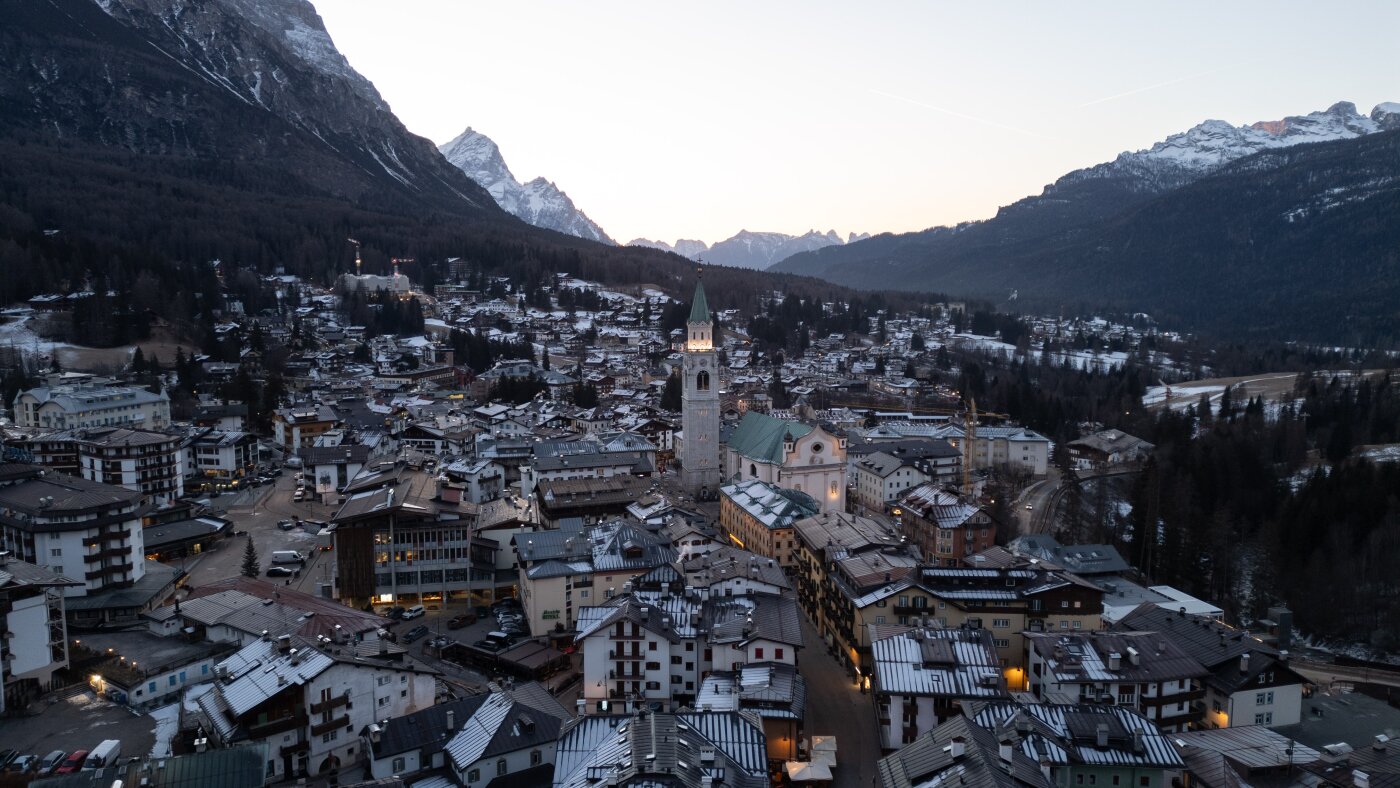
Cortina d’Ampezzo mixes Olympic legacy with Alpine glamour

Florida High School Football Rankings: Top 25 teams – Oct. 21

How old is Bo Nix? What to know about Oregon quarterback ahead of 2024 NFL Draft

Cleary's 21 help Le Moyne down Central Connecticut State 69-64 in OT

99th annual Pony Swim held in Virginia

Indiana Members Credit Union announced as new anchor tenant at Bottleworks District
Video: ICE Agents Will Be Deployed to U.S. Airports, White House Confirms

Schumer knocks Trump on Iran, plan to send ICE to airports: ‘Asking for trouble’

‘Risk of escalation is extremely high as Iran shows it can retaliate’

Immigration agents deploying to airports under border czar as TSA staffing falls short | CNN Politics

Video: Former F.B.I. Director Robert Mueller Dies at 81
-

 Detroit, MI4 days ago
Drummer Brian Pastoria, longtime Detroit music advocate, dies at 68
-

 Oklahoma1 week ago
Family rallies around Oklahoma father after head-on crash
-

 Nebraska1 week ago
Wildfire forces immediate evacuation order for Farnam residents
-

 Georgia6 days ago
How ICE plans for a detention warehouse pushed a Georgia town to fight back | CNN Politics
-

 Alaska1 week ago
Police looking for man considered ‘armed and dangerous’
-
 Science1 week ago
Federal EPA moves to roll back recent limits on ethylene oxide, a carcinogen
-
 Science1 week ago
H5N1 bird flu spreads to sea otters and sea lions along San Mateo coast, wildlife experts say
-

 Movie Reviews4 days ago
‘Youth’ Twitter review: Ken Karunaas impresses audiences; Suraj Venjaramoodu adds charm; music wins praise | – The Times of India