Nebraska
Nebraska overcomes 18-point deficit in second half to upset Wisconsin 80-72


LINCOLN, Neb. (AP) — Nebraska loves to play at Pinnacle Bank Arena, and the record shows it.
No. 6 Wisconsin, on the other hand, might be getting a complex about the place.
For the second straight year, the Cornhuskers pulled off a dramatic comeback to beat the Badgers. On Thursday night, they erased an 18-point second-half deficit to win 80-72 in overtime. Last February, Nebraska erased a 17-point second-half deficit en route to an overtime win.
Nebraska coach Fred Hoiberg said he made sure to remind his players of that in the locker room when they were down 43-27.
“A huge win for us,” Hoiberg said. “We knew the importance of this. I’m proud of the guys for finding a way to dig in and come back when things were not looking good.”
Rienk Mast scored early in overtime to give the Huskers the lead for good, and when time expired the students spilled onto the court for the second time this season. The first was Jan. 9 when the Huskers beat then-No. 1 Purdue 88-72.
C.J. Wilcher scored 16 of his 22 points in the second half, Mast finished with 20, and the Huskers (16-6, 6-5) improved to 6-0 at home in Big Ten play and 14-1 overall.
It was Nebraska’s biggest comeback since erasing a 19-point deficit against Iowa in 2013. Since 2000, Wisconsin had been 120-0 when leading by 15 or more points at halftime.
“I thought we got completely away from what makes us good,” Badgers coach Greg Gard said. “The shots we settled for at times, turning the ball over and gambling defensively when we didn’t need to gamble … just doing some very uncharacteristic things.”
AJ Storr matched his season high with 28 points to lead the Badgers (16-5, 9-2). Max Klesmit and Chucky Hepburn had 13 apiece.
The Huskers were coming off an embarrassing 73-51 loss at Maryland and found themselves down as many as 19 in the first half.
“Coach got on us about having our heads down,” Wilcher said. “That gave us a little spark and helped us play with a little bit of edge.”
Mast said he and his teammates were a bit taken aback by Hoiberg’s halftime speech.
“We needed that,” Mast said. “When you have a coach that’s super chill and then is super loud, it’s, ‘Come on guys.’”
Wisconsin struggled the entire second half against a more aggressive Nebraska defense. After shooting 55% in the first half, the Badgers dipped to 36% in the second and got sloppy with the ball.
When Wilcher hit a deep 3 to pull the Huskers within seven points, he beat his chest and asked the crowd for more noise. The fans obliged and were on their feet for the final 12 minutes of regulation and all of overtime.
“The roof came off the place,” Hoiberg said, adding that it was the best environment he has experienced in his five years at Nebraska.
Brice Williams’ two free throws in the final minute of regulation gave Nebraska its first lead at 67-65. Storr’s layup tied it and Mast and Williams missed two shots in the last 20 seconds.
Nebraska capitalized on a run of eight Wisconsin turnovers over eight minutes in the second half to tie it at 52. The Badgers were ahead 63-56 after Klesmit scored 11 points over two minutes.
But Nebraska came back again, got the game to overtime and posted one of its biggest comebacks in program history.
Big picture
Wisconsin: The Badgers had as nearly as many turnovers (10) as field goals (11) after half.
Nebraska: The Huskers posted their second win over a top-10 opponent in the same season for the first time since 2013-14.
Hepburn homecoming
Wisconsin’s Hepburn, playing 50 miles from his hometown of Omaha, was met with boos each time he touched the ball. Hepburn had strongly considered Nebraska, but picked the Badgers after the Huskers fired Tim Miles in 2019.
Hepburn played a big role in the first half. In a span of 29 seconds, Hepburn made a fallaway jumper and had two layups off steals, with a free throw tacked onto the second. Another layup pushed the Badgers’ advantage to 17 late in the half.
Up next
Wisconsin: Hosts No. 2 Purdue on Sunday.
Nebraska: Visits No. 14 Illinois on Sunday.



Nebraska softball finalized its coaching staff on Wednesday. Head coach Rhonda Revelle signed an extension that runs through the 2031 season. The program also finalized several previously announced coaching changes.
Revelle earned the extension after leading Nebraska to one of its best seasons in history, bringing the team back to the Women’s College World Series for the first time since 2013. The Huskers totaled a school-record 52 wins in Revelle’s 34th season as Nebraska’s head coach, helping solidify her as the winningest coach in Nebraska athletics history.
“As we said when we had the privilege of naming the field at Bowlin Stadium in her honor, Rhonda Revelle is Nebraska Softball. Rhonda is not only a great leader of our softball program, but she is a world-class individual who elevates our entire athletic department in many ways. The trajectory of our program is at an all-time high coming off a record-breaking season and we are excited for the years ahead under the leadership of Rhonda and her outstanding staff.”
Revelle also re-worked the responsibilities of her coaching staff, elevating existing staff members and bringing in a slew of former players as assistants. This comes following the retirement of long-time assistant Lori Sippel in June.
Diane Miller has been elevated to associate head coach, and Mandie Nocita was promoted to assistant coach. Olivia Ferrell and Jordy Frahm also join the staff and will serve as assistant coaches. Hannah Coor and Hannah Camenzind have been added as graduate assistants. Lauren Camenzind will be a graduate manager for the Huskers.
Contact/Follow us @CornhuskersWire on X (formerly Twitter) and like our page on Facebook to follow ongoing coverage of Nebraska news, notes and opinions.

Nebraska Gov. Jim Pillen on Wednesday announced measures to further cut state spending, including a cut in state agency spending and a hiring freeze on most positions.
Pillen said in a news release that the measures are necessary after the state paid out $307 million more in state tax refunds than anticipated in fiscal year 2026, which ended June 30. Tax receipts have come in below projections in March, April and May, leading to a current expected deficit of $172 million.
That’s after lawmakers closed a $646 million budget hole in their most recent legislative session.
The governor has previously sought to cut spending to provide more property tax relief to Nebraska residents and had called for additional cuts during the current fiscal year.
“I am pleased with the progress we have made, but I’m not satisfied,” Pillen said in a news release.
Accompanying the release was a memo Pillen sent to state agencies, boards and commissions in which he called on them to “exercise additional fiscal restraint.”
Among the measures outlined in the memo:
- A freeze on creating any new positions or filling any vacancies without approval from the state budget office. The freeze does not apply to law enforcement or corrections positions.
- A 5% reduction in budgets for all state agencies.
- All agencies, boards and commissions must provide monthly cash flow projections.
- Agency leaders are directed to “concentrate” on eliminating redundant processes, services regulation and aid programs.
- Agency leaders are directed to reduce their agencies’ physical footprint and “consolidate teams and services.”
All state entities are required to submit their plans for reducing spending by the end of the month.
The memo also said agencies should “prepare for downward adjustments to appropriations” not only in the current fiscal year but also in the 2028 and 2029 fiscal years.

The U.S. Supreme Court has agreed to hear Nebraska’s lawsuit against Colorado over a proposed canal that would take water out of the South Platte River in Colorado and send it to a reservoir in Nebraska.
Nebraska claims Colorado is deliberately obstructing efforts to build the ditch, known as the Perkins Canal, even though everyone agrees Nebraska has the right to do so. The canal is necessary, Nebraska says, because Colorado isn’t sending enough water into Nebraska.
The Perkins Canal would divert water from the South Platte River near Ovid to a storage site somewhere in Nebraska. The South Platte River Compact, ratified by both states and Congress in 1923, requires Colorado to guarantee a flow in the river of 120 cubic feet per second at a water gauge near the state line during the irrigation season. The compact also authorizes Nebraska to build the canal and grants the right to use the power of eminent domain to acquire land on which to build it. Initial work was done on the canal more than a century ago, but the project was abandoned as unfeasible.
Nebraska resurrected the idea in late 2021, citing fears that urban development along Colorado’s Interstate 25 corridor and plans to expand water storage were causing Colorado to violate the terms of the 1923 compact.
The idea that Nebraska might actually build the canal has water users in the lower reaches of the river worried that doing so would disrupt the water augmentation process that underpins much of the crop irrigation along the South Platte, especially between Fort Morgan and the Colorado-Nebraska state line. It is designed to help Colorado meet the terms of the 1923 compact.
Colorado land owners have resisted Nebraska’s efforts to buy land in the Julesburg area so the canal can be built. Colorado Attorney General Phil Weiser and Gov. Jared Polis, while recognizing Nebraska’s right to build the canal, have nevertheless sworn to do all they can to protect Coloradans’ property and water rights. Seeing such rhetoric as subverting Nebraska’s right to build, Nebraska sued Colorado in the Supreme Court in July 2025, alleging that Colorado is obstructing Nebraska’s efforts to go ahead with the Perkins project. Nebraska also attacked Colorado’s water augmentation system, saying it doesn’t work.
To understand augmentation, it’s important to know that Colorado operates on the prior appropriation doctrine, meaning the oldest (senior) water right holders get their water first. During dry periods, senior users may place a “call” on a stream, forcing junior users to stop taking water to ensure the senior rights are fulfilled. When someone pumps water out of a river basin, it eventually pulls water out of nearby streams and rivers, which can illegally shortchange senior surface-right holders. In that case, the junior wells would have to be shut down until senior rights were satisfied
To avoid such shutdowns, called “curtailment,” Colorado devised a system called augmentation in which the water that is pumped during the irrigation season must be replaced during the winter months so it flows back through the aquifer into the river in the following irrigation season. Some augmentation is done simply by buying water rights from upstream users, increasing the amount of water in the river. The system is highly complex and requires detailed accounting of river flows.
In a prepared statement issued last week, after the high court agreed to hear the case, Colorado Attorney General Phil Weiser said Colorado is in compliance with the compact.
The court’s decision, he wrote, “merely opens the door for Nebraska to bring its claims against Colorado. Nebraska’s burden to prove those claims is incredibly high and we will vigorously defend Colorado’s full entitlements under the compact.”
Perkins Canal needed because Colorado is harming Nebraska
But Nebraska officials insist water augmentation isn’t doing what it was supposed to do. In its 55-page complaint to the U.S. Supreme Court, Nebraska calls the augmentation system illegal and a violation of the river compact.
“Colorado’s water administration system, including its augmentation plans, have harmed and will continue to harm Nebraska,” the lawsuit reads. “For example, many augmentation projects … allow junior well owners to pump water out of priority during the irrigation season, provided they pump or divert additional water during the non-irrigation season and apply it to recharge ponds. This method assumes that water will percolate back into the water table and make its way to the South Platte River in time to make whole downstream senior users.”
Kent Miller is general manager of the Twin Platte Natural Resources District, which includes most of the South Platte River in Nebraska. He’s said he’s watched the river since 1972 and is skeptical that augmentation even works.
“Those plans have not been working, and I base that on the fact that the Western Irrigation District rarely receives what it’s supposed to receive,” Miller said.
In May, U.S. Solicitor General John Sauer filed an amicus brief with the high court recommending that the court allow the suit to go ahead, but with conditions.
In its lawsuit, Nebraska addresses augmentation because of its complexity and insists that any mechanism Colorado uses to comply with the compact should be simple. In his amicus brief, Sauer recommended tossing the argument.
“Nebraska reads Article VIII (of the compact) as mandating that compliance mechanisms be ‘simple,’ and it alleges that Colorado has violated that requirement,” Sauer wrote. “But Article VIII imposes no such requirement; it merely authorizes Colorado officials to enforce the Compact without action by the Colorado legislature. Because Nebraska’s Article VIII claim is facially meritless, it should not be permitted to proceed further.”
Sauer further recommended disallowing arguments that Colorado is obstructing Nebraska’s efforts to build the canal, saying Nebraska offers no evidence of such obstruction.
In signaling its acceptance of the lawsuit on Monday, the Supreme Court said it wants to hear all of Nebraska’s complaints and let the justices judge for themselves whether parts of it lack merit. Colorado originally had 30 days to respond to the court’s action but, on July 2, requested a 60-day extension.
-
 Business2 minutes ago
California soccer fans sue StubHub after it fails to deliver expensive World Cup tickets
-
 Entertainment4 minutes ago
Lucas Museum to give free annual passes to South L.A. neighbors, host community preview day
-
 Lifestyle10 minutes ago
Meow Wolf taps famed L.A. animation house for its new Los Angeles venue
-
Politics17 minutes ago
Column: Trump decries ‘communism’ while his government takes ownership of companies
-
 Science20 minutes ago
‘I’d rather my house burn down than get cancer’: Herbicide use upends California’s fight to save forests
-
 Sports25 minutes ago
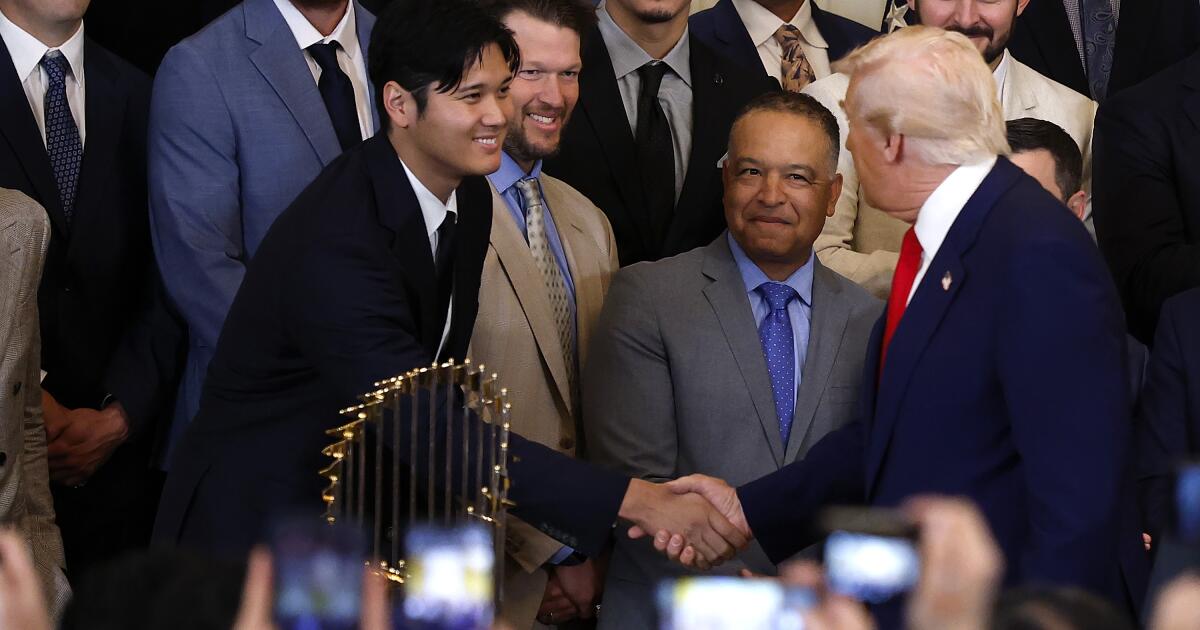
Dodgers scheduled to visit White House in late July to celebrate 2025 World Series win
-

 World35 minutes ago
Former US Olympian pleads not guilty in DC reflecting pool vandalism case
-
 News1 hour ago
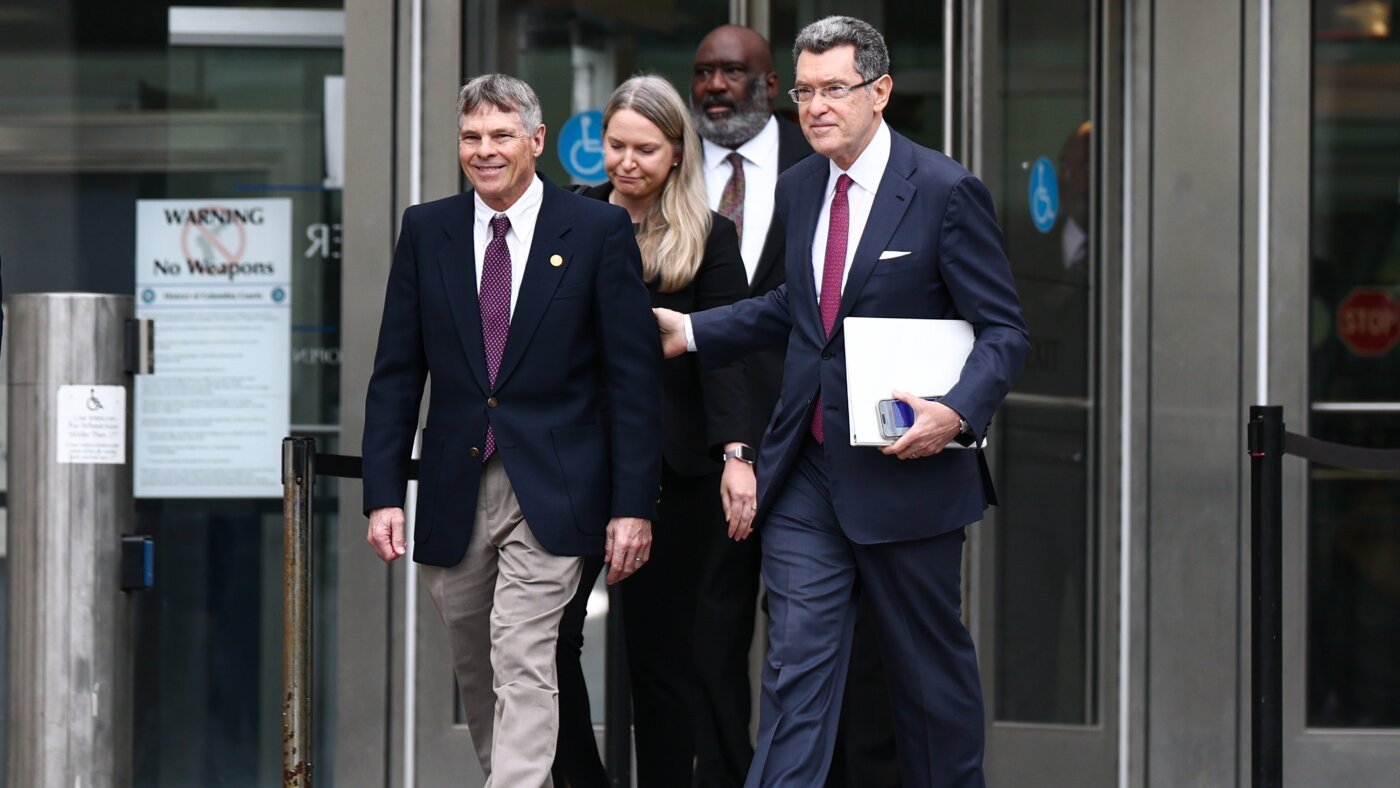
Former Olympian pleads not guilty in reflecting pool vandalism charges


