Nebraska
Nebraska bill would provide cancer benefits to firefighters


LINCOLN, Neb. (WOWT) – A bill before Nebraska lawmakers would provide workers’ compensation benefits to firefighters diagnosed with cancer without requiring them to prove their cancer came from the job.
LB-400 entered its first round of debate Monday. The bill was introduced by Sen. Dave Wordekemper of Fremont, a longtime firefighter.
“Firefighters don’t want to die. They don’t want to leave their jobs, their families, their fellow firefighters,” Wordekemper said.
Cancer risks for firefighters
Wordekemper said firefighters face increased cancer risks compared to the general population.
“Firefighters face a nine percent increase in cancer diagnosis, and a fourteen percent increase in cancer-related deaths compared to the general population,” he said.
“This isn’t speculation, this isn’t a theory, this is an established scientific fact from an independent international body,” Wordekemper said.
Trevor Towey, president of the Omaha Professional Firefighters union, said modern fires pose greater chemical risks than in previous decades.
“Fires of today are not like the fires in the seventies and the eighties. The products that are inside homes burn faster, there’s chemicals in the fires and firefighters are exposed to that,” Towey said.
Opposition to the bill
The bill was opposed by Sen. Mike Jacobson of North Platte and Sen. Bob Hallstrom.
Jacobson argued the bill could be unaffordable for smaller communities.
“Villages and cities are paying for it; and how are they paying for it? With property taxes,” Jacobson said.
Jacobson said current law is adequate.
“The current law is working. No one is turning their backs on firefighters,” he said. “Their benefits are all better than any other city employee.”
Jacobson referenced his own skin cancer diagnosis during the debate.
“Some of you have probably noticed I have a couple of cuts on my face. Well, it wasn’t from shaving,” he said. “I’ve never been a firefighter, by gosh somehow I’ve got cancer, so I’m dealing with it. Not every firefighter gets cancer.”
Current law and proposed changes
Current Nebraska law lists 20 cancers as presumed job-related if a firefighter is diagnosed. However, families are not compensated until the firefighter dies.
Towey said several Omaha firefighters are currently battling cancer.
“I can tell you we have got about 5 or 6 right now, and a couple of them are continuing to fight for their lives,” he said.
“Why would not those same cancers be also presumed while they are still alive, while they can still recover, while they can still fight and come back and service our community? That’s all we’re asking for,” Towey said.
Under current law, firefighters who get cancer and believe it is job-related must sue insurance companies to receive benefits. The proposed bill would allow firefighters to receive workers’ compensation benefits automatically, with employers able to sue if they believe the cancer was not job-related.
Towey said 33 other states have similar legislation.
“We’re not asking something that is outrageous, we’re not asking for something to be created that doesn’t exist,” he said.
Copyright 2026 WOWT. All rights reserved.



Nebraska
Amendment to guard Nebraska Environmental Trust falters in legislature after losing key support

Thursday marked a turning point in Nebraska’s 2026 legislative session: any bill that hasn’t already been brought to the floor for debate stands no chance of making it through the body and onto Gov. Jim Pillen’s desk.LR298CA now shares that fate with several other senator priority bills, despite it being scheduled for debate on Thursday morning.”There were about 15 bills, priority bills of other senators, that have yet to be heard,” Sen. Tom Brandt, who championed LR298CA, said. “And so, we felt very fortunate that we had a shot at this.”The proposal would have put a constitutional amendment to a vote of the people, aiming to erect more stringent guardrails around the Nebraska Environmental Trust. Budget legislation swept more than $10 million from the fund this year, and the measure sought to prevent that in the future.Brandt said he had the votes as of yesterday, but this morning, a couple of defections dropped the tally below the crucial 33-vote threshold. The body adjourned early without debate.”To be fair to everyone in this situation with their priorities, we will be passing over LR298CA,” Speaker John Arch said.Brandt said he wishes he had more time.”It is certainly disappointing,” Brandt said. “Normally, you would have time — you’d have hours to work a bill like that. And quite often you can get them to come back and vote your way.”The decision drew frustration from conservation advocates, who had been watching closely from places like Prairie Pines, a restored prairie and forest area outside Lincoln funded in part by Environmental Trust dollars.”It felt like a gut punch,” said Mark Brohman, executive director of the Wachiska Audubon Society. “I was hoping that someone would come out and say we’ve got something worked out, but it just didn’t happen.”Brohman said without additional protections to NET, the future of conservation work in the state would be more uncertain.”As long as they’re taking money from the Environmental Trust, it’s going to make our job tougher on the landscape,” Brohman said. “I’m really worried next year, without this protection going into place, that the trust will be another source of income they’ll come looking at again.”Make sure you can always see the latest news, weather, sports and more from KETV NewsWatch 7 on Google search.NAVIGATE: Home | Weather | Local News | National | Sports | Newscasts on demand |
Thursday marked a turning point in Nebraska’s 2026 legislative session: any bill that hasn’t already been brought to the floor for debate stands no chance of making it through the body and onto Gov. Jim Pillen’s desk.
LR298CA now shares that fate with several other senator priority bills, despite it being scheduled for debate on Thursday morning.
“There were about 15 bills, priority bills of other senators, that have yet to be heard,” Sen. Tom Brandt, who championed LR298CA, said. “And so, we felt very fortunate that we had a shot at this.”
The proposal would have put a constitutional amendment to a vote of the people, aiming to erect more stringent guardrails around the Nebraska Environmental Trust. Budget legislation swept more than $10 million from the fund this year, and the measure sought to prevent that in the future.
Brandt said he had the votes as of yesterday, but this morning, a couple of defections dropped the tally below the crucial 33-vote threshold. The body adjourned early without debate.
“To be fair to everyone in this situation with their priorities, we will be passing over LR298CA,” Speaker John Arch said.
Brandt said he wishes he had more time.
“It is certainly disappointing,” Brandt said. “Normally, you would have time — you’d have hours to work a bill like that. And quite often you can get them to come back and vote your way.”
The decision drew frustration from conservation advocates, who had been watching closely from places like Prairie Pines, a restored prairie and forest area outside Lincoln funded in part by Environmental Trust dollars.
“It felt like a gut punch,” said Mark Brohman, executive director of the Wachiska Audubon Society. “I was hoping that someone would come out and say we’ve got something worked out, but it just didn’t happen.”
Brohman said without additional protections to NET, the future of conservation work in the state would be more uncertain.
“As long as they’re taking money from the Environmental Trust, it’s going to make our job tougher on the landscape,” Brohman said. “I’m really worried next year, without this protection going into place, that the trust will be another source of income they’ll come looking at again.”
Make sure you can always see the latest news, weather, sports and more from KETV NewsWatch 7 on Google search.
NAVIGATE: Home | Weather | Local News | National | Sports | Newscasts on demand |

Overstreet said that while a general election may have about 120 different ballot faces across the county, the primary may have 120 ballot faces for each party.
“Everybody has some races that are the same across the entire county — the governor, the secretary of state, the attorney general — all of those state offices or federal offices can be county-wide, but you start slicing and dicing on local races, and you get a lot of different ballot faces,” Overstreet said.
Here’s how that works for different registered voters.
Those who belong to a political party get a ballot corresponding to their party. For example, registered Republicans get a Republican ballot.
For those not registered with a political party, they get a nonpartisan ballot, which has nonpartisan races like State Board of Education and state Legislature. Then, they can request what’s called a “nonpartisan partisan” ballot. Overstreet said many independent voters don’t realize they have this option – they can weigh in on some partisan races.
“You would have to request the second ballot. It’s not something that they say, ‘Hey, do you want a second ballot?’” Overstreet said. “You have to know it. You have to know that you can ask for it so you can weigh in on your Senate and House seat.”
The Democratic and Libertarian parties keep their primaries open to other voters. That’s not the case for the Republican and Legal Marijuana NOW parties. Nonpartisan voters can still request one of these ballots, but it will only have the races for the U.S. Senate and the House of Representatives — and that’s required by law.
Mary Jane Truemper, chairman of the Nebraska Republican Party, said sometimes the GOP has chosen to have an open primary, but for now, they keep it closed to only Republican voters. That’s caused some voters in Nebraska to change their political affiliation ahead of primaries.
“We just chose not to at this point, but we want Republicans choosing the Republican candidates, and that’s just the way we’ve decided it was best for us,” Truemper said.
Jane Kleeb, chair of the Nebraska Democratic Party, said the NDP keeps an open primary because the number of Democrats and nonpartisan voters together can compete with the Republicans in the state.
“We even endorse and support independent candidates,” Kleeb said. “We make sure that they have access to party resources. We just really want to create a coalition, not only of supporting independent candidates, but also supporting independent voters.”
Constantly preparing for the next election
Political party officials start thinking about election day as soon as possible, most times after the last election.
Truemper said the party is currently assessing every race to see who is running as a Republican and who their competition is.
“One of our goals is always to put Republicans in seats,” Truemper said. “We try to identify districts where maybe there’s a Democrat now that we see an opportunity for us to have a Republican in there and focus on those districts.”
Truemper has spent the months leading up to the election working on messaging for the Republican party, connecting with county parties and looking for future candidates. She said a big part of preparation is finding ways to encourage people to vote in the primary.
“What can we do in [congressional district] two, [congressional district] one, especially if there’s not a really highly competitive race in the primary, because that affects your down ballot races, and so that’s what we’re doing now, is working out strategies,” Truemper said.
Kleeb, with the Nebraska Democratic Party, said the NDP is also focused on getting Democrats in seats, especially when it comes to the state Legislature.
“We’re really making sure that we spend some time and money on those races to ensure that in the rural legislative races that we get the Democrat over the finish line, so we have a fighting chance in the general election,” Kleeb said.
The NDP is also looking for ways to connect with voters ahead of the primary, including mailers, phone calls and texts. Kleeb said they are doing voter guides for the primary, which isn’t the usual plan.
“We usually only do them in the general, but we’re going to do voter guides in the primary this year, too,” Kleeb said. “That lets voters know who the Democrats are on the ballot, because there are so many nonpartisan races.”

The Nebraska Extension will host a statewide webinar, “Nebraska Cattle Health Outlook: New World screwworm update, Scours prevention and diagnostics, and UNL research on bovine pinkeye” on Thursday, April 16, from 6 to 7:30 p.m. MT. The program is designed for Nebraska beef producers and allied industry professionals seeking timely information on late-spring herd health risks.
The webinar will feature Dr. Matt Hille, Assistant Professor and diagnostic pathologist at the Nebraska Veterinary Diagnostic Center. After graduating with his DVM from Iowa State University, Dr. Hille practiced feedlot and cow-calf medicine in South Dakota for five years. He returned to the University of Nebraska-Lincoln to complete a Ph.D. and residency in Anatomic Pathology. His research and diagnostic interests focus on infectious diseases and immunology of beef cattle.
Topics will include:
New World screwworm update
Prevention and diagnostic strategies for calf scours
UNL research on bovine pinkeye
The program will provide practical, research-based information to help producers make informed herd health decisions heading into the late spring and summer months.
The webinar is free, but register for the link at https://pears.io/events/nebraskaextension/5109
For more information, contact Brock Ortner at 308-327-2312 or bortner2@nebraska.edu
-University of Nebraska–Lincoln

Undeserved Mercy? Or ‘Real Justice?’ South Carolina Solicitor Under Fire – FITSNews

South Dakota women’s basketball’s successful season started with portal risks

Americans would be ‘up at night worrying’ if they knew the truth about alien life, Tennessee Rep. Tim Burchett says

How to watch UCLA vs. Texas in Women’s Final Four: Time, TV, stream

Utah Completes Comeback, Beats Seattle 6-2 | Utah Mammoth

Florida High School Football Rankings: Top 25 teams – Oct. 21

How old is Bo Nix? What to know about Oregon quarterback ahead of 2024 NFL Draft

Cleary's 21 help Le Moyne down Central Connecticut State 69-64 in OT

99th annual Pony Swim held in Virginia

Indiana Members Credit Union announced as new anchor tenant at Bottleworks District

Video: Trump Struck Iran. Now Farmers Are Paying the Price.

What B-52 bombers bring to Iran fight — and what it means for the war now

Podcast: Hungary elects: what is at stake and who is likely to win?
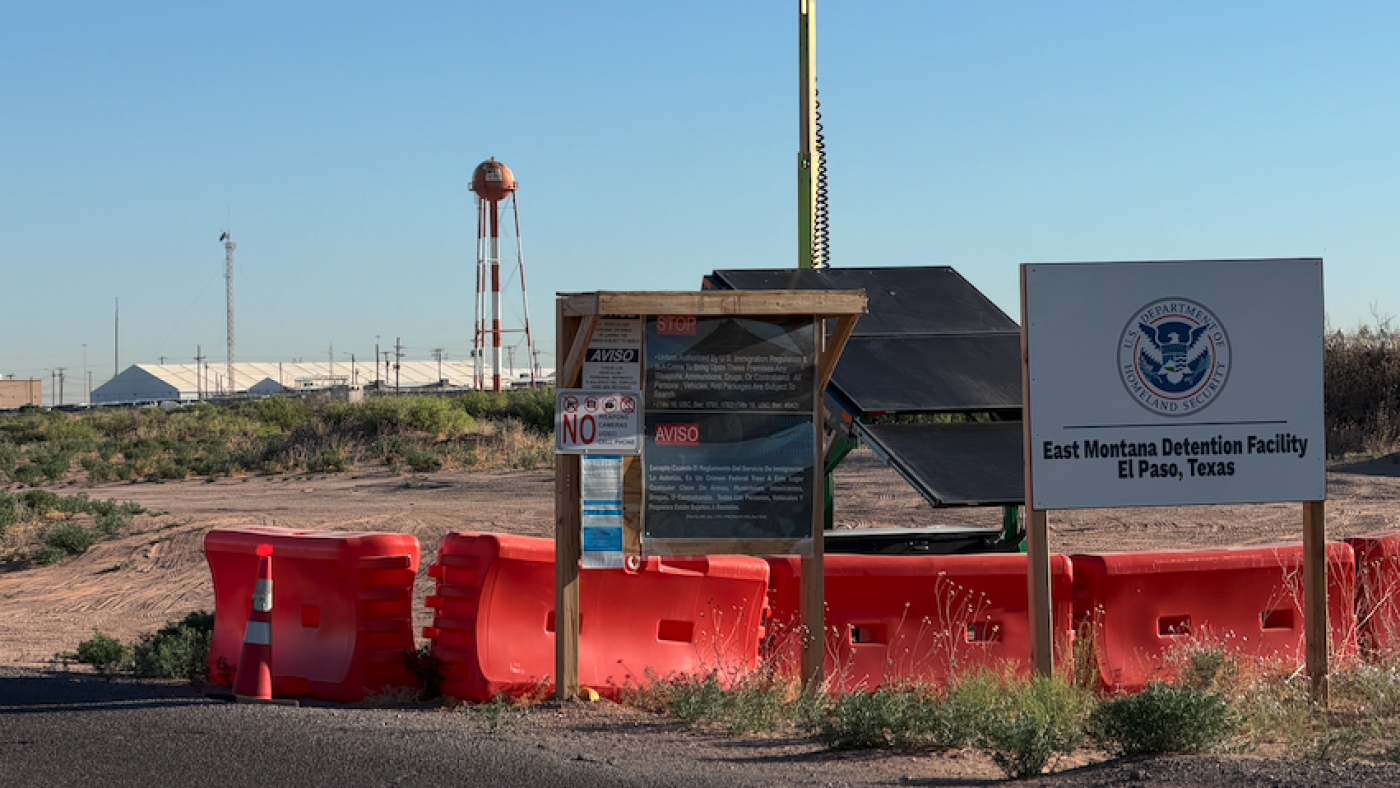
ICE detention deaths are on a record pace. One Texas facility bears the brunt

GOP rails against ‘s— sandwich’ deal as all eyes turn to House to end DHS shutdown
-

 South-Carolina5 days ago
South Carolina vs TCU predictions for Elite Eight game in March Madness
-

 Culture1 week ago
Wil Wheaton Discusses ‘Stand By Me’ and Narrating ‘The Body’ Audiobook
-

 Miami, FL1 week ago
Jannik Sinner’s Girlfriend Laila Hasanovic Stuns in Ab-Revealing Post Amid Miami Open
-

 Culture1 week ago
What Happens When We Die? This Wallace Stevens Poem Has Thoughts.
-

 Minneapolis, MN1 week ago
Boy who shielded classmate during school shooting receives Medal of Honor
-

 Vermont5 days ago
Skier dies after fall at Sugarbush Resort
-

 Education1 week ago
Video: Transgender Athletes Barred From Women’s Olympic Events
-

 Politics5 days ago
Trump’s Ballroom Design Has Barely Been Scrutinized