Midwest
Nebraska lawmaker proposes 'stand your ground' gun law


- Nebraska is considering a “stand your ground” law, making it one of the last Republican-led states to do so.
- State Sen. Brian Hardin introduced the bill to prevent prosecution of residents using deadly force in self-defense.
- Currently, Nebraska law mandates retreating from threats before resorting to deadly force, except in one’s home or workplace.
Nebraska would become one of the last Republican-led states to enact a so-called “stand your ground” law under a bill presented to a legislative committee on Thursday.
State Sen. Brian Hardin, of Scottsbluff, said he brought the bill at the urging of his constituents and to keep residents who use deadly force while defending themselves from facing prosecution.
“This bill would ensure that we’re not revictimizing a person who’s already been a victim of a crime,” Hardin said. “It should be difficult to put someone in jail who was protecting himself.”
12-WEEK ABORTION LAW TAKES EFFECT IN NEBRASKA AS STATE PREPARES CRACKDOWN ON TRANSGENDER SURGERIES FOR MINORS
Nebraska is among a handful of states where the law says a person has a duty to retreat from threat if they can do so safely before using deadly force, with the exception of a person’s home or workplace. Thirty-eight states — including all six of Nebraska’s neighboring states — have stand your ground laws.
State senators gather for debate on the Legislative floor of the Nebraska State Capitol in Lincoln, Nebraska, on May 4, 2023. Nebraska would become one of the last Republican-led states to enact a so-called “stand your ground” law under a bill presented to a legislative committee on Thursday. (Rebecca S. Gratz for The Washington Post via Getty Images)
The concept came under national scrutiny in the 2012 fatal shooting of a Black teenager from Florida, Trayvon Martin, by a neighborhood watch volunteer who was following him. The volunteer, George Zimmerman, was later acquitted after a trial in which his attorneys essentially used the law as a defense.
Critics have labeled the measure as a “shoot first” law and argue it makes it easier for a person to shoot someone and avoid prosecution by saying they felt threatened. Some prosecutors have complained that the laws have increasingly placed the burden on them to prove self-defense did not occur by defendants making a stand your ground defense.
The top prosecutor for Nebraska’s most populous county, Douglas County Attorney Don Kleine, was the first of several people who testified against Hardin’s bill Thursday, saying that the state’s current law already allows latitude for those who are threatened with imminent harm.
“Obviously, if someone points a gun at you, you don’t even have to think about that,” he said. “Of course you can defend yourself. I think this law change is unnecessary.”
NEBRASKA GOP LAWMAKERS PROPOSE BILLS INTERTWINING RELIGION WITH PUBLIC EDUCATION
While several people and groups, including the Nebraska Firearms Owners Association and Women for Gun Rights, testified in favor of the bill, others opposed it, citing several high-profile cases across the nation in the last decade that have called stand your ground laws into question. They included the 2020 fatal shooting of 25-year-old Ahmaud Arbery in Georgia and the shooting last year in Kansas City, Missouri, that injured 17-year-old Ralph Yarl.
The two Black males were doing everyday tasks — Arbery was jogging and Yarl was knocking on the door of a home where he thought his brother was visiting — when they were shot by white men who later claimed they did so because they felt threatened.
The Nebraska bill comes at a time when GOP-led state legislatures across the country are embracing bills expanding gun rights. Last year, Nebraska lawmakers passed a bill allowing residents to carry concealed guns without a permit. Under the so-called “constitutional carry” law, people can carry guns hidden in their clothing or vehicle without having to pay for a government permit or take a gun safety course.
Read the full article from Here

Minneapolis, MN
With Minneapolis medical center’s survival threatened, staff and leaders call for state action

As a dire financial outlook has pushed Minneapolis’ Hennepin County Medical Center (HCMC) to the brink of closure, health care workers and union leaders are calling for legislative action, which could be introduced at the state Capitol as soon as Tuesday.
HCMC, part of the larger Hennepin Healthcare provider system, is Minnesota’s busiest Level 1 adult and pediatric trauma center. It is also a safety-net hospital, meaning it accepts patients regardless of their insurance status or ability to pay, and has been a training site for more than half of Minnesota’s practicing physicians. In 2025, the hospital saw nearly 115,000 patients, including more than 94,000 emergency department visits.
“HCMC is not just a Minneapolis hospital. It’s Minnesota’s safety net. It is Minnesota’s last line of care,” said Jeremy Olson-Ehlert, a registered nurse at HCMC and second vice president of the Minnesota Nurses Association (MNA), at an April 1 press conference at the Capitol.
The hospital is also in financial straits, facing up to $50 million in operating losses in 2026 and staring down $1.7 billion in losses over the next 10 years, according to projections shared in March with the Hennepin County Board’s budget committee. Right now, the hospital can’t even make its $33 million biweekly payroll and must rely on the county to cover the overdraft, Hennepin County Commissioner Jeffrey Lunde told MinnPost. Lunde chairs the Hennepin Health Board.
The hospital’s financial hardships can be attributed to multiple factors over many years, including the shutdown of Minnesota-based health insurer UCare, which owes HCMC $115 million, and the running cost to treat uninsured or publicly insured patients, who make up the hospital’s majority.
Massive changes to Medicaid eligibility under the One Big Beautiful Bill Act, set to go into effect in 2027, are expected to exacerbate HCMC’s challenges. About 140,000 Minnesotans are at risk of losing their health coverage in the coming decade, according to an analysis by the Minnesota Department of Human Services.
Lunde said that without action from lawmakers by the May 18 end to the legislative session, HCMC would begin closing in June.
No other place to go
The impact would be catastrophic and felt throughout the state, several speakers said at the April 1 press conference.
“Patients will wait significantly longer in emergency departments, and hospitals across Minnesota will lose a partner that they rely on,” Olson-Ehlert said. “There is no backup plan, there is no extra capacity, and there is no other place for these patients to go.”
Lunde echoed those concerns, saying HCMC’s closure would overwhelm places like Regions Hospital in St. Paul and North Memorial in Robbinsdale, the only other Level 1 trauma centers in the Twin Cities. He also warned that wait times for the ER could skyrocket from one to two hours to up to 10.
Some cost-saving measures are already underway. In February, HCMC cut its beds by 100, to 390 total. In January, the hospital stopped accepting most non-emergency transfers from outside of Hennepin County, putting a strain on rural hospitals.
“We’re not only a safety net hospital for patients, we’re also a safety net hospital for other hospitals,” Lunde said.
The current solution being eyed is to repurpose the county’s 0.15% sales tax used to pay off bonds for the Minnesota Twins stadium into a 1% tax that would generate about $340 million annually for HCMC.
Lunde said he expects a bill in support of the tax to be introduced Tuesday in the House when the Legislature reconvenes after the Easter/Passover break. It will be introduced by a member of the DFL Party, he said, with a Republican co-signer.
“We’ve met with the speaker, the senate minority leader, the senate majority leader, leadership in the House, because we’ve been very focused on we need a bipartisan bill, and we need bipartisan support,” Lunde said.
—-
This story was originally published by MinnPost and distributed through a partnership with The Associated Press.

INDIANAPOLIS (WISH) — Indianapolis police on Tuesday asked for the public’s help to find a missing 26-year-old man with autism.
Tyrese Pepper was described as being 5 feet, 8 inches tall and weighing 150 pounds. He was wearing a dark-colored jacket with a Colts logo and navy jogger pants.
He was last seen riding a navy-and-white bicycle eastbound on East 21st Street, according to the Indianapolis Metropolitan Police Department.
IMPD says Pepper is nonverbal and autistic.
If located, please call 911 immediately.

Got story updates? Submit your updates here. ›
The 74,420 fans who attended the Cleveland Indians’ home opener on April 7, 1973, witnessed a classic game that has become a lost memory for most. But for one Northeast Ohio couple, that day at Cleveland Stadium remains a cherished moment from their youth that they’ve held onto for the past 50 years.
Why it matters
The 1973 Indians home opener was a significant event in Cleveland sports history, drawing the largest crowd ever to see a baseball game in the city. While the details of the game itself have faded over time, the experience of attending that day has become a treasured memory for longtime Indians fans who were there.
The details
On April 7, 1973, the Cleveland Indians hosted the New York Yankees in their home opener at Cleveland Stadium. The game drew a record crowd of 74,420 fans, the largest attendance ever for a baseball game in Cleveland. The Indians went on to win the game 2-1 in 12 innings, capping off an exciting day for the passionate home crowd.
- The 1973 Indians home opener took place on April 7, 1973.
- The game drew a record crowd of 74,420 fans to Cleveland Stadium.
What they’re saying
“That day at the ballpark was one of the most exciting experiences of our lives. The energy of the crowd, the thrill of the game, and the memories we made together are something we’ll never forget.”
— John and Mary Smith, Lifelong Cleveland Indians Fans
The takeaway
The 1973 Indians home opener serves as a reminder of the timeless joy and community that sports can bring, even as the specific details of a game fade over time. For passionate fans like the Smiths, those cherished memories continue to hold a special place in their hearts decades later.

With Minneapolis medical center’s survival threatened, staff and leaders call for state action

IMPD asks for help to find missing 26-year-old man

Below freezing temperatures to return Wednesday morning, ahead of 80-degree weather this weekend

Is the World Cup in DC? Here’s where you can watch games

1973 Indians Home Opener Holds Special Memory for NE Ohio Couple – Cleveland Today

Florida High School Football Rankings: Top 25 teams – Oct. 21

How old is Bo Nix? What to know about Oregon quarterback ahead of 2024 NFL Draft

Cleary's 21 help Le Moyne down Central Connecticut State 69-64 in OT

99th annual Pony Swim held in Virginia

Indiana Members Credit Union announced as new anchor tenant at Bottleworks District

Ilhan Omar calls Trump an ‘unhinged lunatic,’ urges booting him out of office
Between Budapest and Brussels: Péter Magyar’s political tightrope
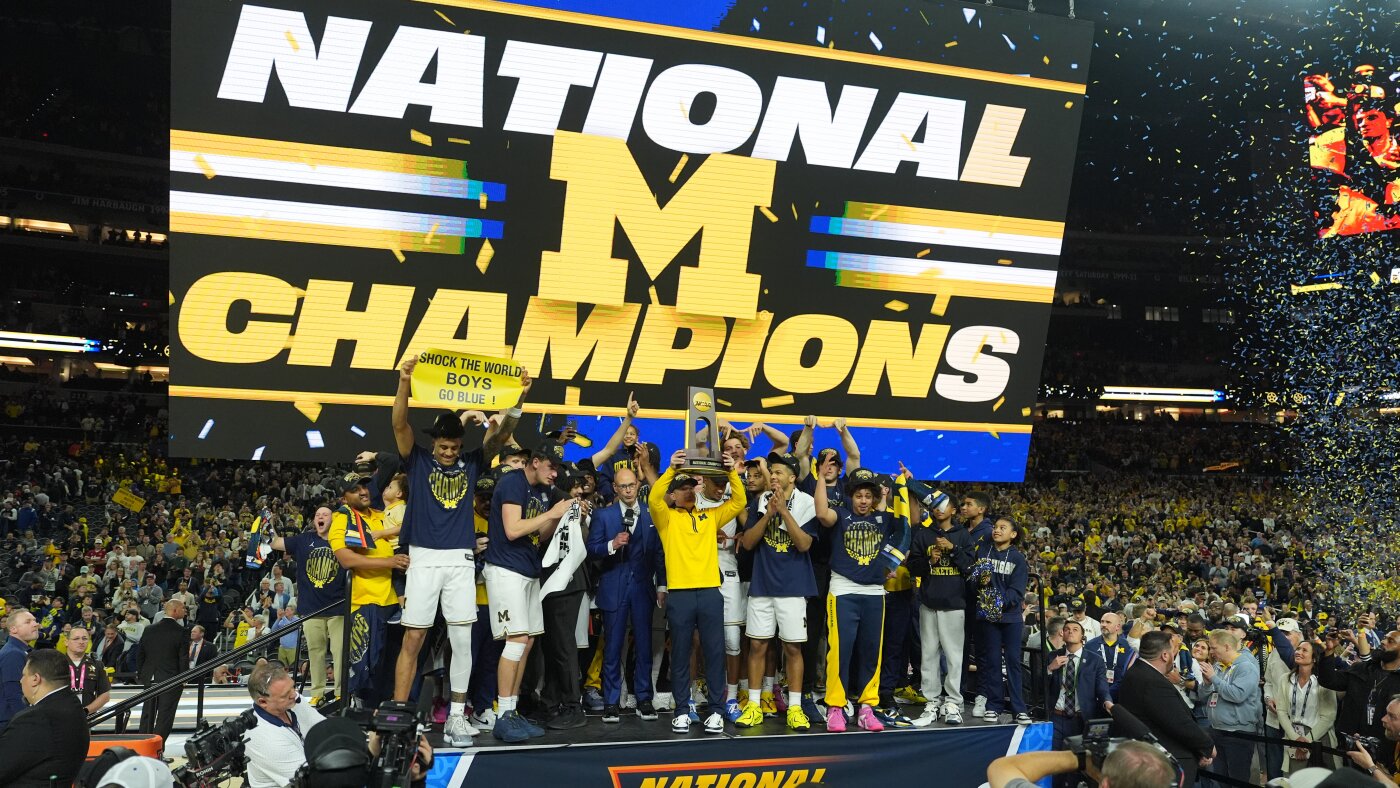
Michigan muscles its way to program’s 2nd NCAA basketball title, beating UConn

Map: Minor Earthquake Strikes Near San Diego

Trump claims he’d win as the president of Venezuela — just needs to ‘quickly’ learn Spanish
-

 Atlanta, GA3 days ago
1 teenage girl killed, another injured in shooting at Piedmont Park, police say
-

 South-Carolina1 week ago
South Carolina vs TCU predictions for Elite Eight game in March Madness
-

 Movie Reviews5 days ago
Vaazha 2 first half review: Hashir anchors a lively, chaos-filled teen tale
-

 Vermont1 week ago
Skier dies after fall at Sugarbush Resort
-

 Politics1 week ago
Trump’s Ballroom Design Has Barely Been Scrutinized
-

 Politics1 week ago
JD Vance says he was ‘obsessed’ with UFOs, believes aliens are actually ‘demons’
-

 Politics1 week ago
Jeffries declines to break with indicted Democrat after ethics panel’s guilty verdict
-
 Entertainment5 days ago
Inside Ye’s first comeback show at SoFi Stadium