Midwest
Missing Domino's pizza delivery driver's car found in Wisconsin: police

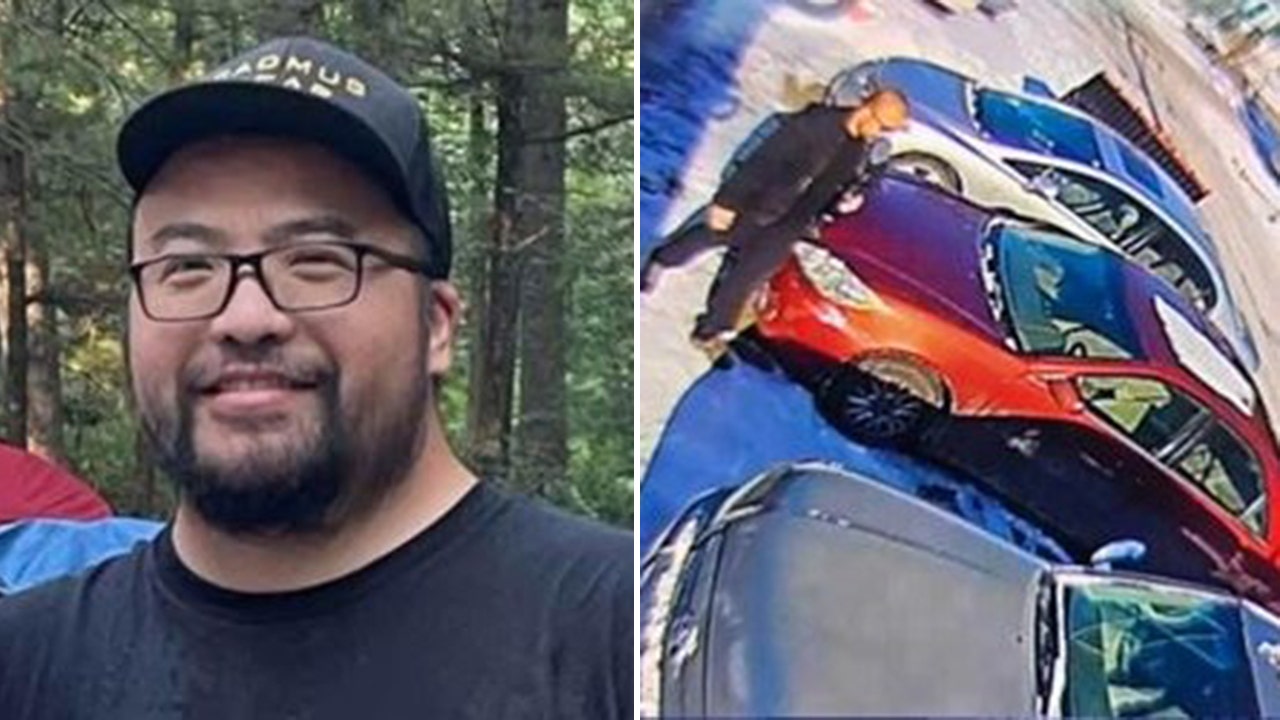
The search for a Domino’s pizza delivery driver who disappeared in Minnesota during a shift last week remains ongoing after authorities say his car was discovered over 100 miles away in Wisconsin on Sunday.
A witness told police that they saw Shuefaub Xiong, 42, in his red Toyota Camry around 4 p.m. Saturday in Superior, Wisconsin, the Apple Valley Police Department in Minnesota said Monday.
Police discovered Xiong’s Toyota Camry unoccupied on Sunday in Superior – around 170 miles north of Apple Valley, where Xiong was reported missing on Jan. 14 after he “did not return home” from work at Domino’s, police said.
A friend of Xiong’s also reported that they spoke in Roseville, Minnesota, around 8 p.m. Saturday, though police say it was unclear how Xiong traveled or if he used a different car to cross back into the state.
FAMILY OF MISSING PREGNANT WOMAN REVEALS SUSPICIONS ABOUT DISAPPEARANCE
Xiong disappeared while making pizza deliveries for Domino’s on Jan. 14, police said. (Minnesota Bureau of Criminal Apprehension)
Investigators believe Xiong may be experiencing a mental health crisis after his “uncharacteristic behavior.” Police said that while there is no indication that Xiong is a threat to others, he is known to carry a firearm and has a permit to carry.
Police said Xiong’s red Toyota Camry was recovered Sunday in Superior, Wisconsin, about 170 miles north of Apple Valley, Minnesota. (Minnesota Bureau of Criminal Apprehension)
Xiong was first reported missing after he failed to make four deliveries that were scheduled around 6 p.m. on Jan. 14. Officers conducted searches in each area where Xiong was supposed to make a delivery, though police said they did not find the missing delivery driver.
Police said the last known sighting of Xiong on Jan. 14 was at a Target in Richfield, Minnesota, though he was also believed to have been in Golden Valley at one point.
Xiong may be experiencing a mental health crisis, according to police. (Apple Valley Police Department )
Investigation into his phone location, bank records, and known social media accounts have not produced any leads on why Xiong disappeared or his current whereabouts, police said.
FIRE AT HOME OF FLORIDA MAN MISSING FOR 2 YEARS COULD OFFER INVESTIGATORS CLUES
Friends and family described Xiong in a post on a GoFundme page as “the most thoughtful, kind, and selfless person we know” and “the one who always puts others before himself.”
Family and friends said Xiong is “thoughtful, kind, and selfless,” and are working to help bring him home safely. (Minnesota Bureau of Criminal Apprehension)
“Our family is heartbroken by his disappearance, and each moment without him feels like an eternity. We are doing everything in our power to bring him home safely,” the post read.
Xiong is described as an Asian male, standing 5 feet, 8 inches tall and weighing 215 pounds, with brown hair and eyes.
CLICK TO GET THE FOX NEWS APP
Authorities asked anyone with information regarding Xiong’s location to call (952) 953-2700.
Read the full article from Here


NEWYou can now listen to Fox News articles!
Kansas has officially invalidated driver’s licenses and birth certificates for transgender residents who changed their sex designation on government documents under a law that took effect Thursday.
Roughly 1,700 individuals in Kansas will be required to obtain a new standard driver’s license at a cost of $26, according to the House Substitute for Senate Bill 244.
The state’s vehicle division informed residents that no grace period will be offered for those who need to update their IDs, according to The Kansas City Star.
“Please note that the Legislature did not include a grace period for updating credentials. That means that once the law is officially enacted, your current credentials will be invalid immediately, and you may be subject to additional penalties if you are operating a vehicle without a valid credential,” the Kansas Department of Revenue’s vehicle division said.
Trans rights activists take part in a protest April 20, 2024. (Carl Court/Getty Images)
The law also establishes clear rules for shared private spaces in government buildings, restricting their use to a single sex. This applies to facilities such as restrooms, locker rooms, changing rooms and shower rooms where individuals may be partially or fully undressed.
The bill further reinforced a strict definition of sex and gender as an “individual’s biological sex, either male or female, at birth.”
Consequently, individuals or entities who violate the space restrictions may face significant civil penalties or potential criminal charges.
KANSAS JUDGE SAYS TRANSGENDER RIGHTS NOT VIOLATED BY STATE’S REFUSAL TO CHANGE SEX ON DRIVER’S LICENSES
A drone aerial view of downtown Wichita (Joe Sohm/Visions of America/Universal Images Group via Getty Images)
Individuals are also given the right to take legal action if someone of the opposite biological sex violates their privacy in these spaces.
Democratic Gov. Laura Kelly, whose veto of the bill was ultimately overridden by the Republican-led Kansas Legislature Feb. 18, had previously called it a “poorly drafted bill with significant, far-reaching consequences.”
“It is nothing short of ridiculous that the Legislature is forcing the entire state, every city and town, every school district, every public university to spend taxpayer money on a manufactured problem,” she said. “Kansans elected them to focus on education, job creation, housing and grocery costs.”
SUPREME COURT CONSERVATIVES SIGNAL SUPPORT FOR STATE TRANSGENDER SPORTS BANS DURING ORAL ARGUMENTS
Kansas Gov. Laura Kelly previously tried to veto a bill that ultimately went into effect Feb. 26, 2026, restricting identification preferences for transgender state residents. (Rich Sugg/Kansas City Star/Tribune News Service via Getty Images)
Under the bill, entering a multiple-occupancy space designated for the opposite sex constitutes a violation. After a first warning, a second offense could result in a $1,000 civil penalty and a third or subsequent violation is treated as a class B misdemeanor.
Anyone who believes their privacy has been violated in such a setting may bring a civil lawsuit against the violator and seek $1,000 in liquidated damages, according to the bill.
CLICK HERE TO DOWNLOAD THE FOX NEWS APP
Government entities, such as state agencies or local districts, that fail to align with the new regulations are subject to steep fines. Entities face a $25,000 civil penalty for a first violation and $125,000 for each subsequent violation.
The law provides specific exceptions for entering spaces designated for the opposite sex, including custodial or maintenance work, medical or emergency aid, law enforcement duties, assisting someone who needs help or children under 9 accompanied by a caregiver.
Related Article

Read the full article from Here

There was a time when many Historical Black Colleges had swimming teams. The late Robert ‘Fish’ Jenkins benefited from that era and then he spent much of his adult life lifting up youths in Detroit.
Black heritage tours teach travelers what they missed in history class
So much of America’s Black history isn’t taught in schools, but travelers can learn about some of those experiences on the road.
Cody Godwin, USA TODAY
The celebration of Black History Month throughout February provides an opportunity to share stories about Detroiters that have positively impacted the lives of others in a variety of ways.
And included among those stories that have been shared this month is a “Fish” story that is unique, without exaggeration.
That is because this story is about the late Robert “Fish” Jenkins Sr., a longtime Detroit educator and a groundbreaking coach, whose superpower was his ability to create life-changing opportunities for young people in unconventional spaces.
In 1969, Jenkins arrived at Detroit’s Northern High School as a physical education teacher and coach. During Northern’s heyday, the high school, formerly located on Woodward Avenue at Owen in the city’s North End, produced a host of high-profile sports stars, including basketball greats Bill Buntin — a two-time All-American center at the University of Michigan during the 1960s — and Derrick Coleman — the first overall pick in the 1990 NBA draft. And record-breaking sprinter Marshall Dill, Track & Field News’ High School Athlete of the Year in 1971, who set world records in the 300-yard dash while running for Michigan State University.
However, Jenkins specialized in coaching sports that were a little less popular among young people in Detroit, particularly Black students. Jenkins coached teams at Northern — and for one year at East English Village Preparatory Academy after he retired from teaching in 2001 — to 24 Detroit Public School League championships in swimming, golf and soccer.
“No matter what the sport was, he had the formula to make a team a champion,” Robert Jenkins Jr. said about his father, who died on Jan. 14 at the age 86.
“But more than that, my father had a profound impact on the minds of every student he touched. He brought golf, and all the lessons golf teaches, to the North End. And, in the summer, he had members of the swim team teach the younger kids in the neighborhood how to swim, which taught his swim team members how to give back to the community.”
During the evening of Feb. 22, Robert Jenkins Jr. took pride in sharing stories about young people who were coached and mentored by his father across multiple decades that went on to become “doctors, educators, business leaders, and parents” that have made positive contributions to the city of Detroit.
Robert Jenkins Jr. also described some of the friendly interactions that his dad had with notable people like U.S. Olympic sprint champion Wilma Rudolph and Naismith Memorial Basketball Hall of Famer Dick Barnett at Tennessee State University, where the elder Jenkins received the education and training that he needed to teach and coach student-athletes in Detroit.
But earlier that day, an equally compelling “Fish” story was told by another community member.
“Mr. Jenkins was a very important person in my life and he is one of the reasons why I have always tried to do my part when it comes to providing opportunities for young people in our city,” said Gary Peterson, who has coached young swimmers in Detroit for 47 years, including at Detroit’s King High School, where he coaches boys and girls swimmers today.
Long before Peterson coached high school swimmers — and youth swimmers of virtually all ages when he was a full-time swimming instructor for the city of Detroit’s Recreation Department — Peterson was on the swim team at King High School (Class of 1974), when Robert Jenkins Sr. came into his life.
“There were coaches at other schools that helped young swimmers that wanted to improve and go to another level, and Mr. Jenkins was one of those coaches,” said Peterson, who was coached at King High School by Clyde James, a lifelong friend and teammate of Jenkins on the Tennessee State University swimming team during the late 1950s and early 1960s, when they brought national attention to the school’s swimming program.
“Mr. Jenkins would make his pool at Northern available to students from other schools that wanted to get in extra practice. Then, as I got closer to going to college, Mr. Jenkins was the person who introduced me to the colleges that were recruiting Black high school swimmers.
“At that time, there were more than 20 HBCUs (Historically Black Colleges and Universities) that had competitive swimming programs. Today, there is only one (Howard University in Washington, DC). But back then, Mr. Jenkins wanted to make sure we had the opportunities and exposure, which included sending a small group of us to South Carolina State for a recruiting trip.
“Afterwards, Mr. Jenkins even came over to King from Northern to present me with my scholarship to South Carolina State, while I was sitting in a King classroom. I couldn’t believe it and I was ecstatic, but everything that he did for me and other young swimmers in the city he did so willingly. And that’s what I always thought I was supposed to do as a coach.”
Peterson said he would do even more with Jenkins when Peterson returned to Detroit from Orangeburg, South Carolina, after graduating from college.
“In the late 1980s, a team I was coaching at Johnson Recreation Center and Mr. Jenkins’ team at Northern, traveled to Washington DC as one team in February to compete in the Black History Invitational Swim Meet. And that tradition of Detroit competing as one team at that meet continued every year until COVID,” said Peterson, who also recalled that Jenkins coached softball and even junior varsity football for a time, in addition to swimming, golf and soccer.
“Just as Mr. Jenkins thought it was critical for us to come together and take our kids to DC for that swim meet because it was the biggest showcase for Black swimmers, he wanted all the young people he coached to have good training and exposure. And in my case, as the son of sharecroppers, I can say that Mr. Jenkins inspired me as well, as a swimmer and a coach.”
Every time Peterson walks into King High to coach the current group of swimmers at the school, he said he is reminded of Jenkins and other important people that paved the way for Black swimmers in Detroit.
For example, in 2023, the natatorium at King was rededicated as the Clyde James Natatorium by the Detroit Public Schools Community District. Peterson says the renaming was not only a salute to James, who was a finalist in the National Association of Intercollegiate Athletics Championships in the 100-yard butterfly during the 1960-61 season while swimming for Tennessee State, but also a tribute to the fabled swimming program that was once housed at the Brewster Recreation Center, which helped to develop James, Jenkins and many other Detroit swimmers that competed nationally. Brewster’s early swimming program was led by the legendary Clarence Gatliff, an all-city swimmer at Cass Tech during the 1920s.
Another pleasant reminder of the history and evolution of Black swimmers in Detroit that Peterson sees when inside King High is 54-year-old Robert Jenkins Jr., an educator like his father, who is teaching personal finance this school year at King and hopes to honor his father’s legacy this summer by offering a swimming and golf program to students.
“I want to make sure that Detroiters understand my father’s legacy,” said Jenkins, a 1989 graduate of Northern High School, who explained that his father and mother (Norma Jean Jenkins) taught him and his sister (Dr. Marlo Rencher) that “we don’t half do anything.”
And that includes community service.
“My father was a servant leader and he would offer encouragement to any young person he was around, not just the students he coached. And paying it (that support) forward was a lesson he always taught in the process.”
Scott Talley is a native Detroiter, a proud product of Detroit Public Schools and a lifelong lover of Detroit culture in its diverse forms. In his second tour with the Free Press, which he grew up reading as a child, he is excited and humbled to cover the city’s neighborhoods and the many interesting people who define its various communities. Contact him at stalley@freepress.com or follow him on Twitter @STalleyfreep. Read more of Scott’s stories at www.freep.com/mosaic/detroit-is/. Please help us grow great community-focused journalism by becoming a subscriber.

A Milwaukee County judge on Thursday, Feb. 26, criticized the smell of marijuana inside the courthouse during a sentencing hearing, calling it inappropriate and illegal as visitors described the odor as common.

Movie Review: ‘Goat’ – Catholic Review

Video: Pakistan Launches Airstrikes on Afghanistan

Video: The Web of Companies Owned by Elon Musk
Baz Luhrmann will make you fall in love with Elvis Presley

Here’s your first look at Kratos in Amazon’s God of War show

Florida High School Football Rankings: Top 25 teams – Oct. 21

Cleary's 21 help Le Moyne down Central Connecticut State 69-64 in OT

How old is Bo Nix? What to know about Oregon quarterback ahead of 2024 NFL Draft

99th annual Pony Swim held in Virginia

Indiana Members Credit Union announced as new anchor tenant at Bottleworks District

Where Iran’s ballistic missiles can reach — and how close they are to the US

Has India’s influence in Afghanistan grown under the Taliban?

Bill Clinton to testify before House committee investigating Epstein links

Read Judge Schiltz’s Order

Vulnerable House Dem lashes out at Trump’s ‘racist’ SOTU challenge: ‘That was uncomfortable’
-

 World2 days ago
Exclusive: DeepSeek withholds latest AI model from US chipmakers including Nvidia, sources say
-

 Massachusetts2 days ago
Mother and daughter injured in Taunton house explosion
-

 Montana1 week ago
2026 MHSA Montana Wrestling State Championship Brackets And Results – FloWrestling
-

 Oklahoma1 week ago
Wildfires rage in Oklahoma as thousands urged to evacuate a small city
-

 Louisiana4 days ago
Wildfire near Gum Swamp Road in Livingston Parish now under control; more than 200 acres burned
-

 Technology6 days ago
YouTube TV billing scam emails are hitting inboxes
-

 Denver, CO2 days ago
10 acres charred, 5 injured in Thornton grass fire, evacuation orders lifted
-

 Technology6 days ago
Stellantis is in a crisis of its own making