Minnesota
FAFSA completion rates still down in Minnesota, though things are improving


Despite progress in recent months, FAFSA completion rates among high school seniors in Minnesota are still lower than in previous years.
The FAFSA, or the Free Application for Federal Student Aid, is how students qualify for federal and state grants, as well as many school scholarships and other types of financial support to cover the cost of attending an institution of higher education.
For the upcoming 2024-2025 school year, the U.S. Department of Education implemented changes intended to make the FAFSA process simpler, but the application’s release was delayed and the form plagued with technical glitches.
Data shows 2,478 fewer high school seniors in Minnesota have completed the FAFSA this cycle compared to last, as of tracking updated through July 5, reflecting a 6.8 percent decrease.
Gifts from individuals keep MPR News accessible to all – free of paywalls and barriers.
“The technology in the new form was not ready, so students ran into a lot of issues and technical challenges … that delayed the process really significantly, of students just simply not being able to complete it,” said Isaiah Allen, spokesperson for College Possible Minnesota, a nonprofit offering college readiness programs for low-income students.
Minnesota fares better than most of the country — it’s in the top three states where FAFSA completion has dropped the least. Allen points out that completion rates have also improved in Minnesota in the last two months, which is not the case in many states.
Still, there is concern that the challenges of accessing financial aid will prevent students from attending college in fall. The National College Attainment Network reports FAFSA completion was correlated with an 84 percent increase in college enrollment in one study.
Amanda Justen is program strategy manager for Achieve Twin Cities. She said some students who couldn’t complete the FAFSA in time for their high-school graduation ended up not committing to a college.
“And then, once they graduate and go off, I think some students in that situation just decided to maybe take a year off and work or weren’t able to make a decision on their college,” she said.
Justen said many of the technical issues with the FAFSA have been resolved, so it’s a matter of getting people help now.
In May, state officials announced grants to both College Possible and Achieve Twin Cities to help Minnesotans get one-on-one help with the FAFSA. The nonprofits are offering individualized support through appointments and at events this summer.
Justen reminds students they can still receive aid. The FAFSA deadline for the 2024-2025 academic year isn’t until the end of it: June 30, 2025.
“Our main message right now is definitely if students applied and were accepted to college, and that’s still their goal, there’s still time to do the FAFSA,” said Justen.
How to get help with FAFSA
College Possible is offering free individualized support for all Minnesotans to complete the FAFSA or the MN Dream Act, which is the FAFSA equivalent for undocumented students, virtually through their website.
It also has three upcoming events at the Mall of America at the Capital One Café from 4 p.m. to 8 p.m. on several upcoming Thursdays: July 18, Aug. 8 and Aug. 22.
Allen said people seeking help should bring their social security numbers, tax ID and FAFSA IDs, if they have them. He said applications have taken between 15 minutes to 2.5 hours, usually with students who have families of mixed immigration status.
St. Paul and Minneapolis Public Schools students can get in-person help by scheduling an appointment with Achieve Twin Cities or visiting a drop-in event at a local library.
Both organizations will also provide FAFSA help at the Minnesota State Fair, helping to staff the Office of Higher Education’s booth in the Education building.





The Wild were taken down by the Utah Mammoth 5-2 on Friday night to end Minnesota’s winning streak at six games.
Lawson Crouse scored twice and U.S. Olympian Clayton Keller had a goal and two assists for Utah.
Logan Cooley and Barrett Hayton also scored and Karel Vejmelka made 21 saves to help the Mammoth rebound from a 4-2 home loss to NHL-leading Colorado on Wednesday night in their return from the Olympic break. Utah began the night in the first wild-card spot in the Western Conference.
U.S. Olympian Matt Boldy scored and assisted on Kirill Kaprizov’s goal for Minnesota. Second behind Central Division-rival Colorado in the West, the Wild are 9-2-1 in their last 12. They beat the Avalanche 5-2 on Thursday night in Denver.
Cooley opened the scoring with a short-handed goal with 6:37 left in the first period. The former University of Minnesota star got the puck on the right side off a deflection and put a shot between Wallstedt’s legs for his 15th goal.
Keller scored his 18th at 4:26 of the second. Nick Schmaltz forced a turnover on a forecheck and fed Keller on the right side.
Crouse made it 3-0 at 7:49 of the second. He came down the middle, took a pass from Keller and beat Wallstedt with a backhander.
Kaprizov countered for Minnesota on a power play with 5:57 left in the second. He has 33 goals this season.
Hayton made it 4-1 on a power play at 1:19 of the third, and Crouse added his 16th of the season on a tip with 7:12 to go.
Boldy got his 35th of the season with 5:57 remaining.
Up next
Wild: Host St. Louis on Sunday.
Mammoth: Host Chicago on Sunday.
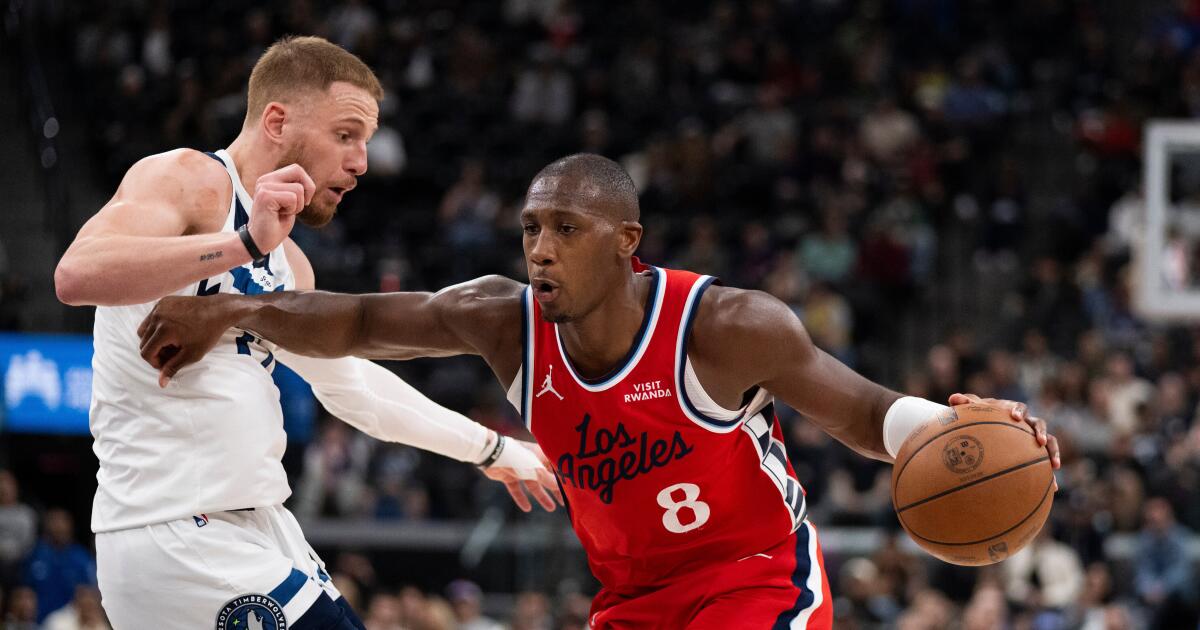
Anthony Edwards scored 31 points, Donte DiVincenzo added 18 and the surging Minnesota Timberwolves beat the Clippers 94-88 on Thursday night.
Jaden McDaniels and Ayo Dosunmu each scored 12 points and Rudy Gobert had 13 rebounds to help the Timberwolves improve to 5-1 since Feb. 9 and 3-1 since the All-Star break.
Edwards, returning to the site of the All-Star Game, where he was the MVP, was 12 for 24 from the floor and sealed the victory with a step-back three-pointer over two defenders for a 92-88 lead with 42.9 seconds left.
Minnesota improved to 2-0 on a three-game trip.
Derrick Jones Jr. scored 18 points and Bennedict Mathurin added 14 for the Clippers, who struggled from the outset with a season-low 38 points in the first half. Kris Dunn had 11 points for the Clippers (27-31), who have lost three consecutive games for the first time since December.
The Clippers struggled on offense without star Kawhi Leonard, out because of ankle soreness. The Clippers shot 40.5% from the floor, including 18.2% (four for 22) in the second quarter. Minnesota shot 43.4% in the game.
The Timberwolves (37-23) scored just 15 points in the second quarter and still topped the Clippers, who had 11. Minnesota led 44-38 at halftime behind 12 points from DiVincenzo and 11 from Edwards.
The Clippers led by six in the third quarter and were up 68-63 heading into the fourth. Edwards’ drive and reverse layup put the Timberwolves up for good at 76-74 with 7:40 remaining.
The Clippers pulled within one three times in the last 2½ minutes, but Edwards answered each time. He scored the Timberwolves’ last nine points.
Up next for Clippers: vs. New Orleans on Sunday night.

A St. Paul church member has filed a federal lawsuit alleging that a group of individuals, including journalist Don Lemon and activist Nekima Levy Armstrong, unlawfully disrupted service last month as part of a coordinated political demonstration.
The complaint, filed by Ann Doucette in the U.S. District Court of Minnesota, alleges that a Jan. 18 demonstration at Cities Church interfered with her ability to worship and caused her to suffer damages, including emotional distress and trauma.
In addition to the former CNN anchor and Armstrong, the complaint names journalist Georgia Fort and activists Will Kelly, Jerome Richardson, Trahern Crews and Jamael Lundy. It also names St. Paul school board member Chauntyll Allen.
Doucette and seven of the defendants did not immediately respond to requests for comment. Doucette filed the complaint without the representation of an attorney. In an emailed statement to NBC News, Crews denied the lawsuit’s allegations “with empathy and compassion.”
The lawsuit accuses the group of civil conspiracy, aiding and abetting, intentional infliction of emotional distress, interference with religious exercise and trespassing.
“As a result of Defendants’ actions, the worship service was disrupted, congregants experienced fear and distress, and Plaintiff’s ability to freely exercise her religion in a private place of worship was unlawfully interfered with,” the lawsuit states.
All eight defendants are also facing federal charges for conspiracy against the rights of religious freedom at a place of worship and for interfering with the exercise of the right of religious freedom. Lemon has pleaded not guilty to all charges, saying outside the court, “I wanted to say this isn’t just about me, this is about all journalists, especially in the United States.”
Fort, Crews and Lundy were released on bond and entered not guilty pleas, according to The Associated Press.
This is the latest legal action tied to protests in the Twin Cities, where tensions remain over the Trump administration’s immigration crackdown and the fatal shootings of Renee Good and Alex Pretti.
According to the lawsuit, the demonstrators engaged in “coordinated conduct” by organizing meetings ahead of the “Operation Pullup” protest and promoting it on social media.
The lawsuit alleges that on the morning of Jan. 18, a coordinated group of individuals entered Cities Church, halting the worship service, and chanting “‘ICE Out!’ and ‘Hands Up, Don’t Shoot!’” while obstructing aisles. Protesters could allegedly be seen “confronting the pastor and congregants in a menacing manner,” the lawsuit says, noting that their chanting and “aggressive gestures” caused “severe emotional distress, fear, anxiety, and trauma” and caused children “terror.”
Demonstrators gathered at the church because they said its pastor, David Easterwood, was the acting director of an ICE field office in the city, the lawsuit says.
Lemon was arrested in January in California and accused of violating federal civil rights law after covering the protest on Jan. 18. He was released on a personal recognizance bond before a federal grand jury in Minnesota returned the indictment against Lemon and eight co-defendants, all of whom are also named in Doucette’s lawsuit.

In the lawsuit, Doucette alleges that Lemon specifically livestreamed the protest, “noting congregants’ fear and distress, and appeared to take satisfaction in the disruption.”
Levy Armstrong, a Minneapolis-based civil rights attorney and activist, was also arrested for her participation in the St. Paul protest. Her arrest drew national attention after the White House shared on social media doctored photos where she appeared to be crying.

Prep talk: Councilmember looking into helping fix fire damage at Encino Franklin Fields

Israel strikes two schools in Iran, killing more than 50 people

Anthropic CEO says he’s sticking to AI “red lines” despite clash with Pentagon

FBI raid involving LA schools superintendent possibly tied to failed $6M AI deal, potential conflict

‘Family Mob’ gang members, associates charged in major Minneapolis fentanyl trafficking case: DOJ

Florida High School Football Rankings: Top 25 teams – Oct. 21

Cleary's 21 help Le Moyne down Central Connecticut State 69-64 in OT

How old is Bo Nix? What to know about Oregon quarterback ahead of 2024 NFL Draft

99th annual Pony Swim held in Virginia

Indiana Members Credit Union announced as new anchor tenant at Bottleworks District
Israel strikes two schools in Iran, killing more than 50 people
Anthropic CEO says he’s sticking to AI “red lines” despite clash with Pentagon

ICE blasts Washington mayor over directive restricting immigration enforcement

Did the EU bypass Hungary’s veto on Ukraine’s €90 billion loan?
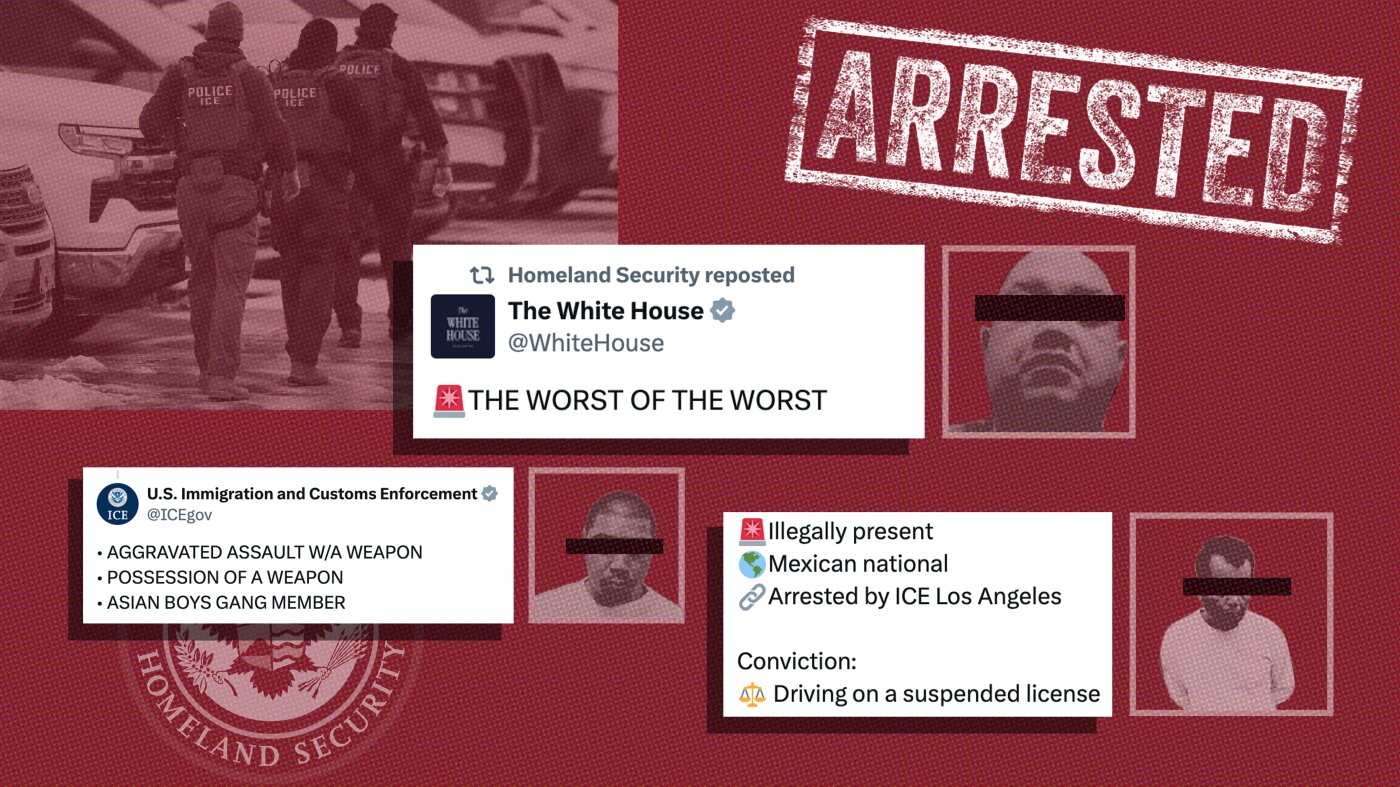
How the federal government is painting immigrants as criminals on social media
-

 World2 days ago
Exclusive: DeepSeek withholds latest AI model from US chipmakers including Nvidia, sources say
-

 Massachusetts3 days ago
Mother and daughter injured in Taunton house explosion
-

 Montana1 week ago
2026 MHSA Montana Wrestling State Championship Brackets And Results – FloWrestling
-

 Louisiana5 days ago
Wildfire near Gum Swamp Road in Livingston Parish now under control; more than 200 acres burned
-

 Denver, CO3 days ago
10 acres charred, 5 injured in Thornton grass fire, evacuation orders lifted
-

 Technology1 week ago
YouTube TV billing scam emails are hitting inboxes
-

 Technology1 week ago
Stellantis is in a crisis of its own making
-

 Politics1 week ago
OpenAI didn’t contact police despite employees flagging mass shooter’s concerning chatbot interactions: REPORT