Minneapolis, MN
Portion of Plymouth Avenue to be renamed to


MINNEAPOLIS — Spike Moss spent decades fighting for his community, much of that time along Plymouth Avenue.
The stretch between Newton and Lyndale avenues will soon be named “Spike Moss Way,” an honor usually only given posthumously.
“Most people have no clue what he has given, what he has given to Minneapolis, North Minneapolis, St. Paul, the Twin Cities, and actually to America,” said Tyrone Terrell, president of the African American Leadership Council.
Terrell has worked alongside Spike Moss for more than 40 years, and through those years, has witnessed Moss’ resilience and unwavering commitment.

“Brother Spike always gets results and he is willing to put himself on the line,” said Terrell.
Terrell calls Moss his big brother and smiles when he talks about this community champion.
“Whether it was bus jobs or police or fire or General Mills — you name it — he has been at that table,” he said.
Moss committed his life to fighting injustice in 1966. He was instrumental in diversifying Metro Transit. He pushed an initiative forcing them to hire Black bus drivers at a time that wasn’t allowed.
At a time when fire departments questioned the intelligence and physical prowess of Black people, Moss successfully advocated for desegregation, allowing African Americans to work as firefighters. He battled police brutality and advocated for the recruitment of Black officers.
Terrell says history books will never show the impact Moss has made on the culture, like his role as the youngest director of The Way Opportunities Unlimited, a nonprofit community center.
“All the things and programming that benefitted the community, Prince, everybody learned to play the guitar in the basement of the Way with famous brother Sony Thompson. The Way was where you played your sports, where you got academic help, and the name was so perfect. The Way, showing young Black kids the way, the way to success. And it was led by him,” said Terrell.
Shane Price met Moss when he was a 12-year-old student at Lincoln Junior High School.

“The Way was pivotal in kind of directing that traffic, directing the traffic of the young Negroes who had become African Americans, directing the traffic of individuals and organizations who wanted to be helpful but didn’t know how to plug in and The Way was that nucleus for both,” explained Price, the Director of Power of People Personal Development Leadership Institute.
Moss’s impact on his life led Price to a career working with young people, and spending time in Minnesota prisons, helping educate and rehabilitate.
“I believe that consistency is the only thing that grants true authentic authority. Spike has been absolutely positively consistent in his advocacy for a better way of life for the African American people,” said Price.
It’s a fight this octogenarian is still fighting to this day, and now it’ll be more visible for community members to see.
“A street that he put so much of his life into now will hold his name,” said Terrell.
The dedication is at 11 a.m. Tuesday at Plymouth and Newton avenues. It’ll be a community gathering at the University of Minnesota’s Urban Research and Outreach Engagement Center, featuring speeches from famous musicians and athletes Moss mentored.




On a freezing February evening last year, around a dozen people gathered on an interstate overpass in Minneapolis and hoisted a sign in view of oncoming traffic.
The sign — letters screwed to long, thin pieces of lumber — read: “STOP THE COUP.”
A week later, the group gathered again, though they had doubled in number. The week after that, they doubled again.
Over a year later, around 40 neighbors and up to 100 on busy nights now squeeze onto the overpass Thursday evenings with a new message for the rush-hour traffic.
They call themselves Democracy Bridge Minneapolis, and have protested almost every week since President Donald Trump’s second inauguration.
And in the lead-up to the third nationwide No Kings protests tomorrow, Democracy Bridge catalyzed a wave of demonstrations like their own spanning the 1,568-mile length of Interstate 35.
From Duluth, Minn., to San Antonio, 47 different bridge protests cut through the midline of the country Thursday with the same message: “YES DEMOCRACY NO KINGS.”
Grassroots organizations 50501 Kansas City, Indivisible Twin Cities and The Visibility Brigade also took the lead on mobilizing this week.
Organizers said they hope their efforts inspired onlookers to participate in what’s projected to be the largest turnout for a single-day protest in United States history.
“We have to help us and we have to start by letting our neighbors know what the hell is going on and why they should care,” Sarah Linnes-Robinson, a founding member of the group, said.
While millions of Americans will take to the streets in cities across the country, as many as 100,000 people could attend the No Kings Day flagship rally in Minnesota’s capital, St. Paul.
The flagship rally will feature progressive leaders Gov. Tim Walz and U.S. Sen Bernie Sanders, as well as legend Bruce Springsteen, who will headline with his “Streets of Minneapolis.”
“ICE OUT OF MN:” The Twin Cities fight back
Past the stardom, the rallies across the Twin Cities may provide catharsis for residents whose lives over the past several months have been upended by Trump’s winter immigration enforcement operation.
Dubbed “Operation Metro Surge,” Trump’s massive deployment of immigration officials in Minnesota resulted in mass unlawful detentions, repeated violent assaults against peaceful protesters, and ultimately, the killings of two U.S. citizens, who were both shot by federal officers.
Democracy Bridge protesters channeled their outrage over Renee Good’s and Alex Pretti’s killings through their weekly messages.
“DEFUND ICE” and “ICE OUT OF MN” lit up the bridge on Jan. 29, 2026.
Similarly, “HANDS OFF ELECTIONS” appeared following Trump’s threat to “take over voting” this February, as well as signs protesting the escalation of the Iran war.
Other messages, all of which can be viewed on the organization’s website archive, urged for the release of the Epstein files, opposed a war with Venezuela and admonished Trump’s proposed 2027 budget for its potential impact on Minnesotans’ healthcare.
Most messages are succinct and sometimes abbreviated so while organizers said they would like it, words like “authoritarianism” don’t make the cut.
Some have backgrounds in community organizing, while other bridge-goers are architects and retired researchers. Some come straight from pickleball practice and others from church.
“All are welcome so you can have a Ukrainian flag, you can have a Palestinian flag, a right side up flag, an upside down flag I mean come as you are,” Rosemary Dolata, a Minneapolis resident and bridge protest organizer, said.
Mary Jane Levine has lived in Minneapolis since 2000 and works in a garden store. But before that, she was a federal law enforcement officer. It’s what brought her to the bridge.
“I’m horrified by what was done to the civil service and even more horrified to see what my former federal law enforcement officers are doing to our citizens,” Levine said.
Do protests work? What the data and the locals say
With thousands of other local protests planned across the U.S, this follows a trend of increasing decentralization within civic action.
That’s according to data from American University researcher Dana Fisher, who has been conducting surveys of widespread protests since the Women’s March in 2017.
Fisher’s data shows that nationwide protests in recent years have been largely composed of white, highly educated, and primarily older women. While multiple factors are at play, Fisher noted that a lack of diversity is not always reflective of a lack of interest.
As pointed out by organizers as well, many people of color don’t feel safe showing up to a large crowd and making their presence known amid Trump’s deployment of federal agents. And for young people, some are just burned out.
“They’ve had a really hard go of being adults,” Fisher said. “And the country has been in precarious moments of democracy basically consistently.”
In addition to her vast demographic research, Fisher said she’s worried about the national focus on high turnout without a solid plan for what’s next after No Kings Day.
While excited about the potential record turnout this weekend, bridge regulars underscored how their smaller efforts have engendered meaningful local impact in Minneapolis.
Everyone who protests has their first one, and Linnes-Robinson said the project has been a way to meet the moment in a time when many in Minneapolis “are just ready to say yes.”
Fisher added that despite her doubts or larger organizational aims, these local actions remain important for “collective mourning” and fostering “collective identity formation.”
Demonstrators came together overwhelmingly on the top two issues of “Trump” and “Immigration” at the last No Kings Day, according to Fisher’s data.
“While I’m critical of the way the organizers keep banging on the number, I also just want to recognize that they are very much doing other work to get people to build power and capacity in their communities,” Fisher said.
Sarah Strzok, another founding member of the group, described the organizing process as a true grassroots effort. Each Monday, members text in their Signal group to brainstorm and settle on a message for the signs. Neighbors then build the signs from their “letter library” with wooden sticks and sign holders.
Because they are not permitted to fasten the signs to the bridge itself, participants get creative with pieces of bamboo and pool noodles to hold up the signs.
Apart from sign logistics, unforgiving Minnesota weather has been another consideration for bridge regulars. While some still made it outside in freezing temperatures, the group organized an indoor project in the coldest months where others could write letters and assemble whistle kits.
Once daylight savings hit, the group moved their demonstration an hour earlier and community members donated reflective tape to ensure signage visibility and safety.
Dolata lives in South Minneapolis and said protesting at the bridge has been a way to not just advocate for change but connect with the community she’s lived in for more than 25 years.
“It’s just been neighbors reaching out to neighbors,” Dolata said.
This “reaching out” has transcended the bridge demonstrations. This winter, Rebecca Shield told Democracy Docket that some in the group found out that families at local schools were facing food insecurity.
It wasn’t long before the crew decided to chip in. What began as boxes of food for 20 families in need has surged to about 120, Shield said. And bridge friends are pitching in to cover rent for some of the families, too.
The solidarity and community-building that Fisher said No Kings protests have the potential to engender have manifested at the bridge – from mutual aid to merely flashing a smile to a fellow protester in the grocery store.
“It [the bridge] was just another thread that knit us all together,” Strzok said.

Police say two people were hurt and one other man died.
A homicide investigation is underway in Minneapolis after a shooting early Friday morning killed one man and hurt two others.
Minneapolis police were called to the area of East Franklin Avenue and Chicago Avenue at around 12:30 a.m.
5 EYEWITNESS NEWS cameras caught more than 65 evidence markers scattered across the ground in the area and shattered glass at a bus shelter. Some nearby businesses also appeared to have some damage.
Minneapolis police are still working to determine what led up to the shooting and who was involved but investigators say first responders found the three men suffering from gunshot wounds.
One injured man is in his 40s, the other in his 50s, police say. Both were taken to a hospital by ambulance.
The third man died at the scene. His name and age haven’t yet been publicly released.
Police say early information suggests the men were on a sidewalk when at least one person opened fire, then fled in a vehicle.
So far, no arrests have been made.
Anyone with information about what happened is asked to call police at 612-673-5845 to leave a voicemail or email policetips@minneapolismn.gov.
“This is a tragic and deeply disturbing act of violence that has taken a life, and left others seriously injured,” MPD Chief Brian O’Hara said. “This kind of violence is unacceptable, and we are committed to identifying those responsible and holding them accountable.”
Minneapolis police investigating alleyway shooting near East Franklin Avenue
It comes less than 30 hours after another serious shooting along East Franklin Avenue, just a half-mile west of Friday’s scene. That incident left a man hospitalized with a potentially life-threatening gunshot wound. No arrests have been announced in that case either.
5 EYEWITNESS NEWS is still working to learn more about this shooting. Stay with KSTP-TV for the latest updates on air and on the KSTP app.

Minneapolis, MN
A Minneapolis woman recounts death of Alex Pretti as lawyers eye a class action lawsuit

MINNEAPOLIS (AP) — A Minneapolis woman who confronted federal immigration officers alongside Alex Pretti in January was among a group of potential litigants who spoke out Thursday about alleged excessive force against people protesting or monitoring the enforcement surge in Minnesota.
Georgia Savageford, who introduced herself as Wynnie at a news conference, said she was inside an officer’s vehicle when she saw federal agents shoot Pretti.
“That day has changed me forever,” she said. “The trauma will haunt me for the rest of my life, and I will never be the same.”
Savageford said she had been legally observing the actions of federal officers in Minneapolis ever since the shooting death of Renee Good by a U.S. Immigration and Customs Enforcement officer on Jan. 7. She said she was doing so again on the morning of Jan. 24 when an agent pushed her twice and caused her to fall.
“As I was going down, three agents proceeded to tackle me and drag me face-down into the middle of the street. They knelt on my back, twisted my arms and my legs to the ground, and handcuffed me. The cuffs were so tight I lost feeling in my hands, which resulted in temporary nerve damage,” she recounted.
Officials with the Department of Homeland Security and ICE did not immediately respond Thursday to emails seeking comment. Minnesota officials sued the Trump administration on Tuesday for access to evidence they say they need to independently investigate the killings.
Savageford said Pretti recorded video of her arrest and yelled at agents to leave her alone.
She said the officers put her in the back of a vehicle, from which she saw agents shoot and kill Pretti on the other side of the street.
“At that moment, I thought I was going to die too. I pleaded with the agents to understand why another life was taken, and to not take mine,” she said.
She added that they told her to shut up and to stop being hysterical. She said they then took her to an ICE holding facility where she was held for 12 hours in a cold cell without ready access to food, water or the bathroom until she was released without being charged.
“I did not know him, but I knew he had my back,” she said of Pretti. “I know the kind of heart he had. One that loves and protects without limits.”
Savageford shared her story at a news conference where civil rights attorney John Burris, of Oakland, California, and other lawyers laid out how they’re paving the way for potential class-action lawsuits over alleged excessive force used against protesters and monitors.
Burris, who specializes in police misconduct, helped win an $11 million settlement against the Oakland Police Department in 2003, and helped win a civil jury verdict of $3.8 million for the late motorist Rodney King, who was beaten by Los Angeles police officers in 1991.
He said he and his colleagues have filed complaints with federal agencies involved in the Minnesota enforcement surge on behalf of 10 people, including Savageford, as the first step in a process that’s likely to lead to a larger class-action lawsuit.
“We have many others that are under investigation that have not completed the process. But I thought it was important for us to start this process now. Put the government on notice that we’re here,” Burris said.

Gas prices rose this week in New Mexico. Here’s why

North Dakota medical professionals gather for brain injury education

Math plan would help a generation of Ohio students | Opinion

OU basketball vs South Carolina prediction, our pick for Women’s NCAA Tournament Sweet 16
Oregon Lottery Mega Millions, Pick 4 results for March 27

Florida High School Football Rankings: Top 25 teams – Oct. 21

How old is Bo Nix? What to know about Oregon quarterback ahead of 2024 NFL Draft

Cleary's 21 help Le Moyne down Central Connecticut State 69-64 in OT

99th annual Pony Swim held in Virginia

Indiana Members Credit Union announced as new anchor tenant at Bottleworks District

Dem senators dodge crucial question on illegal alien accused of killing Chicago college student

EU Parliament unblocks key political hurdle in digital euro talks
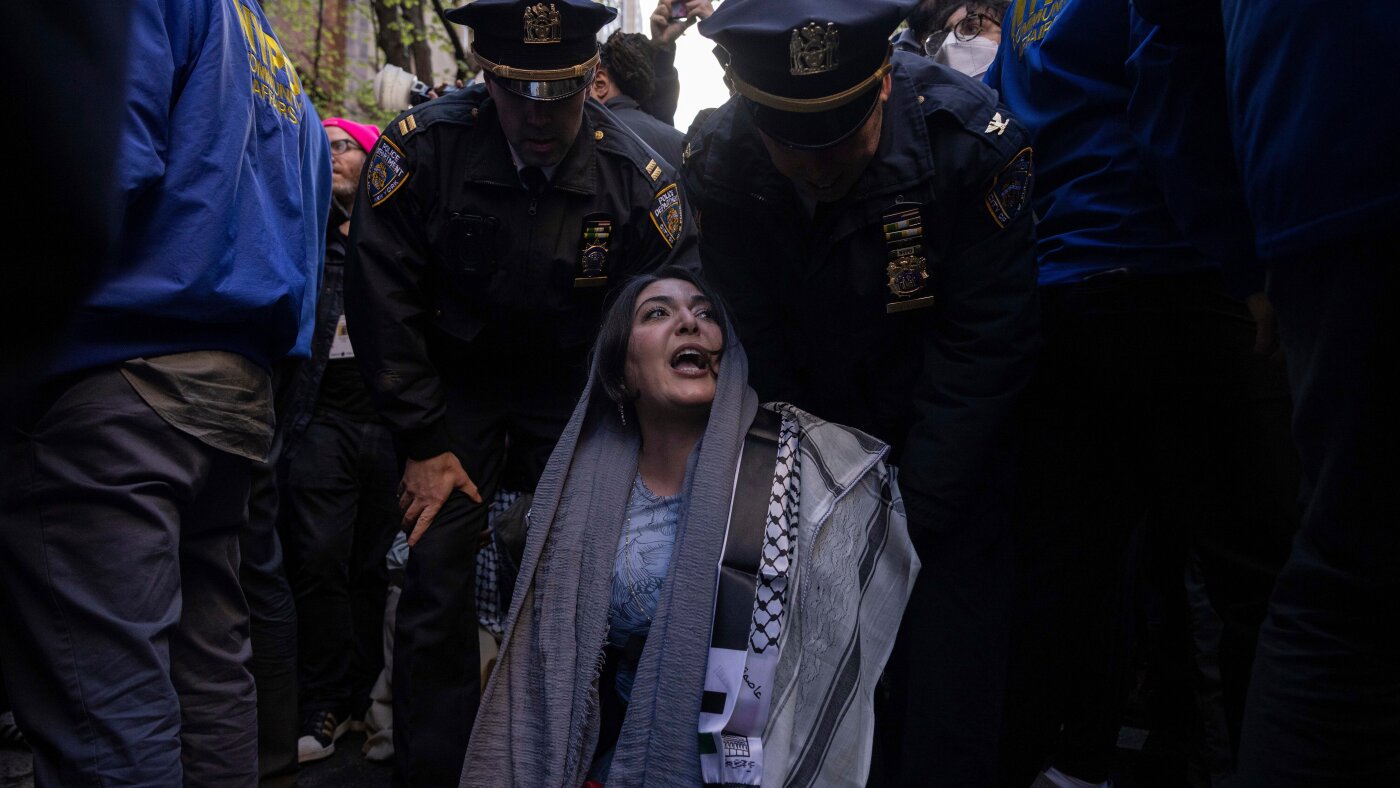
Man arrested in plot to firebomb Palestinian activist’s home after undercover op

WATCH: Senate hearing goes silent after Angel Father confronts top Dem over daughter’s death

US diplomat Marco Rubio denounces settler violence, tolls in Hormuz strait
-

 Detroit, MI1 week ago
Drummer Brian Pastoria, longtime Detroit music advocate, dies at 68
-

 Movie Reviews1 week ago
‘Youth’ Twitter review: Ken Karunaas impresses audiences; Suraj Venjaramoodu adds charm; music wins praise | – The Times of India
-

 Sports7 days ago
IOC addresses execution of 19-year-old Iranian wrestler Saleh Mohammadi
-

 New Mexico6 days ago
Clovis shooting leaves one dead, four injured
-
 Business1 week ago
Disney’s new CEO says his focus is on storytelling and creativity
-

 Technology6 days ago
YouTube job scam text: How to spot it fast
-

 Tennessee5 days ago
Tennessee Police Investigating Alleged Assault Involving ‘Reacher’ Star Alan Ritchson
-

 Texas1 week ago
How to buy Houston vs. Texas A&M 2026 March Madness tickets