Minneapolis, MN
Minneapolis firefighters form first all-Native American crew


Growing up as a kid in Minneapolis, Johnny Crow never saw Native American firefighters manning the trucks responding to emergencies in his Phillips neighborhood south of downtown.
Still, it didn’t deter Crow, a member of the Oglala Lakota Nation, from becoming a firefighter for the city — a decision he looks back on with pride.
“That made a huge difference in the community for them to see a Native man with long hair that looks like me on a fire rig going to 911 calls,” Crow said.
About six months ago Crow, 37, and three other Minneapolis firefighters — Bobby Headbird, 38, Capt. Michael Graves, 41, and fire motor operator Jesse Strong, 45 — teamed up at Fire Station 6 downtown to respond to emergency calls on Engine 10. It’s the first time the city has had an all-Native crew, who spoke about their jobs ahead of Indigenous Peoples’ Day on Monday.
Graves, who was recently promoted to captain, said bringing the crew together was intentional, with the goal of showing Native American kids and adults alike that they can also work for the fire department. The four said they hope it can help build trust between the department and the communities they serve.
“That they would see people that look like them, and kids could see someone to look up to and something to aspire to, that was a big conversation we had,” said Graves, a member of the Red Lake Nation.
Along with responding to fires and emergency medical calls, the group has gone to various community events in the city’s Little Earth and Franklin neighborhoods, which both have high Native American populations. The response has been positive, Graves said, with some captains telling him callers will sometimes say they wish the all-Native crew would be the ones to respond.
“We had a call not far from here where it was unhoused Natives, and when we showed up, they were just completely different than when another crew responded,” Graves said.



Auto thefts continue to rise in Minneapolis, and the Minneapolis Police Department (MPD) said thieves are increasingly using new technology to steal cars without ever needing the owner’s key.
Minneapolis car thefts spike in 2026, St. Paul sees continued decline
According to MPD’s Crime Dashboard, 66 vehicles have been reported stolen in the city since March 20. The dashboard also shows auto thefts are up 26% compared to this time in 2025.
One of those victims is a Minneapolis man named Travis, who shared home surveillance video of his car pulling out of his driveway.
“I seen that car backed out and my keys were still in the house. Already knew someone stole the car,” he said.
He ran to a neighbor’s home, where more camera footage showed “two guys walking through the alley going toward my car.”
He said a family member eventually connected him to people who knew the teens involved.
“He called me back like an hour later, and he was like he figured out who got my car. They were asking for money. They wanted me to give them $1,500 just for them to tell me the location where my car was.”
Travis said the teens sent him photos and videos of the car’s surroundings.
“They were sending me pictures of where the car was parked, what’s around the car.”
He and several relatives spent hours comparing the images to real locations.
“Me and a few other family members and a few friends, we run around and start driving around looking for the car off of the videos that they sent us.”
By 10 p.m. Friday, they found it in an apartment parking lot.
“As soon as I hit the car starter on the car, the car started right up. The first thing was just jump in the car and pull the car up out of there.”
But the damage was extensive, and he said the loss of sentimental items hurt the most.
“They threw out my son’s car seat. They threw out like programs from funerals and stuff. They broke my sunroof. They broke my windshield.”
He said the theft has been hard on his family.
“It’s kind of hard, you know, because I have a 4‑year‑old son. They threw his stuff out. That kind of messed me up.”
According to MPD, non‑Kia and non‑Hyundai vehicles stolen without keys are up nearly 60% compared to this time last year. Kia and Hyundai thefts, where thieves peel or punch the ignition, are also rising.
MPD said the city is also seeing signs of a nationwide trend involving key‑programming devices. These are tools that can reprogram a car to start without the owner’s key. Officers have recovered these devices during recent arrests, including one case involving a 13‑year‑old.
The department says a relatively small group of individuals is responsible for a significant share of auto thefts in the city. MPD also said it does not have a dedicated auto‑theft unit, and that there are fewer property-crime investigators now than in 2020. A new pilot program uses forensic scientists to process stolen vehicles for evidence.
Travis said he gave officers everything he found, the videos, the photos, the social‑media accounts, but felt the department didn’t respond the way he hoped.
“Basically, they didn’t do anything. All they say is they’re juveniles and ain’t too much they could do. Even if they catch them, they lock them up, they’ll get right back out.”
He believes the teens who stole his car have real technical skill.
“What I seen how y’all started my car and everything like that, y’all could really be out here and take that and really make some good money. Plenty of people out here that lost their car keys. You could be making hundreds of dollars programming car keys to people.”
He said the experience has changed how he lives.
“I’m definitely nervous. Now I gotta move different. Make sure my car locked up at night, make sure it’s safe, upgrade my security a little bit more.”
He’s keeping the car at a relative’s house until he can repair the damage.
“I didn’t feel safe. They took my garage keys and everything out of the car.”
Travis said he hopes the teens who stole his car understand the impact on families.
“People have kids, people have family out here. People go out every day, they work. If they came to me and was like hey, we need a few dollars, I’ll give you a few dollars instead of coming and just taking my car that I gotta get to work and get my son to day care.”
He also hopes they choose a different path.
“Just find something else to do with your time,” he said. “Something really bad could happen to y’all.”
The Minneapolis Police Department provided the following responses to KSTP’s questions:
Are the recent increases concentrated in any specific precincts or neighborhoods?
- We are compiling data that will likely be available tomorrow. Auto thefts are occurring in all five precincts with the largest recent increase occurring in the Second Precinct.
Is MPD able to share the percentage of auto‑theft cases that have been solved or cleared so far this year?
- That will need to be a data request. I will see what I can find out.
Does MPD have any updated prevention guidance for residents, especially with the rise in key‑programming technology?
- Car manufacturers are the best source for prevention guidance related to newer technologies used to steal vehicles. In addition to locking your vehicle, removing valuables from plain sight, never leaving a key fob inside or near your vehicle, and never leaving a vehicle running unoccupied, manufacturers also recommend storing key fobs in RFID-blocking cases and keeping them away from doors and windows.
What is the department’s response to people who feel they need to track down their own stolen vehicles, or who feel MPD isn’t doing enough to help them recover their cars?
- Auto theft has a significant impact on victims, and having a vehicle stolen is frustrating and personal. To date, there have been approximately 1,400 auto thefts, compared to 2,190 during the same period in 2023. While that represents a meaningful decline, auto theft remains an ongoing concern.
- Many stolen vehicles are recovered, and both investigators and patrol officers are actively working to address these cases alongside other public safety priorities. Technology has played an important role. License Plate Readers, both fixed and mobile units in squad cars, have helped officers locate stolen vehicles and, in some cases, make arrests.
- We recognize that some vehicle owners have access to tracking technology and may be able to provide real-time location information. That information can be valuable to officers. However, we strongly urge individuals not to approach or attempt to recover their vehicle on their own.
- If a stolen vehicle is located and occupied, individuals should not approach and should call 911 immediately. If the vehicle is unoccupied, they should notify police of its location and wait for officers to respond. For safety and evidentiary reasons, the vehicle should not be moved until it has been officially reported as recovered.
Editor’s note: The video says the victim’s car was stolen on Saturday, but it was actually Friday.

A man was hospitalized with serious injuries after an apparent domestic-related stabbing Monday night in the Bryant neighborhood of Minneapolis, police say.
According to Minneapolis Police Sgt. Garrett Parten, officers were called to the area of 39th Street East and Fourth Avenue South just before 9 p.m. and found a man suffering from “at least one potentially life-threatening stab wound.”
Parten says officers provided aid until an ambulance took the man to a hospital for treatment.
Less than a mile west of where they found the man, on the other side of Interstate 35W, officers found a woman with less serious injuries. She was also taken to a hospital for treatment but is expected to survive.
Investigators believe the man and woman were involved in a domestic dispute and, upon being released from the hospital, were both booked into jail, Parten said.
The investigation remains active.

Minneapolis police respond to a hit-and-run that left a woman seriously injured, (FOX 9)
MINNEAPOLIS (FOX 9) – A woman hit by a vehicle that fled the scene in Minneapolis over the weekend died Monday from her injuries, according to Police Chief Brian O’Hara.
Minneapolis hit-and-run crash
The backstory:
Police say they responded to reports of a hit-and-run crash involving a pedestrian at about 3:10 a.m. on Sunday in the 1600 block of Marshall Street Northeast.
Officers then found a woman in her 20s suffering from potentially life-threatening injuries. She was taken to the hospital.
Investigators say the woman was crossing Marshall Street while carrying a bag of food when she was struck by a speeding vehicle.
Driver still at large
What you can do:
Police say no arrests have been made in connection with the incident. The vehicle is described as a dark-colored sedan that was possibly driven by a man.
Anyone with information on the incident is asked to contact Minneapolis police by emailing policetips@minneapolismn.gov or calling 612-673-5845 to leave a voicemail.

Wil Wheaton Discusses ‘Stand By Me’ and Narrating ‘The Body’ Audiobook

A professional cornhole player and quadruple amputee is arrested for murder

The Bumpboxx BB-777 is the ultimate in boombox nostalgia

US military sends drones, alongside 200 troops, to Nigeria amid fears of renewed Boko Haram insurgency

Chicago alderwoman apologizes for ‘wrong place at the wrong time’ comment on slain student

Florida High School Football Rankings: Top 25 teams – Oct. 21

How old is Bo Nix? What to know about Oregon quarterback ahead of 2024 NFL Draft

Cleary's 21 help Le Moyne down Central Connecticut State 69-64 in OT

99th annual Pony Swim held in Virginia

Indiana Members Credit Union announced as new anchor tenant at Bottleworks District
Chicago alderwoman apologizes for ‘wrong place at the wrong time’ comment on slain student

Fake Euronews website targets Hungary election with false claims
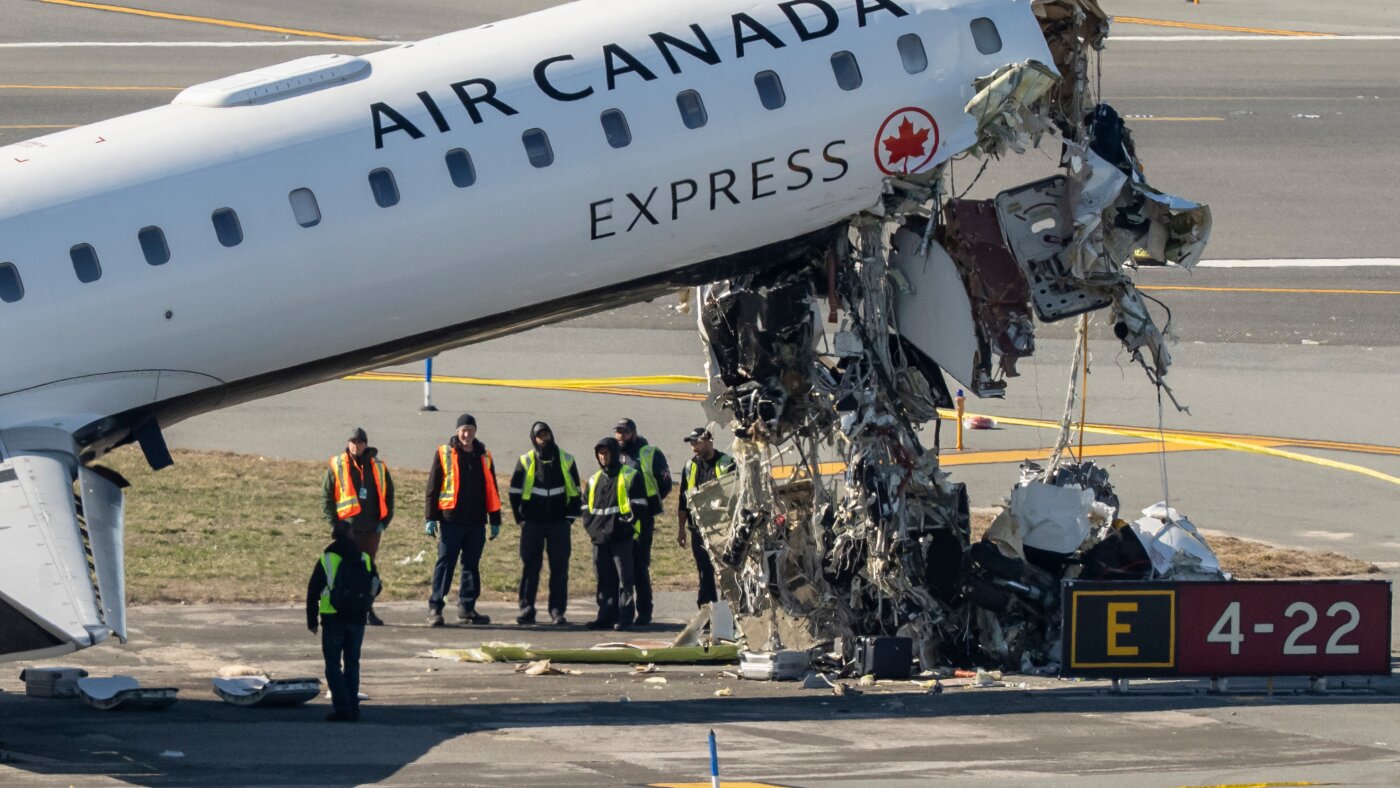
An air traffic controller was juggling extra roles during the LaGuardia plane crash

Iran War: Pentagon set to send thousands of elite 82nd Airborne troops to region | BBC News

Video: Passengers Wait in Long Security Lines at LaGuardia After Deadly Crash
-

 Detroit, MI6 days ago
Drummer Brian Pastoria, longtime Detroit music advocate, dies at 68
-

 Georgia1 week ago
How ICE plans for a detention warehouse pushed a Georgia town to fight back | CNN Politics
-

 Movie Reviews6 days ago
‘Youth’ Twitter review: Ken Karunaas impresses audiences; Suraj Venjaramoodu adds charm; music wins praise | – The Times of India
-

 Alaska1 week ago
Police looking for man considered ‘armed and dangerous’
-

 Education1 week ago
Video: Turning Point USA Clubs Expand to High Schools Across America
-

 Sports4 days ago
IOC addresses execution of 19-year-old Iranian wrestler Saleh Mohammadi
-
 Science1 week ago
Industrial chemicals have reached the middle of the oceans, new study shows
-

 New Mexico2 days ago
Clovis shooting leaves one dead, four injured