Milwaukee, WI
‘Top Chef: Wisconsin’ Episode 12 recap: On the final episode filmed in Wisconsin, the chefs get reflective


“Top Chef” contestant Dan Jacobs on cooking with Kennedy’s Disease
Milwaukee-based chef and restauranteur Dan Jacobs opened up about his Kennedy’s Disease diagnosis.
Warning: Spoilers ahead for “Top Chef” Season 21, Episode 12, which aired June 5, 2024.
Take a bow, Wisconsin. You’ve put on a good show.
Twelve weeks after the chefs walked into the Top Chef Kitchen, four are leaving the state on their journey to the finals. It’s been a fun ride, and a blast to see so many familiar faces and places on the small screen.
Did you have a favorite “Top Chef” challenge set in Wisconsin? I adored the Indigenous cuisine challenge, had a blast watching the Famous Racing Sausages, and of course, I’ll always have a soft spot for the cheese festival, Restaurant Wars and fish boil challenges — all episode tapings I was lucky enough to attend.
But Wisconsin’s time in the “Top Chef” spotlight wrapped up this week, with an Elimination Challenge that was less about the setting of the season and more about how the competition shaped the chefs along the way.
And appropriately enough, a handful of Wisconsin chefs were in attendance to wish the contestants “bon voyage” as they head to the finals next week. Find the full list of them below, plus the final Milwaukee sites we see for the season.
And just because “Top Chef” is leaving Wisconsin doesn’t mean these recaps are over. I’ll be here sharing the play-by-play during both episodes of the finals, until the season wraps on June 19.
What in MKE did we see?: The Milwaukee lakefront, the Milwaukee River, the Sixth Street Viaduct, Ristorante Bartolotta, Milwaukee Public Market, The Pfister Hotel, the ASQ Center, Harbor House, the Milwaukee Art Museum
Celebrity sightings: Bartolotta Restaurants Owner/Co-Founder Paul Bartolotta, Bartolotta Restaurants Director of Catering Maria Bartolotta, Ristorante Bartolotta Executive Chef/General Manager Juan Urbieta, The Diplomat Chef/Owner Dane Baldwin, Birch Chef/Owner Kyle Knall, Wild Bearies Executive Chef/Founder Elena Terry, L’Etoile Chef/Owner Tory Miller, Food & Wine Editor-in-Chief Hunter Lewis, Three Brothers Restaurant Chef/General Manager Milunka Radicevic
Where was the challenge set? Harbor House in Milwaukee
How did Dan do? It was not his best showing. In fact, it was probably his worst. He absolutely bungled his steak-and-eggs Quickfire Challenge dish and was heavy-handed with smoke for his whitefish-centered Elimination Challenge dish. He landed in the bottom three … but, spoiler alert: He squeaked by to move on to the penultimate episode of “Top Chef.”
Best Wisconsin-related quote: “Were you going with cheddar ‘cause I’m from Wisconsin? Working the judge?” —Paul Bartolotta
During one of the last group gatherings of the season at the chefs’ residence, the final five reflected on their time in the competition, appreciating the feedback they’d received, the inspiration they’d take to their restaurants back home, and the tight bond they’d made over the season.
“It’s cool to come here not knowing anybody and leaving with a bunch of new friends,” Dan said to the group.
“And an uncle … or a grandpa,” Danny replied, joking. (One last “old man Dan” crack for the road.)
Soon the group would be whittled to four, and no matter how tight-knit they had become, friendship couldn’t get in the way of the competition.
The Quickfire Challenge: A feast for the senses
“Last Quickfire in Milwaukee, man. What are we doing today?” Dan asked his car-mates on their way to the Top Chef Kitchen.
After they arrived, they got their answer with the help of Milwaukee chef and restaurateur Paul Bartolotta. For an episode about reflection, it was fitting he’d be there for the final episode taped in his city. Bartolotta was a major factor in bringing the show to Wisconsin, after all, and he appeared as a guest judge on the season’s first episode 12 weeks ago.
Bartolotta helped reveal this week’s Quickfire Challenge, the blind taste-test challenge — a perennial favorite on “Top Chef,” and one where the chefs would attempt to identify 26 mystery ingredients while blindfolded.
After the blindfold challenge, the chefs would then have to cook a dish in 30 minutes using only the ingredients they correctly identified, plus a limited pantry for support.
The chef who guessed the most ingredients correctly would win $5,000. The chef with the best dish would receive $10,000.
Each chef had five minutes to taste ingredients like anchovies, za’atar, okra, pork chops, quinoa, umeboshi, gooseberries, watermelon, flank steak and more.
Should’ve been a cinch for these chefs’ refined palates, right? Well … sort of.
“I have an incredible palate,” Dan said. “This should be pretty easy.”
Smash-cut to every other chef correctly identifying rosemary while Dan whiffed by guessing oregano.
But he wasn’t the worst. Technically, he was tied for the worst. After five minutes were up, he and Savannah both identified nine ingredients correctly. Danny was next with 13, followed by Laura’s 15. And Manny, who flew through the ingredients as he tasted, impressively identified 23 of the 26 mystery ingredients.
He’d be able to use them all, if he wanted, in his Quickfire dish. But when it came time for Kish, Bartolotta, and judges Tom Colicchio and Gail Simmons to taste it, he failed to incorporate enough flavor in his salmon to impress them.
Even so, he fared better than Dan, who botched a sauce he’d tried to piece together from his short list of ingredients (you mean watermelon, kalamata olives, soy sauce and red wine vinegar didn’t work together?), then bailed and went with a steak and eggs dish (complete with egg shells for crunch) that he sheepishly served the judges, knowing he’d failed.
“This was by far the worst thing I’ve probably ever made,” he said.
But Savannah, who also had just nine ingredients, wowed with her stripped-down creation. She made a crispy fried pork chop with a faux Caesar dressing made with cheddar cheese in place of the traditional Parmesan.
“Were you going with cheddar ‘cause I’m from Wisconsin? Working the judge?” Bartolotta asked with a smile.
It worked. The judges loved her clever twist.
“That belongs on a menu somewhere. It’s really good,” Colicchio said.
The dish won Savannah the Quickfire Challenge — her third in a row — and brought her total cash winnings to $38,000.
The Elimination Challenge Reveal: A wealth of wisdom learned in Wisconsin
“OK, chefs, who’s ready to take a walk down memory lane?” Kish asked.
For the final Elimination Challenge set in Wisconsin, the chefs would need to create a dish that reflected the growth they’ve made here over 12 episodes.
No other parameters were placed on the chefs, who would have $150 to spend at the Milwaukee Public Market and $200 at Whole Foods Market to create a dish for 10 judges dining at Harbor House, Bartolotta’s restaurant on the shore of Lake Michigan in downtown Milwaukee.
But before the chefs went shopping, Bartolotta treated them to dinner at another one of his area restaurants: Ristorante Bartolotta, which celebrated its 30th year as “Top Chef” was filming in Wisconsin last summer.
“You feel the love in that space. It’s a special place,” Dan said of the Italian restaurant located in Wauwatosa.
“Top Chef” showed it off nicely, with loads of lingering shots of the restaurant’s dishes piling up on the table. Maria Bartolotta, Paul’s sister and the restaurant group’s director of catering, met the chefs and judges, and each dish was presented table-side by Executive Chef Juan Urbieta.
While dining, the chefs reflected on their time on the show and the growth they experienced, while Bartolotta and Kish offered advice about changing and challenging yourself as you develop as a chef.
“For me, the biggest lesson on ‘Top Chef’ was knowing that I was good enough and that I could trust myself,” Kish said. “And that will change the way you cook.”
Solid advice at this stage in the game from a “Top Chef” winner.
The Elimination Challenge: A season of change at Milwaukee’s Harbor House
Visits to the Milwaukee Public Market (including stops at The Spice House, the West Allis Cheese & Sausage Shoppe and St. Paul Fish Company) and Whole Foods Market helped shape the chefs’ stories for this last Wisconsin-based cook.
Manny planned a fish dish he felt comfortable with (yet again…), hoping to redeem himself after a poor showing at the fish boil two weeks prior. Danny and Laura both aimed to show restraint in their dishes after going overboard in the past. Dan and Savannah were still trying to find their stories while shopping, but the absence of fresh lemongrass at Whole Foods meant Dan’s story would need to shapeshift a bit — he’d have to rely on turmeric-lemongrass paste to build the sauce he’d planned.
When the chefs arrived at Harbor House, Savannah’s storyline took shape. She planned to make a potato pavé in three hours — a dish that typically needs to be pressed overnight to work successfully. But coming off her hot streak, she was confident she could pull it off.
Everyone seemed confident for such a high-pressure cook. Danny danced up a storm in the kitchen, Manny felt good about his red snapper, Dan was loving his improvised sauce, Laura was happy to bring a taste of her Mexican heritage into her Mediterranean dish.
They’d be serving their dishes to a number of Wisconsin chefs we’ve seen guest judge in previous episodes: Bartolotta, Baldwin, Knall, Terry and Miller. They were joined by the three judges as well as Lewis and Radicevic.
First up was Savannah and her shortcut potato pavé served with burnt onion and cherry jam with a chicken sauce reduction. She explained that the heat and pressure are all that’s needed to make a potato pavé, just like how the heat and pressure of the competition were all she needed to bring out her confidence.
The judges were all smiles, impressed by her articulate storyline and just as impressed that she managed to pull off an impressive pavé in such a short amount of time.
“I love a potato pavé and I love it even more now that Savannah told us why she made a potato pavé,” Kish said.
But they weren’t as impressed with Manny’s dish, a snapper a la Veracruzano with creamy potatoes and saltines. He’d said he wanted to show off his roots and honor the cuisine of his Mexican ancestry — a beautiful homage, for sure, but one that had nothing to do with his journey or time spent in Wisconsin, as Knall pointed out.
It was a through line in much of the season for Manny, who often leaned on the same style of dishes (meat, sauce, vegetable) to present each week.
But more egregious were the three completely raw servings of fish. Bartolotta said his was cooked perfectly, which Colicchio raised his eyebrows at. Manny’s dish was inconsistent around the table, and raw fish — not undercooked — is a major no-no.
Danny’s dish was meant to be a redemption of the lackluster buckwheat tea he’d created during Restaurant Wars. This time around, he made a soba cha mushroom broth with mushroom puree and cod, a dish he called “subtle” with “nuanced flavors,” which shocked the judges.
“You think this is subtle?” Simmons asked.
They thought the mushroom flavors were bold, so much so that the cod was completely lost in the dish, according to Radicevic. And Kish pointed out that if Danny was going for redemption, he needed to bring his tea concept to the forefront of the dish.
Dan struggled finding his story as he cooked (“I feel like I’m forcing square pegs into round holes,” he said), and a misfire in the kitchen certainly didn’t help. Time got away from him and he let his whitefish smoke for longer than he’d planned.
He served his dish anyway: smoked walleye and potato dumplings with lemongrass, turmeric and brown butter emulsion.
“The backbone of this dish is all about Wisconsin,” he said.
That might have been true, but there was a lot going on with it. Kish said all she could taste was smoke while Terry said it felt heavy. Lewis called it “absolute maximalist” while Colicchio said it suffered from an “identity crisis.”
There were decent flavors there, they said, but it was a lot to take on, with Simmons summing it up by saying the “story and the dish were muddled.”
But things ended on a high note with Laura’s lamb manti (a Turkish dumpling) with barbacoa sauce, a simplified (for her) dish that showed she’d gained focus as the competition went on.
The judges had googly eyes for the stunning dish from the start.
“The dumpling pasta is pure love,” Lewis said.
Kish said the technicality of the dish was difficult to ignore and the plating was beautiful before thanking the guest judges for joining them throughout the season in Wisconsin.
“We’re wrapping up our time here in Wisconsin and I just wanted to take the time to say thank you to the pillars of the community for welcoming us, for teaching us about your beautiful state and sharing all your time and talents,” Kish said to the table of guest judges.
But the pleasantries wouldn’t last. It was time to select a final four.
Who won ‘Top Chef: Wisconsin’ Episode 12?
Back in the Top Chef Kitchen, Bartolotta and Lewis joined the judges’ table and wasted no time revealing the week’s top dish.
“The winning chef today told a wonderful story and also executed a dish with precision,” Lewis said, before Bartolotta announced that Savannah’s hot streak would continue.
“I’m so stoked,” Savannah said as she fought back tears upon learning she was this week’s winner. She’ll have an advantage going into next week’s finals challenge.
“You had a beginning and an end and it was all right there,” Colicchio said of her story and dish.
“Pavé in that amount of time? What were you thinking?” Bartolotta asked, smiling. “And yet, boom, you nailed it.”
“I feel like I’m the one to beat here,” Savannah said. “I’m realizing it, and I think other people are, too.”
Who was sent home on ‘Top Chef: Wisconsin’ Episode 12?
Before revealing the bottom three dishes of the week, Kish announced Laura would be joining Savannah in the final four, her focused dish proving she’d grown from throwing together all the ingredients she could find.
That meant Danny, Dan and Manny had the least-favorite dishes. Danny’s was incongruent with his storyline of subtlety. Dan used too much smoke and his dish didn’t show growth from the stellar smoked walleye dish he’d won with at Restaurant Wars. Manny’s raw fish was unacceptable and the overall dish didn’t reflect what he’d learned in the competition.
As the judges deliberated, it was a toss-up between Manny and Dan, especially considering Dan’s exceptionally poor Quickfire dish (it was “actually terrible,” Simmons said).
But the judges couldn’t overlook the raw fish, which brought Manny’s journey on “Top Chef” to an end.
“I served raw fish on ‘Top Chef.’ I’m taking ownership of what I did wrong,” he said. “Being part of ‘Top Chef’ has changed me as a person and as a chef. I cannot put it in words. You just feel it.”
His and the rest of the chefs’ time in Wisconsin would end. But the top four — Dan, Danny, Laura and Savannah — still have a journey ahead of them.
They’ll go home for a few weeks, then get together again for the first of two finals episodes, which will take place on a Caribbean cruise in Curaçao, a Dutch Caribbean island just north of Venezuela.
Next week, in Curaçao, one chef will be eliminated, with three moving on to the final challenge to compete for the title of Top Chef.
How to watch ‘Top Chef: Wisconsin’: TV channel, streaming
Viewers can watch live on Bravo on Wednesday nights at 8 p.m. or stream the next day on Peacock, BravoTV.com or the Bravo app.



WEST ALLIS, Wis.– IndyCar racers test-drive at the Milwaukee Mile ahead of the August doubleheader.
The IndyCar Series has back-to-back races at the track on August 29 and August 30.
Racers had the rare opportunity to practice laps in West Allis on Wednesday, July 8.
“It’s a tough place; it’s a very tough course,” said four-time IndyCar series champion Álex Palou. “I feel like every time I come here, the car and the driving feels very different.”
Palou currently leads the 2026 IndyCar Series in points and will race the Milwaukee Mile next month.
“It just makes everything super close, especially being the second to last event of the year and having two races ” said Palou. “If you have a good weekend, it’s great, but if you don’t, you can be crying after it.”
The IndyCar Series consists of 18 races across the United States and Canada.
Milwaukee is the only doubleheader race on the schedule, making the event worth double the points and potentially swinging the series championship leaderboard.
“It’s one of those tracks that you need a car that gives you a lot of confidence, but you need to have confidence in this place as well.”
IndyCar driver Josef Newgarden is eager to get back on the Milwaukee Mile.
“It’s the most historic racetrack that you’ll find in North America, and it’s very historic when you think of IndyCar,” said Newgarden. “I’ve always wanted to be back here.”
According to the Wisconsin State Fair website, the Milwaukee Mile is the oldest operating motor speedway in the world.
The first automobile race was held there in 1903 on a dirt track. Cars similar to IndyCars first competed on the West Allis track in 1933.
“I love this market,” said Newgarden. “I think Milwaukee’s a great place to race and we’ve got a good fan base here.”
The IndyCar Series raced at the Milwaukee Mile annually from 2004 to 2015. The track did not host the series from 2016 through 2023. IndyCar returned in 2024 and has raced there each year since.
The Milwaukee Mile will host the IndyCar Series for the Snap-on Makers and Fixers 250 on Saturday, August 29, and the Snap-on Milwaukee Mile 250 on Sunday, August 30.

Milwaukee has officially joined the Global Swimmable Cities Alliance, aligning with other Great Lakes communities like Sheboygan and Ottawa in a growing movement to make urban waterways safer for recreation.
Milwaukee Riverkeeper Cheryl Nenn joined WTMJ’s Jeff Sherman on The Upswing to discuss what that means for the city. With a background in environmental science and experience working with both the City of New York and the U.S. Forest Service, Nenn says joining the alliance builds on years of water quality progress – while also creating accountability through a clear action plan.
Efforts are already underway to improve both safety and accessibility. Nenn says Milwaukee Riverkeeper is pursuing grants to install more safety ladders along lower piers throughout the river system, ensuring that anyone who ends up in the water has a way to get out. At the same time, the organization is working with the city and local businesses to green riverfront areas, creating healthier habitats for wildlife and improving the overall ecosystem.
Nenn emphasized that becoming a swimmable city is a community effort. Residents can play a role by picking up trash along beaches and rivers, keeping streets and storm drains clean, and reducing plastic use.
The Upswing is presented by Horicon Bank.
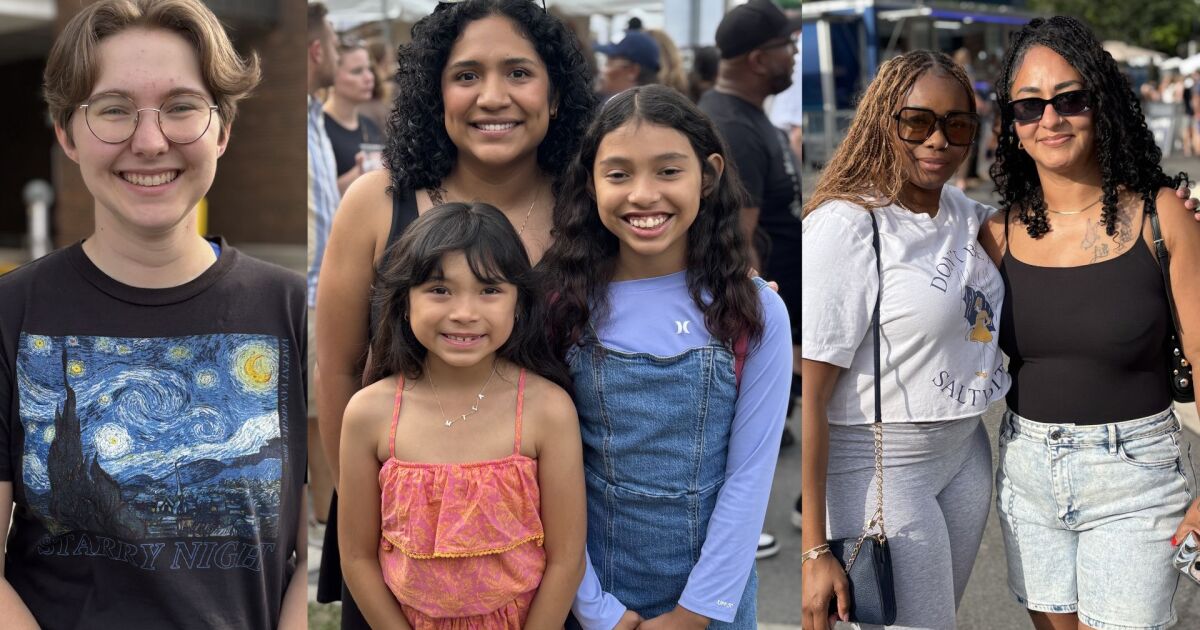
MILWAUKEE — Bastille Days and Festa Italiana are filling downtown Milwaukee with live music, food and large crowds this weekend.
For many, events like these are a summer tradition.
“The festivals for the summertime-they’re something to do like almost every single day and almost most definitely every single week,” Natara Riley said.
But some festivalgoers say outside of these big events, downtown’s entertainment scene isn’t what it used to be.
“I grew up partying on Water Street. I won’t go there no more at all,” Leandra Wohner said.
“I think it’s the city is not upkeeping the entertainment that people need to have fun. So when something does happen, like Bastille Days or other festivals, a lot of people tend to go to it because there’s not a lot of room for like activities for people,” Riley said.
Watch: Festivalgoers say Milwaukee’s summer events fill a gap in downtown entertainment
It’s a weekend of festivals in downtown Milwaukee
Festivalgoers say events like these give people a chance to enjoy live music, support local vendors, and try new foods — all in an environment they feel is well organized.
“I feel like it’s safe. They block off the roads, especially where there’s a lot of people walking around, and you know, parking wasn’t hard to find either. So it’s very-I want to say-I feel like it’s very well put together,” Dana Garcia said.
For those who may be hesitant about coming downtown, Emma Maertz offered this encouragement.
“If you never give it a chance, you never discover all the wonderful little vibrant things out here on the streets, and so I’d say give it a chance. You know, come down, see what it’s like, walk around, try out a street festival, park a few blocks away, and explore a new area,” Maertz said.
Let’s talk:
Hey there! At TMJ4 News, we’re all about listening to our audience and tackling the stuff that really matters to you. Got a story idea, tip, or just want to chat about this piece? Hit us up using the form below. For more ways to get in touch, head over to tmj4.com/tips.
It’s about time to watch on your time. Stream local news and weather 24/7 by searching for “TMJ4” on your device.
Available for download on Roku, Apple TV, Amazon Fire TV, and more.
Report a typo or error // Submit a news tip
-

 Augusta, GA5 minutes ago
Augusta urgent care gives away 300 backpacks for back to school
-

 Washington, D.C12 minutes ago
Why a road trip is the best way to see the US Capital Region
-

 Cleveland, OH15 minutes ago
PAUL ANTHONY FORTUNATO Obituary – Cleveland, OH (1941-2026)
-

 Austin, TX20 minutes ago
Suspect killed in officer-involved shooting in downtown Austin
-

 Alabama27 minutes ago
Cullman’s Alabama Strawberry Festival adds another statewide award
-
 Alaska30 minutes ago
Commentary: What’s in a name? A confounding U.S. Senate race
-

 Arizona35 minutes ago
Arizona firefighter killed in wildfire remembered as brainy, ‘goofy’
-

 Arkansas42 minutes ago
Bentonville’s Dave Peel Park to become new downtown entertainment space | Arkansas Democrat Gazette

