There have been some great rotations in the modern era for the Brewers. The 2021 rotation is the gold standard in terms of stats. They were far ahead of any other rotation by starting pitcher fWAR (20.3), and also had the best ERA (3.13) and FIP (3.29). The 2011 rotation helped earn the team its first division title in 29 years and was a model of reliability, only needing six starters for the whole season. The 2025 rotation may not be an all-time great one, but it’s developing into one that could rival some of those great Brewers teams.
Milwaukee, WI
The youth of the Brewers’ rotation is exciting and concerning


Where did the 2025 rotation rank? While it might not be the best, it was still strong. The starting pitcher ERA (3.56) was the second-best since 2000. Their FIP (4.07) and fWAR (12.6) were closer to the middle of the pack, but still solid. It’s worth noting that these marks are slightly skewed because of the Brewers’ use of openers, but they are still good numbers.
Taking an early look at 2026, the rotation will have plenty of options, but also a lot of questions. Leading the rotation is Freddy Peralta, who should be back after his option is exercised. Also, Quinn Priester had a full, healthy season and can take on a full-season workload. After that, it becomes murkier.
Jacob Misiorowski ended up at 141 1/3 innings pitched, which is a 45% increase from 2024. A 160-inning season in 2026 is reasonable, if the Brewers want to go that route. Are there any concerns around him after pitching that many extra innings in 2025?
Chad Patrick is also set up for a full-time major league workload after a year where he pitched 171 innings. He re-established himself with a strong playoff performance and should be in the plans for next season.
Brandon Woodruff is going to be an interesting case. He finished the season at 106 2/3 innings pitched. However, that late-season lat injury ended his season early. While he should be fine going into 2026, that late injury is going to be a point of concern (even if it’s not pitching-related). It’s a $20 million mutual option for him in 2026, with a $10 million buyout. That means the question about him will be if he’s worth $10 million on a one-year deal (since he will get the other $10 million either way). Woodruff could decline his side, though that would be betting that he can get at least a $20 million offer somewhere else.
Jose Quintana will likely not return. There is a $15 million mutual option with a $2 million buyout available. With the internal options the Brewers have, it would be a surprise to see that option exercised.
Logan Henderson and Robert Gasser are bigger wild cards heading into 2026. Henderson pitched 103 innings before an elbow injury kept him out for the rest of the season. Gasser did get back into game action, but never fully stretched out and only pitched 46 1/3 innings. There’s also Tobias Myers and Carlos Rodriguez, who could factor into the plans, though neither pitched significant innings in the majors in 2025.
The biggest problem here is the overall experience if neither Woodruff nor Quintana returns. That would put Priester as the second-most experienced major league starter with just under two years of service time. Gasser would be over a year of service time as well, though most of that was spent on the injured list. Everyone else would be under a year of service time.
If Peralta is traded, the rotation would have a sudden lack of major league experience. Three pitchers (Priester, Misiorowski, Patrick) could put together 160-plus inning seasons based on their workloads in 2025. After that, there are a lot of question marks. Even if the Brewers get some of the other young options to step up, how many innings would they be limited to? Are the Brewers ready to push them farther? An average of five innings per start over a full season equates to 160 innings. That would also mean more work for the bullpen, and that can also backfire if they are used too often.
We saw what happened with a depleted rotation in the 2025 playoffs. The Brewers had to get creative with their bullpen to make it through the NLDS, and they were alright in the NLCS (or at least, they weren’t the main problem). Some of that was just bad luck and timing, but some was also the consequence of growing pains in the rotation.
We also saw what dominant starting pitching can look like. The Dodgers’ four starters in the NLCS each made strong starts and kept pressure off the bullpen. It’s debatable how much the Brewers’ offense helped them look great. Despite that, it’s a level that shows what a very strong rotation with pitchers that can pitch deeper into games can do. The Brewers’ rotation doesn’t need to get there (especially since the Dodgers have the payroll advantage to supplement their pitching staff), but getting closer to that is what they should strive for.
All of this also assumes that all the pitchers continue to perform in 2026. We’ve seen pitchers fall in and out of favor quickly. Tobias Myers was arguably the best starter in 2024, but barely made an impact in 2025 (though he did have a strong finish to the season in the bullpen). Patrick fell out of favor for a bit when he was demoted and struggled in spot starts, but eventually came back stronger. Looking back earlier in the season, Aaron Civale had a spot to start the season, but didn’t pitch well enough to keep it.
There’s a lot of potential with the young pitchers. We saw what Misiorowski and Patrick did as part of the playoff bullpen (even though Misiorowski wasn’t much different from a starter, based on his innings). The potential for the future rotation is high. However, it’s also worrying for 2026 if they can’t cover enough innings. Keeping Peralta around will help with that. Another veteran presence would bring experience and reliability to a rotation that could use it, whether that is Woodruff, Quintana, or a free agent this offseason.



Milwaukee, WI
‘You can see God’s hand in it’: How Milwaukee women are building a double Dutch community through sisterhood and fitness

On Milwaukee’s North Side, women 40 and up are coming together to jump double Dutch. Members say that beyond the ropes they are building a sisterhood, strengthening their health and becoming confident in aging.
40+ Double Dutch Club is a nonprofit founded in Chicago by Pamela Robinson in 2016 that uses double Dutch and other fitness activities to encourage wellness, sisterhood, mental health and more for women over 40.
“It amazes me how God can use something as simple as a plastic clothesline to connect women all over the world,” said Robinson, who is also the group’s CEO and board president.
Robinson, 55, launched the organization after discussing the idea with her friend Catrina Dyer-Taylor. At the time she was battling depression.
“My husband and I were about to get divorced, my oldest kids were grown and I just had my youngest one in the house,” Robinson said. “I needed to find a happy place.”
She promoted the meetup on social media, and many of her friends and community members came out to support her.
“I remember telling (Dyer-Taylor) that if no one came then we’d tie the ropes to a fence and jump together,” Robinson said. “However, we never had to do that because our friends came out.”
Since being founded, the organization has expanded into hundreds of subclubs nationwide, including Milwaukee’s.
“I knew that God wanted me to do something and it’s given me purpose and he has put me on a path where 40+ Double Dutch is a part of that,” said Angela Scott, captain and founder of Milwaukee’s double Dutch subclub.
Launching the Milwaukee subclub
Scott, 54, established the 40+ Double Dutch subclub in Milwaukee in 2024 after discovering the organization on Facebook. She took weekend trips to Chicago and sometimes Texas to participate with women of the club.
“The feeling I got from the ladies when I entered the gym was like I’ve known them all my life,” Scott said.
As a breast cancer survivor, Scott said she was glad to have found something that brought her comfort that wasn’t a traditional gym space.
“Double Dutching is a full body workout, and I don’t like the gym, but I knew I needed something to keep my body moving and to keep cancer out of my body,” Scott said.
Once officially joining 40+ Double Dutch, Scott talked to Robinson about bringing a subclub to Milwaukee.
“She said that they had been wanting one in Milwaukee, they just had no one that was interested and committed,” Scott said.

Milwaukee’s subclub now consists of 37 members. Among them is Scott’s mother, Shirley Tomlinson, 76, who is the first and oldest member.
“I feel like my family has grown here and that’s a very positive thing for a person my age,” Tomlinson said. “It helps keep me feeling young, and there’s a lot of support in it.”
Tomlinson said she joined the club after hearing about her daughter’s Chicago experience and watching the film “Beyond the Ropes: The 40+ Double Dutch Club Documentary.”
Though Tomlinson doesn’t jump double Dutch, she does other things for the subclub like record keeping, videography, planning birthday celebrations and more.
“I do everything I can because I’m my daughter’s ride or die,” she said.

Reliving childhood memories
Scott said double Dutch gives her a joyous nostalgia from growing up, especially as she learned how to double Dutch from her aunt who was like a big sister.
“If you were a girl that jump-roped, then you know it takes you back to that space,” Scott said.
When the Milwaukee subclub appears at local events like the Juneteenth parade, residents typically will jump in the ropes with smiles and recall memories as they walk down the streets.
“As you watch us grow, you can see God’s hand in it,” Tomlinson said.


The women of Milwaukee’s subclub meet from 6:30 to 8 p.m. every Wednesday at Abundant Faith Church of Integrity, 7830 W. Good Hope Road.
The meet typically begins with a stretch, then leads to open play that includes dances and songs to let them double Dutch, hula hoop or play a rhythmic game.
One fitness activity recreated by 40+ Double Dutch is African Hopscotch, which includes members jumping to a song called “Double Dutch Bus” by Frankie Smith and sometimes holding pompoms.
To end the session, members close with a double Dutch hymn followed by a circle of prayer.
“We hold hands and then we sing the song,” Scott said. “Regardless of what meet you go to each one will have the same format.”

Building a strong sisterhood
Scott said the relationships being built at the club remind her of the organization’s mission.
“Part of the mission is friendship, fitness, fun and fellowship,” she said. “All of those things resonate with me and in my spirit because it’s a sisterhood that’s based on God’s direction.”

When away from the ropes, members try to support each other in different ways.
“There are several of the ladies in our club that have businesses, and we’ll do anything to support them,” Scott said.
For Tomlinson, who experienced a few health crises this year, it brought relief knowing that there was a sisterhood standing behind her.
“They reached out to me and let me know they were praying for me,” she said. “It’s like having a big family of daughters.”

Achieving long-term goals
Within the next few years, Scott hopes to see the subclub grow in membership and the women begin to intentionally take more time for themselves.
“I truly believe that a healthy and strong woman makes a healthy and strong world because we are the mothers of this world,” she said. “If the woman is not healthy mentally, physically or spiritually, then the world is not healthy.”

Another goal of hers is to visit with incarcerated women.
“For whatever reason that they’re there, I just want to take them out of that space for just 30 to 40 minutes,” she said.
Tomlinson said it amazes her to see her daughter lead, receive support from the community and promote health to other women.
“It’s been wonderful watching her grow and watching how dedicated she is because that’s a big responsibility,” she said.


How to join 40+ Double Dutch Club
If you are a woman over 40 and interested in joining, click here to find a subclub near you and find details about weekly meetups.
Membership is $120 and includes a digital ID card, access to all nationwide subclubs, subclub support and more.
Scott said the summer has been the busiest time for the organization and wants to remind women that you don’t have to jump to be a part of it.
“People are starting to realize we’re in the city and we like it that way because the more women that know then the more that can be impacted by what we have to offer,” she said.

Jonathan Aguilar is a visual journalist at Milwaukee Neighborhood News Service who is supported through a partnership between CatchLight Local and Report for America.
This <a target=”_blank” href=”https://wisconsinwatch.org/2026/07/milwaukee-women-double-dutch-jump-rope-club-community-sisterhood-fitness/”>article</a> first appeared on <a target=”_blank” href=”https://wisconsinwatch.org”>Wisconsin Watch</a> and is republished here under a <a target=”_blank” href=”https://creativecommons.org/licenses/by-nd/4.0/”>Creative Commons Attribution-NoDerivatives 4.0 International License</a>.<img src=”https://i0.wp.com/wisconsinwatch.org/wp-content/uploads/2021/02/cropped-WCIJ_IconOnly_FullColor_RGB-1.png?fit=150%2C150&quality=100&ssl=1″ style=”width:1em;height:1em;margin-left:10px;”>
<img id=”republication-tracker-tool-source” src=”https://wisconsinwatch.org/?republication-pixel=true&post=1318844&ga4=G-D2S69Y9TDB” style=”width:1px;height:1px;”><script> PARSELY = { autotrack: false, onload: function() { PARSELY.beacon.trackPageView({ url: “https://wisconsinwatch.org/2026/07/milwaukee-women-double-dutch-jump-rope-club-community-sisterhood-fitness/”, urlref: window.location.href }); } } </script> <script id=”parsely-cfg” src=”//cdn.parsely.com/keys/wisconsinwatch.org/p.js”></script>

MILWAUKEE — It’s well known that Milwaukee is famous for beer, brats, the Bucks, and the Brewers. But let’s put some respect on the comedy scene here.
The Laughing Tap features weekly stand-up performances with nationally touring acts. They opened up their new venue at 761 N. Jefferson St. in Milwaukee back in March.
Since then, they’ve had dozens of acts perform. Now, they are putting on a new type of comedy show, The Milwaukee Comedy Challenge.
According to the website, the challenge is: “A friendly battle of wits with over $2000 in Cash Prizes, more than 2.5 hours of Paid Gigs awarded, and the chance to challenge yourself to be the best comic you can be. This isn’t about competing with your fellow comics, it’s about challenging yourself to write great material, get bigger laughs, and become a better comic.”
The first round has finished. The challenge continues on July 22 with the start of the second round. The remaining 20 comics will perform a four-minute set. Only 10 will make it to the next round. There will be four more rounds afterwards. In the finals, comics will have to perform 20-minute sets with completely new jokes. The winner will be receive a paid headliner gig at The Laughing Tap, a spot in the 2026 Milwaukee Comedy Festival, and $1,000.
If you think you’re pretty funny, you can get on stage for The Laughing Tap’s weekly stand-up open mic on Wednesdays at 6 p.m. Every aspiring comic gets about three to four minutes.
Milwaukee comedy club The Laughing Tap hosting comedy challenge
Let’s talk:
Hey there! At TMJ4 News, we’re all about listening to our audience and tackling the stuff that really matters to you. Got a story idea, tip, or just want to chat about this piece? Hit us up using the form below. For more ways to get in touch, head over to tmj4.com/tips.
It’s about time to watch on your time. Stream local news and weather 24/7 by searching for “TMJ4” on your device.
Available for download on Roku, Apple TV, Amazon Fire TV, and more.
Report a typo or error // Submit a news tip

Wisconsin Bike Fed interns bring repairs to neighborhoods
Wisconsin Bike Fed students bring mobile bike repair services directly to Milwaukee neighborhoods at no cost.
On a typical summer day, Tanysia Kelley pedals a cargo bike loaded with tools and supplies to parks and libraries across Milwaukee.
Kelley, a junior at Milwaukee High School of the Arts, is one of three high schoolers working this summer for the Wisconsin Bike Federation to repair bikes for free in underserved neighborhoods. On a scorching July afternoon, Kelley and her fellow mechanics set up shop in the shade at Emigh Playfield, on Milwaukee’s south side, where a steady queue of riders waited for the team to fix their flat tires, loose chains and worn-out brake pads.
For Kelley, the best part of the job is giving back to the community and watching them ride away with a bike she worked on herself.
“I love seeing all the kids come over and getting their bikes fixed,” she said as she adjusted the seat of a bike with a wrench. “Yesterday, we fixed this little boy’s bike with his brakes, and he just started zooming all over the park.”
Toni Casagrande, the program’s manager and lead mechanic, said the goal of the program is to expand access to repair services in communities that lack bike shops while giving teens hands-on mechanical skills. The nonprofit Wisconsin Bike Federation pays the students $15 per hour, trains them to perform minor repairs and provides each with a cargo bike for transportation.
Casagrande said the team expects to repair about 300 to 400 bikes by the end of the summer. The program particularly focuses on Clarke Square, Layton Boulevard West, Harambee, Lindsay Heights and other low-income neighborhoods where residents may face transportation barriers. Over 40% of residents in the City of Milwaukee do not drive, according to a county service assessment released last year.
A majority of riders who used the Wisconsin Bike Federation’s mobile repair service last year were people of color, according to the program’s annual report.
The mobile bike repair program launched in 2014. Jake Newborn, assistant director of the Wisconsin Bike Federation, said the organization had long brought bikes and education programs into Milwaukee Public Schools, but staff noticed some families stopped using their bikes when they lacked access to a nearby bike shop or couldn’t afford repairs.
After moving from North Division High School, the program’s main base is now at Bradley Tech High School, where students learn to identify issues through a a 30-point bike inspection. The most common repairs include replacing brake pads, tubes, tires and chains, using both new and recycled parts from donated bikes.
“Many of these are pretty significant repairs,” Casagrande said. “People are often surprised by what we can do with the setup we have, given that it all just fits in a cargo bicycle.”
Kelley said she had no prior mechanic experience – or even a bike – before starting the job. Now she finds herself biking everywhere and is confident in her skills. After returning one rider’s repaired bike, Kelley received a $20 tip. She said some participants also offer donations to the Wisconsin Bike Federation after receiving repairs.
“Most of them are very grateful,” Kelley said. “We’re really trying to help people.”
Casagrande said many students end up pursuing jobs in mechanics once the program is complete. After the summer, Kelley said, she wants to learn how to fix cars or pursue opportunities with other local bike organizations.
For now, she’s happy spending her summer helping neighbors get back on their bikes.
“I really like doing work to feel accomplished in the end,” Kelley said. “I’ll work on things for a really long time just to feel confident, so this is the perfect job for me.”
Mobile bike repair locations
- 10 a.m. to 2 p.m. July 20-23 at Green Bay Ave Playfield, 3872 N. Eighth St.
- 3:30 to 5:30 p.m. July 20 at Villard Square Library, 5190 N. 35th St.
- 3:30 to 5:30 p.m. July 23 at Atkinson Library, 1960 W. Atkinson Ave.
- 10 a.m. to 2 p.m. July 27-31 at Whittier Playfield, 4382 S. Third St.
- 3:30 to 5:30 p.m. July 27 at Mitchell Street Library, 906 W. Historic Mitchell St.
- 10 a.m. to noon Aug. 1 at Good Hope Library, 7715 W. Good Hope Road
- 10 a.m. to 2 p.m. Aug. 3-7 at Merrill Park, 461 N. 35th St., and Lyons Park, 3301 S. 55th St.
- 10 a.m. to 2 p.m. Aug. 10-14 at Holt Playfield, 1716 W. Holt Ave.
Kayla Huynh covers K-12 education, teachers and solutions for the Journal Sentinel. Contact: khuynh@gannett.com. Follow her on X: @_kaylahuynh.
Kayla Huynh‘s reporting is supported by Herb Kohl Philanthropies and reader contributions to the Journal Sentinel Community-Funded Journalism Project. Journal Sentinel editors maintain full editorial control over all content. To support this work, visit jsonline.com/support. Checks can be addressed to Local Media Foundation (memo: “JS Community Journalism”) and mailed to P.O. Box 85015, Chicago, IL 60689.
The JS Community-Funded Journalism Project is administered by Local Media Foundation, tax ID #36-4427750, a Section 501(c)(3) charitable trust affiliated with Local Media Association.
-
 Sports4 minutes ago
World Cup championship and third-place game: Start times and how to watch
-

 World16 minutes ago
Rule of Law in Hungary shows ‘radical change’ under Magyar, EU says
-

 News46 minutes ago
Where Wildfire Smoke Is The Worst Right Now—And What To Do About It
-

 Los Angeles, Ca2 hours ago
LADWP begins long-term repairs after West Hollywood water main rupture
-

 Detroit, MI3 hours ago
Livestream: Mayor Sheffield, Detroit health chief to address wildfire smoke threat
-
 San Francisco, CA3 hours ago
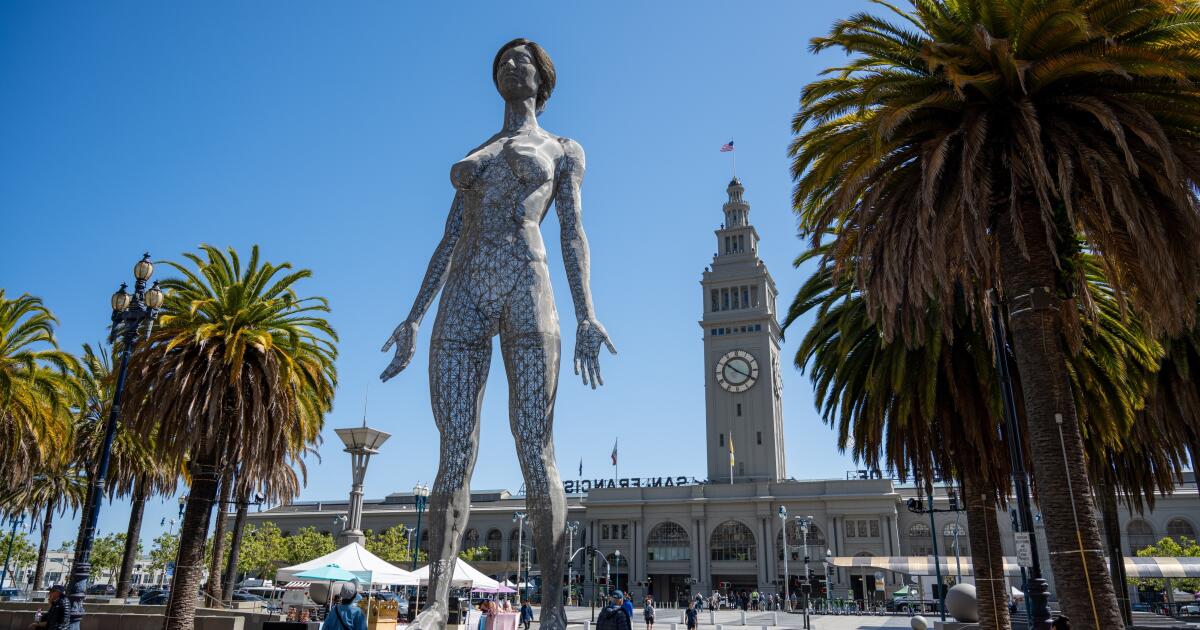
A sculpture of a giant naked woman goes on sale in San Francisco. Bring a crane
-

 Dallas, TX3 hours ago
No ‘straight answer’: Why Pioneer Cemetery is the latest battleground at City Hall
-

 Miami, FL3 hours ago
TSA hosts news conference ahead of World Cup third place match at Miami Stadium

