If there’s one thing we know about the Brewers and starting pitchers, it will be that they use a lot of them. Listen to any broadcast about the team and you will likely hear, at least once, a mention of how many starting pitchers the team has used over the past couple of seasons. (This is a true but somewhat misleading statement, as those counts tend to include “openers,” but the point stands.)
Milwaukee, WI
Milwaukee Brewers 2026 preview by position: Starting Pitcher


Already in mid-March, we’ve seen why the Brewers leaned into acquiring a lot of starting pitcher depth. They traded for highly regarded, about-major-league ready young pitchers in both of the Freddy Peralta and Caleb Durbin trades to go along with the several that were already in the organization.
The loss of Peralta will undoubtedly matter. Peralta was (and still is!) a very good pitcher, an excellent clubhouse presence, and one of the team’s longest-tenured players. But the Brewers have done just about as well as a team with their limited financial means can in terms of replacing him with multiple options that should be able to contribute this season and for many seasons beyond. Let’s take a look.
One thing that this pitching staff will not have in abundance is experience. By my count, there are 12 pitchers who are somewhat in contention for getting starts at the beginning of the season, though that includes three players I expect to be in the bullpen (but who the powers-that-be have murmured about as starters) and one who is currently injured. Of those 12 pitchers, there is one who is 33 years old. There are zero others who are within five years of that one player’s age.
The veteran, of course, is Brandon Woodruff. Woodruff, who turned 33 in February, is five years and three months older than the second-oldest player in this group, Aaron Ashby. Woodruff has started 127 career games; that’s 88 more than any other player on the roster. He’s thrown 745 career innings; the other 11 players in this group have that beat, if you combine them all, but if you narrow the field down to the seven pitchers most likely to grab spots in the rotation, they come up short, with just 717 innings between them.
Woodruff, at this point, isn’t really a known quantity. His health issues are well documented — he hasn’t thrown even 70 innings in a season since 2022. He finished last season hurt. He is obviously not getting any younger.
But last season Woodruff, even with somewhat diminished stuff over what he had at his best in the early 2020s, showed how valuable he can be. Despite lower velocity he managed the best K:BB ratio of his career at 5.93. He had career-best rates in walks per nine and strikeouts per nine. The underlying metrics suggest that those are probably unsustainable, and the losses on his stuff may have contributed to his career-worst rate in home runs per nine innings.
But he will certainly be able to provide leadership and he’s not going to make it easy for hitters. I wouldn’t put it past Woodruff turning into an impeccable control pitcher at this point in his career, either; he’s always had a good walk rate, and he’s a smart enough pitcher to realize that if he can’t throw in the mid-to-upper 90s anymore, he’s going to need to lean into different strengths.
The results could be mixed, and who would take the over if you asked over/under 75 innings this season? But Woodruff can still serve an important function to this team and this pitching staff.
There are a whole bunch of players in this category, a few who are new to the organization and a few who came up through the organization. The thing that they all have in common is a lack of time in the big leagues; Quinn Priester leads this group with 257 major league innings, and not one other player has reached 200.
Priester is, of course, injured. And while I’m optimistic, there are those who viewed his late-season (possibly injury-influenced) swoon as a major warning sign, especially when coupled with the fact that Priester outperformed his FIP by 0.69 runs. But Priester is an excellent example of the Brewers’ front office finding players whose particular talents — in this case, ground balls — are tailored to the team behind them.
The new-to-the-org guys include Brandon Sproat (acquired in the Peralta trade) and Kyle Harrison and Shane Drohan, acquired for Durbin. Sproat and Harrison are relatively recent top 100 prospects. Drohan is a late bloomer who was extremely good in Triple-A last year, but who hasn’t thrown an inning in the majors yet. Harrison hasn’t clicked in the big leagues, yet, but he doesn’t turn 25 until August. All three have intriguing arsenals that you’d expect the Brewers will be able to maximize.
The internal prospects include Jacob Misiorowski, Chad Patrick, Robert Gasser, and Logan Henderson. Gasser, who has made seven career starts dating back to May 2024, is the only one who pitched in the big leagues before last season. Patrick, who spent a good chunk of last season in the rotation, is the only one who has thrown more than 100 innings as a big leaguer.
Misiorowski, of course, could quickly become one of the league’s best pitchers if he’s able to consistently find his spots. Whether or not he can do that remains a question, but if he figures out his control, you’ve got a guy who throws 104 mph with massive extension and multiple devastating off-speed pitches (some of which still reach the plate faster than many other pitchers’ fastballs). Misiorowski walked 4.2 batters per nine innings last year, a number that would’ve tied for second in the league among qualified pitchers, and that mark was better than any of his three seasons in the minors (not including 2022, when he walked seven batters in 1 2/3 innings in his two-game professional debut).
Henderson, like Sproat, has only made a handful of appearances in the majors, but Henderson made such an impression in his five starts early in the 2025 season that it’s difficult not to be excited about him. In those five starts, Henderson allowed only five runs in 25 1/3 innings (a 1.78 ERA) and struck out 33 batters (11.7 per nine). While he won’t keep that pace, and there are questions about his velocity and a third viable pitch (in his five starts last year Henderson threw a fastball or a changeup 89% of the time), there’s a lot of intriguing talent.
Patrick had a great 2025. He made his major league debut in a relief outing on March 29 and was a staple of the rotation (and Rookie of the Year candidate) through the first week of July, when he was demoted not really because he was bad but because the Brewers were finally healthy again and he was the odd man out. Patrick worked on some new stuff in the minors and came back in late August, and down the stretch he served a valuable role as a reliever capable of going multiple innings. He served in that role in the postseason, where he allowed just two runs on three hits and a walk in nine innings while striking out 11. He, along with Misiorowski, was one of the most reliable players in the Brewers’ 11-game postseason run.
Gasser is the one in this group whose future might look murkiest. A fringe top 100 prospect prior to the 2024 season, he — like Henderson last year — made five good starts for the Brewers that season. But an elbow injury required Tommy John surgery, and Gasser didn’t get back to the big leagues until late last season, when he got in 5 2/3 innings in two shaky starts. He got beat up a little bit in the postseason, too, and he hasn’t looked very good in spring training. Gasser is still only 26 and you can’t give up on a guy after less than 35 career innings, but of all the guys in this preview, he’s the one who’s probably trending most downward.
But given the way the Brewers handle their starters, he’s likely to get a shot at some point this year, so we’ll hope he can get back to the promising form he showed before his arm injury.
The relievers who they keep telling us could start
Three players fit into this category, and they’re all left-handed: Aaron Ashby, DL Hall, and Ángel Zerpa. I’m going on the record now to say that I’m skeptical any of them will be any sort of traditional “starter” in the big leagues this year; they just have too many options, and while the bullpen is likely to be pretty heavy on lefties, I don’t necessarily think that’s a problem.
Ashby has proven capable of being one of the league’s top relievers, and the fact that he’ll be “stretched out” as a potential starter (he’s thrown 4 2/3 innings in two spring appearances) could just mean that he’s being prepped as an old-school “fireman,” an ace reliever capable of throwing two or three innings at a time. Ashby did this with regularity last season, when he threw 66 2/3 innings across 43 appearances, and he was excellent in doing so: a 2.16 ERA, 10.3 strikeouts per nine, and — qualitatively — stuff that, when he was on, looked impossible to hit.
I personally don’t believe it makes a ton of sense to move Ashby into a starting role when he’s proven this effective as a reliever. Yes, the Brewers tied some long-term money into Ashby that would make him somewhat expensive as a reliever, but if he’s one of the best relievers in the league he’s still a bargain at the $5.7 million he’ll make this year (and $7.7 million next year, with club options at $9 million and $13 million the next two). If the Brewers had more pressing needs in the starting rotation, I’d say sure, but as long as they’ve got options there, I believe Ashby is more valuable out of the pen.
Hall is similar to Ashby in terms of the starter/reliever dynamic, but he’s also got a lot to prove. Hall, like Garrett Mitchell, has intriguing talent but hasn’t been able to stay on the field, and in Hall’s case there have been some concerning trends in his pitch velocity. Hall has managed just 81 2/3 innings since coming to Milwaukee as one of the two major pieces in the Corbin Burnes trade, and while he’s shown flashes, the results have been largely inconsequential.
What we need to see from Hall is a healthy season so that the Brewers can get an actual assessment of where he fits. He’s still pre-arbitration, so it’s not like they’re taking any financial risk here; he likely starts the season in the bullpen, too, but he has started in the past and could conceivably do that again if there is need.
Zerpa, to my eyes, is just a reliever (a role he filled for the World Baseball Classic winners, Venezuela, over the last two weeks). Of his 148 big-league appearances, 140 are out of the bullpen, and while he did mostly start in the minor leagues, so did a lot of pitchers who end up as relievers. I see no indication that Zerpa (who hasn’t been pitching more than an inning at a time all spring) is being considered for any role other than as a typical reliever, despite what Matt Arnold and Pat Murphy would have us believe.
Beyond those nine players — Woodruff, Misiorowski, Priester, Patrick, Harrison, Sproat, Henderson, Gasser, and Drohan, in roughly that order, I would think — who is in the upper levels of the minors who could play a role this season if necessary?
The top two names here are Carlos Rodriguez, who has made seven appearances with the Brewers over the last two seasons, and Coleman Crow, who hasn’t debuted yet, because they are the two “starters” who are on the 40-man roster. Rodriguez is still young, but he’s got a 6.95 ERA across 22 major league innings and he’s sort of getting edged out of the prospect conversation.
Crow, who the Brewers got from the Mets in the December 2023 trade that sent Adrian Houser and Tyrone Taylor to Queens, had an excellent 2025 season at Double-A Biloxi, where he posted a 2.51 ERA in 10 starts and had a 6.5 strikeout-to-walk ratio. He finished the season at Triple-A Nashville, where he’ll start this year, and if enough players get injured, he could find his way to Milwaukee at some point this season.
Beyond those two, there’s not a whole lot else I’ve got my eye on for 2026, though the Brewers tend to surprise us in this regard.
Probably all of them? But I’ll take a stab at the Opening Day rotation.
We know that Quinn Priester will start the season on the IL with a hopeful return sometime in April or May. Brandon Woodruff is ramping up but probably won’t quite be ready, either. Based on Murphy’s comments, it seems that Misiorowski and Patrick will definitely start the season in the rotation. I’m going to say Harrison gets there, too.
I think the Brewers start Sproat in the minors, unless they want to use him for a start or two and then send him down when Woodruff is ready. I just think the service-time incentive is there for the Brewers to hold him in the minors for about six weeks this year.
I don’t have a good grasp on where the Brewers go with the last two spots to open the season, but just to make a guess, I’m going to say Gasser, as a lefty, gets one of them. For what it’s worth, Adam McCalvy thinks Aaron Ashby gets a spot in the rotation; I don’t really feel good about that as a long-term fix, but it might work in the short term. If we go along with that and say that Ashby starts the season in the rotation, I think it would be in a “piggyback” situation, where you might see Ashby and, for instance, Hall on the same day for three-ish innings each.
The Brewers certainly have enough pitchers to cover the innings they need to cover, but the combination in which they do so will remain mysterious for a while.



Milwaukee, WI
‘You can see God’s hand in it’: How Milwaukee women are building a double Dutch community through sisterhood and fitness

On Milwaukee’s North Side, women 40 and up are coming together to jump double Dutch. Members say that beyond the ropes they are building a sisterhood, strengthening their health and becoming confident in aging.
40+ Double Dutch Club is a nonprofit founded in Chicago by Pamela Robinson in 2016 that uses double Dutch and other fitness activities to encourage wellness, sisterhood, mental health and more for women over 40.
“It amazes me how God can use something as simple as a plastic clothesline to connect women all over the world,” said Robinson, who is also the group’s CEO and board president.
Robinson, 55, launched the organization after discussing the idea with her friend Catrina Dyer-Taylor. At the time she was battling depression.
“My husband and I were about to get divorced, my oldest kids were grown and I just had my youngest one in the house,” Robinson said. “I needed to find a happy place.”
She promoted the meetup on social media, and many of her friends and community members came out to support her.
“I remember telling (Dyer-Taylor) that if no one came then we’d tie the ropes to a fence and jump together,” Robinson said. “However, we never had to do that because our friends came out.”
Since being founded, the organization has expanded into hundreds of subclubs nationwide, including Milwaukee’s.
“I knew that God wanted me to do something and it’s given me purpose and he has put me on a path where 40+ Double Dutch is a part of that,” said Angela Scott, captain and founder of Milwaukee’s double Dutch subclub.
Launching the Milwaukee subclub
Scott, 54, established the 40+ Double Dutch subclub in Milwaukee in 2024 after discovering the organization on Facebook. She took weekend trips to Chicago and sometimes Texas to participate with women of the club.
“The feeling I got from the ladies when I entered the gym was like I’ve known them all my life,” Scott said.
As a breast cancer survivor, Scott said she was glad to have found something that brought her comfort that wasn’t a traditional gym space.
“Double Dutching is a full body workout, and I don’t like the gym, but I knew I needed something to keep my body moving and to keep cancer out of my body,” Scott said.
Once officially joining 40+ Double Dutch, Scott talked to Robinson about bringing a subclub to Milwaukee.
“She said that they had been wanting one in Milwaukee, they just had no one that was interested and committed,” Scott said.

Milwaukee’s subclub now consists of 37 members. Among them is Scott’s mother, Shirley Tomlinson, 76, who is the first and oldest member.
“I feel like my family has grown here and that’s a very positive thing for a person my age,” Tomlinson said. “It helps keep me feeling young, and there’s a lot of support in it.”
Tomlinson said she joined the club after hearing about her daughter’s Chicago experience and watching the film “Beyond the Ropes: The 40+ Double Dutch Club Documentary.”
Though Tomlinson doesn’t jump double Dutch, she does other things for the subclub like record keeping, videography, planning birthday celebrations and more.
“I do everything I can because I’m my daughter’s ride or die,” she said.

Reliving childhood memories
Scott said double Dutch gives her a joyous nostalgia from growing up, especially as she learned how to double Dutch from her aunt who was like a big sister.
“If you were a girl that jump-roped, then you know it takes you back to that space,” Scott said.
When the Milwaukee subclub appears at local events like the Juneteenth parade, residents typically will jump in the ropes with smiles and recall memories as they walk down the streets.
“As you watch us grow, you can see God’s hand in it,” Tomlinson said.


The women of Milwaukee’s subclub meet from 6:30 to 8 p.m. every Wednesday at Abundant Faith Church of Integrity, 7830 W. Good Hope Road.
The meet typically begins with a stretch, then leads to open play that includes dances and songs to let them double Dutch, hula hoop or play a rhythmic game.
One fitness activity recreated by 40+ Double Dutch is African Hopscotch, which includes members jumping to a song called “Double Dutch Bus” by Frankie Smith and sometimes holding pompoms.
To end the session, members close with a double Dutch hymn followed by a circle of prayer.
“We hold hands and then we sing the song,” Scott said. “Regardless of what meet you go to each one will have the same format.”

Building a strong sisterhood
Scott said the relationships being built at the club remind her of the organization’s mission.
“Part of the mission is friendship, fitness, fun and fellowship,” she said. “All of those things resonate with me and in my spirit because it’s a sisterhood that’s based on God’s direction.”

When away from the ropes, members try to support each other in different ways.
“There are several of the ladies in our club that have businesses, and we’ll do anything to support them,” Scott said.
For Tomlinson, who experienced a few health crises this year, it brought relief knowing that there was a sisterhood standing behind her.
“They reached out to me and let me know they were praying for me,” she said. “It’s like having a big family of daughters.”

Achieving long-term goals
Within the next few years, Scott hopes to see the subclub grow in membership and the women begin to intentionally take more time for themselves.
“I truly believe that a healthy and strong woman makes a healthy and strong world because we are the mothers of this world,” she said. “If the woman is not healthy mentally, physically or spiritually, then the world is not healthy.”

Another goal of hers is to visit with incarcerated women.
“For whatever reason that they’re there, I just want to take them out of that space for just 30 to 40 minutes,” she said.
Tomlinson said it amazes her to see her daughter lead, receive support from the community and promote health to other women.
“It’s been wonderful watching her grow and watching how dedicated she is because that’s a big responsibility,” she said.


How to join 40+ Double Dutch Club
If you are a woman over 40 and interested in joining, click here to find a subclub near you and find details about weekly meetups.
Membership is $120 and includes a digital ID card, access to all nationwide subclubs, subclub support and more.
Scott said the summer has been the busiest time for the organization and wants to remind women that you don’t have to jump to be a part of it.
“People are starting to realize we’re in the city and we like it that way because the more women that know then the more that can be impacted by what we have to offer,” she said.

Jonathan Aguilar is a visual journalist at Milwaukee Neighborhood News Service who is supported through a partnership between CatchLight Local and Report for America.
This <a target=”_blank” href=”https://wisconsinwatch.org/2026/07/milwaukee-women-double-dutch-jump-rope-club-community-sisterhood-fitness/”>article</a> first appeared on <a target=”_blank” href=”https://wisconsinwatch.org”>Wisconsin Watch</a> and is republished here under a <a target=”_blank” href=”https://creativecommons.org/licenses/by-nd/4.0/”>Creative Commons Attribution-NoDerivatives 4.0 International License</a>.<img src=”https://i0.wp.com/wisconsinwatch.org/wp-content/uploads/2021/02/cropped-WCIJ_IconOnly_FullColor_RGB-1.png?fit=150%2C150&quality=100&ssl=1″ style=”width:1em;height:1em;margin-left:10px;”>
<img id=”republication-tracker-tool-source” src=”https://wisconsinwatch.org/?republication-pixel=true&post=1318844&ga4=G-D2S69Y9TDB” style=”width:1px;height:1px;”><script> PARSELY = { autotrack: false, onload: function() { PARSELY.beacon.trackPageView({ url: “https://wisconsinwatch.org/2026/07/milwaukee-women-double-dutch-jump-rope-club-community-sisterhood-fitness/”, urlref: window.location.href }); } } </script> <script id=”parsely-cfg” src=”//cdn.parsely.com/keys/wisconsinwatch.org/p.js”></script>

MILWAUKEE — It’s well known that Milwaukee is famous for beer, brats, the Bucks, and the Brewers. But let’s put some respect on the comedy scene here.
The Laughing Tap features weekly stand-up performances with nationally touring acts. They opened up their new venue at 761 N. Jefferson St. in Milwaukee back in March.
Since then, they’ve had dozens of acts perform. Now, they are putting on a new type of comedy show, The Milwaukee Comedy Challenge.
According to the website, the challenge is: “A friendly battle of wits with over $2000 in Cash Prizes, more than 2.5 hours of Paid Gigs awarded, and the chance to challenge yourself to be the best comic you can be. This isn’t about competing with your fellow comics, it’s about challenging yourself to write great material, get bigger laughs, and become a better comic.”
The first round has finished. The challenge continues on July 22 with the start of the second round. The remaining 20 comics will perform a four-minute set. Only 10 will make it to the next round. There will be four more rounds afterwards. In the finals, comics will have to perform 20-minute sets with completely new jokes. The winner will be receive a paid headliner gig at The Laughing Tap, a spot in the 2026 Milwaukee Comedy Festival, and $1,000.
If you think you’re pretty funny, you can get on stage for The Laughing Tap’s weekly stand-up open mic on Wednesdays at 6 p.m. Every aspiring comic gets about three to four minutes.
Milwaukee comedy club The Laughing Tap hosting comedy challenge
Let’s talk:
Hey there! At TMJ4 News, we’re all about listening to our audience and tackling the stuff that really matters to you. Got a story idea, tip, or just want to chat about this piece? Hit us up using the form below. For more ways to get in touch, head over to tmj4.com/tips.
It’s about time to watch on your time. Stream local news and weather 24/7 by searching for “TMJ4” on your device.
Available for download on Roku, Apple TV, Amazon Fire TV, and more.
Report a typo or error // Submit a news tip

Wisconsin Bike Fed interns bring repairs to neighborhoods
Wisconsin Bike Fed students bring mobile bike repair services directly to Milwaukee neighborhoods at no cost.
On a typical summer day, Tanysia Kelley pedals a cargo bike loaded with tools and supplies to parks and libraries across Milwaukee.
Kelley, a junior at Milwaukee High School of the Arts, is one of three high schoolers working this summer for the Wisconsin Bike Federation to repair bikes for free in underserved neighborhoods. On a scorching July afternoon, Kelley and her fellow mechanics set up shop in the shade at Emigh Playfield, on Milwaukee’s south side, where a steady queue of riders waited for the team to fix their flat tires, loose chains and worn-out brake pads.
For Kelley, the best part of the job is giving back to the community and watching them ride away with a bike she worked on herself.
“I love seeing all the kids come over and getting their bikes fixed,” she said as she adjusted the seat of a bike with a wrench. “Yesterday, we fixed this little boy’s bike with his brakes, and he just started zooming all over the park.”
Toni Casagrande, the program’s manager and lead mechanic, said the goal of the program is to expand access to repair services in communities that lack bike shops while giving teens hands-on mechanical skills. The nonprofit Wisconsin Bike Federation pays the students $15 per hour, trains them to perform minor repairs and provides each with a cargo bike for transportation.
Casagrande said the team expects to repair about 300 to 400 bikes by the end of the summer. The program particularly focuses on Clarke Square, Layton Boulevard West, Harambee, Lindsay Heights and other low-income neighborhoods where residents may face transportation barriers. Over 40% of residents in the City of Milwaukee do not drive, according to a county service assessment released last year.
A majority of riders who used the Wisconsin Bike Federation’s mobile repair service last year were people of color, according to the program’s annual report.
The mobile bike repair program launched in 2014. Jake Newborn, assistant director of the Wisconsin Bike Federation, said the organization had long brought bikes and education programs into Milwaukee Public Schools, but staff noticed some families stopped using their bikes when they lacked access to a nearby bike shop or couldn’t afford repairs.
After moving from North Division High School, the program’s main base is now at Bradley Tech High School, where students learn to identify issues through a a 30-point bike inspection. The most common repairs include replacing brake pads, tubes, tires and chains, using both new and recycled parts from donated bikes.
“Many of these are pretty significant repairs,” Casagrande said. “People are often surprised by what we can do with the setup we have, given that it all just fits in a cargo bicycle.”
Kelley said she had no prior mechanic experience – or even a bike – before starting the job. Now she finds herself biking everywhere and is confident in her skills. After returning one rider’s repaired bike, Kelley received a $20 tip. She said some participants also offer donations to the Wisconsin Bike Federation after receiving repairs.
“Most of them are very grateful,” Kelley said. “We’re really trying to help people.”
Casagrande said many students end up pursuing jobs in mechanics once the program is complete. After the summer, Kelley said, she wants to learn how to fix cars or pursue opportunities with other local bike organizations.
For now, she’s happy spending her summer helping neighbors get back on their bikes.
“I really like doing work to feel accomplished in the end,” Kelley said. “I’ll work on things for a really long time just to feel confident, so this is the perfect job for me.”
Mobile bike repair locations
- 10 a.m. to 2 p.m. July 20-23 at Green Bay Ave Playfield, 3872 N. Eighth St.
- 3:30 to 5:30 p.m. July 20 at Villard Square Library, 5190 N. 35th St.
- 3:30 to 5:30 p.m. July 23 at Atkinson Library, 1960 W. Atkinson Ave.
- 10 a.m. to 2 p.m. July 27-31 at Whittier Playfield, 4382 S. Third St.
- 3:30 to 5:30 p.m. July 27 at Mitchell Street Library, 906 W. Historic Mitchell St.
- 10 a.m. to noon Aug. 1 at Good Hope Library, 7715 W. Good Hope Road
- 10 a.m. to 2 p.m. Aug. 3-7 at Merrill Park, 461 N. 35th St., and Lyons Park, 3301 S. 55th St.
- 10 a.m. to 2 p.m. Aug. 10-14 at Holt Playfield, 1716 W. Holt Ave.
Kayla Huynh covers K-12 education, teachers and solutions for the Journal Sentinel. Contact: khuynh@gannett.com. Follow her on X: @_kaylahuynh.
Kayla Huynh‘s reporting is supported by Herb Kohl Philanthropies and reader contributions to the Journal Sentinel Community-Funded Journalism Project. Journal Sentinel editors maintain full editorial control over all content. To support this work, visit jsonline.com/support. Checks can be addressed to Local Media Foundation (memo: “JS Community Journalism”) and mailed to P.O. Box 85015, Chicago, IL 60689.
The JS Community-Funded Journalism Project is administered by Local Media Foundation, tax ID #36-4427750, a Section 501(c)(3) charitable trust affiliated with Local Media Association.
-

 Los Angeles, Ca1 hour ago
LADWP begins long-term repairs after West Hollywood water main rupture
-

 Detroit, MI2 hours ago
Livestream: Mayor Sheffield, Detroit health chief to address wildfire smoke threat
-
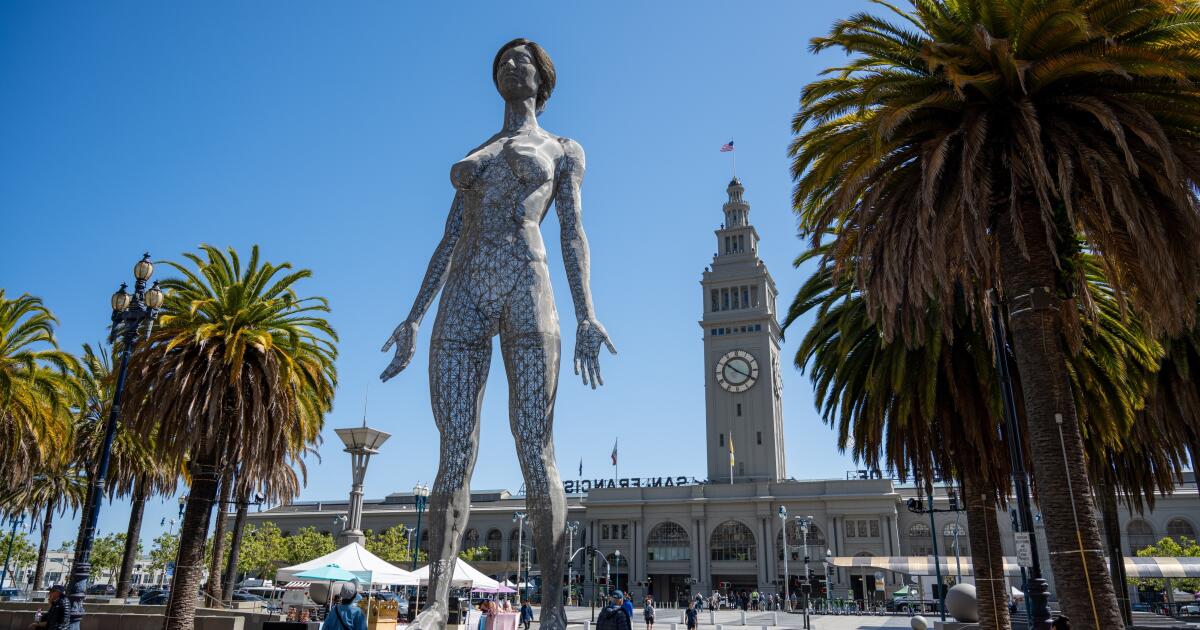 San Francisco, CA2 hours ago
A sculpture of a giant naked woman goes on sale in San Francisco. Bring a crane
-

 Dallas, TX2 hours ago
No ‘straight answer’: Why Pioneer Cemetery is the latest battleground at City Hall
-

 Miami, FL2 hours ago
TSA hosts news conference ahead of World Cup third place match at Miami Stadium
-

 Boston, MA2 hours ago
ICE Boston arrests Barbados national during targeted operations in Attleboro
-

 Denver, CO2 hours ago
Denver Broncos training camp is 2 weeks away
-

 San Diego, CA2 hours ago
Daily Business Report: July 17, 2026, San Diego Metro Magazine

