World
China rebukes UK over nationalisation of British Steel


The UK has appropriated its last working steelworks, following fears its former Chinese owners would shut it down.
Published On 17 Jul 2026
Beijing has warned the United Kingdom that its nationalisation of British Steel has “severely undermined” Chinese companies’ confidence in investing in the UK.
The UK nationalised the loss-making company on Thursday in what the government said was a move taken to protect national interests.
list of 3 itemsend of listRecommended Stories
British Steel is the only source of primary steelmaking in the UK. It supports approximately 2,700 jobs across its main steelworks in Scunthorpe and across the wider supply chain.
The company’s former owner, Jingye – which is among the 100 biggest companies in China – bought British Steel for 70 million pounds ($94m) in 2020. By 2025, Jingye said it was losing 700,000 pounds ($942,000) every day.
British Steel’s nationalisation has been in the works for more than a year.
In March 2025, Jingye carried out a consultation that concluded that the British Steel furnaces were not financially sustainable. The following month, it emerged that Jingye had cancelled orders for a key material used in the steelmaking process, stoking fears that it was planning to shut down the blast furnaces.
That month, the UK government seized operational control of British Steel from Jingye to stop that from happening. The Chinese company retained ownership, but lost operational control.
Thursday, though, saw ownership officially transfer to the UK government, which says it will appoint an independent valuer to “assess whether any compensation is payable” to Jingye.
The process has angered Beijing. The expropriation of British Steel “seriously damaged” Jingye’s legitimate rights and interests and “severely undermined” Chinese companies’ confidence in investing in the UK, China’s Ministry of Commerce said in a statement on Friday.
The UK, the ministry said, has “forcibly” taken over the company and “disregarded” Jingye’s contributions to the British economy and society.
The ministry urged the UK to fulfil obligations under the China-UK Investment Protection Agreement and said it would assist Chinese companies in protecting their rights.



NEWYou can now listen to Fox News articles!
UNITED NATIONS — The Democratic Republic of Congo does not view growing American involvement in its critical minerals industry as a contest with China, the country’s foreign minister told Fox News Digital, arguing that Kinshasa needs multiple partners to transform its vast natural wealth into prosperity for its people.
“I don’t like talking about competition. I like talking about complementarity,” Foreign Minister Thérèse Kayikwamba Wagner said in an exclusive interview at the United Nations.
U.S. President Donald Trump, Secretary of State Marco Rubio and Vice President JD Vance meet Democratic Republic of the Congo Foreign Minister Thérèse Kayikwamba Wagner in the Oval Office at the White House in Washington D.C., June 27, 2025. (Ken Cedeno/Reuters)
“A country as big as the USA, but also a country as big as the DRC and as big as China, they do not develop just with one single partner,” she added. “They develop with different partnerships that respond to different needs and that bring different expertise to the table.”
CHINA’S GRIP ON RARE-EARTH MAGNETS COULD CRUSH US DRONE INDUSTRY BEFORE IT GROWS
The comments come as the Trump administration seeks to increase American access to Congo’s copper, cobalt, lithium, gold and other strategic resources, while reducing U.S. reliance on mineral supply chains dominated by China.
A strategic partnership signed by Washington and Kinshasa Dec. 4, 2025, calls for increased economic cooperation, investment and the development of secure and transparent critical-mineral supply chains. The agreement accompanied a broader regional framework linking economic integration to efforts to end decades of conflict between Congo and Rwanda.
TRUMP ADMIN BACKS BOLIVIA STATE OF EMERGENCY AS LEFTIST EX-LEADER’S LOYALISTS FRACTURE NATION
Excavators and drillers at work in an open pit at Tenke Fungurume, a copper and cobalt mine 110 km (68 miles) northwest of Lubumbashi in Congo’s copper-producing south Jan. 29, 2013. (Reuters/Jonny Hogg/File Photo)
A separate arrangement involving DR Congo’s state mining company Gécamines and commodities trader Mercuria could give U.S. buyers priority access to some copper and cobalt supplies, Reuters reported Dec. 5, 2025. The U.S. International Development Finance Corporation also expressed interest in taking a strategic stake in the partnership.
Kayikwamba Wagner said relations between the U.S. and DR Congo were taking “a more concrete shape” based on mutual economic interests.
She said Kinshasa welcomed “more U.S. interests in the DRC” that could help the country turn its mineral wealth into “tangible transformations for the lives of Congolese,” while also delivering benefits to American partners.
Speaking separately at a high-level U.N. meeting on critical minerals Tuesday, Kayikwamba Wagner warned that the global shift toward clean energy must not reproduce an economic model in which raw materials leave Africa while processing, technology and most of the profits remain elsewhere.
“The global energy transition must not become another extractive transition,” she said. “If it merely replaces one form of dependency with another, it will have fallen short of its promise.”
She called for foreign partnerships to support local processing, infrastructure, technology transfers, research, industrialization and access to financing — not simply secure supplies of raw materials.
CHILL COMING FROM TRUMP’S SUMMIT WITH XI IS PROOF OF A NEW COLD WAR WITH CHINA
M23 rebels stand with their weapons in Kibumba, in the eastern of Democratic Republic of Congo, Dec. 23, 2022. (AP Photo/Moses Sawasawa)
The minerals push is closely connected to the U.S.-mediated peace process between the DRC and Rwanda. The countries initially signed a peace agreement in Washington June 27, 2025, before presidents Félix Tshisekedi and Paul Kagame reaffirmed the deal and signed related economic agreements on Dec. 4. The framework was intended both to reduce fighting and attract Western investment to a region rich in cobalt, copper, tantalum and other minerals.
Kayikwamba Wagner acknowledged that the agreement had not ended the violence but said Washington’s willingness to impose consequences for violations showed that the process remained meaningful.
“This is a 30-year conflict we’re dealing with,” she said. “It’s not going to happen overnight.”
She praised the administration for sanctioning the Rwanda Defense Force and senior Rwandan officials over what the Treasury Department described as their support for the M23 rebel group. Treasury said in March that the RDF had supported, trained and fought alongside M23 as it seized territory and strategic mining locations in eastern Congo. Rwanda has repeatedly denied supporting M23.
“I find it encouraging to see that we have with us a partner that is not willing to give up at the first obstacle,” Kayikwamba Wagner said.
She was in New York as the DRC, which holds the Security Council presidency for July, elevated the connection between natural resources, armed conflict and sexual violence.
Kayikwamba Wagner said rape and other forms of conflict-related sexual violence had risen sharply in areas held by M23 and Rwandan forces, affecting women and girls as well as men and boys.
Victims in occupied areas, she said, often lack access to courts, healthcare or other avenues for redress.
“This is also one of the reasons why we continue to be mobilized against this illegal occupation of eastern DRC,” she said, arguing that restoring state authority was essential to providing survivors with justice and medical care.
CLICK HERE TO DOWNLOAD THE FOX NEWS APP
President Donald Trump arrives for a signing ceremony with Rwandan President Paul Kagame and Democratic Republic of Congo President Felix-Antoine Tshisekedi at the Donald J. Trump Institute of Peace Dec. 4, 2025, in Washington. (AP Photo/Evan Vucci)
In her U.N. remarks, she cited the Rubaya mining area, which is under M23 control and supplies a significant share of global tantalum demand. She said U.N. experts estimated that at least 1,400 tons of coltan were smuggled into Rwanda during the first year after the mines were seized, generating approximately $800,000 per month for the armed group.
The Treasury Department imposed additional sanctions on June 25 against a network it accused of working with M23 to smuggle minerals from eastern Congo into Rwanda, saying the action was intended to support the Washington peace framework and improve transparency in regional mineral supply chains.


Iran threatens to close Strait of Hormuz, impacts global oil prices
FOX Business’ Lauren Simonetti details escalating tensions in the Strait of Hormuz as Iran threatens to block shipping lanes and impose new conditions. This move follows reports of vessels being struck by Iranian drones since March. The uncertainty surrounding the vital waterway has led to a 2% drop in crude oil prices, affecting the global market.
NEWYou can now listen to Fox News articles!
Iran has reportedly instructed Yemen’s Houthi terrorists to prepare to close a critical Red Sea gateway if the United States attacks Iranian power infrastructure, Reuters reported, a threat experts warn could sharply disrupt global shipping even if the group cannot completely seal the waterway.
“This threat should be taken seriously,” Nadwa Al-Dawsari of the Middle East Institute told Fox News Digital. “With recent escalation and U.S. strikes on Iran, Tehran has already signaled that the Bab al-Mandab could become part of its response.”
Three sources told Reuters on Thursday that Iran’s leadership had discussed using the Houthis to shut the Bab el-Mandeb Strait and recently conveyed the request to the group. A source close to the Houthis said missiles and drones had been deployed near the waterway and that the group was awaiting an order to begin attacking shipping.
IRAN-BACKED TERROR PROXY HOUTHIS THREATEN FRESH ATTACKS AFTER YEMEN AIRPORT STRIKE
A Houthi follower during a pro-Iran demonstration, in Sanaa, Yemen, April 6, 2026. (Khaled Abdullah/Reuters)
Edmund Fitton-Brown, a former British ambassador to Yemen and senior fellow at the Foundation for Defense of Democracies, warned in a recent Fox News Digital report that a full resumption of the Houthi maritime campaign could trigger wider fighting.
“It will be interesting if the Houthis do go all in, and resume their campaign against Red Sea shipping with full intensity,” Fitton-Brown said. “This will draw international anger and likely result in Israeli and U.S. strikes on Sana’a and Hodeida.”
“There is potential for a general escalation if this happens, albeit one in which the allies have a clear military advantage,” he added.
Al-Dawsari said the Houthis have continued developing the weapons needed to threaten the narrow shipping corridor despite largely refraining from maritime attacks over the past year.
“While the Houthis have largely refrained from attacking shipping for about a year, they have continued to advance their maritime capabilities, including missiles, drones and sea mines,” she said. “They may not be able to fully close the strait, but they could significantly disrupt shipping and raise costs and risks for commercial traffic.”
US CLAWS BACK KEY CONCESSION TO IRAN AFTER FRESH ATTACKS ON COMMERCIAL SHIPS IN STRAIT OF HORMUZ
This photo released by the Houthi Media Center shows Houthi forces boarding the cargo ship Galaxy Leader on Nov. 19, 2023. (Houthi Media Center via AP)
But the group would not necessarily need to physically control the waterway. Its previous missile and drone campaign demonstrated that repeated attacks — or even a credible threat of them — can push major shipping companies to reroute vessels around Africa, driving up insurance, fuel and freight costs.
The Bab el-Mandeb connects the Gulf of Aden to the Red Sea and Suez Canal, making it one of the world’s most important maritime choke points. The consequences of renewed attacks would be especially severe because Iran has already disrupted shipping through the Strait of Hormuz, historically the principal route for roughly one-fifth of global energy supplies.
A substantial volume of Gulf oil has consequently been redirected through Saudi Arabia to the Red Sea port of Yanbu. Reuters reported that the Bab el-Mandeb route now carries approximately 7% of global energy supplies and that Saudi Arabia has shifted about 70% of its energy exports through Yanbu.
The reported instructions also raise new questions about how much control Tehran exercises over major Houthi military decisions.
In this image provided by the U.S. Navy, the amphibious dock landing ship USS Carter Hall and amphibious assault ship USS Bataan transit the Bab al-Mandeb strait on Aug. 9, 2023. (Mass Communications Spc. 2nd Class Moises Sandoval/U.S. Navy via AP)
“Any decision to escalate in the Bab al-Mandab would be strategic and tied more to the interests of Iran and the Axis of Resistance than to Houthi interests alone,” Al-Dawsari said. “Decisions of this magnitude are likely coordinated through the Axis’ joint operations room under IRGC oversight.”
A source close to the Houthis claimed representatives of Iran’s Islamic Revolutionary Guard Corps in Yemen would control the timing of any move against the strait, Reuters reported.
The latest warning follows earlier Houthi threats against maritime traffic. In the June 12 report, Fox News Digital reported that the group had announced a complete ban on Israeli-owned ships in the Red Sea and declared them “legitimate targets.”
EXPERT WARNS OF ‘GENERAL ESCALATION’ OF FIGHTING IF HOUTHIS RESUME RED SEA CAMPAIGN
A satellite imagery shows Bab el Mandeb Strait, a key shipping waterway and the gateway to the Red Sea, in this handout picture dated July 12, 2026. (Nasa Worldview/Handout via Reuters)
A State Department spokesperson told Fox News Digital at the time that the actions of Iran and the Houthis were “unacceptable” and “dangerous,” warning that they could inflame regional tensions and further disrupt global supply chains.
U.N. Secretary-General António Guterres has “repeatedly condemned” Houthis attacks against ships in the Red Sea and called on all parties Thursday to avoid further escalation, his spokesperson, Stéphane Dujarric, told Fox News Digital.
“Any disruptions or attacks would endanger the safety and security of seafarers, freedom of navigation and the stability of global supply chains and have a negative impact on the economic and humanitarian situation in Yemen and beyond,” Dujarric said. “The Secretary-General underscores that U.N. Security Council Resolution 2722 (2024) must be fully respected in its entirety,” he said on the resolution condemning at least two dozen Houthis attacks on commercial vessels since November 2023 and demanding an immediate end to the attacks.
The emerging threat has also renewed scrutiny of the Iranian weapons networks that helped build the Houthis’ missile and drone arsenal.
Amr Al-Bidh, foreign affairs chief of the Southern Arabian Transitional Council, said that the reported threat also exposed broader failures in the handling of Yemen’s security crisis. “The fact that individuals convicted of trafficking Iranian weapons to the Houthis and leading terrorist operations are now being released under a U.N.-brokered deal only underscores how poorly the Yemen crisis is being managed,” he said, “the main beneficiary of this vacuum is Iran, as seen in its credible threat to close the Bab al-Mandab Strait.”
In a July 15 letter obtained by Fox News Digital, the Southern Arabian Transitional Council formerly known as the Southern Transitional Council, a southern Yemeni separatist movement that seeks greater autonomy or independence for the territory of the former South Yemen, warned U.N. Special Envoy for Yemen Hans Grundberg that a U.N.-facilitated detainee agreement may include people the council says were convicted of assisting Iranian weapons transfers to the Houthis.
A missile is launched from a warship during the U.S.-led coalition operation against military targets in Yemen, aimed at the Iran-backed Houthi militia that has been targeting international shipping in the Red Sea, in this handout picture released on Jan. 12, 2024. (US Central Command via X/Handout via REUTERS/ File Photo)
CLICK HERE TO DOWNLOAD THE FOX NEWS APP
An annex identifies individuals the council alleges were members of a cell that smuggled drones, aviation fuel and heavy and medium weapons from Iran to Sanaa.
The Office of the U.N. Special Envoy for Yemen said it received the letter only after the agreement had already been signed and stressed that it does not determine which detainees are released.
“We have received the letter after the agreement was signed,” spokesperson Ismini Palla told Fox News Digital. “The United Nations – as well as the International Committee of the Red Cross (ICRC) – do not decide who is released and who remains in detention. Our role is limited to mediating the negotiations and ICRC leads on the implementation of the release operation.”
Palla added that “the names of those released are proposed and agreed between the parties under the framework of the Stockholm Agreement on prisoners’ exchange of 2018.”
Fox News Digital reached out to the State Department and the Iranian Mission to the United Nations on the latest developments.
Fox News’ Paul Tilsley and Reuters contributed to this report.
-

 World2 minutes ago
Resource-rich nation praises US ties amid Washington-Beijing critical minerals race
-

 Politics8 minutes ago
‘Shadow government’: Trump claims intel community bragged about hiding Chinese meddling
-

 Health14 minutes ago
Doctors reveal hidden danger for some Ozempic, Wegovy users with brain disorders
-

 Sports20 minutes ago
Olympic great Lindsey Vonn reveals her ankle is ‘still broken’ months after shocking crash
-

 Technology26 minutes ago
Apple AirDrop, Android Quick Share flaws put phones at risk
-
 Business32 minutes ago
Netflix reports higher profits as investors worry about growth
-
 Entertainment38 minutes ago
Kris Jenner’s mom, beloved matriarch Mary Jo ‘MJ’ Shannon, dies at 91
-
 Politics50 minutes ago
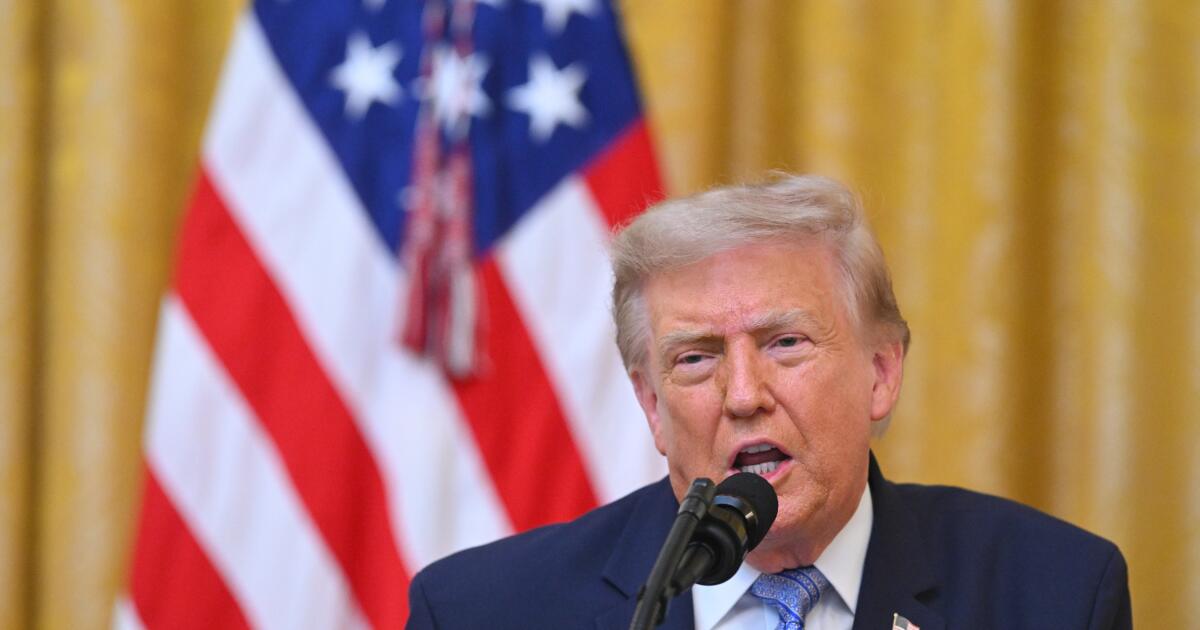
Trump repeats debunked claims about voting vulnerabilities in prime-time speech

