Midwest
Mayo Clinic doctor's suspicious purchase strengthens murder case in wife's poisoning, prosecutors say

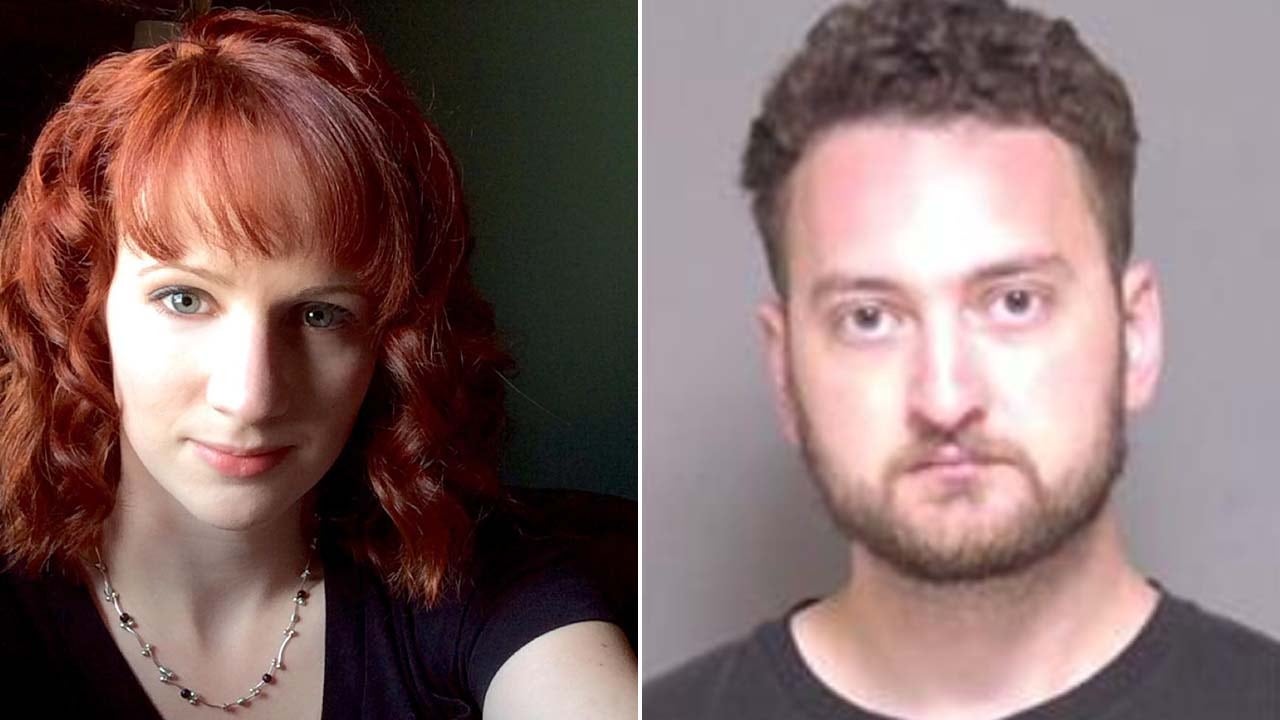
Prosecutors said this week that information pulled from a former Mayo Clinic doctor suspected of poisoning his wife – in addition to online searches like “Internet Browsing History: Can it be Used In Court?” – has strengthened their case since he was indicted on murder charges.
Poison control expert Connor Bowman, 30, faces a potential life sentence if convicted after he was indicted in Minnesota last week on first-degree murder charges in the death of his Mayo Clinic pharmacist wife, Betty Bowman, 32.
Previously, according to court filings, detectives learned Connor Bowman had purchased a gift card for an online pharmacy and that his wife had a lethal dose of gout drug colchicine in her system when she died in Mayo Clinic’s St. Mary’s Hospital on Aug. 20. They also wrote in their indictment that he used his computer to convert his wife’s weight to kilograms and multiply it by 0.8 – an equation that would determine the fatal dose of the drug.
On Tuesday, prosecutors told District Court Judge Kathy Wallace that digital forensic evidence showed that colchicine was, in fact, the drug that Bowman used his credentials to purchase in the weeks preceding his wife’s death, FOX 9 reported.
MAYO CLINIC DOCTOR CHARGED WITH MURDERING WIFE WHO WAS POISONED AFTER OPEN RELATIONSHIP FAILED: DOCUMENTS
The charge against Connor Bowman, 30, was upgraded to first-degree murder with intent last Thursday in the death of his wife, Betty Bowman, 32. (Olmsted County Jail)
Also, at the 15-minute hearing, they asked Wallace to double Bowman’s unconditional bail from $5 million to $10 million and his conditional bail amount to be set at $5 million rather than $2 million, considering the high stakes of his potential life sentence.
Wallace declined to do so, instead telling a handcuffed and shackled Bowman that he would need to establish residency in Minnesota and wear a GPS monitor if he posts bail. The 30-year-old has been behind bars at Olmsted County Jail since his October arrest, according to online records.
His next court date has yet to be scheduled. Michael Schatz, Bowman’s attorney, did not respond to emails for comment on the case.
After graduating from the University of Kansas with a pharmaceutical doctorate in 2018, Betty Bowman worked as a “diligent and capable hospital pharmacist” for Mayo Clinic, according to her obituary. Her husband was a medical resident at the world-renowned hospital’s location in Rochester, Minnesota.
POISON CONTROL DOCTOR TRIED TO CREMATE WIFE AFTER GOUT MEDICINE MURDER: POLICE
Saint Mary’s Hospital at the Mayo Clinic campus in Rochester, Minnesota. (Google Maps)
“Mayo Clinic is aware of the charges filed against a former resident which are unrelated to his Mayo Clinic responsibilities,” Dan Lea, a communications specialist for the hospital, wrote in a statement to Fox News Digital. “The resident’s training at Mayo Clinic ended in early October. We continue to extend our condolences to the family, friends and colleagues of Betty Bowman while the criminal case proceeds.”
The representative did not expound on why Bowman’s residency came to a halt.
Bowman’s arrest and the search of his home were set in motion after police ordered Betty Bowman’s blood samples to be tested at the Minnesota Department of Health.
There, medical professionals determined that 29ng/ml of colchicine – a medication commonly used in much smaller doses to treat gout – was in her bloodstream when she died.
MINNESOTA MAN ACCUSED OF FATALLY IMPALING ACCLAIMED BALLET DANCER RULED INCOMPETENT FOR TRIAL
Mayo Clinic in Rochester, Minnesota. (Google Maps)
Betty Bowman had never been treated for gout, and medical examiners noted in her post-mortem autopsy that she had no symptoms that would lead a doctor to prescribe gout medication. Her death was ruled a homicide caused by the “toxic effects” of the colchicine – although investigators’ knowledge of Bowman’s specific purchase of the drug was just revealed, the Rochester Police Department began to build a case against the doctor soon after his wife’s death.
Friends told police that the Bowman couple were in an open relationship, and that Betty began threatening divorce when Connor developed an “emotional connection” to another woman, the Post Bulletin reported.
Around that time, police said Bowman began making concerning searches on his work laptop for the University of Kansas, where he worked as a poison control specialist, soon after he developed an “emotional connection” to another woman.
Before Betty went to the hospital, Connor Bowman allegedly searched for the drug colchicine.
He was supposed to use the University of Kansas computer to look up medications relevant to calls to the poison control center, but neither he nor his coworkers had any calls pertaining to gout or colchicine during the weeks preceding his wife’s death.
Days before his wife fell ill, Bowman allegedly searched “delete Amazon history police,” “police track package delivery” and “internet browsing history: can it be used in court?”
MURDERED HUSBAND OF UTAH CHILDREN’S BOOK AUTHOR HAD WIFE’S MEDS IN HIS BODY WHEN HE DIED: COURT DOCS
Betty Bowman’s cause of death was the result of toxic effects of colchicine, according to court documents. (Betty Bowman/Facebook)
Five days later, he allegedly searched “food v. industrial grade sodium nitrate,” according to the history on the seized computer, and looked up a medical journal used by doctors to test the lethality of certain substances.
Detectives also learned that Bowman used his medical credentials to access his wife’s electronic health information during her emergency department stay for suspected food poisoning.
Doctors’ treatment for food poisoning had been ineffective, and the woman succumbed to organ failure and fluid in her lungs, according to arresting documents, but she was perfectly healthy before she was admitted.
Bowman also accessed her information a few days after she died, reviewing the medication she was administered, her reported allergies and an operating room log.
An Olmsted County coroner reached out to police when Bowman asked that his wife be “cremated immediately” after her four-day hospital stay and death on Aug. 20.
SUSPECTED FENTANYL DEALER CHARGED WITH MURDER IN OVERDOSE DEATH OF TEXAS TEEN
Around the same time, a concerned friend of the deceased woman called the examiner’s office to report that the couple was “talking about a divorce following infidelity and a deteriorating relationship.”
In the weeks leading up to her death, court documents show, Betty Bowman had also told them her husband was in about $500,000 debt and that they kept separate bank accounts.
Meanwhile, according to a probable cause affidavit, Bowman mentioned to a friend that he stood to receive a $500,000 insurance payout in the event of his wife’s death. Investigations found a $450,000 bank deposit note when they searched the Bowmans’ home after the doctor’s arrest, court documents show.
Connor Bowman was arrested during a traffic stop on Oct. 20 by the Rochester Police Department. (Google Earth)
Bowman wrote in his late wife’s obituary that she suffered from hemophagocytic lymphohistiocytosis (HLH), which is a rare illness where certain blood cells are over-produced and damage organs. Tests performed for HLH were inconclusive, police wrote.
Days before Betty fell ill, Bowman purchased a gift card for a website that sold the drug, police said.
A man who was dating Betty, referred to as “SS” in court documents, told detectives that the woman “had a few days off and was looking to spend some time with him” on Aug. 14.
After they met up the next day, she and the man texted back and forth while she and her husband drank alcohol at home.
The next day, before she was admitted to the hospital, Betty texted the other man that she was sick and unable to sleep; she blamed an alcoholic drink mixed with a large smoothie she drank last night for her illness, the man told police.
Read the full article from Here


A car crashed into a home in unincorporated Cary, Illinois, while three people were inside Monday evening, fire officials said.
A spokesperson for the Cary Fire Protection District said they were called to a home in the 2500 block of Oakdale Terrace just after 5:30 p.m. after reports came in that a vehicle had crashed into a house.
When paramedics and firefighters arrived, they found a black Jeep had slammed into a house, causing damage.
Three people were in the home at the time, fire officials said, but they were all able to get out safely and no injuries were reported. There were two people in the Jeep who got checked out by paramedics for minor injuries, but they declined further medical attention and did not want to go to a hospital.
Because of the damage to the home, McHenry County officials deemed it unsafe to occupy until repairs were made.
The American Red Cross is helping the four residents of the home with temporary housing and other needs while repairs are made.
The circumstances surrounding the crash are under investigation by the McHenry County Sheriff’s Office. It was not clear if any charges or citations would be issued.

I believe God put us here to serve. To always put our lives, energy, and faith into making the world a better place. Growing up in Hays, my parents and teachers insisted we always do the right thing, even when no one was looking. That meant mowing Mrs. Eichelberger’s grass when she couldn’t pay, visiting a shut-in as a cub scout, and taking care of drug-addicted patients with nowhere else to go.
What makes Kansas special to me is the people. I love the finger waves when you pass a truck, Mr. Bolen spending his summer tutoring me in algebra, and the thousands of prayer warriors who prayed when I got prostate cancer. Thanks to you I beat cancer. Kansas is the strong, modest center of the greatest country in the history of the world.
It’s we Kansans together who accomplished more than anyone realized when I had the honor of serving as your Governor: the dark tone changed immediately; there were more Kansans working than ever before; the culture of life was on the rise; we were the first state to fully privatize Medicaid giving our patients better outcomes and saving $1B a year; the first governor in fifty years to fully fund K-12 education; eliminated thousands of duplicative state government positions saving billions without controversy; leaving an $800 million surplus and putting humble Kansas back on track. We did that together.
For me, there are many ways to serve, and I shall continue to do so with every fiber of my being. Kansas has been my family’s home for five generations and hopefully fifty more.
I want to thank the tens of thousands who share our vision of a bold, new Kansas; the thousands who contributed and volunteered; and our fantastic staff who took us to every corner of the state. Most especially thank you to my bride, Ruth, and our amazing daughters. Together this team is unstoppable.
It’s because of you that we won every straw poll, out-fundraised every candidate, built the biggest grassroots campaign and led every poll by double digits. Thank you for believing in us and that dream we call Kansas.
This campaign was never about me. Like you, I believe that Kansas can be the beating heart of America once again.
My service will continue, but I shall not be a candidate for governor in 2026. I am with you—Kansas—every step of the way. Ad Astra Per Aspera”

During closing arguments in Brendan Sorsby’s injunction hearing on Monday, Sorsby’s attorney Jeffrey Kessler pointed to a recent NCAA gambling case involving former Indiana assistant volleyball coach Brett Agne. Kessler argued it demonstrated a stark contrast in how the NCAA has handled gambling-related violations with different cases.
Details in Agne Case
Kessler referenced Agne, who, according to NCAA findings, placed more than 700 sports wagers totaling over $327,000 during a five-month period while employed by Indiana. NCAA investigators determined that 27 of those wagers involved Indiana football and men’s basketball games.
Despite Agne admitting he knowingly engaged in prohibited sports wagering activity after receiving NCAA gambling education, the NCAA’s negotiated resolution stopped short of a lengthy suspension. Instead, the penalties included a two-year show-cause order with a mandatory sports betting education, a requirement that he provide gambling education to his peers, and a suspension of only 10 regular-season matches, roughly 30 percent of Indiana’s volleyball season.
“A two-year show-cause order for Agne, in which any employing member school must require Agne to complete meaningful sports betting education and provide sports betting education to his peers,” the NCAA’s penalty summary stated.
How It Compares/Differs from Sorsby’s Case
Kessler used the case to argue that the NCAA has previously treated gambling violations as opportunities for education and rehabilitation rather than imposing season-long competitive penalties.
The comparison was particularly notable given Brendan Sorsby’s circumstances. The Texas Tech quarterback recently completed a residential treatment program for a gambling addiction and has publicly detailed his recovery efforts since completing the program. Kessler argued that while Agne’s case resulted in educational requirements and a limited suspension despite hundreds of wagers and more than $327,000 in betting activity, Sorsby faces the possibility of losing the rest of his collegiate eligibility.
The comparison became even more notable when examining how the NCAA described Agne’s defense. According to the NCAA report, Agne stated that he used an unregulated computer program that automatically placed wagers based on an algorithm and claimed he was unaware of which games were being bet on, including the Indiana contests. Agne did not bet on his own team as Sorsby did, but Agne also did not acknowledge knowing which bets he was placing — a key distinction from Sorsby.
“Agne stated that he used an unregulated computer program to place bets on games automatically based on an algorithm, and as a result, he was not aware of which games he was betting on, including the Indiana games,” the NCAA’s report stated.
Also on Monday, Kessler emphasized Sorsby’s treatment efforts, revealing during the hearing that a Level-1 gambling treatment specialist diagnosed the Texas Tech quarterback with both a gambling addiction and an anxiety disorder while he was receiving residential care. Kessler argued that Sorsby’s case should be viewed through the lens of treatment and recovery, noting that Sorsby has acknowledged his mistakes rather than attempting to distance himself from them.
Closing
Whether Judge Ken Curry ultimately agrees with Kessler’s comparison remains to be seen, but the Indiana case served as a centerpiece of Kessler’s closing argument on Monday. A decision on Brendan Sorsby’s request for injunctive relief is expected in the coming days, with the ruling potentially determining whether the Texas Tech quarterback will be able to continue his collegiate career.
Join the conversation with other Red Raiders on the Inside The Double T forum.
Subscribe today to get the most in-depth Texas Tech sports and recruiting coverage.
Follow us on X: @RedRaiderSports
Like and follow us on Instagram @rrs_rivals & like us on Facebook.
-

 Alabama17 seconds ago
New Poll Shows Varied Dynamics Across Alabama Republican Runoff Races
-

 Alaska5 minutes ago
Report: Alaska LNG project could cost Municipality of Anchorage millions
-

 Arizona12 minutes ago
Deadly hantavirus case in Arizona; plans for new homes at golf course site withdrawn | Nightly Roundup
-

 Arkansas15 minutes ago
Faces of Arkansas honors 4th-generation pitmaster Harold Jones of Jones Bar-B-Q Diner
-

 California20 minutes ago
Steve Hilton says he is ‘well prepared’ to make changes in California
-

 Colorado27 minutes ago
Major Northern Colorado cities warn lack of power generation could temporarily stunt region’s projected growth
-

 Connecticut30 minutes ago
Rocky Hill firefighters honored for Connecticut river rescue
-

 Delaware35 minutes ago
Lavender & Lambs Festival Returns to Brittingham Farms June 27 – Milford LIVE! – Local Delaware News, Kent and Sussex Counties

