Midwest
Knife-wielding man in St. Louis airport shot and killed by police

NEWYou can now listen to Fox News articles!
A knife-wielding suspect was shot and killed Friday morning at St. Louis Lambert International Airport after refusing orders to drop his weapon, police said.
The officer-involved shooting happened around 1:05 a.m. local time as “STL Airport Police officers were conducting routine security checks in Terminal 1” and “encountered an adult male with a knife,” according to St. Louis County Police.
“The suspect refused to drop the weapon and was tased by one police officer. The suspect continued to advance towards officers, and a second police officer fired his service weapon, striking the male suspect,” police added. “He was pronounced deceased on scene.”
Investigators said both officers involved in the incident have been with STL Airport Police for six months and one year, respectively, and each have prior law enforcement experience.
PASSENGER FINDS LOADED MAGAZINE WITH MYSTERIOUS INSCRIPTION ON ATLANTA PLANE, FBI NOTIFIED
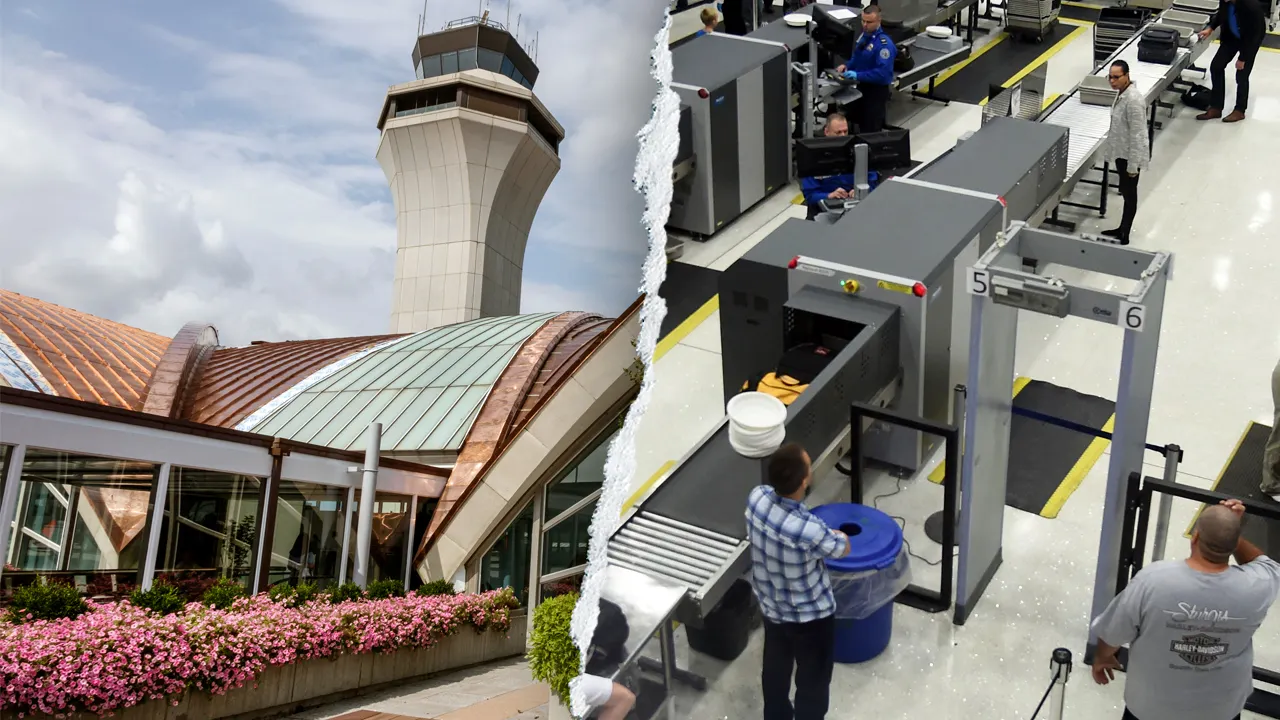
A terminal at St. Louis Lambert International Airport, left. On the right, Transportation Security Administration (TSA) officers inspect airline passengers before they board their flights at the airport in October 2016. (Jeffrey Greenberg/Universal Images Group via Getty Images; Robyn Beck/AFP via Getty Images)
St. Louis County Police Bureau of Crimes Against Persons detectives are now reviewing the incident.
Fox News Digital reached out to St. Louis Lambert International Airport for comment.
NEW TSA POLICY MAY CHARGE PASSENGERS WHO DO NOT HAVE ACCEPTABLE IDS AT CHECKPOINTS
A man walking with his carry-on luggage at St. Louis Lambert International Airport. (Jeffrey Greenberg/Universal Images Group via Getty Images)
The suspect has not been publicly identified.
“Today’s incident in Terminal One was a tragic event for our Airport Community. However, I take great pride in our response. As police responded and county authorities conducted their investigation, we were able to continue normal operations at STL,” St. Louis Lambert International Airport CEO and Airport Director Rhonda Hamm-Niebruegge told KSDK.
An American Eagle plane is seen on the tarmac at St Louis Lambert International Airport in St Louis, Missouri, on Oct. 23, 2019. (Daniel Slim/AFP via Getty Images)
CLICK HERE TO DOWNLOAD THE FOX NEWS APP
“The Terminal One MetroLink station was closed for approximately three hours. During that time, shuttle buses were used to transport riders from Terminal One to the Terminal Two MetroLink station,” she added. “The airport is cooperating with the St. Louis County Police Department as they continue their investigation.”
Read the full article from Here



Gov. J.B. Pritzker’s 2019 “Rebuild Illinois” plan created automatic inflationary adjustments in the state gas tax, which could reach over $1 per gallon by 2056.
Illinois’ state gas tax is slated to go up every year without lawmakers ever voting on the increases.
The state went almost 30 years without raising the tax, which was 19 cents a gallon from 1990 to 2019.
That year, as part of his “Rebuild Illinois” infrastructure program, Pritzker doubled the tax to 38 cents a gallon.
More consequentially, the law created automatic yearly increases linked to inflation. Because of that, Illinois drivers will likely pay more in state gas taxes each year for the foreseeable future unless lawmakers take action, as there’s no expiration date on the annual adjustments.
The gas tax could more than double in the next 30 years. By then, it could be over $1 a gallon, five times more than before Pritzker took office.
The automatic increases allow lawmakers to avoid having to pass an unpopular tax hike and justify it to voters. They also can claim credit when they pause the hikes, saying it’s tax relief for residents.
That’s what the governor has done this year, holding off for six months on a 1.3-cents-a-gallon increase that was slated to kick in July 1.
Pritzker made affordability a central theme of his fiscal 2027 budget, but this temporary reprieve does nothing to change the long-term reality of yearly automatic gas tax increases.
The Illinois Tollway Board might even add automatic inflationary adjustments to passenger tolls, despite the Illinois Tollway reporting its highest collections and net revenue in state history.
Pritzker appoints the tollway board members and is himself an ex-officio member, as is the Pritzker-appointed state secretary of transportation.
Meanwhile, Illinois continues to hoard billions in the state’s Road Fund, money meant for improving transportation infrastructure. The fund held over $3.7 billion at the end of fiscal 2025.
Despite this surplus and drivers paying the nation’s second-highest gas taxes, federal data shows that 80.4% of Illinois roads were considered acceptable in 2024, fewer than in 2015, when the gas tax was still 19 cents.
Lawmakers also divert sales tax revenue on gas that would have gone into the Transportation Fund and Downstate Transportation Fund to fill budget shortfalls. The fiscal 2027 budget redirects $150 million in unexpected gas sales tax revenue from higher fuel costs to help close the state’s broader budget gap.
Gas taxes hit working families the hardest. Middle- and low-income Illinoisans often drive older, less fuel-efficient vehicles and spend a larger share of their income commuting to work, getting to school and handling daily necessities.
Lawmakers should be required to vote on state gas tax increases rather let automatic increases allow them to avoid scrutiny from their constituents.

INDIANAPOLIS – A country star, an “American Band” and a Fleetwood Mac tribute act highlight the second wave of free concerts at this year’s Indiana State Fair.
Organizers revealed five more acts for the Hoosier Lottery Free Stage: Trace Adkins, TUSK – The Classic Fleetwood Mac Tribute, Josiah Queen, Grand Funk Railroad and the Happy Together Tour.
All shows are free with paid fair admission and start at 7:30 p.m. unless otherwise noted. Tickets are available here.
Here’s a look at the free concert schedule (newly announced shows in italics):
- The Beach Boys: Friday, Aug. 7 – Opening Day
- TUSK – The Classic Fleetwood Mac Tribute: Saturday, Aug. 8
- Josiah Queen: Sunday, Aug. 9
- Busta Rhymes: Thursday, Aug. 13
- Grand Funk Railroad: Friday, Aug. 14
- Trace Adkins: Sunday, Aug. 16
- Happy Together: Wednesday, Aug. 19
- Gene Simmons: Thursday, Aug. 20
- Don McLean: Saturday, Aug. 22
- Tasha Cobbs Leonard: Sunday, Aug. 23
Here’s more about the upcoming acts, according to the Indiana State Fair:

TUSK – The Classic Fleetwood Mac Tribute (Aug. 8)
TUSK has been crisscrossing the country since 2008 as The Classic Fleetwood Mac Tribute. Five pro musicians turned into masters of their trade through decades of individual music study, live performance, creative risk, and devotion to the art. TUSK features note-perfect renditions of both the solo and full band songs, with each member specializing in one of the core lineup of Fleetwood Mac (Lindsey Buckingham, Stevie Nicks, Christine McVie, John McVie, and Mick Fleetwood). They possess an electric stage presence that can only come from well over a decade touring together. Truly the best at what they do, TUSK is unmatched in their tribute to one of the greatest bands of all time.

Josiah Queen (Aug. 9)
Josiah Queen has quickly become one of the most impactful voices in Christian music, blending raw authenticity with deeply resonant melodies. With over 1.3 billion combined global streams, his music continues to inspire a wide-reaching and rapidly growing audience. Following the breakout success of “The Prodigal” (200M+ streams), Josiah’s single “Dusty Bibles” became a defining moment in his career becoming his first Billboard Hot 100 hit, and certified Gold in under six months from release. The song also climbed to the top tier of streaming performance, landing in the Top 3 Christian/Gospel Streaming Songs in the U.S., charting on the Spotify Viral 50 in over 15 countries, and reaching the Shazam Top 200 in multiple territories.

Grand Funk Railroad (Aug. 14)
Affectionately known as The American Band, Grand Funk Railroad continues to pack venues across the country, connecting generations of fans with their unmistakable mix of hard-driving rock, soulful vocals, and anthemic hits. Founding members Don Brewer (vocals and drums, and writer/singer of the iconic “We’re an American Band”) and Mel Schacher (bass, the thunder behind the groove) are joined by guitar slinger and veteran of Bob Seger’s Silver Bullet Band Mark Chatfield; and the ever-versatile Tim Cashion (affectionately known as “Dr. Tim”), who – in the past – has hit the road with Robert Palmer and Bob Seger, on keys. Their influence can still be heard in the DNA of rock icons like Van Halen, Bon Jovi, Foreigner, and Journey.
Grand Funk’s music endures not only on the airwaves—thanks to mega-hits like We’re an American Band, I’m Your Captain/Closer to Home, The Loco-Motion, and Some Kind of Wonderful—but also on big screens and TV campaigns. From Disney’s The Country Bears to General Motors commercials, and blockbuster films like Radio and Sahara, their songs remain a cultural touchstone. With more than 25 million albums sold, 19 charting singles, 8 Top 40 hits, and two No. 1 smashes, Grand Funk has earned 7 gold and 10 platinum certifications—including 2022 platinum awards for both We’re an American Band and Some Kind of Wonderful. Whether you’re a lifelong fan or discovering Grand Funk for the first time, there’s no better time to experience one of rock’s most enduring bands.

Trace Adkins (Aug. 16)
Over the course of his three-decade reign in Country music, Trace Adkins has emerged as a full-fledged icon whose reach spans far beyond the genre’s borders. A multi-award-winning singer and actor who’s scored 40 hit singles on Country radio, the Louisiana native is now nearing the 30th anniversary of his trailblazing debut album Dreamin’ Out Loud—a 1996 LP that delivered his No. 1 “(This Ain’t) No Thinkin’ Thing” and “Every Light In The House” (a Top 5 entry on Billboard’s Hot Country Songs chart). With 12 million albums sold to date, the superstar entertainer recently followed his featured spot on Blake Shelton’s Friends & Heroes Tour with his own What Color’s Your Wild Tour (a hot-ticket headline run named for his hard-driving anthem released in early 2025) and is currently on his 30th Anniversary headline run in 2026. A true American legend whose powerhouse catalog includes 14 studio albums, Adkins continues to embody the fiery spirit of traditional Country while moving the genre forward with his ever-evolving sound.

The Happy Together Tour (Aug. 19)
The Happy Together Tour 2026 consists of eight acts: The Association, The Troggs, Chicago Lead Singer 1985-2016 Jason Scheff, Gary Puckett, The Fortunes, Rone Dante of The Archies and The Turtles, The Vogues and The Cowsills.. These artists had their biggest hits in the 60’s, 70’s and 80’s and brought timeless sounds and songs of that time period. These bands combined have multiple No. 1 hits making this tour an iconic homage to an era of music that has influenced many of today’s artists. The tour has consisted of several different bands and artists throughout the nearly 40 years it has been running.
The Indiana State Fair runs from Aug. 7 through Aug. 23 and is closed on Mondays. Get tickets here.


Hear from CIWW as mandatory lawn watering ban issued in Des Moines metro
Hear from CIWW and Des Moines Water Works as Des Moines metro is placed under a lawn watering ban for the second consecutive year on June 8, 2026.
Central Iowa residents face a second consecutive summer banned from watering their lawns as Central Iowa Water Works seeks to preserve its capacity to produce sufficient safe drinking water.
CIWW announced the ban Monday, June 8, after Des Moines Water Works, its largest utility, estimated that with temperatures set to surpass 90 degrees Tuesday and high nitrate levels requiring it to provide additional treatment, demand would reach 98% of capacity.
Already, the system’s nitrate removal facility, among the world’s largest, was operating “at full throttle,” Des Moines Water Works CEO Amy Kahler said during a Monday news conference.
Here’s what to know about the ban.
Why is Central Iowa Water Works requiring a ban?
CIWW officials warned in early May that a lawn-watering ban like the one imposed in June 2025 was likely after a winter during which high nitrate levels in central Iowa’s source water — the Raccoon and Des Moines rivers — failed to abate.
Elevated nitrate concentrations in the rivers require “significantly more treatment” to achieve a federal safety standard of no more than 10 milligrams per liter, Tami Madsen, CIWW’s executive director, said at Monday’s news conference. Lawn watering greatly increases demand in warm weather, and “we have reached a point where conservation is necessary to preserve treatment capacity and ensure reliable service to everyone,” Madsen said.
Who does the ban affect?
Customers of Des Moines Water Works are the largest group. Also under the ban are Ankeny, Clive, Johnston, Norwalk, Polk City and Waukee and areas served by Urbandale Water Utility, West Des Moines Water Works, Warren Water and portions of the Xenia Water District.
Grimes, a member of the CIWW, isn’t under the ban because it’s not yet connected to the shared water distribution system.
How high have nitrate levels been?
In addition to the Raccoon and Des Moines rivers, the nitrate levels in the Des Moines Water Works’ infiltration gallery, a system of water naturally filtered through rock and sand, have been unusually high, Kahler said.
The gallery typically is the utility’s best water source. But it has been over the 10-milligrams-per-liter limit for nearly 90 days, which Kahler called a record.
On Tuesday, nitrate levels were 14.98 milligrams per liter in the Raccoon River; 11.75 milligrams in the Des Moines River; and 11.83 milligrams in the infiltration gallery, Des Moines Water Works reported.
Nitrates, even at low levels, have been tied to some cancers and to serious illness in infants. The federal government requires water utilities to alert consumers when nitrate levels rise above the standard.
What’s causing high nitrate levels in the Raccoon, Des Moines rivers?
Farming contributes about 80% of the nitrates in the Raccoon and Des Moines rivers, according to a Polk County water analysis released last year.
Iowa farmers use commercial nitrogen as well as manure from millions of pigs, chickens, turkeys and other livestock to fertilize the state’s roughly 24 million acres of corn and soybeans. Nitrogen and phosphorus, two nutrients that can befoul Iowa waterways, also naturally occur in Iowa’s rich soil.
Weather plays a major role. Drought, for example, can result in a buildup of nutrients in the soil. When rains return, as they have the past two springs, they can pick up the contaminants and move them to waterways both over land and through the drainage tiles that underlie about 13 million acres of farm fields across Iowa.
What’s being done to cut fertilizer losses?
The state adopted the Iowa Nutrient Reduction Strategy in 2013, setting a goal to cut by 45% the nitrogen and phosphorus that reach Iowa streams and ultimately flow into the Mississippi River, contributing to the dead zone around the river’s mouth in the Gulf of Mexico, renamed the Gulf of America by the U.S. government.
The state and federal governments offer farmers financial and technical assistance to adopt practices like planting cover crops and reducing or eliminating tillage to cut fertilizer losses. They also encourage establishing buffer strips, bioreactors and wetlands that help clean water as it leaves fields.
In May, Gov. Kim Reynolds announced the state will give CIWW a $25 million grant to expand and upgrade its nitrate removal facilities, part of a statewide overhaul of Iowa’s water quality funding. However, the state so far has declined to impose measures to reduce nitrates from agricultural runoff, with Reynolds saying in July 2025 that regulation “is hardly ever the answer.”
Are candidates addressing the issue?
Zach Lahn, the GOP nominee to replace retiring Republican Reynolds in this fall’s gubernatorial election, has said Iowa must “start addressing the problem at the source — not just relying on expensive treatment upgrades after the damage is already done.”
“Upgrading water treatment facilities may help in the short term, but it’s ultimately a Band-Aid approach that passes massive costs onto taxpayers and communities,” Lahn said in a post on Facebook.
Democratic nominee Rob Sand points to improved water quality as part of an effort to address Iowa’s growing cancer rate, and calls for a variety of initiatives including tax breaks for farmers who adopt conservation measures, improved water monitoring and more transparent tracking of farmers’ manure use.
“These proposals aren’t a promise to solve Iowa’s water quality issues and cancer crisis overnight,” Sand says on his campaign website. “There aren’t any realistic ways to do that overnight. But they are a promise to move our state in the right direction and the first steps towards seeing improved water quality and cancer rates in the coming years ― not the coming centuries.”
Iowa Agriculture Secretary Mike Naig, a Republican seeking reelection, has maintained that growers are making progress in preventing fertilizer losses, including leading the nation in adopting cover crops and other conservation practices and building infrastructure like wetlands.
But, he added on June 3 at the World Pork Expo in Des Moines, “There is no finish line when it comes to soil conservation and improving water quality. We can always do more.”
Chris Jones, an Iowa City Democrat and longtime activist on water quality who is challenging Naig for the agriculture secretary post, said in a statement Tuesday that the state’s approach to cutting agricultural runoff is not working.
“Des Moines area residents and people all across Iowa now commonly spend hundreds or thousands of dollars for in-home water treatment for peace of mind as they worry about their and their loved ones’ health,” Jones said, pointing to news that Iowa is one of only three states with rising new cancer rates, according to this year’s Cancer in Iowa report.
Is data center water use contributing to the water crisis?
Concern has been rising about water consumption by proliferating data centers, which use it to cool their equipment. Tech giant Microsoft, with a growing array of data centers in West Des Moines, used about 2.4% of the city’s total water last year, West Des Moines Water Works reported. It was 0.3% of the CIWW network’s overall water use in 2025.
Christina Murphy, general manager of West Des Moines Water Works, said Microsoft was nevertheless the city’s largest user in 2025, consuming 62.3 million gallons, primarily because other large business users were prevented from watering their lawns during last year’s ban. She said Microsoft does not irrigate its lawns.
Microsoft agreed in 2023 to provide West Des Moines Water Works with $25 million to provide large surface and underground water storage facilities that will offset its water usage, Murphy said.
The 300 million gallons of underground storage is still being developed, she said, adding that Microsoft also is moving to systems that reduce its water usage.
The lawn-watering ban isn’t about how much water CIWW can produce, but its capacity to treat high nitrate levels in its source water, Murphy said. “We have lots of capacity to treat water, just not with these levels of nitrates,” she said.
What about my new sod, garden and flowers?
The ban does not prevent residents from watering newly installed sod, seeded areas and trees or hand watering gardens and flowers, officials said. It also does not prevent watering of golf courses and sports fields.
CIWW encourages residents, in addition to refraining from lawn watering, to conserve home water use, including running dishwashers and washing machines only with full loads and fixing leaky faucets and toilets.
How long will the ban last?
The ban will continue until nitrate levels drop enough to guarantee there is sufficient treatment capacity to allow lawn watering to resume. For reference, last year’s ban began June 12. It began easing in stages on July 18. The last restriction ended Aug. 15.
Is central Iowa’s water safe?
“I want to be clear about one thing: Our drinking water is safe,” Madsen said at Monday’s news conference.
Donnelle Eller covers agriculture, the environment and energy for the Register. Reach her at deller@registermedia.com.
-

 Alaska3 minutes ago
Land transfer to Alaska Native corporation preserves stretch of Nome River
-

 Arizona10 minutes ago
Texas-based Buc-ee’s reveals opening date for first Arizona store
-

 Arkansas13 minutes ago
Arkansas lands grant to battle deadly cattle tick disease
-

 California18 minutes ago
Operation Hands Down disrupts Central California gangs – Inside CDCR
-

 Colorado25 minutes ago
$25.7M Colorado private ski mountain property heads to auction
-

 Connecticut28 minutes ago
Connecticut driver spots snake in car while driving, police say
-

 Delaware33 minutes ago
Delaware Bay’s new oil spill response boat officially christened
-

 Florida40 minutes ago
Sheriff’s Office investigating fatal shooting of child in Florida City

