Kansas
Trust fall: Trump’s win or loss will further damage our elections • Kansas Reflector


The Rule said, “Don’t talk about politics at the dinner table.”
It wasn’t polite to mention deficit spending, because, well … The Rule. And not immigration. Or racism. Or abortion. Or inflation.
And according to The Rule, you certainly shouldn’t bring up the candidates. You weren’t to mention how you didn’t trust the Democrat, or how you didn’t agree with the Republican.
The Rule told us this talk was too divisive. Instead, just tell your dinner guests that you voted, because, even if we couldn’t agree on policy or candidates, we agreed to trust the elections.
How old-fashioned.
Today, merely mentioning the election — mail-in ballots, early voting, election fraud, poll workers — is just as likely to kick up a fight as a debate about the choice between Democrat or Republican, red or blue, pro-life or pro-choice.
At its core, the 2024 presidential election next week will shine a spotlight on our confidence in democratic election results. Will we trust the announced winners? A partisan divide on basic election logistics suggests that we could be in for a roiling debate, not just at our national dinner table, but here in Kansas as well.
A report on the political attitudes of Kansans published this week by the Docking Institute at Fort Hays State University surveyed hundreds of voters statewide.
It happily noted, “Respondents had high confidence with the election results in Kansas. About sixty percent (60.5%) of respondents agreed or strongly agreed that they were confident that the reported winners of the elections in Kansas are actually the candidates that most Kansas voted for.”
Is 60.5% a number that should make us confident?
The fact that anyone reads this polling result as positive news is itself discouraging. To that same question, 10.4% said they disagree or strongly disagree. The same number said they “don’t know.”
This is not “high confidence” in elections. Those “disagree” and “don’t know” percentages, even if wildly off, represent tens of thousands of Kansans that might believe the wrong candidate — their candidate — unfairly lost.
How have those confidence percentages changed during the past few years? Not much. While it’s positive news that Kansans aren’t doubting their elections more each year, we might also worry that this doubt is becoming part of the political identity of Kansans.
Kansans are worried about problems that either don’t exist or problems so rare that they are difficult to document:
- 15.3% believe that illegal immigrants were voting in Kansas elections in large numbers.
- 11.6% believe that voter fraud routinely decides the winners of elections in Kansas.
- Sizeable numbers believed ballot drop boxes should be banned (23.5%) and vote by mail should be abolished (23%).
Call it Kansas election skepticism.
The scare-mongering of Kris Kobach might have successfully entrenched this anxiety about elections into Kansans. His deceptive hyperventilation about voter fraud played out in the courts, in his grasps for national office and in his run for governor. His constant squawks about voter fraud and election integrity may have nudged our statewide attitudes toward suspicion, along with Trump’s more recent shoves on the national stage.
How much is this a Kansas belief and how much is this a Republican belief? That’s difficult to tease out from the survey. All we can see is that 34.1% identified as some kind of “conservative,” while 23.5% identified somewhere along the range of “liberal.”
To answer this question, we need to check national partisan attitudes.
In a report issued last month, Gallup surveyed nationally on the issue of “votes cast by people who, by law, are not eligible to vote.” A wide majority of Republicans (74%) identified this as a “major problem,” while only 14% of Democrats saw it that way. Other surveys found similar partisan divides.
According to the Pew Research Center, Democrats (90%) are 33 percentage points more likely to forecast this election as being run and administered very or somewhat well than Republicans (57%). Trump supporters are less trusting than Harris supporters of election basics such as vote counting, poll workers and election officials. The divide on mail-in ballots is the widest: 85% of Harris supporters are confident in them as opposed to 38% of Trump supporters.
An area of skeptical overlap? Only 8% of all respondents to the Pew poll said they are highly confident in the Supreme Court’s neutrality, if it needed to issue an election decision (2% for Harris supporters; 14% for Trump supporters).
That kind of animosity — whether from one political party or both — toward the basic function of voting is an existential threat to democracy. As some of Trump’s advisers whispered to his deaf ear in 2020, it’s vital to American democracy that the loser trusts both the counts and the courts, and steps aside.
Clearly, Trump’s false claims about voting have fueled Republican doubts about elections. Look no further than Kansas Speaks: It didn’t start asking about election confidence until the 2022 fall survey, in the wake of Trump’s fraudulent clinging to office.
The Rule about dinner table politics was a domestic rule about courtesy. Respect the people who sit across the table from you — enough to not clutter the table with politics.
A Trump biographer and the new movie about Trump’s rise detail another version of The Rule. Along with two other tenets, Trump learned this lesson from the ruthless New York lawyer Roy Cohn. This version of The Rule? “Claim victory and never admit defeat.”
Trump’s dogged insistence that he won — that he always wins — is his personal version of what MIT election experts call the “loser’s regret phenomenon.”
Researchers with their Election Data + Science Lab have documented this effect over decades and across countries. When voters watch their preferred candidate lose, they express less confidence in the election process. Logically, there is a “winner’s effect,” calculated by tracking how much more confident people become in elections after their candidate wins.
When combined, these effects can be substantial. Simply put in one of their studies, “Winners are consistently more trusting of the vote count than losers.” In this way, the reaction of Trump and his followers was at once predictable and extreme, as they searched for votes in Georgia, waged losing court battles and ultimately stormed the Capitol.
Four days from the election, we are caught in a dilemma of election confidence. If voters elect Trump as president next week, he will have four more years in power to damage confidence in our elections. During his first term, he used the bully pulpit to cast doubt about voting machines, poll workers and election commissions. We should expect more of the same from a second Trump term. We should expect election confidence to slide, even with the winner’s effect. Republicans might be buoyed, but Democrats will doubt, with everyone soured by Trump’s deep distrust of elections.
Conversely, if Trump loses, he is likely to fight the election results. The Rule of “never admitting defeat” means a wave of loser’s regret, fueled by Trump’s childish insistence that he must win. His supporters are likely to feel that sting and doubt returns in upcoming elections.
Either way, Trump and his enablers have been and likely will continue to be an accelerant of election doubt, fueling unbounded and unfounded skepticism. Four years from now, political scientists likely will still be polling doubting Kansans who will be thinking of Trump’s lies and parroting them around the kitchen table to anyone who will listen — even if it ruins family dinner.
In this way and many others, the bonfires that Trump and his operatives lit within our elections will still be burning, regardless of who wins next week.
Eric Thomas teaches visual journalism and photojournalism at the William Allen White School of Journalism and Mass Communication at the University of Kansas in Lawrence. Through its opinion section, Kansas Reflector works to amplify the voices of people who are affected by public policies or excluded from public debate. Find information, including how to submit your own commentary, here.



KSHB 41 reporter Isabella Ledonne reports on stories in Overland Park, Johnson County and topics about government accountability. Share your story idea with Isabella.
—
Saturday marks the final FIFA World Cup 26 match in Kansas City with Argentina set to meet Switzerland on the pitch at Kansas City Stadium.
Kansas City to reduce bus transit frequency, extended hours after World Cup
Public transportation received a big boost during the World Cup.
Johnson County launched JOCO United, and according to leaders, the airport drop and ride service that was implemented for the tournament will stick around.
“It has been very smooth every time,” Johnson County resident Mariah Wickham said. “I’ve been up and down so many times.”
Kansas City, Missouri, also bumped up its transit options, but not all of the those will be sticking around once the final whistle blows.
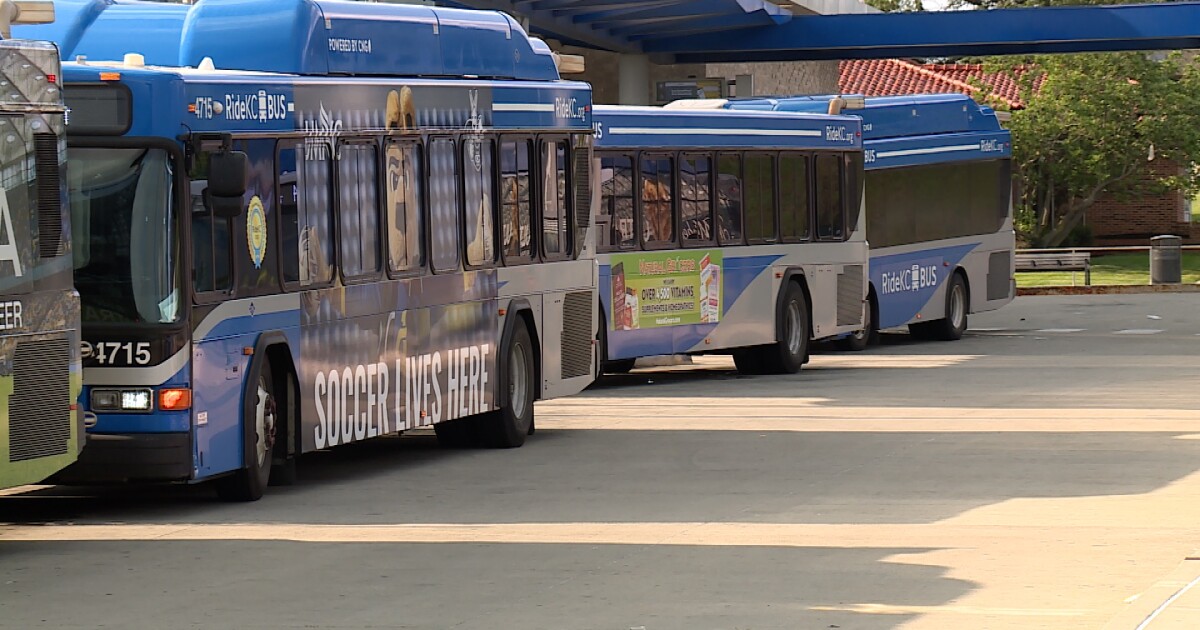
Tens of thousands of people have been using the airport link, streetcar and the buses to get around Kansas City. The city poured millions of dollars into building up its public transit infrastructure. The KCATA added more frequency to bus transit lines and the streetcar, pushing more fans to use public transportation during the tournament.
Brian Luton
“With the World Cup here, I was able to exercise using the streetcar more frequently and that was really fun,” Trish Luancing said. “It wold be nice to not have to drive everywhere and not have to worry about parking.”
But thousands have been relying on public transit for years, regardless of what event was in town.
“It’s been busier since the World Cup,” Jeffrice Jackson, a bus rider, said. “It’s been smooth sailing.”
The KCATA added streetcar ‘bus bridge’ links, extended bus service hours and increased frequency on East-West routes to link riders to the streetcar. It’s benefited both travelers and commuters.
Brian Luton
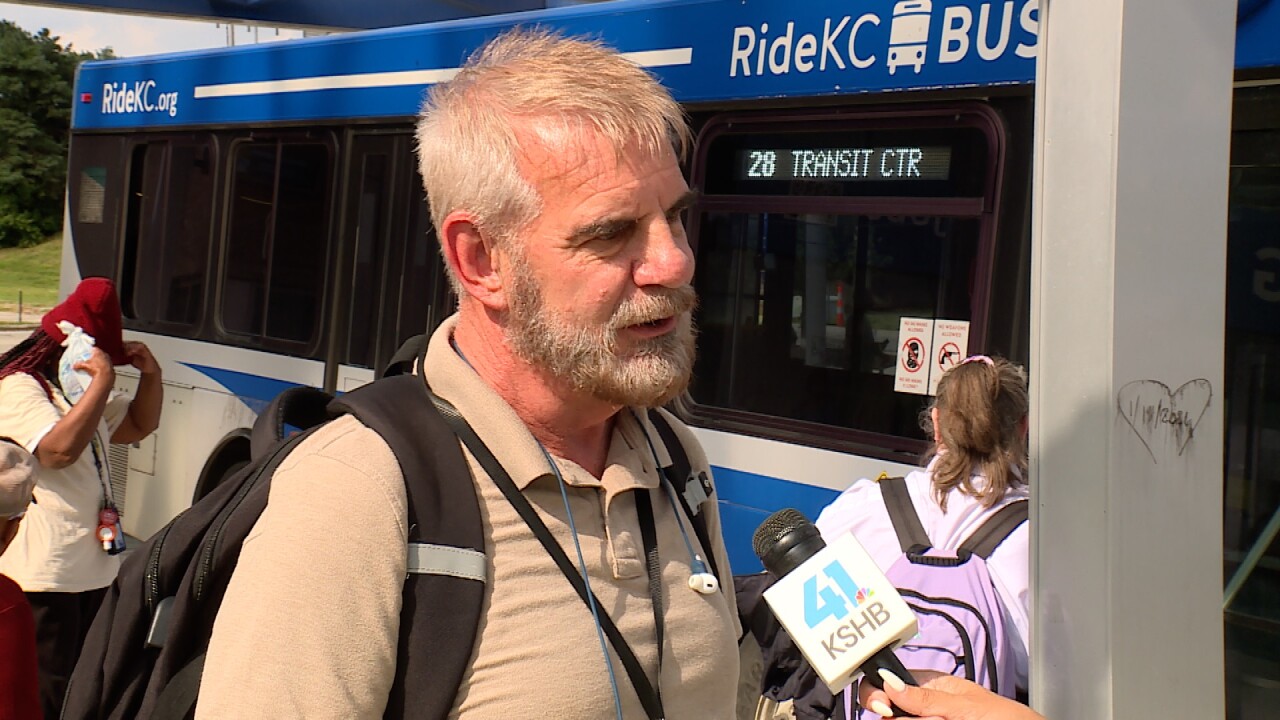
“[Service] has been more consistent with the World Cup than it was previously,” Jerry Breault, a rider said. “We were missing buses or routes because there weren’t enough drivers to drive that route.”
But the add-on’s stop on Sunday, July 12. If the transit authority can’t find more money, more than a dozen routes will be cut, potentially impacting more than 8,000 riders.
“It’s a little frustrating,” Breault said. “A lot of us rely on it just to get back and forth to work, to take care of our daily needs. It looks like we may be having to find alternatives and we’re not very happy about that.”
The KCATA will potentially suspend these weekday and weekend routes by September:
Weekday Route Eliminations:
- 9 – 9th Street, 365 average weekday ridership
- 21 – Cleveland Antioch, 512 average weekday ridership
- 23 – 23rd Street, 266 average weekday ridership
- 25 – Troost Local, 1,460 average weekday ridership
- 27 – 27th Street, 422 average weekday ridership
- 57 – Wornall, 411 average weekday ridership
- 71 – Prospect Local, 464 average weekday ridership
Weekend Route Eliminations:
- 9 – 9th Street, 349 average weekend ridership
- 21 – Cleveland Antioch, 312 average weekend ridership
- 23 – 23rd Street, 312 average weekend ridership
- 25 – Troost Local, 1,431 average weekend ridership
- 27 – 27th Street, 455 average weekend ridership
- 57 – Wornall, 595 average weekend ridership
- 71 – Prospect Local, 982 average weekend ridership
Bus fares came back earlier this summer to offset some of the operation costs, but many have reported issues with the free fare cards and eligibility.
“There’s always funding challenges with the KCATA,” Kansas City, Missouri, Mayor Quinton Lucas said. “How are the fare re-institutions working right now?”
Brian Luton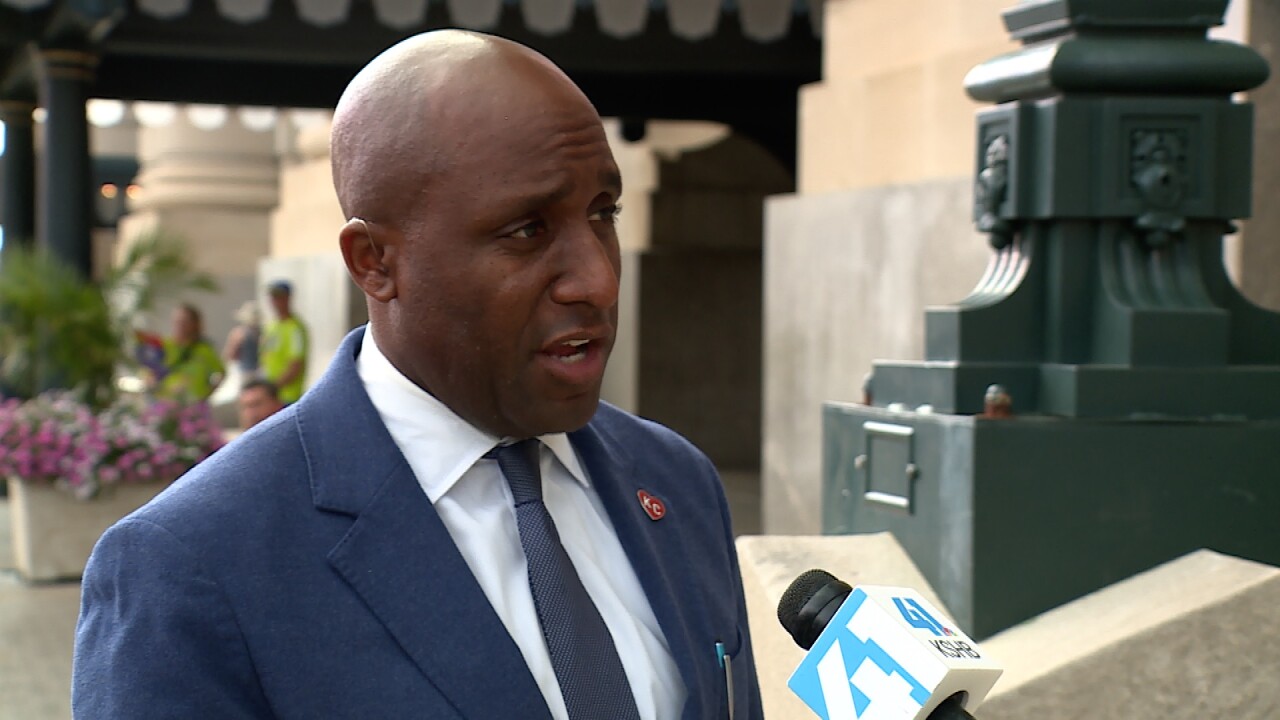
Mayor Lucas told KSHB 41 News Reporter Isabella Ledonne the transit improvements implemented for the World Cup “should continue,” and there are plans to talk with the KCATA commissioners to “make it work”.
“KCATA cannot just be Kansas City supported alone forever,” Mayor Lucas said. “Our approach and our preference is that the region got to see how much they would like [expanded service] during the World Cup. It was always intentional that if they liked it, maybe they would invest and maybe they would want this thing to go further.”
That’s good news to the thousands of daily riders.
Brian Luton
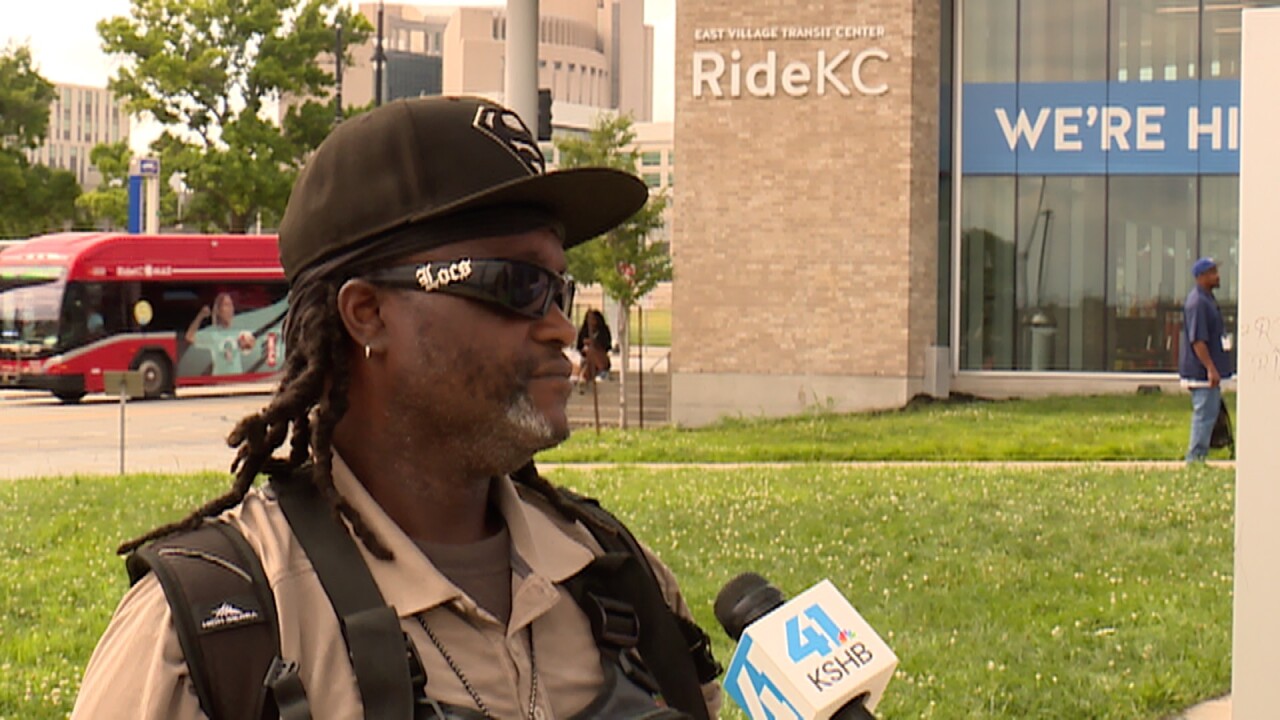
“I think it’s good because it helps people get around if they need to get around,” Jackson said.
The KCATA did not make themselves available for an interview.
—


One of the top prospects in the 2027 boys’ high school basketball recruiting class recently trimmed his list of suitors, and the Kansas Jayhawks find themselves firmly in the mix.
KU is one of eight schools to make the cut for 2027 five-star small forward Demarcus Henry, according to On3 National Basketball Reporter Joe Tipton. His list of eight includes some of the best programs in the country: Kansas, Ohio State, Kentucky, North Carolina, BYU, Arkansas, UConn, and Louisville.
The 6-foot-7 Charlotte, North Carolina, native is one of the best players in the 2027 class. He’s currently ranked as the No. 5 player overall and the No. 1 player at his position, according to the most recent On3.com 2027 player rankings.
As a junior this past year at Compass Prep High School in Chandler, Arizona, Henry averaged 15.5 points, 8.2 rebounds, and 2.2 steals per game as he helped lead his team to a 25-3 record.
He followed that up with an impressive performance at the NBPA Top 100 camp this summer, leading all attendees in scoring (20.0 points per game) and rebounding (9.3 rebounds per game). He was also a member of the 2026 USA Men’s U18 National Team that earned a silver medal at the FIBA U18 AmeriCup earlier this summer in León, Mexico.
When speaking about his game, Henry mentions his versatility and how he’s developed over the past year.
“I’m just very versatile,” Henry told Rivals in a previous interview. “I can play one through four and just help my teammates and hit shots and play defense. I watch a lot of KD (Kevin Durant) and Paul George. How they score it, and how they could shoot off the dribble, shoot off the catch. I’ve gotten tougher and just more aggressive when I transferred AZ Compass and just being able to get downhill, I feel like that’s really developed for me.”
When asked about what he’s looking for in a potential home at the college level, Henry says he wants to be challenged and grow his game for the NBA.
“What I’m looking for in school is someone that just pushes me to be better,” Henry said. “Help me grow into the person I know I can be and someone who will help me reach my potential. I want to play for a coach that will hold me accountable and help me make me uncomfortable and keep growing and keep getting better and just help me reach the NBA, which is my ultimate goal.”
Early Contenders
Right now the early favorite to land Henry may be the basketball program with the least amount of notoriety of the final eight schools – and that is Ohio State.
Henry has a lot of familial ties to the university as his older brother Chris Henry Jr. is a five-star incoming freshman wide receiver for the Buckeyes football team this year, and his older sister Seini Henry is a talented women’s basketball player at Ohio State.
He’s already taken an unofficial visit to the school and has also taken an unofficial visit to BYU. Thus far, they are the only schools to have received a visit.
Follow

The Royals have been linked to shortstop Jacob Lombard out of Gulliver Prep (Fla.) — if he makes it that far — left-hander Gio Rojas out of Stoneman Douglas (Fla.) HS, outfielder Eric Booth Jr. out of Oak Grove (Fla.) HS, UC Santa Barbara right-hander Jackson Flora and Georgia Tech outfielder Drew Burress, among others. Maybe they shake up the board and go with Huntington Beach (Calif.) HS left-hander/outfielder Jacob Grindlinger, who is just 17 years old after reclassifying for this year’s Draft and has legitimate upside as a two-way player. Grindlinger is No. 16 on MLB Pipeline’s Top 250 Draft prospects list and is rising on boards as Draft day nears.
Prep players usually mean a lot of upside but with more risk, while college players bring a higher floor and more experience — often with a chance to move quickly. Over the full Draft, the Royals are going to value both.
“There’s a good mix of high school and college,” Bridges said. “To tell you the truth, our range is pretty broad. There’s a clear-cut four players, five players in this Draft, and then believe it or not, where we’re picking, you can go a number of different directions. So we have a pretty good balance of what we’re looking at, both high school and college.”
-

 Maine25 seconds ago
Maine’s high court keeps transgender athlete referendum off 2026 ballot
-

 Maryland4 minutes ago
MD woman sentenced to 2 years, $6.8M restitution in multi-million-dollar laundering scheme
-

 Michigan16 minutes ago
Harmful algal blooms reported on 2 large West Michigan lakes
-

 Massachusetts19 minutes ago
Insider tips for navigating the Brimfield Antique Flea Market
-

 Minnesota24 minutes ago
Northwest Minnesota Foundation awarded $200,000 for child care economic development
-

 Mississippi31 minutes ago
Family of Mississippi teen Nolan Wells demand investigation into son’s death
-

 Missouri33 minutes ago
SEMA sets info sessions for FEMA Public Assistance for late-April storms
-

 Montana39 minutes ago
8 Most Welcoming Towns In Montana’s Countryside

