Kansas
Starting options abound on Kansas State football’s first official depth chart of 2024


Kansas State football coach Chris Klieman on the team’s strengths
Kansas State football coach Chris Klieman assesses the Wildcats’ strength heading into the 2024 season opener.
K-State Athletics
MANHATTAN — Until now, we could only speculate on how Kansas State football’s depth chart would look heading into the 2024 season.
But coach Chris Klieman provided some clarity on Monday, as the Wildcats released their first official two-deep with the opener scheduled for 6 p.m. Saturday at Bill Snyder Family Stadium.
Here are a few observations.
Kansas State football QB Avery Johnson cool and calm ahead of season opener
Kansas State football WR Sterling Lockett is ready to add to the family legacy
Kansas State football creative with extra positions
K-State frequently has listed 12 players on its offensive depth chart to allow for either a fullback or third wide receivers. Now, suddenly, there are 13 positions on offense, and 12 on defense.
Adding names to the list no doubt keeps more players happy, but also illustrates the Wildcats’ depth at several positions.
On offense, there now are two tight ends and two running backs to go with three wide receivers, while the defense lists three defensive ends. There is no shortage of players in the mix.
The tight end expansion allows for both sophomore Garrett Oakley and senior Will Swanson to claim starter status, while at running back junior DJ Giddens and sophomore Colorado transfer Dylan Edwards can say the same.
The three starters now listed at defensive end — the Wildcats’ base defensive is two ends and a nose tackle up front — are super-senior Brendan Mott, senior Cody Stufflebean and either Austin Peay transfer Travis Bates or redshirt freshman Chiddi Obiazor.
Veterans dominate the Wildcats’ top roster spots
The Wildcats boast experience at just about every position, as evidenced by a depth chart that names no freshmen and only six sophomores as potential starters.
And of the sophomores — Oakley at tight end, Avery Johnson at quarterback, Edwards at running back, Jayce Brown at receiver, Bates at defensive end and Austin Romaine at middle linebacker — all had significant roles last year with the Wildcats. All except for Bates, a transfer who started as a redshirt freshman at Austin Peay.
But the Wildcats have high hopes for last year’s freshmen, most of whom redshirted. The depth chart includes eight redshirt freshmen.
Damian Ilalio nailes down nose tackle job
One surprise, and it wasn’t entirely unexpected, was the emergence of junior Damian Ilalio as the starting nose tackle ahead of super-senior Uso Seumalo.
Ilalio, a Manhattan High School product, drew praise from his coaches throughout the spring and fall, while returning starter Seumalo missed most of the spring with an injury.
While both will see significant playing time, Ilalio has separated himself with his leadership ability.
We have some answers on special teams
There was not much news coming out of preseason camp with regards to specialists, but now we have an idea at last.
To nobody’s surprise, senior Chris Tennant is back to handle kickoffs, field goals and extra points, but redshirt freshman Simon McClannan has won the punting job.
The Wildcats also list a number of playmakers in the return game, with Edwards, Brown and receiver Keagan Johnson still battling for kickoff return duties, while Edwards or sophomore receiver Sterling Lockett will field punts.
Kansas State football’s first official 2024 depth chart
OFFENSE
WR — Keagan Johnson; Jadon Jackson or Ty Bowman
TE —Garrett Oakley, Brayden Loftin
LT — Easton Kilty, John Pastore
LG — Hadley Panzer, Andrew Leingang
C — Sam Hecht, Michael Capria
RG — Taylor Poitier or Andrew Leingang; Alex Key
RT — Carver Willis, Drake Bequeaith
TE — Will Swanson; Will Anciaux or Andrew Metzger
QB — Avery Johnson; Ta’Quan Roberson or Jacob Knuth
RB — DJ Giddens, Joe Jackson
RB — Dylan Edwards, La’James White
WR — Jayce Brown, Sterling Lockett
WR — Dante Cephas, Tre Spivey
DEFENSE
DE — Brendan Mott; Tobi Osunsanmior Ryan Davis
NG — Damian Ilalio, Uso Seumalo, Asher Tomaczewski
DE — Travis Bates or Chiddi Obiazor
DE — Cody Stufflebean, Jordan Allen
SLB — Desmond Purnell, Asa Newsom
MLB — Austin Romaine, Beau Palmer, Terry Kirksey
WLB — Austin Moore, Rex Van Wyhe, Zach Wittenberg
CB — Jacob Parrish, Justice James
SS — VJ Payne; Colby McCalister or Wesley Fair
JS — Jordan Riley, Jack Fabris
FS — Marques Sigle; Nickendre Stiger or Daniel Cobbs
CB — Keenan Garber; Jordan Dunbar or Donovan McIntosh
SPECIAL TEAMS
PK — Chris Tennant, Leyton Simmering
P — Simon McClannan, Teagan Cobb
LS — Mason Olguin, Keane Bessert
KR — Dylan Edwards or Jayce Brown or Keagan Johnson
PR — Dylan Edwards or Sterling Lockett
Arne Green is based in Salina and covers Kansas State University sports for the Gannett network. He can be reached at agreen@gannett.com or on Twitter at @arnegreen.



The Kansas Lottery offers several draw games for those aiming to win big.
Here’s a look at July 10, 2026, results for each game:
Winning Mega Millions numbers from July 10 drawing
02-39-44-46-56, Mega Ball: 23
Check Mega Millions payouts and previous drawings here.
Winning Pick 3 numbers from July 10 drawing
Midday: 4-0-8
Evening: 0-0-3
Check Pick 3 payouts and previous drawings here.
Winning 2 By 2 numbers from July 10 drawing
Red Balls: 01-03, White Balls: 02-08
Check 2 By 2 payouts and previous drawings here.
Winning Millionaire for Life numbers from July 10 drawing
14-42-46-47-57, Bonus: 05
Check Millionaire for Life payouts and previous drawings here.
Feeling lucky? Explore the latest lottery news & results
Are you a winner? Here’s how to claim your lottery prize
All Kansas Lottery retailers will redeem prizes up to $599. For prizes over $599, winners can submit winning tickets through the mail or in person at select Kansas Lottery offices.
By mail, send a winner claim form and your signed lottery ticket to:
Kansas Lottery Headquarters
128 N Kansas Avenue
Topeka, KS 66603-3638
(785) 296-5700
To submit in person, sign the back of your ticket, fill out a claim form, and deliver the form along with your signed lottery ticket to Kansas Lottery headquarters. 128 N Kansas Avenue, Topeka, KS 66603-3638, (785) 296-5700. Hours: 8 a.m. to 5 p.m., Monday through Friday. This office can cash prizes of any amount.
Check previous winning numbers and payouts at Kansas Lottery.
When are the Kansas Lottery drawings held?
- Powerball: 9:59 p.m. CT Monday, Wednesday and Saturday.
- Mega Millions: 10 p.m. CT Tuesday and Friday.
- Pick 3 Midday/Evening: 1:10 p.m. and 9:10 p.m. CT daily.
- 2 By 2: 9:30 p.m. CT daily.
- Lucky for Life: 9:38 p.m. CT daily.
- Lotto America: 9:15 p.m. CT Monday, Wednesday and Saturday.
- Super Kansas Cash: 9:10 p.m. CT Monday, Wednesday and Saturday.
- Millionaire for Life: 10:15 p.m. CT daily.
This results page was generated automatically using information from TinBu and a template written and reviewed by a Kansas editor. You can send feedback using this form.

WICHITA, Kan. (KSNW) — Two Kansas parents were charged Thursday in connection with the shooting deaths of their two children.
The Ellsworth County Attorney’s Office charged Aaron French and Makayla French of Brookville with four counts each of aggravated child endangerment.
On March 28, law enforcement responded to a home near Kansas Highway 141 and Avenue N near Kanopolis Lake.
A 5-year-old girl and an 8-year-old boy had been shot, according to the Kansas Bureau of Investigation. The 5-year-old was pronounced dead at the scene. The 8-year-old was taken to a Wichita hospital, where he died almost a week later.
The KBI said a young child in the home picked up a loaded, unsecured shotgun and shot the siblings.
Aaron French, 37, and Makayla French, 28, have been ordered to appear in court on July 28.
For more Kansas news, click here. Keep up with the latest breaking news by downloading our mobile app and signing up for our news email alerts. Sign up for our Storm Track 3 Weather app by clicking here. To watch our shows live on our website, click here.
KSHB 41 reporter Isabella Ledonne reports on stories in Overland Park, Johnson County and topics about government accountability. Share your story idea with Isabella.
—
Saturday marks the final FIFA World Cup 26 match in Kansas City with Argentina set to meet Switzerland on the pitch at Kansas City Stadium.
Kansas City to reduce bus transit frequency, extended hours after World Cup
Public transportation received a big boost during the World Cup.
Johnson County launched JOCO United, and according to leaders, the airport drop and ride service that was implemented for the tournament will stick around.
“It has been very smooth every time,” Johnson County resident Mariah Wickham said. “I’ve been up and down so many times.”
Kansas City, Missouri, also bumped up its transit options, but not all of the those will be sticking around once the final whistle blows.
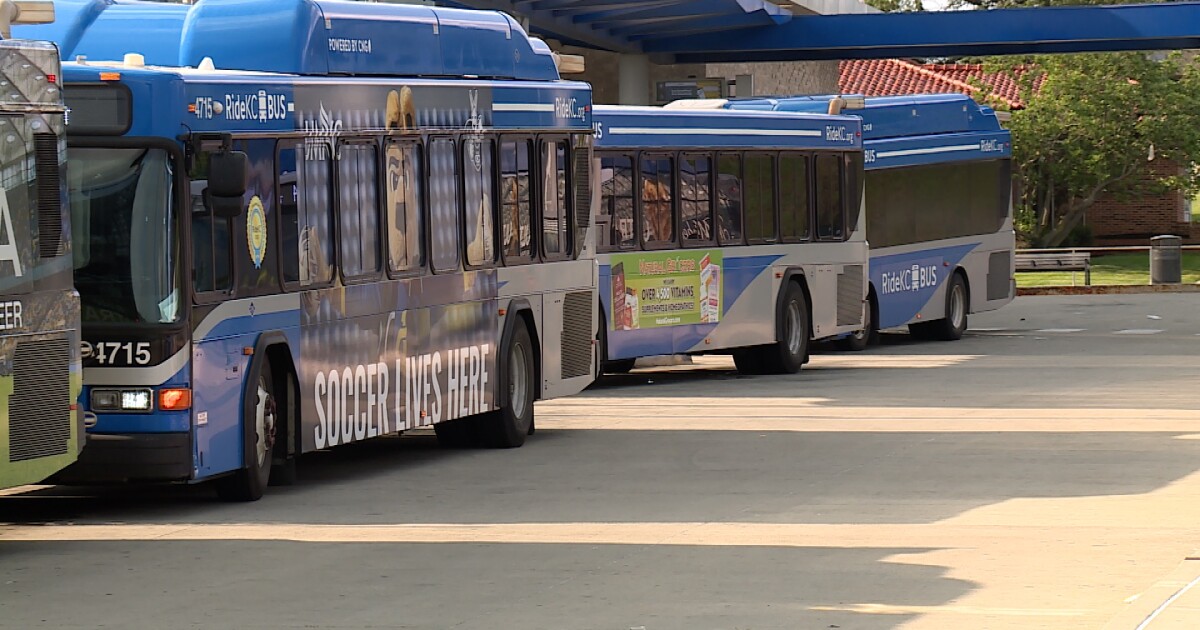
Tens of thousands of people have been using the airport link, streetcar and the buses to get around Kansas City. The city poured millions of dollars into building up its public transit infrastructure. The KCATA added more frequency to bus transit lines and the streetcar, pushing more fans to use public transportation during the tournament.
Brian Luton
“With the World Cup here, I was able to exercise using the streetcar more frequently and that was really fun,” Trish Luancing said. “It wold be nice to not have to drive everywhere and not have to worry about parking.”
But thousands have been relying on public transit for years, regardless of what event was in town.
“It’s been busier since the World Cup,” Jeffrice Jackson, a bus rider, said. “It’s been smooth sailing.”
The KCATA added streetcar ‘bus bridge’ links, extended bus service hours and increased frequency on East-West routes to link riders to the streetcar. It’s benefited both travelers and commuters.
Brian Luton
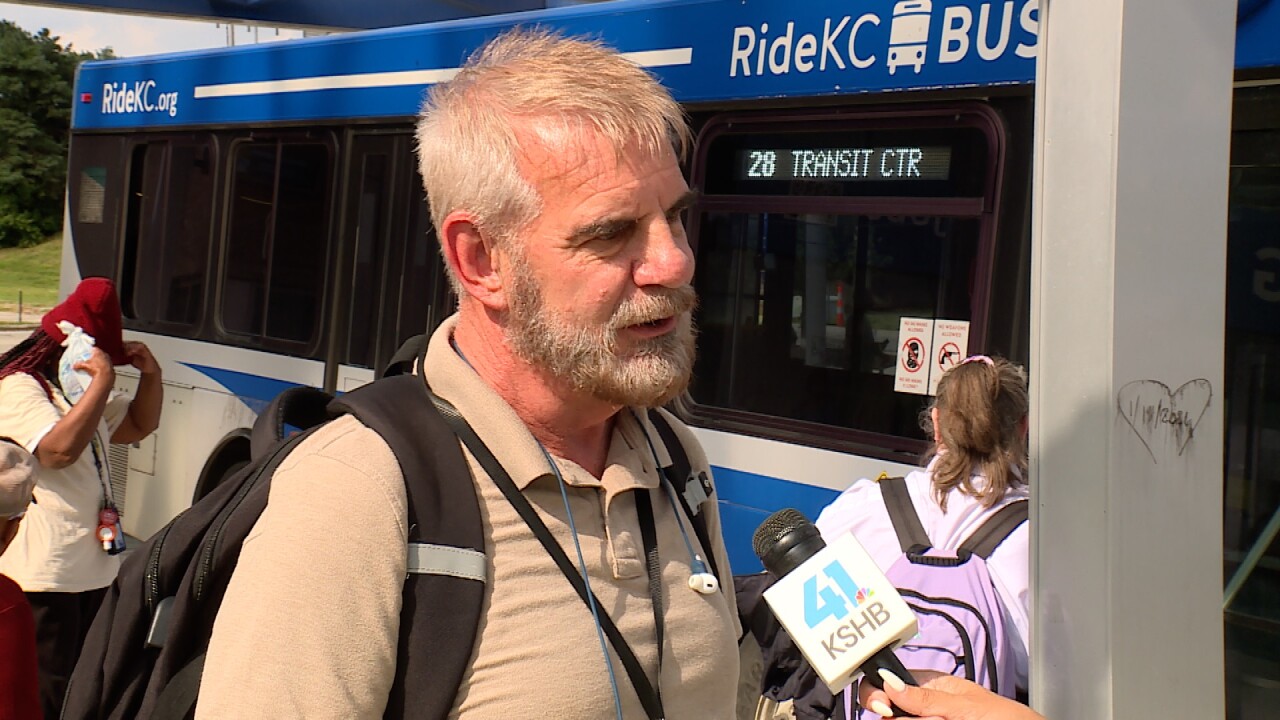
“[Service] has been more consistent with the World Cup than it was previously,” Jerry Breault, a rider said. “We were missing buses or routes because there weren’t enough drivers to drive that route.”
But the add-on’s stop on Sunday, July 12. If the transit authority can’t find more money, more than a dozen routes will be cut, potentially impacting more than 8,000 riders.
“It’s a little frustrating,” Breault said. “A lot of us rely on it just to get back and forth to work, to take care of our daily needs. It looks like we may be having to find alternatives and we’re not very happy about that.”
The KCATA will potentially suspend these weekday and weekend routes by September:
Weekday Route Eliminations:
- 9 – 9th Street, 365 average weekday ridership
- 21 – Cleveland Antioch, 512 average weekday ridership
- 23 – 23rd Street, 266 average weekday ridership
- 25 – Troost Local, 1,460 average weekday ridership
- 27 – 27th Street, 422 average weekday ridership
- 57 – Wornall, 411 average weekday ridership
- 71 – Prospect Local, 464 average weekday ridership
Weekend Route Eliminations:
- 9 – 9th Street, 349 average weekend ridership
- 21 – Cleveland Antioch, 312 average weekend ridership
- 23 – 23rd Street, 312 average weekend ridership
- 25 – Troost Local, 1,431 average weekend ridership
- 27 – 27th Street, 455 average weekend ridership
- 57 – Wornall, 595 average weekend ridership
- 71 – Prospect Local, 982 average weekend ridership
Bus fares came back earlier this summer to offset some of the operation costs, but many have reported issues with the free fare cards and eligibility.
“There’s always funding challenges with the KCATA,” Kansas City, Missouri, Mayor Quinton Lucas said. “How are the fare re-institutions working right now?”
Brian Luton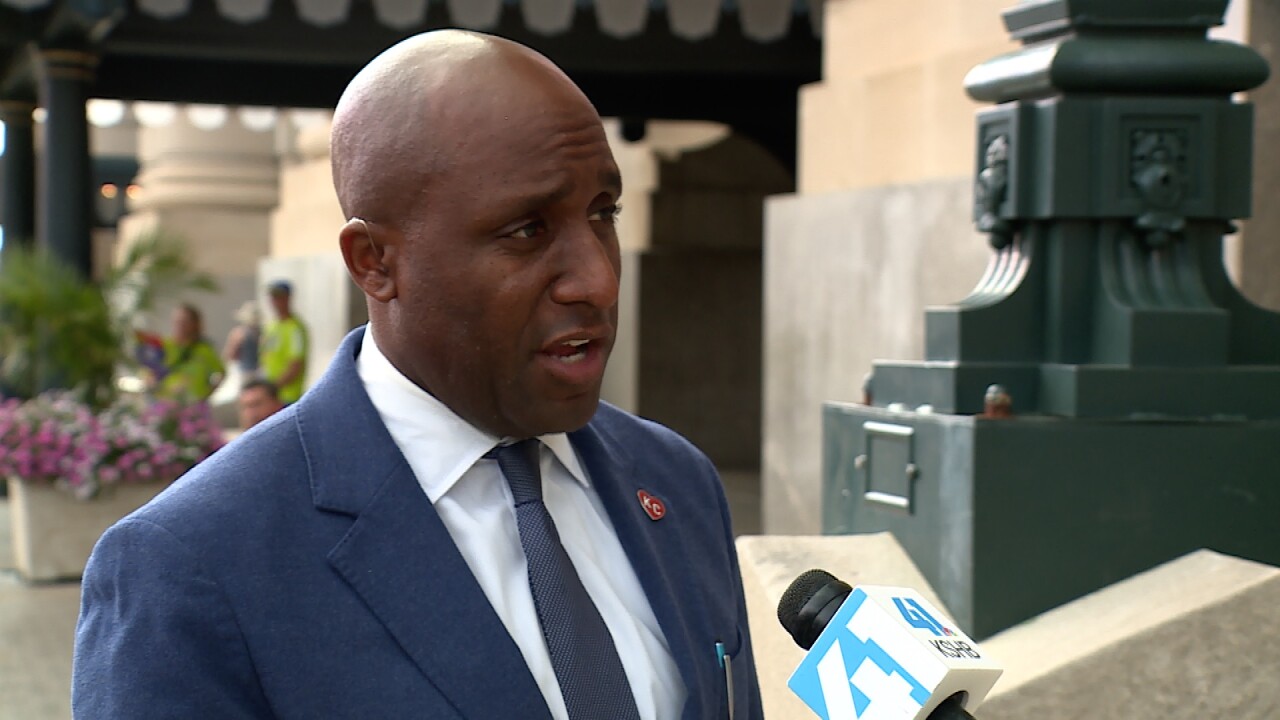
Mayor Lucas told KSHB 41 News Reporter Isabella Ledonne the transit improvements implemented for the World Cup “should continue,” and there are plans to talk with the KCATA commissioners to “make it work”.
“KCATA cannot just be Kansas City supported alone forever,” Mayor Lucas said. “Our approach and our preference is that the region got to see how much they would like [expanded service] during the World Cup. It was always intentional that if they liked it, maybe they would invest and maybe they would want this thing to go further.”
That’s good news to the thousands of daily riders.
Brian Luton
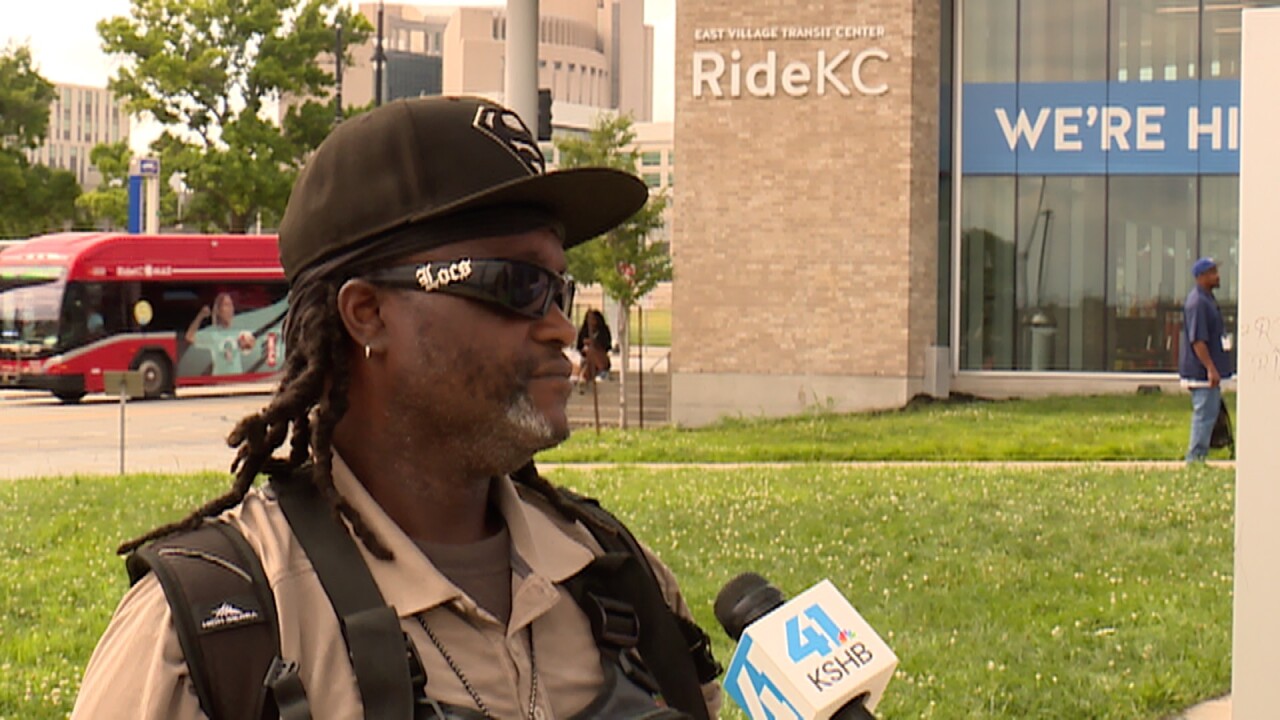
“I think it’s good because it helps people get around if they need to get around,” Jackson said.
The KCATA did not make themselves available for an interview.
—
-
 Politics5 minutes ago
Assassinations unleashed under Trump haunt Iran war endgame
-
 Sports12 minutes ago
Q&A: Partner, chance to play in Long Beach reignited AVP star Taylor Crabb’s Olympic fire
-

 World22 minutes ago
Moldova president nominates pro-European businessman Tofan for PM
-

 News50 minutes ago
US congressman says he was detained by armed Israeli settlers in occupied West Bank
-

 Los Angeles, Ca2 hours ago
New details emerge in fatal stabbing of boy in El Monte
-

 Detroit, MI3 hours ago
1 dead, 1 injured after two-vehicle crash at Collingwood and Belleterre in Detroit
-

 San Francisco, CA3 hours ago
4 arrested, 3 cited after brawl following Giants vs. Rockies game at Oracle Park
-

 Dallas, TX3 hours ago
Mark Cuban takes legal action against Dallas Mavericks ownership over potential new arena deal

