Kansas
Kansas would benefit by returning to Trump-era funding of election infrastructure needs


President Joe Biden has so frequently claimed that the return of former President Donald Trump represents an existential threat to democracy that it has become practically his only argument for voters to return him to office.
But a closer examination of how each President actually supported our election system during their respective terms calls this argument into serious question.
During President Trump’s administration, Congress allocated anywhere from $380 million (in FY2018) to $425 million (in FY2020) to meet America’s election infrastructure needs through Help America Vote Act (HAVA) Election Security Grants. Fast forward to the Biden administration, and that level of commitment has dropped precipitously to just $75 million in fiscal years 2022 and 2023.
And this year, the most recent, last-minute budget bill passed by Congress included only $55 million for election security.
But President Biden hasn’t just woefully underfunded programs designed to strengthen the states’ election systems. He has also acted to subvert the entire election system. On March 7, 2021, President Joe Biden directed the agencies of his administration to use federal funds appropriated by Congress for the operation of their agencies to instead “promote voter registration and voter participation.”
And, of course, just coincidentally, that undue influence has been felt disproportionately among demographics that favor President Biden’s reelection in 2024.
The effects of this executive order have already been felt right here in Kansas.
According to left-wing nonprofit organization Vot-ER’s CEO Krista Postai, federal dollars funneled through her organization to FQHCs in southeast Kansas that were used to send 65,000 text messages to influence the 2022 Value Them Both amendment referendum. She proudly concluded in a webinar about their efforts, “As you can see, we had an impact.”
As a Kansas state representative, chair of the House Committee on Elections, and a professor of homeland security at Wichita State University, I have grave concerns about the safety and security challenges facing our dedicated election officials and poll workers.
Particularly in our many rural regions and communities, election offices are lacking some of the most basic resources they need, not only to prepare for and counter the security threats they face but to simply manage the election process efficiently and effectively.
I am even more concerned by President Joe Biden’s unconstitutional effort to divert funds appropriated by Congress to fund healthcare, food benefits and other social programs to put his thumb on the scale and influence the 2024 presidential election.
My concerns only grew last month when the bill we passed to try to stop this inappropriate activity in Kansas, House Bill 2618, was vetoed by Democratic Gov. Laura Kelly.
Election security is national security. The US Department of Homeland Security designated America’s election infrastructure as “critical infrastructure” in 2017. If we expect our hardworking election officers and workers to do their jobs and keep our elections safe and secure, then we need to make sure they have all the tools and resources necessary to do so.
The paltry $55 million that Congress allocated for election security in fiscal 2024, approximately $1 million to each state, is not enough. The way to ensure our election system remains secure is to return to Trump-era funding levels, authorized through the people’s representatives in Congress, and stop the subversion of our electoral processes by an extra-constitutional misappropriation of funds designed to favor one party.
Pat Proctor, R-Leavenworth, was elected to the Kansas House in 2020, where he represents the 41st District as the chairman of the House Elections Committee.



The Kansas player with the biggest decision to make this offseason is sophomore big man Flory Bidunga. The Congo native just wrapped up his second year in Lawrence and will have to determine whether he wants to spend another year at the university.
In 35 games this season, he averaged 13.3 points, 9.0 rebounds, and 2.6 blocks per game en route to an All-Big 12 First Team selection. A breakout star, Bidunga took one of the biggest jumps of any player in the entire country.
Most mock drafts project Bidunga to be selected in the early-to-mid second round or even as early as the late first round, though you’d be hard-pressed to find many predictions like that. Is he a strong enough draft prospect to go pro after two campaigns?
Evaluating Flory Bidunga as an NBA Draft Prospect
Bidunga’s biggest strength is as a rim protector and shot-blocker, evidenced by his conference-leading block number. His freakishly lengthy wingspan allows him to contest nearly any shot at the rim and forces opposing players to reconsider testing their luck against him.
Almost all of Bidunga’s points come within six feet of the basket or the free-throw line, where he has shot a lifetime 61.8% in the NCAA. Since he has such an impressive vertical for his size, he can rise up for several dunks a game and might have thrown down more alley oops than any other player in the country this season.
Despite his long arms, Bidunga is still quite undersized as a true five. He stands at 6-foot-9, which is rather short for someone with the skill set he possesses.
Bidunga is a traditional big who specializes on the defensive end and on the defensive glass. Still, it is difficult to see why an NBA team would want to spend an early draft pick on a center who doesn’t have much of a post game or imposing size.
He feels like someone who can carve out a long career in the league as a backup big man, which is a perfectly fine role to have. For him to become anything more than that, he’ll have to expand his game outside the paint and build more muscle to avoid being bullied by stronger centers.
Could Flory Bidunga Play Collegiately at a Different School?
While Bidunga will certainly be looking to impress NBA Draft scouts with his ability, going pro is not the only option for him. He could return to Kansas for his junior year or even enter the transfer portal to explore other collegiate opportunities.
Last year, Bidunga briefly entered the transfer portal before returning to the university and staying with Kansas. His reasoning was that he had concerns after playing sparingly in his freshman year behind Hunter Dickinson and may have also been seeking a larger NIL payout.
Before the season even ended, there was speculation that Bidunga might be eyeing opportunities from other schools that could offer more in NIL compensation. This has led to widespread uncertainty about his future as a Jayhawk.
Head coach Bill Self has refused to comment on these rumors in the past, but the uncertainty surrounding his own future at the school adds another layer to Bidunga’s situation. He has played for Coach Self in both of his collegiate seasons and may not be willing to stick it out with KU if a new face takes over the program.
We should learn more about these circumstances in the coming weeks, but Bidunga’s decision is one to monitor more closely than anyone else’s on the team. What he decides this offseason could ultimately shape the trajectory of his basketball career.
Kansas
Kansas City barbecue pitmaster Arthur Lee Sr. killed in hit-and-run crash while riding his scooter

KSHB 41 reporter La’Nita Brooks covers stories providing solutions and offering discussions on topics of crime and violence. She also covers stories in the Northland. Share your story idea with La’Nita.
—
Kansas City barbecue pitmaster Arthur Lee Sr. was killed in an early morning hit-and-run crash while riding his scooter March 21.
Kansas City barbecue pitmaster Arthur Lee Sr. killed in hit-and-run crash
Lee was turning left from Dr. Martin Luther King Jr. Boulevard onto Eastwood Trafficway when a car ran a red light and hit him. A small memorial now grows at the intersection.
Chris Morrison
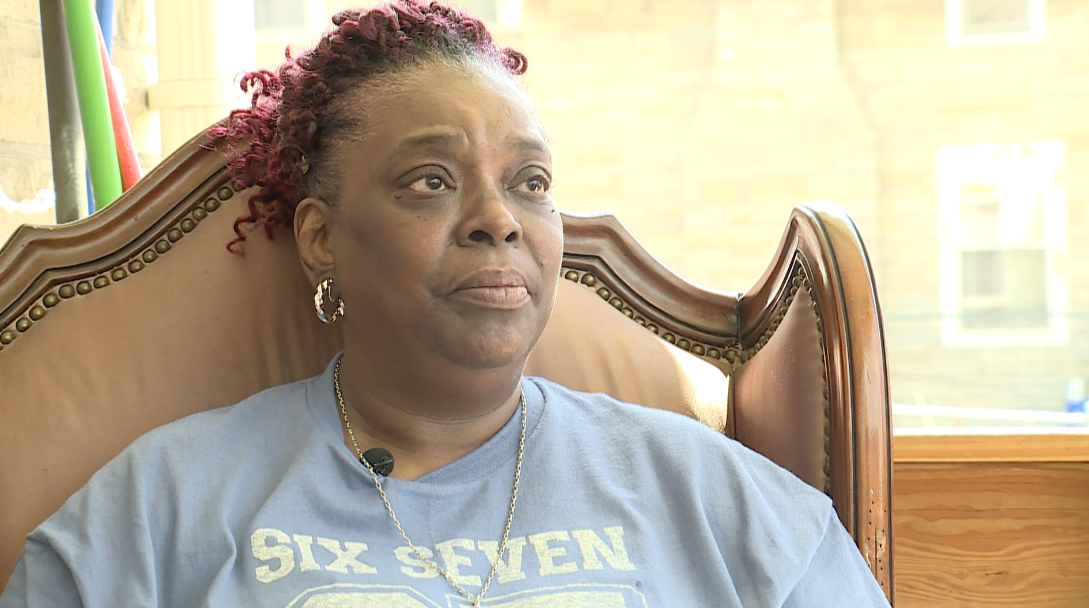
“Devastated. Everybody’s hurt, it was really unexpected,” his son Arthur Lee Jr. said. “I loved him to death. My dad was like my best friend.”
Lee was well known in the barbecue community, working as a pitmaster at Gates Bar-B-Q for the past eight years after spending two decades at Arthur Bryant’s Barbeque.
“He loved working at Gates,” Rose Qualls, Lee’s sister-in-law, said. “He was always making us slabs and turkey sandwiches.”
Chris Morrison
The morning of the incident, Lee was preparing to move into a new home with his wife and children, getting ready for a fresh start before a tragic end.
“He was really special, you know. He was one of a kind and everybody that he was around just loved him,” Qualls said. “It’s just a sad situation.”
Lee was 60 years old. His family said while his life was cut short, his flame will burn forever.
“My sister, she is really going through it, we all are,” Qualls said. “And I’m here for her, whatever she needs, when she need a shoulder to cry on, I’m here.”
Courtesy of Arthur Lee Jr.
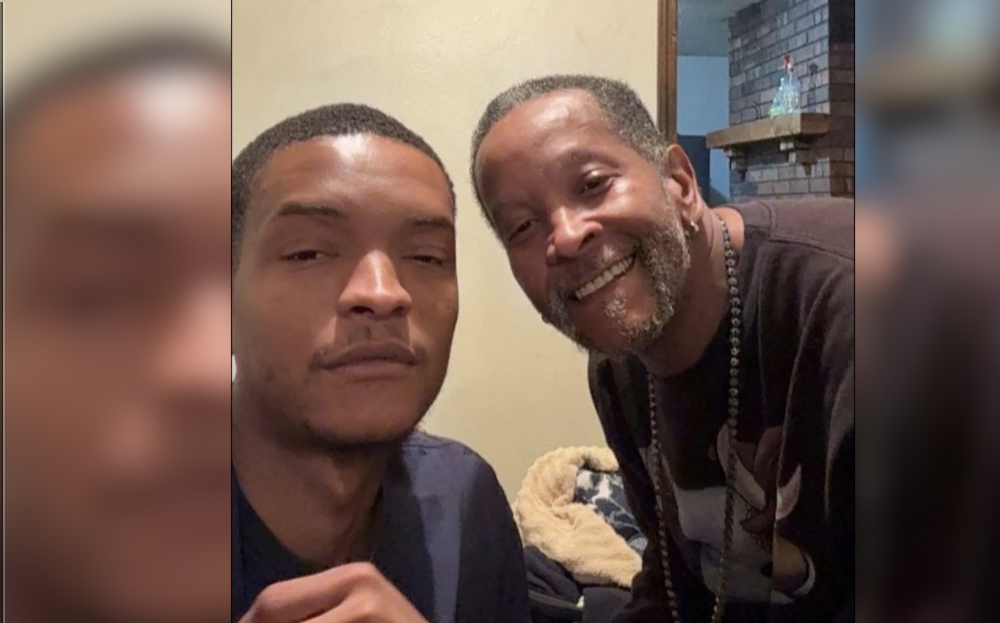
The family is pleading for answers and for the driver, who fled the scene, to come forward.
“I would pray that they would have some type of compassion, some type of heart, possibly turn themselves in,” Lee Jr. said.
This story was reported on-air by a journalist and has been converted to this platform with the assistance of AI. Our editorial team verifies all reporting on all platforms for fairness and accuracy.
—


WICHITA, KAN. – A Kansas man was sentenced to 120 months in prison for selling methamphetamine to an undercover police officer, according to the United State’s Attorney.
According to court documents, Wayne F. Fleming, 41, of Wichita pleaded guilty to one count of distribution of a controlled substance.
In May 2021, Fleming sold drugs multiple times to an undercover officer with the Wichita Police Department. Testing by the Sedgwick County Regional Forensic Science Center showed the total amount Fleming sold to the officer to be more than 200 grams of pure methamphetamine.
“Mr. Fleming was federally indicted in 2021, but before a plea agreement was reached, Mr. Fleming went to state prison to serve time for offenses unrelated to the federal case,” said U.S. Attorney Ryan A. Kriegshauser. “The Department of Justice doesn’t forget. Not long after his release from a state prison, Mr. Fleming is now an inmate in a federal prison.”
The Wichita Police Department investigated the case.

The race against time to destroy Iran’s illicit nuclear weapons program heats up amid fresh strikes

WATCH: Senate hearing goes silent after Angel Father confronts top Dem over daughter’s death

Another state bans ‘gas station heroin’ as officials warn of deadly risks

Tiger Woods involved in rollover crash in Florida less than 2 weeks before Masters: reports

Fox News AI Newsletter: Family turns down $26M from AI giant to keep farmland

Florida High School Football Rankings: Top 25 teams – Oct. 21

How old is Bo Nix? What to know about Oregon quarterback ahead of 2024 NFL Draft

Cleary's 21 help Le Moyne down Central Connecticut State 69-64 in OT

99th annual Pony Swim held in Virginia

Indiana Members Credit Union announced as new anchor tenant at Bottleworks District
WATCH: Senate hearing goes silent after Angel Father confronts top Dem over daughter’s death

US diplomat Marco Rubio denounces settler violence, tolls in Hormuz strait

Iran-linked hackers have breached FBI Director Kash Patel’s personal emails | CNN Politics

Live: CPAC 2026 Day 2

Video: Will ICE Change Under Its New Leader?
-

 Detroit, MI1 week ago
Drummer Brian Pastoria, longtime Detroit music advocate, dies at 68
-

 Movie Reviews1 week ago
‘Youth’ Twitter review: Ken Karunaas impresses audiences; Suraj Venjaramoodu adds charm; music wins praise | – The Times of India
-

 Sports6 days ago
IOC addresses execution of 19-year-old Iranian wrestler Saleh Mohammadi
-

 New Mexico5 days ago
Clovis shooting leaves one dead, four injured
-
 Business1 week ago
Disney’s new CEO says his focus is on storytelling and creativity
-

 Technology5 days ago
YouTube job scam text: How to spot it fast
-

 Tennessee4 days ago
Tennessee Police Investigating Alleged Assault Involving ‘Reacher’ Star Alan Ritchson
-

 Texas1 week ago
How to buy Houston vs. Texas A&M 2026 March Madness tickets