Kansas
Fervent debates still resound in Lecompton, Kansas, where slavery began to die • Kansas Reflector


It’s an ambitious legacy for a community of fewer than 600 citizens. But Lecompton, 13 miles northwest of Lawrence, has leaned into the challenge. After all, for six contentious years it was the capital of the Kansas Territory, before the state was admitted to the Union in 1861.
Consider Constitution Hall, built by the pro-slavery Sheriff of Douglas County, Samuel Jones, in 1856. The following year, according to Lecompton historian Tim Rues, the second of four constitutions proposed for the state of Kansas was signed there. It protected the enslavement of human beings in Kansas and excluded free Black persons from entering. Free Staters, anticipating an election rigged by Missouri settlers, boycotted the vote.
The Lecompton Constitution was then debated in the U.S House of Representatives in February 1858. If not for a late-night brawl that tabled the proceedings, eventually splitting the Democratic party over the issue of voter fraud, Kansas might have entered the Union as a slave state.
For this hugely consequential turn of events, Constitution Hall is now a Kansas and National Historic Landmark; a good place to introduce or update your knowledge of the border war. Plan your visit around a presentation called “Bleeding Kansas.”
The Lecompton Reenactors are a group of historical interpreters who “bring to life a turbulent time in Kansas history,” says Steve Germes, who portrays Kansas’ first governor, Charles Robinson.
One weekday this spring, I witnessed this mock debate over the issues of popular sovereignty and slavery to a captive audience of two dozen high school students. Other interpreters represented James Lane, U.S.senator and leader of the Kansas Brigade during the Civil War, abolitionist John Brown, a fictional slave catcher named Felix, Sheriff Samuel Jones, and two important Kansas women, Sara Robinson and Clarina Nichols. They provided a moral counterpoint to the flawed men on both sides of the debate.
Historically, no such debate ever took place. Women were forbidden to speak in the public sphere. Lane and Robinson, both free staters, were political enemies, rarely seen together. And Sheriff Jones was usually preoccupied with keeping the state’s more radical abolitionists in check.
The speeches were well-researched. The interpreters were passionate about their messages, regardless of side.
Recreator Paul Bahnmaier, speaking as Sheriff Jones, highlighted the legitimacy of the Lecompton government, while skirting the issue of legalizing chattel slavery, as he challenged abolitionists’ rights to be in Kansas in the first place.
“What did you come here for?” he asked. “Why did you not go instead to Minnesota or Nebraska where you would be welcomed? But no, you want to get all of the territory, but damn you, you shall not have it as it belongs to the South.”
Lecompton native Bahnmaier coined the town’s brand, Where slavery began to die. Republican Abraham Lincoln, he points out, was only elected in 1860 because of that Democratic party split. Eventually, the anti-slavery Topeka Constitution was ratified by the Senate — 40 days after South Carolina seceded.
“Without this splitting, Lincoln would never have been elected president and who knows how much longer slavery would have existed?” he said.
There is yet more history to learn in Lecompton. In anticipation of the Congressional passage of the pro-slavery Lecompton Constitution, a territorial capitol building was begun with a $50,000 federal appropriation. Yes, Kansas was that close to becoming a slave state!
Today, the building houses the Territorial Capital Museum. Displays about politics of the 1850s and ’60s show the role that Lecompton played in elections from Massachusetts to California. The small Democratic headquarters cabin nearby adds to the story of how the Lecompton Constitution enabled Lincoln to be elected with just 39% of the popular vote.
The town offers a thorough introduction to the constitutional crisis in the border war story. Kansas was not predestined to enter the Union as a Free State. It took any number of articulate and committed abolitionists to accomplish this.
On the other hand, rad what the Rev. Samuel Adair, a relative of John Brown, observed about some of the self-proclaimed abolitionists who settled the territory. “Their free-soil is free soil for white, but not for black. They hated slavery but they hated the Negro worse.”
If this legacy catches anyone by surprise, stay tuned.
Frank Barthell is a former video producer at the University of Kansas. Through its opinion section, Kansas Reflector works to amplify the voices of people who are affected by public policies or excluded from public debate. Find information, including how to submit your own commentary, here.



The Kansas player with the biggest decision to make this offseason is sophomore big man Flory Bidunga. The Congo native just wrapped up his second year in Lawrence and will have to determine whether he wants to spend another year at the university.
In 35 games this season, he averaged 13.3 points, 9.0 rebounds, and 2.6 blocks per game en route to an All-Big 12 First Team selection. A breakout star, Bidunga took one of the biggest jumps of any player in the entire country.
Most mock drafts project Bidunga to be selected in the early-to-mid second round or even as early as the late first round, though you’d be hard-pressed to find many predictions like that. Is he a strong enough draft prospect to go pro after two campaigns?
Evaluating Flory Bidunga as an NBA Draft Prospect
Bidunga’s biggest strength is as a rim protector and shot-blocker, evidenced by his conference-leading block number. His freakishly lengthy wingspan allows him to contest nearly any shot at the rim and forces opposing players to reconsider testing their luck against him.
Almost all of Bidunga’s points come within six feet of the basket or the free-throw line, where he has shot a lifetime 61.8% in the NCAA. Since he has such an impressive vertical for his size, he can rise up for several dunks a game and might have thrown down more alley oops than any other player in the country this season.
Despite his long arms, Bidunga is still quite undersized as a true five. He stands at 6-foot-9, which is rather short for someone with the skill set he possesses.
Bidunga is a traditional big who specializes on the defensive end and on the defensive glass. Still, it is difficult to see why an NBA team would want to spend an early draft pick on a center who doesn’t have much of a post game or imposing size.
He feels like someone who can carve out a long career in the league as a backup big man, which is a perfectly fine role to have. For him to become anything more than that, he’ll have to expand his game outside the paint and build more muscle to avoid being bullied by stronger centers.
Could Flory Bidunga Play Collegiately at a Different School?
While Bidunga will certainly be looking to impress NBA Draft scouts with his ability, going pro is not the only option for him. He could return to Kansas for his junior year or even enter the transfer portal to explore other collegiate opportunities.
Last year, Bidunga briefly entered the transfer portal before returning to the university and staying with Kansas. His reasoning was that he had concerns after playing sparingly in his freshman year behind Hunter Dickinson and may have also been seeking a larger NIL payout.
Before the season even ended, there was speculation that Bidunga might be eyeing opportunities from other schools that could offer more in NIL compensation. This has led to widespread uncertainty about his future as a Jayhawk.
Head coach Bill Self has refused to comment on these rumors in the past, but the uncertainty surrounding his own future at the school adds another layer to Bidunga’s situation. He has played for Coach Self in both of his collegiate seasons and may not be willing to stick it out with KU if a new face takes over the program.
We should learn more about these circumstances in the coming weeks, but Bidunga’s decision is one to monitor more closely than anyone else’s on the team. What he decides this offseason could ultimately shape the trajectory of his basketball career.
Kansas
Kansas City barbecue pitmaster Arthur Lee Sr. killed in hit-and-run crash while riding his scooter

KSHB 41 reporter La’Nita Brooks covers stories providing solutions and offering discussions on topics of crime and violence. She also covers stories in the Northland. Share your story idea with La’Nita.
—
Kansas City barbecue pitmaster Arthur Lee Sr. was killed in an early morning hit-and-run crash while riding his scooter March 21.
Kansas City barbecue pitmaster Arthur Lee Sr. killed in hit-and-run crash
Lee was turning left from Dr. Martin Luther King Jr. Boulevard onto Eastwood Trafficway when a car ran a red light and hit him. A small memorial now grows at the intersection.
Chris Morrison
“Devastated. Everybody’s hurt, it was really unexpected,” his son Arthur Lee Jr. said. “I loved him to death. My dad was like my best friend.”
Lee was well known in the barbecue community, working as a pitmaster at Gates Bar-B-Q for the past eight years after spending two decades at Arthur Bryant’s Barbeque.
“He loved working at Gates,” Rose Qualls, Lee’s sister-in-law, said. “He was always making us slabs and turkey sandwiches.”
Chris Morrison
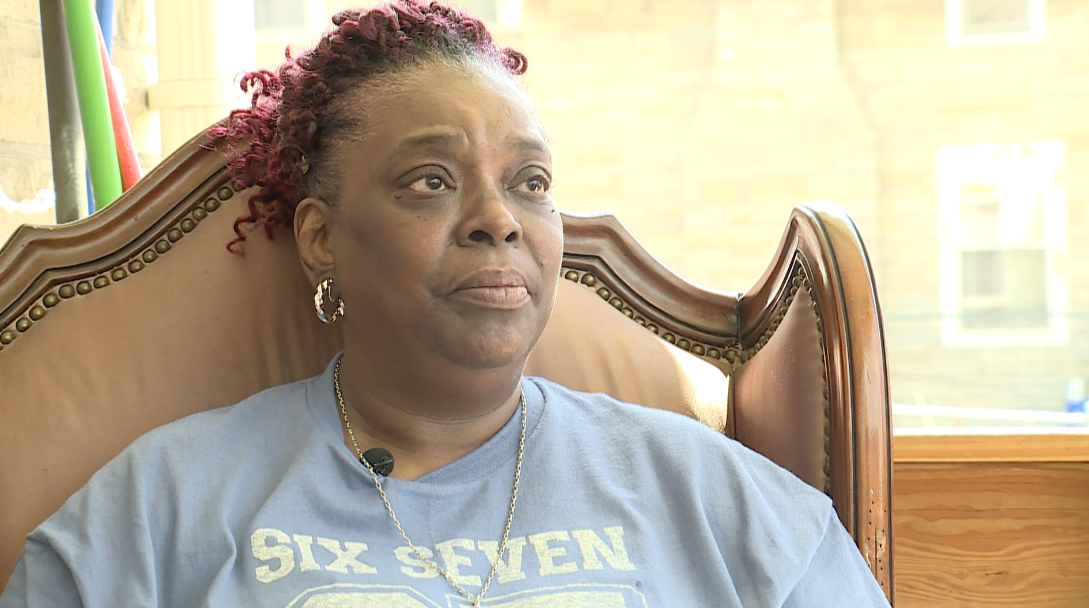
The morning of the incident, Lee was preparing to move into a new home with his wife and children, getting ready for a fresh start before a tragic end.
“He was really special, you know. He was one of a kind and everybody that he was around just loved him,” Qualls said. “It’s just a sad situation.”
Lee was 60 years old. His family said while his life was cut short, his flame will burn forever.
“My sister, she is really going through it, we all are,” Qualls said. “And I’m here for her, whatever she needs, when she need a shoulder to cry on, I’m here.”
Courtesy of Arthur Lee Jr.
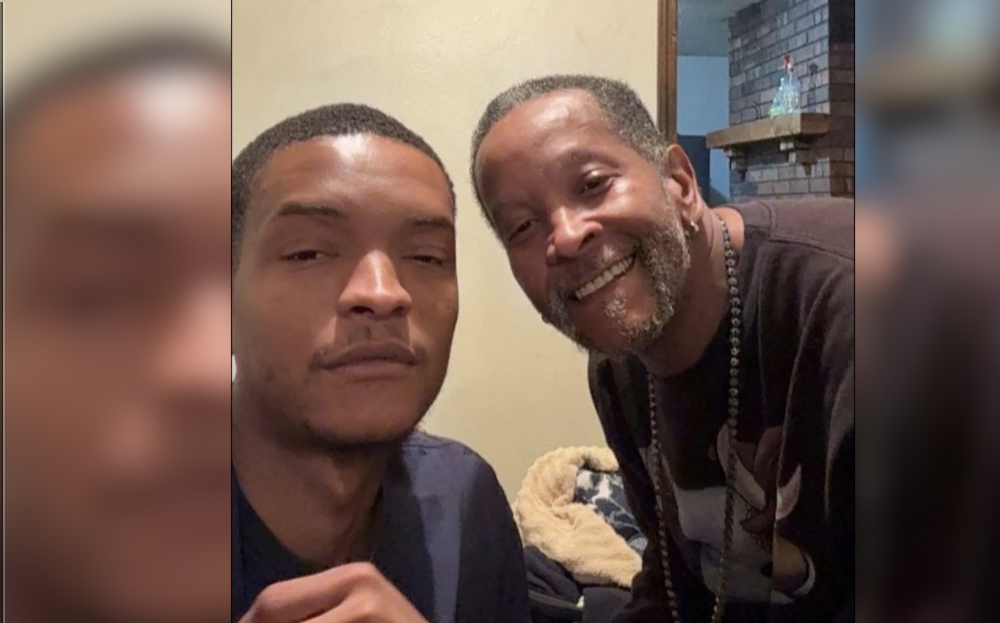
The family is pleading for answers and for the driver, who fled the scene, to come forward.
“I would pray that they would have some type of compassion, some type of heart, possibly turn themselves in,” Lee Jr. said.
This story was reported on-air by a journalist and has been converted to this platform with the assistance of AI. Our editorial team verifies all reporting on all platforms for fairness and accuracy.
—


WICHITA, KAN. – A Kansas man was sentenced to 120 months in prison for selling methamphetamine to an undercover police officer, according to the United State’s Attorney.
According to court documents, Wayne F. Fleming, 41, of Wichita pleaded guilty to one count of distribution of a controlled substance.
In May 2021, Fleming sold drugs multiple times to an undercover officer with the Wichita Police Department. Testing by the Sedgwick County Regional Forensic Science Center showed the total amount Fleming sold to the officer to be more than 200 grams of pure methamphetamine.
“Mr. Fleming was federally indicted in 2021, but before a plea agreement was reached, Mr. Fleming went to state prison to serve time for offenses unrelated to the federal case,” said U.S. Attorney Ryan A. Kriegshauser. “The Department of Justice doesn’t forget. Not long after his release from a state prison, Mr. Fleming is now an inmate in a federal prison.”
The Wichita Police Department investigated the case.

Retired Detroit sergeant faces new sexual assault charge involving 14-year-old victim from 2002

Trump floats sending federal agents to San Francisco to tackle crime

Dallas ISD will offer free pre-K starting next school year

Norwegian Cruise Line offers a first look at Luna, new cruise ship setting sail from PortMiami – WSVN 7News | Miami News, Weather, Sports | Fort Lauderdale

Live: CPAC 2026 Day 2

Florida High School Football Rankings: Top 25 teams – Oct. 21

How old is Bo Nix? What to know about Oregon quarterback ahead of 2024 NFL Draft

Cleary's 21 help Le Moyne down Central Connecticut State 69-64 in OT

99th annual Pony Swim held in Virginia

Indiana Members Credit Union announced as new anchor tenant at Bottleworks District
Live: CPAC 2026 Day 2

Video: Will ICE Change Under Its New Leader?

DHS shutdown breakthrough comes at cost for Republicans as funding fights nears end

Rubio joins crucial G7 talks as Iran war set to dominate second day

A surprise resignation could open the door for an independent to win a Montana Senate seat
-

 Detroit, MI1 week ago
Drummer Brian Pastoria, longtime Detroit music advocate, dies at 68
-

 Science1 week ago
How a Melting Glacier in Antarctica Could Affect Tens of Millions Around the Globe
-

 Movie Reviews1 week ago
‘Youth’ Twitter review: Ken Karunaas impresses audiences; Suraj Venjaramoodu adds charm; music wins praise | – The Times of India
-

 Sports6 days ago
IOC addresses execution of 19-year-old Iranian wrestler Saleh Mohammadi
-

 New Mexico5 days ago
Clovis shooting leaves one dead, four injured
-
 Business1 week ago
Disney’s new CEO says his focus is on storytelling and creativity
-

 Technology5 days ago
YouTube job scam text: How to spot it fast
-

 Tennessee4 days ago
Tennessee Police Investigating Alleged Assault Involving ‘Reacher’ Star Alan Ritchson