Iowa
Iowa 95, Utah 88: A Balanced Comeback


Iowa 95, Utah 88: A Balanced Comeback
Nine months ago, Utah ended Iowa’s 2023-24 season in the second round of the NIT. Saturday night, Iowa faced off with Utah again at the Sanford Pentagon in Sioux Falls, South Dakota, and came away with a very solid 95-88 win over the Utes. The Hawkeyes used a dominant second half and a balanced scoring effort from the starting lineup to earn the victory.
Here are three takeaways from the game.
1. The Big Finish
Finishing strong hasn’t always been a strength for this particular Iowa team. The Hawkeyes couldn’t make enough shots (or get enough stops) in their neutral-site loss to Utah State last month and ran out of steam after playing very well against Iowa State for 35 minutes a few weeks ago.
Saturday, Iowa trailed 40-36 at halftime and was down 11 early in the second half after conceding a 9-2 run to the Utes out of the break. The Hawkeyes caught fire after that, rattling off 25 points in the next seven minutes of game action to tie the score at 63-all.
Down the stretch, it was the Hawkeyes who were making shots and getting stops. Iowa outscored Utah 20-13 after the game was tied at 75 with 6:59 to play. Iowa scored 59 points in the second half (to 48 from Utah), led by 16 points from Payton Sandfort, who shot 5-of-8 from the floor and was perfect at the free throw line (6-of-6).
Notably, Iowa scored 59 points in the second half despite shooting just 4-of-6 from 3-point range. After attempting 14 three-pointers in the opening 20 minutes (and making five of them), Iowa adjusted on offense in the second half, attacking the rim more and getting higher-percentage shots — and more trips to the free throw line, where the Hawkeyes went 17-of-24 after the break.
“We were moving the ball and driving the ball [in the second half],” Iowa head coach Fran McCaffery said after the win. “We settled too much in the first half. Payton said it [and] he was right, we hit a couple early and started settling.”
“[Then] they don’t have to play defense, they don’t get tired, they come down and they carve you up, they run good stuff. So we kept the ball moving the ball side to side, driving the ball, intelligent screening, back-cuts, that was the difference in the game.”
The sellout crowd at the Pentagon had a noticeable (and unsurprising) Hawkeye flavor, which helped fuel Iowa’s second half comeback. That, as well as the veteran core of this Iowa roster that’s had plenty of experience in these situations — both good and bad — at this point.
“Veteran guys,” said McCaffery on how Iowa was able to turn the game around in the second half. “We’ve got good players, we’ve got good ball-handlers, guys who’ve been through it, [the] crowd was great. I think [it was] a combination of all those things.”
2. Drew Thelwell’s Spark
One player who provided a notable spark in Iowa’s comeback effort was senior guard Drew Thelwell, making his third consecutive start. Thelwell didn’t make a basket in the second half — didn’t even attempt one, in fact — but he scored seven points on 7-of-8 shooting at the free throw line.
Thelwell drew five fouls (more than anyone else on the Iowa roster in the second half), although a few of those came late when the Utes were attempting to extend the game. Still, Thelwell’s ability to attack the defense and the energy he brought were key factors in Iowa’s comeback win.
“[His energy] is infectious,” McCaffery said after the game. “Everyone else goes with him, Brock [Harding]’s kind of that way as well. The energy in the building was phenomenal. Drew was right in the middle of that. His defense, drawing six fouls, those are stats that are critical to a team’s ability to win. You do that by driving the ball and drawing fouls and that’s what he did.”
McCaffery also expanded on what he was looking for when he was pursuing Thelwell out of the transfer portal earlier this year and what he’s brought to this Iowa team. “I was looking for a veteran point guard, who could run a team, who could play off the ball and score, guard his man,” he explained.
“I noticed immediately that this kid could play defense, and wants to play defense and wants to play at both ends, that he understands how to engineer a victory,” McCaffery said. “Drew Thelwell is a winner, that’s what I was looking for and that’s what we got.”
The man that Thelwell displaced in the starting lineup — Ladji Dembele — also had some key plays to spark Iowa’s comeback bid. After scoring zero points and grabbing just one rebound in the first half, Dembele had five points, three rebounds, and a steal after intermission. His two baskets came during Iowa’s surge after falling behind by 11 and helped cut a 7-point deficit to just two.
More importantly, he helped keep Iowa afloat in the second half, with Owen Freeman bolted to the bench with foul trouble (Freeman picked up three fouls in the second half and played under five minutes total after halftime). Dembele played 14:10 in the second half and he finished with a +13 plus-minus rating in those minutes, the highest of any Iowa player in the second half.
McCaffery praised the effort from Dembele and fellow sub Pryce Sandfort. “They’re just rock solid, both of them. All they care about is winning. Pryce, defensively, was tremendous. Ladji, boy was he great. [He] had his two big hoops. But then defensively, on the glass, [he had a] big time offensive rebound late, [a] couple in-traffic rebounds, just his awareness defensively was great.”
3. Balance Carries The Day
Recent years have seen multiple standout individual players that served as the focal points for their respective Iowa teams — Luka Garza, followed by Keegan Murray, and then Kris Murray. Those players were superstars at the college level, racking up All-Big Ten honors, winning Big Ten Player of the Year awards, and vying (or winning, in Garza’s case) for national honors as well.
There isn’t a player quite like that on this Iowa roster — but at its best, this is a team that has a lot of depth and scoring balance, with multiple players that can score and pass and put pressure on a defense. Saturday night saw them at something pretty close to their best, especially in the furious second half comeback effort.
All five Iowa starters finished in double figures in scoring, led by Payton Sandfort with 24 points and a game-high 8 rebounds. Freeman finished second on the team with 16 points, despite missing 75% of the second half with foul trouble. “Owen was really on his way to a big-time game, I felt bad when he got in foul trouble like that,” McCaffery said after the game. Freeman finished with 16 points and 6 rebounds.
Josh Dix and Drew Thelwell each added 15 points, with 10 of Dix’s points coming in the second half. Dix did his damage inside the arc in this game, going 7-of-9 on two-point shots and attempting just one three.
Finally, Brock Harding finished with 12 points, all in the second half. After going 0-for-5 in the first half, Harding went 4-of-8 in the second half, including 2-of-2 from deep. His first three gave Iowa its first lead of the second half at 68-67 and his second triple pushed Iowa’s lead to 88-80 with three minutes to play.
When Iowa is moving the ball well, setting screens, and attacking the rim like the offense was in the second half, this becomes a very difficult team to defend because there’s no one player that defenses can key on and try to slow down. Maintaining that focus and that aggressive mindset on the offensive end was key to Iowa’s win on Saturday — maintaining those same things over the next two-and-a-half months will be key to Iowa’s success in the Big Ten.
NEXT: Iowa finishes off non-conference play with a home game against New Hampshire on December 30 (6 PM CT, BTN).



Video: Iowa football QB Jeremy Hecklinski provides summer update
Iowa football’s Jeremy Hecklinski meets with media on July 15, 2026.
The accounting student whose name is attached to the University of Iowa’s endowment for the head football coaching position and who created an athletics excellence fund at the school grew up as a “truck-stop kid.”
Will Moon raced around towering semis while his parents labored to grow what, six decades later, is now the massive, hugely popular Iowa 80 World’s Largest Truck Stop along Interstate 80 at the Walcott exit.
The longtime UI donor and namesake of the Moon Family Head Football Coach died on Thursday, July 16. He was 64.
“I was very saddened to hear about Will’s passing,” Hawkeye coach Kirk Ferentz said in a news release. “Will and his wife Renee have been very generous in their support of our program and Hawkeye athletics. Hawkeye student-athletes will benefit from their gifts for years to come.”
Moon arrived in Iowa City at the perfect moment for a football fan in the fall of 1979, just as coach Hayden Fry was beginning the revival of the Hawkeye football program, and Moon was captivated.
“From that point on, Iowa football was fun again,” Moon told the University of Iowa Center for Advancement in 2021.
Moon grew up working at the truck stop during the summers after his parents took over in the 1960s. His father, Bill Moon, an entrepreneur, bought the truck stop after he found the land for Standard Oil as construction of Iowa’s portion of I-80 neared completion. A year later, Bill Moon convinced Standard Oil to let him run the truck stop, and he took full ownership in 1964.
As a teenager, Moon became interested in the family business and its operations, and, with an aptitude for math, came to the University of Iowa to study accounting, paving the way for a successful business career and to take over the family business.
While at Iowa, Moon met his wife, Renee Breckenridge Moon. Their first date was at The Airliner in downtown Iowa City, where they watched the Hawkeye football team defeat Penn State. Ever since, they cheered for the Hawkeyes from inside Kinnick Stadium, in opponents’ venues and at bowl games.
Moon and his wife rank among UI Athletics’ most generous donors. Their support created an endowment fund for the operational needs of Hawkeye football, establishing the Will and Renee Moon Excellence Fund for unrestricted athletics initiatives, and providing leadership support for the Kinnick Edge Campaign to revitalize the north end zone. In recognition of this generosity, the UI permanently designated the football leadership position, ensuring that Moon Family Head Football Coach will be the official title held by Ferentz and all future UI head football coaches.
“Will was one of the kindest, most genuine people you could ever meet, and his love for the Hawkeyes was unwavering,” Iowa athletics director Beth Goetz said in a news release. “His generosity and loyalty helped shape Iowa Athletics, but it was the relationships he built and the way he cared for others that will be remembered most. He was a dear friend and truly part of the Hawkeye family.”
Visitation will be Monday, July 20, from 4-8 p.m. at Runge Mortuary in Davenport. Funeral services will be Tuesday, July 21, at 10 a.m. at Calvary Church of Walcott, followed by burial at Walcott Cemetery.
Jessica Rish is an entertainment, dining and education reporter for the Iowa City Press-Citizen. She can be reached at JRish@press-citizen.com or on X, formerly known as Twitter, at @rishjessica_

DES MOINES, Iowa (Gray Media Iowa State Capitol Bureau) — U.S. Speaker of the House Mike Johnson told Gray Media Iowa that he got briefed late Thursday afternoon, a few hours before President Donald Trump gave a prime-time speech to make his latest claims about election fraud.
“Yeah, I just got off of a telephone call literally in the motorcade as we were driving here,” Johnson said after arriving at a campaign appearance with U.S. Rep. Mariannette Miller-Meeks (R – 1st District, Ottumwa) at a Pella bakery.
Miller-Meeks is running for re-election in what is again considered a competitive race with Democrat Christina Bohannan, a University of Iowa law professor from Iowa City.
This is the third straight election that the two will meet in a general election.
Johnson said the “off the record” intelligence briefing to leaders in the U.S. House and Senate previewed Trump’s new election fraud claims. He called it “blockbuster information.”
“It’s the result of an investigation that’s been ongoing for some time now about fraud and irregularity in in federal elections, American elections around the country,” Johnson said.
Gray Media Iowa asked Johnson whether he believes congressional colleagues were elected because of fraud.
He did not directly answer that question.
“…everybody’s going to be able to evaluate all that information on their own, and it will lead to other investigations, I’m certain,” Johnson said of the briefing.
He added, “we’ll have to see where all this goes.”
For years, Trump has alleged widespread fraud that cost him the 2020 election. Trump has lost dozens of court cases on the matter.
On January 7, 2021, Congress certified his defeat to Democrat Joe Biden, a day after Trump supporters rushed the U.S. Capitol Building. Some attacked law enforcement officers and damaged the outside and inside of the building.
After returning to office in 2025, President Trump pardoned supporters for their crimes.
Copyright 2026 Gray Media Iowa State Capitol Bureau. All rights reserved.

With the college football season right around the corner, the Iowa State Cyclones will be hoping to have a strong campaign with a new regime coming in. However, a lot of their success might depend on one key player.
Following the departure of Matt Campbell to the Penn State Nittany Lions, the Cyclones saw their roster get completely gutted. Most of their players entered the transfer portal, leaving new head coach Jimmy Rogers with plenty of work to do.
Fortunately, Rogers and the coaching staff were able to get out there and bring in a lot of new players from all over the country. While Iowa State might be lacking star power and aren’t going to be as talented as they were last year, they do have a good amount of depth.
There should be quite a bit of competition for spots in camp, but there are some players who should clearly be starters that transferred in.
Pete Nakos of On3 recently predicted who would be the starting quarterback for every team in the Big 12. Unsurprisingly for the Cyclones, it was Jaylen Raynor who was the choice.
Raynor an Easy Pick
After bringing in the three-year starter from the Arkansas State Red Wolves, Raynor instantly became the favorite to be the starter for the Cyclones in Week 1. Him being predicted as that guy should come as no surprise, and his ability to play against elevated competition on a weekly basis will be key.
There is a lot to like about Raynor’s game, and he could certainly help Iowa State exceed expectations next year.
Last season with the Red Wolves, he totaled 3,361 passing yards, 19 passing touchdowns, and a 66.5 completion percentage. It was career-highs for him in all three of those categories, showing some nice improvement in his junior season.
As a dual-threat player, he also totaled a career-high in rushing yards and rushing touchdowns. The junior recorded 423 yards on the ground to go along with seven rushing scores.
Overall, the numbers for Raynor were really solid, and there is reason to believe he might be even better in his senior season. For the Cyclones, with all of the new players on the roster, there will undoubtedly be some competition for starting spots around the field. However, it should certainly be Raynor who is under center to start.
Add us as a preferred source on GoogleFollow
-
 Politics3 minutes ago
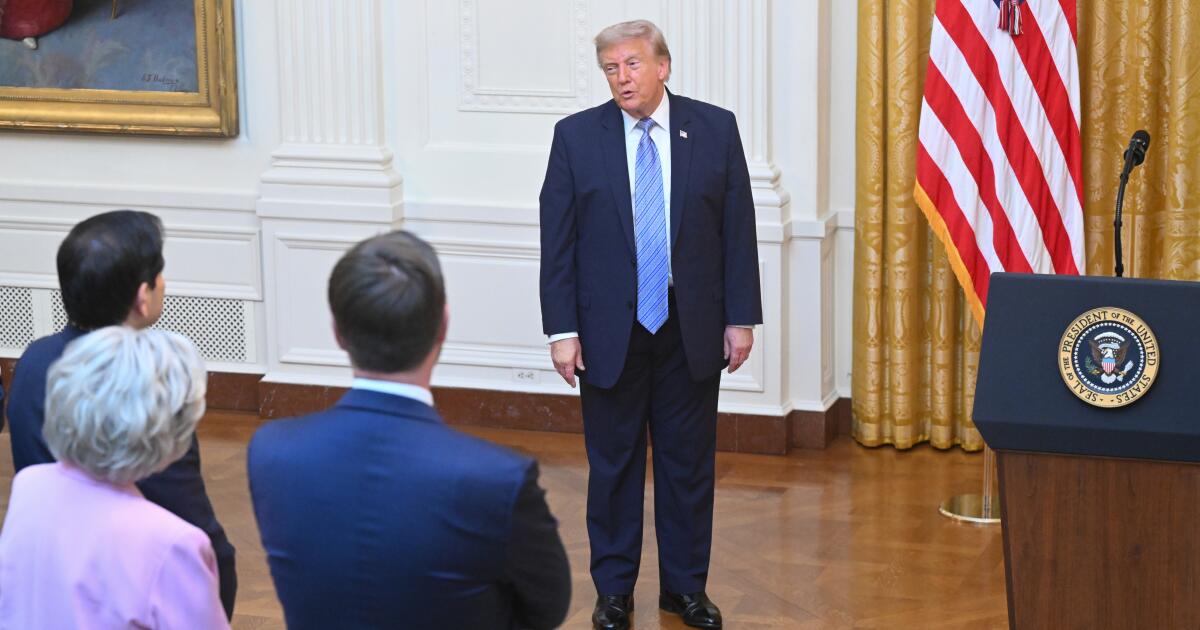
Trump escalates election attacks, threatens California over voter data
-
 Science9 minutes ago
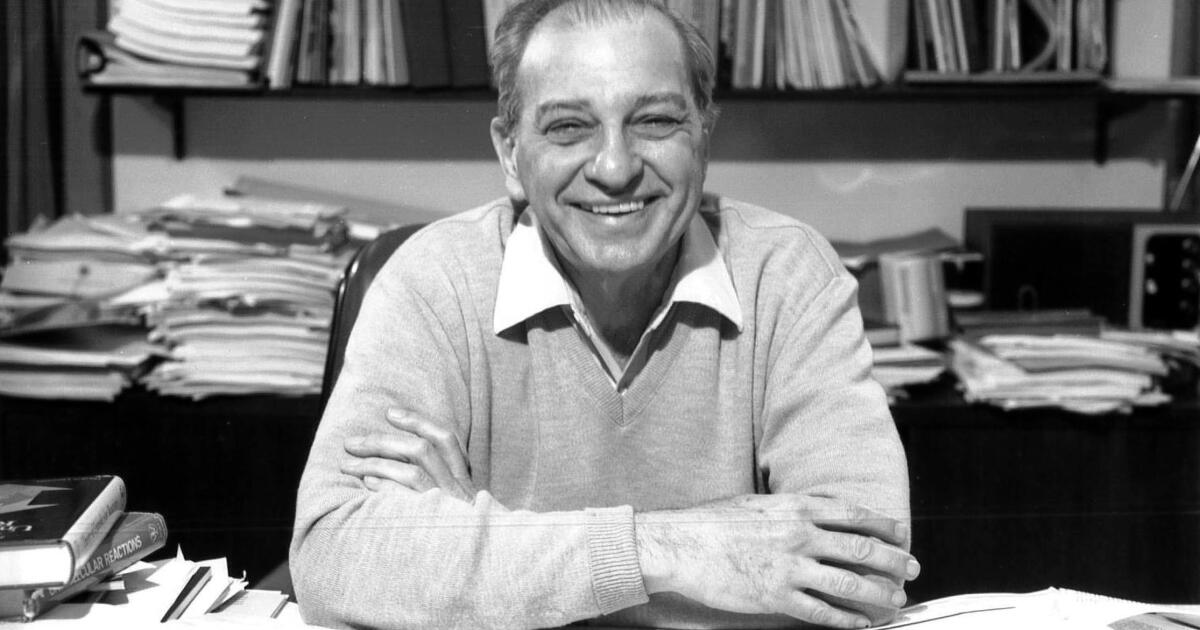
Rudolph Marcus, Caltech chemist who won Nobel Prize, dies at 102
-
 Sports15 minutes ago
Commentary: With Will Smith out indefinitely, Dodgers need to trade for a catcher
-

 World27 minutes ago
Mandela Day: What his legacy means in today’s South Africa
-
 News57 minutes ago
ICE shared Medicaid data it wasn’t supposed to have with Palantir
-

 Los Angeles, Ca3 hours ago
‘Moana’ is a triumph for Pacific Islander representation on the big screen
-

 Detroit, MI3 hours ago
Five shot during funeral at Detroit church
-

 San Francisco, CA3 hours ago
San Francisco Giants Announce Intriguing Roster Move Ahead of Mariners Series

