Indiana
LIVE: Caitlin Clark, Indiana Fever vs Seattle Storm score updates, highlights


Caitlin Clark: ‘I think you can see the progress this team is making.’
The Indiana Fever fell to 0-4 after a hard-fought loss to Connecticut, in which Clark had an eventful evening.
The Indiana Fever are 0-4 to start the 2024 season as they head west to play the Seattle Storm (1-3). Indiana’s losses have come to the New York Liberty and Connecticut Sun, who are a collective 7-0.
The Fever had their first clutch game on Monday, leading midway through the fourth quarter before the Sun made enough plays to come away with an 88-84 win.
Caitlin Clark averages a team-leading 17.0 points and 5.5 assists per game. NaLyssa Smith leads the Fever in rebounds (6.8) along with 10.5 points.
Insider: How Fever coach Christie Sides is helping Caitlin Clark break bad habits
Sign up: Subscribe to our Caitlin Clark Fever newsletter
Special edition: Exclusive 4-page special section featuring the Indiana Fever and Caitlin Clark
Indiana Fever vs Seattle start time, date
10 p.m. ET Wednesday, May 22, 2024, at Climate Pledge Arena in Seattle.
How to watch Caitlin Clark, Indiana Fever vs Connecticut Sun
TV: WTHR-13
Streaming: Fubo (FREE)
Caitlin Clark stats
Through four games, Caitlin Clark averages 17.0 points and 5.5 assists per game, both of which lead the Fever. She is making 41.2% of her shots from the field and 34.3% of her 3-pointers (3.0-of-8.8 per game). She also averages 4.0 rebounds and 6.5 turnovers.
Get Caitlin Clark and Indiana Fever jerseys, gear
Indiana Fever and Caitlin Clark jerseys, shirts, sweatshirts, hats from Fanatics can be found here.
Tickets to see Caitlin Clark, Indiana Fever
Tickets for Fever games are available here.
This is the Indiana Fever 2024 schedule, with TV info; all times are ET; ^-preseason.
Date, day
place, opponent
Time, TV/results
May 3, Fri.
at Dallas^
L, 79-76
May 9, Thurs.
vs. Atlanta^
W, 83-80
May 14, Tues.
at Connecticut
L, 92-71
May 16, Thurs.
vs. New York
L, 102-66
May 18, Sat.
at New York
L, 91-80
May 20, Mon.
vs. Connecticut
L, 88-84
May 22, Wed.
at Seattle
10 p.m., WTHR
May 24, Fri.
at Los Angeles
10 p.m., Ion
May 25, Sat.
at Las Vegas
9 p.m., NBA TV, WTHR
May 28, Tues.
vs. Los Angeles
7 p.m., NBA TV
May 30, Thurs.
vs. Seattle
7 p.m., Prime, WTHR
June 1, Sat.
vs. Chicago*
1 p.m., NBA TV, WALV
June 2, Sun.
at New York*
7 p.m., NBA TV, WALV
June 7, Fri.
at Washington*
7:30 p.m., Ion, WTHR
June 10, Mon.
at Connecticut*
7 p.m., NBA TV, WTHR
June 13, Thurs.
vs. Atlanta*
7 p.m., WTHR
June 16, Sun.
vs. Chicago
Noon, CBS
June 19, Wed.
vs. Washington
7 p.m., NBA TV
June 21, Fri.
at Atlanta
7:30 p.m., Ion
June 23, Sun.
at Chicago
6 p.m., NBA TV, WALV
June 27, Thurs.
at Seattle
10 p.m., Prime, WALV
June 30, Sun.
at Phoenix
3 p.m., ESPN
July 2, Tues.
at Las Vegas
10 p.m., ESPN
July 6, Sat.
vs. New York
1 p.m., CBS
July 10, Wed.
vs. Washington
Noon, NBA TV, WTHR
July 12, Fri.
vs. Phoenix
7:30 p.m., Ion
July 14, Sun.
at Minnesota
7 p.m., ESPN
July 17, Wed.
at Dallas
8 p.m., ESPN
Aug. 16, Fri.
vs. Phoenix
7:30 p.m., Ion
Aug. 18, Sun.
vs. Seattle
4 p.m., ABC
Aug. 24, Sat.
at Minnesota
8 p.m., NBA TV
Aug. 26, Mon.
at Atlanta
7:30 p.m., NBA TV, WTHR
Aug. 28, Wed.
vs. Connecticut
7 p.m., NBA TV
Aug. 30, Fri.
at Chicago
7:30 p.m., Ion
Sept. 1, Sun.
at Dallas
4 p.m., NBA TV
Sept. 4, Wed.
vs. Los Angeles
7 p.m., CBS SN, WALV
Sept. 6, Fri.
vs. Minnesota
7:30 p.m., Ion
Sept. 8, Sun.
vs. Atlanta
4 p.m., WTHR
Sept. 11, Wed.
vs. Las Vegas
7 p.m., NBA TV
Sept. 13, Fri.
vs. Las Vegas
7:30 p.m., Ion
Sept. 15, Sun.
vs. Dallas
3 p.m., WALV
Sept. 19, Thurs.
at Washington
7 p.m., Prime, WTHR
We occasionally recommend interesting products and services. If you make a purchase by clicking one of the links, we may earn an affiliate fee. USA TODAY Network newsrooms operate independently, and this doesn’t influence our coverage.



As many are celebrating America’s 250th birthday, a threat of severe weather looms, as watches and warnings have been issued for most Illinois and northwest Indiana counties for Saturday.
A Severe Thunderstorm Warning is in effect for Kane and Kendall counties in Illinois until 3:45 p.m.
A Severe Thunderstorm Watch has been issued for DuPage, Kane, Kankakee, Grundy, Kendall, and Will counties in Illinois and for Porter, Newton, Jasper, and Lake counties in Indiana until 7 p.m.
A Flash Flood Watch is in effect for Central Cook, De Kalb, DuPage, Eastern Will, Grundy, Kane, Kendall, La Salle, Northern Cook, Northern Will, Southern Cook, and Southern Will in Illinois and Lake in Indiana until 10 p.m.
A Flash Flood Warning is in effect for De Kalb, La Salle, and Lee counties in Illinois until 5 p.m.
Storm Prediction Center has areas along and south of I-80 at a Level 1 (out of 5) for severe chances. Strong-to-severe storms are expected around 2 p.m. and sunset. Frequent lightning, damaging winds and torrential downpours may accompany the strongest storms.
Be sure to stick with CBS News Chicago and the First Alert Weather team for the latest.

TODAY
Mostly sunny and very warm to start, then the storm chance rises later in the day. Highs reach the upper 80s to near 90, with a light southwest breeze. A Heat Advisory remains in effect through 9 p.m. Saturday, and the better chance for showers and thunderstorms develops after mid afternoon, with any stronger storm capable of heavy downpours, hail, and damaging wind gusts.
TONIGHT
Showers and thunderstorms remain likely early in the evening, then coverage gradually trends lower later at night. Lows fall into the low 70s, with light wind. It does not look like nonstop rain, but evening outdoor plans, including fireworks, will need a weather eye.
TOMORROW
Partly sunny, warm, and still somewhat unsettled, with storms becoming more likely as the day goes on. Highs reach the mid 80s, with light wind. Much of the first half of the day looks more usable, but the second half becomes less reliable as showers and thunderstorms become more common.
TOMORROW NIGHT
Showers and thunderstorms remain likely early, then fade back later in the evening and overnight. Lows settle near 70. It should turn quieter with time, and the air will feel a little less oppressive than the previous few nights.
MONDAY
Partly sunny and still hot, but not quite as extreme as the holiday weekend. Highs reach the mid 80s, with a more humid feel and at least a low-end thunderstorm chance around. This looks more manageable than Saturday, but not completely quiet from start to finish.
MONDAY NIGHT
Partly cloudy and seasonably mild, with lows in the mid 60s. Any leftover storm chance looks limited, and quieter weather should win out for most of the night.
TUESDAY
Clouds and sun mix with a stray thunderstorm chance, and highs recover into the mid 80s. Heat is still around, but not as punishing as the late-week surge, and much of the day still looks usable.
TUESDAY NIGHT
Partly cloudy and muggy again, with lows in the upper 60s. Quiet weather generally holds overnight, even if a completely dry forecast is not guaranteed.
WEDNESDAY
Mostly cloudy and humid with a thunderstorm possible in spots during the afternoon. Highs reach the mid 80s. This keeps the pattern a little unsettled, though it still does not look like an all-day rain setup.
7 DAY FORECAST
The main concerns are the late-day storm chance on the Fourth and then a hot, humid stretch that continues into next week. Saturday and Sunday both carry storm chances, with the Fourth looking more active later in the day and Sunday staying somewhat unsettled. After that, temperatures settle into the 80s with occasional storm chances lingering into midweek, so the pattern stays summerlike even though the worst of the heat eases back a bit.

WESTFIELD, Ind. (WISH) — Two women are facing criminal charges following a prostitution investigation at an apartment complex in Westfield.
According to a news release Thursday, the investigation began June 23, stemming from a Crime Stoppers tip about suspected prostitution and possible human trafficking at The Farmhouse at Lantern Commons Apartments, near the 16000 block of Gleam Way.
On June 25, detectives arranged a meeting, entered the residence and encountered two adult women. One of the women agreed to engage in sexual activity in exchange for $300. Both women were detained at the scene.
Detectives searched the apartment and found evidence of sexual activity and prostitution-related activity.
Yanyi Zhang faces five charges:
- Two counts of Promoting Prostitution, a Level 5 Felony.
- Identity Deception, a Level 6 Felony.
- Class A Misdemeanor for prostitution.
Linxia Shi was charged with a Class A Misdemeanor for prostitution.
Zhang and Shi were offered victim assistance resources during the investigation, Westfield Police said.
A jury trial for Zhang is scheduled for Nov. 2, according to online court records.
This case marks the second prostitution investigation by the Westfield Police in the past two months, both of which were initiated by tips submitted anonymously through Crime Stoppers. The department encourages residents to continue to report suspicious activity.
-
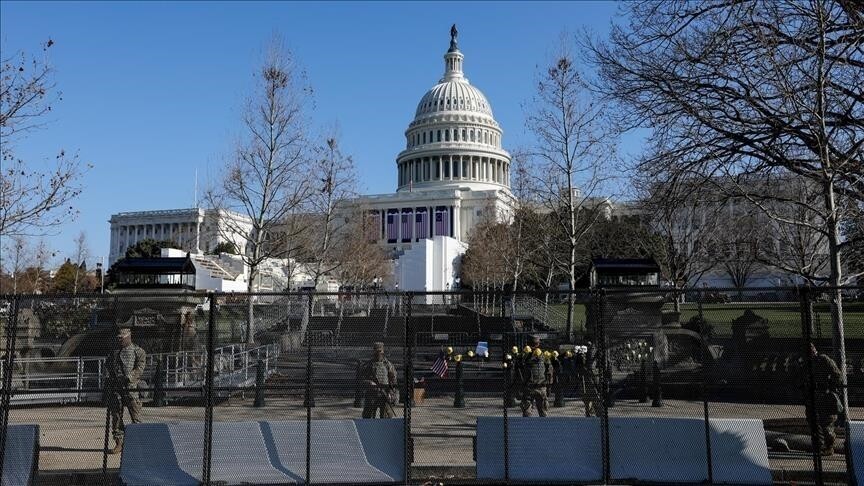 Washington, D.C53 seconds ago
Masked men carrying Confederate flags seen chanting, marching, in Washington DC
-

 Cleveland, OH8 minutes ago
Chicago White Sox vs. Cleveland Guardians prediction, pick for Friday 7/3/26
-

 Austin, TX11 minutes ago
South Texas Health System (@stxhealthsystem)
-
 Alabama16 minutes ago
5-Star OL commits to Texas over Alabama and others
-

 Alaska23 minutes ago
Semi overturns on highway north of Seward, spilling salmon
-

 Arizona26 minutes ago
Arizona gets commitment from 3-star Texas OL Mason Joshua
-

 Arkansas31 minutes ago
Why Unheralded CJ Brown Could Be Arkansas’ Answer at WR1
-

 Colorado41 minutes ago
Most Expensive Colorado Buffaloes Road Tickets This Fall

