Indiana
Bill tracker: Which bills are dead, advancing at halfway point of legislative session


How does a bill become law? See the path it takes in Indiana Statehouse
Follow IndyStar’s statehouse reporter Hayleigh Colombo as she shows the path a bill must travel to become law.
It’s the halfway point of Indiana’s 2025 legislative session.
That means hundreds of bills have already received approval from one chamber. There are also lots of dead bills that didn’t make it through the major deadlines this week.
When House and Senate lawmakers return from their session break on March 3, they will swap bills and consider more changes to proposed legislation before anything is sent to Gov. Mike Braun’s desk.
IndyStar is tracking the prominent bills that are moving through the legislative process and that would impact a wide variety of Hoosiers.
Here are some of the major bills that have advanced, and what happened to them last week.
Editor’s note: There will be no bill tracker next week due to a break for lawmakers before the second half of the session.
House Bill 1001: State budget
Lead author: Rep. Jeff Thompson, R-Lizton
What it does: This bill funds Indiana’s government, health care programs like Medicaid, public K-12 schools and colleges for the next two years. Republican proponents say it’s a “vanilla” budget that helps the state live within its fiscal means while funding key priorities such as removing the income cap for private school vouchers and a new workforce tax credit for employers. But Democratic opponents say the bill funds the wealthy at the expense of the poor, for example, by defunding the Dolly Parton Imagination Library program and failing to expand preschool.
Status: The bill passed the House by a 66-28 vote on Feb. 20 and now heads to the Senate.
Senate Bill 1: Property taxes
Lead author: Sen. Travis Holdman, R-Markle
What it does: The bill, which Gov. Mike Braun said he would not sign in its current form, aims to slow property tax increases by limiting how much local governments can raise their property tax rates and proposes limiting tax referendums to general elections. It would give first-time homebuyers a tax credit and enable more Hoosiers to take advantage of tax credits and deductions for disabled veterans and seniors. Finally, it allows counties to create programs to allow taxpayers to defer up to $500 of their property taxes annually.
Status: The Senate passed the bill on Feb. 17 by a vote of 37-10. It now heads to the House.
House Bill 1008: Illinois-Indiana boundary commission
Lead author: House Speaker Todd Huston, R-Fishers
What it does: The bill creates a bipartisan group that would explore how Illinois counties could effectively secede from their state and join Indiana by redrawing state lines.
Status: The bill passed the house by a 69-25 vote on Feb. 20 and now heads to the Senate.
Senate Bill 518: Sharing property tax dollars with charter schools
Lead author: Sen. Linda Rogers, R-Granger
What it does: The bill would require all traditional public-school districts, including Indianapolis Public Schools, to share property tax revenue with charter schools in their attendance boundaries, if 100 or more kids leave the traditional district for charter schools, starting in 2028.
Status: The bill passed out of the Senate by a 28-21 vote on Feb. 20 and now heads to the House.
House Bill 1041: Transgender athlete ban
Lead author: Rep. Michelle Davis, R-Whiteland
What it does: This is virtually the same bill lawmakers passed in 2022, which banned transgender girls from participating in girls’ K-12 sports. This year’s bill extends that ban to collegiate athletics.
Status: The bill passed the House on Feb. 18 by a vote of 71-25. It now heads to the Senate.
House Bill 1531: Immigration enforcement penalties
Lead author: Rep. JD Prescott, R-Union City
What it does: The bill gives the governor power to withhold funding from local governments if the attorney general determines the entity does not comply with federal immigration enforcement. It says federal immigration law can be enforced by local, state and federal officials. The bill also prohibits employers from knowingly hiring someone who is not legally allowed in the U.S.
Status: The bill passed the full House on Feb. 20 by a vote of 64-26.
House Bill 1006: Prosecutors
Lead author: Rep. Chris Jeter, R-Fishers
What it does: The bill establishes a fund to help counties pay their deputy prosecutors and creates a prosecutor review board to investigate complaints against prosecutors. If the board determines the prosecutor is “noncompliant,” their office would be denied funds available through the bill. Democrats see the measure as an attack on Marion County Prosecutor Ryan Mears.
Status: The bill passed the full House on Feb. 19 by a vote of 72-24. It now heads to the Senate.
Senate Bill 2: Medicaid eligibility
Lead author: Sen. Ryan Mishler, R-Mishawaka
What it does: The bill adds far more stringent and regular government reviews of the eligibility of Medicaid recipients and adds work requirements in order for someone to be eligible for the Healthy Indiana Plan, the state Medicaid expansion plan. In addition, if the federal government allows, it limits enrollment in the Healthy Indiana Plan.
Status: The Senate passed the bill on Feb. 18 by a vote of 40-9. It now heads to the House.
House Bill 1004: Price-controlling hospitals
Lead author: Rep. Martin Carbaugh, R-Fort Wayne
What it does: This is one of the key bills seeking to control health care costs in Indiana. This bill does it by penalizing hospitals with an excise tax if they charge facility fees higher than a certain benchmark. It also sets another price benchmark over which their nonprofit tax status could be revoked.
Status: Passed the House on Feb. 20 by a 68-26 vote and now heads to the Senate.
Senate Bill 516: IEDC transparency changes
Lead author: Sen. Brian Buchanan, R-Lebanon
What it does: The bill would require the Indiana Economic Development Corporation make mandatory notifications to local governments if the quasi-government agency seeks to purchase 100 acres or more in a community and provide annual reports on Innovation Development Districts, like the LEAP project in Boone County. Additionally, the bill creates a new entrepreneurship and innovation office and a new role of president of the IEDC.
Status: The bill unanimously passed the full Senate on Feb. 20. It now heads to the House.
Senate Bill 284: Shrinking early voting
Lead author: Sen. Gary Byrne, R-Byrneville
What it does: The bill would have shrunk Indiana’s period for early in-person voting from 28 days to 14 days. It died on Feb. 19 after Byrne said he did not have the support to advance the bill.
Status: Died in the Senate on Feb. 19 after the author did not open it for amendments by the deadline.
Senate Bill 201: Closing Indiana’s primaries
Lead author: Sen. Mike Gaskill, R-Pendleton
What it does: By requiring voters to register with a political party in order to vote in that party’s primary, this bill would have made Indiana a closed-primary state. It died on Feb. 19 after Gaskill said he did not have the support to advance the bill.
Status: Died in the Senate on Feb. 19 after the author did not open it for amendments by the deadline.
House Bill 1461: Road funding
Lead author: Rep. Jim Pressel, R-Rolling Prairie
What it does: The bill offers a platter of tools local governments could use to beef up their road budgets. Those tools initially included a tax on food deliveries and rideshares, and for Indianapolis, the ability to levy a property tax referendum, but these were later taken out. The bill also makes it easier for the state to establish more toll roads.
Status: The House passed the bill by a 72-21 vote on Feb. 20. It now heads to the Senate.
House Bill 1432: Online gambling
Lead author: Rep. Ethan Manning, R-Logansport
What it does: The bill would have allowed people to play online poker and other casino games virtually and allow the Hoosier Lottery to operate virtually as well.
Status: The bill died after not receiving a hearing in the House Ways and Means Committee before the Feb. 17 deadline.
Senate Bill 523: Chaplains in public schools
Lead author: Sen. Stacey Donato, R-Logansport
What it does: The bill would allow public schools to hire or bring in on a volunteer basis religious chaplains, with an eye toward alleviating the burden on school counselors.
Status: Passed the Senate on Feb. 11 by a 32-16 vote.
House Bill 1007: Small nuclear reactors
Lead author: Rep. Ed Soliday, R-Valparaiso
What it does: The bill provides a state tax credit for expenses incurred in manufacturing small modular nuclear reactors in Indiana. The bill could result in costs shifted to utility customers to pay back project expenses before construction starts.
Status: Passed the full House by a 67-25 vote on Feb. 13.
Senate Bill 4: Water pipeline oversight
Lead author: Sen. Eric Koch, R-Bedford
What it does: The bill prohibits the construction, operation, purchase, sale and lease of a long-haul water pipeline unless the Indiana Utility Regulatory Commission signs off on it. However, the Citizens deal to provide water to the LEAP district in Lebanon is exempted from those rules.
Status: Passed the Senate unanimously on Feb. 4. It now heads to the House.
Senate Bill 13: Spinning
Lead author: Sen. Jim Tomes, R-Wadesville
What it does: The bill makes intentional and reckless skidding while driving, known as “spinning”, a Class B misdemeanor and increases the penalties further if the spinning endangers, injures or kills another person. If the bill becomes law, a person found spinning could have their vehicle seized in a civil forfeiture.
Status: Passed the Senate 48-1 on Feb. 3.
House Bill 1002: Education deregulation
Lead author: Rep. Bob Behning, R-Indianapolis
What it does: The bill aims to loosen restrictions for Indiana schools and education systems, including by nixing the education credential requirement for the Indiana secretary of education, changing the timing of when teachers are paid and removing certain training and professional development requirements.
Status: Passed the House by a 75-16 vote on Feb. 3. It now heads to the Senate.
Senate Bill 10: Student voter ID
Lead author: Sen. Blake Doriot, R- Goshen
What it does: The bill would ban college students from being able to use their student IDs as a form of acceptable voter identification at the ballot box.
Status: Passed the full Senate Feb. 4 by a 39-11 vote. It now heads to the House.
Senate Bill 235: Banning DEI
Lead authors: Sen. Tyler Johnson, R-Leo, Sen. Gary Byrne, R-Byrneville
What it does: This bill bans all state spending on diversity, equity and inclusion initiatives — from trainings to diverse hiring initiatives — at state agencies, educational institutions and health profession licensing boards.
Status: The contents of this bill were amended into a different bill, Senate Bill 289, on the Senate floor on Feb. 4. That bill then passed the Senate on Feb. 6 by a 34-13 vote.
House Bill 1393: Illegal immigration notices
Lead author: Rep. Garrett Bascom, R-Lawrenceburg
What it does: The bill requires law enforcement officers to report individuals to their county sheriff if the person is arrested for a felony or misdemeanor and the officer has probable cause to believe the person lacks permanent legal status. It then requires county sheriffs to report the person to proper authorities.
Status: Passed the House on Feb. 4 by a 67-26 vote.
Senate Bill 11: Social media for minors
Lead author: Sen. Mike Bohacek, R-Michiana Shores
What it does: The bill requires parental consent for social media use for people under age 16, and allows Indiana’s attorney general to sue social media operators that don’t comply.
Status: Passed by the full Senate by a 42-7 vote on Jan. 23. It now goes to the House for consideration.
Senate Bill 451: Income tax cut
Lead Author: Sen. Travis Holdman, R-Markle
What it does: The bill would further decrease Indiana’s individual income tax rate if state revenues grow by more than 3% compared to previous years.
Status: The bill unanimously passed the Senate on Jan. 28. It now heads to the House.
Senate Bill 143: Parental rights
Lead Author: Sen. Liz Brown, R-Fort Wayne
What it does: The bill restricts government entities, including school districts and the Indiana Department of Child Services, from intruding on parental rights or keeping information from parents, unless there is a compelling governmental interest.
Status: Passed the Senate by a 44-5 vote on Jan. 27. It now heads to the House.
Senate Bill 475: Physician noncompetes
Lead author: Sen. Justin Busch, R-Fort Wayne
What it does: Lawmakers tried in 2023 to outlaw noncompete agreements for Indiana doctors — contracts that prevent doctors from taking jobs at competing hospitals within a certain radius. The compromise that year was to only apply this to family doctors. This year, Senate Bill 475 attempts the ban for all physicians, again, hoping it will encourage competition and reduce prices in the health care market.
Status: Passed the Senate by a 47-2 vote on Jan. 28. The bill now heads to the House.
House Bill 1201: Chronic absenteeism
Lead author: Rep. Bob Behning, R-Indianapolis
What it does: The bill prohibits a public school from expelling or suspending a student because they are chronically absent or habitually truant and expands the number of days for a school to hold an attendance conference about a student’s absences from five days to 10. It also requires the Department of Education to establish best practices for student discipline on chronic absenteeism.
Status: Passed the House unanimously on Jan 30. A bill that similarly addresses absenteeism, Senate Bill 482, passed the Senate unanimously on Feb. 4.
Contact IndyStar state government and politics reporter Brittany Carloni at brittany.carloni@indystar.com. Follow her on Twitter/X @CarloniBrittany.
Contact senior government accountability reporter Hayleigh Colombo at hcolombo@indystar.com or follow her on X at @hayleighcolombo.
Contact IndyStar state government and politics reporter Kayla Dwyer at kdwyer@indystar.com or follow her on Twitter @kayla_dwyer17.



INDIANAPOLIS (WISH) — Indiana University is making sure all the visitors in town for the Final Four don’t forget who won the football national championship.
A photo of former IU quarterback Fernando Mendoza and wide receiver Charlie Becker is displayed at the Indianapolis International Airport when visitors arrive and go to baggage claim.
IU football won its first national championship in program history in the 2025 season, defeating Miami in the national championship game. The Hoosiers completed the season with an undefeated, 16-0 record.
Mendoza won the Heisman Trophy, becoming the first IU player to win the prestigious award.
Mendoza threw for 3,535 yards and 41 touchdowns last season. He is projected to be the top pick in the 2026 NFL Draft.
Becker had 34 catches for 679 yards and four touchdowns last season.

(MIRROR INDY) — Standing by a pocket park that used to be a gas station on the north side, James Whitfield reflected on how his neighborhood has changed.
Whitfield, 77, moved to Highland Vicinity more than three decades ago. Back then, the neighborhood was mostly blue-collar families, but the demographics shifted as investors and more affluent families began buying and fixing up older homes.
As president of the neighborhood association, a post he’s held for the past 18 years — “Nobody wants the job, so I keep getting volunteered” — Whitfield helps organize cleanups and keeps residents informed about changes happening in the area, the latest of which is traffic-related.
The Department of Public Works is converting parts of 29th and 30th streets to two-way traffic as part of an effort to make the area more pedestrian-friendly. Changes will be near neighborhood assets such as the little park at 29th and Capital Avenue as well as large attractions like the Children’s Museum.
The $14 million project will include street resurfacing, sidewalk improvements and traffic calming elements, as well as a protected bike lane on 30th Street.
It comes as cities throughout the country have been converting one-way roads that act as mini highways for commuters back into slower-moving, easier-to-navigate neighborhood streets.
Whitfield isn’t necessarily opposed to the project, but he and many of his neighbors feel they weren’t properly informed — that a decision was made for them without their feedback.
“We didn’t even have input before it was already laid out,” Whitfield said.
A DPW spokesperson said the department held an open house in December 2021 and has been speaking publicly about the project to news outlets and on social media platforms. City engineers began presenting the concept to neighborhood organizations last year, including Highland Vicinity, Crown Hill and the Riverside Civic League.
Why the changes?
The two-way conversion project is part of a larger citywide effort to make neighborhoods across Indianapolis safer and more accommodating to pedestrians and cyclists — in line with city policies around Vision Zero and Complete Streets.
A roughly 2.5-mile stretch of 29th Street is slated for conversion, beginning at the White River on the west end and ending at Central Avenue in Mapleton-Fall Creek.
This section of 29th is classified as a high injury network by the Indianapolis Metropolitan Planning Organization. Since 2018, there have been 18 crashes involving serious injuries. Two of them were fatal.
A 2-mile section of 30th between the White River, right by the recently completed 30th Street bridge, and Meridian Street, will also be converted to two-way traffic.
Some residents are worried that the changes will lead to traffic congestion and increased crashes due to driver confusion.
“I think it’s going to cause a lot of accidents,” said Tonya Elliott, who recently formed a neighborhood watch group.
“For the elderly, it’ll be a little confusing,” said Gina Martin, who also lives in the neighborhood. “I know my husband will probably be like, ‘Wait a minute, what’s going on here?’”
The two-way conversion is the first of two major traffic projects coming to the area. The city also plans to convert Illinois Street and Capitol Avenue to two-way traffic between 21st and 38th streets.
Whitfield thinks the traffic changes will be “a major problem” for the Children’s Museum parking garage, which is located near the corner of 30th and Illinois streets. Right now, pedestrians cross one-way Illinois street to get from surface parking or the garage to the museum.
A museum spokesperson said it is in ongoing conversations with city officials to “understand the potential implications and timing of the proposed changes, with a continued focus on safety and accessibility for our visitors and the surrounding neighborhood.”

DPW spokesperson Kyle Bloyd said the project will enhance east-west connectivity between neighborhoods across the Riverside, near northwest side and Midtown areas.
“Restoring the streets back to two-way traffic will create a more balanced street network that calms traffic, supports transit operations, enhances pedestrian and bicycle access, and empowers local business activity,” Bloyd said.
What’s next?
Construction on 29th and 30th streets is expected to start in April at the western end of the project, between Riverside Drive and the I-65 interchange, and continue east until the project is completed. Indy DPW expects to finish by fall 2027.
Other city thoroughfares slated for two-way conversions include:
- Pennsylvania Street from I-65 to Fall Creek Parkway South Drive
- Delaware Street from I-65 to Fall Creek Parkway South Drive
- Alabama Street from Washington Street to Michigan Street
- New Jersey Street from Washington Street to Michigan Street
- East Street from Washington Street to 10th Street
- College Avenue from Virginia Avenue to Market Street
Work on those projects is expected to start in 2028 and last until 2032.
Mirror Indy, a nonprofit newsroom, is funded through grants and donations from individuals, foundations and organizations.
Peter Blanchard covers local government. Reach him at 317-605-4836 or peter.blanchard@mirrorindy.org. Follow him on X @peterlblanchard.

NOBLESVILLE, Ind. (WISH) — An international tennis training group wants to open a facility in Noblesville, and the City Council on Tuesday night introduced the proposal.
Mouratoglou Tennis Center hopes to open a new academy at 14469 Olio Road for upcoming and professional athletes in September at the Deer Creek Business Park, located just off I-69 northwest of The Arena at Innovation Mile and east of Ruoff Music Center.
Just before the council meeting, the business and the Hamilton County city’s government announced the proposal in a news release.
News 8 reached out to the city government and the business to find out how much will be spent on the tennis center, and whether any government incentives were to be issued. Those questions are ones that could be asked during a public hearing for the project at 6 p.m. April 20 before the Noblesville Plan Commission.
The Noblesville tennis center would feature six indoor tennis courts, eight padel courts and four indoor futsal pitches, the release said. Construction would scheduled to begin in May, the release said. The facility would hold a soft opening in August, with a full opening expected by September.
Joyceann Yelton with the Noblesville Planning Department told the council that an existing building next to the roundabout at East 146th Street and Olio Road would be refurbished as part of the project.
Patrick Mouratoglou, a coach for more than 25 years, founded the tennis center, with the flagship being in France. Others are in China, Egypt, Greece, Italy, Malaysia and Mexico. In the United States, there are centers in California, Florida, Georgia, Massachusetts and Texas. Mouratoglou previously coached Serena Williams.
Mouratoglou said in a statement, “Bringing Mouratoglou Tennis Center to Noblesville is an exciting step in our international expansion. What makes this project truly special is the ambition of the city to build a complete sports ecosystem where performance, education and community come together.”
The new academy will join several other major sports and wellness projects in the area: The Arena at Innovation Mile, which serves as the home for the Indiana Pacers G League affiliate, the Noblesville Boom; and the future site of the USA Gymnastics Training and Wellness Center and headquarters. Additionally, The Arena was recently selected to host the 2027-2031 Horizon League Men’s and Women’s Basketball Championships.
In July, the Noblesville government announced Gared Performance Sports Systems, a maker of institutional-grade sports equipment, would be coming to the 45-acre Deer Creek Business Park by August.
Missouri Lottery Powerball, Pick 3 winning numbers for March 25, 2026
Montana Lottery Powerball, Lotto America results for March 25, 2026

CBS Sports predicts Nebraska-Iowa basketball in the Sweet 16

Nevada’s season ends with 79-65 quarterfinal loss to Auburn in NIT
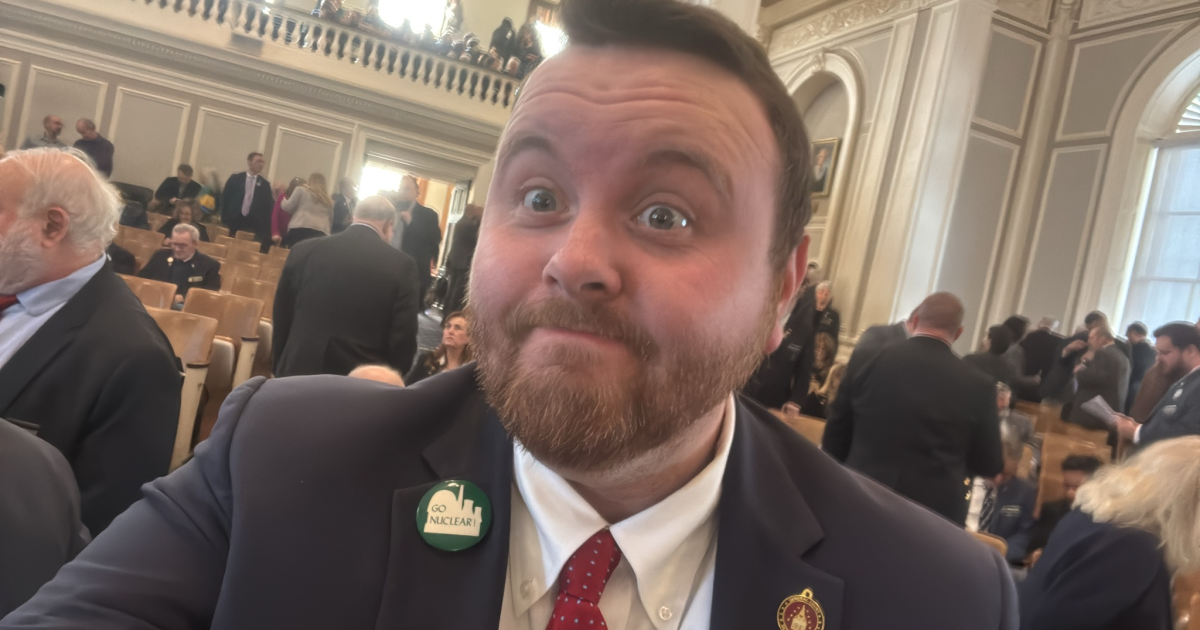
AI posts, selfies, and dank memes: The very online politics of NH’s Joe Sweeney

Florida High School Football Rankings: Top 25 teams – Oct. 21

How old is Bo Nix? What to know about Oregon quarterback ahead of 2024 NFL Draft

Cleary's 21 help Le Moyne down Central Connecticut State 69-64 in OT

99th annual Pony Swim held in Virginia

Indiana Members Credit Union announced as new anchor tenant at Bottleworks District

Video: Jury Rules Against Meta and YouTube for Addictive Features

New Jersey Gov Sherrill signs law barring ICE agents from wearing face coverings to shield identities

Escalation in the Middle East – Not Europe’s war? MEPs in the Ring

War with Iran disrupts fertilizer exports as U.S. farmers prepare for planting season

White House unleashes on Raskin for clinging to ‘deranged’ Jack Smith ‘lies’ in latest Trump docs flare-up
-

 Detroit, MI1 week ago
Drummer Brian Pastoria, longtime Detroit music advocate, dies at 68
-
 Science1 week ago
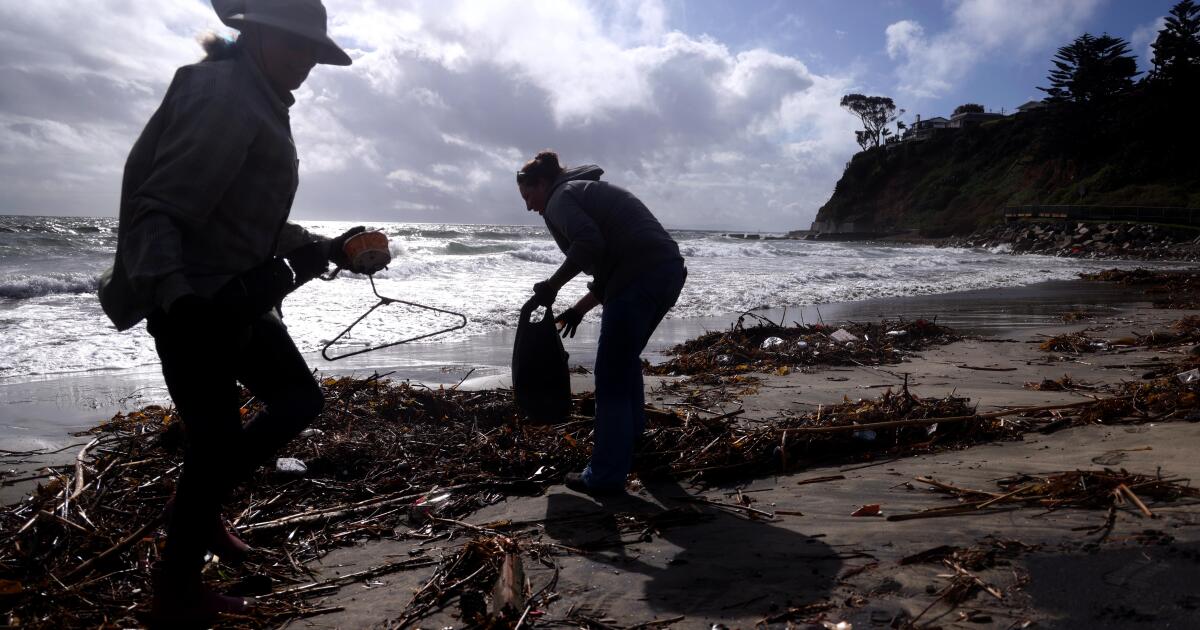
Industrial chemicals have reached the middle of the oceans, new study shows
-

 Movie Reviews1 week ago
‘Youth’ Twitter review: Ken Karunaas impresses audiences; Suraj Venjaramoodu adds charm; music wins praise | – The Times of India
-

 Science1 week ago
How a Melting Glacier in Antarctica Could Affect Tens of Millions Around the Globe
-

 Culture1 week ago
Test Your Memory of Great Lines From Classic Irish Poems
-

 Sports5 days ago
IOC addresses execution of 19-year-old Iranian wrestler Saleh Mohammadi
-

 New Mexico4 days ago
Clovis shooting leaves one dead, four injured
-
 Science1 week ago
I had to man up and get a mammogram