Illinois
University of Chicago student; Springfield, Illinois native are among 2026 Rhodes scholars


A University of Chicago college student is among the 2026 Rhodes Scholars announced this weekend.
Tori Harris, a fourth-year in the College at UChicago, will attend Oxford University in England next fall with a goal of earning a master of science in African Studies and archaeology.
“It’s an incredible honor to be selected to study as a Rhodes Scholar,” Harris said in a University of Chicago news release. “There’s a part of me that feels like this is a little surreal, but I’m excited to be given this opportunity to study what I love at Oxford. I’m hoping to do right by the people who set me on this journey as I move forward in my work.”
Harris is the 56th University of Chicago student to be named a Rhodes Scholar, and the third to earn the honor in the past 12 months.
“Tori has not only exhibited remarkable creativity during her time in the College, but also demonstrated the effectiveness of community-based knowledge—a hallmark of public archaeology,” Melina Hale, Dean of the College at UChicago, said in the news release. “We’re incredibly proud of her and this achievement.”
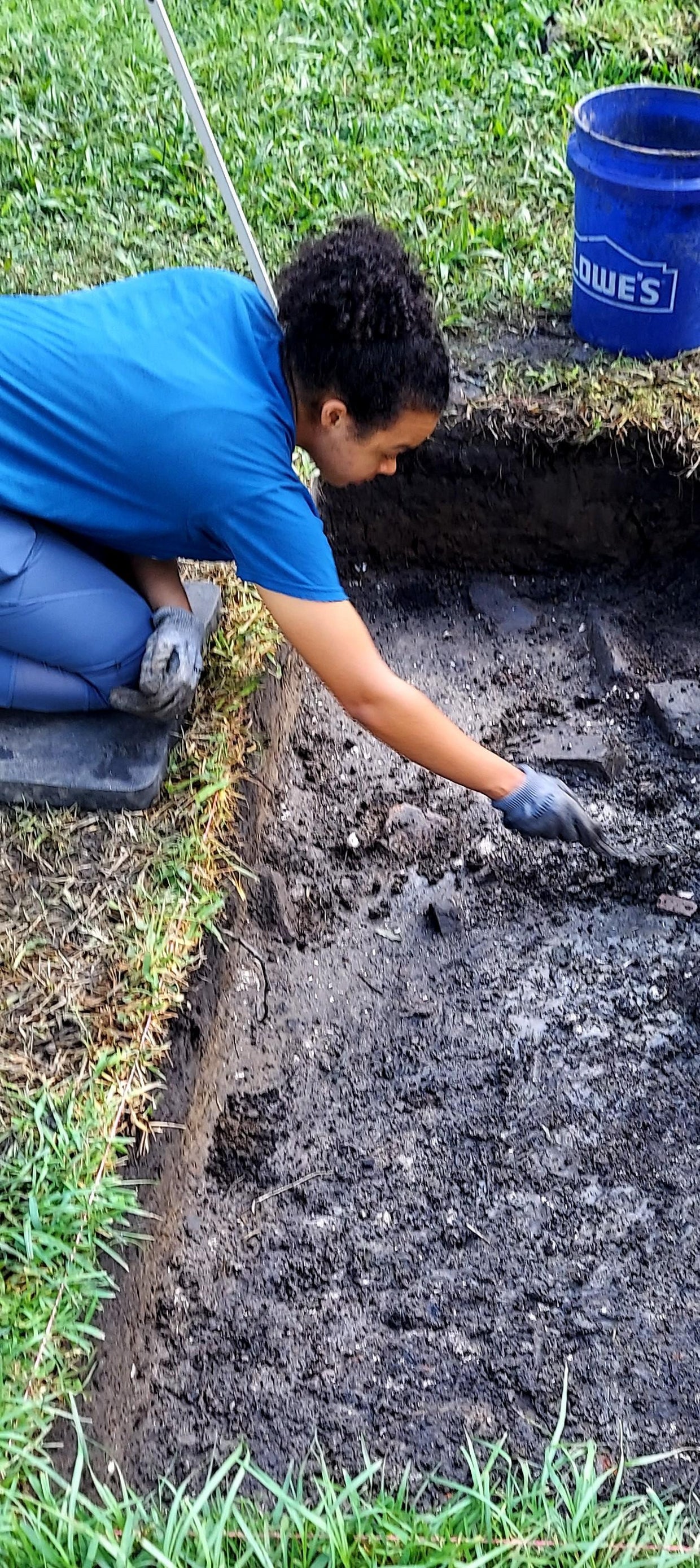
Harris studies anthropology and creative writing at the U of C. She has focused on excavating the legacy of the African diaspora to recover African American culture and history, the university said.
Harris, who grew up in Tulsa, had her first experience with archaeology when she researched and excavated the site of the 1921 Tulsa Race Massacre, the university said.
“My path in archaeology started when I volunteered during the riot’s centennial anniversary,” Harris said in the release. “I was 16 years old, and had a role in mapping smaller community sites that shaped the city and those neighborhoods for years to come. However, it wasn’t until my second year at UChicago that I became interested in African diasporic religious practices and started studying the connection between those practices and the revolutionary theory of those who were enslaved.”
The Rhodes House noted that Harris has conducted archaeological excavations elsewhere across the U.S., including New Orleans, where she helped excavate the Duncan Plaza public park. She also served as a research assistant at the Midlow Center for New Orleans Studies and at the Chicago History Museum, the Rhodes House said.
Harris is currently working on her B.A. paper on material culture — the study of the objects, spaces, and resources that people use to define themselves, the U of C said. Harris excavated artifacts at the Woodland Plantation in Louisiana last summer, and she used her creative writing skills to weave the information from the excavation into narratives, the university said.
Harris has also had her creative writing, including a set of poems and short stories, published in Blacklight Magazine.
At Oxford, Harris hopes to lean on the U.K.’s history of public archaeology, which she said has a focus on community involvement that she admires.
“There is a project in the outskirts of Cardiff that uses local volunteers at their archaeological sites to not only help out with research but also to care for the site,” Harris said in the release. “It’s honestly the reason why I want to be in the U.K. I want to learn what the best way to reach community members is and how to involve them and their local expertise in the discovery of history that is right in their backyards.”
Community involvement has come into play in archaeological excavations on which Harris has already worked. The university noted that during the Duncan Park excavation in New Orleans, some area residents came by, including the third great-grandson of a resident who once lived in the neighborhood and is now working with the excavation project himself.
Also among the 2026 Rhodes scholars is William Lieber, a fifth-generation Illinoisan who grew up in Springfield and graduated from Duke University in North Carolina in May. Lieber earned a B.A. in health and incarceration, a program at Duke that involves examining the intersection of medical science, ethics, education, and criminal and restorative justice.

Lieber, who transferred to Duke from Illinois Wesleyan, is focused on advancing prison reform and improving reentry programs and systems for those who have served time, Duke said.
Lieber has already co-led education-focused programs in prisons throughout North Carolina, and worked with Duke Hospital and the Durham Sheriff’s office to examine the issue of insurance among rearrested patients, Duke said. He also worked as an EMT and restorative justice facilitator, and led an interview team working with gun violence victims in Durham, North Carolina, to provide information for policy reform.
At Oxford, Lieber will pursue a master of science in education and in criminology and criminal justice.



The Chicago Board of Education wants Gov. J.B. Pritzker to reject a federal program offering donated money to students.
A new Chicago Board of Education resolution urges Gov. J.B. Pritzker and Illinois lawmakers to reject a federal program that will provide donor money for students’ academic needs.
The measure passed 15-0 with three members abstaining.
Many on the board appeared to rely on the inaccurate claim that public money will be diverted for private education. But some seemed wary of blindly following the Chicago Teachers Union, which is less popular than ever.
Board member Jennifer Custer indicated she has seen a lot of community interest and that the feedback she’s heard is “50-50 for and against” the federal program.
Before the vote, board member Ellen Rosenfeld motioned to table the resolution indefinitely. While her motion was unsuccessful, Rosenfeld made clear she believed the issue belongs instead on the board’s legislative agenda.
If the state opts into the program, thousands of K-12 Chicago Public School students could receive donor money for tutoring, test fees, career coaching, books and more.
The money would be donated by taxpayers, who would get a dollar-for-dollar federal tax credit up to $1,700 each year. Any taxpayer can get the credit for a qualified contribution to a tax-exempt scholarship-granting organization.
That means the only cost to the federal government is minimal foregone income tax revenue. There is no cost to states, only the benefit of more help flowing directly to students.
If Pritzker does not opt Illinois into the program, residents will watch the money flow to other states.
Pritzker has until Jan. 1, 2027, to decide if over a million Illinois families and students will be able to access donated education money for their academic needs.

Skip to content

Contact Us

ELK GROVE VILLAGE, Ill. (WLS) — The body of a missing man was found in a retention pond Thursday in the northwest suburbs, police said.
Chopper 7 was over the scene at a retention pond at Higgins and Innovation Drive in Elk Grove Village, in front of a number of warehouses in the area.
ABC7 Chicago is now streaming 24/7. Click here to watch
There was a large police presence there for multiple hours, surrounding the water.
Chopper 7 witnessed dive teams go in and out of the water, and there were paramedics on scene.
Elk Grove Police confirmed a male body was found in the water in the 700 block of Innovation Drive. The Cook County Medical Examiner’s Office responded to the scene.
Police identified the body as a missing 26-year-old man named Alexis Ramirez.
Ramirez had been missing since March 10. Elk Grove Police were searching the same area after Ramirez went missing after he was the sole occupant of a single-vehicle crash near Higgins and Brennan Boulevard, which is right by the pond he was found in on Thursday.
Police believe he walked away from that scene before officers arrived. At that time, the police search led to no one being found.
ABC7 spoke to the family of Ramirez on the scene Thursday, and they appeared very emotional.
Police say there is no evidence of foul play at this time as they send out their condolences to the family.
No further information was immediately available.
Copyright © 2026 WLS-TV. All Rights Reserved.

San Francisco store created and run by AI

Wembanyama drops 40 as Spurs beat Mavericks, reach award eligibility

Who is Rueben Bain Jr\ufeff? Miami Hurricanes draft prospect visits Bengals

Full-length Replay: Boston | FOX Sports

Recap: Denver Nuggets B squad defeats Oklahoma City Thunder C squad 127-107. – Denver Stiffs

Florida High School Football Rankings: Top 25 teams – Oct. 21

How old is Bo Nix? What to know about Oregon quarterback ahead of 2024 NFL Draft

Cleary's 21 help Le Moyne down Central Connecticut State 69-64 in OT

99th annual Pony Swim held in Virginia

Indiana Members Credit Union announced as new anchor tenant at Bottleworks District

Swalwell’s former female staffer drops bombshell allegations of sexual assault, exposing himself: report

NASA’s Artemis II prepares for splashdown on Earth

Trump proposes painting executive office building white

Rep Randy Fine joins House Freedom Caucus: ‘Strongest group of conservative patriots in Congress’

Trump issues NATO ultimatum to reopen Strait of Hormuz ‘within days’
-

 Atlanta, GA6 days ago
1 teenage girl killed, another injured in shooting at Piedmont Park, police say
-

 Education1 week ago
Video: YouTube’s C.E.O. on the Rise of Video and the Decline of Reading
-

 Movie Reviews1 week ago
Vaazha 2 first half review: Hashir anchors a lively, chaos-filled teen tale
-

 Education1 week ago
Video: Toy Testing with a Discerning Bodega Cat
-

 Georgia4 days ago
Georgia House Special Runoff Election 2026 Live Results
-

 Pennsylvania4 days ago
Parents charged after toddler injured by wolf at Pennsylvania zoo
-

 Arkansas14 hours ago
Arkansas TV meteorologist Melinda Mayo retires after nearly four decades on air
-
 Milwaukee, WI5 days ago
Potawatomi Casino Hotel evacuated after fire breaks out in rooftop HVAC system