Illinois
Real estate sales in Peoria, Tazewell, Woodford counties Jan. 17, 2026


These real estate transactions, recorded the week of January 5, are compiled from information on file with Peoria, Tazewell and Woodford counties. They represent sales of $78,000 or more.
PEORIA COUNTY
523 S. Anna Ave., Peoria: Ortman Property Management LLC to Kimberly and Herschel Miller, $93,000.
3510 N. Kingston Drive, #5, Peoria: Jeffrey Imig and Judy Edwards to Tracy J. Sumrell, $100,000.
907 S. Manual Ave., Peoria: Debra Hurt and Brian Dewasme to Caleb Bowling, $103,900.
5122 N. Willard Road, Peoria Heights: Heights Properties LLC to Allison Smith, $105,000.
200 W. Virginia Ave., Peoria: Victoria L. Szmania to Brandon J. Jackson, $113,520.
312 S. Fourth St., Dunlap: F Street Investments LLC to Mark and Katelyn Stoller, $122,500.
609 W. Hudson St., Peoria: Timothy Shea to Isaac Vega, $123,500.
5112 W. Pfeiffer Road, Bartonville: Leslie L. Bowman to Brent T. Godsey, $124,900.
3563 W. Saymore Lane, Peoria: John M. and Tara Raine to Scott Hooste, $125,000.
614 N. Lammers Ave., West Peoria: 4115 N Chelsea LLC to Margaret Green, $130,000.
2011 W. Richwoods Blvd., Peoria: David and Erin Tankersley to Rylee Calzavara, $130,000.
814 W. Ridge Road, Peoria: Teresa A. Davis to Cynthia Chavez, $133,000.
1404 E. Moneta Ave., Peoria Heights: Federal National Mortgage Association to Matti Bielfeldt, $135,000.
5412 S. Juliette Drive, Bartonville: Makayla L. and Coby M. Donaldson to Ethan Ehnle, $144,000.
5203 Rutledge Ave., Bartonville: Richard J. and Deanna C. Merriman to Denise M. Merriman, $150,000.
3621 W. Richwoods Blvd., Peoria: 3623 Sterling LLC to Treyvon Graves, $152,000.
2209 W. Kensington Drive, Peoria: Lisa McFarlin to Tran Property Rentals LLC, $154,000.
15409 W. Glasford-Canton Road, Glasford: Bayley and Paige Carlile to Michael W. Schabatka, $155,000.
416 W. Maple St., Chillicothe: Brian E. and Taylor J. Moore to Andrew and Erynn Chirchirillo, $155,000.
611 W. Forest Lawn Ave., Peoria: Michael F. and Sandra L. Koch to Scotty Speagle, $160,000.
419 N. Lakeshore Drive, Hanna City: Brian J. Monge and David W. Hawkins to Seth E. and Chloe Stewart, $160,500.
310 W. Armstrong Ave., Peoria, and 1320 N. North St., Peoria: Scott A. and Sherrie Reed to Rebecca Ala, $165,900.
136 E. Oak Park Drive, Peoria: Brett Baldovin to Cory A. Tutaj, $172,500.
1124 N. Hushaw Ave., Chillicothe: Andrew J. and Keeley A. Ruhland to Noah and Mariah Ellis, $178,000.
4901 W. Pfeiffer Road, Bartonville: Jeremy Suddeth to Brayden Henry, $185,000.
4502 NW Scenic Drive, Peoria: Chris O’Niell Inc. to Rylee M. Joanis, $210,000.
317 N. Longbow Drive, Peoria: Makenzie K. Merriman and Jesse Page to Eric J. and Tamara E. Ruth, $214,000.
6311 N. Riviera Court, Peoria: Pedro P. and Kelly S. Orozco to Charles and Teara M. Howell, $220,000.
12700 W. Parks School Road, Princeville: Two G Farms LLC to Miles G. Smith, $250,000.
5118 W. Greenridge Court, Peoria: Kevin and Ellen Grohovena to Beth A. Hinchee, $259,900.
1516 E. Glen Ave., Peoria Heights: Robert L. Jr. and Kathleen F. Travers to Robert J. and Brooke N. Travers, $270,000.
2407 W. Miners Drive, Dunlap: Eithish Arisa and Sunitha Battu to Rachel K. Kangila and Pathou Kavena, $293,500.
3227 N. Knoxville Ave., Peoria: Mary L. Jacquin to Bradford Woodworth, $300,000.
19921 N. White Grove Road, Princeville: Theodore J. and Virginia Gilles to Nicholas B. and Brianna N. Milligan, $300,000.
1925 W. Courtside Drive, Peoria: Michael S.E. and Lisa T. Pace to Nucompass Mobility Services Inc., $325,000.
1925 W. Courtside Drive, Peoria: Nucompass Mobility Services Inc. to Suzanne Chave, $325,000.
13921 N. River Crest Drive, Chillicothe: Ryan W. and Thomas W. Blackorby to David C. and Columbia J. Ozuna, $359,900.
13628 N. Wild Spruce Lane, Chillicothe: Michael T. and Jennifer K. Swanson to Matthew E. and Megan Layne, $380,000.
6110 N. Oak Leaf Court, Peoria: Jay and Sara L. Bruer to Saleh N. Alarami and Nawa A. Dawadi, $422,000.
427 W. Westfield Court, Dunlap: William C. and Melissa N. Boley to Jose L. Reteguin and Maria T. Velasco Marquez Marlen, $539,900.
6100 N. Eagle Bend Court, Peoria: Associated Bank NA to Bonnie J. and Kenneth L. Humphrey, $800,000.
TAZEWELL COUNTY
1404 Matilda St., Pekin: B. Hayden & F.P. Ragland Investing LLC to Shannon Davies and George Stringham, $85,000.
235 Mount Aire Drive, East Peoria: Charlene R. and Jimmy F. Stevens to Daniel Z. Stevens, $90,534.
1515 N. 10th St., Pekin: Thomas Huff Jr. to NF Rentals LLC, $95,000.
557 Groveland St., Creve Coeur: Joshua L. Ristow to Andrew Pisel, $95,000.
2032 Broadway Road, Pekin: James E. Didonato to Generation Next Inc., $100,000.
315 Pekin Ave., East Peoria: Brandon and Crystal Gore to Bryce Conover, $105,000.
320 Lawndale Ave., Creve Coeur: Brian C. and Clara P. Hibbert to John H. Way Jr., $115,900.
132 McArthur St., North Pekin: Isabel Potts to James Greenacre, $116,000.
1004 Park Avenue, Pekin: Robert T. and Jennifer N. Buzdigian to Ian A. Smith and Autumn Spoor, $128,000.
1312 Sommerset St., Pekin: Kevin Goeken to William J. Forkell, $129,500.
1407 Lincoln St., Pekin: Austin Thomason to Adam Siefert, $140,000.
1005 Edison Court, Pekin: Jakob Bridenbaugh to Braden Cease, $152,000.
103 Mabee Ave., East Peoria: Eagle Property Management LLC to Philip Tharp, $160,000.
412 Whippoorwill Drive, Washington: Kristina M. and Patrick J. Shirley to Skyler R. Goode and Leah N. Kuykendall, $217,500.
27615 Schuck Road, Washington: Melody L. and Roland Campbell to Karen A. and Thomas D. Brecklin, $220,000.
27363 Broadway Road, Morton: Becky S. Watts to Shelby and Amanda Metzer, $225,000.
1400 Springfield Road, East Peoria: Bradley A. and Mckenzie Reeser to Zyrene D. Banas and Luke Barr, $230,500.
720 Lincoln St., Hopedale: Kevin and Lisa Litwiller to Benjamin and Kendra Litwiller, $241,000.
29585 Allentown Road, Mackinaw: John W. and Tobey L. Hauter to Alecia M. and Edward P. Hauter, $250,000.
922 Birchwood Drive, Washington: Anna J. and Kevin M. Koch to Samantha Sutter and Blake A. Sutter-Driggers, $263,000.
Parcel Number 23-23-05-200-007, Tazewell County: Sandra J. Morris to Luke Litwiller, $300,000.
2502 Plymouth Place, Pekin: Frederick J. and Pamela S. Dawson to Bradley J. and Jamie L. Siltman, $325,000.
2724 Broadway St., Pekin: Marjorie L. Fulton to Matthew and Rebekah Fulton, $349,500.
1707 W. Jefferson St., Morton: Ronald G. and Suzanne R. Reising to Brock A. Schwartz, $392,000.
108 Village Drive, Washington: Nelson Jeffery to Chong S. Calderon and Michael A. Marshall, $430,000.
2727 Aspen Court, Pekin: Lori L. Davis and Rhonda S. Ries to James K. Ruth, $442,500.
25901 E. Wildlife Road, Hopedale: Bright Blue Property Management LLC to Murphy Property Group LLC, $461,750.
623 Country Club Lane, Pekin: Edrick Ferguson to Cathryn S. and William M. Cash, $510,000.
1224 Autumn Ridge Court, Morton: Jiayan Sun and Zhihong Zhang to Brittain and Danielle Ladd, $580,000.
Parcel Number 23-23-05-200-007, Tazewell County: Sandra J. Morris to Edward J. and Rosemary E. Litwiller, $609,360.
2 Hunters Way, Washington: Beth and Matthew Lykens to Jennifer M. and Timothy M. Van Autreve, $649,900.
WOODFORD COUNTY
794 Northfork Road, Metamora: Steve Ahrens to Scott A. and Janet L. Huser, $125,000.
910 N. Church St., Roanoke: Hailey and Eric Schaefer to Jerry Frank, $170,000.
1285 Sunset Drive, East Peoria: Scott Vreeland to Brendan Kay, $267,500.



WILLIAMSON COUNTY, Ill. (HEARTLAND NEWS) – Officials are reminding residents to take lightning safety seriously following a recent strike that sent a Franklin County man to the hospital.
Lightning can strike more than 10 miles away from the storm itself, whether you’re at the pool, lake or courts. Emergency management officials say the biggest mistake people make is waiting until the rain starts before heading inside.
“Lightning often strikes outside the area of the heaviest rainfall, and if you can hear thunder, you’re in danger,” said Brian Burgess, director of the Williamson County Emergency Agency.
Scott Radecki teaches tennis lessons at Herrin City Park and constantly monitors weather conditions as part of his outdoor job. He tracks weather on his phone, especially on days with uncertain conditions.
“I’ve had lessons later in the day, had to go back to Marion, drive to courts, a popup storm came, started raining, so it’s just kind of part of the job and you just try to deal with it the best you can,” Radecki said.
Burgess said people need to know where they’ll go if storms develop before heading outdoors. The National Weather Service says you need to stay inside a safe building for at least 30 minutes after the last rumble of thunder because all thunderstorms produce lightning and are dangerous.
If you’re caught outside and can’t immediately find shelter, stay away from isolated tall trees, towers and utility poles. If you are in a group of people, make sure you spread out.
Lightning can also be dangerous inside buildings as well.The National Weather Service says Electricity travels through anything that’s metal or any medium, including electronics.
“Lightning will travel through wiring and plumbing if your building is struck, so don’t take a bath or a shower or wash dishes during the storm,” Burgess said.
Official organizations like the CDC offer a simple reminder: when thunder roars, go indoors.
Copyright 2026 KFVS. All rights reserved.
Illinois
Illinois waives tax penalties for 11 counties hit by storms, including Stephenson and Winnebago

(WIFR/WREX) – Illinois leaders announce disaster tax relief for individuals and businesses in 11 counties affected by severe thunderstorms earlier this year.
The relief waives penalties and interest for taxpayers who cannot file returns or make payments on time because of the severe weather. It covers income, withholding, sales, specialty and excise taxes.
The tax relief applies to any area included in Gov. JB Pritzker’s state disaster proclamation.
Locally, this includes Stephenson and Winnebago Counties. Other counties across the state included in the proclamation are:
- Coles
- Cook
- Effingham
- Jefferson
- Kankakee
- LaSalle
- McLean
- Warren
- Woodford
The proclamation covers severe weather in these counties between March 10 and June 21.
“In the wake of these devastating storms, my administration is ensuring that impacted residents and businesses have the support they need to recover,” Pritzker said. “By offering temporary tax relief to individuals and businesses in 11 counties, we’re giving impacted communities the time and breathing room necessary to focus on recovery.”
Individuals and businesses located in those counties qualify for state tax relief. Any counties added later will also be eligible, according to the governor’s office.
Taxpayers seeking a waiver of penalties and interest should send a brief written explanation to the Illinois Department of Revenue regarding why they cannot file timely or pay. They should provide their full name, account number, mailing address and an estimate of when they believe they can file or pay their taxes. If using a Social Security number, include only the last four digits.
Requests may be submitted electronically to REV.DisasterRelief@illinois.gov or by postal mail using the address on the return. When submitting by mail, taxpayers should write “Severe Storms – Summer 2026” at the top of the return in red ink and attach or include the explanation for requesting abatement of penalties and interest.
Taxpayers who have already been billed for penalties should email REV.DisasterRelief@Illinois.gov and provide their name, business name, account numbers and the periods for which they filed late due to the storms to request penalty abatement. Taxpayers should also include “Severe Storms – Summer 2026” in any communications with the department when requesting relief.
Property owners who experienced damage should contact their county supervisor of assessments if they wish to apply for reassessment due to any property damage. The Motor Fuel Use Tax is not included in this disaster tax relief.
Copyright 2026 WIFR. All rights reserved.
Illinois
As Illinois enters 10th year under Evidence-Based Funding model, equity remains an elusive goal

Article Summary
- After nine years of funding schools under the Evidence-Based Funding model, wealth-based disparities in per-pupil spending have largely evened out, but residents of low-wealth districts still pay significantly higher property tax rates.
- Since the adoption of EBF, annual state funding of public schools has increased by more than $3 billion. But 63% of districts are still funded at less than 90% of their adequacy target.
- School district officials in both rich and poor districts credit the EBF system focusing resources where they are needed most and providing more certainty in funding.
This summary was written by the reporters and editors who worked on this story.
SPRINGFIELD — Illinois has made progress in recent years boosting funding for schools that serve some of the state’s poorest communities and leveling out some, but not all, of the wealth-based disparities in per-pupil instructional spending.
But as Illinois enters the 10th year of financing schools under the Evidence-Based Funding model — a formula adopted in 2017 that was supposed to improve both the adequacy and equity of the state’s school finance system — wide disparities still exist in the property tax system that funds more than half the cost of K-12 education.
An analysis of school finance data by Capitol News Illinois covering the nine-year period from 2017 to 2025 shows homeowners in the lowest-wealth districts pay tax rates that are double those in the wealthiest districts.
The findings are largely consistent with those of other researchers who follow school finance issues nationally.
“Given the design of EBF and the evidence basis on which it was built, this is about what I would expect. I mean, it’s actually a little better than I would have expected,” Bruce Baker, a school finance researcher at the University of Miami, said in an interview. “To a significant extent, it leveled out the resources, but it, by no stretch of the imagination, brought the state to equal educational opportunity.”
Evidence-Based Funding
The Evidence-Based Funding formula came about after years of negotiations among legislators and stakeholders who were searching for a way to reform what many considered to be the most inequitable school funding system in the country.
“I have always talked about Pennsylvania and Illinois as being kind of the equity trainwreck states,” Baker said. “Connecticut has taken Illinois’ place in that role.”
At that time, according to State Report Card data, Illinois was spending about $7 billion a year funding public schools, less than one-fourth of the total $28.4 billion being spent by the state’s public schools. Federal funding provided another $2.1 billion, or 7.5% of the total.
But more than two-thirds of the total, $19.3 billion, came from local revenues, primarily property taxes.
Meanwhile, there were vast disparities across the state’s school systems, both in terms of the taxes they levied on property within their boundaries and the money they spent educating their students.
The aim of the new formula was to improve both the adequacy and equity of school funding in Illinois. That involved establishing an “adequacy target” for each district, using research-based evidence to estimate the cost of educating each student in a district.
The formula was predicated on the idea that some students are more expensive to educate than others. That meant the adequacy target had to account for such things as the poverty rate within a district, the percentage of its students from non-English speaking backgrounds, the number of students receiving special education services and regional cost of living differences, among other factors.
“A district that’s 60% to 70% kids from low-income households, 20 to 30% non-English speaking kids, that school or district might need 40%, 50% or even 100% more in spending per pupil than a district that has no kids from low-income families and no kids who are English learners,” Baker said. “The per-pupil spending really needs to be differentiated based on the costs to achieve common outcomes.”
The law then called for increasing state funding each year by at least $300 million and earmarking the bulk of that money for the districts furthest below their adequacy target, with the goal of eventually getting all districts up to at least 90% of adequacy.
It also called for funding $50 million each year in property tax relief grants to reduce levies in certain high-tax districts. Districts are awarded grants based on a formula spelled out in statute. Districts are expected to use the grant funds to abate taxes they would otherwise levy.
At Gov. JB Pritzker’s urging, lawmakers did not fund the grants in the fiscal year that just ended June 30 but instead passed a bill calling for the Illinois State Board of Education’s Professional Review Panel to file a report assessing the impact of the program.
That report was released in March. It found that from 2015 through 2023, total property taxes collections grew in almost every district in the state, although the growth was slightly lower in districts that had received the grants than those that did not.
Lawmakers renewed the grant program for the fiscal year that began July 1 but extended the period in which districts must use the funds to abate taxes to three years.
In the years since the EBF formula was adopted, overall annual state funding for schools has increased more than $3 billion, to an estimated $10.8 billion in the fiscal year that just began.
Out of 850 elementary, high school and unit school districts in the state, according to ISBE’s EBF distribution data, the number of districts that are funded at or above 90% of their adequacy target has grown from 194 in fiscal year 2018 to 313 in 2026.
Open chart in a new tab
But after nine years under the EBF model, that still leaves 537 districts, 63% of the total, funded at less than 90% of adequacy. ISBE reported during this year’s budgeting process that it would take an additional $3 billion to get all districts up to at least 90% of adequacy.
“We need more, and I have tried very hard, as you know, in very tight budget circumstances,” Pritzker said during a recent news conference. “We nevertheless increased funding for K-12 schools.”
But an analysis of school finance data covering the first eight years of the EBF formula shows the state has made only modest progress to improve the equity of its school finance system, either in terms of the taxes people pay to fund their local schools and the amount of resources those districts devote to classroom instruction.
Tax inequity
One of the hopes of the new funding system was that as state funding for schools increased, local districts would become less reliant on local property taxes.
At the time EBF went into effect, there were vast disparities among districts in terms of their relative wealth and the tax rates they levied.
According to data from the Illinois Local Education Retrieval Network, or ILEARN, in fiscal year 2017, the year before EBF took effect, district wealth ranged from a low of $20,449.57 in taxable property valuation per pupil to a high of $2.47 million.
Property tax rates among the districts also varied widely, from a low of $1.14 per $100 of equalized assessed valuation, or EAV, to a high of $21.82.
According to the data, people in the poorest 10% of districts in the state paid an average tax rate of $5.39 per $100 of EAV. That was more than double the average tax rate in the wealthiest 10% of districts, which was $2.50 per $100 of EAV.
Using a statistical tool known as regression analysis, the data showed that for every $10,000 increase in a district’s per-pupil property wealth, there was a corresponding $0.028 decrease in its property tax rate. And while other factors also influenced a district’s tax rate, property wealth explained 21% of the variation.
By 2025, the eighth year of the EBF formula, data from school districts’ annual financial reports showed those disparities had eased only slightly.
There was still wide variation in tax rates among school districts, from a low of $19,580 to a high of $3.3 million.
From 2017 through 2025, the average tax rate among the poorest 10% of districts fell considerably, to $4.81 per $100 of EAV. But that was still more than twice as high as the average tax rate among the wealthiest 10%, which was $2.40 per $100.
Open chart in new tab

Differences in per-pupil property wealth still explained about 21% of the variation in tax rates but the relationship was not as severe. In 2025, for every $10,000 increase in property wealth, there was a corresponding $0.018 decrease in tax rates.
Spending inequity
One area where Illinois appears to have made more progress is in directing new resources to districts serving large numbers of high-needs students.
The EBF formula is predicated on the idea that some students are more expensive to educate than others. The additional cost of educating those students — including low-income students, English language learners and students receiving special education services, among others — is used as a factor in calculating each district’s adequacy target and, eventually, how much new money they receive each year.
To measure how effectively Illinois was directing resources to high-need districts, CNI compared each district’s instructional expenses per-pupil with its percentage of low-income students, as reported in the ISBE’s annual Report Card data.
ISBE defines instructional expenditures as “the direct costs of teaching pupils or the interaction between teachers and pupils.” Low-income students are defined as those “who receive or live in households that receive Supplemental Nutrition Assistance Program or Temporary Assistance for Needy Families benefits; are classified as homeless, migrant, runaway, Head Start, or foster children; or live in a household where the household income meets the U.S. Department of Agriculture income guidelines to receive free or reduced-price meals.”
In 2017, the year before EBF took effect, there were wide wealth-based gaps in instructional spending across all school districts in Illinois.
At that time, instructional spending averaged about $7,320 per pupil statewide. The average among elementary districts was below that level, at $6,822, while high school districts the average was $9,224.
Within elementary districts, however, the wealthiest 10% — those with the lowest percentage of low-income students — instructional spending per-pupil was 39% higher than it was among the poorest 10%.
Among high school districts, the wealthiest districts spent 29% more on average than the poorest districts.
Among unit districts, however, there was little difference in spending levels between wealthy and poor districts.
By 2025, the eighth year of the EBF program, the spending picture had changed considerably.
Open chart in new tab
First, the infusion of $3 billion in additional annual state funding boosted instructional spending across the board. That year, the statewide average was $10,601 per pupil, a 45% increase over 2017 levels.
In addition, many of the wealth-based disparities had been erased.
Among unit districts, the poorest 10% of districts actually spent about 29% more per-pupil on instruction than the wealthiest. Among elementary districts, spending levels were about even between rich and poor districts.
Among high school districts, however, wealth-based disparities persisted. There, the richest 10% of districts continued to spend about 29% more per-pupil on instruction than the poorest districts.
Chris Johnson, deputy superintendent at New Trier Township High School District in northern Cook County, one of the wealthiest districts in the state, acknowledged in an interview that his district is fortunate to have more than adequate resources. But he said that is not the fault of the EBF system.
“We were 91% funded by local property taxes, and so we have a long history of our community generously committing to support our schools,” he said.
In 2025, New Trier ranked third in the state among high school districts for per-pupil instructional spending, at just over $21,000. Its property tax base was also among the highest, at nearly $1.9 million per pupil, and it had one of the lowest property tax rates, at $1.92 per $100 of equalized assessed valuation.
As a result, New Trier receives very little state funding through EBF, which is designed to prioritize the neediest districts. But Johnson, who wrote his doctoral dissertation on the implementation of EBF, said he supports the system and believes it is performing as it was intended.
“It’s brought more money to Illinois school districts, and it’s done it in an equitable way that focuses on the districts that need the most support,” he said.
“What I found in my dissertation was that the function codes — the ways the district spent the money in their budgets — were aligned with the rationale for passing law,” Johnson said. “So, the categories in school district budgets related to instruction grew at a faster rate than expenditures related to some of the administrative and other expenses.”
One district official in a smaller rural school district said the EBF model was probably more useful in helping larger districts quantify their needs. “But like for ours,” he said, “it tells us that we need a 0.2 school psychologist and a 0.1 social worker. I can’t do a point one person.”
Overall, that official said the biggest benefit the EBF system has provided his district is greater certainty that state funding will arrive on time.
“I like the guaranteed money, you know. Making sure they’re gonna send us some money,” he said.
Some lawmakers, however, have expressed growing frustration with the slow progress being made in bringing all districts up to adequate funding levels.
Sen. Graciela Guzmán, D-Chicago, introduced legislation this year calling on the state to fund all districts at 100% of their adequacy target. Although the bill never advanced out of committee, it did receive serious discussion during one committee hearing in May.
“If the state says that a service is required, the state should fund it,” Guzmán said during that hearing. “And then if the state has defined what adequate education looks like, the state should also fund that. So, if we’re serious about equity, property tax relief and supporting public schools across Illinois, then we have to stop treating underfunding as if it is normal.”
How we reported this story
This story is based on analysis of publicly available data from several datasets maintained by the Illinois State Board of Education.
Information about school district property valuations and tax levies for fiscal year 2017 was obtained from the Illinois Local Education Agency Retrieval Network, or ILEARN. According to ISBE, there is a two-year lag in reporting that data. Therefore, the FY 2017 data was obtained from the FY 2019 report.
Property valuation and tax levy data for fiscal year 2025 was obtained from individual districts’ annual financial reports filed with ISBE. At the time this analysis was performed, data was available from 746 of the state’s 850 elementary, high school and unit districts.
Information about school districts’ instructional spending and low-income population was taken from annual report card data, available from ISBE’s Report Card Data Library.
Capitol News Illinois is a nonprofit, nonpartisan news service that distributes state government coverage to hundreds of news outlets statewide. It is funded primarily by the Illinois Press Foundation and the Robert R. McCormick Foundation.
-

 World7 minutes ago
Does more World Cup history beckon for Norway? England stand in their way
-
 News34 minutes ago
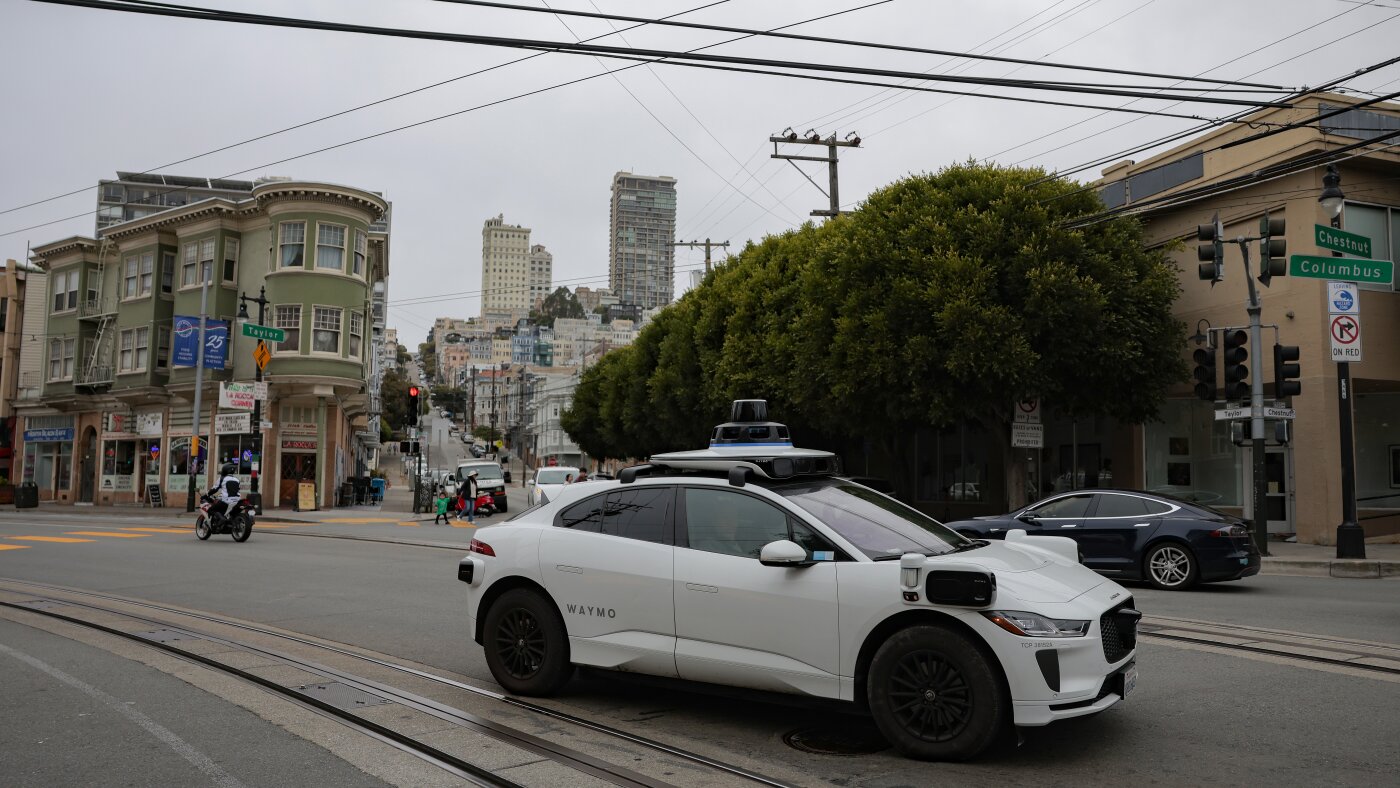
Waymo called the cops on teen riders, raising privacy concerns
-

 Los Angeles, Ca2 hours ago
O.C. police prep for beach, theme park ‘takeovers’ promoted on social media
-

 Detroit, MI2 hours ago
Detroit city leaders to DHS: Stop ICE pursuits which endanger the community
-

 San Francisco, CA2 hours ago
SF Supervisor Jackie Fielder hosts listening session after medical leave
-

 Dallas, TX3 hours ago
The Stewpot artists find healing, purpose and income through art in Dallas
-

 Miami, FL3 hours ago
Can Jason Marshall push for a starting spot – The Splash Zone 7/10/26
-

 Boston, MA3 hours ago
Police investigating shooting in Downtown Crossing – Boston News, Weather, Sports | WHDH 7News

