Illinois
Northern Illinois falls to North Carolina State, dropping second straight since beating Notre Dame


RALEIGH, N.C. — Northern Illinois lost its second consecutive game since its stunning victory against then-No. 5 Notre Dame, falling 24-17 on Saturday to former coach Dave Doeren and North Carolina State.
The Huskies (2-2) outgained the Wolfpack 283 yards to 171 and held them to 1-for-11 on third-down conversions, but they were done in by four turnovers — two interceptions and two fumbles — by quarterback Ethan Hampton.
‘‘You lose the turnover battle 4-0, and it’s hard to win,’’ NIU coach Thomas Hammock said. ‘‘They blitzed us early and often. We just didn’t make enough plays.’’
The Huskies had been on a six-game streak, dating to last season, of not allowing any sacks. But N.C. State shattered any hope NIU had of extending that run by sacking Hampton four times, matching its total from its first four games combined. All told, the Wolfpack had 12 tackles for loss.
N.C. State opened the scoring with a one-yard touchdown run by quarterback CJ Bailey, who was making his second start as a true freshman, midway through the first quarter.
After the Huskies responded with a three-yard touchdown run by fullback Brock Lampe late in the first, the momentum shifted when Wolfpack safety DK Kaufman reached Hampton on a third-down blitz, knocked the ball out of his hand and returned the fumble two yards for a touchdown for a 14-7 lead early in the second.
N.C. State added a field goal to make it 17-7 with five minutes left in the second before Hampton (14-for-29, 159 yards) threw a six-yard touchdown pass to Cam Thompson to pull NIU to 17-14 at the break.
The Wolfpack’s defense provided another boost early in the third when defensive end Devin Vann forced Hampton into a fumble that defensive tackle Brandon Cleveland recovered and returned to the Huskies’ 1. Bailey took advantage of the field position to throw a touchdown pass to KC Concepcion that pushed N.C. State’s lead to 24-14.
Kanon Woodill — whose last-minute field goal beat Notre Dame 16-14 on Sept. 7 — made a 50-yard field goal early in the fourth to cut NIU’s deficit to 24-17, but Wolfpack cornerback Corey Coley intercepted a pass by Hampton in the end zone as time expired to end the Huskies’ hopes of another victory against a power-conference opponent.
‘‘It was a team win,’’ said Doeren, who coached NIU for two seasons (2011-12) before leaving for N.C. State. ‘‘Offensively, obviously, statistics are not good. But we did not turn the football over the whole game, we punted the football really well and we played dominant defense against a really good football team.
‘‘I know people are upset we didn’t have enough yards, this, that and the other. Don’t be mad about winning. That was a hell of a team win.’’
Antario Brown had 114 yards on 28 carries for the Huskies.



WADSWORTH, Ill. (WLS) — Two people who were killed in a head-on crash involving a semi in the north suburbs on Thursday morning have been identified, officials said on Friday.
The Lake County sheriff’s deputies and the Newport Township Fire Protection District responded to the Route 173 crash, which happened west of North Kilbourne Road in Wadsworth, around 7:50 a.m.
ABC7 Chicago is now streaming 24/7. Click here to watch
Witnesses told investigators that the driver of a 2009 Acura sedan, which was traveling eastbound, appeared to be having difficulty staying in his lane and drifted into the path of a Freightliner semi-truck, which was heading westbound.
The two vehicles then collided head-on, officials said. A third vehicle was also hit.
Chopper 7 was over the scene at 9 a.m., capturing the damage.
The sedan’s driver, a man, and a passenger, a woman, were pronounced dead on the scene.
The Lake County Coroner’s Office identified them as 51-year-old Kelly Wooten and 45-year-old Jacklyn Bradley of Stoughton, Wisconsin. Preliminary autopsy results indicate that both Wooten and Bradley died from blunt-force injuries.
The driver of the third vehicle, a 54-year-old Salem, Wisconsin woman, suffered non-life-threatening injuries.
The crash shut down Route 173 between Kilbourne Road and U.S. 41 in both directions.
The Lake County Sheriff’s Office Technical Crash Investigations Team is investigating.
The video in the player above is from a previous report.
Copyright © 2026 WLS-TV. All Rights Reserved.
Illinois
AIPAC faces test of its power in Illinois primary as Democrats debate future of Israel relationship

WASHINGTON — A crowded primary season in Illinois is shaping up as the next test for the American Israel Public Affairs Committee, a powerful advocacy organization that’s generating fresh turmoil over the Democratic Party’s relationship to Israel and the role of undisclosed campaign cash in this year’s midterm elections.
AIPAC, which was founded decades ago to lobby for U.S. support for Israel, has reserved at least $1.9 million in advertisements through its super PAC in the race to replace Rep. Danny Davis, a veteran politician who is retiring. The organization hopes to boost Melissa Conyears-Ervin, the city treasurer in Chicago, to victory over a dozen other candidates in the March 17 primary.
Other organizations that critics believe are tied to AIPAC are also spending heavily in Illinois, a source of bitterness and recriminations in a state already known for its bare knuckled brand of politics.
The aggressive spending comes after AIPAC put almost $2 million into a recent Democratic primary for a special election in New Jersey, an effort that’s widely considered to have backfired. AIPAC targeted Tom Malinowski, a former congressman who narrowly lost to progressive candidate Analilia Mejia — who has been outspoken in criticism of Israel.
But AIPAC appears undaunted by the experience, despite an outpouring of criticism from across the political spectrum.
“We expect to be involved in dozens of races both in primaries and general elections this cycle,” said Patrick Dorton, a spokesman for AIPAC’s affiliated super PAC, the United Democracy Project, or UDP.
AIPAC has more urgently pursued its mission as Democratic skepticism and even hostility toward the U.S.-Israel relationship increases because of the war in Gaza, jeopardizing traditional bipartisan support for military assistance to a historic ally. But the group’s assertive interventions in this year’s primaries, which are expected to expand in the months to come, also risk further fracturing the party and eroding any remaining goodwill.
AIPAC has been dividing line in Illinois primary
Campaign finance laws involving super PACs make it nearly impossible to ascertain who is behind much of the money being spent in Illinois. Although UDP is open about its affiliation, recently created groups like Elect Chicago Women and Affordable Chicago Now haven’t yet been required to disclose the sources of their money.
Neither group is obligated to disclose its funding until after the Illinois’ primary. Critics suspect they’re conduits for AIPAC money, and AIPAC has declined to say whether there’s any connection.
UDP, Elect Chicago Women and Affordable Chicago Now are three of the top four spenders on advertisements in House races so far, with almost $11 million total, and the majority going to Illinois. Financial numbers are drawn from AdImpact, a nonpartisan ad-tracking service.
None of the organizations mention Israel in their campaign messaging, a strategy that AIPAC-affiliated groups have used in the past as well.
For example, the United Democracy Project assailed Malinowski in New Jersey as sympathetic to President Donald Trump’s deportation efforts, undermining him with liberal voters. In Illinois, it is promoting Conyears-Ervin to replace Davis in the 7th congressional district by saying she will fight to lower costs and protect healthcare.
The strategy has contributed to speculation and angst about AIPAC’s influence in politics. Supporters of Israel accuse critics of using antisemitic tropes about dual loyalty, and others say the focus on AIPAC is misplaced.
“I think the folks who are talking the most about AIPAC are seeking to demonize Israel and create a break in the U.S.-Israel relationship,” said Rep. Brad Schneider, a Democrat who represents Illinois’ 10th district.
“The problem is Citizens United and the decision to allow dark money,” said Schneider, the co-chair of the Congressional Jewish Caucus. “The problem is the rules. Let’s fix the rules.”
Candidates have been criticizing each other for their perceived willingness to accept help from AIPAC. Four progressive candidates vying for different Illinois congressional seats jointly condemned the organization’s role in the state’s primaries during a press conference in February. Another candidate is selling shirts on her website with anti-AIPAC messaging.
AIPAC has increased its campaign spending in recent years
Malinowski is still raw over his experience as AIPAC’s target in New Jersey, and he said that he won’t support any candidates backed by the organization this year. He described himself as pro-Israel even though he opposed unconditional assistance for the country, a stance that drew AIPAC’s ire.
“Obviously, we were going to talk about Israel and Gaza in the campaign because many voters would be asking questions about it,” Malinowski said. “But I wanted those discussions to be about the substance, not colored by baggage of endorsements from groups that are controversial now.”
AIPAC said in a statement that Mejia’s success in the primary was “an anticipated possibility,” suggesting they had no regrets that their role could have helped pave the way for a candidate who has described Israel’s actions in Gaza as genocide.
Although AIPAC has always been politically active, it began spending directly on campaigns during the 2022 midterms.
Since then, it has spent more than $221 million through its traditional PAC and its super PAC, according to Federal Election Commission filings between December 2021 and January 2026.
The super PAC has mostly focused on Democratic primaries. In the 2022 and 2024 cycles, UDP spent at least $1 million supporting or opposing 18 candidates, 16 of whom were Democrats. Many of those candidates were running in open races.
Traditional PACs are allowed to raise and donate up to $5,000 per candidate per election, and may coordinate directly with campaigns. Super PACs don’t have fundraising or spending limits but are not allowed to make direct or in-kind contributions to candidates nor coordinate communications.
In 2024, UDP’s biggest investments were made in support of centrist challengers to progressive incumbents. It spent more than $13 million in the 2024 Democratic primary in New York’s 16th District, in which current Rep. George Latimer defeated former Rep. Jamaal Bowman. It also spent $8.5 million opposing former Rep. Cori Bush, who lost her primary to Rep. Wesley Bell.

A tax incentive plan aimed at keeping the Bears in Illinois advanced in the state House Thursday amid opposition from City Hall and questions about whether Democrats can whip up enough votes to pass it.
The legislation, introduced by state Rep. Kam Buckner (D-Chicago), would allow the NFL team to negotiate a freeze on property tax assessments with local taxing districts — in this case, Arlington Heights, Cook County and local school districts.
This marks the latest development in the high-stakes bidding war between Illinois and Indiana over which state can lay claim to one of the NFL’s most storied franchises as the team looks for the exits from its long-time lease at Soldier Field.
On a roll call opposed by Republicans, the Democratic-led House Revenue & Finance Committee voted 13-7 to back Buckner’s legislation and position it for a vote by the full House. But that didn’t happen after the committee vote because the House adjourned for the week without taking action on the measure.
Following the committee’s action, Buckner said it’s time to start putting a legislative plan into motion, and the property tax concessions are essential for anything going forward.
“I don’t feel pressured by the Bears,” Buckner said. “What is important to me, though, is that we are able to put these tools in play. I do want the team to stay in Illinois. That’s very important to me.”
The bill that advanced Thursday deals only with the issue of property tax certainty and saving the Bears hundreds of millions of dollars by freezing property taxes on the Arlington International Racecourse site, and allowing the team to negotiate reduced “payments in lieu of property taxes with suburban school districts.”
Still to be determined is the massive infusion of infrastructure funding required to bankroll the road, sewer and utility work needed to ready the site for development.
Ahead of the vote, Buckner appeared on “The Fran Spielman Show” podcast and said the infrastructure wish list that started at $855 million has been whittled down to $734 million and said, “We’re still talking through it.”
But Buckner told the Chicago Sun-Times that whatever the final number turns out to be, the Chicago legislative delegation will demand similar help to renovate and refresh Soldier Field and ease the transportation bottleneck that makes it difficult to get in and out of the Museum Campus.
“We’ve still got some things to work on, including Chicago and what happens with Chicago and a Chicago package,” he said.
Buckner, whose district includes Soldier Field, has long spoken out against the state cutting a blank check to finance a new Bears’ stadium, particularly given that roughly half a billion dollars in debt remains from the 2003 renovation of Soldier Field. Buckner said the Bears should pick up that tab.
The Chicago Park District has made an ask for $630 million for infrastructure and renovation of the Soldier Field — an appeal that a representative of the mayor’s office renewed today despite formally registering as an opponent to Buckner’s legislation.
Steven Mahr, Chicago’s acting chief financial officer, told the House panel the relocation of the Bears would have “devastating consequences on the city,” and he re-upped the city’s previous $630 million infrastructure request.
“Some of those consequences are unknowable,” Mahr said. “It is clear that Chicago is the economic engine of the state of Illinois. Engines require fuel to run, otherwise engines stall and grind to a halt. The city is requesting a fair and equitable opportunity and a level playing field.”
Labor unions, business groups and several northwest suburbs, including Arlington Heights, voiced support for the legislation.
This is a developing story.

Texas to require proof of identity, legal status for new vehicle titles March 5, 2026

Utahns first or eroding the Utah way? House OKs measure cracking down on illegal immigration
VT Lottery Mega Millions, Gimme 5 results for Feb. 27, 2026

How to Watch Virginia vs. Duke Basketball Game Online Without Cable

Man charged with shooting co-worker in Washington Heights

Florida High School Football Rankings: Top 25 teams – Oct. 21

Cleary's 21 help Le Moyne down Central Connecticut State 69-64 in OT

How old is Bo Nix? What to know about Oregon quarterback ahead of 2024 NFL Draft

99th annual Pony Swim held in Virginia

Indiana Members Credit Union announced as new anchor tenant at Bottleworks District

ICE blasts Washington mayor over directive restricting immigration enforcement

Did the EU bypass Hungary’s veto on Ukraine’s €90 billion loan?
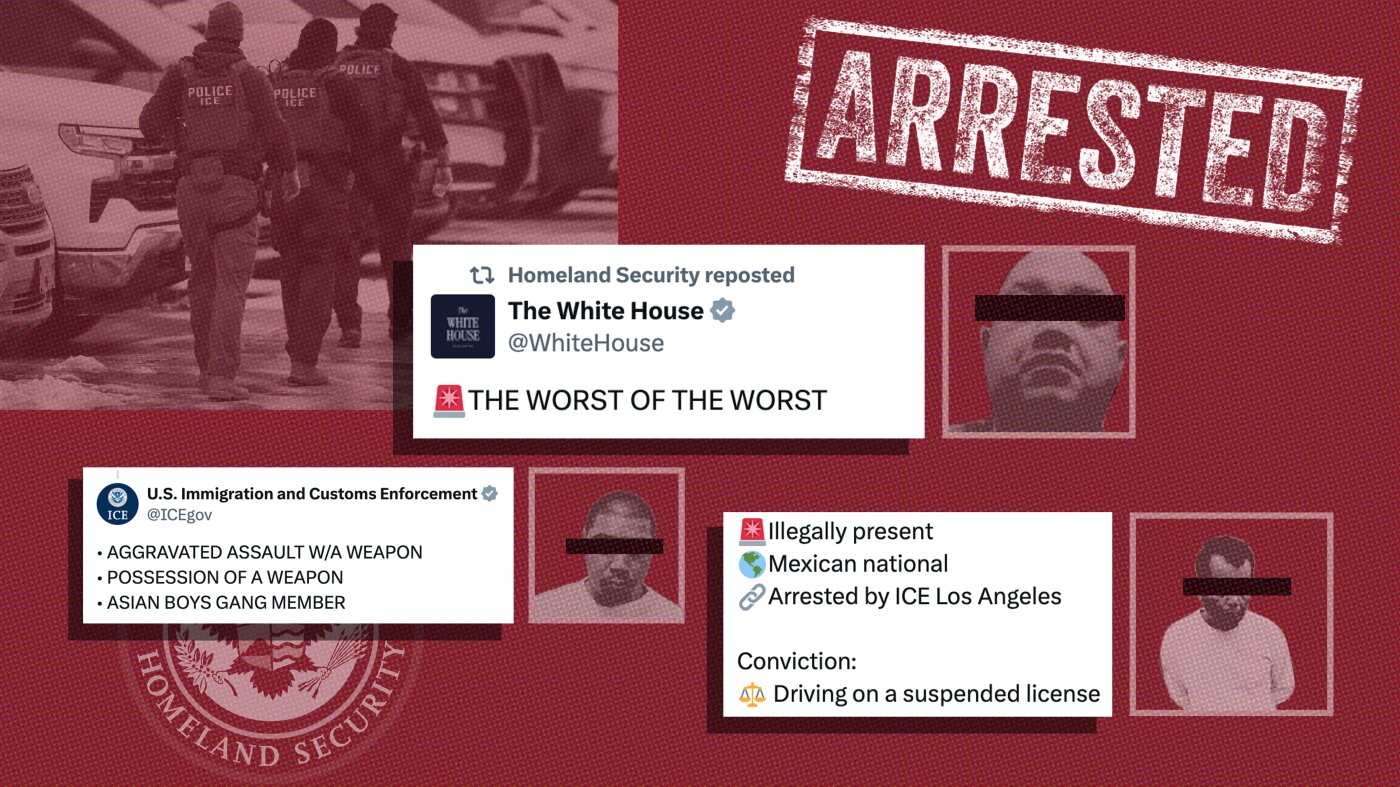
How the federal government is painting immigrants as criminals on social media

Where Iran’s ballistic missiles can reach — and how close they are to the US

Has India’s influence in Afghanistan grown under the Taliban?
-

 World2 days ago
Exclusive: DeepSeek withholds latest AI model from US chipmakers including Nvidia, sources say
-

 Massachusetts2 days ago
Mother and daughter injured in Taunton house explosion
-

 Montana1 week ago
2026 MHSA Montana Wrestling State Championship Brackets And Results – FloWrestling
-

 Louisiana5 days ago
Wildfire near Gum Swamp Road in Livingston Parish now under control; more than 200 acres burned
-

 Denver, CO2 days ago
10 acres charred, 5 injured in Thornton grass fire, evacuation orders lifted
-

 Technology7 days ago
YouTube TV billing scam emails are hitting inboxes
-

 Technology7 days ago
Stellantis is in a crisis of its own making
-

 Politics7 days ago
OpenAI didn’t contact police despite employees flagging mass shooter’s concerning chatbot interactions: REPORT