Detroit, MI
From the Housewives League to mayor’s office: Sheffield win crowns generations of Detroit women’s work


Mary Sheffield becomes Detroit’s first woman to be elected mayor
Cheers and applause erupted throughout Mary Sheffield’s victory speech to her supporters inside the MGM Grand after her historic victory in Detroit.
City Council President Mary Sheffield’s Nov. 4 election win to become Detroit’s first woman mayor marks the culmination of decades of women’s political influence in the city — and brings Detroit in line with most other major U.S. cities that already have elected women mayors.
Sheffield, 38, is seen by close watchers of local politics as a fitting first. In 12 years on City Council, the fourth-generation Detroiter focused on affordable housing, water affordability, and work opportunities for city residents — earning a reputation as a fighter for the poor and working class like the women who rose to power in civic affairs before her.
“I don’t take for granted that I stand on the shoulders of so many warrior women who have prayed, who have sacrificed, just for us to be here in this room — a torch carried from one generation to the next,” Sheffield said in her victory speech to a packed crowd of family, friends and supporters at the MGM Grand Detroit ballroom Tuesday night. “And, so I say to every little girl watching tonight, and to every child in this city: never doubt yourself … all things are possible.”
Sheffield defeated Triumph Church pastor Rev. Solomon Kinloch with 77% of the vote — or more than 88,000 votes — to Kinloch’s 22%, in the race to succeed Detroit Mayor Mike Duggan, who is leaving office to run for governor in 2026.
Until Nov. 4, Detroit was among roughly 20% of the nation’s 50 largest cities that had never elected a woman mayor, according to a Free Press analysis. Sheffield also was only the second Detroit woman mayoral candidate to advance to a general election: In 1993, then-attorney Sharon McPhail ran unsuccessfully for mayor against Dennis Archer, garnering 43% of the vote to his 56%.
The historic lack of female representation in the city’s top post persisted for 324 years and 75 mayors, even as women gained power on the city council in the 1970s, and began turning out to vote at higher rates than men. In Detroit’s August primary, for example, 20% of registered women voters cast ballots compared with 13% of men, according to a Free Press analysis of voter data.
“Representative leadership is always important, and in a city where the majority of voters are women, having a woman at the helm is representative leadership,” The Heat and Warmth Fund (THAW) former CEO Saunteel Jenkins, who previously served on the city council and ran against Sheffield in the August primary, said.
Beyond that, Jenkins said, female leadership is particularly valuable in a city with as many challenges as Detroit.
“How women are socialized — we’re prepared for work and life in a way that teaches us to look at things more holistically,” Jenkins said. “We tend to lead with more compassion and empathy.”
She added: “Women have often had to work even harder and be even better to get to where they are. So, when women ascend to leadership roles, they’re very well prepared.”
As a woman — particularly a Black woman — Jenkins and others said they expect Sheffield to face greater scrutiny as mayor than her male predecessors.
Sheffield’s Tuesday’s victory came a week after her father and chief of staff confirmed she’d had a romantic relationship with one of the city’s top demolition contractors, who has since been suspended from the program for allegedly using toxic dirt.
Sheffield’s team initially claimed she did not vote on any demolition contracts while she and Gayanga CEO Brian McKinney were together in 2019, but a Free Press review of city council records found Sheffield voted to approve $4.4 million in city contracts for his company that year.
Sheffield’s chief of staff, Brian White, later told the Free Press the Gayanga votes were “not germane” because Sheffield had sought guidance from the city’s ethics department on whether to recuse herself. According to a redacted memo, the department told her she didn’t have to, as the personal relationship did not meet the standard for disclosure under the city’s ethics ordinance because it was not spousal, familial, or a domestic partnership.
Such revelations can be common in political campaigns, where opposition researchers seek information on potential malfeasance or misdoings that can paint their opponent in a negative light. But Sheffield should be prepared to deal with such issues, said Portia Roberson, CEO of the nonprofit Focus: HOPE.
“I am celebrating the idea that we’ve finally reached the city’s highest executive office because it was elusive for so many years,” said Roberson. “I will say that I’m disappointed this will happen sort of under this cloud that I think … they kind of created for themselves.”
Battling for unionization, a stronger safety net
For Sheila Cockrel, a fourth-generation Detroiter and political consultant who served on the city council for 16 years until 2009: “The election of Mary Sheffield represents the culmination of a long process.”
“Women have been running the machinery of democracy in the city for generations,” Cockrel said, and have “redefined leadership to include care for people, collaboration and community accountability.”
Cockrel said she traces that legacy back to at least the 1930s, when the Housewives’ League of Detroit — an African American women’s group — mounted consumer boycotts to promote Black entrepreneurship and pressure white-owned businesses to hire Black workers.
In 1937, women played a pivotal role in the labor movement during the Battle of the Overpass at Ford’s Rouge Plant, forming an auxiliary unit to distribute pamphlets and support union outreach efforts. Some were among those beaten by Ford’s security guards during the bloody confrontation.
“The photographs of that brought national attention to the UAW. And the women made the story come alive — setting a standard in Detroit where women were strategic organizers, not merely passive supporters,” Cockrel said.
Women began taking office in Detroit in 1950, when Mary Beck was elected the first woman city council member.
And Cora Mae Brown was elected to represent Detroit in the Michigan Senate in 1953, becoming the first Black woman elected to any state senate in the nation.
Together, Cockrel said, Beck and Brown “connected the city’s priorities with statewide civil rights and labor policy.”
After the city’s 1967 rebellion and ensuing white flight, civil rights activist Eleanor Josaitis co-founded Focus: HOPE in 1968 as a racial and social justice organization, launching decades of advocacy to hold government accountable on issues affecting poor and working-class Detroiters.
Then, Erma Henderson was elected as the first Black woman to the Detroit City Council in 1972, becoming its first Black woman president in 1977.
Also in the 1970s, the late Barbara-Rose Collins and Carolyn Cheeks Kilpatrick — both associated with the Shrine of the Black Madonna — were elected to the state Legislature, becoming “huge proponents of creating a stronger social safety net and ensuring all citizens were cared for,” Jenkins said.
When Henderson left her post as council president to run to be the city’s first woman mayor, then-councilmember Maryann Mahaffey, first elected in 1974, picked up the gavel, serving as the council president from 1990 to 2005. (Henderson lost the primary to then-Mayor Coleman A. Young.)
The women-led political efforts that began in the 1970s brought “services to neighborhoods, (strengthened) civil rights enforcement, and built a framework for city-wide equity initiatives that literally became blueprints for what we’re seeing acted out today,” Cockrel said. Tuesday’s win “is a political milestone for Mary Sheffield, but it’s also a testament to decades of women’s civic power.”
Mary in the mold?
Linda Campbell, director of the Detroit People’s Platform, a nonprofit focused on equitable development, said she believes Sheffield has the potential to follow in the mold of the city’s powerful past women leaders.
“I’ve worked on some very important issues with Sheffield, and she’s always been a really good inside ally for the work,” Campbell said. “She hasn’t always been 100% in alignment, but I’ve always viewed her as someone who listens and can be moved in the manner that best serves her constituents.”
Campbell recalled working with Sheffield to develop a 2017 ordinance that created an affordable housing trust fund to support the city’s lowest-income rental housing, which Sheffield has since seeded with at least $15 million from city land sales.
“I remember that what I liked about her style was that she was in learning mode,” Campbell said. “She wasn’t afraid to say, ‘Hey, I want to take a look at what other communities have done — can you invite some folks in who we can learn from?’
“And that was happening at a very grassroots level with us,” she added. “Her ability to just pull up a chair in the cafeteria of our office … to come into the community, listen to what community needs … we never had community with Mayor Duggan.”
What took so long?
The 50 largest U.S. cities that have never had female mayors include, New York City, Indianapolis, Columbus, Ohio and El Paso, Texas.
That Detroit remained on the list for so long raises eyebrows among many local women leaders, given the city’s central role in the Black Power, Civil Rights and labor movements.
“In many ways, we’ve been a city that has led and been progressive,” said Jenkins. “But in other ways, we’ve been a city where change has been very hard. The patriarchy here has been real.”
“The Black church plays a big role in politics in Detroit — things often tend to be more traditional and socially conservative,” Jenkins added. “It wasn’t that long ago that the first woman became a minister of a Baptist church in the city,” she said, referencing DeeDee Coleman, who became pastor of Russell Street Missionary Baptist Church in 1999. “There was a lot of fallout around it.”
“It’s somewhat shocking, because you look at a place like Atlanta — which is in the South — and you’d think they’d be more hesitant, but they’ve had at least two (women mayors) in the time we’ve had none,” said Roberson. Noting that Wayne County also has never had a woman executive, she added: “There are a lot of executive roles we’ve not been able to break that glass ceiling in, and I’m surprised by that.”
“I think there are a lot of voters who are comfortable with women in legislative roles rather than in the executive role, where women make the final decisions,” Roberson continued. “There’s a sense that it’s a hard job — and sometimes people think it’s too hard of a job for a woman.”
Campbell blamed Detroit’s period of emergency management from 2013-2014 for delaying the rise of a woman mayor, saying it “interrupted the natural evolution of leadership and imposed not only an austerity mindset, but a certain type of leadership style to manage that contraction of democracy.”
Jenkins said she believes things have changed with the increasing normalization of women in executive roles.
“There have always been highly qualified women working in the background who weren’t tapped for these positions. And I think we’re finally at a point where it’s very hard to keep overlooking them,” she said. “With (2024 Democratic presidential nominee and Vice President) Kamala Harris getting as close as she did, it’s a compounding effect — the more you see it, the more normal it becomes.”
Sheffield now joins a long list of women holding top executive positions, in and outside of Michigan politics.
The CEOs of one of the Detroit Three automakers, Blue Cross Blue Shield of Michigan and DTE Energy are all women — the latter two companies installed women CEOs for the first time this year. Wayne State University is also now led by a woman, appointed two years ago.
The state’s governor, attorney general and secretary of state are also all women; as are Detroit’s city clerk and Wayne County’s clerk and prosecutor. Detroit City Council, meanwhile, is made up of mostly women, and voters elected another majority-woman council Tuesday.
“We’ve reached the point in Detroit where women aren’t holding up half the sky — we’re holding up the whole sky,” Cockrel said. “And with that comes responsibility.”
Free Press data journalist Kristi Tanner contributed reporting.
Violet Ikonomova is an investigative reporter at the Free Press focused on government and police accountability in Detroit. Contact her at vikonomova@freepress.com.



(WXYZ) — The highly-anticipated premiere of “The Odyssey” is officially here, with showtimes starting Thursday across metro Detroit.
The epic, directed by Christopher Nolan, was shot entirely with IMAX cameras, the first film to be shot with them. It will be available to watch in a variety of formats in the area and across the state.
On the website for the film, it lists all of the premium format options and where you can find them. Check out the details below.
IMAX 70mm
This is the premiere format to watch the film, presented in IMAX’s 1.43:1 expanded aspect ratio, according to the website.
“It is the largest and highest-resolution format available and gives you an unparalleled sense of immersion as the image fills IMAX’s signature floor-to-ceiling screen,” the website reads.
Across the country, there are only a 30 theatres that are capable of playing IMAX 70mm, and only one in Michigan. To see the film in that format, you’ll have to go to Celebration! Cinema in Grand Rapids.
IMAX
As we’ve said, “The Odyssey” is the first feature film shot entirely on IMAX cameras. “The film was shot and designed to be experienced on the biggest screen possible, and IMAX delivers on this,” star Anne Hathaway said.
It comes in the 1.90:1 expanded aspect ratio, filling your entire field of vision.
There are several theatres showing the film in IMAX in metro Detroit. They are:
- MJR Southgate
- MJR Troy
- AMC Forum 17 in Sterling Heights
- AMC Livonia 20
- AMC Star Great Lakes
- Cinemark Ann Arbor
70mm
The 70mm film is a large format that “offers a bright, clear image up to 3 times the resolution of standard digital projection formats,” according to the website. It’s shown at a 2.20:1 aspect ratio.
In metro Detroit, there are three theatres showing it in 70mm. They are:
- MJR Southgate
- AMC Forum 17 in Sterling Heights
- AMC Livonia 20
35mm
35mm is the classic film format shown at a 2.39:1 aspect ratio. “It projects light through the entire 35 millimeter frame to deliver clear, high resolution images with rich analog color,” the website reads.
Only the Michigan Theater in Ann Arbor is showing the film in 35mm.
Dolby Vision
According to the film’s website, The Dolby Vision projection system has a 1,000,000:1 contrast ratio.
“Dolby Vision allows you to experience every detail and nuance captured by the large format film cameras Christopher Nolan used in production,” the website reads.
You can see the film in Dolby Vision at AMC in Clinton Township, Sterling Heights and Great Lakes.
Premium Large Format
The premium large format movie will be in either 2.39:1 or 1.85:1 aspect ratio, depending on the theatre. “It features larger wall-to-wall screens, superior projection technology, including laser projection,” the website reads.
Here are places you can see “The Odyssey” in Premium Large Format.
- MJR Southgate
- Emagine Royal Oak
- Cinemark in Taylor
- MJR in Sterling Heights
- Emagine Woodhaven
- MJR Westland
- The Riviera in Farmington
- Emagine Canton
- MJR Partridge Creek
- Emagine Rochester Hills
- Emagine Macomb
- Emagine Novi
- MJR Chesterfield
MJR Waterford - Phoenix Theatres in Monroe
- Emagine Saline
- MJR Brighton
- Emagine Hartland

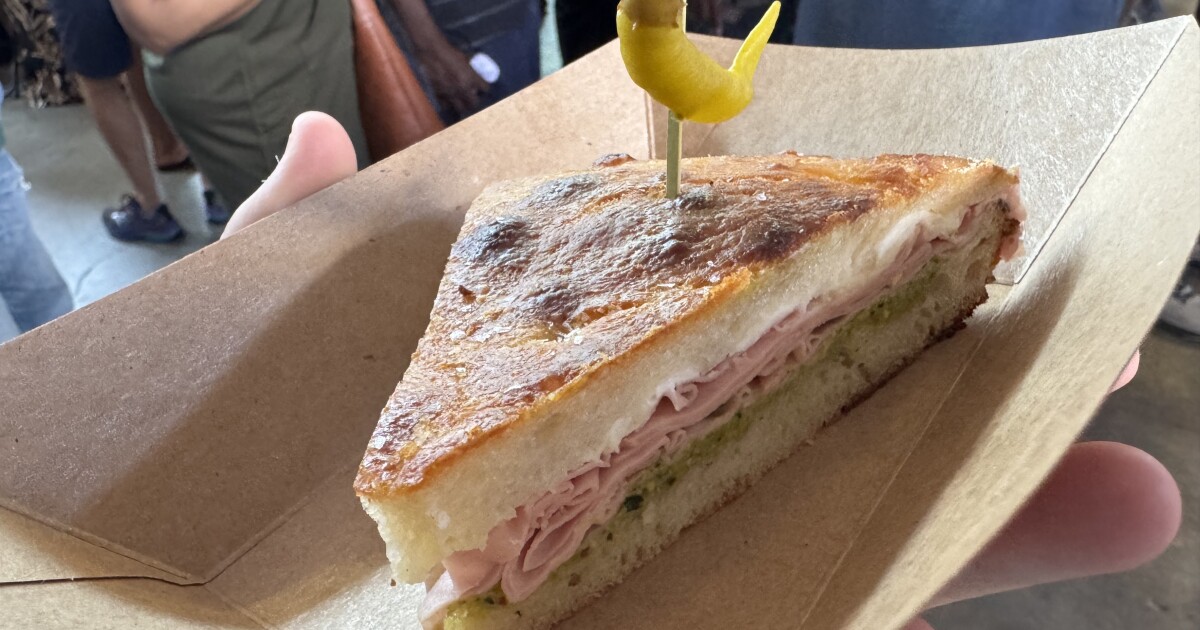
(WXYZ) — The third annual Detroit Sandwich Party is coming to Eastern Market on Labor Day weekend, bringing a massive free festival for sandwich lovers.
The festival is scheduled for Sunday, Sept. 6 at Eastern Market. It’s organized by Carlos Parisi, Will McDowell and Bekah Galang.
Watch our 2025 interview with Carlos in the video below
Detroit Sandwich Party returns to Eastern Market with an expansion on Aug. 31
Organizers are looking for vendors, volunteers and sponsors for the 2026 event. You can learn more and sign up to be a vendor, volunteer or sponsor here.
The event is free to enter, and each vendor will be selling smaller-sized sandwiches for purchase, so people can try as many sandwiches as they want.
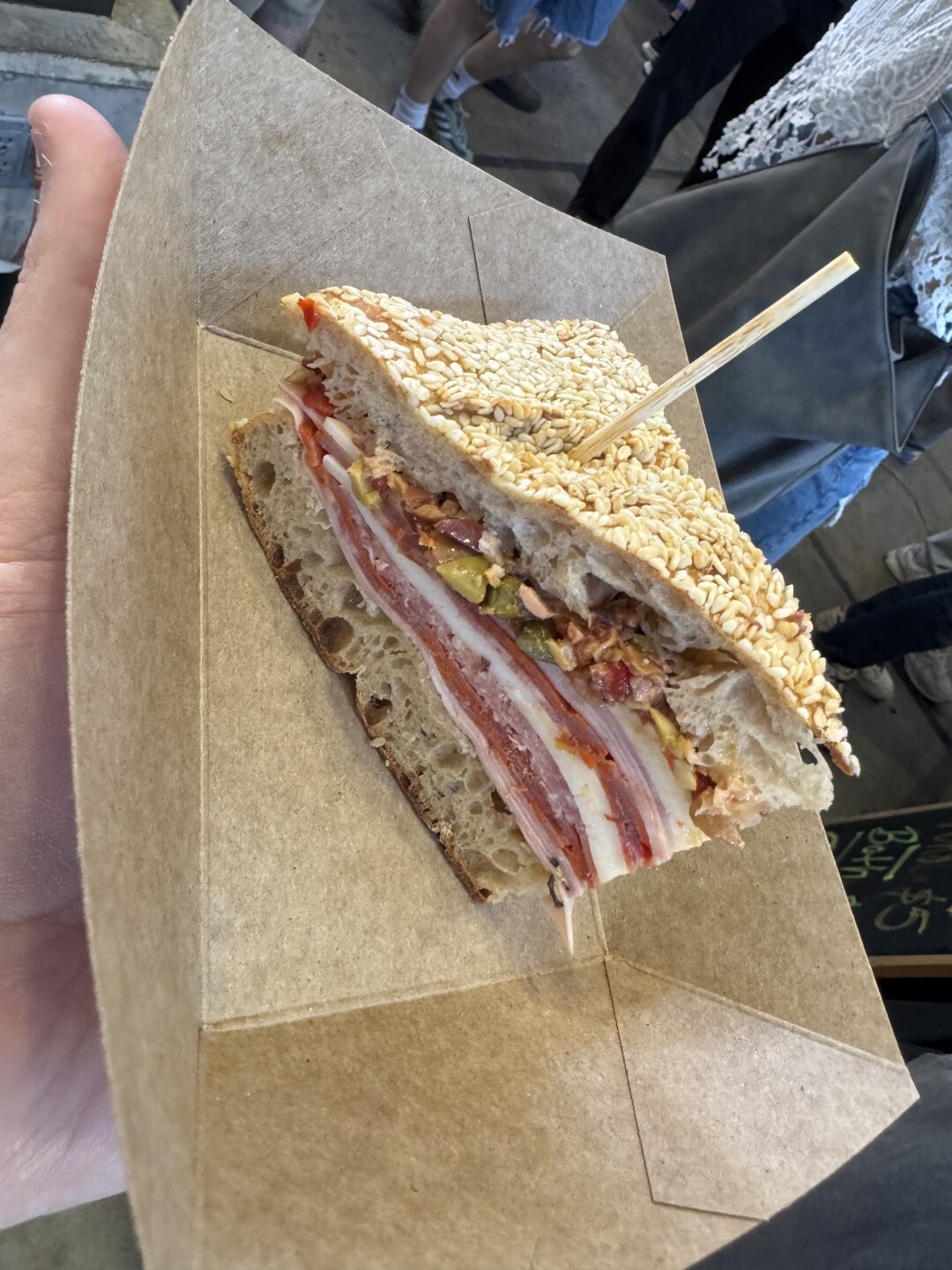
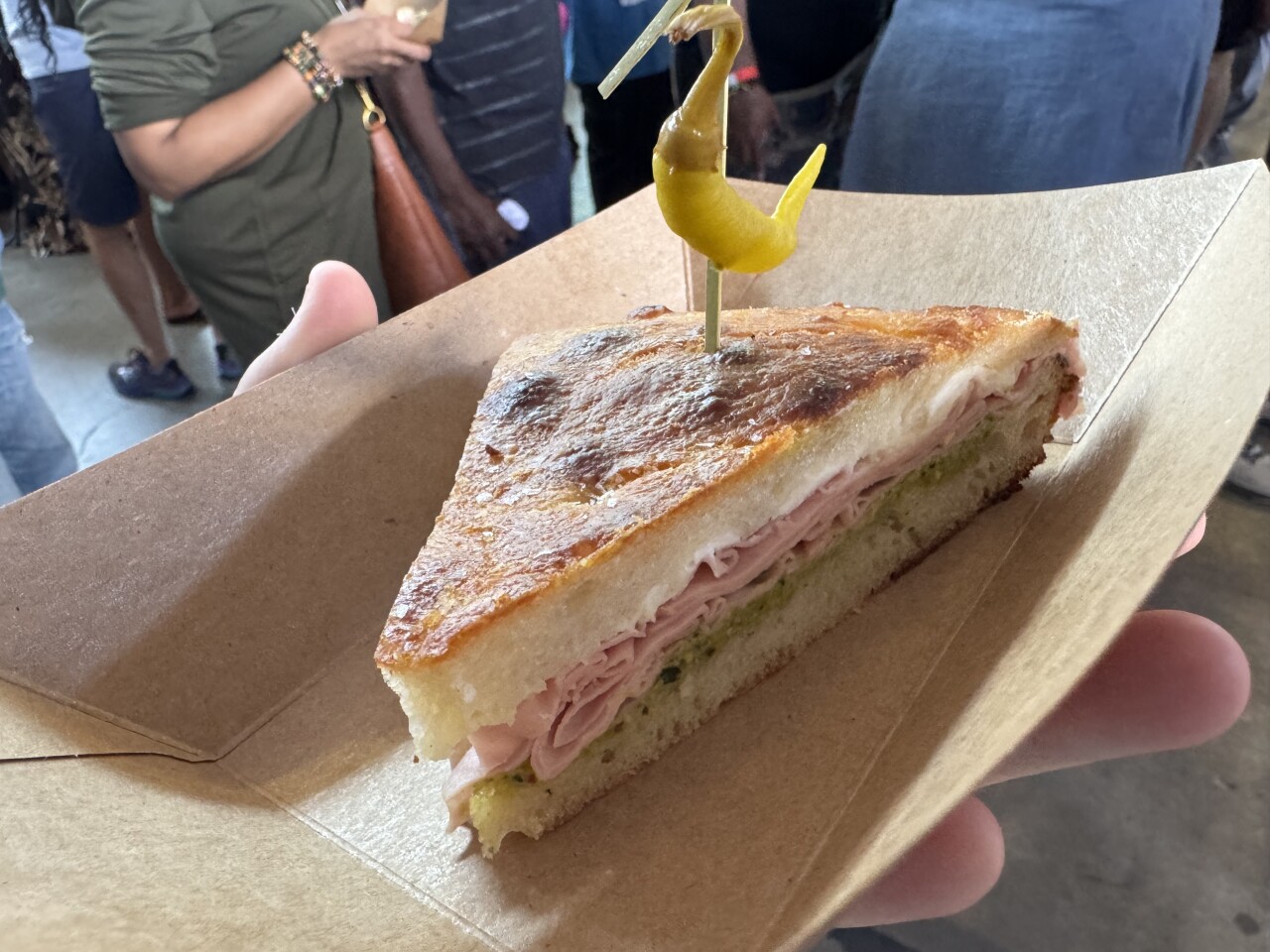
Below are some sandwiches from the 2025 festival from Leña, Tall Trees Cafe, Bar Chenin and more
WXYZ
WXYZ
WXYZ

WXYZ

WXYZ
-

 Health5 minutes ago
Notable figures who died from the same heart condition linked to Lindsey Graham’s death
-

 Sports11 minutes ago
Folarin Balogun admits that red-card reversal affected USA World Cup teammates: ‘A lot of outside noise’
-

 Technology17 minutes ago
Humanoid robots perform live surgery in world first
-
 Business23 minutes ago
A ‘next generation studio’ for YouTube creators
-
 Entertainment29 minutes ago
Finn Wolfhard is taking ‘control of the narrative’
-
 Lifestyle35 minutes ago
What are your most cherished memories of the 2026 World Cup in L.A.?
-
 Politics41 minutes ago
Commentary: Two Lorenzos from Mexico. One fulfilled his American dream. ICE killed the other
-
 Sports53 minutes ago
What will the Sparks do next? The franchise is at a crossroads after firing its GM

