Cleveland, OH
Cleveland State could absorb Notre Dame College

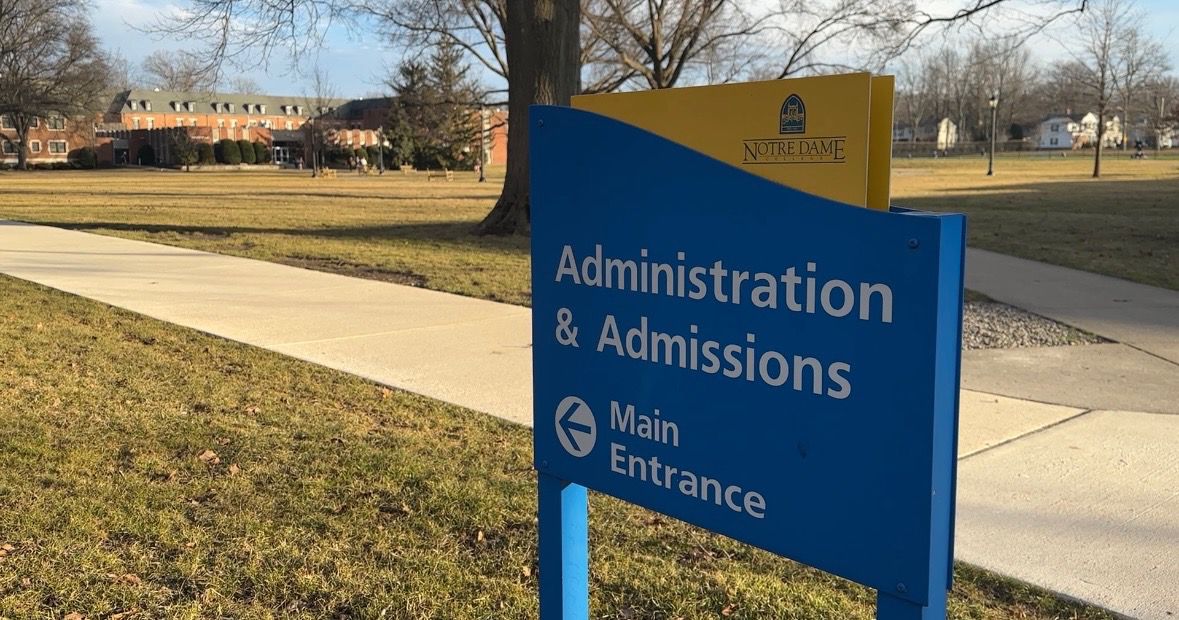
CLEVELAND — For months, Notre Dame College in northeast Ohio has been at the center of the rumor mill. Many staff and students have expressed fears that the small school could be closing its doors for good.
On January 27th, Notre Dame College posted a statement on X, previously Twitter, confirming the school is struggling.
“Notre Dame College, like higher education institutions across the country, faces a number of challenges, including a shrinking pool of college-aged students and growing costs,” the school’s post said. “In response to these challenges, Notre Dame College continues to engage in strategic planning to develop options for our future, including a potential opportunity with Cleveland State University.”
Spectrum News reached out to NDC to request an interview, and they said there is no new information to share.
Cleveland State University sent a response via email.
“Our Board of Trustees Chair David Reynolds confirms that CSU did have preliminary meetings with Notre Dame College. It is accurate to say that those meetings were opportunities for both administrations to explore the feasibility of CSU potentially absorbing Notre Dame College,” the statement reads. “There have been no further developments since then, so CSU does not have anything else to add at this time.”
NDC freshman, Laila Farsane, said that she has not heard from an official about the school’s fate, but some of her professors have brought up the topic.
“To have that kind of looming over everything is a little bit anxiety inducing,” she said. “For a lot of students, that is something they have to think about and it is something they have to grapple with and figure out and actually put time into planning and reorganizing their whole lives.”



Getty
CLEVELAND, OH – NOVEMBER 01: Roberto Perez #55 of the Cleveland Indians reacts after Addison Russell #27 of the Chicago Cubs , hit a two-run RBI double during the first inning in Game Six of the 2016 World Series at Progressive Field on November 1, 2016 in Cleveland, Ohio. (Photo by Jason Miller/Getty Images)
On Thursday evening, the Cleveland Guardians will play their first game of the 2026 regular season when they visit the Mariners in Seattle.
Before Opening Day, a franchise legend announced that he is calling it quits on his baseball career.
Cleveland Guardians Legend Announces Retirement

GettyCLEVELAND, OHIO – APRIL 10: Roberto Perez #55 of the Cleveland Indians hits a two-run home run against the Detroit Tigers in the second inning during a game at Progressive Field on April 10, 2021 in Cleveland, Ohio. (Photo by Emilee Chinn/Getty Images)
Roberto Perez (who last played in 2023) announced his retirement from baseball (h/t MLB Trade Rumors).
Perez wrote (via Instagram): “After much thought and reflection, I have decided to officially retire from baseball. This game has been a major part of my life and has shaped me both on and off the field. Through baseball, I’ve learned discipline, resilience, teamwork, and the importance of commitment. I am deeply grateful for every coach, teammate, trainer, and supporter who helped me along the way and believed in me throughout my journey. While this decision was not an easy one, I feel confident that it is the right time to step away and begin the next chapter of my life. I leave the game with nothing but respect and appreciation for everything it has given me. Thank you to everyone who has been part of this experience and for the opportunities, lessons, and memories that will stay with me forever. Sincerely, Roberto Bebo Perez🙏🏻⚾️”
Perez’s MLB Career

GettyCHICAGO, IL – OCTOBER 29: Roberto Perez #55 of the Cleveland Indians walks across the field in the first inning against the Chicago Cubs in Game Four of the 2016 World Series at Wrigley Field on October 29, 2016 in Chicago, Illinois. (Photo by Jamie Squire/Getty Images)
Perez was picked in the 33rd round of the 2008 MLB Draft.
He spent the first eight seasons of his career with the Guardians.
In that span, the 37-year-old won two Gold Glove Awards (and helped the franchise reach the World Series).

GettyMINNEAPOLIS, MN – JULY 31: Roberto Perez #55 and Brad Hand #33 of the Cleveland Indians hug at the mound after defeating the Minnesota Twins 6-2 at Target Field on July 31, 2018 in Minneapolis, Minnesota. (Photo by Adam Bettcher/Getty Images)
Perez also spent the final two seasons of his ten-year career with the Pittsburgh Pirates and San Francisco Giants.
Over 516 career games, he batted .207 with 55 home runs, 193 RBI’s and 165 runs.

GettyNEW YORK, NY – MARCH 30: Roberto Perez #1 of the San Francisco Giants hits a single during the fifth inning against the New York Yankees on Opening Day at Yankee Stadium on March 30, 2023 in the Bronx borough of New York City. (Photo by Sarah Stier/Getty Images)
Current Guardians

GettyCLEVELAND, OHIO – SEPTEMBER 30: Manager Stephen Vogt #12 of the Cleveland Guardians speaks with the media following game one of the American League Wild Card Series against the Detroit Tigers at Progressive Field on September 30, 2025 in Cleveland, Ohio. (Photo by Nick Cammett/Getty Images)
The Guardians are coming off a season where they won the AL Central with an 88-74 record.
They lost to the Detroit Tigers in the Wild Card Round.
Ben Stinar Ben Stinar has been covering the NBA for over seven years.
He has written for OnSI, Forbes, Amico Hoops, The Big Lead and had a podcast with former All-Star Jameer Nelson. More about Ben Stinar
More Heavy on Guardians
Loading more stories

Who: Cleveland Cavaliers (45-27) vs. Miami Heat (38-34)
Where: Rocket Arena – Cleveland, OH
When: Wed., March 25 at 7:30 PM
TV: FanDuel Sports Network Ohio, FanDuel Sports App, NBA League Pass
Point spread: Cavs -2.5
Cavs injury report: Max Strus – OUT (injury management), Dean Wade – QUESTIONABLE (ankle), Jaylon Tyson – OUT (toe), Jarrett Allen – OUT (knee), Craig Porter Jr. – OUT (groin), Larry Nance Jr. – QUESTIONABLE (illness), Olivier Sarr – OUT (G League)
Heat injury report: Terry Rozier – OUT (not with team), Vladislav Goldin – OUT (G League), Trevor Keels – OUT (G League), Jahmir Young – OUT (G League)
Cavs expected starting lineup: James Harden, Donovan Mitchell, Keon Ellis, Sam Merrill, Evan Mobley
Heat expected starting lineup: Davion Mitchell, Tyler Herro, Pelle Larsson, Andrew Wiggins, Bam Adebayo
Previous matchup: The shorthanded (and later fined) Cavs defeated the Heat 130-116 on Nov. 12.
Rocket Arena
One Center Court, Cleveland, OH 44115
Legendary rock icon Robert Plant takes the stage at the historic Ellie Caulkins Opera House in Denver for an unforgettable evening of music. The former Led Zeppelin frontman will perform a career-spanning set, delighting fans with his signature vocals and iconic songs.
Buy ticket

Fangirl Culture is Front and Center as Detroit Mercy Theatre Company Presents a Zany Y2K Comedy

Authors gathering in San Francisco to raise awareness and money for the National Kidney Foundation

3 takeaways as the Mavericks lose a fun one, 142-135, at the Denver Nuggets

Jannik Sinner’s Girlfriend Laila Hasanovic Stuns in Ab-Revealing Post Amid Miami Open

Your 2026 Red Sox season primer

Florida High School Football Rankings: Top 25 teams – Oct. 21

How old is Bo Nix? What to know about Oregon quarterback ahead of 2024 NFL Draft

Cleary's 21 help Le Moyne down Central Connecticut State 69-64 in OT

99th annual Pony Swim held in Virginia

Indiana Members Credit Union announced as new anchor tenant at Bottleworks District

Video: Jury Rules Against Meta and YouTube for Addictive Features

New Jersey Gov Sherrill signs law barring ICE agents from wearing face coverings to shield identities

Escalation in the Middle East – Not Europe’s war? MEPs in the Ring

War with Iran disrupts fertilizer exports as U.S. farmers prepare for planting season

White House unleashes on Raskin for clinging to ‘deranged’ Jack Smith ‘lies’ in latest Trump docs flare-up
-

 Detroit, MI1 week ago
Drummer Brian Pastoria, longtime Detroit music advocate, dies at 68
-
 Science1 week ago
Industrial chemicals have reached the middle of the oceans, new study shows
-

 Science1 week ago
How a Melting Glacier in Antarctica Could Affect Tens of Millions Around the Globe
-

 Culture1 week ago
Test Your Memory of Great Lines From Classic Irish Poems
-

 Movie Reviews1 week ago
‘Youth’ Twitter review: Ken Karunaas impresses audiences; Suraj Venjaramoodu adds charm; music wins praise | – The Times of India
-

 Sports5 days ago
IOC addresses execution of 19-year-old Iranian wrestler Saleh Mohammadi
-
 Science1 week ago
I had to man up and get a mammogram
-

 New Mexico4 days ago
Clovis shooting leaves one dead, four injured