Cleveland, OH
Browns stadium drama: Surveys, lawsuits, economic studies, and amendments, oh my!


The Cleveland Browns have just two games remaining before they close the book on their latest season of frustration and disappointment.
While everyone will get a much-needed break after the final whistle blows in Baltimore on January 5, one topic related to the team will most certainly not be decided anytime soon. And that is debate over where the team will be playing its home games in the future.
Team officials have made it clear they intend to build a domed stadium and surrounding entertainment district in the Cleveland suburb of Book Park. City and county officials have continually countered with their preference for the Browns to remain downtown on the lakefront and play in a renovated Huntington Bank Field, which has been home to the team since its return to the NFL in 1999.
For the Browns, team officials have been busy focusing on a campaign to win the hearts and minds of fans and politicians. This campaign started with the release earlier this month of an economic study conducted by RCLCO, a real estate consulting company.
According to a story on the team’s website, the main takeaways from the study include:
- A domed stadium can attract up to an additional 1.5 million visitors through a mix of year-round programming of various sizes and major events.
- A projected annual direct economic output of $1.2 billion across Cuyahoga County, as well as create nearly 5,400 permanent jobs.
- Total annual spending at bars, restaurants, and hotels downtown is projected to increase by about $11 million over what is generated today by the activity at Huntington Bank Field.
That was followed up last week with a team-led interview with Lance Evans, lead architect of HKS, the firm chosen to design the domed stadium.
Evans hit all the right notes, especially by appealing to fans when he discussed the approach to creating the Dawg Pound in a new stadium:
“You’ve got to start with the Dawg Pound and the idea that it is a celebrated item. When we were listening to the fan base about what they wanted in the building, number one was to restore the power of the fans of the Dawg Pound. And so, we’ve created essentially a wall, a vertical wall of fans for the Dawg Pound. We have brought them as close as we can to the players and to the end zone. We’re going to have the visiting team run out right beside them. It is going to be a raucous wall of electricity, and we’re excited about that. That informed the decisions, like really the seating bowl was informed, the whole design of it, around this idea of catering to the kind of fandom of Brown’s nation, which is palpable.”
Finally, the Browns have been conducting surveys to gauge interest in the idea of the domed stadium project. While some local media have made a big deal out of the surveys, they appear to be filled with the standard type of questions that are commonly used when undertaking a project of this magnitude, such as how important the addition of restaurants and bars is to the project, how often the survey respondent would visit the area on non-game days, and the like.
One interesting element of the surveys comes in a series of questions that lay out some potential price points for season tickets, including amenities like unlimited food and drink, or priority access to other events. The prices are not the actual prices, but are shown solely for “research purposes.”
No matter what the results of the survey say – either for or against the domed stadium – there is nothing compelling either side of the debate to act on the results, so it is probably a good idea to not get too worked up about their existence.
There are two areas that deserve some attention, both of which come from the government side of the debate.
The first comes from Cleveland City Council President Blaine Griffin, who confirmed last week that the city plans to use the state’s Modell Law to try and keep the Browns downtown. Griffin is joined in that fight by Cuyahoga County Executive Chris Ronayne.
The city first floated the idea of using the law, which requires owners of professional sports teams that play in a taxpayer-supported stadium to give at least six months’ notice before leaving and must give the city or local investors an opportunity to buy the team, in October.
While nothing official has happened, the city has hired the law firm of Jones Day to reportedly act as outside counsel as the city works on its response to the team’s position that the law is unconstitutional, according to NEOtrans blog.
Ronayne also continues to lead the fight to keep the Browns downtown as opposed to using public money for the Brook Park site, as the told NEOtrans:
“Cuyahoga County cannot afford to subsidize the creation of a second downtown with taxpayer dollars. I continue to ask for the downtown stadium renovation plan to be shared publicly and for the Cleveland Browns to come back to the negotiating table with the city of Cleveland to build off of the billions of dollars of investments already made in the downtown core.”
The second comes from the Statehouse in Columbus, where lawmakers closed out their year by giving the Cincinnati Bengals a tax break on their upcoming $120 million renovation of Paycor Stadium.
As part of an amendment to House Bill 315, the Bengals can exempt themselves from around $9.3 million in sales taxes if Governor Mike DeWine approves the proposal.
Ultimately it is a lot of posturing between the Bengals and Hamilton County officials, which you can read more about here. As it relates to the Browns and their plans, it is still unclear how the amendment could potentially impact a new or renovated stadium project, but it is something to keep an eye on in the coming months.
While the 2024 regular season is winding down, the battle over where the Browns will call home is far from over. As always, it is important to remember that the Browns current lease does not expire until after the 2028 season, so they are not going anywhere. And even if they eventually do land in Brook Park, it is only a move to the suburbs so they will still be the Cleveland Browns.



Watch live newscasts, stream breaking coverage, and catch up on the top stories shaping Cleveland, Akron, Canton, and surrounding communities.
Subscribe for:
• Cleveland breaking news + live updates
• Northeast Ohio weather forecasts and severe weather alerts
• Investigations and accountability reporting
• Community stories across the region
• Major events, sports, and local explainers
WKYC — Cleveland news and weather, live and on demand.
🔗 More: https://www.wkyc.com/
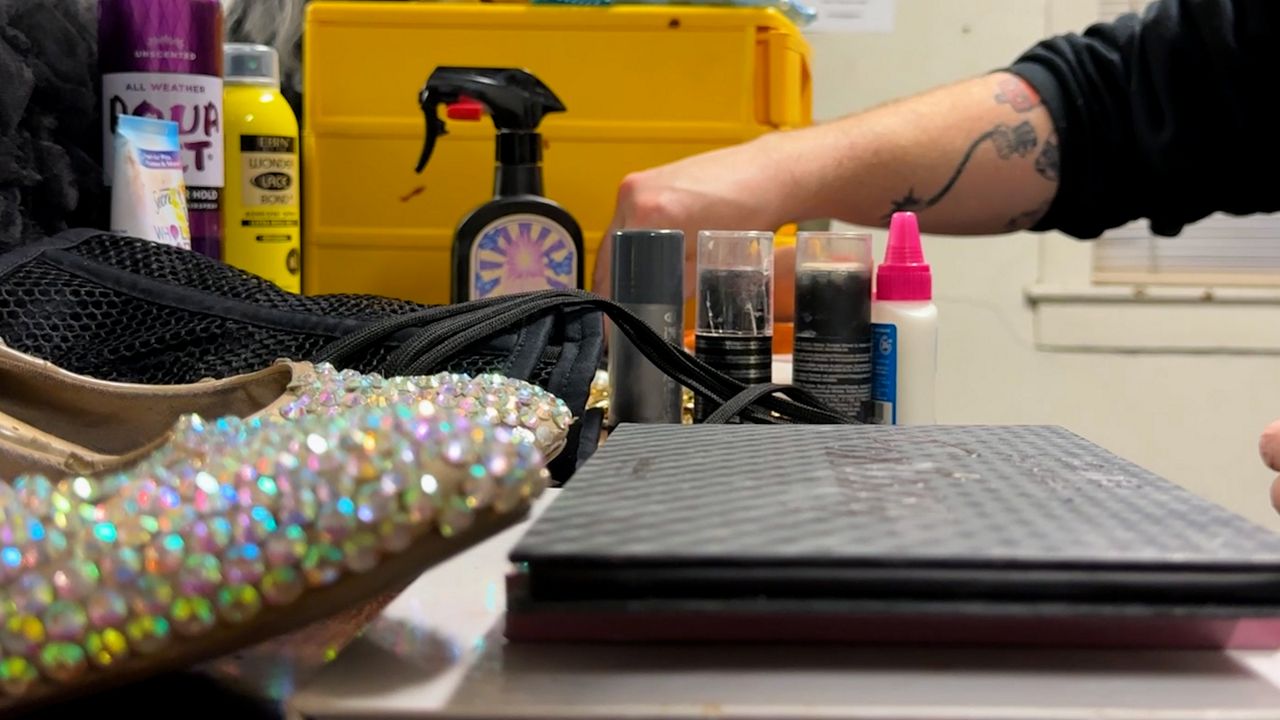
CLEVELAND — For Kyle Burnett, drag is more than just a hobby, discovering the art form after falling into a deep depression during the COVID-19 pandemic.
Burnett, who is nonbinary, has been living in Ohio for more than a decade and has performed as “Zoey Zegai” for five of those years.
“It was a tough time … I found drag not only as a way of entertainment, but embracing myself as a queer member of the LGBTQ+ community,” said Burnett, who uses he/they pronouns.
While Burnett has been met with substantial support, he said, he’s noticed a recent shift in societal attitudes toward the LGBTQ+ community over the last year.
“I had my purse and was wearing short shorts because Ohio gets hot in the summertime, and I had a beer bottle thrown at me from outside of someone’s car window,” Burnett said.
“Zoey Zegai,” which Burnett said, is influenced by old-school divas like Joan Crawford and newer divas like Jinkx Monsoons.
According to the American Civil Liberties Union (ACLU), 500 anti-LGBTQ bills have been proposed during the 2026 legislative session nationwide.
One of these bills is HB 249, or the “Indecent Exposure Modernization Act,” which would restrict drag performances to adult entertainment venues. The policy also changes the definition of public indecency to include “performers or entertainers who exhibit a gender identity that is different from the performer’s or entertainer’s biological sex using clothing, makeup, prosthetic or imitation genitals or breasts, or other physical markers.”
TransOhio Executive Director Dara Adkison said the bill uses broad language and could criminalize gender-diverse expression.
“It’s really making a statute that law enforcement professionals get to enforce their personal ideas about what is and isn’t appropriate gender representation, what is and isn’t performance. You know, is it singing karaoke? Is it being and drag queen? I know, is it a trans person walking down?” said Adkison, who uses they/them pronouns.
While many Ohioans are expressing concerns about the bill targeting transgender people and drag performers, nonprofit Equality Ohio said, the legislation’s impact expands to athletes and countless others.
The bill revises a previous code banning the exposure of “private parts” to now ban the exposure of “private areas,” said Dwayne Steward, Executive Director of Equality Ohio.
“Because the language they use is so vague, it really can apply to anyone, really. The language has been shifted from ‘obscenity’ … someone showing their genitals … to anyone showing their ‘genital area’, which could mean anyone who’s wearing a sports bra, a cheerleader who may be showing their midriff. “
Supporters of HB 249 said the bill is meant to protect children, while others have said this argument reinforces a harmful narrative surrounding drag performances.
“People, immediately when they see drag, they think that it is something that is sexual, something that is trying to indoctrinate children, to expose them to sexual content. And that’s not the case in any capacity,” Olivia Kowslowski.
Kowslowski is born and raised in northeast Ohio, now performing as “Monica Mod.”

Kowslowski, who started first started performing drag in Jan. 2022.
“I think that my perspective is important because it just shows that the bill is harmful to many people, including people that they were not expecting to be impacted by this,” she said. “… Most people don’t realize that when I’m in drag, I am, I’m a cisgender woman.”
While she’s become well known around her college campus’ drag scene, Kowslowski said, she and other performers are facing additional barriers.
“I have found that finding bookings is much more difficult because many venues are a lot more hesitant to host drag events at their spaces, or even support drag entertainers and their venues. Mainly from HB 249,” she said.
The Democratic Society of America’s Cleveland chapter recently announced it is launching a Gender Freedom Policy Petition that would go against “recent legislation calling to limit and ban drag performances,” calling it, “an injustice to not only the drag scene but also the broader Cleveland community.”
The petitions also includes provisions “that safeguard drag performers” and call for city-backed gender-affirming care services.
HB 249 now remains under review by the Ohio Senate and would require the governor’s signature before going into effect.
While the future remains uncertain, Burnett said, he and others in the drag community are hoping to build wider solidarity across all Ohio populations.
“We’re all just trying to live the same day-to-day life, get groceries, pay bills, drive to-and-from work. But there’s no room for hate,” Burnett said. “There’s no room for violence. We just want to feel like Ohio citizens.”

Getty
CLEVELAND, OH – NOVEMBER 01: Roberto Perez #55 of the Cleveland Indians reacts after Addison Russell #27 of the Chicago Cubs , hit a two-run RBI double during the first inning in Game Six of the 2016 World Series at Progressive Field on November 1, 2016 in Cleveland, Ohio. (Photo by Jason Miller/Getty Images)
On Thursday evening, the Cleveland Guardians will play their first game of the 2026 regular season when they visit the Mariners in Seattle.
Before Opening Day, a franchise legend announced that he is calling it quits on his baseball career.
Cleveland Guardians Legend Announces Retirement

GettyCLEVELAND, OHIO – APRIL 10: Roberto Perez #55 of the Cleveland Indians hits a two-run home run against the Detroit Tigers in the second inning during a game at Progressive Field on April 10, 2021 in Cleveland, Ohio. (Photo by Emilee Chinn/Getty Images)
Roberto Perez (who last played in 2023) announced his retirement from baseball (h/t MLB Trade Rumors).
Perez wrote (via Instagram): “After much thought and reflection, I have decided to officially retire from baseball. This game has been a major part of my life and has shaped me both on and off the field. Through baseball, I’ve learned discipline, resilience, teamwork, and the importance of commitment. I am deeply grateful for every coach, teammate, trainer, and supporter who helped me along the way and believed in me throughout my journey. While this decision was not an easy one, I feel confident that it is the right time to step away and begin the next chapter of my life. I leave the game with nothing but respect and appreciation for everything it has given me. Thank you to everyone who has been part of this experience and for the opportunities, lessons, and memories that will stay with me forever. Sincerely, Roberto Bebo Perez🙏🏻⚾️”
Perez’s MLB Career

GettyCHICAGO, IL – OCTOBER 29: Roberto Perez #55 of the Cleveland Indians walks across the field in the first inning against the Chicago Cubs in Game Four of the 2016 World Series at Wrigley Field on October 29, 2016 in Chicago, Illinois. (Photo by Jamie Squire/Getty Images)
Perez was picked in the 33rd round of the 2008 MLB Draft.
He spent the first eight seasons of his career with the Guardians.
In that span, the 37-year-old won two Gold Glove Awards (and helped the franchise reach the World Series).

GettyMINNEAPOLIS, MN – JULY 31: Roberto Perez #55 and Brad Hand #33 of the Cleveland Indians hug at the mound after defeating the Minnesota Twins 6-2 at Target Field on July 31, 2018 in Minneapolis, Minnesota. (Photo by Adam Bettcher/Getty Images)
Perez also spent the final two seasons of his ten-year career with the Pittsburgh Pirates and San Francisco Giants.
Over 516 career games, he batted .207 with 55 home runs, 193 RBI’s and 165 runs.

GettyNEW YORK, NY – MARCH 30: Roberto Perez #1 of the San Francisco Giants hits a single during the fifth inning against the New York Yankees on Opening Day at Yankee Stadium on March 30, 2023 in the Bronx borough of New York City. (Photo by Sarah Stier/Getty Images)
Current Guardians

GettyCLEVELAND, OHIO – SEPTEMBER 30: Manager Stephen Vogt #12 of the Cleveland Guardians speaks with the media following game one of the American League Wild Card Series against the Detroit Tigers at Progressive Field on September 30, 2025 in Cleveland, Ohio. (Photo by Nick Cammett/Getty Images)
The Guardians are coming off a season where they won the AL Central with an 88-74 record.
They lost to the Detroit Tigers in the Wild Card Round.
Ben Stinar Ben Stinar has been covering the NBA for over seven years.
He has written for OnSI, Forbes, Amico Hoops, The Big Lead and had a podcast with former All-Star Jameer Nelson. More about Ben Stinar
More Heavy on Guardians
Loading more stories

Georgia Senate passes bill for hand-marked paper ballots

Hawaii police investigate alleged gun threat at Kealakehe Intermediate

Idaho Senate introduces new bill to give local municipalities authority to control rat populations

Illinois vs Iowa prediction, analysis, Elite Eight expert picks for men’s March Madness

Police arrest suspect in Westfield homicide

Florida High School Football Rankings: Top 25 teams – Oct. 21

How old is Bo Nix? What to know about Oregon quarterback ahead of 2024 NFL Draft

Cleary's 21 help Le Moyne down Central Connecticut State 69-64 in OT

99th annual Pony Swim held in Virginia

Indiana Members Credit Union announced as new anchor tenant at Bottleworks District

WATCH: Senate hearing goes silent after Angel Father confronts top Dem over daughter’s death

US diplomat Marco Rubio denounces settler violence, tolls in Hormuz strait

Iran-linked hackers have breached FBI Director Kash Patel’s personal emails | CNN Politics

Live: CPAC 2026 Day 2

Video: Will ICE Change Under Its New Leader?
-

 Detroit, MI1 week ago
Drummer Brian Pastoria, longtime Detroit music advocate, dies at 68
-

 Movie Reviews1 week ago
‘Youth’ Twitter review: Ken Karunaas impresses audiences; Suraj Venjaramoodu adds charm; music wins praise | – The Times of India
-

 Sports6 days ago
IOC addresses execution of 19-year-old Iranian wrestler Saleh Mohammadi
-

 New Mexico5 days ago
Clovis shooting leaves one dead, four injured
-
 Business1 week ago
Disney’s new CEO says his focus is on storytelling and creativity
-

 Technology5 days ago
YouTube job scam text: How to spot it fast
-

 Tennessee4 days ago
Tennessee Police Investigating Alleged Assault Involving ‘Reacher’ Star Alan Ritchson
-

 Texas1 week ago
How to buy Houston vs. Texas A&M 2026 March Madness tickets