Politics
Trump Has Raised Questions About Fort Knox. His Allies Are Trying to Cash In.


It is one of the more baffling story lines of Donald J. Trump’s second term. The president has said he wants to personally visit Fort Knox to ensure that no one has stolen the government-owned gold bars that are stored there.
Mr. Trump has not explained why any gold might be missing from the nation’s heavily guarded reserves. His own Treasury secretary, Scott Bessent, has insisted that there is no reason to worry. “All the gold is there,” Mr. Bessent emphatically told Bloomberg in February, at one point looking directly into a camera and addressing the American people.
Mr. Trump’s interest in the gold reserves has been largely overshadowed by his family’s involvement in various cryptocurrency ventures, which has raised ethical concerns about potential conflicts of interest.
The president has a long history of embracing conspiracy theories, and is known to be a fan of golden and gilded things. It is difficult to say what exactly is behind his recent fanning of unfounded fears about Fort Knox, which have been floating around since at least the 1970s.
A White House spokesperson did not respond when asked to comment for this story.
What is certain is that gold is on many investors’ minds these days. Generally seen as a safe place to park wealth during tumultuous periods, the precious metal has risen to record prices recently, in part because of the global economic uncertainty that the president’s shifting tariff policies caused.
Some of Mr. Trump’s allies, including his eldest son, serve as pitchmen for gold investment companies that advertise heavily on their podcasts or radio shows.
And some of them have been using fresh concerns about Fort Knox to make a profit.
The Gold Conspiracy That Wouldn’t Go Away
If nothing else, Mr. Trump’s Fort Knox obsession has resurfaced one of the deeper cuts in the American conspiracy theory catalog.
One reason the government holds onto such large stores of gold is to confer a sense of financial stability, even though the country moved off the gold standard in the 20th century. According to the United States Mint, 147.3 million ounces of gold, about half of the government’s stash, is held at Fort Knox.
The Kentucky facility, known formally as the United States Bullion Depository at Fort Knox, almost never allows visitors and is kept under famously heavy lock and key — an inaccessibility that may explain much of the intrigue around it.
One of the main early proponents of the idea that gold was missing from Fort Knox was a lawyer named Peter Beter, who earned a modicum of notoriety in the 1970s by spreading dark theories in a mail-order audio cassette series. Among other things, Mr. Beter believed that “organic robotoids,” controlled by Bolsheviks, had infiltrated the federal government.
By 1974, concerns about the gold reserves grew so intense that a congressional delegation and a few news outlets, including The New York Times, were invited to Fort Knox for a rare inspection. A reporter for The Times described the effect of seeing a vault 6 feet wide and 12 feet deep, stacked with 36,236 glistening gold bars, as “awesome.”
Another wave of concern crested in 2011, when then-Representative Ron Paul, the Texas Republican, introduced a bill calling for an inventory of the reserves. At a subcommittee hearing, Mr. Paul said people had become worried that “the gold had been secretly shipped out of Fort Knox and sold.” He added, “And, still others believe that the bars at Fort Knox are actually gold-plated tungsten.”
U.S. House of Representatives
The inspector general of the Treasury Department at the time, Eric Thorson, told Mr. Paul that audits were performed yearly, with “no exceptions of any consequence.”
U.S. House of Representatives
More recently, Mr. Trump’s first-term Treasury secretary, Steve Mnuchin, had a chance to check on the gold in August 2017, with Mitch McConnell, then the Senate majority leader, in tow. Photos were taken of the men among the gold bars.
“Glad gold is safe!” Mr. Mnuchin wrote on Twitter, now known as X.
Questions About Ft. Knox Bubble Up Again
The latest concerns appear to have taken off on Feb. 14, when the website ZeroHedge, which occasionally promotes conspiracy theories, tagged Elon Musk in a post on X. The post asked him to make sure the gold at Fort Knox is there.
“Surely it’s reviewed at least every year?” Mr. Musk replied.
“It should be. It isn’t,” ZeroHedge responded. (Mr. Bessent, the Treasury secretary, would later say that the gold is still audited annually.)
Senator Rand Paul of Kentucky, a Republican and the son of Ron Paul, chimed in, calling for an audit. “Let’s do it.”
The next day, Alex Jones, the “InfoWars” conspiracy theorist, said on his talk show that when he was a child, his great-uncle told him some of the gold was missing, and that the “deep state” was involved in the “crime of the century.”
Mr. Musk responded to this post as well. “It would be cool to do a live video walkthrough of Fort Knox!” he wrote.
Then came Glenn Beck, the conservative radio and TV host, who posted an open letter to Mr. Trump the next day, asking if he could take a camera crew to Fort Knox to “restore faith in our financial system.”
The chatter about the gold reserves was growing louder.
By Feb. 20, Mr. Trump was telling a press gaggle on Air Force One that he planned to go to Fort Knox to “make sure the gold is there.”
How the Conspiracy Theory Has Been Integrated Into Sales Pitches for… Gold
Since then, the idea that the government’s gold reserves may have gone missing has been integrated into the sales pitches of companies that trade in gold coins and gold investment accounts. The companies advertise heavily on Trump-friendly TV and internet shows.
InfoWars, The Dan Bongino Show, The Ben Shapiro Show, Triggered with Don Jr.
A number of “gold I.R.A.” companies have suggested that a future audit of Fort Knox could determine that gold is missing, setting off a crisis among Americans about the stability of the economy. Amid such chaos, the companies argue, privately held gold would be a lucrative safe haven for investors.
One of the companies, Birch Gold Group, is endorsed by the president’s eldest son and bills itself as “Donald Trump Jr’s gold company.” A recent article on Birch Gold’s website stated that the idea of an “empty Fort Knox” had gone “from conspiracy theory to mainstream concern.” A discovery that gold was missing from Fort Knox, the article stated, would be the “quickest way down for the U.S. dollar.”
“It is only those without physical gold exposure that feel the need to panic, perhaps with good reason, about the greenback’s admittedly dismal prospects,” states the article, which is accompanied by an offer for a “FREE gold IRA info kit.”
The younger Mr. Trump lauded his father’s plans to visit Fort Knox in a Feb. 24 episode of his online talk show, on which he regularly makes pitches for Birch Gold. “If it’s empty,” he said, “I would imagine there’s hell to pay.”
On Feb. 27, Lear Capital, a gold company that Mr. Beck promotes, posted, “As calls for a Fort Knox audit grow louder, investors should stay informed and consider their exposure to gold as part of a diversified portfolio.”
On Instagram, Rogan O’Handley, a conservative influencer who goes by the handle DC Draino, posted a plug for Donald Trump Jr.’s preferred gold company.
“If Fort Knox is empty, do you know what Gold prices will do?,” Mr. O’Handley wrote. “Get a **Free** info packet from Birch Gold – LINK IN MY BIO – to learn more about @birchgold’s tax-advantaged precious metals retirement plans.”
On another section of Birch Gold’s website, a “Message from Donald Trump Jr.” raised the possibility that his father’s administration could “revalue America’s gold reserves on the national balance sheet from their outdated book value of $42” — the price per ounce the government assigns for bookkeeping purposes — “to current market prices.”
This, he wrote, “could cause a surge in gold prices.” He added, “The potential upside for gold investors is substantial.” A gold I.R.A., he added, would be a great way to benefit. He did not mention that Mr. Bessent had publicly stated that he had no plans to revalue the gold reserves.
Above the message was a digitally altered photo of the president at a desk, showing off an important-looking signed document, a wall of gold bricks behind him.
Mr. Trump has still not visited Fort Knox.




Happy Birthday, America!
You turned 250 on Saturday and, honestly, you don’t look a day over 249. (Ha ha.)
Seriously, it’s perfectly understandable why there’s more gray on your scalp and deeper worry lines on your face. This last year has been another challenging one, to say the least. (And we thought the one cataloged 12 months ago in this space was rough.)
The country is caught up in an unpopular, on-again, off-again war with Iran that was recklessly launched by President Trump with far more swagger than foresight. In an utterly predictable move, Iran choked off the the Strait of Hormuz, a vital passageway for the world’s oil, sending gasoline prices skyrocketing. Though they’ve fallen since the announcement of a shaky ceasefire agreement, the cost of filling up is still significantly higher than a year ago.
Of course, costlier oil means virtually everything else has become more expensive. Trump was reelected in good part because he vowed to tame inflation on his very first day in office. Instead, it’s reached a three-year high.
The ground beef served up at many July 4 cookouts costs 75 cents a pound more than it did a year ago. A package of hamburger buns is up 15 cents. The price of hot dogs and other picnic staples have also increased, along with just about every other item at the grocery store.
Chew that over with your corn on the cob. (Up roughly 2.5% from July 2025.)
Meanwhile, Trump enriched himself to the tune of $2.2 billion during his first year in office alone. Treating the U.S. treasury like his personal cash cow, the president has lavished hundreds of millions of taxpayer dollars on vanity projects such as a personally kitted out Air Force One — a “gift” from Qatar that Trump plans to keep after retirement — and a gilded White House ballroom, rising where the demolished East Wing used to stand. Plans are underway for a grand, marble arch in Washington celebrating, well, you know who.
At the same time, Trump has squandered money and resources pursuing political vendettas, persecution of his enemies and fruitless investigations like the one probing “theft” of the 2020 election and “vandalism” at the algae-clogged Reflecting Pool he promised and failed to rehab.
All this while millions of Americans have lost healthcare coverage and/or federal food assistance, all thanks to the One Big Billionaire Bounty bill that Trump signed into law a year ago.
It’s all a bit unnerving isn’t it, America? You’re on edge in a way you haven’t been in at least a generation.
In Minnesota, in the dead of winter, two of your citizens were gunned down by federal officers as they engaged in that most American of exercises, registering dissent against the policies of their government. From sea to shining sea, innocent Americans have been arrested — and sometimes shipped abroad — and immigrant communities cower in fear of federal agents who often seem bent more on meeting deportation quotas than meting out justice.
You’re divided, America, in ways no one alive has ever seen.
It starts at the very top. Trump acts as though he’s president of a favored rump group — his political supporters — rather than the nation as a whole. He’s used your 250th birthday not to celebrate those many grand and glorious things that hold us together as Americans but to bask in the tanning-bed glow of his immeasurable self-regard.
But, heck, if it’s any consolation on this star-spangled holiday weekend, the country has been through worse. Much worse. And you, America, have not only survived but in many ways grown stronger by surmounting obstacles, facing down your flaws and overcoming some knee-buckling, soul-crushing challenges.
Slavery. Civil war. Racist exclusionary laws. Genocide against indigenous peoples. Two worldwide conflicts. Depression. Financial crises. And too many deadly natural disasters — fire, floods, earthquakes, hurricanes — to enumerate.
Your treatment of some Americans, it should be said, hasn’t always been fair and just. It still isn’t.
People are despairing over the Supreme Court and its genuflecting deference to the president. The justices of its conservative majority have done just about everything short of handing Trump a crown and scepter to reign as a virtually untouchable, imperial president.
But it’s worth noting that earlier court majorities held that Black Americans — “beings of an inferior order,” in the words of the wretched Dred Scott decision — could be denied citizenship, that racial segregation was constitutional and that compulsory sterilization based on eugenics was perfectly fine from a legal standpoint.
That ugly, sordid history won’t necessarily make anyone feel better about the current state of affairs, nor should it. But it does offer some perspective and, with it, hope.
This weekend is best celebrated honoring the country’s many good things and the bright, shining place that America aspires to be, with liberty and justice for all. So chin up! Have another slice of birthday cake, America, and don’t worry about the calories — you really do look terrific for 250!
Going forward it’s up to us, your citizens, to keep working toward that more perfect union mentioned in the preamble to the Constitution. Whatever ails you, America, the remedy resides with we the people and the power we hold, particularly at the ballot box.
Unhappy with the wrecking crew that’s heedlessly chain-sawed federal programs and allowed Trump to money-grub with both fists, defile the White House and undermine our rule of law? Send a message and vote ‘em out, starting in November’s midterm election. And bear in mind the damage that’s been wrought come the 2028 presidential race.
Don’t stop believing that, as dark and difficult as things may seem right now, better days lie ahead.
That undimmed and abiding faith is what makes America great.

NEWYou can now listen to Fox News articles!
President Donald Trump is set to deliver what the White House is calling a “historic” speech Saturday night before a massive fireworks display celebrating America’s 250th anniversary.
Trump is still expected to take the stage at 10 p.m. at the conclusion of the Salute to America celebration on the National Mall, though timing of events may fluctuate due to adverse weather, per a senior White House official.
The president’s address is expected to look back on America’s history since its founding 250 years ago, a senior White House official told Fox News.
THE LESSON WE CAN LEARN FROM BICENTENNIAL HISTORY IS TO PARTY LIKE IT’S 1976
President Donald Trump speaks during a rally at Mount Rushmore National Memorial on July 3, 2026 in Keystone, South Dakota. (Chip Somodevilla/Getty Images)
Trump will deliver a “unique” speech featuring the stories of American heroes.
“It will be a unique speech unlike any other he’s given before,” the official added.
Earlier Saturday, Trump celebrated what he described as a “stronger than ever” America in a Truth Social post, praising the “incredible” crowds gathered in Washington despite the heat and storms.
FOURTH OF JULY APP GUIDES SPECTATORS THROUGH NINE-HOUR AIR SHOW FROM NASA JETS TO B-1 BOMBERS
The grand finale lasted over two minutes to cap a 23-minute light and fireworks display over Mount Rushmore after President Donald Trump’s 28-minute speech, brief by his lengthy standards. (Matt Gade)
The president also highlighted the air shows over the nation’s capital, saying the pilots and aircraft were “at a level never seen before.”
Trump also addressed recent vandalism at the Reflecting Pool, calling those responsible “Vandal Thugs” and promising the pool would be drained and repaired after the holiday weekend.
The president’s remarks come one day after he delivered a patriotic speech at Mount Rushmore, where he called the United States the “most exceptional nation ever to exist” and warned that communism posed the nation’s greatest threat.
TRUMP HAILS AMERICA AS ‘MOST EXCEPTIONAL NATION EVER TO EXIST’ IN MOUNT RUSHMORE SPEECH
The U.S. Air Force Thunderbirds perform a flyover during “Salute to America 250” Fourth of July celebrations on the National Mall on July 4, 2026, in Washington, DC. (Finn Gomez/Getty Images)
“Communism is the exact opposite of life, liberty and the pursuit of happiness — it is death, tyranny and the pursuit of evil.
A severe thunderstorm swept through Washington on Saturday evening, prompting emergency officials to urge people on the National Mall to seek shelter.
CLICK HERE TO DOWNLOAD THE FOX NEWS APP
Freedom 250, the event organizer, said it would provide updates on the evening’s schedule as weather conditions developed.
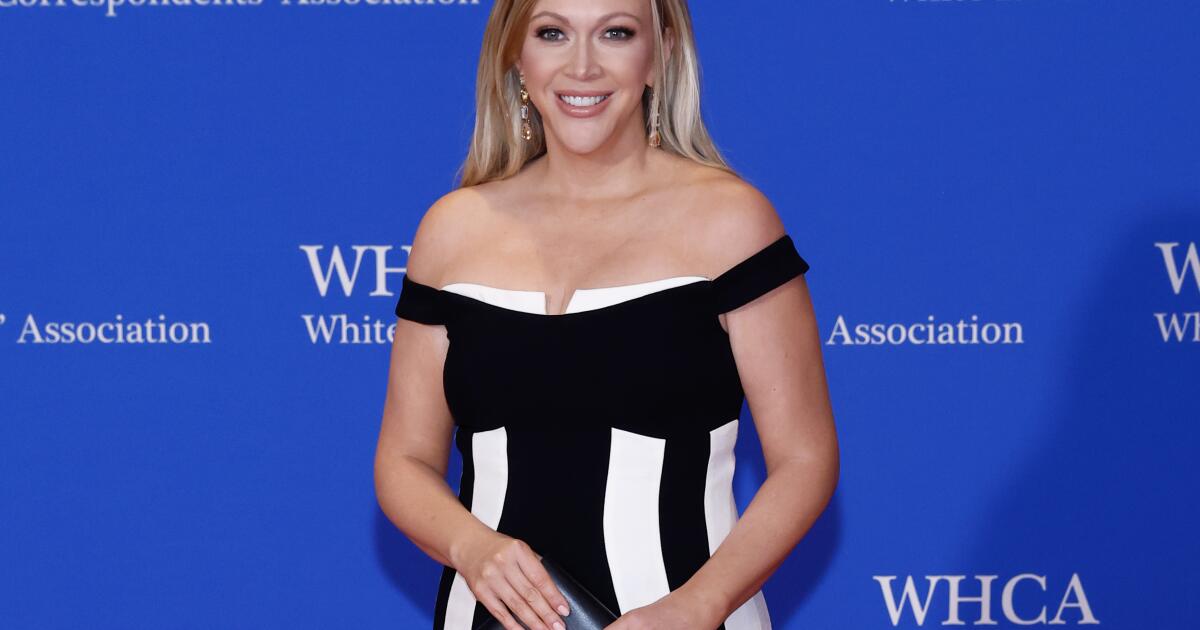
As CNN prepares for change under a new owner, the network’s chief legal affairs correspondent, Paula Reid, is heading for the exit and expected to jump to MS NOW.
The Washington-based Reid’s contract with CNN is up in several months and she has told the network she does not plan to renew. She is expected to sign on with CNN competitor MS NOW, according to people familiar with her plans who were not authorized to comment publicly.
A representative for MS NOW said the network does not comment on personnel matters but added, “as everyone in Washington knows, Paula Reid is an exceptional reporter, and any news organization would be fortunate to showcase her journalism.”
Reid‘s planned departure comes ahead of the impending merger of CNN parent Warner Bros. Discovery and Paramount. The combination has led to speculation over who will run CNN, and the uncertainty is said to have played a factor in Reid’s decision.
Reid joined CNN from CBS News in 2021.
CNN and Paramount’s CBS News will be combined after the merger, but the management structure is still under discussion. Paramount put Bari Weiss, founder of the heterodox digital news site the Free Press, in charge of CBS News in October, with a mandate to move the network’s coverage more to the political center. Based on the chaos that has ensued at CBS News under her watch, many CNN insiders are concerned over her possible stewardship of an even larger and more complex organization.
CBS News executives and on-air talent have pushed back at Weiss’ efforts to make changes at the division, which many insiders have viewed as an attempt to placate the Trump White House while Paramount seeks regulatory approvals needed ahead of closing the $111-billion Warner Bros. Discovery deal.
Internal resistance to Weiss has been strongest at the venerable news magazine “60 Minutes.” The program’s star correspondent Scott Pelley was fired last month after he confronted management over the dismissals of executive producer Tanya Simon and his on-air colleagues Sharyn Alfonsi and Cecilia Vega.
Weiss’ overhaul of the “CBS Evening News” with her handpicked anchor Tony Dokoupil has failed to improve the third-place program’s competitive position in the ratings. The program has also been criticized for some of its editorial decisions and logistical snafus.
CNN anchor Anderson Cooper has reportedly told colleagues he does not want to work for Weiss if the cable network is put under her purview. He already rejected an offer from Weiss to anchor the “CBS Evening News” and declined to renew his deal as a “60 Minutes” contributor after nearly two decades with the program.
The chaos at CBS has given pause to people at CNN. Larry Ellison, the tech billionaire and father of Paramount Chief Executive David Ellison, has reportedly promised Trump there will be sweeping changes to CNN after the merger.
Reid, 43, is among the many TV news correspondents and anchors that Trump has disparaged over the years, claiming they are unfair in their coverage. As White House correspondent for CBS News, Reid was known for asking tough questions of Trump during his White House briefings on the coronavirus.
Reid was a lawyer before becoming a journalist at CBS News in 2010. In addition to serving as White House correspondent for the network, she covered the Justice Department and the Supreme Court.
Reid would be another significant hire for MS NOW, the progressive-leaning channel that is rebuilding its roster after separating from NBC News and its parent, Comcast. The network formerly known as MSNBC is now part of Versant, a company with a stable of cable networks spun off by Comcast.
Peter Alexander, former chief White House correspondent for NBC News, is joining MS NOW as a morning anchor later this year. The network also hired former “CBS Mornings” executive producer Shauna Thomas as political director.
-

 Health5 minutes ago
July 4 heat delays America 250 celebration as State Fair guests share love of USA
-

 Sports8 minutes ago
Toronto Maple Leafs top pick Gavin McKenna reveals that he’s changing his jersey number
-

 Technology13 minutes ago
China’s robot-run hotel opens to public in 2027
-
 Business20 minutes ago
China-backed AI tool behind fake Brad Pitt fight making Hollywood inroads
-
 Entertainment23 minutes ago
Don Was produced the Rolling Stones, Bob Dylan and Ozzy. At 73, he found his voice in Detroit — and the Dead
-
Politics35 minutes ago
Commentary: Happy Birthday, America! You’ve weathered another rough year
-
 Sports43 minutes ago
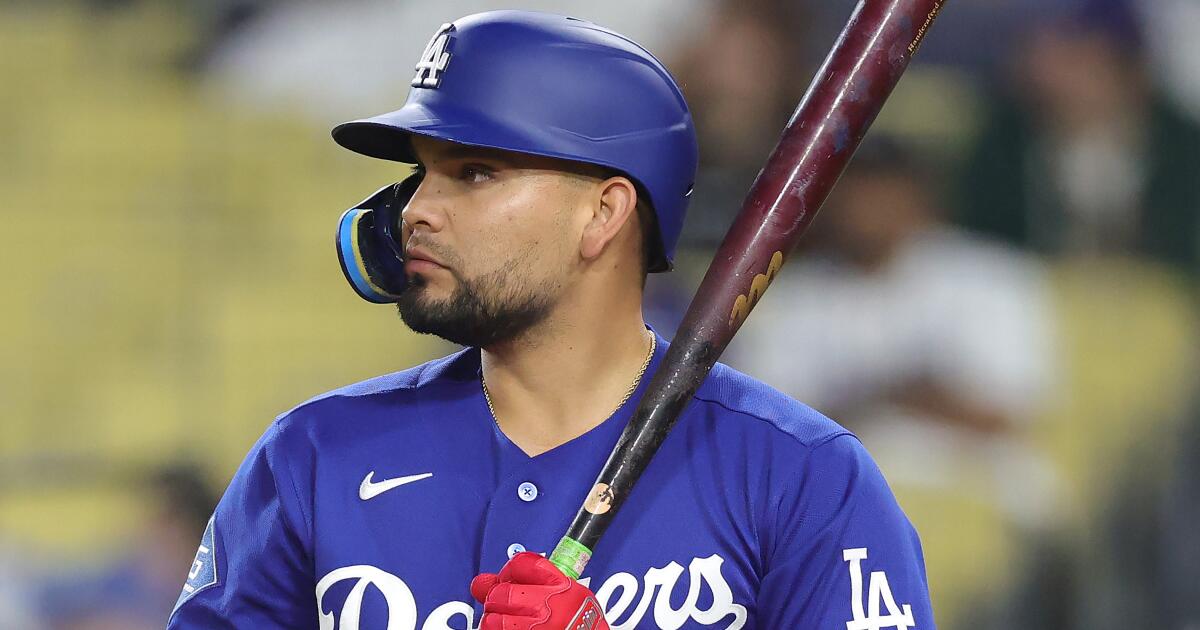
Dodgers’ Eliezer Alfonzo praying his sister and stepmother will be found in Venezuela
-

 World53 minutes ago
Reform UK’s Farage failed to disclose funds from convicted criminal: Report

