Midwest
Biden admin turning this federal agency into a Dem get-out-the-vote machine

NEWYou can now listen to Fox News articles!
The Founding Fathers feared a system of government where the executive branch is able to wield the power of the federal bureaucracy to interfere with elections. Unfortunately, President Biden has directed every federal agency to do just that.
As chairman of the Committee on Small Business, we have been investigating the electioneering efforts undertaken by the Small Business Administration (SBA), and what we have uncovered is already very troubling.
On March 19, 2024, the SBA announced a Memorandum of Understanding (MOU) with the Michigan Department of State (MDOS) to facilitate voter registration efforts ahead of the 2024 election cycle.
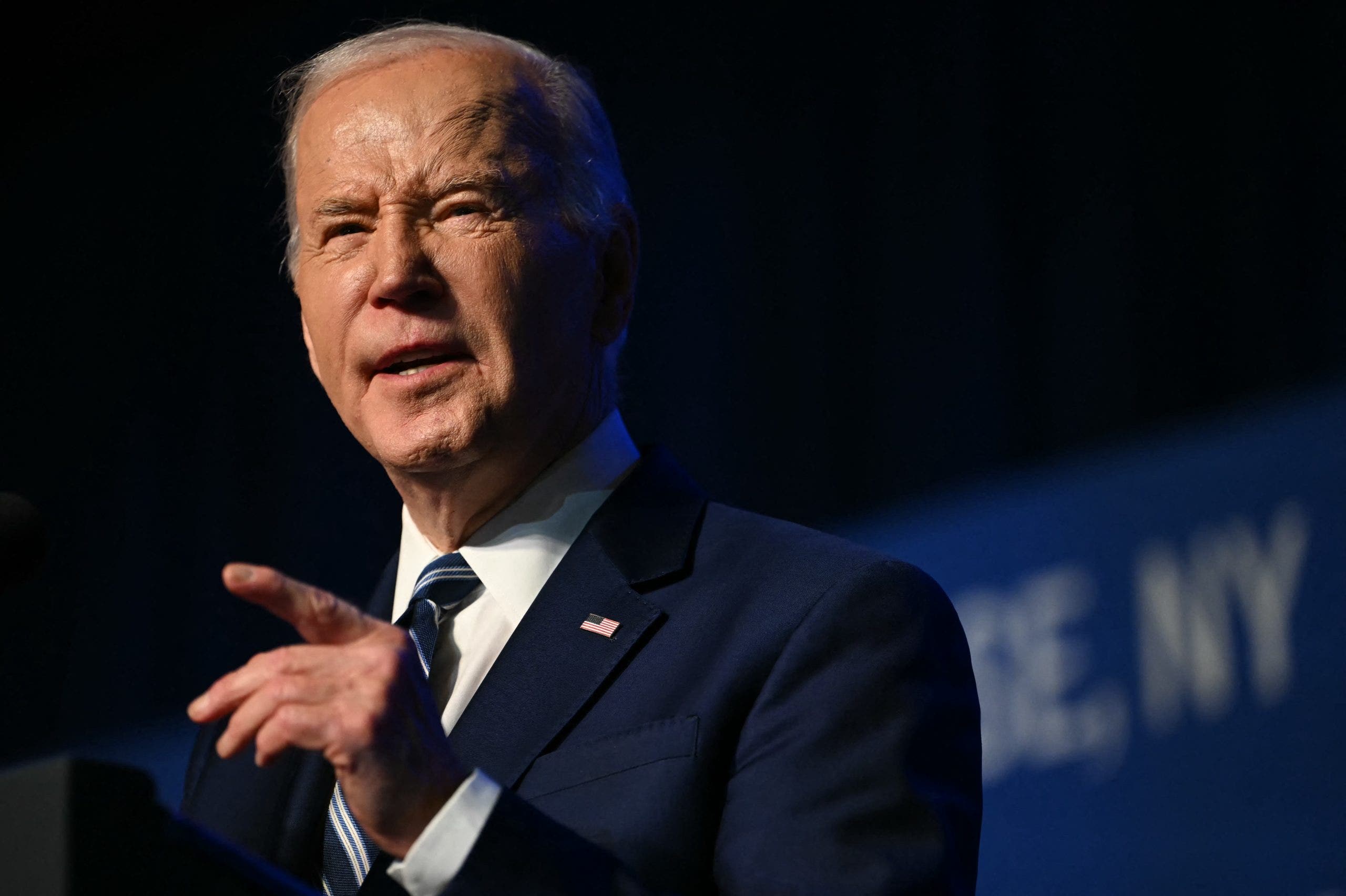
President Biden has directed every federal agency to wield the power of the federal bureaucracy to interfere with elections. (Andrew Caballero-Reynolds/AFP via Getty Images)
Given that small businesses continue to struggle under the weight of crippling inflation, high interest rates, and an acute labor shortage, the SBA diverting resources to assist a get-out-the-vote effort is extremely troubling. This alarming shift in focus raises serious questions about the agency’s priorities and its commitment to its core constituency: America’s small businesses.
WATCHDOG GROUP SUES BIDEN AGENCY FOR RECORDS AS LAWMAKER CALLS ITS VOTER WORK ‘A SLAP IN THE FACE’
The SBA’s press release bragging about this first of its kind partnership with Michigan to register voters immediately raised red flags and led the committee to request the signed agreement. Since the agency was so proud to announce this MOU, we assumed that this request wouldn’t be met with much resistance.
However, the SBA stonewalled turning over the document for months, dating back to the committee’s oversight hearing with Administrator Isabel Guzman on March 20, 2024. But as we were waiting to see what this new partnership entailed, the committee started to dig deeper into what the SBA has already been doing in Michigan.
As a critical battleground state where Biden is facing challenges, the selection of Michigan for this effort already insinuated that this was politically motivated decision. If the agency was truly only interested in registering voters, Michigan is a very unusual choice.
GOP STATE LAWMAKERS APPEAL TO SCOTUS TO CHALLENGE BIDEN’S ‘USURPATIONS’ OF THEIR POWER TO RUN ELECTIONS
With three-quarters of their state’s population already registered to vote, the third-highest percentage of registered voters in the entire country, there must be another reason for this first of its kind partnership.
Curiously, the committee noticed that this agreement with MDOS was announced four days after the Biden re-election campaign reiterated its interest in Michigan and noted its “not taking a single voter for granted,” especially among key demographics of young and minority voters.
As the committee continued to wait to receive the MOU from the SBA, we decided to look into the background of some of Biden’s political appointees who will be carrying out these orders. Within the SBA, Jennifer Kim, the associate administrator of the SBA Office of Field Operations is tasked with carrying out these voter registration efforts.
WE NEED TO SAVE OUR ELECTIONS FROM ABUSE AND HERE’S HOW
In going to the SBA website to see Kim’s background, the agency fails to highlight any experience in helping small businesses. Instead, her biography on sba.gov says she has years of experience in “increasing voter registration in communities of color as well as promoting youth civic engagement.” Coincidentally, she also attended the University of Michigan.
The diversion of taxpayer dollars and agency resources toward partisan activities like electioneering raises serious legal and ethical concerns. Just last week we held a hearing to discuss some of these conflicts of interest.
One of the witnesses was Stewart Whitson, the senior director of federal affairs at the Foundation for Government Accountability (FGA). The FGA is a nonpartisan, nonprofit organization that seeks to enhance the lives of all Americans by improving welfare, workforce, health care, and election integrity policy at the state and federal levels. In his testimony, he summed up the concerns very eloquently:
“The worry is that this isn’t about registering small business owners across the state of Michigan, but rather, this is about using generous business startup and other grants to lure targeted groups of voters, those the Left believes are more likely to vote for the current president, to SBA’s website and to in-person outreach events hosted in Democratic strongholds, all to help register and mobilize these voters ahead of the 2024 election.
“In other words, this appears to be a get-out-the-vote effort aimed at directly benefiting the Biden campaign, at the expense of the American taxpayer and the small businesses the SBA is supposed to serve.”
The SBA’s actions set a dangerous precedent for executive overreach. The founding principles of federalism and separation of powers are under threat as the Biden administration seeks to consolidate control over elections.
The SBA should not be transformed into a campaign arm of the Biden administration while abandoning the needs of small businesses. This devastating deviation from their core purpose is not only a breach of their duty, but also a disservice to Main Street America, as they continue to struggle to survive in the face of economic turmoil.
As chairman of the House Committee on Small Business, I will continue to demand answers throughout this investigation until the needs of Main Street are met and the agency intended to help them returns to carrying out their core mission.
ROGER WILLIAMS
Read the full article from Here

Michigan
University of Michigan’s David C. Miller chosen to succeed Jeff Balser as Vanderbilt Health’s President and CEO and Dean of Vanderbilt University School of Medicine

David C. Miller, MD, MPH, Chief Executive Officer of Michigan Medicine and Executive Vice President for Medical Affairs for the University of Michigan, has been chosen to succeed Jeff Balser, MD, PhD, as the next President and CEO of Vanderbilt Health and Dean of Vanderbilt University School of Medicine. Miller will assume the role at Vanderbilt on Jan. 1, 2027.
Earlier this year, Balser announced plans to retire on Dec. 31, after serving Vanderbilt in both leadership roles for nearly two decades.
Miller’s selection as the new senior leader for Vanderbilt Health (VH) and Vanderbilt University School of Medicine (VUSM) finalizes an extensive national search by the VH Board of Directors to identify Balser’s successor.
“From an incredibly strong field of applicants, Dr. Miller’s personal warmth, prior leadership experiences, and commitment to organizational culture stood out. David has presented an exciting vision for advancing the Medical Center’s missions and is the ideal candidate to succeed Dr. Balser. We look forward to welcoming David, his wife, Inge, and family to the Nashville community,” said Edie Carell Johnson, JD, Chair of the VH Board of Directors.
“On behalf of the Board, I want to again express my deep appreciation to Dr. Balser for his many years of dedication to the Medical Center’s growth and success. Jeff will be remembered for his commitment to excellence and as a leader whose contributions will continue to impact generations of patients and families now and into the future.”
Miller has spent the bulk of his career with the University of Michigan and Michigan Medicine where he has held a variety of administrative and academic roles and has been instrumental in enhancing quality, safety and patient experience and expanding access to health care services across Michigan through operational growth and strategic partnerships.
Similar in size and scale to Vanderbilt Health, Michigan Medicine is a statewide academic health system with 12 hospitals, 5,800 clinicians, 2,500 physicians-in-training, 97,000 annual discharges, 4.7 million outpatient visits and $820 million in annual research awards.
As the new leader of VH and VUSM, Miller will be responsible for shaping the institution’s core missions of advancing health care delivery, scientific discovery, health care training and education, and community engagement while championing a culture of collaboration, service and clinical excellence amidst a period of rapid growth.
“Serving as CEO and Dean has been tremendously rewarding, and I’m forever grateful for everyone’s support. I want to congratulate Dr. Miller and welcome him into the Vanderbilt family,” said Balser. “David is a seasoned leader with deep, career-long experience in our core missions of health care, research and teaching. He joins us at an exciting and transformative moment in history. I am confident he will sustain our positive momentum while nurturing the distinctive and caring culture we all treasure.”
Miller will be responsible for the development, implementation and fulfillment of strategies spanning VH and VUSM and will be central to maintaining the scholarly activities shared by the Medical Center and University.
“Vanderbilt University and Vanderbilt Health together form one of the largest and most eminent research enterprises in American higher education — one that turns discovery into better treatments and educates the next generation of physicians and scientists,” said Daniel Diermeier, PhD, Chancellor, Vanderbilt University. “Our School of Medicine sits at the heart of that work, which is why this appointment matters well beyond our campus. I am delighted to welcome Dr. Miller as its Dean and a partner in this transformative work, and I look forward to what we will accomplish together.”
Prior to his service as the CEO of Michigan Medicine, Miller served as Executive Vice Dean for Clinical Affairs for the University of Michigan Medical School and President of U-M Health, a clinical enterprise with approximately 20,000 employees caring for more than 1.3 million patients, where he oversaw all aspects of strategic, operational, clinical, cultural and financial performance. During his tenure at Michigan Medicine, Miller also led the clinical, business and cultural integration of the statewide academic health system.
Before serving as U-M Health’s President, Miller served as Chief Clinical Officer for Michigan Medicine’s University Hospital and the Frankel Cardiovascular Center. As a Professor in the Department of Urology, he also maintained a clinical practice focused on the diagnosis and management of patients with prostate cancer.
Miller has been awarded research funding for urologic cancer by the National Institutes of Health, the Agency for Healthcare Research and Quality, and the American Cancer Society. A frequently invited speaker on urologic cancer, Miller is the author or co-author of more than 300 peer-reviewed articles, editorials and abstracts. In addition to his clinical practice, Miller served as Director of the Michigan Urological Surgery Improvement Collaborative (MUSIC) from 2011 through 2020, a coalition of more than 40 urology practices improving urological care in Michigan.
“I am honored to be named the leader of one of the most highly regarded academic health care organizations in the country,” Miller said. “Vanderbilt is synonymous with exemplary patient care and world-leading innovation and medical education; I am humbled to be following in Dr. Balser’s footsteps. I am eager to begin meeting faculty, staff and students to learn what makes Vanderbilt such an exceptional organization with an unparalleled culture. My wife, Inge, and I are also excited about getting to know Nashville and the entire state.”
Miller earned a Bachelor of Science from the University of Michigan, Doctor of Medicine from Washington University School of Medicine, and a Master of Public Health with emphasis in epidemiology from the University of Michigan School of Public Health. His residency training in urology was at the University of Michigan, followed by a health services research and clinical fellowship in urologic oncology at the University of California, Los Angeles.
Related

Heavy smoke from several large wildfires blazing in Canada and Minnesota is expected to engulf large swaths of the Midwest and Northeast U.S. this week, exposing millions of people to dangerous air pollution.
Over 100 wildfires currently are burning in Canada and winds are carrying the smoke southeast. Warnings about dangerous, unhealthy air extended Wednesday from Minnesota through Toronto and into New York. Unusually hot summer temperatures were expected too.
The best advice is to stay indoors to avoid both the smoke and the extreme heat, said Tyler Hasenstein, meteorologist with the National Weather Service in Chanhassen, Minnesota.
“Those two things coinciding with each other is not good from a health perspective,” he said.
Rangers try to get thousands of campers out of remote Minnesota wilderness
In far northeastern Minnesota, rangers were trying to warn people that the Boundary Waters Canoe Area Wilderness was closed Tuesday because about 17 fires caused by lightning more than a week ago were spreading through the vast wilderness accessible primarily by canoe.
Rangers estimated anywhere from 6,000 to 10,000 people were inside the 1.1-million-acre wilderness, which is almost the size of Delaware, Superior National Forest spokesperson Joy VanDrie said.
“It’s an arduous job,” VanDrie said of rangers and campers having to canoe for hours or even carry their boats over land to evacuate.
No injuries or deaths have been reported. Rangers were going through every lake and waterway and officials estimated they had about 90% of the people out Wednesday.
Campers rescued this week said skies quickly darkened from smoke and they could feel the heat as they paddled or were taken by boat to safety.
Jan Bailey was camping with her husband, daughter, son-in-law, two grandchildren and three dogs when they noticed wispy smoke on the horizon. Two hours later, they could see a raging firestorm. A paddleboarder with a satellite phone fled to their campsite and they called forestry rangers who sent a boat to rescue them and others.
“We had fire on both sides of us at that time,” Bailey told Minnesota Public Radio. “So we’re just weaving between the lakes. It’s a little smoky. Campsites are going up.”
Even the Canadian Air Force pitched in. They rescued two groups of youth campers Wednesday who had crossed the border. One group was stuck on an isolated sandbar, Minnesota Gov. Tim Walz said.
VanDrie didn’t know when the area might reopen. Minnesota officials said some fires in the Boundary Waters will be allowed to burn indefinitely but will be monitored to ensure they don’t threaten people or property.
Severe drought and heat have led to a busy wildfire season
Dan Westervelt, associate professor at Columbia University’s Climate School, said severe drought conditions combined with heat in Canada and the U.S. have created “a perfect storm for really dry conditions to provide a lot of fuel for these wildfires to burn.” Research shows warming temperatures from burning coal, oil and gas are making fires more frequent and intense.
High levels of fine particulate matter in the air from wildfire smoke may be unhealthy for sensitive groups, such as children and people with heart or lung conditions. The particulates can cause shortness of breath, coughing, dizziness or fatigue and aggravate heart and lung diseases and other chronic health issues.
Experts suggest wearing a N95 mask if you have to be outside and keeping your indoor air cleaner by closing windows and running an air purifier or air conditioner.
It’s been a particularly busy and deadly fire season in the U.S. About four dozen large fires are currently burning across 15 states, from Minnesota and North Carolina to Colorado, Utah, Idaho, Oregon and California, according to the National Interagency Fire Center.
Prolonged drought and record-low snowpack levels combined to make conditions ripe for rapid fire growth. More than 16,800 people are assigned to fighting blazes across the county. The fires have burned over 5,678 square miles (9,138 square kilometers) — more than the size of Yellowstone and Grand Canyon national parks combined, the agency said.
Comparison view of clear vs. smoky conditions in Larsen, Wisconsin:
Smoke spreads as officials warn wildfires could burn for months
In Minnesota, officials warned large fires could burn for months. In Minneapolis, the high Wednesday was expected to be 96 degrees F and temperatures above 90 F were expected the rest of the week.
“It could well be we’re having significant fires throughout the summer until we have snow. Snow would be a good thing,” said Patty Thielen, director of the state Department of Natural Resources.
Officials in Michigan and Wisconsin warned residents about air quality issues that could last for days and the problems extended even to Maine, where residents were reporting a yellowish and brownish color in the sky.
The most intense smoke could spread as far south as Washington, D.C., by midday Thursday.
___
Associated Press writers Susan Montoya Bryan and Jeffrey Collins contributed to this report.

Missouri health officials are investigating dozens of confirmed or probable cases of cyclosporiasis, the intestinal infection that has sickened thousands of people across the country this summer.
As of Sunday, the state Department of Health and Senior Services logged 43 cases of the infection, which causes diarrhea and other digestive symptoms. The department data does not include where in the state cases have been reported.
Missouri has a relatively small number of reported cases compared to Michigan and other states at the center of the outbreak.
Illinois health officials have reported 216 cases of the infection, according to the state’s health department. In Michigan, which has the most reported cases, health officials have logged more than 3,700 cyclospora infections.
Officials expect that number to go up as more people are tested. Because people with diarrhea rarely go to the doctor and even fewer of those people receive the necessary stool sample test, it’s likely more people are infected.
Local health departments are following up with patients to get their food and travel history, which could help identify where the parasite came from.
Cyclosporiasis can cause watery diarrhea, nausea and dehydration. Unlike other illnesses caused by food-borne pathogens, fever and vomiting are relatively rare symptoms. Most people recover from the infection without treatment, but antibiotics can clear the infection.
According to the federal Centers for Disease Control and Prevention, no deaths have been reported due to the current outbreak.
Cyclospora, a parasite that can only be seen through a microscope, is spread through human feces. Past outbreaks have been linked to leafy greens, but officials have not yet found the cause of this year’s outbreak.
People can prevent the illness by thoroughly washing produce, cutting off bruised or damaged bits and refrigerating cut fruits and vegetables. Heat kills the parasite, so cooking vegetables can also cut down on risk.
-

 Louisiana5 minutes ago
New Louisiana waterway cleanup initiative aims to start in September
-

 Maine11 minutes ago
“I’m Ashamed of My Country”: Biddeford, Maine Locals Grieve Neighbor Killed by ICE
-

 Maryland17 minutes ago
Maryland Fall Home & Garden + Craft Show returning in October
-

 Michigan23 minutes ago
University of Michigan’s David C. Miller chosen to succeed Jeff Balser as Vanderbilt Health’s President and CEO and Dean of Vanderbilt University School of Medicine
-

 Massachusetts29 minutes ago
Massachusetts Broadband Institute distributes devices to underserved communities
-

 Minnesota35 minutes ago
Smoke from wildfires in Minnesota and Canada exposes millions to dangerous air quality
-

 Mississippi41 minutes ago
How permanent daylight saving time would impact Mississippi
-
Missouri47 minutes ago
Missouri reports 43 cases of parasitic infection that’s sickened thousands nationwide

