Lifestyle
Zendaya brings ‘The Drama,’ we bring the spoilers : Pop Culture Happy Hour


Zendaya in The Drama.
A24
hide caption
toggle caption
A24
The Drama is a dark and twisty comedy starring Zendaya and Robert Pattinson as a storybook couple preparing for their upcoming wedding. But just days before the big day, she reveals a horrifying truth about her past self that threatens to undo their nuptials, and their bond. In this spoiler-packed episode, we’re getting into that reveal, and all the surprising drama of the movie.
Follow Pop Culture Happy Hour on Letterboxd at letterboxd.com/nprpopculture


new video loaded: Stephen Colbert Closes Out “Late Show”
transcript
transcript
Stephen Colbert Closes Out “Late Show”
Stephen Colbert signed off for the last time from “The Late Show” on Thursday. His final guest was Paul McCartney and together they performed the Beatles’ “Hello, Goodbye.”
-
“Tonight is our final broadcast from the Ed Sullivan Theater.”
By Julie Yoon
May 22, 2026
Lifestyle
L.A. Affairs: I married at 51 after decades of being single. My dog turned out to be the better companion

In the past two years, I’ve changed my pronouns twice. But I’m not talking about my gender identity. I’ve always been a cis she/her/hers woman. I’ve also, for most of my life, been single, an I in a sea of coupled we’s.
The world prefers a we to an I, especially if you’re a woman. If someone casually asks what you did this weekend, responding “I bought a Christmas tree” is a sad, lonely statement to most listeners. Responding “We bought a Christmas tree” is a happy, cozy statement, reflecting that you will not be spending Christmas alone, or, one can infer, most likely dying alone too.
I, like many women, was raised on the myth of marriage. Growing up in the San Fernando Valley in the ’70s and ’80s, it was a foregone conclusion I’d get married one day and have a family. My mom often would say, “Just wait until you have kids of your own,” when she thought I was being difficult. She continued to say this into my 40s, at which point I’d respond, with sadness and self-pity, that, at my age, I was probably never going to have kids or get married.
Finally, well into middle age, I stopped caring about getting married and focused on how good my life as a single woman was. I lived in an ocean-view apartment in Santa Monica. I’d built a successful small business. I had great friends. I’d adopted a dog, Fofo, the best decision of my life.
Then I met the love of my life. Vagner was tall, unbearably handsome and disarmingly charming.
We found each other on an app and met up for the first time at my community garden plot on Main Street, then got ramen at Jinya. From that moment on, we were together. Vagner loved the Santa Monica Pier, which he’d seen in a video game he’d played with his teenage son in Rio. The pier was a short stroll from my apartment, and when we walked Fofo at sunset, Vagner always wanted to climb the wooden stairs and take in the glorious view from the pier. He was like a kid experiencing something from a movie in real life, and seeing the city through his eyes gave it a new sense of wonder.
When I broke my shoulder six weeks into our romance and needed surgery, he stayed with me in the hospital and moved in to care for me. Only an amazing guy would do that. One evening Vagner got down on one knee and proposed. We were in love. He was in the U.S. on a six-month tourist visa, and to stay together, we had to get married before his visa expired. Vagner was the most loving, caring man I’d ever known, so I said yes.
We got married three months after meeting, and Vagner turned into a different person 24 hours after we said, “I do.”
The toothpaste he bought at Costco lasted longer than our marriage.
But for the 11 months we were married, I experienced the glory of being a we instead of an I. Suddenly I was part of a giant club, the Partnered People. While it wasn’t an exclusive club, it still felt wonderful to finally get in.
I relished speaking in the plural. I loved talking to my married friends about us, our marriage, our life. I was no longer left out.
If I could find love and get married for the first time at 51 — in L.A., a city notoriously difficult for dating, especially for women over 40 — anyone could.
When I began to confide in married girlfriends about our problems, they unfailingly shared their own marital struggles, things they’d never mentioned when I was single. Over sushi and spicy margaritas at Wabi on Rose, a longtime friend advised me about how to give your husband wins, build up his self-esteem and keep from overwhelming him with perceived demands. I was grateful for her advice, and though I tried the strategies she’d suggested, nothing I did made any difference. Vagner was shut down, emotionally absent and prone to walking out every time we had a disagreement.
Still, I clung to my newfound identity as a we, even though there was very little us in the marriage. Even being unhappily married, I was still part of the club.
“It doesn’t matter if you date for 10 weeks or 10 years, people change after they get married,” I heard from more than one sympathetic soul. I took some comfort in this since I was beginning to blame myself for getting married too quickly.
The truth of the matter was, we had a far bigger problem than adjusting to being married. Believing we were simply two good people who’d rushed to the altar under the influence of euphoric new love and the pressure of an expiring visa was far less painful than the truth.
In our first conversation, he told me he was a lawyer. In reality, he was an ex-military police officer who’d been dismissed for misconduct. But his biggest omission was neglecting to tell me about his second child, a 13-year-old son who bore his full name, whose existence I discovered three months into our marriage when he disclosed it on an immigration form. He claimed the child wasn’t his but the product of his ex-wife’s infidelity.
Also, Vagner rarely wanted to spend time together. The moment he got his employment authorization, he announced a plan to take a job in Florida as a long-haul truck driver. On Christmas Eve. That was the beginning of the end.
The reality, which I only began to absorb bit by bit after I ended it, is that my husband was not only a prolific storyteller but also a master manipulator. I was lucky to get out with only a broken heart, not a broken life.
As good as it had felt — at least briefly — to finally be a we, there was no denying that I had been far happier as an I. As I walked Fofo by the beach, cuddled with him on the couch and threw his ball at Hotchkiss Park, I realized he was a superior companion to my ex-husband.
Fortunately, I hadn’t changed my name, so the only thing I had to change back were my pronouns. There was not even one tiny part of me that missed being able to refer to myself as we, so immense was the relief of freeing myself of Vagner.
Although I forfeited my membership in the Partnered People club, I became a member of another, equally nonexclusive-but-far-less-touted club, the Happily Divorced Women.
The author is the founder of Inner Genius Prep, a boutique educational and career consulting company. She lives in Santa Monica, holds an MFA in creative writing from Brooklyn College and is working on a memoir about having a mystery illness. She’s on Instagram: @smgardengirl.
L.A. Affairs chronicles the search for romantic love in all its glorious expressions in the L.A. area, and we want to hear your true story. We pay $400 for a published essay. Email LAAffairs@latimes.com. You can find submission guidelines here. You can find past columns here.
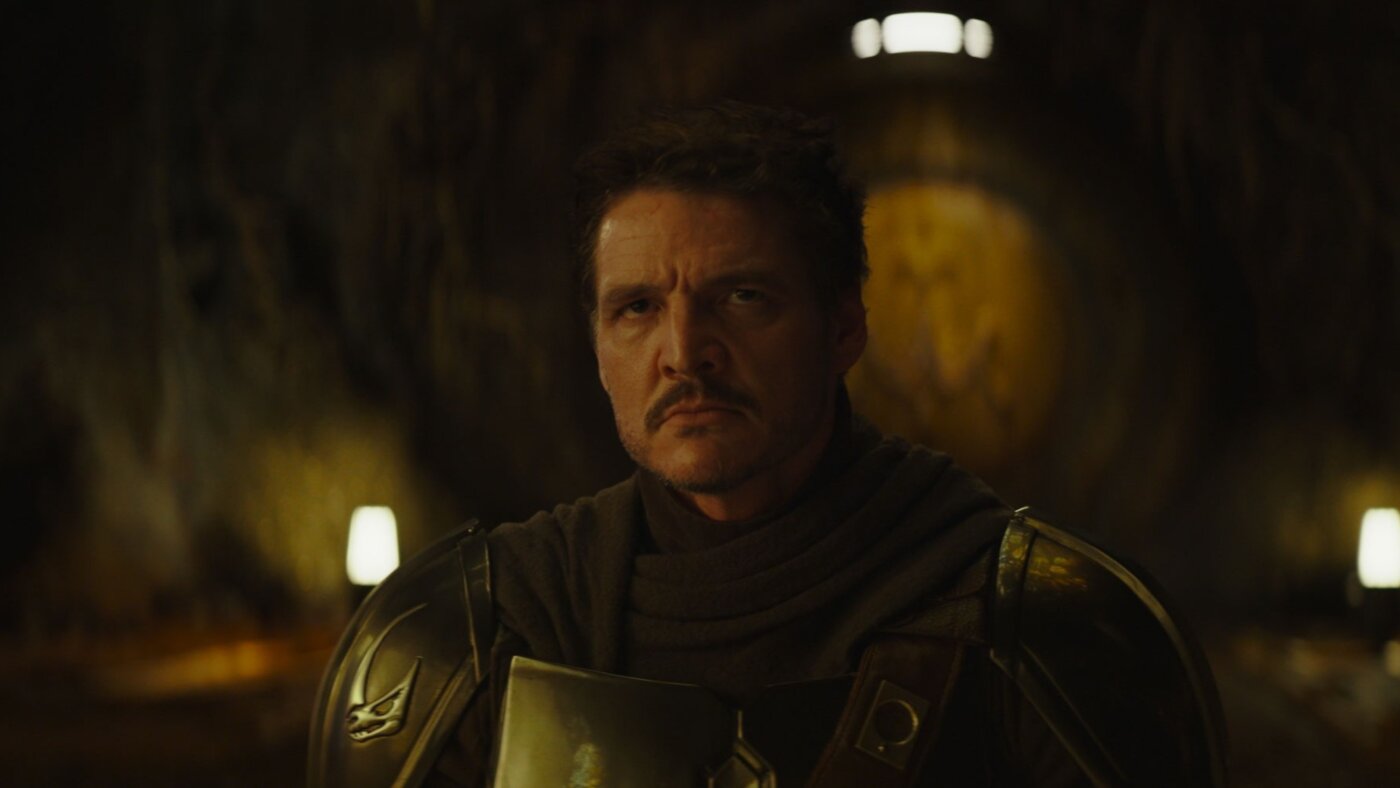
Pedro Pascal in The Mandalorian And Grogu.
Lucasfilm Ltd.
hide caption
toggle caption
Lucasfilm Ltd.
The Mandalorian has made the jetpack-assisted leap to the big screen with the new movie Star Wars: The Mandalorian and Grogu. The laconic bounty hunter (Pedro Pascal) and his cute sidekick Grogu are hired by the good guys to do a job for some bad guys. You know what you’re gonna get – creatures, droids, easter eggs, and lots of fights. But, after three seasons on Disney+, will folks go out to the theaters to watch something they’ve gotten to know on their couches?
Follow Pop Culture Happy Hour on Letterboxd at letterboxd.com/nprpopculture
Subscribe to Pop Culture Happy Hour Plus at plus.npr.org/happyhour
-

 Delaware3 minutes ago
Man facing rape charges after being found in park after hours with underage girl
-

 Florida9 minutes ago
Donald Trump Jr. and Bettina Anderson get married in Florida
-

 Georgia15 minutes ago
Georgia softball coach wants the outcomes, it’s just not why he does this
-

 Hawaii21 minutes ago
Tanaka Ramen opens 7th Hawaii spot at Windward Mall
-
 Idaho27 minutes ago
Unknown man stole dead teen’s identity 25 years ago to obtain $300K in government aid, Idaho jury finds
-

 Illinois33 minutes ago
Pritzker is hopeful lawmakers will pass bill that could keep Bears in Illinois as deadline nears
-

 Indiana39 minutes ago
Officer shot multiple times inside Indiana hospital ER
-

 Iowa45 minutes ago
Super Bowl Winning Quarterback, Iowa Native Set Adds More To Resume

