Lifestyle
You owe it to yourself to go on a solo trip. Here’s how to plan one


In 2024, I planned to travel by myself to Slovenia — a country I had fallen in love with during my first visit 20 years prior.
It was going to be the first time I’d left my two young children for a week, and I was nervous. What if something bad happened to them while I was gone? How long would it take me to rebook three flights and get home?
But as soon as I began wandering Slovenia’s capital of Ljubljana alone, I was flooded with relief — and excitement. I couldn’t wait to explore the Julian Alps and spend time in the toplice, or thermal spas, without having to break for nap time or search for kid-friendly snacks.
Traveling alone can be one of the most rewarding things you can do for yourself, says journalist Marquita Harris, who spent 2021 traveling the world solo through Airbnb’s Live Anywhere program. It can be empowering to learn that you are capable and resilient — and that you can trust yourself.
But it can also be a little scary, she adds. “When you don’t have to cater to your partner or a friend or your kids, you’re arriving at a destination where the only person you have to rely on is yourself.”
If you’re curious about traveling solo, here’s how to plan a trip — and what to expect.
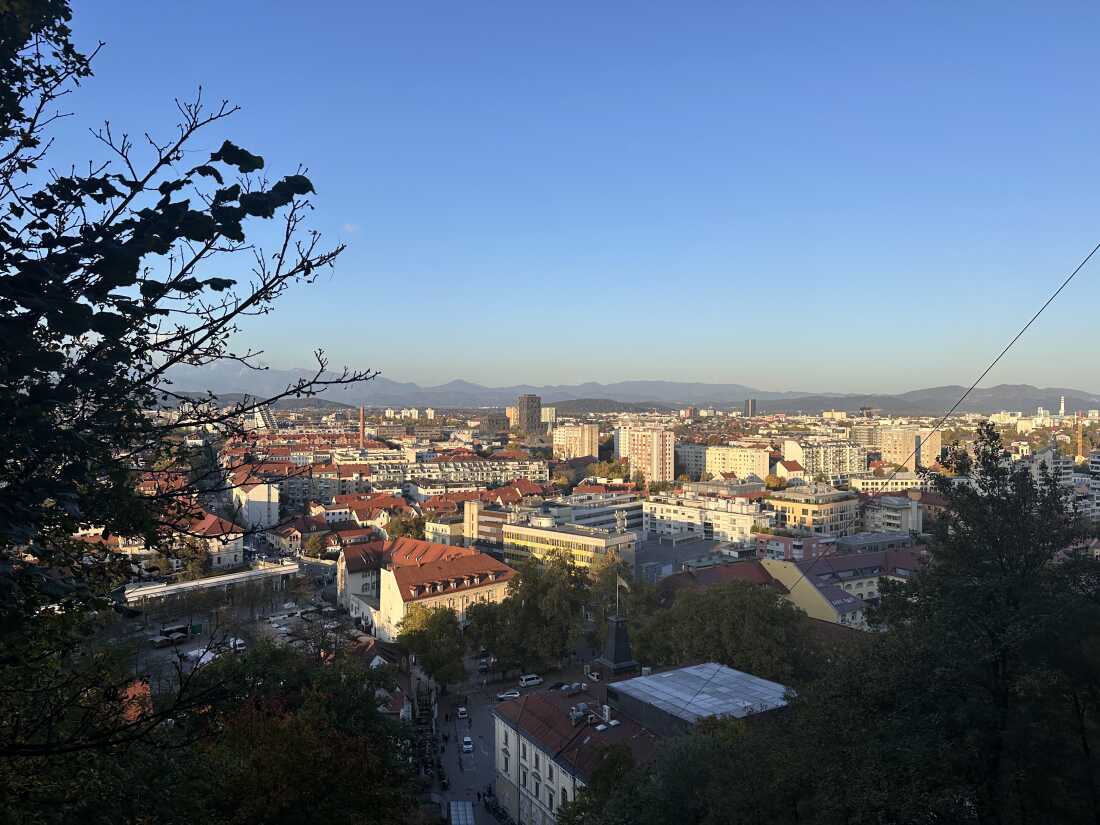
Author Amelia Edelman traveled solo to Slovenia in 2024. She shares the view from her climb to Ljubljana Castle, situated high above the country’s capital.
Amelia Edelman
hide caption
toggle caption
Amelia Edelman
Start small
To get a sense of how you plan, manage and meander when it’s all on you, go on a mini solo trip close to home, Harris says. “See if you can just have a beach day by yourself somewhere local.”

This can allow you to test the waters of solo travel and work up to bigger trips in the future.
Choose a destination that’s right for you
Ready for something more ambitious? Don’t just pick a destination that looks dreamy on Instagram. Choose a place that aligns with your unique trip goals.
Ask yourself: Why do I want to go on this trip? What do I want to do? Where do I want to go? How fast or slow do I want to move?
Use your answers to these questions to help you determine what type of solo trip — and destination — are right for you.
For example, if you’re reeling after a breakup or coping with burnout, you may want to book a chill mountainside cabin or stay somewhere with a spa. If you’re feeling energetic and psyched about meeting new people, head to your dream city across the planet and start exploring on foot.
Consider your comfort level
Aim for a place that’s navigable, welcoming and suited to how you want to travel.

Start with a destination where you speak the language, Harris says. That can make it easier to get around, read signs and menus, and start conversations with locals.
Equally important is understanding how a place might feel for you. A destination that feels safe and joyful for one traveler may not for another.
Harris’ family, for example, advised her against traveling solo to Rio de Janeiro. But the city ended up being deeply affirming for Harris.
“I’ve never been to a place where so many people looked like me,” she says. “I will sing its praises, especially for Black travelers.”

Edelman likes to keep things simple while solo traveling. She prefers sticking to just one course when dining, so it’s less of a production — but she won’t say no to tasting two wines.
Amelia Edelman
hide caption
toggle caption
Amelia Edelman
Beware the single supplement
While planning your trip, keep an eye out for the single supplement. It’s a premium that’s often charged to solo travelers by tours and cruise lines that could otherwise book two people into a room for a greater profit.
The add-on can range widely, from a $50-per-day single supplement on a 10-day Rick Steves tour to a full 200% of the stateroom cost on a Royal Caribbean cruise. (This is based on a double-occupancy stateroom; Royal Caribbean does have limited single-occupancy staterooms available.)
To determine whether there’s a single supplement on your tour or cruise, compare the cost of a double-occupancy room for two people versus a room for one, or inquire with the company if it’s not clear when booking on the site.
Joy Fox, a 90-year-old solo traveler who has been exploring the world on her own for nearly 70 years, recommends networks like Women Welcome Women World Wide and Solos. These organizations don’t charge the supplement and even provide additional resources and support that cater just to solo travelers.
Expect “traveler’s melancholy”
Even on the best solo trips, loneliness or sadness can rear their heads, especially if you find yourself alongside travelers who seem to all be paired up with friends, family or partners.
“They call it ‘traveler’s melancholy,’” Harris says. Eventually in her solo-travel year, “I got tired of myself. I needed to hear another voice besides my own.”

The author on a nighttime hike with new friends from her solo travels in Solčava, Slovenia, near the border with Austria.
Araceli Viqueira
hide caption
toggle caption
Araceli Viqueira
To cope with these feelings, Fox says to find small ways to make connections with others while traveling. “Smile. Give someone a compliment. Suddenly you’re not really on your own.”
And remember: Traveling by yourself does not mean you’re alone. “You’re gonna befriend the person who helps you up the mountain,” Harris says. “There’s always a friend somewhere.”
As for my “Solo-venia” trip, as I called it, of course there were moments when I missed my kids or surveyed a romantic sunset over the mountains and wished my partner were beside me.
But mostly, I traipsed through the forest on night hikes, met new friends from a dozen different countries and tried countless kinds of Slovenian wine — all without any tiny hands tugging at my clothes or little voices admitting, “Mama, I peed.” And that was worth every minute of my unwarranted pre-trip jitters.
Amelia Edelman is a writer, editor and content strategist who has worked with outlets such as the BBC, Lonely Planet and Travel + Leisure. She has traveled to 38 countries, often with her kids.
The story was edited by Malaka Gharib. Beck Harlan is the visual editor. We’d love to hear from you. Leave us a voicemail at 202-216-9823, or email us at LifeKit@npr.org.
Listen to Life Kit on Apple Podcasts and Spotify, and sign up for our newsletter. Follow us on Instagram: @nprlifekit.



There’s a three-story house in Baltimore that looks a bit imposing. You walk up the stone steps before even getting up to the porch, and then you enter the door and you’re greeted with a glass case of literary awards. It’s The Clifton House, formerly home of Lucille Clifton.
The National Book Award-winning poet lived there with her husband, Fred, starting in 1967 until the bank foreclosed on the house in 1980. Clifton’s daughter, Sidney Clifton, has since revived the house and turned it into a cultural hub, hosting artists, readings, workshops and more. But even during a February visit, in the mid-afternoon with no organized events on, the house feels full.

The corner of Lucille Clifton’s bedroom, where she would wake up and write in the mornings
Andrew Limbong/NPR
hide caption
toggle caption
Andrew Limbong/NPR
“There’s a presence here,” Clifton House Executive Director Joël Díaz told me. “There’s a presence here that sits at attention.”
Sometimes, rooms where famous writers worked can be places of ineffable magic. Other times, they can just be rooms.

Princeton University Press
Katie da Cunha Lewin is the author of the new book, The Writer’s Room: The Hidden Worlds That Shape the Books We Love, which explores the appeal of these rooms. Lewin is a big Virginia Woolf fan, and the very first place Lewin visited working on the book was Monk’s House — Woolf’s summer home in Sussex, England. On the way there, there were dreams of seeing Woolf’s desk, of retracing Woolf’s steps and imagining what her creative process would feel like. It turned out to be a bit of a disappointment for Lewin — everything interesting was behind glass, she said. Still, in the book Lewin writes about how she took a picture of the room and saved it on her phone, going back to check it and re-check it, “in the hope it would allow me some of its magic.”
Let’s be real, writing is a little boring. Unlike a band on fire in the recording studio, or a painter possessed in their studio, the visual image of a writer sitting at a desk click-clacking away at a keyboard or scribbling on a piece of paper isn’t particularly exciting. And yet, the myth of the writer’s room continues to enrapture us. You can head to Massachusetts to see where Louisa May Alcott wrote Little Women. Or go down to Florida to visit the home of Zora Neale Hurston. Or book a stay at the Scott & Zelda Fitzgerald Museum in Alabama, where the famous couple lived for a time. But what, exactly, is the draw?

Lewin said in an interview that whenever she was at a book event or an author reading, an audience question about the writer’s writing space came up. And yes, some of this is basic fan-driven curiosity. But also “it started to occur to me that it was a central mystery about writing, as if writing is a magic thing that just happens rather than actually labor,” she said.
In a lot of ways, the book is a debunking of the myths we’re presented about writers in their rooms. She writes about the types of writers who couldn’t lock themselves in an office for hours on end, and instead had to find moments in-between to work on their art. She covers the writers who make a big show of their rooms, as a way to seem more writerly. She writes about writers who have had their homes and rooms preserved, versus the ones whose rooms have been lost to time and new real estate developments. The central argument of the book is that there is no magic formula to writing — that there is no daily to-do list to follow, no just-right office chair to buy in order to become a writer. You just have to write.

Bruce Johnston
I’m Riding My Last Wave With The Beach Boys
Published
Bruce Johnston is riding off into the California sunset … at least for now.
The Beach Boys legend announced Wednesday he’s stepping away from touring after six decades with the iconic band. The 83-year-old revealed in a statement to Rolling Stone he’s hanging up his touring hat to focus on what he calls part three of his long music career.

“It’s time for Part Three of my lengthy musical career!” Johnston said. “I can write songs forever, and wait until you hear what’s coming!!! As my major talent beyond singing is songwriting, now is the time to get serious again.”
Johnston famously stepped in for co-founder Brian Wilson in 1965 for live performances, becoming a staple of the Beach Boys’ touring lineup ever since. Now, he says he’s shifting gears toward songwriting and even some speaking engagements … with occasional touring member John Stamos helping him craft what he’ll talk about onstage.
“I might even sing ‘Disney Girls’ & ‘I Write The Songs!!’” he teased.
But don’t call it a full-on farewell tour just yet. Johnston made it clear he’s not shutting the door completely, saying he’s excited to reunite with the band for special occasions, including their upcoming July 2-4 shows at the Hollywood Bowl as part of the Beach Boys’ 2026 tour. The run celebrates both the 60th anniversary of “Pet Sounds” and America’s 250th birthday.
“This isn’t goodbye, it’s see you soon,” he wrote. “I am forever grateful to be a part of the Beach Boys musical legacy.”
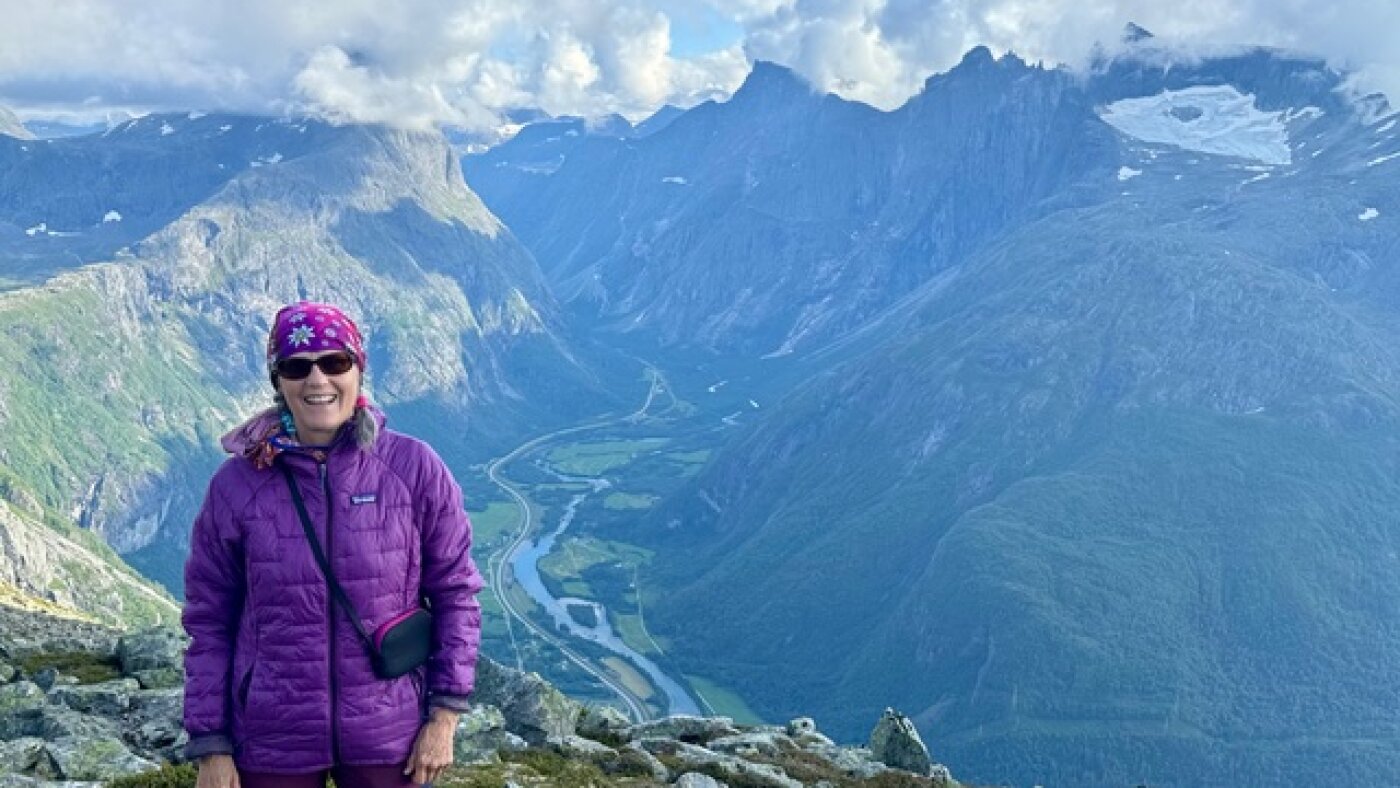
In 1982, Jean Muenchrath was injured in a mountaineering accident and on the brink of death when a stranger and his family went out of their way to save her life.
Jean Muenchrath
hide caption
toggle caption
Jean Muenchrath
In early May 1982, Jean Muenchrath and her boyfriend set out on a mountaineering trip in the Sierra Nevada, a mountain range in California. They had done many backcountry trips in the area before, so the terrain was somewhat familiar to both of them. But after they reached one of the summits, a violent storm swept in. It began to snow heavily, and soon the pair was engulfed in a blizzard, with thunder and lightning reverberating around them.
“Getting struck and killed by lightning was a real possibility since we were the highest thing around for miles and lightning was striking all around us,” Muenchrath said.
To reach safer ground, they decided to abandon their plan of taking a trail back. Instead, using their ice axes, they climbed down the face of the mountain through steep and icy snow chutes.
They were both skilled at this type of descent, but at one particularly difficult part of the route, Muenchrath slipped and tumbled over 100 feet down the rocky mountain face. She barely survived the fall and suffered life-threatening injuries.

This was before cellular or satellite phones, so calling for help wasn’t an option. The couple was forced to hike through deep snow back to the trailhead. Once they arrived, Muenchrath collapsed in the parking lot. It had been five days since she’d fallen.
”My clothes were bloody. I had multiple fractures in my spine and pelvis, a head injury and gangrene from a deep wound,” Muenchrath said.
Not long after they reached the trailhead parking lot, a car pulled in. A man was driving, with his wife in the passenger seat and their baby in the back. As soon as the man saw Muenchrath’s condition, he ran over to help.
”He gently stroked my head, and he held my face [and] reassured me by saying something like, ‘You’re going to be OK now. I’ll be right back to get you,’” Muenchrath remembered.
For the first time in days, her panic began to lift.
“My unsung hero gave me hope that I’d reach a hospital and I’d survive. He took away my fears.”
Within a few minutes, the man had unpacked his car. His wife agreed to stay back in the parking lot with their baby in order to make room for Muenchrath, her boyfriend and their backpacks.
The man drove them to a nearby town so that the couple could get medical treatment.
“I remember looking into the eyes of my unsung hero as he carried me into the emergency room in Lone Pine, California. I was so weak, I couldn’t find the words to express the gratitude I felt in my heart.”

The gratitude she felt that day only grew. Now, nearly 45 years later, she still thinks about the man and his family.
”He gave me the gift of allowing me to live my life and my dreams,” Muenchrath said.
At some point along the way, the man gave Muenchrath his contact information. But in the chaos of the day, she lost it and has never been able to find him.
”If I knew where my unsung hero was today, I would fly across the country to meet him again. I’d hug him, buy him a meal and tell him how much he continues to mean to me by saving my life. Wherever you are, I say thank you from the depths of my being.”
My Unsung Hero is also a podcast — new episodes are released every Tuesday. To share the story of your unsung hero with the Hidden Brain team, record a voice memo on your phone and send it to myunsunghero@hiddenbrain.org.

Abercrombie’s Career-High 33 Lifts Augusta Past Middle Georgia in PBC Tournament Quarterfinals – Augusta University

Storm Team4 Forecast: Thick fog to clear before storms, rain Thursday night

Several Ohio schools placed under lockdown after threat

Texas Plans Second Execution of the Year

Alabama Baseball Ties Stolen Base Record In Win Over Hornets

Florida High School Football Rankings: Top 25 teams – Oct. 21

Cleary's 21 help Le Moyne down Central Connecticut State 69-64 in OT

How old is Bo Nix? What to know about Oregon quarterback ahead of 2024 NFL Draft

99th annual Pony Swim held in Virginia

Indiana Members Credit Union announced as new anchor tenant at Bottleworks District

DHS defends McLaughlin against allegations husband’s company profited millions from ad contracts: ‘Baseless’

Sánchez defies Trump in political gamble as Madrid say no to war

Satellite images show Iran school strike hit more buildings than earlier reported

US submarine sinks Iranian warship by torpedo in a first since World War II

Which oil and gas facilities in the Gulf have been attacked?
-

 World1 week ago
Exclusive: DeepSeek withholds latest AI model from US chipmakers including Nvidia, sources say
-

 Massachusetts1 week ago
Mother and daughter injured in Taunton house explosion
-

 Wisconsin3 days ago
Setting sail on iceboats across a frozen lake in Wisconsin
-

 Maryland4 days ago
AM showers Sunday in Maryland
-

 Denver, CO1 week ago
10 acres charred, 5 injured in Thornton grass fire, evacuation orders lifted
-

 Florida4 days ago
Florida man rescued after being stuck in shoulder-deep mud for days
-

 Oregon6 days ago
2026 OSAA Oregon Wrestling State Championship Results And Brackets – FloWrestling
-

 Massachusetts2 days ago
Massachusetts man awaits word from family in Iran after attacks