Lifestyle
Will Disneyland get an Avatar land? It's likely. Here's what else may be in store

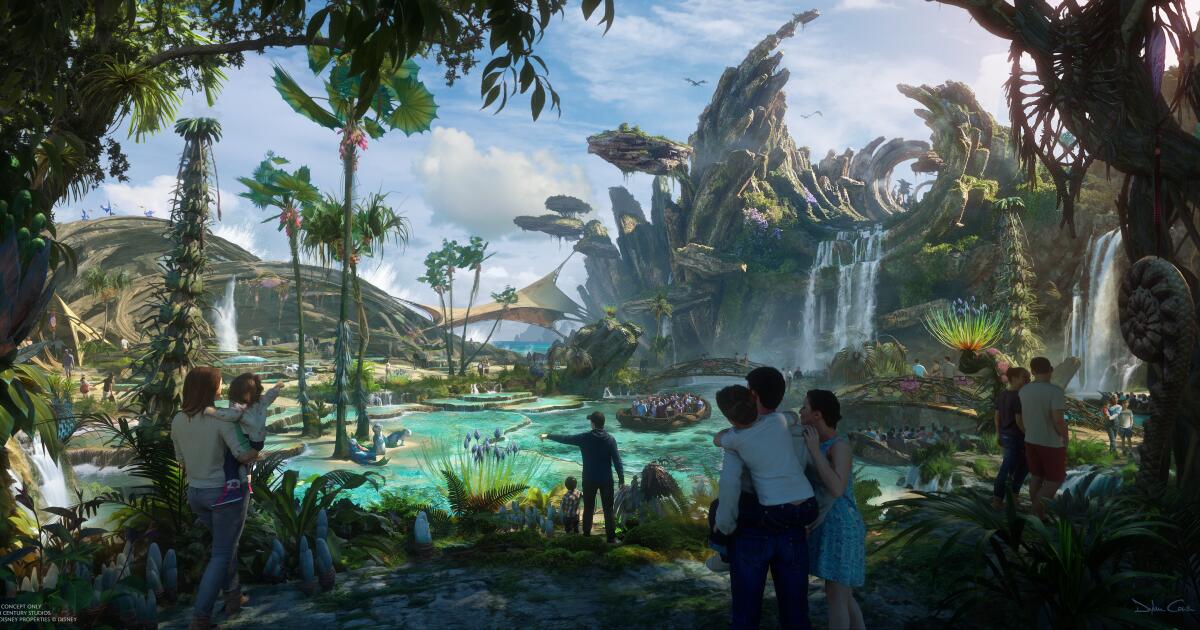
With the city of Anaheim unanimously voting to pass DisneylandForward, the Disneyland Resort will be forever changed.
Twice in the last 69 years, Disneyland has been significantly transformed. Four years after the park opened in 1959, Disneyland added its monorail, the Matterhorn Bobsleds and a submarine ride and expanded Autopia. It was a message that would begin to fulfill Walt Disney’s promise that Disneyland would never be completed.
More than that, however, it revealed that Disneyland would continue to look to the future. Disneyland in 1959 showed its guests possibilities — a transportation system in the monorail that could remake urban communities, a tease of the freeway system that would reshape travel and a glimpse at the sort of deep-sea excursions only a lucky few could witness. The Matterhorn, while inspired by the film “Third Man on the Mountain,” also was meant to be a transportive experience, to not only bring to Disneyland a new kind of thrill ride but give visitors a taste of international adventure.
Disneyland’s second reimagining came much later. In 2001 the Walt Disney Co. would open Disney California Adventure, the Grand Californian hotel and the Downtown Disney District. These additions would attempt to make Disneyland, the company’s original park, one that could, in theory, rival Florida’s Walt Disney World by becoming a resort that could demand multiday stays.
This expansion succeeded as well, but not overnight.
Dubbed DisneylandForward, the plan is not specific about what exactly Disneyland plans to build, but it asks Anaheim to relax zoning rules and give Disney flexibility to construct new rides, hotels and stores.
(DisneylandForward)
The original vision of Disney California Adventure proved to be lackluster, relying heavily on on-the-shelf rides and lacking emotion-driven experiences that take visitors out of their daily life. While the Grand Californian is a Craftsman-inspired triumph, Downtown Disney is in the midst of a transformation and is still attempting to outgrow its reputation as a home for chains and midtier eateries.
And now we’re entering a new era of possibilities, one that likely will look much different from the prior two. Modern Disney is centered on intellectual property — or IP, in corporate speak — rather than Walt-era idealism, and the most tantalizing prospects of DisneylandForward center on building around existing structures rather than erecting a new park.
With DisneylandForward, the company won the flexibility to redesign the resort. Zoning rules will be amended so that Disney can add new attractions alongside hotels on the west side of Disneyland Drive. These will, if they come to fruition, likely be extensions of Disneyland or Disney California Adventure rather than a third park. Additionally, a new shopping, dining and entertainment district can be created to the southeast on what is currently the Toy Story parking lot at Katella Avenue and Harbor Boulevard.
Company brass and the DisneylandForward materials have offered teases of what could be built. Most of these have centered on recent expansions at Disney’s international parks, such as the World of Frozen at Hong Kong Disneyland or Zootopia at Shanghai Disney Resort. There’s been little ideological talk about the future of Disneyland, as the focus has centered squarely on popular properties and franchises rather than the resort’s status as a cultural hub and gathering space.
But DisneylandForward came with a pledge. The Walt Disney Co. has promised to spend a minimum of $1.9 billion on Disneyland attractions, lodging, entertainment, shopping and dining in the next 10 years. That money can go quickly, with modern attractions costing sometimes in the high six figures, but the Walt Disney Co. also is in the midst of doubling down on its theme parks. Disney has guaranteed to spend $60 billion over the next 10 years in its experiences division, with at least half of that total dedicated to parks and resorts, according to a recent SEC filing.
It’s safe to say that the next 10 years will shape Disneyland for decades to come. While there’s much to be revealed, there are, perhaps, some safe bets. Here are a few educated guesses as to what to expect with an expanded Disneyland in the near term.
Get ready for Pandora
DisneylandForward materials reference everything from “Tangled” to “Peter Pan” to “Tron” as possible experiences that could come to Anaheim. One word, however, is missing, and it’s one that’s been regularly referenced by Disney brass in recent weeks: “Avatar.”
Disney CEO Bob Iger mentioned it at a recent shareholder meeting, even sharing the “Avatar” concept art, which was referred to as “inspirational artwork.” Josh D’Amaro, chairman of Disney Experiences, wrote in a blog post after the shareholder event that further news on Disneyland-related attractions such as the “Avatar” experience was tied to the approval of DisneylandForward.
“We are excited about the stories our guests could experience at Walt’s original theme park destination after approval of DisneylandForward — including the chance to experience all-new Avatar adventures with a visit to Pandora,” D’Amaro wrote. And last night in Anaheim, Disneyland Resort President Ken Potrock again teased “Avatar” at the DisneylandForward hearing and vote. Finally, one of Disney’s most respected theme park creatives even posted the “Avatar” concept art on Instagram, expressing the hope of sharing more on the project in the future.
Consider a large-scale “Avatar”-inspired land all but a done deal, and the art shared for Disneyland isn’t an exact replica of Florida’s Pandora — The World of Avatar, which resides in that coast’s Animal Kingdom park. Now where to put it? Expect Pandora to be bound for Disney California Adventure. There’s been speculation that it could replace the area currently served by water ride Grizzly River Run or move into a largely vacant slot of Hollywood Land, but neither is ideal. The latter requires a rerouting of the monorail, and Grizzly River Run remains a popular attraction.
Here’s betting it’s positioned in one of the DCA expansion areas near the Pixar Place Hotel, as that would allow the company to give the James Cameron property a plethora of space, especially if Disney must hide a large show building behind an illusion of floating mountains.
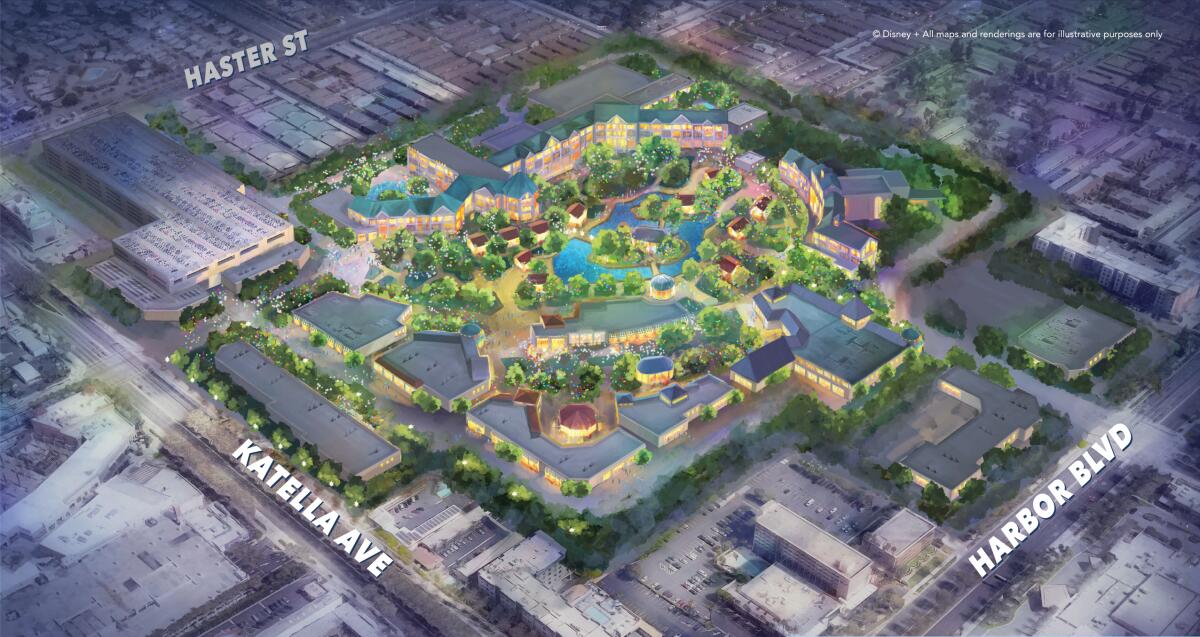
DisneylandForward concept art for a potential dining and entertainment district on the current location of the Toy Story Lot.
(Walt Disney Co.)
Expect more hotel options
With Disneyland lacking the acreage of Florida’s Walt Disney World, hotel prices in Anaheim are at a premium. Rooms for the recently revamped Pixar Place Hotel — Anaheim’s “budget” option — can routinely top $500 per night. More hotel space is needed, and if Disneyland goes all-in on “Avatar,” expect lodging and more entertainment options to follow close behind. Disney has long touted development of the Toy Story Lot as prime space for hotel, dining and entertainment modeled after Florida’s Disney Springs district.
The DisneylandForward materials mention the land as “the perfect location to cater to locals, conventioneers, hotel and Disneyland Resort guests with restaurants, hotels, live music, shopping, ticketed shows and theme park experiences.” A new proposed parking structure to the north would solve the parking issue, and Disney has done extensive research on this already, as it was part of an earlier, pre-pandemic planned development known as the “Eastern Gateway.”
Walkways to and from the new parking structure would connect the current resort to the new entertainment area. And while fans may want Disney to rapidly fill the available space with theme park attractions, if the resort is planning to increase capacity it’s first going to need a spot for those guests to park. Additionally, Iger at a recent media event said the company likely would hold back some of its theme park funds so the organization could move on the popularity of new films or franchises.
“We actually have a fairly good idea in the near term of what’s being built, but we’re purposefully not going to allocate it all,” Iger said. “Because who knows? In five years we can end up with a giant hit movie — think ‘Frozen’ — that we may want to mine essentially as an attraction, or a hotel or restaurant in our parks. So you want to maintain some flexibility.”
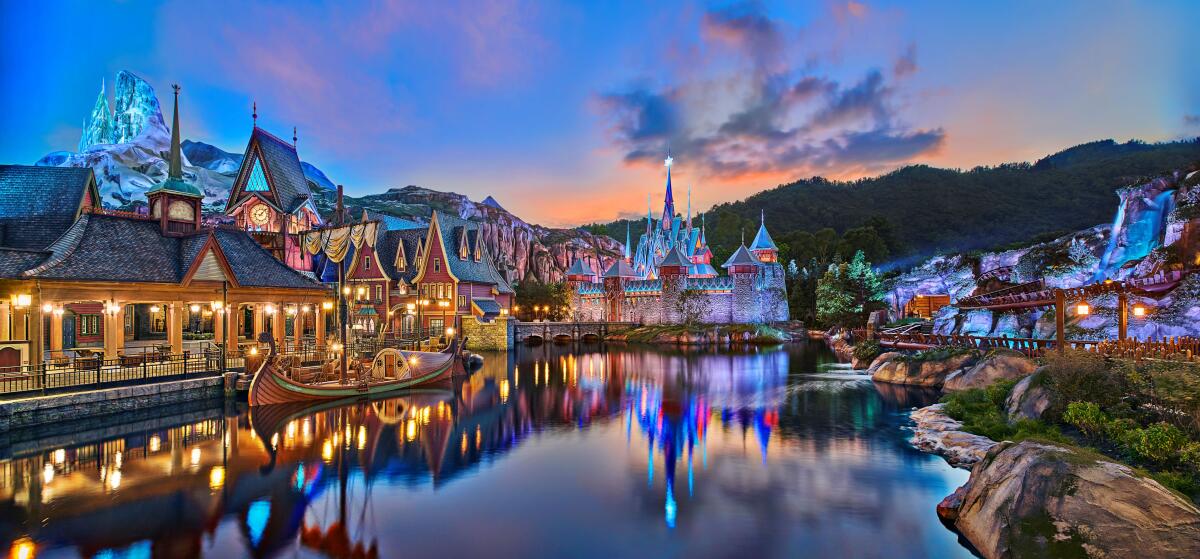
The World of Frozen recently opened at Hong Kong Disneyland. A “Frozen” experience has been teased as a possibility for Disneyland as part of DisneylandForward.
(Walt Disney Co. )
What about ‘Frozen’s’ Arendelle? Or a ‘Coco’-themed experience?
Beyond “Avatar,” which seems a sure thing as it’s been mentioned by Iger on multiple occasions, any future aspects of DisneylandForward become pure speculation. But a couple of franchises may have higher priority than others.
Disney now has a “Frozen” attraction in Walt Disney World, a land in Hong Kong and experiences in the works for Disneyland Paris and Tokyo DisneySea. Walt Disney Imagineering, the company’s secretive arm devoted to theme park experiences, clearly has done the work on bringing “Frozen” to life in physical spaces, and it stands to reason that expansions to the original Disneyland Park, with its fairy-tale feel, would go more of a Fantasyland-inspired route.
What’s more, re-creating Arendelle in the expansion plots located near the Disneyland Hotel would give Disney the opportunity to construct a second castle, as any extensive changes to park centerpiece Sleeping Beauty Castle are prohibited due to structural limitations. The enduring popularity of “Frozen” seems relatively assured at this point, so bringing the franchise to Disneyland is far from a risk.
But if the company opts to create something unique for Southern California rather than importing Hong Kong’s World of Frozen or Shanghai’s Zootopia, one franchise that seems to be routinely brought up by executives is “Coco.” When mentioning blue-sky concepts last year year at an investor event in Florida, D’Amaro teased “Coco” as a key film that has yet to be properly explored in the Disney parks.
Potrock again mentioned “Coco” in an op-ed in the Orange County Register touting the benefits of DisneylandForward, writing that the initiative could pave the way for “the chance to celebrate Dia de Los Muertos in a ‘Coco’-themed experience.” Disney California Adventure, of course, is home to a Dia de Los Muertos celebration that does center a short “Coco” show, and the property seems especially ripe for Southern California and our heavily Latino communities. That makes it an opportunity to give Disneyland an unique land not found in other parks while also tapping into the region’s diverse fan base. Walt’s original park deserves no less as it looks ahead to closing out its first century.



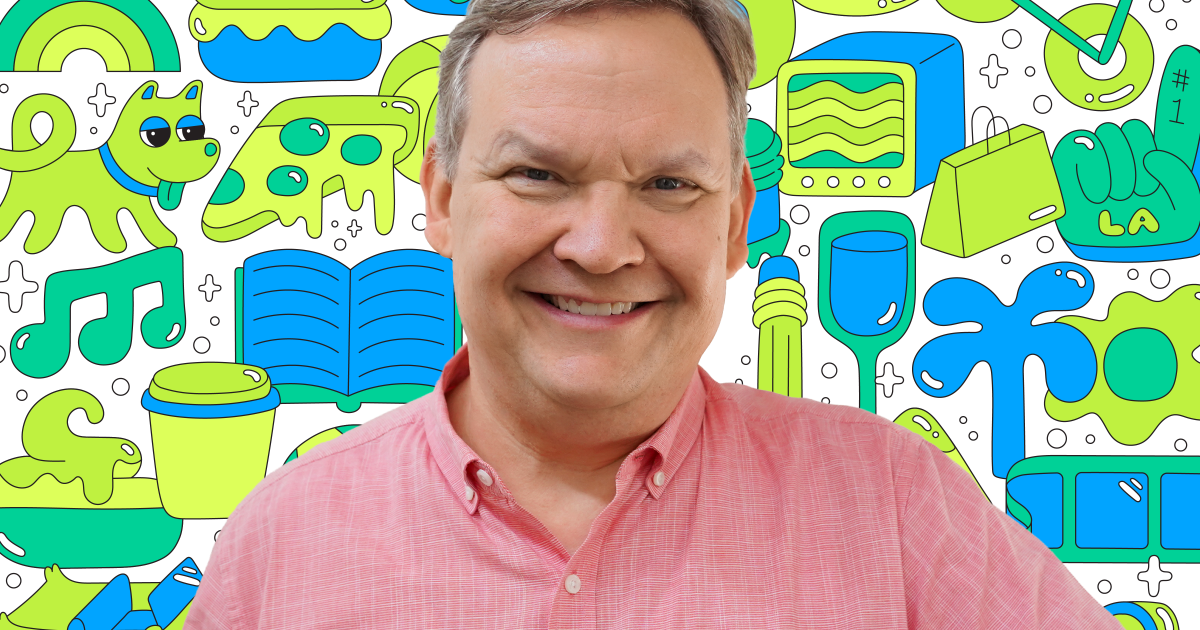
Andy Richter has found his place.
The Chicago area native previously lived in New York — where he first found fame as Conan O’Brien’s sidekick on “Late Night” — before moving to Los Angeles in 2001. Three years ago, he moved to Pasadena. “Now that I live here, I would not live anywhere else,” he says.
There are some practical benefits to the city. “I am such a crabby old man now, but it’s like, there’s parking, you can park when we have to go out,” Richter says. “The notion of going to dinner in Santa Monica just feels like having nails shoved into my feet.”
In Sunday Funday, L.A. people give us a play-by-play of their ideal Sunday around town. Find ideas and inspiration on where to go, what to eat and how to enjoy life on the weekends.
But he mostly appreciates that Pasadena is “a very diverse town and just a beautiful town,” he says.
For Richter, most Sundays revolve around his family. In 2023, the comedian and actor married creative executive Jennifer Herrera and adopted her young daughter, Cornelia. (He also has two children in their 20s, William and Mercy, from his previous marriage.)
Additionally, he’s been giving his body time to recover. Richter spent last fall training and competing on the 34th season of “Dancing With the Stars.” And though he had no prior dancing experience, he won over the show’s fan base with his kindness and dedication, making it to the competition’s ninth week.
He hosts the weekly show “The Three Questions” on O’Brien’s Team Coco podcast network and still appears in films and TV shows. “I’m just taking meetings and auditioning like every other late 50s white comedy guy in L.A., sitting around waiting for the phone to ring.”
This interview has been lightly edited and condensed for length and clarity.

7:30 a.m.: Early rising
It’s hard for me at this advanced age to sleep much past 7:30. I have a 5 1/2-year-old, and hopefully she’ll sleep in a little bit longer so my wife and I can talk and snuggle and look at our phones at opposite ends of the bed, like everybody.
Then the dogs need to be walked. I have two dogs: a 120-pound Great Pyrenees-Border Collie-German Shepherd mix, and then at the other end of the spectrum, a seven-pound poodle mix. We were a blended dog family. When my wife and I met, I had the big dog and she had a little dog. Her first dog actually has passed, but we like that dynamic. You get kind of the best of both worlds.

8 a.m.: Breakfast at a classic diner
Then it would probably be breakfast at Shakers, which is in South Pasadena. It’s one of our favorite places. We’re kind of regulars there, and my daughter loves it. It’s easy with a 5-year-old, you’ve got to do what they want. They’re terrorists that way, especially when it comes to cuisine.
I’ve lived in Pasadena for about three years now, but I have been going to Shakers for a long time because I have a database of all the best diners in the Los Angeles metropolitan area committed to memory. There’s just something about the continuity of them that makes me feel like the world isn’t on fire. And because of L.A.’s moderate climate, the ones here stay the way they are; whereas if you get 18 feet of winter snow, you tend to wear down the diner floor, seats, everything.
So there’s a lot of really great old places that stay the same. And then there are tragic losses. There’s been some noise that Shakers is going to turn into some kind of condo development. I think that people would probably riot. They would be elderly people rioting, but they would still riot.
11 a.m.: Sandy paws
My in-laws live down in Long Beach, so after breakfast we might take the dogs down to Long Beach. There’s this dog beach there, Rosie’s Beach. I have never seen a fight there between dogs. They’re all just so happy to be out and off-leash, with an ocean and sand right there. You get a contact high from the canine joy.

1 p.m.: Lunch in Belmont Shore
That would take us to lunchtime and we’ll go somewhere down there. There’s this place, L’Antica Pizzeria Da Michele, in Belmont Shore. It’s fantastic for some pizza with grandma and grandpa. It’s originally from Naples. There’s also one in Hollywood where Cafe Des Artistes used to be on that weird little side street.

4 p.m.: Sunset at the gardens
We’d take grandma and grandpa home, drop the dogs off. We’d go to the Huntington and stay a couple of hours until sunset. The Japanese garden is pretty mind-blowing. You feel like you’re on the set of “Shogun.”
The main thing that I love about it is the changing of ecospheres as you walk through it. Living in the area, I drive by it a thousand times and then I remember, “Oh yeah, there’s a rainforest in here. There’s thick stands of bamboo forest that look like Vietnam.” It’s beautiful. With all three of my kids, I have spent a lot of time there.

6:30 p.m.: Mall of America
After sundown, we will go to what seems to be the only thriving mall in America — [the Shops at] Santa Anita. We are suckers for Din Tai Fung. My 24-year-old son, who’s kind of a food snob, is like, “There’s a hundred places that are better and cheaper within five minutes of there in the San Gabriel Valley.” And we’re like, “Yeah, but this is at the mall.” It’s really easy. Also, my wife is a vegetarian, and a lot of the more authentic places, there’s pork in the air. It’s really hard to find vegetarian stuff.
We have a whole system with Din Tai Fung now, which is logging in on the wait list while we’re still on the highway, or ordering takeout. There’s plenty of places in the mall with tables, you can just sit down and have your own little feast there.
There’s also a Dave & Buster’s. If you want sensory overload, you can go in there and get a big, big booze drink while you’re playing Skee-Ball with your kid.
9 p.m.: Head to bed ASAP
I am very lucky in that I’m a very good sleeper and the few times in my life when I do experience insomnia, it’s infuriating to me because I am spoiled, basically. When you’ve got a 5 1/2-year-old, there’s no real wind down. It’s just negotiations to get her into bed and to sleep as quickly as possible, so we can all pass out.

new video loaded: Prada Peels Back the Layers at Milan Fashion Week
By Chevaz Clarke and Daniel Fetherston
February 27, 2026

Bill Cosby
Rape Accuser Says Cosby Won’t Take Stand At Trial
Published
Bill Cosby‘s rape accuser Donna Motsinger says the TV star can’t be bothered to show up to court for a trial in a lawsuit she filed against him.
According to new legal docs, obtained by TMZ. Motsinger says Bill will not testify in court … she claims it’s “because he does not care to appear.”

Motsinger says Bill won’t show his face at the trial either … and the only time the jury will hear from him will be a previously taped deposition.
As we previously reported, Motsinger claims Bill drugged and raped her in 1972. In the case, Bill admitted during a deposition that he obtained a recreational prescription for Quaaludes that he secured from a gynecologist at a poker game.
TMZ.com
Bill also said he planned to use the pills to give to women in the hopes of having sex with them.
Motsinger alleged Bill gave her a pill that she thought was aspirin. She claimed she felt off after taking it and said she woke up the next day in her bed with only her underwear on.
Here, it sounds like Motsinger wants to play the deposition for the jury.

MLB pitcher Merrill Kelly says California tax rate swayed decision to reject Padres’ free agency offer

Google dismantles 9M-device Android hijack network
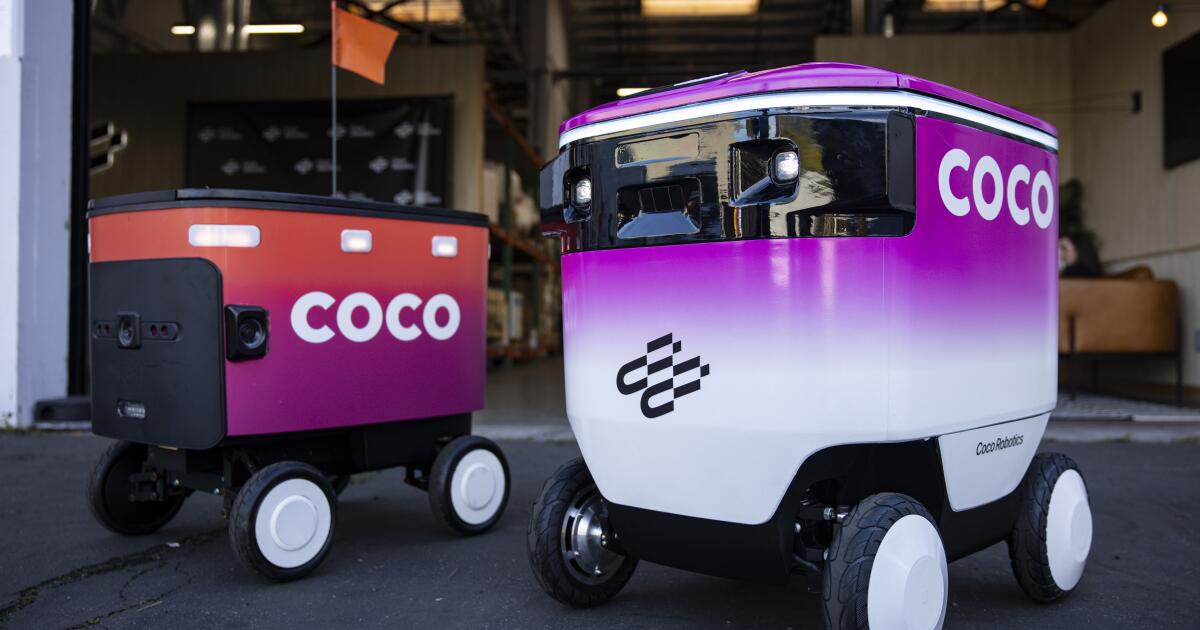
A new delivery bot is coming to L.A., built stronger to survive in these streets

Soho House sued after bartender alleges she was ‘drugged and raped’ by her supervisor
How to have the best Sunday in L.A., according to Andy Richter

Florida High School Football Rankings: Top 25 teams – Oct. 21

Cleary's 21 help Le Moyne down Central Connecticut State 69-64 in OT

How old is Bo Nix? What to know about Oregon quarterback ahead of 2024 NFL Draft

99th annual Pony Swim held in Virginia

Indiana Members Credit Union announced as new anchor tenant at Bottleworks District

Israel strikes two schools in Iran, killing more than 50 people

Anthropic CEO says he’s sticking to AI “red lines” despite clash with Pentagon

ICE blasts Washington mayor over directive restricting immigration enforcement

Did the EU bypass Hungary’s veto on Ukraine’s €90 billion loan?

How the federal government is painting immigrants as criminals on social media
-

 World2 days ago
Exclusive: DeepSeek withholds latest AI model from US chipmakers including Nvidia, sources say
-

 Massachusetts3 days ago
Mother and daughter injured in Taunton house explosion
-

 Montana1 week ago
2026 MHSA Montana Wrestling State Championship Brackets And Results – FloWrestling
-

 Louisiana5 days ago
Wildfire near Gum Swamp Road in Livingston Parish now under control; more than 200 acres burned
-

 Denver, CO3 days ago
10 acres charred, 5 injured in Thornton grass fire, evacuation orders lifted
-

 Technology1 week ago
YouTube TV billing scam emails are hitting inboxes
-

 Technology1 week ago
Stellantis is in a crisis of its own making
-

 Politics1 week ago
OpenAI didn’t contact police despite employees flagging mass shooter’s concerning chatbot interactions: REPORT