Lifestyle
Why Patricia Highsmith's most famous creature, Tom Ripley, continues to fascinate


Andrew Scott plays Tom Ripley in the new Netflix series, Ripley, drawn from Patricia Highsmith’s novel.
Lorenzo Sisti/Netflix © 2021
hide caption
toggle caption
Lorenzo Sisti/Netflix © 2021

Andrew Scott plays Tom Ripley in the new Netflix series, Ripley, drawn from Patricia Highsmith’s novel.
Lorenzo Sisti/Netflix © 2021
For a total psychopath, Tom Ripley is remarkably popular. As we near the 25th anniversary of the acclaimed Oscar-nominated big screen adaptation of Patricia Highsmith’s most infamous creation, The Talented Mr. Ripley, Netflix has released a striking new reimagining, simply titled Ripley. Sinister and visually stunning, the series reminds us why the book continues to influence popular culture.
Through seven decades, Highsmith’s novel, The Talented Mr. Ripley has grown in allure as a masterwork of American noir, boosted by – but distinct from – its adaptations. The core story is always the same: A wealthy man enlists fraudster Tom Ripley, his son’s distant acquaintance, to travel to Italy and woo his errant, playboy son back to the fold; but rather than returning Dickie to his family, an envious Tom disposes of him and assumes his identity. Other murders follow to cover the first.
This bloody-minded serial killer fantasist and antisocial social climber would become Patricia Highsmith’s best known and best loved creation. She published five Ripley novels in all from 1955 to 1991, the last a few years before her death. Since his debut, her all-American psychopath has inspired six screen adaptations, a play by Phyllis Nagy, and a musical staging. That legacy is a testament to Ripley’s complicated appeal – amoral, unassuming and audacious — and Highsmith’s scalpel-sharp writing. There’s something irresistible about an unapologetic grifter, who seizes the chance at a better life by stealing someone else’s. The text is rich enough to handle wildly different interpretations that feel true to the original and brilliant in their own right.
A window into Ripley’s roots
In the first Ripley novel, one childhood scene is especially vivid. When he was 12, and his parents long dead, Tom’s reluctant guardian Aunt Dottie made him get out of her car and run an errand on foot while stuck in traffic. When the cars started moving again, Tom was forced into “running between huge, inching cars, always about to touch the door of Aunt Dottie’s car and never being quite able to…” Instead of waiting, his aunt “had kept inching along as fast as she could go…” Worse, she taunted him, “yelling, ‘Come on, come on, slowpoke!’ out the window.” The memory ends with Tom in teary frustration and his aunt hurling a slur at him: “Sissy! He’s a sissy from the ground up. Just like his father!”
This story bubbles up into the memory of the adult con man Tom Ripley while he’s lying on a ship deck chair on the way to Europe. Buoyed in body and spirit by the luxury and abundance of his surroundings, Tom starts to plot a brighter future for himself. But he keeps returning to past indignities, and that cruel vignette stands out. Looking back from his comfortable perch, Ripley thinks, “It was a wonder he had emerged from such treatment as well as he had.” This isn’t justification, just a part of Ripley’s essence – Ripley as a vulnerable boy rather than cipher or leech or thief, a man whose emotional and physical deprivations curdle into resentment and violence.
Andrew Scott as Tom Ripley in the Netflix series Ripley.
Philippe Antonello/Netflix © 2023
hide caption
toggle caption
Philippe Antonello/Netflix © 2023
That window into Ripley’s roots is one reason I loved re-reading the novel in the lead up to a new adaptation. Highsmith illuminates the inner life of what she recognized as her “psychopath hero” with identification rather than judgment (Highsmith was openly enamored of her creation). That intense interiority is one reason Highsmith is often credited with helping reinvent and popularize the psychological thriller, a genre with roots in the 19th century, and why her influence persists despite a deservedly controversial reputation. Her debut novel became Hitchcock’s Strangers on a Train (1951) less than a year after publication, and her 1957 novel Deep Water appears on The Atlantic’s list of 100 Great American novels.
With Ripley, the narration lives outside of Tom but close enough for dissection. We learn that he’s a loner but not completely, that he gets antsy around people, only able to sustain a performance of normalcy for so long. He’s caught between a need for independence born of his smothering yet loveless upbringing and an aching desire for other people’s good regard.
In proximity to beauty and privilege but not of it, Tom’s neediness escalates. He’s ruthless and amoral, but human and self-conscious. He sobs! And he yearns.. Scene by masterful scene, sentence by sentence, with each disturbing thought and memory, Highsmith reveals how Ripley’s psyche veers out of bounds, a slow drip punctuated by shocking jumps. When Dickie and Tom give a taxi home to a local girl they bump into, and she thanks them, calling them the nicest Americans she’s ever met, Tom remarks to Dickie, “You know what most crummy Americans would do in a case like that—rape her.” It’s a sharp kick in the midst of banality.
Worse, when real violent thoughts finally result in action, Tom revels like a pig in mud in his stolen persona. Feeling “blameless and free,” he likens his confidence in Dickie’s shoes to how “a fine actor probably feels when he plays an important role on a stage with the conviction that the role he is playing could not be played better by anyone else.” The great beauty of Highsmith’s novel lies in moments like this, illuminating the dark recesses of a psyche spinning out of control.
A story ripe for retelling
A portrait this faceted begs for retelling and reinvention — it’s a dream role for an actor — but the text also defies total capture. Highsmith could make a two-act play out of the domestic symbolism and social psychological dynamics of Dickie purchasing a refrigerator.
The beauty of the 1999 movie and 2024 series interpretations of Ripley, despite this high bar, is that they’re fully formed artworks of their own.
Gwyneth Paltrow and Jude Law in the film The Talented Mr. Ripley.
Pictorial Press Ltd / Alamy Stock Photo
hide caption
toggle caption
Pictorial Press Ltd / Alamy Stock Photo
Netflix’s series has both the text and the sublimely entertaining 1999 movie with its constellation of Hollywood stars to live up to. Matt Damon and Jude Law were at the height of their powers as Tom Ripley and Dickie Greenleaf (Law earned a best supporting actor Oscar nomination), and Gwyneth Paltrow was incandescent and multidimensional as Dickie’s girlfriend Marge. They’re memorably supported by Cate Blanchette and Philip Seymour Hoffman as trust fund-babies abroad. Their production is gorgeously shot in the sun-drenched Amalfi coast and the Oscar nominated soundtrack beautifully amplifies the emotion and story. In Anthony Minghella’s screenplay, when the nastiness and violence emerge from Dickie as well as Tom it’s an arresting aberration against this deliberately effervescent, candy-colored backdrop.
The appeal of Minghella’s acclaimed and popular film has more than endured, but it’s not the only classic iteration of Ripley’s debut. The first significant big screen rendering was the 1960 French thriller Purple Noon, starring Alain Delon as a Ripley with beauty that rivals Dickie’s. There are three less celebrated adaptations of other Ripley novels. 2023’s Saltburn wasn’t a Ripley reimagining but its story of upper class ruin at the hands of an interloper seem to spring from a similar well. Plus, the film’s most audacious interlude reads as an homage to Jude Law and Matt Damon’s homoerotic bathtub scene, and the movie and discourse around added new heat to the Highsmith mystique.
Anthony Minghella, far left, director of the film “The Talented Mr. Ripley,” poses with cast members, from left, Matt Damon, Jude Law, Gwyneth Paltrow, Cate Blanchett and Philip Seymour Hoffman at the premiere of the film on Dec. 12, 1999, in the Westwood section of Los Angeles.
Chris Pizzello/AP
hide caption
toggle caption
Chris Pizzello/AP
Anthony Minghella, far left, director of the film “The Talented Mr. Ripley,” poses with cast members, from left, Matt Damon, Jude Law, Gwyneth Paltrow, Cate Blanchett and Philip Seymour Hoffman at the premiere of the film on Dec. 12, 1999, in the Westwood section of Los Angeles.
Chris Pizzello/AP
Despite all that history, the pedigreed new Netflix production successfully forges its own haunting vision of Ripley. Written and directed by Steve Zaillian (screenwriter of Schindler’s List and The Irishman), Ripley (mostly) benefits from having more space to breathe than the film – and from Andrew Scott’s unflinching performance.
Leaving the Hot Priest of Fleabag fame behind, Scott gives a harder, colder interpretation of the title role. Though significantly older than Highsmith’s 25-year-old antihero, the 47-year-old BAFTA winner Scott (All of Us Strangers, Sherlock) fully embodies the brooding and seething Ripley. Rather than charming and boyish, Netflix’s Tom Ripley is visibly creased and battered. Instead of Highsmith’s peevish 25-year-old, who notices with pleasure and opportunism physical resemblances with his privileged friend, Ripley and Dickie’s relationship is more clearly grifter and target. Ripley director Zaillan also advances the timeline to 1961, plunging Ripley into a more modern and edgy world.
Scott is well supported by Johnny Flynn (Emma) as a feckless Dickie, and Dakota Fanning, who delivers a mannered and pricklier Marge, the role that Gwyneth Paltrow made famous. If there’s one flaw, it’s that Ripley masters the style and techniques of Hitchcockian noir, without its momentum. This series’ slow deliberate pace and eerie quiet can sometimes feel like a slog.
Still, Ripley‘s performances and striking style elevate the series. Rendered in stark Black and white tones, each shot is as visually arresting as the best still photo. Anthropological and artistic, it’s the opposite of Anthony Minghella’s bright Italian playground presided over by Jude Law as a golden god. This approach transforms even the most ordinary scene —a cat on a bench in a Roman rooming house — into a foreboding tableau. The noirish visuals are the perfect look for this seedier and more cerebral thriller. So too are the peeling paint, decaying edifices, and too many steps on which the camera lingers. All together, the aesthetic looks like something out of an avant-garde European movie like Jean Cocteau’s La Belle et La Bête or a painting by Caravaggio. The series significantly expands on what Highsmith wrote about Tom’s relationship with high art, spinning the idea that he had “discovered an interest in paintings” from emulating Dickie into an obsessive identification with a 17th-century Italian painter known for his bloody and brutal canvases, interplay of shadow and light, and for murder. It’s an ingenious representation of Tom’s descent on screen.
With these inspired creative choices, the Anthony Minghella film and the Netflix series stand on their own. But if you have the inclination, the two major screen productions and the novel form a phenomenal triple bill.
A slow runner and fast reader, Carole V. Bell is a cultural critic and communication scholar focusing on media, politics and identity. You can find her on Twitter @BellCV.






Jessie Buckley has been nominated for an Academy Award for best actress for her portrayal of William Shakespeare’s wife in Hamnet.
Kate Green/Getty Images
hide caption
toggle caption
Kate Green/Getty Images
Actor Jessie Buckley says she’s always been drawn to the “shadowy bits” of her characters — aspects that are disobedient, or “too much.” Perhaps that’s what led her to play Agnes, the wife of William Shakespeare, in Hamnet.
Buckley says the film, which is based on Maggie O’Farrell’s 2020 novel, offered a chance to counter a common narrative about the playwright’s wife: that she “had kept him back from his genius,” Buckley says.

But, she adds, “What Maggie O’Farrell so brilliantly did, not just with Agnes and Shakespeare’s wife, but also with Hamnet, their son, was to bring these people … and give them status beside this great man. … [And] give the full landscape of what it is to be a woman.”
The film is nominated for eight Academy Awards, including best actress for Buckley. In it, she plays a woman deeply connected to nature, who faces conflicts in her marriage, as well as the death of their son Hamnet.
Buckley found out she was pregnant a week after the film wrapped. She’s since given birth to her first child, a daughter.

“The thing that this story offered me, that brought me into this next chapter of my life as a mother was tenderness,” she says. “A mother’s tenderness is ferocious. To love, to birth is no joke. To be born is no joke. And the minute something’s born into the world, you’re always in the precipice of life and death. That’s our path. … I wanted to be a mother so much that that overrode the thought of being afraid of it.”

Jessie Buckley stars as Agnes and Joe Alwyn plays her brother Bartholomew in Hamnet.
Courtesy of Focus Features/Courtesy of Focus Features
hide caption
toggle caption
Courtesy of Focus Features/Courtesy of Focus Features
Interview highlights
On filming the scene where she howls in grief when her son dies
I didn’t know that that was going to happen or come out, it wasn’t in the script. I think really [director] Chloé [Zhao] asked all of us to dare to be as present as possible. Of course, leading up to it, you’re aware this scene is coming, but that scene doesn’t stand on its own. By the time I’d met that scene, I had developed such a deep bond with Jacobi Jupe, who plays Hamnet, and [co-stars] Paul [Mescal] and Emily Watson, and all the children and we really were a family. And Jacobi Jupe who plays Hamnet is such an incredible little actor and an incredible soul, and we really were a team. …

The death of a child is unfathomable. I don’t know where it begins and ends. Out of utter respect, I tried to touch an imaginary truth of it in our story as best I could, but there’s no way to define that kind of grief. I’m sure it’s different for so many people. And in that moment, all I had was my imagination but also this relationship that was right in front of me with this little boy and that’s what came out of that.
On what inspired her to pursue singing growing up
I grew up around a lot of music. My mom is a harpist and a singer and my dad has always been passionate about music, so it was always something in our house and always something that was encouraged. … Early on, I have very strong memories of seeing and hearing my mom sing in church and this quite intense mercurial conversation that would happen between her, the story and the people that would listen to her. And at the end of it, something had been cracked between them and these strangers would come up with tears in their eyes. And I guess I saw the power of storytelling through my mom’s singing at a very young age, and that was definitely something that made me think I want to do that.
On her first big break performing as a teen on the BBC singing competition I’d Do Anything — and being criticized by judges about her physical appearance
I was raw. I hadn’t trained. I had a lot to learn and to grow in. I was only 17. I think there was part of their criticism which I think was destructive and unfair when it became about my awkwardness, or they would say I was masculine and send me to kind of a femininity school. … They sent me to [the musical production of] Chicago to put heels on and a leotard and learn how to walk in high heels, which was pretty humiliating, to be honest, and I’m sad about that because I think I was discovering myself as a young woman in the world and wasn’t fully formed. … I was different. I was wild, I had a lot of feeling inside me. I could hardly keep my hands beside myself and I think to kind of criticize a body of a young woman at that time and to make her feel conscious of that was lazy and, I think, boring.
On filming parts of the 2026 film The Bride! while pregnant
I really loved working when I was pregnant. I thought it was a pretty wild experience, especially because I was playing Mary Shelley and I was talking about [this] monstrosity, and here I was with two heartbeats inside me. Becoming a mom and being pregnant did something, I think, for me. My experience of it, it’s so real that it really focuses [me to be] allergic to fake or to disconnection.
Since my daughter has come and I know what that connection is and the real feeling of being in a relationship with somebody … as an actress, it’s very exciting to recognize that in yourself and really take ownership of yourself.
I’m excited to go back and work on this other side of becoming a mother in so many ways, because I’ve shed 10 layers of skin by loving more and experiencing life in such a new way with my daughter. I’m also scared to work again because it’s hard to be a mother and to work. That’s like a constant tug because I love what I do and I’m passionate and I want to continue to grow and learn and fill those spaces that are yet to be filled — and also be a mother. And I think every mother can recognize that tug.
On the possibility of bringing her daughter to travel with her as she works
I haven’t filmed for nearly a year and I cannot wait. I’m hungry to create again. And my daughter will come with me. She’s seven months, so at the moment she can travel with us and it’s a beautiful life. And she meets all these amazing people and I have a feeling that she loves life and that’s a great thing to see in a child. And I hope that’s something that I’ve imparted to her in the short time that she’s been on this earth is that life is beautiful and great and complex and alive and there’s no part of you that needs to be less in your life. You might have to work it out, but it’s worth it.
Lauren Krenzel and Susan Nyakundi produced and edited this interview for broadcast. Bridget Bentz, Molly Seavy-Nesper and Beth Novey adapted it for the web.

Bruce Campbell
I’m Battling Cancer
Published
Bruce Campbell has revealed he has cancer, but says it’s a type that’s treatable, though not curable.
“The Evil Dead” actor shared the news Monday in a message to fans, writing, “Hi folks, these days, when someone is having a health issue, it’s referred to as an ‘opportunity,’ so let’s go with that — I’m having one of those.” He continued, “It’s also called a type of cancer that’s ‘treatable’ not ‘curable.’ I apologize if that’s a shock — it was to me too.”
Campbell said he wouldn’t go into further detail about his diagnosis, but explained his work schedule will be changing. “Appearances and cons and work in general need to take back seat to treatment,” he wrote, adding he plans to focus on getting “as well as I possibly can over the summer.”
As a result, Campbell says he has to cancel several convention appearances this summer, noting, “Treatment needs and professional obligations don’t always go hand-in-hand.”
He says his plan is to tour this fall in support of his new film, “Ernie & Emma,” which he stars in and directs.
Ending on a determined note, Campbell told fans, “I am a tough old son-of-a-bitch … and I expect to be around a while.”

Neve Campbell in Scream 7.
Paramount Pictures
hide caption
toggle caption
Paramount Pictures
The OG Scream Queen Neve Campbell returns. Scream 7 re-centers the franchise back on Sidney Prescott. She has a new life, a family, and lots of baggage. You know the drill: Someone dressing up as the masked slasher Ghostface comes for her, her family and friends. There’s lots of stabbing and murder and so many red herrings it’s practically a smorgasbord.
Follow Pop Culture Happy Hour on Letterboxd at letterboxd.com/nprpopculture

Commentary: Will Klein isn’t surprised he saved the Dodgers’ World Series dynasty

Is Iran expanding attacks to target energy and civilian sites in the Gulf?

Trump claims US stockpiles mean wars can be fought ‘forever’; Kristi Noem testifies before Congress – US politics live

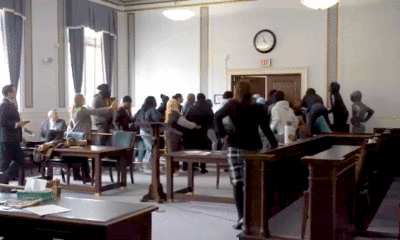
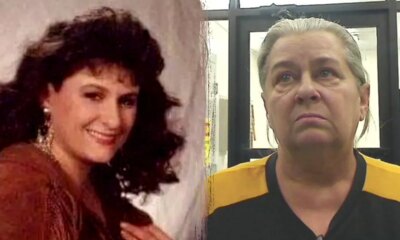
Ohio courtroom devolves into chaos after sentencing in death of teen

Travis County DA faces renewed ‘soft on crime’ criticism after career criminal charged with murder

Florida High School Football Rankings: Top 25 teams – Oct. 21

Cleary's 21 help Le Moyne down Central Connecticut State 69-64 in OT

How old is Bo Nix? What to know about Oregon quarterback ahead of 2024 NFL Draft

99th annual Pony Swim held in Virginia

Indiana Members Credit Union announced as new anchor tenant at Bottleworks District
Is Iran expanding attacks to target energy and civilian sites in the Gulf?
Trump claims US stockpiles mean wars can be fought ‘forever’; Kristi Noem testifies before Congress – US politics live

War in the Middle East: Iran’s broad retaliation in the Gulf • FRANCE 24 English

Trump sends official notification to Congress on strikes against Iran

Unexpected birth brings hope to near-extinct Amazon tribe
-

 World5 days ago
Exclusive: DeepSeek withholds latest AI model from US chipmakers including Nvidia, sources say
-

 Massachusetts6 days ago
Mother and daughter injured in Taunton house explosion
-

 Denver, CO6 days ago
10 acres charred, 5 injured in Thornton grass fire, evacuation orders lifted
-

 Louisiana1 week ago
Wildfire near Gum Swamp Road in Livingston Parish now under control; more than 200 acres burned
-

 Oregon4 days ago
2026 OSAA Oregon Wrestling State Championship Results And Brackets – FloWrestling
-

 Technology1 week ago
Arturia’s FX Collection 6 adds two new effects and a $99 intro version
-

 News1 week ago
Video: How Lunar New Year Traditions Take Root Across America
-

 Florida2 days ago
Florida man rescued after being stuck in shoulder-deep mud for days