Lifestyle
What’s better for the climate: A paper book, or an e-reader?

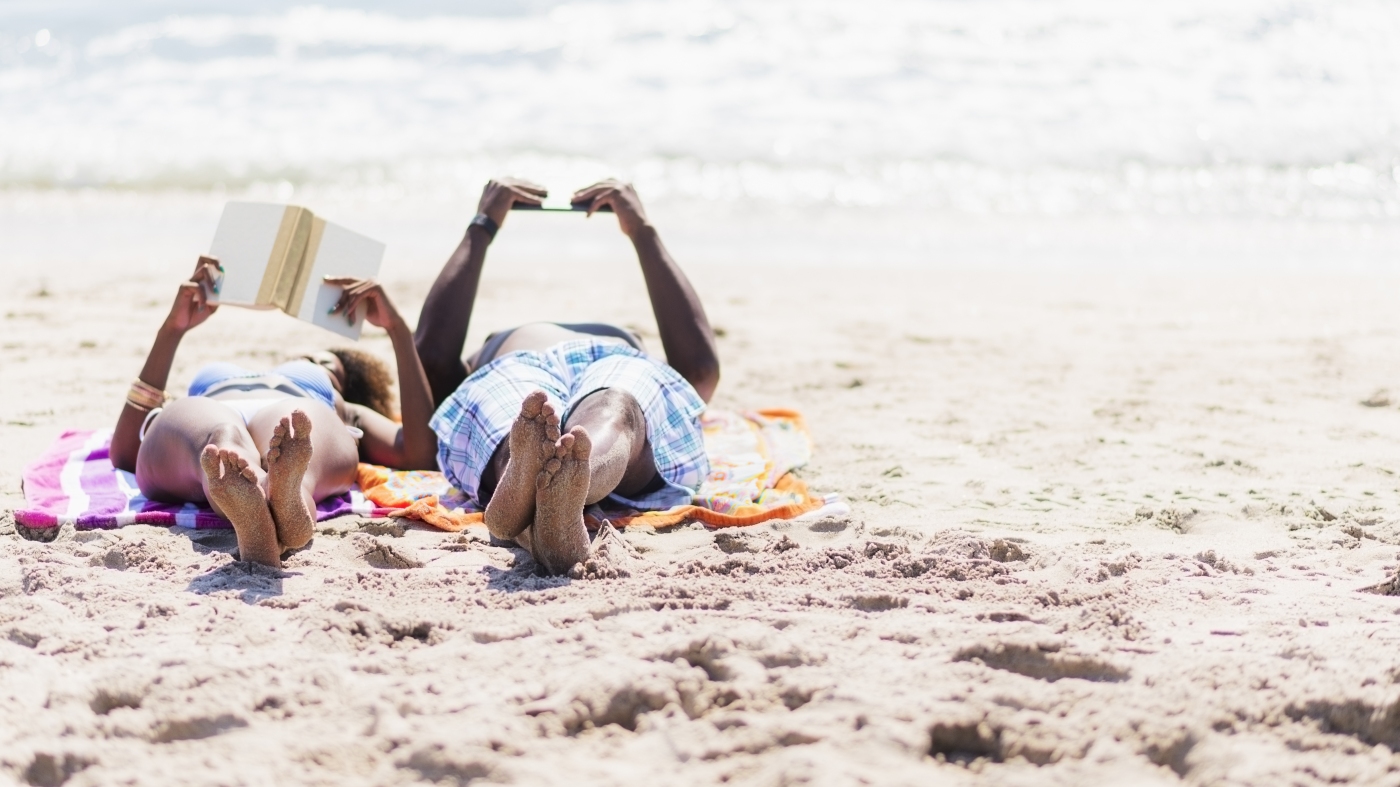
In the face of human-caused climate change, paperbacks and e-readers each have pros and cons.
JGI/Daniel Grill/Getty Images
hide caption
toggle caption
JGI/Daniel Grill/Getty Images
The summer reading season is here.
Some people will opt for paperbacks because they’re easy to borrow and share. Others will go for e-readers, or audiobooks streamed on a phone.
But which is the more environmentally sustainable option? Reading’s carbon footprint is not large compared to other things people do, like travel, and it isn’t something most people consider when choosing how to read a book. But for those looking for small changes in their lives to reduce their impact on the climate, it might be worth exploring how the ways we choose to read books affect the planet.
A complicated question to answer
Whether it’s better to read books in print or on a device is complicated, because of the complex interplay of the resources involved across the entire lifecycle of a published work: how books and devices are shipped, what energy they use to run, if they can be recycled.
Digital reading is on the rise — especially audiobooks. According to the Association of American Publishers, they now capture about the same share of the total US book market as e-books — roughly 15%. But print is still by far the most popular format.

“Publishers are interested in preserving the business that they’ve created over hundreds of years,” said Publishers Weekly executive editor Andrew Albanese, explaining why the industry is focusing most of its efforts on improving the sustainability of paperback and hardcover books, rather than digital formats. “They are looking to run those print book businesses as efficiently as possible, as cleanly as possible, as green as possible.”
On the one side: traditional book publishing
Traditional print publishing comes with a high carbon footprint.
According to 2023 data from the literary industry research group WordsRated, when it comes to pulp and paper, print book publishing is the world’s third-largest industrial greenhouse gas emitter, and 32 million trees are felled each year in the United States to make paper for books. Then there’s the printing and shipping — to say nothing of the many books that are destroyed because they remain unsold.
Although it’s standard practice in the industry, publishers don’t want to destroy books. So instead, many are donating unsold copies, switching to on-demand printing, or, like Chronicle Books, are reducing their initial print runs to see how well the titles sell before they print more.
“We felt that it was better to have a higher cost and have less waste,” said Chronicle Books president, Tyrrell Mahoney.
Chronicle Books, like many other publishers, is also trying to use more sustainable paper.
“We have this great partner in India who has now figured out how to use cotton-based up-cycled materials to print as paper,” Mahoney said.
Publishers are also rethinking book design. It might be a surprise, but certain fonts can be more climate-friendly by using less ink and less paper.

Harper Collins has introduced sustainable fonts that use less ink.
Harper Collins/Harper Collins
hide caption
toggle caption
Harper Collins/Harper Collins
“So far, these subtle, imperceptible tweaks have saved more than 200 million pages across 227 titles since September,” said Harper Collins’ senior director of design Lucy Albanese. NPR could not independently verify these page savings.
On the other: digital publishing
All well and good. But digital reading seems to have a considerable eco-advantage over print because it is paperless, so it saves trees, pulping and shipping. Moreover, tech companies that make e-readers such as Amazon, which sells the market-leading Kindle e-reader, offer recycling programs for old devices.

“By choosing e-books as an alternative to print, Kindle readers helped save an estimated 2.3 million metric tons of carbon emissions over a two year period,” said Corey Badcock, head of Kindle product and marketing. NPR could not independently verify these emissions reductions.
But digital devices also come with a substantial carbon footprint, predominantly at the manufacturing stage. Their cases are made with fossil-fuel-derived plastics and the minerals in their batteries require resource-heavy mining.
The short answer to which is better: it depends
“It’s not cut and dried,” said Mike Berners-Lee, a professor of sustainability at Lancaster Environment Centre in the United Kingdom, of the comparative climate friendliness of digital versus print reading.
Berners-Lee, the author of The Carbon Footprint of Everything, said the average e-reader has a carbon footprint of around 80 pounds.
“This means that I’ve got to read about 36 small paperback books-worth on it before you break even,” he said.

Figuring out whether to take a digital device or a paperback to the beach ultimately depends on how voraciously you read.
“If you buy an e-reader and you read loads and loads of books on it, then it’s the lowest carbon thing to do,” Berners-Lee said. “But if I buy it, read a couple of books, and decided that I prefer paperback books, then it’s the worst of all worlds.”
Yet Berners-Lee said that reading is still, relatively speaking, a pretty sustainable activity — regardless of whether you read using an e-reader, phone or old-fashioned paperback.
Both audio and digital versions of this story were edited by Jennifer Vanasco. Isabella Gomez-Sarmiento mixed the audio version.



John Davidson attends the 2026 BAFTA Film Awards on February 22, 2026 in London, England.
Dominic Lipinski/Getty Images/Getty Images Europe
hide caption
toggle caption
Dominic Lipinski/Getty Images/Getty Images Europe
The British Academy Film Awards (BAFTAs), which were presented on Sunday evening at London’s Royal Festival Hall, have become embroiled in controversy after one of the guests shouted a racial slur, swear words and insults during the televised awards ceremony. The slur was kept in the BBC broadcast, which began airing two hours after the event, as is usual for these honors.
The source of the shouts was John Davidson, the real-life inspiration behind the film I Swear, which chronicles his life with Tourette syndrome, a neurodevelopmental disorder. I Swear was nominated for six prizes and won two BAFTA awards on Sunday, including a lead actor award for Robert Aramayo, who plays Davidson.
While Sinners stars Michael B. Jordan and Delroy Lindo were onstage presenting the award for visual effects, Davidson yelled out the n-word. The actors did not respond in the moment.

On Monday, BAFTA released a lengthy written apology, saying: “Our guests heard very offensive language that carries incomparable trauma and pain for so many. We want to acknowledge the harm this has caused, address what happened and apologize to all.”
The statement identified Davidson as the source of the outbursts. BAFTA said: “One of our guests, John Davidson MBE, has Tourette syndrome and has devoted his life to educating and campaigning for better understanding of this condition. Tourette syndrome causes involuntary verbal tics, that the individual has no control over. Such tics are in no way a reflection of an individual’s beliefs and are not intentional.
The statement continued: “Early in the ceremony a loud tic in the form of a profoundly offensive term was heard by many people in the room. Michael B. Jordan and Delroy Lindo were on stage at the time, and we apologize unreservedly to them, and to all those impacted. We would like to thank Michael and Delroy for their incredible dignity and professionalism.
“During the ceremony, John chose to leave the auditorium and watch the rest of the ceremony from a screen, and we would like to thank him for his dignity and consideration of others, on what should have been a night of celebration for him.”
According to the Tourette Association of America, between 10 and 15% of people living with the disorder have vocal tics that may include disturbing, insulting or inappropriate language, including swear words and slurs.
Davidson also shouted out other insults and profanity during the evening, according to Variety.

Referring to Davidson’s outbursts, host Alan Cumming responded from the podium, “You may have heard some strong and offensive language tonight.” He attributed the shouts to Davidson’s condition, adding: “We apologize if you were offended.”
Aramayo also won BAFTA’s EE Rising Star Award, and addressed some of Davidson’s outbursts in accepting that honor. Aramayo said, “John Davidson is the most remarkable man I’ve ever met. Tonight especially, I just want to say that the people living with Tourette syndrome…they need our support and understanding.”
The BAFTAs are broadcast on a tape delay. But the BBC did not edit the audible slur from its broadcast on the television channel BBC1 and on E! in the U.S. Nor did the BBC edit the archival version available in the U.K. on its BBC iPlayer platform until Monday.
On Monday, the BBC responded to NPR in a written statement: “Some viewers may have heard strong and offensive language during the BAFTA Film Awards. This arose from involuntary verbal tics associated with Tourette syndrome, and as explained during the ceremony, it was not intentional. We apologize that this was not edited out prior to broadcast and it will now be removed from the version on BBC iPlayer.”

Gerry Turner
Scores New $1M Pad With Fiancée Lana Sutton
Published
Gerry Turner is leveling up with fiancée Lana Sutton — the couple just dropped nearly $1 mil on a house together.
The former “Golden Bachelor” and his leading lady showed off the digs on IG, and the new-build stunner in the sought-after Chatham Village does not disappoint — five bedrooms, five bathrooms, and a sprawling 4,455 square feet.
It’s packed with perks, too — a dramatic two-story family room with a tile-surround fireplace, a luxe super shower in the main bath, and a massive game room. In other words, very much worth the seven-figure splurge … even if it took some convincing.
Gerry tells TMZ they toured the place several times but hesitated to make an offer. Plot twist — the builder called them up and asked what the hold-up was. Gerry says once they explained their concerns, the builder nudged them to go for it, which they did — and now they’re both on the deed, splitting it 50/50.
As for the wedding, it’s still happening. Gerry tells us they’re planning to tie the knot — just taking it slow and haven’t locked in a date yet.


Key Things To Watch For Tomorrow Night As Virginia Hosts NC State

Where Wisconsin basketball ranks in AP Poll following win over Iowa

West Virginia Senate Judiciary Committee holds public hearing on child welfare system

Wyoming Energy Authority Releases Coal Study

Crypto exchange Binance may have funded Iranian entities, reports say

Florida High School Football Rankings: Top 25 teams – Oct. 21

Cleary's 21 help Le Moyne down Central Connecticut State 69-64 in OT

How old is Bo Nix? What to know about Oregon quarterback ahead of 2024 NFL Draft

99th annual Pony Swim held in Virginia

Indiana Members Credit Union announced as new anchor tenant at Bottleworks District

House Dem compares Trump’s illegal immigration crackdown to ‘terrorism,’ vows to abolish ICE
Exclusive: European Parliament rejects minute of silence for French nationalist student
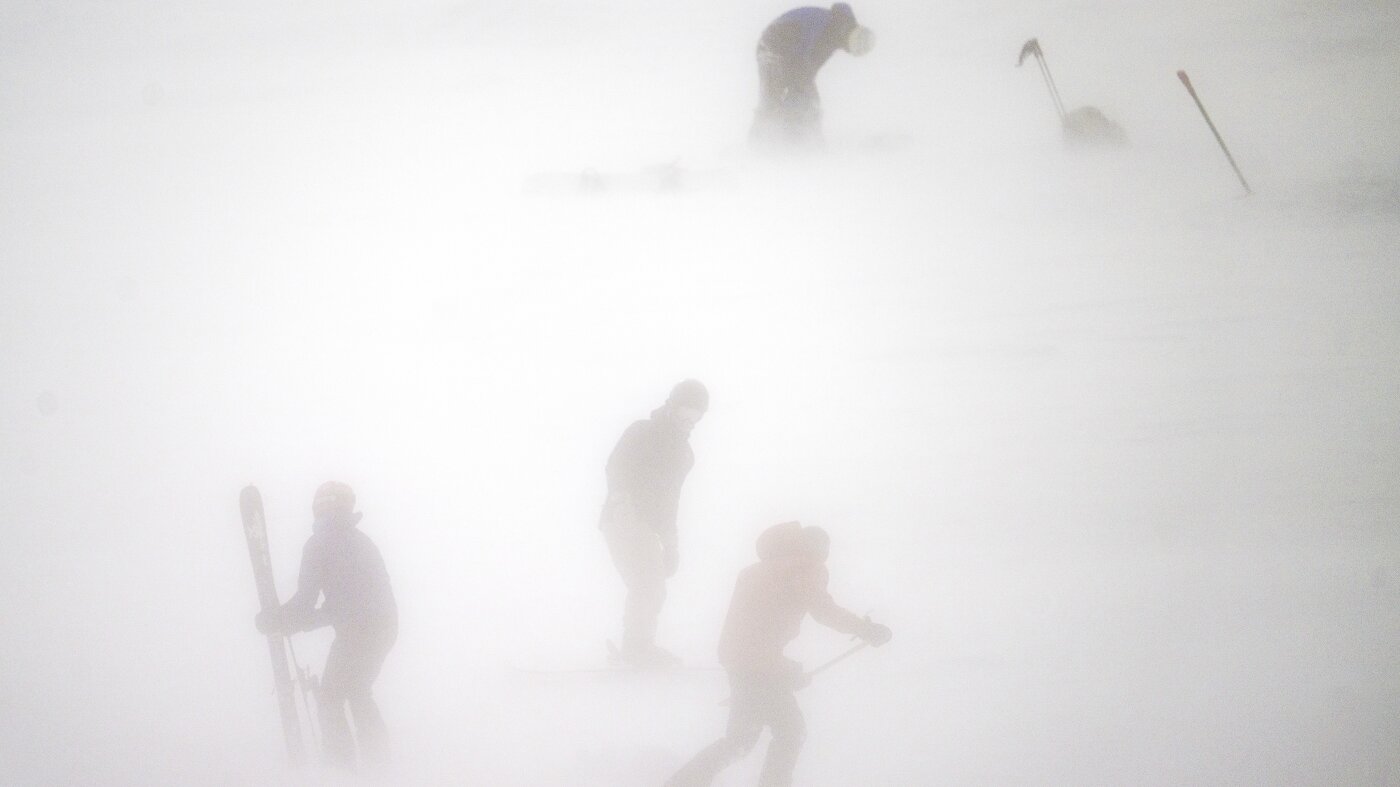
In pictures: Winter storm slams the east coast

Video: Why the Supreme Court Struck Down Trump’s Tariffs

Trump envoy rebukes Greenland leader for rejecting hospital ship proposal
-

 Montana4 days ago
2026 MHSA Montana Wrestling State Championship Brackets And Results – FloWrestling
-

 Science1 week ago
What a Speech Reveals About Trump’s Plans for Nuclear Weapons
-

 Oklahoma6 days ago
Wildfires rage in Oklahoma as thousands urged to evacuate a small city
-

 Technology3 days ago
YouTube TV billing scam emails are hitting inboxes
-

 Technology1 week ago
The DJI Romo robovac had security so poor, this man remotely accessed thousands of them
-
 Science1 week ago
Notoriously hazardous South L.A. oil wells finally plugged after decades of community pressure
-

 Education1 week ago
Video: Secret New York City Passage Linked to Underground Railroad
-

 World1 week ago
AU calls for end to ‘extermination’ of Palestinians, decries African wars