Lifestyle
Think online dating is a ‘numbers game’? You’re playing it all wrong, says this researcher


According to relationship scientist Paul Eastwick, online dating is a market where there are dramatic winners and losers. “I think our modern existence happens to pull from modes of interaction that really amp up the importance of mate value,” Eastwick said. “But it does not have to be this way, and for a long time, it was not this way.”

Shelf Help is a wellness column where we interview researchers, thinkers and writers about their latest books — all with the aim of learning how to live a more complete life.
This is the genesis of Eastwick’s decades-long research about how people initiate and maintain close relationships. His new book “Bonded by Evolution: The New Science of Love and Connection” argues against evolutionary psychology’s philosophy of dating and relationships — debunking ideas like money matters most to women, looks matter most to men and everyone has an inherent objective “mate value.” In his work, the University of California Davis psychology professor offers a dating and relationships alternative in which compatibility trumps all.

Since the dawn of his career, Eastwick has had more than one bone to pick with evolutionary psychology.
The theoretical approach, which studies human behavior, cognition and emotions as products of natural selection, depicts relationship formation as sales-like, highly gendered and strategy-based. That model, which Eastwick calls the “EvoScript,” has never squared with his view of close relationships.
The researcher has long viewed the EvoScript as outdated and exaggerated if not completely incorrect. But it was only a few years ago, when online communities of so-called incels started latching onto evolutionary psychology’s story of close relationships that he began to see the EvoScript as dangerous.
“It was upon realizing that there’s this fun house mirror version of [evolutionary] psych out there that I was like, I think it’s time,” Eastwick said. “There was a wake-up call for me that, we need a scientific book out there that’s going to bring the most contemporary science to people.”
In his work, Eastwick argues that desirability is subjective and unpredictable — and that all anyone really wants is a secure attachment bond that sustains them through good and bad seasons.
The Times talked to Eastwick about how to reimagine the dating “numbers game,” tips for better dates and why men and women ultimately want the same thing.
This interview has been condensed and edited for clarity.

“Bonded by Evolution” author Paul Eastwick.
(Alison Ledgerwood)
You write in your book that “online dating can bring the worst parts of dating to the fore by exaggerating gender differences and making you feel like a clearance item at the bottom of the bin.” What are the long-term and short-term psychological effects of that on people as they go through their dating lives?
“It makes dating feel a little bit like a job, like you’re making sales pitches, and you can set your sights high, but ultimately you’re going to have to settle. It makes the whole thing feel like you’re trying to get a deal, and I just think these are bad metaphors, especially if we want to be happy in the long run. But there is a slow burn approach that feels more like finding connection, opening oneself up, spending time getting to know other people sometimes just for the sake of getting to know other people. Part of what I want to do in the book is remind people that there are other ways — and those other ways also happen to be more democratic, for lack of a better word there — that pull for more idiosyncrasy and give more people a chance to find partners that will really appeal to them.
If you’re trying to tackle the EvoScript, as you call it, what is your thesis about dating?
My thesis is that, if we want to think about the nature of human relationships, how did people evolve to form close relationships, I would describe it as a search for compatibility in small groups. What people classically have looked for and what classically makes for the best, most satisfying pairings are finding and building something compatible with another person from a pretty limited range of options.
OK, so I need to meet people in person. I need to make friend groups. Where do you go to do that now, when things are expensive and a lot of life is online?
For somebody who’s heterosexual, if you’re a woman, it’s like, “OK, where am I gonna meet guys? Where are the guys out there?” Don’t worry if the guys are going to be there, because oftentimes when people meet partners, it’s like, friends of friends of friends, right? It’s all making connections. Maybe it’s sports, maybe it’s activities, maybe it’s a cooking class, maybe it’s a dancing class. Maybe it’s just calling back up the people from your last job that you haven’t seen in a while, getting together over drinks and making it a regular thing. I get it, people are really busy, and everything online is a draw. But the importance of hanging out with people in person, those loose acquaintances, that’s where so much of the magic happens.
People talk a lot about how it’s just a numbers game: You have to go on more dates, you have to swipe on more people. What’s your response to that?
It is a numbers game, but maybe, let’s think about the numbers like this. Rather than numbers of people, it’s numbers of interactions. So you could meet 12 people one time, or you could meet three people four times. I choose the second one, right? Meet fewer people more times. We’re still talking about numbers. We’re still talking about how much time you’re out there interacting with people, figuring out whether you click. But 20-minute coffee dates really pull for a snap judgment. In a perfect world, swiping right on somebody would mean I’m going to do a coffee date with you, and then we’re going to go to some interactive class, and then we’re going to go to a concert and I’m going to spend time with you in all three settings and kind of see how that goes in total and then assess it. So it’s not that the numbers game is misguided, you do have to get out there and try different things, but we often think, “Oh, I can just sample people really briefly, and eventually I’ll get lucky.” The smaller those samples are, the more painful this whole thing gets.
Coffee dates feel like interviews to me. But from a scientific standpoint, why do you recommend an activity-based date over the classic coffee date?
The best evidence that we have for what can you do to make yourself more appealing to someone is not to share your CV and impress them with those details. Do something that reveals a little bit about who you are, how you interact, how you relate to the world, and, best of all, something a little bit vulnerable about yourself. The 36 Questions test, sometimes called the Fast Friends procedure, is truly the best tool we have. Within an hour or two of something interactive, people have gotten to the point where they’re willing to talk about things that they regret, or things that they really like about the other person that they’ve just gotten to know. And this is all in that Fast Friends procedure. So when I think about people doing activities where their attention isn’t just on interview mode, it’s like, “Oh, we’re tackling something together,” it really decreases that self-promotion instinct, which is usually misguided.

In your book, you call compatibility “curated, cultivated and constructed.” Does that mean, to you, that you can theoretically be compatible with anyone?
If you take this idea to its extreme, if you push me, ultimately I land on probably. And of all the things I say that people are going to be resistant to, I think that’s the one that people are like, “No.” Again, I go back to the people involved in small groups. They made relationships work with the limited number of options that were available, and because we are creatures who engage in motivated reasoning, it is very, very possible to be happy with who you’re with, but that does not mean that people just get to turn off all of the alternatives that exist. I think the best way to think about it is, I think a lot of pairs have compatibility potential, but I also think that the many decisions along the way matter a lot.
If the idea of romantic destiny is, as you call it in your book, “the weakest idea ever promoted by scientists,” what is your number-one dating myth you feel your personal research has debunked?
That men and women want different things out of partnerships, that they’re either pulling for different traits or look like these totally different entities, I just think the evidence for this is completely wrong. We see differences when you ask men and women, “What do you want in a partner?” But when you look at the attributes that actually matter, it’s really amazing the extent to which men and women are similar. And it’s not to say that there are no differences, like there is a difference in the strength of the sex drive thing. It’s smaller than people say, but it is there. But if you think about, what do men and women want out of a close relationship? What they really want is somebody who’s going to be supportive, is going to celebrate my successes and is going to have my back.
How do people practically apply that in their dating lives?
Refocusing on attachment, I hope that reduces some of the heteropessimism out there in the world. We have arrived at this very bleak view of relations between men and women, like we see the world differently, we’re just always at odds. And boy, when you come at relationships with this attachment frame, and you look at the things that make people happy, men and women can absolutely build beautiful things working together, and they often do. Because we are creatures who attach, there is so much potential for genuine connection over a sustained period of time.
Do you have any predictions for what the future of dating might look like?
It certainly feels like people are getting tired of the apps and that they’re looking for more ways to socialize in person. I think that’s wonderful. I worry about what AI is going to do, like, is that going to feel so real that it causes our interactional muscles to atrophy? That’s the big question mark on the horizon. I’m not here to be grandpa, but I also hope that we don’t totally lose the ability to interact with real people.



new video loaded: Prada Peels Back the Layers at Milan Fashion Week
By Chevaz Clarke and Daniel Fetherston
February 27, 2026

Bill Cosby
Rape Accuser Says Cosby Won’t Take Stand At Trial
Published
Bill Cosby‘s rape accuser Donna Motsinger says the TV star can’t be bothered to show up to court for a trial in a lawsuit she filed against him.
According to new legal docs, obtained by TMZ. Motsinger says Bill will not testify in court … she claims it’s “because he does not care to appear.”

Motsinger says Bill won’t show his face at the trial either … and the only time the jury will hear from him will be a previously taped deposition.
As we previously reported, Motsinger claims Bill drugged and raped her in 1972. In the case, Bill admitted during a deposition that he obtained a recreational prescription for Quaaludes that he secured from a gynecologist at a poker game.
TMZ.com
Bill also said he planned to use the pills to give to women in the hopes of having sex with them.
Motsinger alleged Bill gave her a pill that she thought was aspirin. She claimed she felt off after taking it and said she woke up the next day in her bed with only her underwear on.
Here, it sounds like Motsinger wants to play the deposition for the jury.
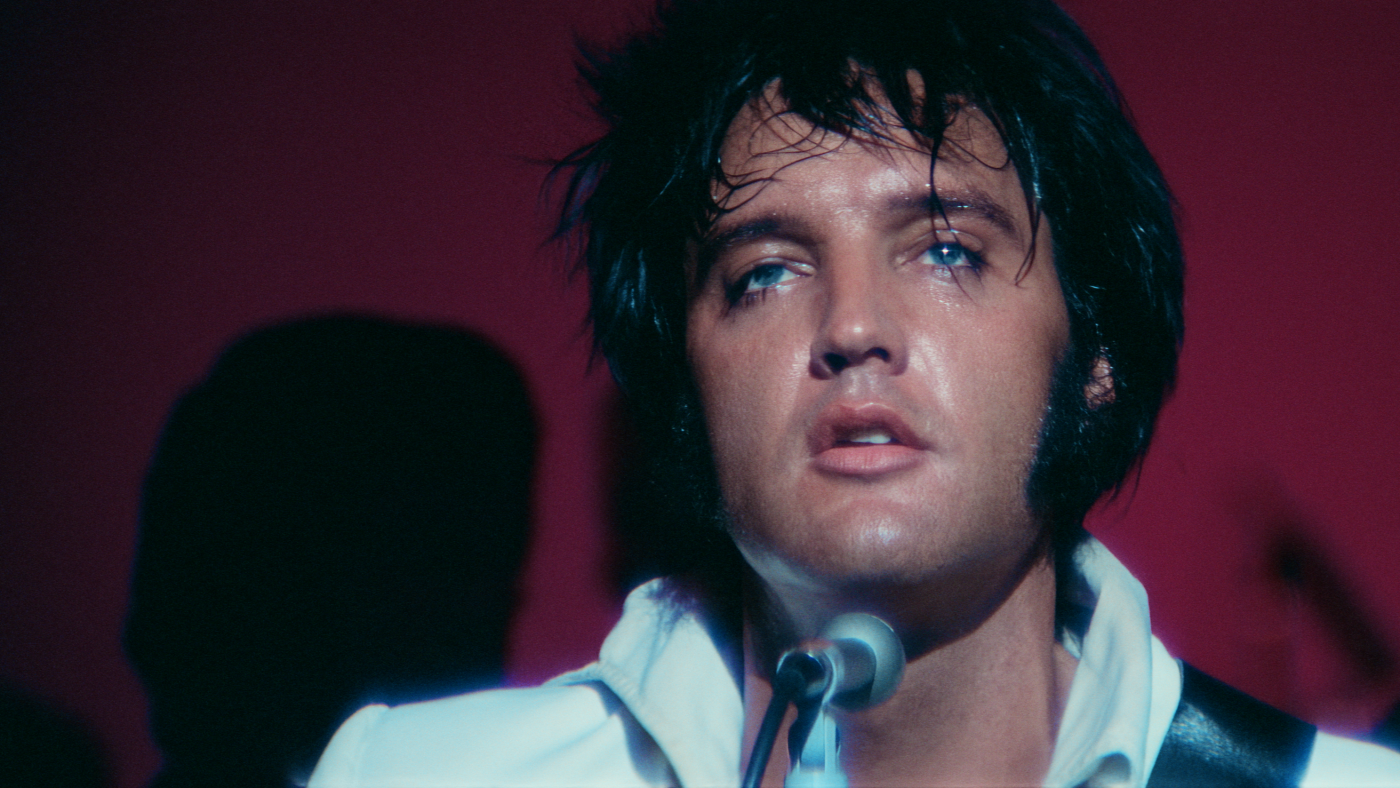
Elvis Presley in Las Vegas in Aug. 1970.
NEON
hide caption
toggle caption
NEON
“You are my favorite customer,” Baz Luhrmann tells me on a recent Zoom call from the sunny Chateau Marmont in Hollywood. The director is on a worldwide blitz to promote his new film, EPiC: Elvis Presley in Concert — which opens wide this week — and he says this, not to flatter me, but because I’ve just called his film a miracle.
See, I’ve never cared a lick about Elvis Presley, who would have turned 91 in January, had he not died in 1977 at the age of 42. Never had an inkling to listen to his music, never seen any of his films, never been interested in researching his life or work. For this millennial, Presley was a fossilized, mummified relic from prehistory — like a woolly mammoth stuck in the La Brea Tar Pits — and I was mostly indifferent about seeing 1970s concert footage when I sat down for an early IMAX screening of EPiC.
By the end of its rollicking, exhilarating 90 minutes, I turned to my wife and said, “I think I’m in love with Elvis Presley.”
“I’m not trying to sell Elvis,” Luhrmann clarifies. “But I do think that the most gratifying thing is when someone like you has the experience you’ve had.”
Elvis made much more of an imprint on a young Luhrmann; he watched the King’s movies while growing up in New South Wales, Australia in the 1960s, and he stepped to 1972’s “Burning Love” as a young ballroom dancer. But then, like so many others, he left Elvis behind. As a teenager, “I was more Bowie and, you know, new wave and Elton and all those kinds of musical icons,” he says. “I became a big opera buff.”
Luhrmann only returned to the King when he decided to make a movie that would take a sweeping look at America in the 1950s, ’60s, and ’70s — which became his 2022 dramatized feature, Elvis, starring Austin Butler. That film, told in the bedazzled, kaleidoscopic style that Luhrmann is famous for, cast Presley as a tragic figure; it was framed and narrated by Presley’s notorious manager, Colonel Tom Parker, portrayed by a conniving and heavily made-up Tom Hanks. The dark clouds of business exploitation, the perils of fame, and an early demise hang over the singer’s heady rise and fall.
It was a divisive movie. Some praised Butler’s transformative performance and the director’s ravishing style; others experienced it as a nauseating 2.5-hour trailer. Reviewing it for Fresh Air, Justin Chang said that “Luhrmann’s flair for spectacle tends to overwhelm his basic story sense,” and found the framing device around Col. Parker (and Hanks’ “uncharacteristically grating” acting) to be a fatal flaw.
Personally, I thought it was the greatest thing Luhrmann had ever made, a perfect match between subject and filmmaker. It reminded me of Oliver Stone’s breathless, Shakespearean tragedy about Richard Nixon (1995’s Nixon), itself an underrated masterpiece. Yet somehow, even for me, it failed to light a fire of interest in Presley himself — and by design, I now realize after seeing EPiC, it omitted at least one major aspect of Elvis’ appeal: the man was charmingly, endearingly funny.
As seen in Luhrmann’s new documentary, on stage, in the midst of a serious song, Elvis will pull a face, or ad lib a line about his suit being too tight to get on his knees, or sing for a while with a bra (which has been flung from the audience) draped over his head. He’s constantly laughing and ribbing and keeping his musicians, and himself, entertained. If Elvis was a tragedy, EPiC is a romantic comedy — and Presley’s seduction of us, the audience, is utterly irresistible.
Unearthing old concert footage
It was in the process of making Elvis that Luhrmann discovered dozens of long-rumored concert footage tapes in a Kansas salt mine, where Warner Bros. stores some of their film archives. Working with Peter Jackson’s team at the post-production facility Park Road Post, who did the miraculous restoration of Beatles rehearsal footage for Jackson’s 2021 Disney+ series, Get Back, they burnished 50-plus hours of 55-year-old celluloid into an eye-popping sheen with enough visual fidelity to fill an IMAX screen. In doing so, they resurrected a woolly mammoth. The film — which is a creative amalgamation of takes from rehearsals and concerts that span from 1970 to 1972 — places the viewer so close to the action that we can viscerally feel the thumping of the bass and almost sense that we’ll get flecked with the sweat dripping off Presley’s face.
This footage was originally shot for the 1970 concert film Elvis: That’s The Way It Is, and its 1972 sequel, Elvis on Tour, which explains why these concerts were shot like a Hollywood feature: wide shots on anamorphic 35mm and with giant, ultra-bright Klieg lights — which, Luhrmann explains, “are really disturbing. So [Elvis] was very apologetic to the audience, because the audience felt a bit more self conscious than they would have been at a normal show. They were actually making a movie, they weren’t just shooting a concert.”
Luhrmann chose to leave in many shots where camera operators can be seen running around with their 16mm cameras for close-ups, “like they’re in the Vietnam War trying to get the best angles,” because we live in an era where we’re used to seeing cameras everywhere and Luhrmann felt none of the original directors’ concern about breaking the illusion. Those extreme close-ups, which were achieved by operators doing math and manually pulling focus, allow us to see even the pores on Presley’s skin — now projected onto a screen the size of two buildings.
The sweat that comes out of those pores is practically a character in the film. Luhrmann marvels at how much Presley gave in every single rehearsal and every single concert performance. Beyond the fact that “he must have superhuman strength,” Luhrmann says, “He becomes the music. He doesn’t mark stuff. He just becomes the music, and then no one knows what he’s going to do. The band do not know what he’s going to do, so they have to keep their eyes on him all the time. They don’t know how many rounds he’s going to do in ‘Suspicious Minds.’ You know, he conducts them with his entire being — and that’s what makes him unique.”

Elvis Presley in Las Vegas in Aug. 1970.
NEON
hide caption
toggle caption
NEON
It’s not the only thing. The revivified concerts in EPiC are a potent argument that Elvis wasn’t just a superior live performer to the Beatles (who supplanted him as the kings of pop culture in the 1960s), but possibly the greatest live performer of all time. His sensual, magmatic charisma on stage, the way he conducts the large band and choir, the control he has over that godlike gospel voice, and the sorcerer’s power he has to hold an entire audience in the palm of his hands (and often to kiss many of its women on the lips) all come across with stunning, electrifying urgency.
Shaking off the rust and building a “dreamscape”
The fact that, on top of it all, he is effortlessly funny and goofy is, in Luhrmann’s mind, essential to the magic of Elvis. While researching for Elvis, he came to appreciate how insecure Presley was as a kid — growing up as the only white boy in a poor Black neighborhood, and seeing his father thrown into jail for passing a bad check. “Inside, he felt very less-than,” says Luhrmann, “but he grows up into a physical Greek god. I mean, we’ve forgotten how beautiful he was. You see it in the movie; he is a beautiful looking human being. And then he moves. And he doesn’t learn dance steps — he just manifests that movement. And then he’s got the voice of Orpheus, and he can take a song like ‘Bridge Over Troubled Water’ and make it into a gospel power ballad.
“So he’s like a spiritual being. And I think he’s imposing. So the goofiness, the humor is about disarming people, making them get past the image — like he says — and see the man. That’s my own theory.”
Elvis has often been second-classed in the annals of American music because he didn’t write his own songs, but Luhrmann insists that interpretation is its own invaluable art form. “Orpheus interpreted the music as well,” the director says.
In this way — as in their shared maximalist, cape-and-rhinestones style — Luhrmann and Elvis are a match made in Graceland. Whether he’s remixing Shakespeare as a ’90s punk music video in Romeo + Juliet or adding hip-hop beats to The Great Gatsby, Luhrmann is an artist who loves to take what was vibrantly, shockingly new in another century and make it so again.

Elvis Presley in Las Vegas in Aug. 1970.
NEON
hide caption
toggle caption
NEON
Luhrmann says he likes to take classic work and “shake off the rust and go, Well, when it was written, it wasn’t classical. When it was created, it was pop, it was modern, it was in the moment. That’s what I try and do.”
To that end, he conceived EPiC as “an imagined concert,” liberally building sequences from various nights, sometimes inserting rehearsal takes into a stage performance (ecstatically so in the song “Polk Salad Annie”), and adding new musical layers to some of the songs. Working with his music producer, Jamieson Shaw, he backed the King’s vocals on “Oh Happy Day” with a new recording of a Black gospel choir in Nashville. “So that’s an imaginative leap,” says Luhrmann. “It’s kind of a dreamscape.”
On some tracks, like “Burning Love,” new string arrangements give the live performances extra verve and cinematic depth. Luhrmann and his music team also radically remixed multiple Elvis songs into a new number, “A Change of Reality,” which has the King repeatedly asking “Do you miss me?” over a buzzing bass line and a syncopated beat.
I didn’t miss Elvis before I saw EPiC — but after seeing the film twice now, I truly do.

The Best Time To Drink Coffee for Weight Loss and a Faster Metabolism

Video: Prada Peels Back the Layers at Milan Fashion Week

Defense secretary Pete Hegseth designates Anthropic a supply chain risk

UN Human Rights Council chief cuts off speaker criticizing US-sanctioned official

ICE blasts Washington mayor over directive restricting immigration enforcement

Florida High School Football Rankings: Top 25 teams – Oct. 21

Cleary's 21 help Le Moyne down Central Connecticut State 69-64 in OT

How old is Bo Nix? What to know about Oregon quarterback ahead of 2024 NFL Draft

99th annual Pony Swim held in Virginia

Indiana Members Credit Union announced as new anchor tenant at Bottleworks District
ICE blasts Washington mayor over directive restricting immigration enforcement

Did the EU bypass Hungary’s veto on Ukraine’s €90 billion loan?
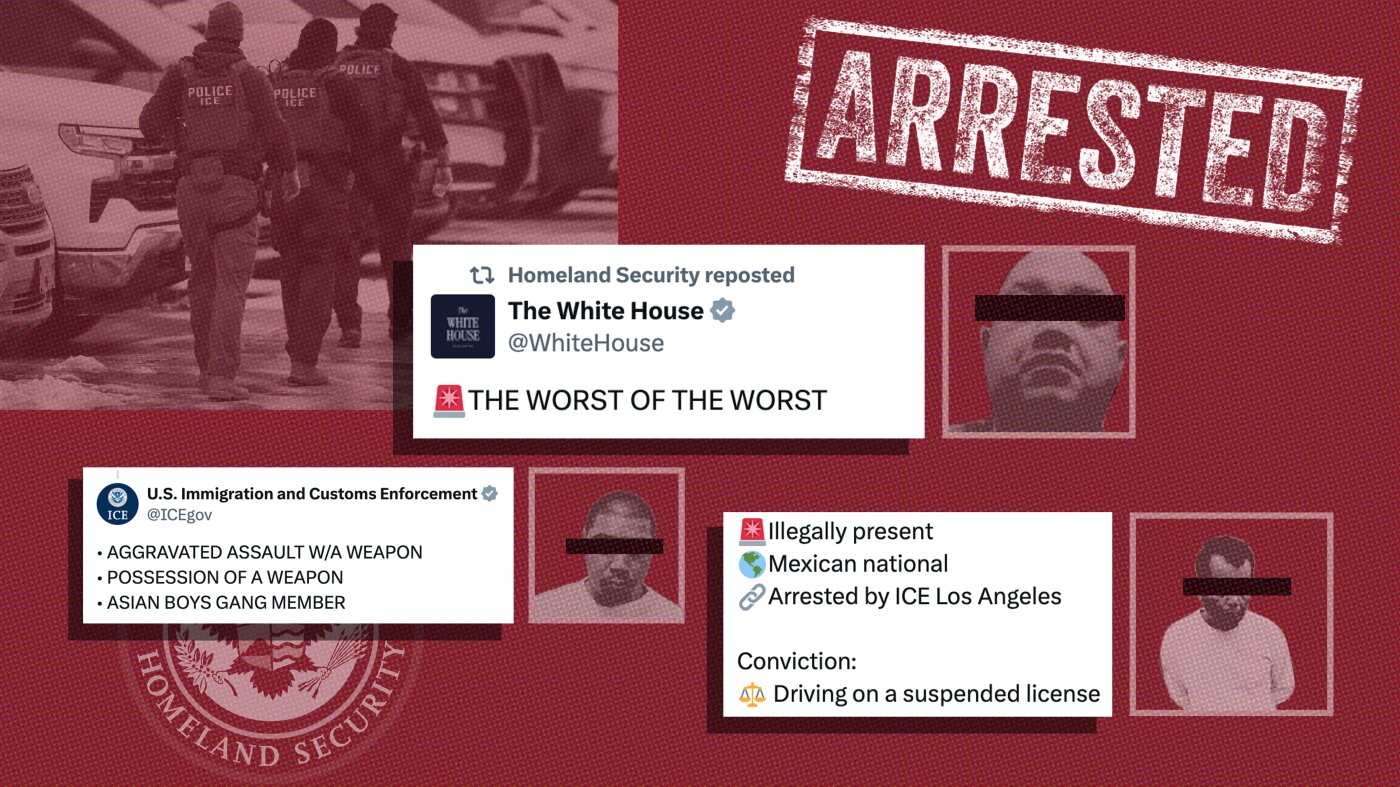
How the federal government is painting immigrants as criminals on social media

Where Iran’s ballistic missiles can reach — and how close they are to the US

Has India’s influence in Afghanistan grown under the Taliban?
-

 World2 days ago
Exclusive: DeepSeek withholds latest AI model from US chipmakers including Nvidia, sources say
-

 Massachusetts2 days ago
Mother and daughter injured in Taunton house explosion
-

 Montana1 week ago
2026 MHSA Montana Wrestling State Championship Brackets And Results – FloWrestling
-

 Louisiana5 days ago
Wildfire near Gum Swamp Road in Livingston Parish now under control; more than 200 acres burned
-

 Oklahoma1 week ago
Wildfires rage in Oklahoma as thousands urged to evacuate a small city
-

 Denver, CO2 days ago
10 acres charred, 5 injured in Thornton grass fire, evacuation orders lifted
-

 Technology7 days ago
YouTube TV billing scam emails are hitting inboxes
-

 Technology7 days ago
Stellantis is in a crisis of its own making