Lifestyle
The Hundreds at 20: An oral history

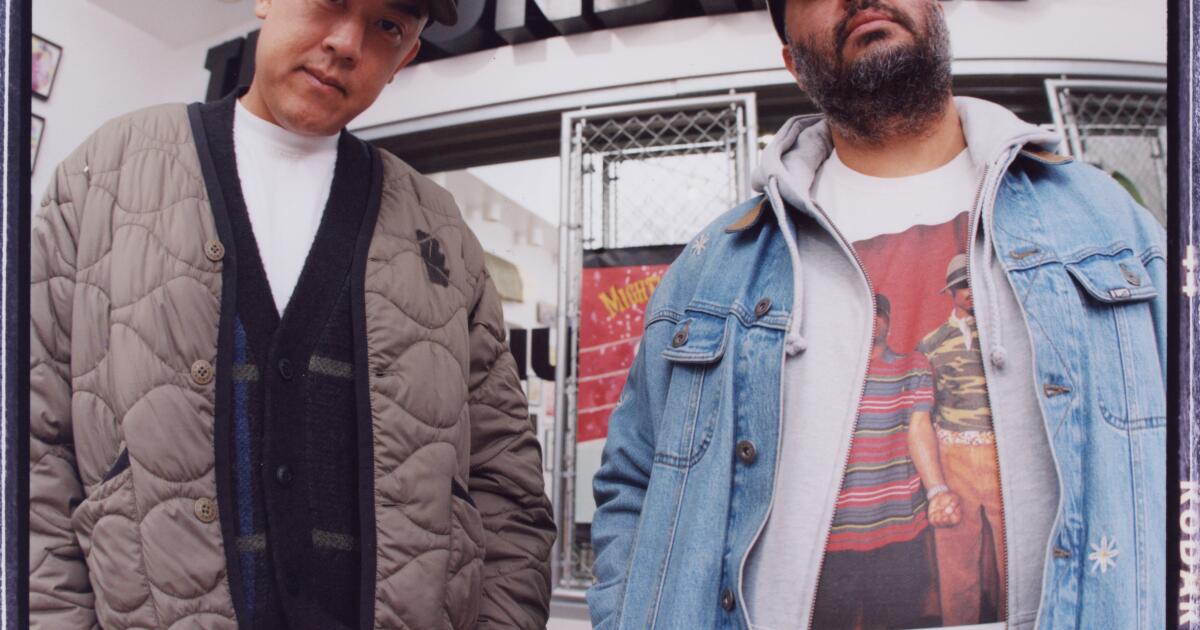
Bobby Kim, left, and Ben Shenassafar, a.k.a. Bobby Hundreds and Ben Hundreds, are co-founders of the brand.
Over the last 20 years, The Hundreds has been hundreds of different things to hundreds of different people: a study hall; a clubhouse; viral before viral; a line out the door; a pioneer in the blog space and later Web3; a perpetually sold-out food festival; block parties that attracted thousands; a beacon of partnership; a riotous celebration at Disneyland that is still remembered in hushed tones; a collaboration machine; a catalyst for a movement; a magnetic force — both physical and spiritual — that compelled kids from all over the world not just to consume but contribute to The Culture.
Today, you can trace The Hundreds’ lineage across a network of streetwear, art, food and storytelling. Its legacy can still be felt around L.A. in some of the city’s most recognizable names and brands: Kacey Lynch of Bricks & Wood, Grammy-winning artist Tyler, the Creator, skater Na-Kel Smith and restaurateurs Jon Shook and Vinny Dotolo. Each a testament to the strength of the name: The Hundreds. It has always been about power in numbers — being stronger together.
“I think it starts with Bobby and I. Our friendship. Our partnership. It starts there,” says Ben Shenassafar, who co-founded the brand with Bobby Kim in the early 2000s while at Loyola Law School. Then they were two 20-somethings whose creative ambitions extended far beyond their classroom. They dreamed of creating a streetwear brand that told stories about the subcultures they were a part of, about the world around them and about things they were into. That idea has blossomed into an empire that, 20 years on, continues to grow and give back.
To commemorate two decades in the game, we spoke to people in the Hundreds multiverse to do the impossible task of telling the story of 20 years of the brand, from the beginning.
Bobby Hundreds, co-founder of The Hundreds: It was like [seeing] a colorful flower in a black-and-white world. My first impression of Ben: He had this very thick, dark, black beard. And he wore these heavy sunglasses, [a lime green] Supreme shirt, black Air Jordan 4s.
Ben Hundreds, co-founder of The Hundreds: I think we were sitting outside of Professor Bryan Hull’s class.
Bobby Hundreds: I was wearing Air Force 1s, they had custom Louis Vuitton swooshes on them, and he’s just like, “I like your Air Force 1s.” I was like, “Where did you get your Supreme shirt?” And he’s like, “I went to New York.” We didn’t have a store here [yet]. There was no online shopping. So I was like, “Oh, this dude is putting in the work. He actually cares about streetwear.”
Siamak Vaziri a.k.a. “Mak,” managing partner at Vaziri Law Group, original third partner of The Hundreds: We met Bobby within probably a month or two at the beginning of law school. Early on, we began to realize we’re not going to be in the top 10% [of our class] and we’re not gonna get one of those big, lavish summer jobs. The conversation turned to, “What can we do that’s cool and fun and at the same time, potentially make a few bucks doing it?”
Ben Hundreds: We had to have been in the library [trying to figure out how] to make money. Like, “What should we do this summer? We should start a brand, we should start a company.” Bobby’s like, “Dude, I shoot photos and write stories and I could design a T-shirt or two.” Mak and I were like, “We can make them and sell them.” Just kind of naive like that.
Mak Vaziri: In a very short period, I saw Bobby’s creative side. It was apparent in everything he did, whether he was drawing, writing, music or whatever. He really had a creative side and it showed.
Bobby Hundreds: I always knew that I liked to write and be a journalist. I loved culture. I loved doing these deep dives and telling the rest of the world. But I was also an artist and I wanted my art to be seen. I just wanted to get in front of eyes. So [if] people are not going to go to the gallery [to see my work], then I’m going to bring the gallery to them. If I put it onto T-shirts and they’re walking around L.A., it’s going to force conversations.
Bobby Hundreds.
Ben Hundreds: Bobby came up with a list of names. It came down to two. One was The Ropes, and one was The Hundreds. In the end, we all thought The Hundreds sounded better. Bobby’s really into typography and when he wrote out the words “The Hundreds,” he liked the way the letters looked and how it all lined up.
Misa Shimotsu-Kim, associate dean and dean of students, USC Gould School of Law; Bobby’s wife: Their paths just crossed at the exact right time. And they both were like, “We don’t want to do this. We don’t want to be stuck in an office for the rest of our lives.” In his studio apartment, they set up shop.
Mak Vaziri: We met with a guy that did some screen printing in the Valley. Obviously, 11 out of the 12 were screwed up.
Ben Hundreds: This kid was like 21. [He had] a print shop deep in a shed in the back of his parents house. We went to pick them up, and they’re all f—ed up. We’re in school. We don’t have any money. I remember being in the car sad, angry.
Bobby Hundreds: We salvaged maybe 20, 25 shirts out of 144 shirts.
Ben Hundreds: I remember saying, “Our company’s over before it even started.”
Misa Shimotsu-Kim: And they’re like, “Oh my God. We promised these to Fred Segal. We need them yesterday.” So they literally brought the box over to my mom. She got her sewing machine out of the garage. She just did the entire box — the first box that they ever sold.
Ben Hundreds: We sold something to [the buyer at Fred Segal]. And then from there, we went over to Dom [DeLuca] at Brooklyn Projects. And we’re like, “Yo, like you want The Hundreds? We sell to Fred Segal.” He’s like, “You do?” We’re like, “Yeah, of course we do. What do you mean? We’re The Hundreds.”
Dom DeLuca, a.k.a. “Brooklyn Dom,” founder and owner of Brooklyn Projects: One day they came and they’re like, “Hey, you know, we’re doing this brand.” They showed me the [T-shirt] and it was a Chuck D silhouette. I was like, “Oh s—, I like that.” They were like, “It’s called The Hundreds — like, the voice of the hundreds.” I forget the meaning now but it was a cool message.
Ben Hundreds: This is 2005. Up until that point, we had a couple of hit T-shirts, one of them being Hip-Hop Is Dead. I remember getting the phone call from Dom saying, “Hey, this shirt sold out. We need more.” Then I remember the second one that was really big was the Mousey T-shirt — Mickey Mouse with the Nikes.
Brooklyn Dom: Once they did their bootleg Mickey Mouse, the Hip-Hop Is Dead [T-shirts] — the early ones — I knew that they had [something]. You start seeing kids all over California wearing it.
Jon Hundreds, first employee of The Hundreds, CEO of Mixed Media Productions, Ben’s brother: Everyone kind freaked out on the [Hip-Hop Is Dead] shirt. That was our first, I guess you could say, viral [hit] for back then.
Misa Shimotsu-Kim: They had a lot of big moments. I remember pretty early on Jay-Z was wearing their paisley all-over print hoodie [on the Hangar tour].
Bobby Hundreds: Everything was possible. Anything could be done because there was no blueprint. There are clothing brands and fashion companies, but not the way that we wanted to do it. We were like, “This has never been done before because Ben and Bobby have never done this before.” We can reset whatever the paradigm is here.
Misa Shimotsu-Kim: At the very core of it, I always knew that no matter what he would do, it would be about community and it’d be about people.
Ben Hundreds: I mean, we were part of something really early. None of us knew what the hell we were doing or what was bubbling at that time. In 2006, no one was even coming to Fairfax. It was just a handful of us. There was nowhere to eat on the street. Nowhere.
Bobby Hundreds: There was not a lot of traffic back then. We were thinking of trying to find a space — just kind of like a little playground for us to skate, party, play soccer, read magazines all day. All brands [would] hang out there — the Diamond guys would come hang out with the Turntable Lab kids. They would all congregate there and it was a cool place to be.
Westside 5ive, former Rosewood manager: We call it Rosewood College, Rosewood University, because if you didn’t go to college, this was the next best thing for you.
Diane Abapo, director of content at Goat and editor-in-chief of Greatest: It ended up being an unofficial school campus for me. I became like a student, trying to understand streetwear and Rosewood — specifically The Hundreds shop.
Mike Enriquez, former retail operations manager of The Hundreds: They definitely, unknowingly — Ben, for sure — shaped me into a man.
None of us knew what the hell we were doing or what was bubbling at that time.
— Ben Hundreds
David Rivera, creative director of The Hundreds: I was always around, kickin’ it, talking shop. I was like, “Oh, I want to run this brand one day.”
Anwar Carrots, founder and creative director of Carrots: It was just a place to watch culture go down. This was our spot to dwell and start making s— of ourselves as human beings.
Bobby Hundreds: That street has a lot of history there. [Westside] 5ive would have 5ive Fridays where he would just set up a grill every Friday afternoon and just barbecue.
Westside 5ive: 5ive Day was basically my day to unwind [on Fridays]. I would bring the grill out. I would have the homie cook.
Bobby Hundreds: A lot of music videos were shot there. Kreayshawn shot her music video for “Gucci Gucci” there. There have been so many fights. So many fights. Brawls with guys and other brands on the street. I won’t name names.
Mike Enriquez: I’ve seen all kinds of rapper fights. I was there firsthand for every single one.
Dillon Francis, DJ, former intern at The Hundreds: It was just so fun running back and forth in the alleyways of that Rosewood area. The amount of people that were stopping by. … Morrissey stopped by one time.
Ben Hundreds: So this is what happened. Dillon Francis was at the shop and Morrissey walked into this sunglass store next door. The manager of the store at the time, Tony — he still works for us — Tony is the biggest Morrissey fan of all time. Anyone who works at The Hundreds listens to Morrissey because of Tony. And so Tony f—ing freaked out. We all basically stood outside the store waiting for him to come out. And Tony asked him to sign his arm. Morrissey signed his arm and Tony went and tattooed it that night.
Westside 5ive: The craziest person [I helped] to this day? Nas gave me $50!
Bobby Hundreds: [Nas] was in there and we were listening to the new Jay-Z album for the first time. He was like, “Is this Jay’s new album?” — they had had their beef at the time and there was no one in the store — so he sat there bobbing his head and was like, “Not bad.” We were like, “Woooow, this is crazy.” He was a good supporter of the brand.
Westside 5ive: All these people: You listen to them, you look up to them, you watch them. In my head I’m fanning out crazy. And then when they leave I’m like, “Yo, that was Nas!”
Bobby Hundreds: Kid Cudi came in one day to the shop feeling a certain kind of way and bought everybody whatever they wanted — whoever was in the store that day got a shopping spree. Frank Ocean walked into the store one day and he looked at a shirt which had a phrase that I use a lot: “Maintain the Mystery.” He says, “Oh my God, I need this.”
“When we opened up that store, that store was our life,” says Ben Hundreds.
Westside 5ive: One of the funniest things — which was not funny — was the Chris Brown and Rihanna s—. We caught them prior [to the assault]. They come in [to Rosewood] and are happy, look good. Everything’s f—ing amazing. We’re helping them out. She’s rocking the short hair. And then we hear about [the assault] later that day. We was like, “Noooo!” Our craziest times were Grammy weekend, BET Awards weekend, any good awards show coming to town.
Bobby Hundreds: My memory is unfortunately not as clear anymore, but they definitely did come in like [one] day before or the day of.
Westside 5ive: This is the epicenter, it was hella cracking at this time. We had Champagne bottles in the shop every damn weekend. Moet every day. Clicquot every f—g day. Smoking the best weed. When you come to Rosewood, you get the real.
Ben Hundreds: When we opened up that store, that store was our life. It had a huge art installation on one half of the wall. We had double racks because we didn’t have enough space. It was super dark. It was really small. The music was really loud. God, I miss that store so much. It was a clubhouse.
Mike Amiri, founder and creative director of Amiri: I was starting in fashion around the same time — with more designer ambitions, which is almost the opposite of what they were doing. It was mostly me alone, while they were building this really organic community. I remember hanging out when their shop was starting to open in the early days. And it was just the crew of skater kids and you couldn’t tell who was shopping there or who worked there.
Jon Hundreds: The first The Hundreds block party was like 500 or 600. The second one was like 2,500. The police had to come to try to shut it down. It was gnarly. People loved it. We were all stars back then on the block, on Fairfax. Everyone knew us for that block party.
Glenjamn, historian and photographer: I thought, “This is special. This is our summer of ’69. This is our Woodstock. When we’re young, and we’re supposed to have fun and do epic s—.” I was very cognizant about that. These kinds of events were just melting pots, they were very natural. Nobody was trying to sell you on anything yet. We were all starting at ground zero right now. We got drunk on the street because we could. There’s something like wholesome about that because you can’t really do that anymore.
Mike Brillstein, a.k.a. “Thee Mike B,” DJ: The first one they had a license from the city and everything, but the cops showed up, helicopters showed up. It was good content for the blog. I think that was an important part of what was happening with them at that time. You wanted to be photographed with them and hanging out around them and be on that blog. Those parties were a good way to do that. People definitely showed up and were wearing their most rare shoes, their most exclusive T-shirts.
Brooklyn Dom: It was the blueprint for Hypebeast and Complex. Everybody that I know, myself included, we would go on The Hundreds blog to see what’s going on, what’s new in the industry, because they were constantly on it.
Mike Cherman, founder and creative director of Market: Before there was Instagram, to me Instagram existed on The Hundreds website. I would just follow it every day.
Anwar Carrots: They were literally posting their lives and showing people in their lives, and Bobby was a good writer. He’s writing all this s— about their day. He made it seem so in-depth.
Bobby Hundreds: I wanted to write the stories behind the T-shirts so that there was meaning and purpose behind the art. Why can’t it look good and be beautiful but also have this really compelling narrative or have it be rich with information? It sounds so basic in a day where anyone can fire an Instagram page or a TikTok and a brand is related to a human’s narrative. But at the time it was very foreign to people to think of a personal narrative that is attached to a living brand.
Jeff Staple, founder of streetwear brand Staple, creative agency Reed Art Department and Web3 platform Stapleverse: I thought they were very hungry — hungry about understanding how this whole thing worked and meeting people not just to meet them but to tell their story. Speaking in hindsight, it was probably under the guise of, we have a blog, but really, it was for their own knowledge of wanting to learn as well, just as much as their readers did. Their hustle and tenacity was really one of the most impressive things for me, because I’m of the generation sort of known for being haters. Old boys club [who is] trying to actually hide advice and gems from you so that you can’t get in.
Bobby Hundreds: [There’s] a different generation of streetwear where the brands were divorced from the owners and the artist behind them. It was intentionally designed that way so that the brands felt more mysterious. But The Hundreds was born in a time [when] the users became brands and brands became people. It was all one and the same.
Jeff Staple: In the [older] generation, I understood that there was that sort of gatekeeping. I was trying to be more open-minded about it. I knew that I didn’t want to end up becoming an extinct dinosaur. Bobby was capturing everything, documenting everything, constantly having his camera out shooting and asking questions and then telling that story. Bobby put himself in front of the stage.
You cannot talk about streetwear history without acknowledging the beefs. They are really what set brands apart.
— Bobby Hundreds
Bobby Hundreds: We had no idea that anyone was paying attention. We just had blinders on. It was like, “I’m only talking to myself,” which is why the blog felt so honest. … It wasn’t until Pharrell got upset about something that I was like, “How does Pharrell know that this blog exists?” Someone at one of the skate shops we sold to was like, “Someone on Pharrell’s team said something about the blog — he’s not happy about [a post on Plain Gravy’s “Pharrell Can’t Skate” T-shirt].” And then Lupe [Fiasco] called me out. At that time I freaked out, I felt bad. It’s like if you’re talking s— and the person is in the next room. There was no way for me to get a direct line to anyone on Pharrell’s side at the time. Years later we ran into each other at an event — I think it was SXSW — and I was like “Yo …” and he was like, “I don’t care.”
You cannot talk about streetwear history without acknowledging the beefs. They are really what set brands apart.
Anwar Carrots: I worked at Rogue Status when Rogue Status and The Hundreds were the best of friends. And I was there when they were the worst of enemies. It was one of the biggest streetwear beefs in Fairfax history. I don’t really know what it was internally, but I know it had something to do with a T-shirt.
Bobby Hundreds: That one was very deep. We were very close with the guys who ran it. [Johan “Yo” Esbensen], the co-founder, who is not with us anymore, unfortunately — we were all friends. Yo was actually over at our office one day and he was like, “Hey, we should fabricate a beef. Like the East Coast-West Coast, how that worked for hip-hop.”
Anwar Carrots: Out of nowhere my boss [at Rogue Status] makes these stickers that say, “Streetwear is dead … The Hundreds killed it.”
Bobby Hundreds: Yo was putting up a bright red bumper sticker [on the utility box in front of the shop] and it says, “Streetwear is dead … The Hundreds killed it.” Ben pulls up and sees Yo doing this and he turns his head and walks away. Ben sees the sticker, he’s like, “Oh my God. This is hilarious. He’s starting the fake beef.”
Anwar Carrots: Bobby posted the sticker on his blog and was like, “Yo, I guess we’re killing it.” He knew how to flip a negative into a positive every time. I saluted Bobby for that. My boss was like, “You know what? F— them. We’re gonna do this clothing drive for everybody who wears a The Hundreds T-shirt — drop your T-shirt in here, you get a free Rogue Status shirt.” Diamond also gets involved. Everybody was just upset with The Hundreds. They started burning The Hundreds T-shirts.
Bobby Hundreds: We get a phone call from Yo and he just starts cussing us out. We still thought it was a fake beef. And he was like, “No, f— you guys. Take it off your blog.” He’s like, “This is real.” Ben and I kind of looked at each other. And I remember we were like, “Oh, that was weird. He kind of sounded like he was serious, but maybe he’s performing in front of his friends.”
Anwar Carrots: Halloween ’07, ’08. Bobby’s car got broken into.
Bobby Hundreds: Later that evening I go out to my car — we always used to park on Hayworth and Fairfax — and my windows are broken. I was like, “Does this have anything to do with what’s going on with Yo?” I call him back and he just starts cussing me out. That’s when I was like, “Oh … there’s something up.” We never, ever got to properly talk to him about it. It took us years to talk to people in and around it. Amongst them it was about, “Oh, he was upset that you never supported his parties.” We were like, “Oh God, we had no idea.”
Ben Hundreds: There’s nothing that the two of us haven’t experienced together. We did our 10-year anniversary. We rented out [a part of Disneyland] from 9 to midnight — all of Tomorrowland and Matterhorn. We closed out one of the restaurants and opened up a full bar for VIP. Everyone was wasted. They gave us 2,000 tickets, and we probably gave most of those out to friends. And everybody was there, everybody. Everyone’s doing all kinds of trippy drugs and freaking out. Riding Space Mountain like 20 times in a row, going on Matterhorn like eight times in a row. The party was so crazy. So many people got kicked out. A lot of people talked about that night for years.
Brooklyn Dom: The first thing I went on was this Star Wars ride. I went on it and I got motion sickness. That was part one. Part two was the Space Mountain thing. I went on and I never had such trauma in my life — I was so f— up. I had to sit down on a bench. I didn’t know what to expect. Those guys, they egged me on to do it.
Mike Enriquez: I’ve never seen so many happy adults at Disneyland.
Katie Huston, Ben and Bobby Hundreds’ former assistant: There’s been a couple of instances with Disney where they’re like, “We’re not going to work with The Hundreds again.” But the party was just so much fun. You can’t really regulate a party that size.
Ben Hundreds: We never really knew how pissed Disneyland was until 1704349995. We wanted to throw our 20-year at Disneyland. And we [hop on a call] with the woman that’s helping us and she says: “I don’t know what you guys did. And I don’t understand what happened. But there’s no shot in hell.”
Brooklyn Dom: One thing about The Hundreds is that they put their money where their mouth is. They go all in on something. I think the Family Style thing was definitely a game changer.
Miles Canares, co-founder of Family Style Fest: I was handling food for ComplexCon and Ben and Bobby were openly praising it. Bobby wrote a really nice blog about it. I saw firsthand just how intertwined these two cultures are — streetwear and food. The ideas just started percolating, and I wanted to go independent again. I hadn’t officially met Ben.
Ben Hundreds: I wanted to build a food festival for us. Miles had been operating the food at ComplexCon and I remember looking at Miles and going, “This guy is just copying everything we do. Every post that Bobby and I put up about [restaurants], Miles copies it.” I didn’t like Miles at first. But then Bobby introduced me to him.
Miles Canares: I was always just a fan. The Hundreds are instrumental in the way that I operate, even in the interests of this space. I got an intro email to Bobby. And Bobby responded with, “Hey, connecting you with Ben.” I remember the email verbatim. He goes: “Miles has a food festival. Ben wants a food festival.” It was serendipitous. I quickly remembered just how much of an impact The Hundreds has when we did the first one.
Ben Hundreds: It was just a s—show. We did it at Television City and Television City has never had an event like that before. They were not prepared for thousands of people to show up. They only had one scanner. One entrance. People were pissed. I left it all alone. I had to deal with inside. We got a ton of hate mail during. Bobby had to make a post. We blamed it on CBS. It was just chaos. Inside was a great party. I said, “Anyone who bet on us that day won.”
Jon Shook, chef and co-owner of Jon & Vinny’s, Helen’s Wines, Son of a Gun, Cookbook Market and Carmelized Productions: I remember when they first came up with the idea and we said, “This is a really hard thing to pull off.” To see what it’s become and the way they’ve been able to get the Television City space to allow them to do that right there on Fairfax and tie it back to the streetwear, it’s quite amazing.
Vinny Dotolo, chef and co-owner of Jon & Vinny’s, Helen’s Wines, Son of a Gun, Cookbook Market and Carmelized Productions: We participate in a lot of food events.That one stands out amongst the most exciting. It brings so many different aspects of life to one place and wants things to just be authentic.
Ben Hundreds: I probably think the most important [collaboration of Family Style Fest] is doing Off White X Jon & Vinny’s a couple of years ago. It was important because Virgil [Abloh] was such a sweetheart. He never said no. When we asked him to do this, he was like, “Yeah, of course I want to do something with Jon & Vinny’s, it’s my favorite restaurant.”
Vinny Dotolo: We had been introduced a couple of times to Virgil and to work with such a force in your lifetime, those are the career moments where you’re sort of … There was a lot of common ground. I feel like we spoke the same language in a way.
Ben Hundreds: Adam Bomb Squad. That was one of the most important chapters in company history.
Bobby Hundreds: These NFT collections are like collections of baseball cards. This was the summer of 2021. A lot of other popular projects … were usually clocking in around 7,500 to 10,000 collectibles. We were a community-based brand and our idea was, Why limit to just 10,000? And so we did 25,000. And we thought it was gonna take us about a week to sell through. We had designed a website, where by the end of the week all the Adam Bombs that didn’t sell were going to explode. They sold out within 40 minutes. These 25,000 NFTs just disappeared.
We built this community in this family for the last 20 years and people really see that and really appreciate it and are drawn to it because they also want to belong.
— Ben Hundreds
Jon Hundreds: I was in the kitchen if I remember correctly. I saw Ben and Bobby in the kitchen also. They were just like, “Holy s—. You don’t even know what happened.” They broke the news to me that [the NFTs] completely sold out.
Sandy Mosqueda, digital brand manager of The Hundreds: At that time, we were one of the first brands to even step forward into the Web3 lane. It’s not like we were able to look at other brands or other companies to see what they’re doing and try to learn from them.
Jeff Staple: Amongst the other many indicators and clues, if Bobby is in this and he’s got The Hundreds all in on [NFTs], that’s got to be something. He’s not a dumbass.
Alyasha Owerka-Moore, designer and creative director: I don’t f— with those f—ing [NFTs]. [But] Bobby sat me down and explained it. He’s the only mother—, the only person in the world that if they took an hour to break it down to me I’d be like, “All right.”
Bobby Hundreds: We made a lot of money. We were really excited. People were congratulating us. And thus began the hardest year of my life.
Ben Hundreds: The stress of it didn’t even really start until the launch. It was really hard on Bobby being the face of the company. It was great for business, but there was a dark moment there because people were not happy.
Bobby Hundreds: What people don’t realize is that nothing comes for free, especially in the NFT and crypto space.
Misa Shimotsu-Kim: There were the most highs and lows that he’s ever had in his career. The learning curve was so steep and so significant and there was so much he felt like was on the line.
Bobby Hundreds: I was getting very little sleep. Everyone was like, “Where did you spend all your money?” And I said, “I spent it all on therapy.” On an artistic and creative level, it was probably one of the most flourishing times of my career. Unfortunately the world was not ready for it yet.
Ben Hundreds: That was our last big chapter. We’re opening up a new chapter now. There are a lot of times where I feel like it is just me and Bobby in his apartment still running The Hundreds by ourselves. That’s the way we treat it a lot of the time.
The Hundreds has always been about power in numbers — being stronger together.
Brooklyn Dom: I thought it was gonna be one of these companies that — I’ve been in business so many years — come and go. But they were more personable. They were sponges. It started at the right place at the right time.
Mister Cartoon, artist: Their demeanor, their manner and coming through on what they say adds to their longevity.
Brooklyn Dom: It’s crazy to say this, but The Hundreds, they’re a heritage brand.
David Rivera: [You hear people say], “Oh, The Hundreds? I grew up with that brand.” We get it, we’re nostalgic. But we’re also still making cool stuff and are still pushing fashion and culture forward.
Westside 5ive: I wasn’t going to do anything to not be a part of this.
Ben Hundreds: We built this community in this family for the last 20 years and people really see that and really appreciate it and are drawn to it because they also want to belong.
Bobby Hundreds: Whatever industry I’m participating in, I come at it from a streetwear perspective. The way I speak, the way I present myself in a room, the way that I sympathize and empathize with young people when they’re in protests. That’s all the streetwear for me. As long as I’m here — we’re here — I’ll have something to say.
Photo assistant: Ty Mullen



![!$+∇√$[+[!LIVESTREAMs!]+] Minnesota Wild vs Boston Bruins Live Free Streams On Tv Channel 2026-03-29](https://i3.wp.com/encrypted-tbn0.gstatic.com/images?q=tbn:ANd9GcReQZPBURuIIuh0fPF6YTAqOY-y1_BeWJWzPA&s&w=400&resize=400,240&ssl=1 "!$+∇√$[+[!LIVESTREAMs!]+] Minnesota Wild vs Boston Bruins Live Free Streams On Tv Channel 2026-03-29")


Lisa Kudrow as Valerie Cherish in The Comeback.
Erin Simkin/HBO
hide caption
toggle caption
Erin Simkin/HBO
Consider Valerie Cherish, the perennially desperate-to-be-seen, desperate-to-be-loved Hollywood C-lister played by Lisa Kudrow. Valerie, bless her, reenters our collective lives once every decade, like the census.
And like the census, her return always assumes the form of an appraisal, a ruthless and clear-eyed taking of stock. In The Comeback‘s original 2005 season, Valerie donned a cupcake costume and pratfalled her way through the rise of reality television, starring in both a corny sitcom and its making-of documentary. In 2014, a second season found Valerie headlining a prestige HBO series about that sitcom, auguring the fusillade of high-end, self-satisfied streaming dramedies that were about to pummel an unsuspecting populace into submission.
In this third season, she’s still out here hustling. Sure, she’s got an Emmy under her belt, and she’s been booked and busy, but there are signs of trouble — she and her husband (Damian Young) have downsized from their Brentwood mansion to a West Hollywood apartment. Her publicist-turned-manager (Dan Bucatinsky) seems even more checked out than baseline. She’s hired a social media consultant (Ella Stiller) and has even started (ominous chord, shudder) … a podcast.
As we meet her, she’s older, wiser but still essentially Valerie: Blithely optimistic, hungrily opportunistic. She’s still desperate for attention — but the precise nature of the attention she’s craving these days has subtly but significantly shifted. It’s no longer enough for Valerie to be seen; now, she wants — expects, demands, even — to be heard.
She remains ridiculous, thank God. And Kudrow once again imbues her with the physicality that has come to define Valerie’s essential self: She’s still going through life nodding like a bobblehead, still punctuating just about every sentence with a “right?” or a “yeah?” or a “y’know?,” because it’s a learned response. If the world refuses to affirm her in any way — and somehow it continues to find endlessly novel ways to do just that — then she’ll just affirm her own darn self, yeah? Right?
But something happens in the first episode of the new season that efficiently signals how much has changed for Valerie. The setup is classic The Comeback: She’s agreed to star as Roxie in Chicago on Broadway (after receiving assurances that her choreo will be the “dumbed down, Real Housewives version”). Rehearsal isn’t going great — her director and fellow dancers are mean, catty and dismissive (apart from one gay guy, whose words of praise Valerie seeks out like a homing missile — which checks out).
What happens next is quietly remarkable, given the Valerie Cherish we’ve come to love/cringe-in-sympathy-with over The Comeback‘s previous seasons. She doesn’t chirpily ignore their insults and blithely soldier on. She doesn’t try to excuse and minimize their bad behavior so she can take advantage of the opportunity they’re affording her. No, she calls them out, and she quits. (More accurately: She finds a ready, contractually viable excuse to quit — same difference, I’d argue.)
This isn’t the Valerie we used to know. When an opportunity to star in an AI-written sitcom arises, she doesn’t knock over furniture to lunge at the chance, as she would have before. She refuses (at first), she seeks assurances that actual writers will be involved (they will, sort of), and she steps up as the show’s executive producer as soon as it becomes clear she’s the only one involved who cares about the cast, the crew and the quality of the show itself.
There remain plenty of opportunities for Kudrow to make us laugh at Valerie, but as the season progresses, we find ourselves rooting for her more than ever. That’s because Kudrow has altered Valerie’s fuel mixture a bit. She’s always been acutely self-aware, she’s always known when she’s being disrespected, but the Valerie of seasons one and two was perfectly content to swallow other people’s low opinions of her if it meant she got some time in the spotlight.
Now, that self-awareness is matched to something besides her default, pathologically sunny perseverance; it’s married to defiance, and to action.
She stands her ground against a costume designer (Benito Skinner) who sees her as camp and nothing more (yet another of The Comeback‘s knowing digs at its rabid gay fanbase). She agrees to play nice with a network executive (Andrew Scott) until she, very publicly, doesn’t. And when her dour husband starts flailing on his own reality show, Valerie draws on her vast reserves of experience on both sides of the camera to show him how it’s done.
But a self-actualized Valerie affects the show’s comedic chemistry, and there are times when the season can’t quite manage to sustain its satiric bite. On two occasions, the show’s pitched disdain for Hollywood phoniness and hollow ambition falters, and something akin to sincerity peeks out from behind the mask. In one, a beloved real-life Hollywood comedy legend delivers a short monologue to Valerie about why AI can never replace real comedy writers, because comedy needs broken people. In another, a cast member from The Comeback‘s first season returns simply to assure Valerie that she is a good person, a wonderful person, and that she is in no way in the wrong.
On both occasions, seasoned viewers will be patiently but eagerly awaiting the turn, the rug-pull, the reveal that such abject, wet-eyed earnestness will of course get swatted down, because this is The Comeback. But the turn never comes, the rug remains firmly in place and we are left to grapple with the knowledge that we’ve just been exposed to the creators’ true intent, delivered with a gravid plainness, without anything even resembling the gimlet-eyed take we’ve come to, well … cherish.
But you know what? Fine. Who knows if Valerie will return in ten years’ time to once again Cassandra us all about the state of the entertainment industry? Who knows, in point of fact, if there’ll be an entertainment industry for her to return to? I forgave those moments of uncharacteristic ingenuousness because I managed to convince myself they felt valedictory, triumphant — a few discordant bars within Valerie Cherish’s swan song.
Which, as viewers of The Comeback’s definitive, beloved, iconic Season 1 finale will remember, is “I Will Survive.” Because it could never be anything else. Y’know?
This piece also appeared in NPR’s Pop Culture Happy Hour newsletter. Sign up for the newsletter so you don’t miss the next one, plus get weekly recommendations about what’s making us happy.
Listen to Pop Culture Happy Hour on Apple Podcasts and Spotify.


Hear the name the Witch’s Cottage and you might conjure a mystical vision. And inside the new North Hollywood space, here there be witches, yes. But that’s just the start of it.
In one area of the two-story cafe, restaurant and bar, constellations beckon. A guide to crystals calls forth in another. An azure booth is flanked by an abstracted mermaid sculpture, and elsewhere howling wolves are engraved into the bar tops.
Witch’s Cottage co-founder Celina Lee Surniak, left, with investor/partner Ana Lovelis and co-founder Danielle Ozymandias. The three envisioned a welcoming space that views the world through a magical lens.
Hidden wonders are everywhere. Circle the cottage’s hand-constructed tree trunks, and maybe, if you’re lucky, you’ll spy a tiny door hiding a little witch. Sit at one of the tables, and don’t be surprised to hear the sounds of birds chirping from the man-made trees. Branches spring forth from paintings and every nook is a nod to something born of a fable.
A decade-long vision of the founders, the Witch’s Cottage has transformed the old Federal Bar into a colorful, whimsical fairy-tale-like forest of a gathering spot. A place where one can come for the fantasy, and stay for the chicken etouffee and the Hex Breaker, a tiki-style, rum-heavy drink for grown-up sorcerers.
“I wanted this to feel lived in,” says Danielle Ozymandias, who dreamed up the space with business partner Celina Lee Surniak, a fellow creative who like Ozymandias very much identifies as a witch. “I wanted this to be a visual feast because I think maximalism is just so interesting. That may be the ADHD talking, but I knew I wanted a lot.”

The dining room of the Witch’s Cottage aims for a fantasy forest-inspired look.


While they certainly designed the Witch’s Cottage to be family-friendly, Surniak and Ozymandias say part of their creative intent was to bring joy to adults.
“Everybody tries to shame you,” Surniak says. “Like, ‘You can’t buy that coffee. Save your money.’ No, let them have the coffee they really love. Let them get that annual pass to Disneyland. Let them have a weekly night at the movies, even if they go alone. The world is so weird right now. What we can do is find joy in tiny things.

A fairy at a media preview for North Hollywood’s new Witch’s Cottage.
“Being able to give adults the opportunity to say ‘I’m a fairy,’ is the best feeling ever,” Surniak continues. “And it’s not just at Renaissance fairs. Be a fairy here.”
Or be anyone. A sign near one of the restaurant’s restrooms makes it clear it doesn’t matter which one guests use. It asks that they simply wash their hands. “You can walk in as a witch, or a dragon, or just a FedEx worker,” Ozymandias says. “There’s no judgment.”
The Witch’s Cottage had its grand opening this weekend, and the community immediately responded with lines out the door. That wasn’t entirely surprising — the project was built by a collective. More than 200 volunteers donated more than 3,000 hours to bring the space to life, and the two founders attracted more than 100 investors via an online crowd-funding campaign that raised more than $167,000.
“We’re regular people,” Surniak says. “We don’t have a lot of money. We don’t have a nest egg. We don’t own property. If we were going to do anything, we would need help.”
Surniak says within three days of creating their campaign, they found an angel investor who offered them the funds to secure the building. Other investors followed, including Ana Lovelis and her husband Kenny Enea, known in the area for the elaborate haunted houses they have hosted at their home. The two joined as creative partners and helped with construction. Lovelis says she recognized in the Witch’s Cottage a similar outlook on life as hers. She recalled once years ago dating someone who had a skeptical and practical view of the world.
“And then there was me, being like, ‘That butterfly is a sign from my grandma,’” Lovelis says. The Witch’s Cottage, she says, is reflective of viewing the world through a magical lens. At a time of much stress for many, such a place may be needed. As Lovelis says, “What’s the harm?”

The Witch’s Cottage is a two-story space that serves as a cafe during the day and a restaurant at night. Dinner service begins at 5 p.m.
Surniak still has a day job, working as a stunt and intimacy coordinator on theatrical and Hollywood productions. Ozymandias, who previously worked in the local theater world, is focusing primarily on the Witch’s Cottage at the moment, helping to devise recipes and ensure the bakery can accommodate as many dietary restrictions as possible.
Beyond new menu items, there’s more in the works, including community events like sound baths, comedy nights and classes on composting, native plants and parenting. Or even some workshops that are more lighthearted, such as a hoped-for night on how to make a broom.
Hidden behind the upstairs bar is what’s called the Tempered Flask Tavern, and it’s an elaborate tabletop role-playing game room. Here, one will find a smoke-puffing dragon, but also digital windows that game masters can use to trigger various effects. A long table sits at its center, flanked by a knight, a digital fireplace and weaponry. Not open yet, the plan is for the room to be rented out by the hour.


The Tempered Flask Tavern is a hidden room dedicated to tabletop games inside the Witch’s Cottage. It will be available soon for guests to rent out.
Though Surniak and Ozymandias say they’ve been building vision boards for more than a decade of what the spot could look like, recent cultural shifts gave them the confidence that the timing was right. They point to “Stranger Things” and how it spawned a conversation around “Dungeons & Dragons,” or the success of Disney+ series “Agatha All Along.” More locally, they watched the rise of a game-focused bar such as the Roguelike Tavern, which is relocating to Studio City, as well as the news that experiential art firm Meow Wolf would be building an exposition in the city.
Taken as a whole, they felt bolstered that North Hollywood could support a heavily themed cafe, a home for those who have rolled a 20-sided die, once looked up the meaning of the Tower card or just enjoyed a viewing of “The Lord of the Rings.”
But one need not know the inner workings of RPGs, tarot or Middle-earth to feel at home in the Witch’s Cottage. This is a space, after all, for anyone who has ever been touched by a fairy tale, dreamed of the fantastical or wanted to believe in the power of wishing upon a star.


Views from inside North Hollywood’s the Witch’s Cottage.
So spend a little time in the Witch’s Cottage, and maybe you’ll start to imagine that cocktail is a potion, and those deviled eggs did in fact hatch from a dragon. Diners may debate between the “iron forged fondue melt” (a patty melt) or the “meze heartwich” (a white bean purée on sourdough), but childlike wonder is the specialty of the house.
“Everybody is somebody’s kid,” Ozymandias says. “And I just want a safe space for people’s kids. Even if you’re 50, or 80, you’re my kid. I want you to feel loved, and to have a cup of something warm or magical. I want you to know that whatever is outside those doors, when you’re in here, I got you.”
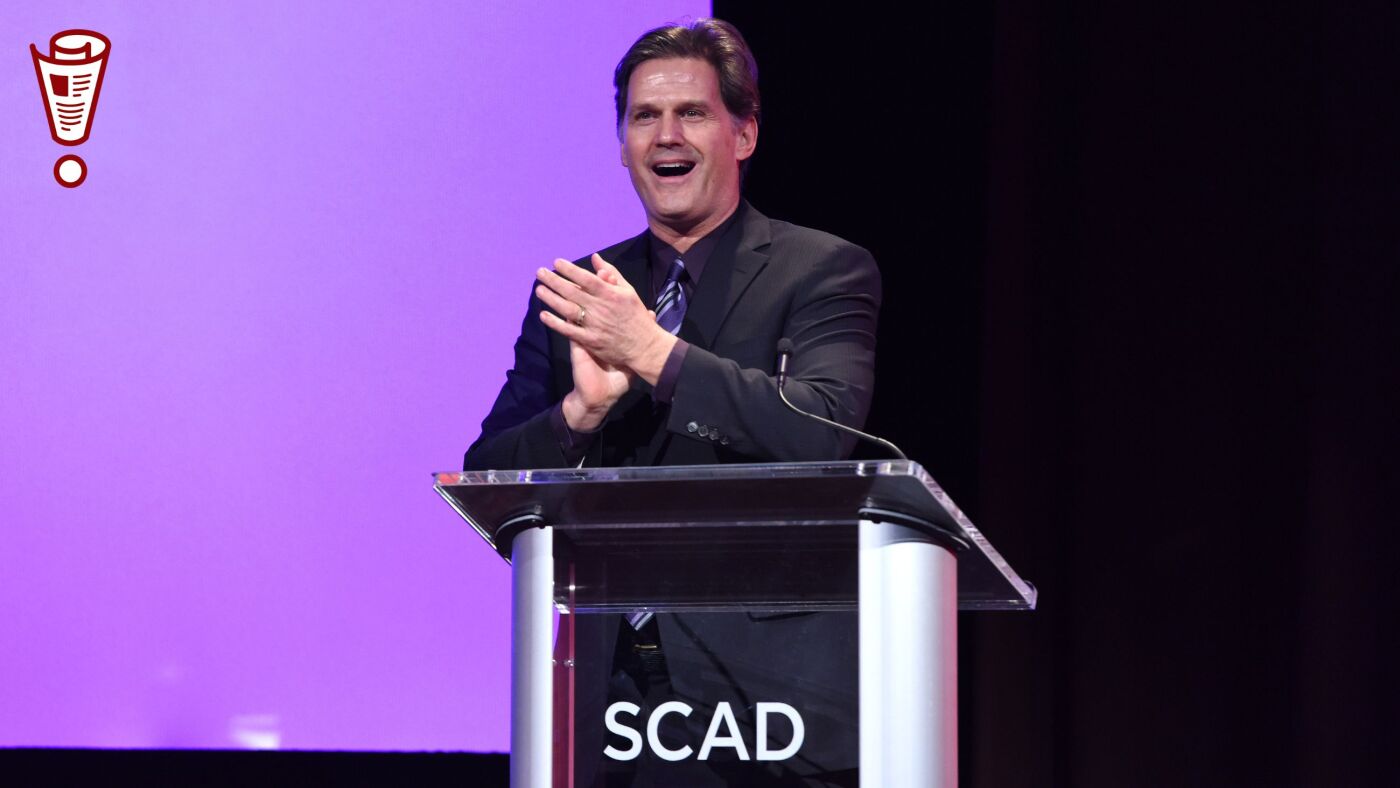
Actor, director, chair of film and television department, SCAD, D.W. Moffett speaks on stage during Rising Star Award presentation to “Star” on Day Three of aTVfest 2017 presented by SCAD at SCADshow on February 4, 2017 in Atlanta, Georgia. (Photo by Vivien Killilea/Getty Images for SCAD)
Vivien Killilea/Getty Images
hide caption
toggle caption
Vivien Killilea/Getty Images
This week’s show was recorded in Savannah with host Peter Sagal, judge and scorekeeper Alzo Slade, Not My Job guest D.W. Moffett and panelists Adam Burke, Shantira Jackson, and Joyelle Nicole Johnson. Click the audio link above to hear the whole show.
Who’s Alzo This Time
Flotus and Robotus, Ineligible Bachelorette, and a Change of Season
Panel Questions
Fold-out Coach
Bluff The Listener
Our panelists tell us three stories about a hot new dining destination, only one of which is true.
Not My Job: Actor, director, and chair of the film and television department at SCAD, D.W. Moffett, answers our questions about melees
Actor D.W. Moffett, part of the cast of One Battle After Another, plays a game called “Lots of Battles All At Once.”
Panel Questions
Hairless Whisper, Signing Off
Limericks
Alzo Slade reads three news-related limericks: Buns on the Runway, Constructive Play, Getting Work Done at Work.
Lightning Fill In The Blank
All the news we couldn’t fit anywhere else
Predictions
Our panelists predict, after the Bachelorette, what’ll be the next TV season to get cancelled at the last minute.

Inside the Dallas furry convention drawing thousands and sparking culture battles

Jannik Sinner’s Girlfriend Laila Hasanovic Stuns in Skirt Before Miami Open Final
![!$+∇√$[+[!LIVESTREAMs!]+] Minnesota Wild vs Boston Bruins Live Free Streams On Tv Channel 2026-03-29](https://i3.wp.com/encrypted-tbn0.gstatic.com/images?q=tbn:ANd9GcReQZPBURuIIuh0fPF6YTAqOY-y1_BeWJWzPA&s&w=80&resize=80,80&ssl=1 "!$+∇√$[+[!LIVESTREAMs!]+] Minnesota Wild vs Boston Bruins Live Free Streams On Tv Channel 2026-03-29")
!$+∇√$[+[!LIVESTREAMs!]+] Minnesota Wild vs Boston Bruins Live Free Streams On Tv Channel 2026-03-29

Colorado No Kings protests draw crowds across Denver, state

Where to watch Cleveland Guardians vs. Seattle Mariners: Live stream, start time, TV channel, odds for Sunday, March 29

Florida High School Football Rankings: Top 25 teams – Oct. 21

How old is Bo Nix? What to know about Oregon quarterback ahead of 2024 NFL Draft

Cleary's 21 help Le Moyne down Central Connecticut State 69-64 in OT

99th annual Pony Swim held in Virginia

Indiana Members Credit Union announced as new anchor tenant at Bottleworks District

JD Vance says he was ‘obsessed’ with UFOs, believes aliens are actually ‘demons’
The EU's recipe for trade deals : easy on beef, tough on wine

Photos: ‘No Kings’ protests across the country

Jeffries declines to break with indicted Democrat after ethics panel’s guilty verdict

Hundreds of thousands march through London in stand against the far right
-

 Sports1 week ago
IOC addresses execution of 19-year-old Iranian wrestler Saleh Mohammadi
-

 New Mexico7 days ago
Clovis shooting leaves one dead, four injured
-

 Tennessee6 days ago
Tennessee Police Investigating Alleged Assault Involving ‘Reacher’ Star Alan Ritchson
-

 Minneapolis, MN3 days ago
Boy who shielded classmate during school shooting receives Medal of Honor
-

 Technology7 days ago
YouTube job scam text: How to spot it fast
-

 Miami, FL3 days ago
Jannik Sinner’s Girlfriend Laila Hasanovic Stuns in Ab-Revealing Post Amid Miami Open
-

 Science1 week ago
Record Heat Meets a Major Snow Drought Across the West
-

 Politics1 week ago
Schumer gambit fails as DHS shutdown hits 36 days and airport lines grow