Lifestyle
'Sinners' is one of the most interesting and audacious movies this year


This latest Ryan Coogler/Michael B. Jordan collaboration is set in 1930s Mississippi — it’s awash in gorgeous music, turbulent romance, pan-African spiritualism and, by the end, buckets of blood.
DAVID BIANCULLI, HOST:
This is FRESH AIR. Our film critic, Justin Chang, says the new supernatural thriller “Sinners” is one of the more interesting and audacious movies to emerge from a major studio so far this year. It’s the latest collaboration between director Ryan Coogler and actor Michael B. Jordan, who worked together previously in “Fruitvale Station,” “Black Panther” and “Creed.” “Sinners” also features Hailee Steinfeld, Delroy Lindo and Jack O’Connell and opens in theaters today. Here is Justin’s review.
JUSTIN CHANG, BYLINE: You can be a fan of “Creed” and “Black Panther” – I certainly am – and still feel a sense of relief that the director, Ryan Coogler, has left franchise filmmaking behind, at least for now. With those earlier movies, Coogler brought a distinctly personal touch to familiar genre material. His latest effort, “Sinners,” is a genre movie, too, with some pulpy narrative beats you’ll recognize. But it’s also his first original script in ages, and it feels wicked and sexy and darkly entrancing in ways that he hasn’t been able to fully embrace until now.
“Sinners” is set in 1930s Mississippi, and it’s awash in gorgeous music, turbulent romance, Pan-African spiritualism, and by the end, buckets of blood. It’s an awful lot of movie, and it makes most of the year’s other studio releases so far look anemic by comparison. “Sinners” also finds Coogler reuniting with Michael B. Jordan, whom he’s worked with consistently since their 2013 drama, “Fruitvale Station.” They double down on their collaboration here – quite literally. Jordan plays twin brothers, named Smoke and Stack, who are notorious fixtures of Chicago’s criminal underworld. It’s 1932, and they’ve just returned to their hometown of Clarksdale, Mississippi. As one of them wryly suggests, the North isn’t all that much less racist than the South. Smoke and Stack plan to open a juke joint, where other Black men and women can drink, dance and gamble the night away.
Coogler spends roughly the first half of the film fleshing out this world and its characters and showing us the tremendous group effort it takes to launch a business. Miles Caton is a standout as the twins’ cousin, Sammie, a gifted blues musician who’s recruited to perform. He’s thrown together with Delta Slim, a harmonica and piano virtuoso, played by a delightfully irascible Delroy Lindo. And Wunmi Mosaku is wonderful as Annie, a local medicine woman whom Smoke loved but abandoned years earlier. After some verbal sparring and reconciliatory sex, she agrees to cook for the grand opening.
“Sinners” is so atmospheric, richly textured and gorgeous to watch – see it in IMAX if you can – that it’s almost a disappointment when it veers into supernatural territory. But if the horror beats prove a touch derivative, Coogler builds suspense with shivery assurance, and he waits until just the right moment – the juke joint’s grand opening – for all hell to break loose. In this scene, Annie realizes that the bouncer, played by Omar Benson Miller, is acting strangely. He’s standing right outside the door and won’t enter unless someone invites him in. She recognizes this as a classic tenet of vampire lore.
(SOUNDBITE OF FILM, “SINNERS”)
OMAR BENSON MILLER: (As Cornbread) What y’all doing? Just step aside and let me on in now.
WUNMI MOSAKU: (As Annie) Why you need him to do that? You big and strong enough to push past us.
MILLER: (As Cornbread) Well, that wouldn’t be too polite now, would it, Miss Annie? I don’t know why I’m talking to you anyway. Smoke.
MOSAKU: (As Annie) Don’t talk to him. You’re talking to me right now. Why you can’t just walk your big ass up in here without an invite, huh? Go ahead. Admit to it.
MILLER: (As Cornbread) Admit to what?
MOSAKU: (As Annie) That you dead.
MILLER: (As Cornbread, laughing) Smoke, you listening to this? Now we out here playing games, telling ghost stories in place of doing what we ought to do.
UNIDENTIFIED ACTOR: (As character) And what is it we’re supposed to be doing?
MILLER: (As Cornbread) Being kind to one another and being polite.
CHANG: Coogler is clearly paying homage here to the legendary horror filmmaker George Romero, not only in his exuberant B-movie splatter, but also in the way he gives the action a sharp, sociopolitical edge. Even before the carnage begins, the director is clearly fascinated by the racial dynamics of the period. Li Jun Li and Yao play a couple who own a grocery store, one of many such Chinese-run businesses that served Black communities in the segregated South. Hailee Steinfeld turns up as Stack’s former flame, and although sparks soon reignite, the movie harbors zero sentimental illusions about how their ill-fated interracial romance will play out.
The entire film can be read as a grimly fantastical parable of Black survival. At one point, someone wonders if vampirism might actually be preferable to white supremacy. It’s not a facetious question, and Smoke and Stack themselves might disagree on the answer. They’re fairly similar as twins go, but Michael B. Jordan subtly captures their crucial difference in temperament and worldview. Stack is the gentler, more trusting one, while Smoke is far warier and more guarded. How they both choose to confront evil will change and define them forever.
I’ve forgotten to mention that on top of all that, “Sinners” is practically a full-blown musical, with a hypnotic, blues-heavy score by Ludwig Goransson and a blunt yet potent message about the spiritual power of song. Early on in the juke joint, the characters give themselves over to the ecstasy of Sammie’s music. And Coogler follows suit with an imaginative, dreamlike sequence that bridges eras and continents, placing the West African dancers of the ancient past on a continuum with the hip-hop artists of the future. Music, Coogler reminds us, can collapse boundaries between time and space – so, it turns out, can some movies.
BIANCULLI: Justin Chang is a film critic for The New Yorker. He reviewed “Sinners,” the new thriller starring Michael B. Jordan.
(SOUNDBITE OF LUDWIG GORANSSON SONG, “WHY YOU HERE / BEFORE THE SUN WENT DOWN”)
BIANCULLI: On Monday’s show, actor Noah Wyle of the popular TV series “The Pitt” about drama and chaos in a Pittsburgh hospital emergency room. The show has earned a following among ER doctors for the accuracy of its portrayals of emergency medicine. Wyle plays a veteran doctor plagued by PTSD from the early days of COVID. I hope you can join us.
(SOUNDBITE OF LUDWIG GORANSSON SONG, “WHY YOU HERE / BEFORE THE SUN WENT DOWN”)
BIANCULLI: To keep up with what’s on the show and get highlights of our interviews, follow us on Instagram – @nprfreshair. FRESH AIR’s executive producer is Danny Miller. Sam Briger is our managing producer. Our senior producer today is Roberta Shorrock. Our technical director and engineer is Audrey Bentham, with additional engineering support by Joyce Lieberman, Julian Herzfeld and Diana Martinez (ph). Our interviews and reviews are produced and edited by Phyllis Myers, Ann Marie Baldonado, Lauren Krenzel, Therese Madden, Monique Nazareth, Thea Chaloner, Susan Nyakundi, Anna Bauman and Joel Wolfram. Our digital media producer is Molly Seavy-Nesper. For Terry Gross and Tonya Mosley, I’m David Bianculli.
(SOUNDBITE OF LUDWIG GORANSSON SONG, “WHY YOU HERE / BEFORE THE SUN WENT DOWN”)
Copyright © 2025 NPR. All rights reserved. Visit our website terms of use and permissions pages at www.npr.org for further information.
Accuracy and availability of NPR transcripts may vary. Transcript text may be revised to correct errors or match updates to audio. Audio on npr.org may be edited after its original broadcast or publication. The authoritative record of NPR’s programming is the audio record.



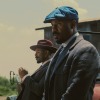
Michael B. Jordan plays twin brothers Smoke and Stack in Sinners.
Warner Bros. Pictures
hide caption
toggle caption
Warner Bros. Pictures
Ryan Coogler’s supernatural horror stars Michael B. Jordan playing twin brothers who open a 1930s juke joint in Mississippi. Opening night does not go as planned when vampires appear outside. “In a straightforward metaphor for all the ways Black culture has been co-opted by whiteness, the raucous pleasures and sonic beauty of the juke joint attract the interest of a trio of demons … they wish to literally leech off of the talents and energy of Black folks,” writes critic Aisha Harris. The film made history with a record 16 Academy Award nominations.

We asked our NPR audience: What movie would you recommend to someone who loved Sinners? Here’s what you told us:
Near Dark (1987)
Directed by Kathryn Bigelow; starring Adrian Pasdar, Jenny Wright, Lance Henriksen
If you want another cool vampire movie with Western kind of vibes, check out Kathryn Bigelow’s Near Dark — super underseen and kind of hard to find, but really gritty and sexy and another very different take on what you might think is a genre that had been wrung dry. – Maggie Grossman, Chicago, Ill.
30 Days of Night (2007)
Directed by David Slade; starring Josh Hartnett, Melissa George, Danny Huston
It follows a group of people in a small Alaskan town as they struggle to survive an invasion of vampires who have taken advantage of the month-long absence of the sun. Both this and Sinners revolve around a vampire takeover and the people’s fight to outlast the “night.” – Nathan Strzelewicz, DeWitt, Mich.

The Wailing (2016)
Directed by Na Hong-jin; starring Kwak Do-won, Hwang Jung-min, Chun Woo-hee, Jun Kunimura
In this South Korean supernatural horror film, a mysterious illness causes people in a quiet rural village to become violent and murderous. A local police officer investigates while trying to save his daughter, who begins showing the same disturbing symptoms. The film blends folk horror, religion, and psychological dread, exploring themes of faith, evil, and moral weakness. Like Sinners, it centers on a supernatural force corrupting a close-knit community, builds slow-burning tension, and examines spiritual conflict and human frailty. – Amy Merke, Bronx, N.Y.
Fréwaka (2024)
Directed by Aislinn Clarke; starring Bríd Ní Neachtain, Clare Monnelly, Aleksandra Bystrzhitskaya
In this Irish folk horror film, a home care worker, Shoo, is assigned to stay with an elderly woman who’s convinced she’s under siege by malevolent fairies. Like Sinners, Fréwaka blends folk traditions and social commentary with horror. The social failures Shoo copes with (untreated mental health issues, religious abuse) are just as frightening as the supernatural forces. – Kerrin Smith, Baltimore, Md.
And a bonus pick from our critic:
Ma Rainey’s Black Bottom (2020)
Directed by George C. Wolfe; starring Viola Davis, Chadwick Boseman, Glynn Turman
This is an adaptation of August Wilson’s play about a legendary blues singer (Viola Davis) muscling through a recording session with white producers who want to control her music. Chadwick Boseman’s blistering in his final role. – Bob Mondello, NPR movie critic
Carly Rubin and Ivy Buck contributed to this project. It was edited by Clare Lombardo.

The tiny town of West Goshen, Calif., was exactly the kind of place that community solar was designed for.
Near Visalia, most of its 500 residents live in mobile homes, where companies won’t install rooftop panels without a solid foundation. And until recently, they used propane for heating and cooking, with price fluctuations in the winter posing hardships for low-income families.
Community solar, in which residents get a discount on their bills for subscribing as a group to small solar arrays nearby, was designed to help low-income residents, apartment dwellers, renters and others who can’t put panels on their own roofs.
Over the last 11 years, New York, Maine, Minnesota, Massachusetts and other states have built thriving community solar programs. But California has built, at most, only 34 projects since 2015, and experts say that’s a generous accounting.
“We’ve had community solar for a dozen years, and it simply has not produced anything of scale and anything of note,” said Derek Chernow, director of Californians for Local, Affordable Solar and Storage, a developer trade group that’s pushing to get a more robust program off the ground. “Projects don’t pencil out.”
The West Goshen residents were among the lucky few, becoming part of a community solar project in 2024.
“It has kind of allowed us to kind of breathe a little bit,” said resident and community organizer Melinda Metheney. Her bill has dropped by about $300 in the summer months, thanks to the 20% community solar discount, stacked with other low-income discounts and clean energy incentives, she said.
West Goshen’s panels sit about 10 miles out of town, in a field surrounded by farms. Energy and climate experts agree California must add much more clean energy to its grid, some 6 gigawatts by 2032, the California Public Utilities Commission said in a new plan last week.
Assemblymember Christopher M. Ward (D-San Diego), who in 2022 authored a bill to create a more effective community solar program, said the state needs to double its annual solar installation rate to reach that goal and is not on track to do that using only large utility-scale solar farms and individual rooftop arrays.
“We need mid-scale community solar,” he said.

Energy and climate experts agree California must add much more clean energy to its grid, some 6 gigawatts by 2032, the California Public Utilities Commission said in a new plan last week. Above, solar panels at Extra Space Storage in Pico Rivera.
(Kayla Bartkowski / Los Angeles Times)
He and a coalition of environmental groups, solar developers and the Utility Reform Network, a ratepayer advocacy group, worked to put his 2022 law into effect. They coalesced around requiring utilities to pay community solar developers and customers for the electricity they feed to the grid using the same formula they use for people who install rooftop solar.
But in May 2024, the California Public Utilities Commission decided to go with a late-in-the-game proposal backed by the state’s investor-owned utilities to pay community solar at a lower rate.
The agency, along with its public advocate’s office, argued that crediting solar developers at the higher rate would raise bills for customers who don’t have solar, who would still have to shoulder the cost of grid maintenance. It’s similar to the argument they’ve made to cut incentives for rooftop solar.
The new program relied on federal money, including the Biden administration’s Solar for All, to sweeten the deal for developers. But the utilities commission spent very little of the $250 million available under that grant before the Trump administration tried to claw it back last summer, and now it is held up in litigation.
At a legislative oversight hearing last week, Kerry Fleisher, the commission’s director of distributed energy resources, blamed the loss for the new program’s failure to launch.
“There’s been a tremendous amount of uncertainty in terms of the Solar for All funding that was intended to supplement this program,” Fleisher said. “That’s part of the reason why this has taken longer than normal.” She said the commission still plans to release a program in the next several months.
Ward, the San Diego lawmaker who wrote the community solar bill, called the program “fatally flawed” in an interview.
He’s now considering a bill to bring the community solar program more in line with what he initially envisioned — higher incentives, requirements for battery storage, and compliance with state law that mandates new houses be built with solar.
A study last year funded by a solar trade group found that could save California’s electric system $6.5 billion over 20 years. But Ward’s effort to revive his program last year failed to pass the Assembly appropriations committee.
“All the other states in our country that have adopted similar community solar program models, they are working,” said Ward, adding that 22 states have programs comparable to the one solar advocates want in California. “The writing on the wall suggests that, exactly as we feared years ago, this was not the way to go.”
California Public Utilities Commission spokesperson Terrie Prosper called California “a leader in cost-effective, least-cost solar deployment overall compared to any other state,” in an emailed statement.
Under the commission’s definition, the state has brought on 34 projects, representing 235 megawatts of community solar. But studies from groups such as the Institute for Local Self-Reliance and Wood Mackenzie use different definitions for community solar, and they show California far behind at least 10 other states.
Meanwhile, advocates and developers involved in successful community solar projects in California say they were difficult to get off the ground.

Homes in the Avocado Heights area of Los Angeles County are part of a community solar project.
(Kayla Bartkowski / Los Angeles Times)
One that came online in May in the unincorporated communities of Bassett and Avocado Heights in the San Gabriel Valley provides solar electricity to about 400 low-income residents. They get 20% discounts on their electric bills for subscribing to panels installed on two Extra Space Storage building rooftops in Pico Rivera.
Organizers said it took nearly five years to find the right location and comply with utility requirements. They also got a grant in addition to funding provided by the state utilities commission’s solar program.
It “would not have happened if it hadn’t been for the grant,” said Genaro Bugarin, a director at the Energy Coalition nonprofit that proposed and coordinated the project.
Brandon Smithwood, vice president of policy at Dimension Energy, the developer for the project in West Goshen, said he still hopes to see a community solar program in California that compensates projects for the way they help out the grid.
“We’ve seen it can work, and we know what we have won’t work,” Smithwood said at the hearing.

There’s a three-story house in Baltimore that looks a bit imposing. You walk up the stone steps before even getting up to the porch, and then you enter the door and you’re greeted with a glass case of literary awards. It’s The Clifton House, formerly home of Lucille Clifton.
The National Book Award-winning poet lived there with her husband, Fred, starting in 1967 until the bank foreclosed on the house in 1980. Clifton’s daughter, Sidney Clifton, has since revived the house and turned it into a cultural hub, hosting artists, readings, workshops and more. But even during a February visit, in the mid-afternoon with no organized events on, the house feels full.

The corner of Lucille Clifton’s bedroom, where she would wake up and write in the mornings
Andrew Limbong/NPR
hide caption
toggle caption
Andrew Limbong/NPR
“There’s a presence here,” Clifton House Executive Director Joël Díaz told me. “There’s a presence here that sits at attention.”
Sometimes, rooms where famous writers worked can be places of ineffable magic. Other times, they can just be rooms.

Princeton University Press
Katie da Cunha Lewin is the author of the new book, The Writer’s Room: The Hidden Worlds That Shape the Books We Love, which explores the appeal of these rooms. Lewin is a big Virginia Woolf fan, and the very first place Lewin visited working on the book was Monk’s House — Woolf’s summer home in Sussex, England. On the way there, there were dreams of seeing Woolf’s desk, of retracing Woolf’s steps and imagining what her creative process would feel like. It turned out to be a bit of a disappointment for Lewin — everything interesting was behind glass, she said. Still, in the book Lewin writes about how she took a picture of the room and saved it on her phone, going back to check it and re-check it, “in the hope it would allow me some of its magic.”
Let’s be real, writing is a little boring. Unlike a band on fire in the recording studio, or a painter possessed in their studio, the visual image of a writer sitting at a desk click-clacking away at a keyboard or scribbling on a piece of paper isn’t particularly exciting. And yet, the myth of the writer’s room continues to enrapture us. You can head to Massachusetts to see where Louisa May Alcott wrote Little Women. Or go down to Florida to visit the home of Zora Neale Hurston. Or book a stay at the Scott & Zelda Fitzgerald Museum in Alabama, where the famous couple lived for a time. But what, exactly, is the draw?

Lewin said in an interview that whenever she was at a book event or an author reading, an audience question about the writer’s writing space came up. And yes, some of this is basic fan-driven curiosity. But also “it started to occur to me that it was a central mystery about writing, as if writing is a magic thing that just happens rather than actually labor,” she said.
In a lot of ways, the book is a debunking of the myths we’re presented about writers in their rooms. She writes about the types of writers who couldn’t lock themselves in an office for hours on end, and instead had to find moments in-between to work on their art. She covers the writers who make a big show of their rooms, as a way to seem more writerly. She writes about writers who have had their homes and rooms preserved, versus the ones whose rooms have been lost to time and new real estate developments. The central argument of the book is that there is no magic formula to writing — that there is no daily to-do list to follow, no just-right office chair to buy in order to become a writer. You just have to write.

Obama calls on voters to help Democrats’ Virginia redistricting ahead of midterm elections

Police finish DoorDash delivery after arresting driver in New Jersey

Wisconsin man accused of setting fire to congressman’s office over TikTok ban gets 7 years in prison

Why is Popular Bracketologist Still Considering West Virginia for NCAA Tournament?

Explore small streams of Wyo. with WGFD XStream Angler challenge

Florida High School Football Rankings: Top 25 teams – Oct. 21

Cleary's 21 help Le Moyne down Central Connecticut State 69-64 in OT

How old is Bo Nix? What to know about Oregon quarterback ahead of 2024 NFL Draft

99th annual Pony Swim held in Virginia

Indiana Members Credit Union announced as new anchor tenant at Bottleworks District

Map: 4.9-Magnitude Earthquake Shakes Louisiana

Paxton vows he’s ‘staying in this race’ even if Trump backs Cornyn in Texas GOP clash

Which Kurdish groups is the US rallying to fight Iran?

Man accused of plot to assassinate Trump testifies Iran pressured him, says Biden and Haley were other possible targets

DHS defends McLaughlin against allegations husband’s company profited millions from ad contracts: ‘Baseless’
-

 World1 week ago
Exclusive: DeepSeek withholds latest AI model from US chipmakers including Nvidia, sources say
-

 Massachusetts1 week ago
Mother and daughter injured in Taunton house explosion
-

 Wisconsin4 days ago
Setting sail on iceboats across a frozen lake in Wisconsin
-

 Maryland4 days ago
AM showers Sunday in Maryland
-

 Florida4 days ago
Florida man rescued after being stuck in shoulder-deep mud for days
-

 Denver, CO1 week ago
10 acres charred, 5 injured in Thornton grass fire, evacuation orders lifted
-

 Massachusetts2 days ago
Massachusetts man awaits word from family in Iran after attacks
-

 Oregon6 days ago
2026 OSAA Oregon Wrestling State Championship Results And Brackets – FloWrestling