Lifestyle
Planeta and Wavey, two designers tapping into the shared language of L.A. and Mexico City

This story is part of Image’s September Image Makers issue, celebrating some of the most daring and innovative artists working in fashion today.
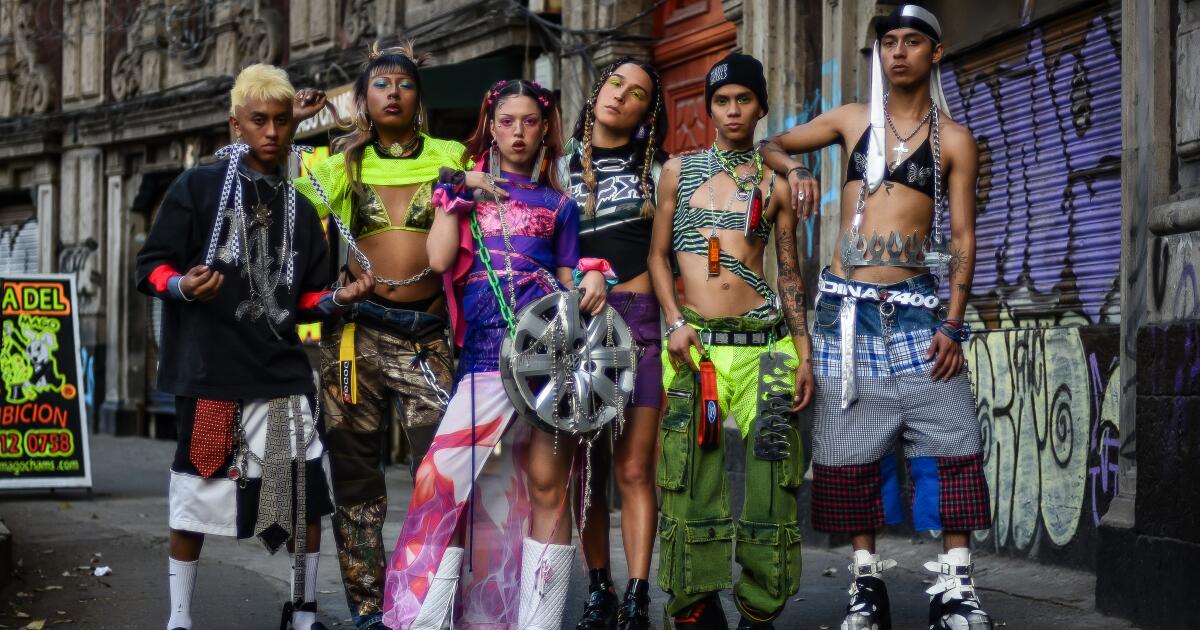
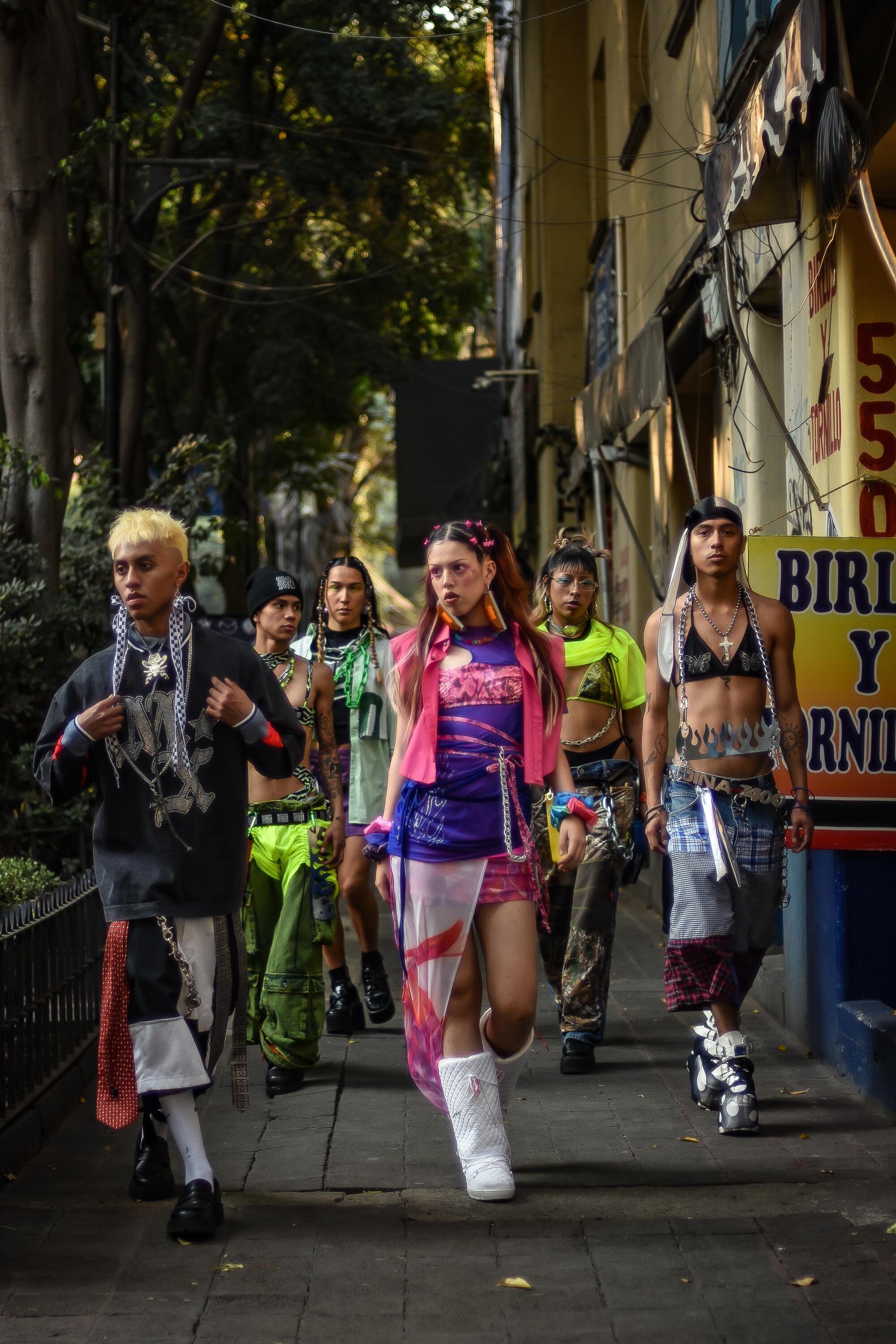
Eric Solis describes his photos as “cyberghetto,” “flow 2000s,” “raver chic.” Models wearing cargos layered with neon mesh shorts, stand among the rims at a car lot, using a purse inspired by one. Remixed plaid jorts. A durag with a blinged-out butterfly bikini top. Club kid platforms accessorized with ripped black tights. The concept: Moda sin fronteras. Solis, an L.A. native who now lives in Mexico City, where much of his family is from, wanted the photos to tell a story about the connection between two brands — L.A.-based Planeta and Mexico City-based Wavey — and in a larger sense, to “blur the lines between how people perceive what fashion is, or how it should look, in both the contexts of L.A. and Mexico.”
For Solis — a multi-hyphenate who works as an architect, event producer, photographer, art director and creative consultant, among other things — this project was an opportunity to capture the conversation he sees happening between Mexico City and L.A. in terms of fashion and style, in a way that felt expansive and not necessarily confined by gender or culture. The models themselves are young people who are mostly from Mexico City (or live there) spanning queer, trans and Indigenous communities that Solis met through fashion shows. The entire team — from the stylist Tuzza to the hair artist Ozmar Báez — was an intentional part of the conversation he was trying to create through the clothes and photos, he says.
Solis was thinking about the dichotomy of the two communities in L.A. and Mexico City, and at least in terms of style, how they were taking from each other and presenting it in new ways. He wanted to take what he was seeing and present it so that it wasn’t L.A. style, wasn’t Mexico City style, but was a hybrid of both.
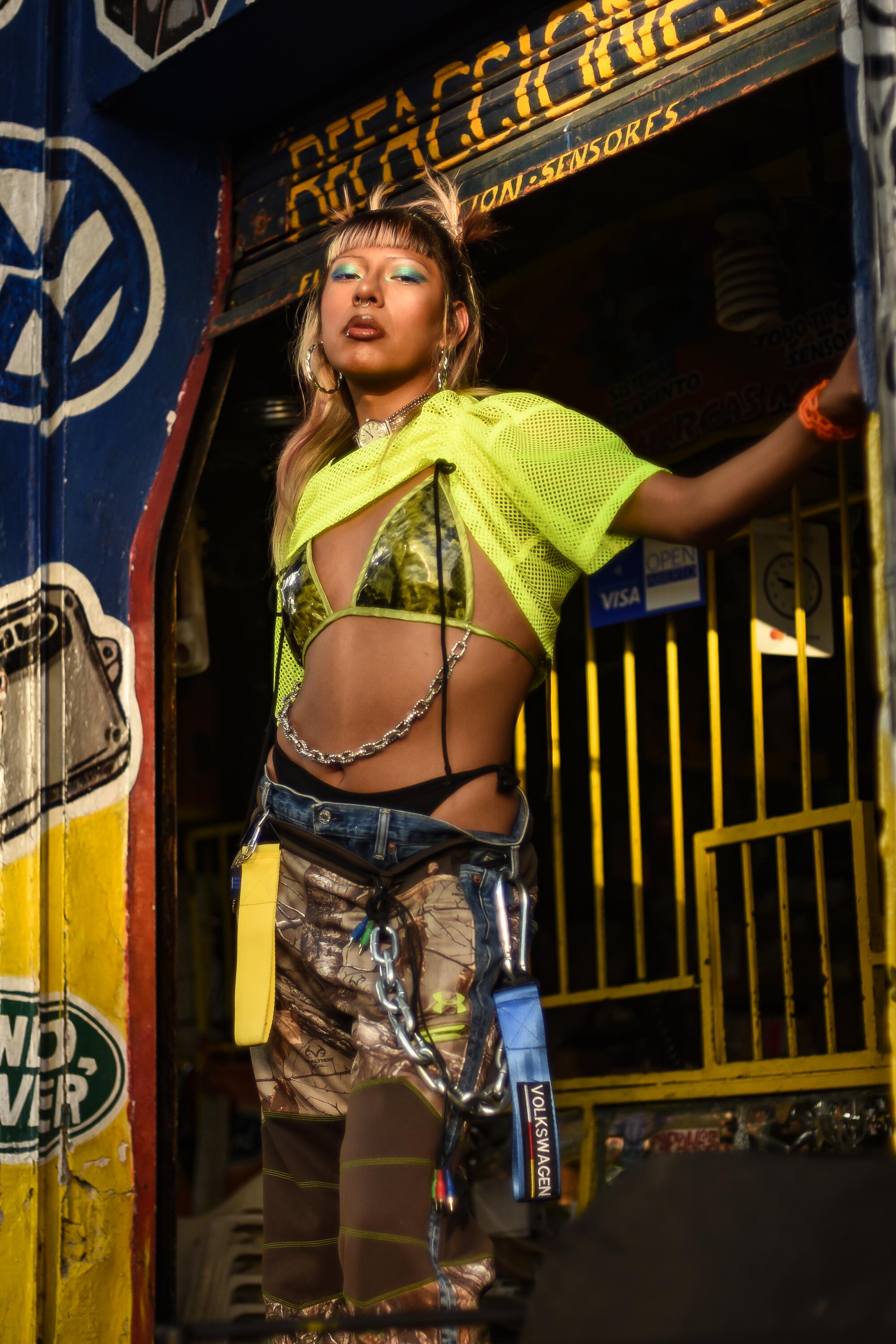

Genesis wears Planeta neon mesh top and hunting pants, Wavey snakeskin bikini top.
The shoot acted as a catalyst for a pop-up called “No Hablamos Inglés” that Solis is curating on Sept. 21 at Planeta’s DTLA store. He is bringing the work of more than 20 emerging Mexican designers — spotlighting a scene of alternative, young, queer artists who are morphing how we think about Mexican style — including Palida Studios, Tlacuache Muerto and Resurrected. The name is important; for Solis it stands for cultural pride and community: “Sometimes, Mexicans on the Mexico side feel like they should learn English to better their lives or to be better in business, but this is almost like a saying of defiance. It’s almost rebellious: ‘No Hablamos Inglés.’”
This project is also Solis’ contribution to an ongoing conversation artists have been sparking between L.A. and Mexico for years, chief among them artist and curator Anita Herrera. From the beginning, Herrera has infused her practice with the mission of finding the connection and disconnections between L.A. and Mexico. Her ongoing series, “Diaspora Dialogues,” has consistently used fashion as a medium to explore these topics — as has much of Herrera’s work; she went to fashion school and started her career in the fashion industry.
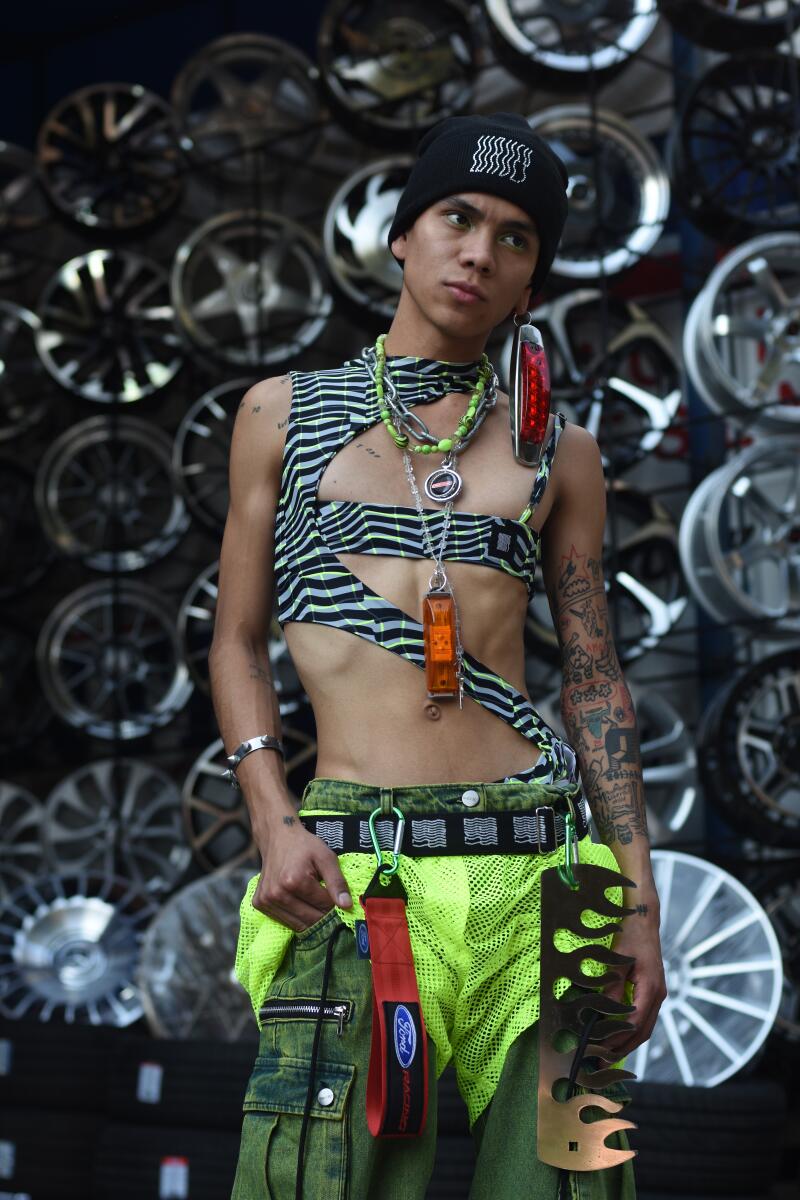
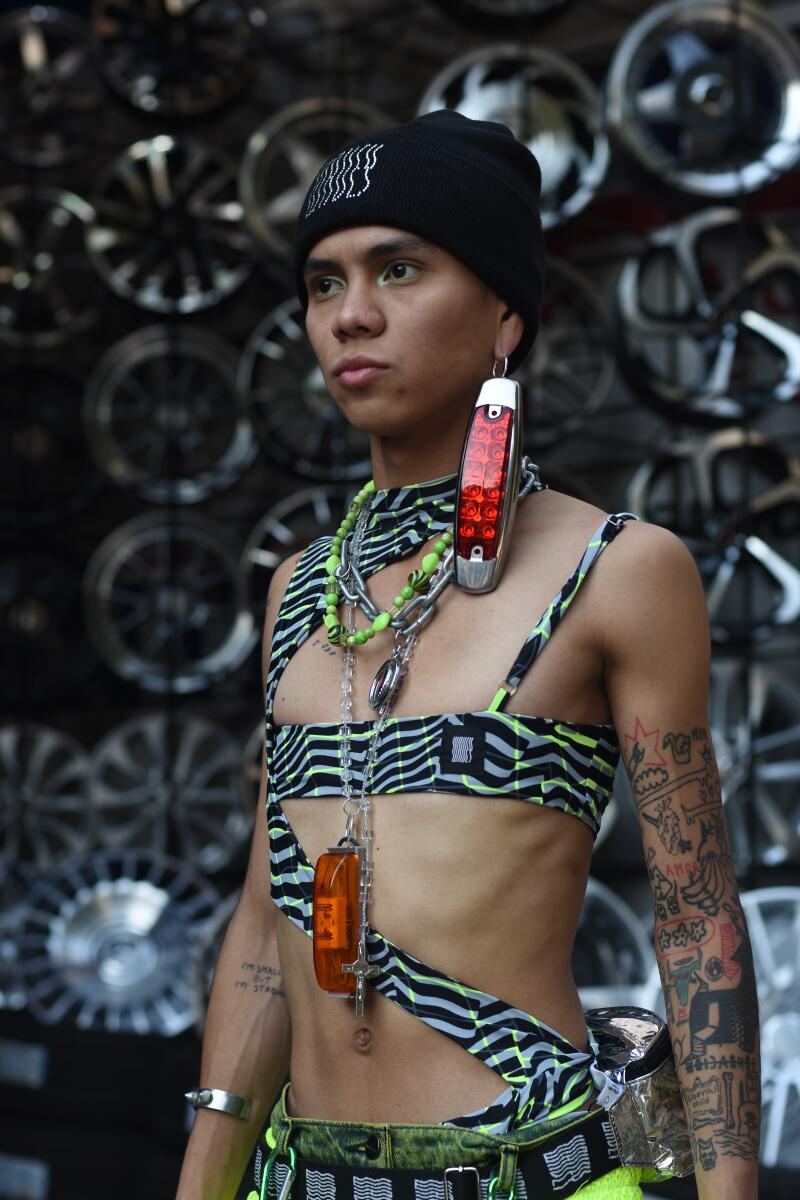
Israel wears Wavey zig-zag top, bejeweled beanie, acid cargo pants, chrome fanny pack, Planeta neon mesh shorts, Tuzza custom reflector earring.
Solis met Herrera through helping with “Diaspora Dialogues” and met the founders of Planeta at one of Herrera’s exhibitions in Mexico City, “A Través de la Moda,” where she displayed personal pieces from her closet that drew from images and symbols that Mexican Americans hold dear — La Virgen de Guadalupe, the Aztec calendar — “as an exploration of history, myths and novelties between L.A. and Mexico City,” Herrera says. Planeta, founded by designers Hoza Rodriguez and Richard Resendez, has an IYKYK cult-like kind of status among the fashion people, artists and club kids who wear it. Their work is best recognized by the magic they do with upcycling — flannel shirts layered on top of baggy denim become a new genre entirely, something from the future. When they went to Mexico City for the exhibition and were able to see the city through the eyes of Solis and Herrera (Rodriguez and Herrera have been friends since 2009, when they were both starting their careers in the fashion industry), something clicked. “Everything’s unisex,” Rodriguez says of the style he observed in Mexico. “And I learned that they are not influenced by us, we are influenced by them.”
Wavey, a Mexico City brand and store founded by Talulah Rodriguez-Anderson in 2018, makes the kind of things you might wear at a rave on the beach. It’s always been dedicated to communicating its clothing as unisex. Rodriguez-Anderson grew up in L.A. and was inspired by her visual experiences and memories on both sides of the border when starting her brand. The brand’s store, in Colonia Juárez, carries this same energy, with its aesthetic drawing from the cargo trailers that go from Mexico City to the States. A Wavey piece borrows from Chicano silhouettes and images, told through a Mexican streetwear lens — the latter of which Rodriguez-Anderson says is “evolving very quickly.”
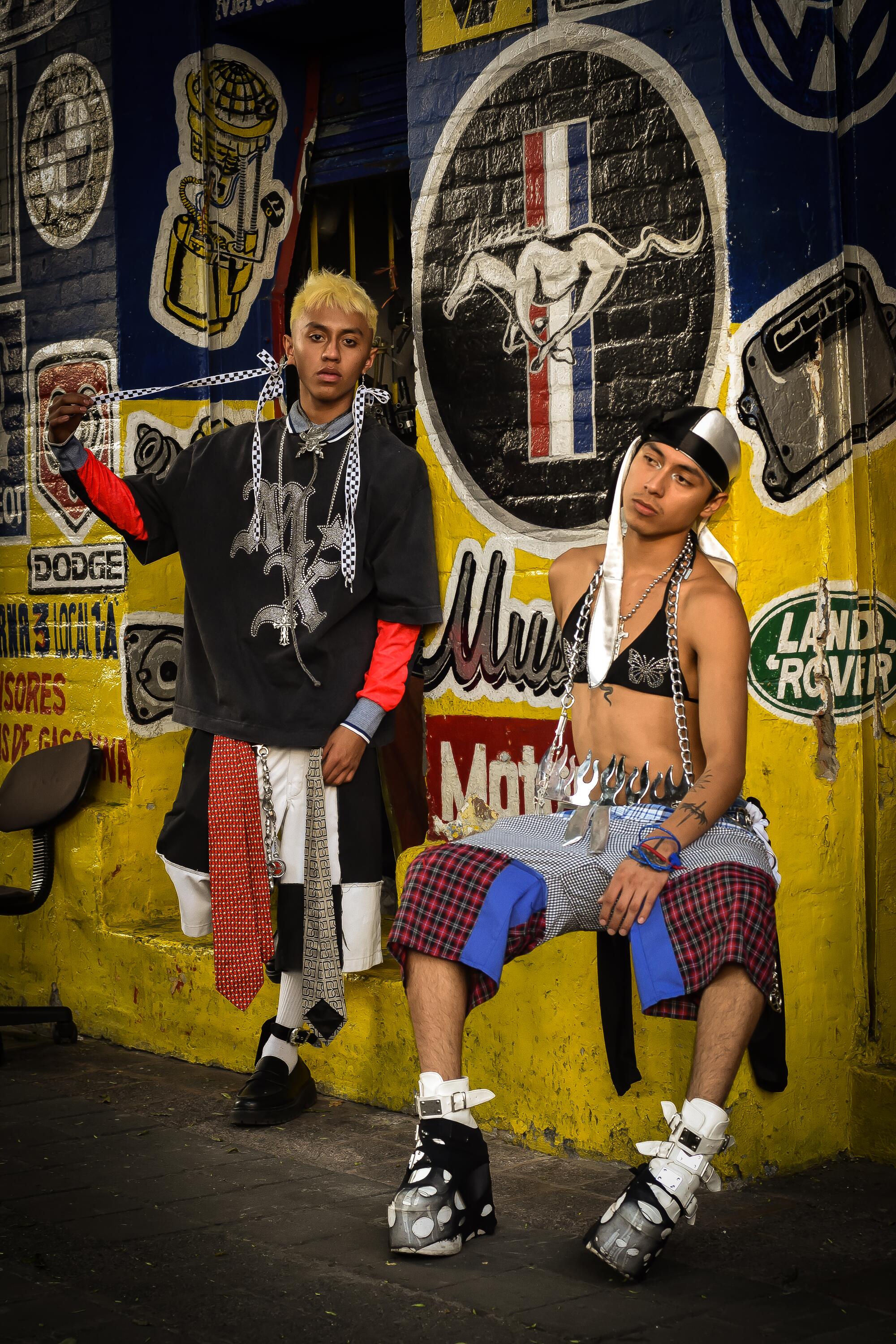
Jorge, left, wears Wavey MX* T-shirt, Planeta jersey work shirt and Planeta checkered Dickies shorts. Axel wears Wavey mariposa bikini top, Planeta plaid block shorts.
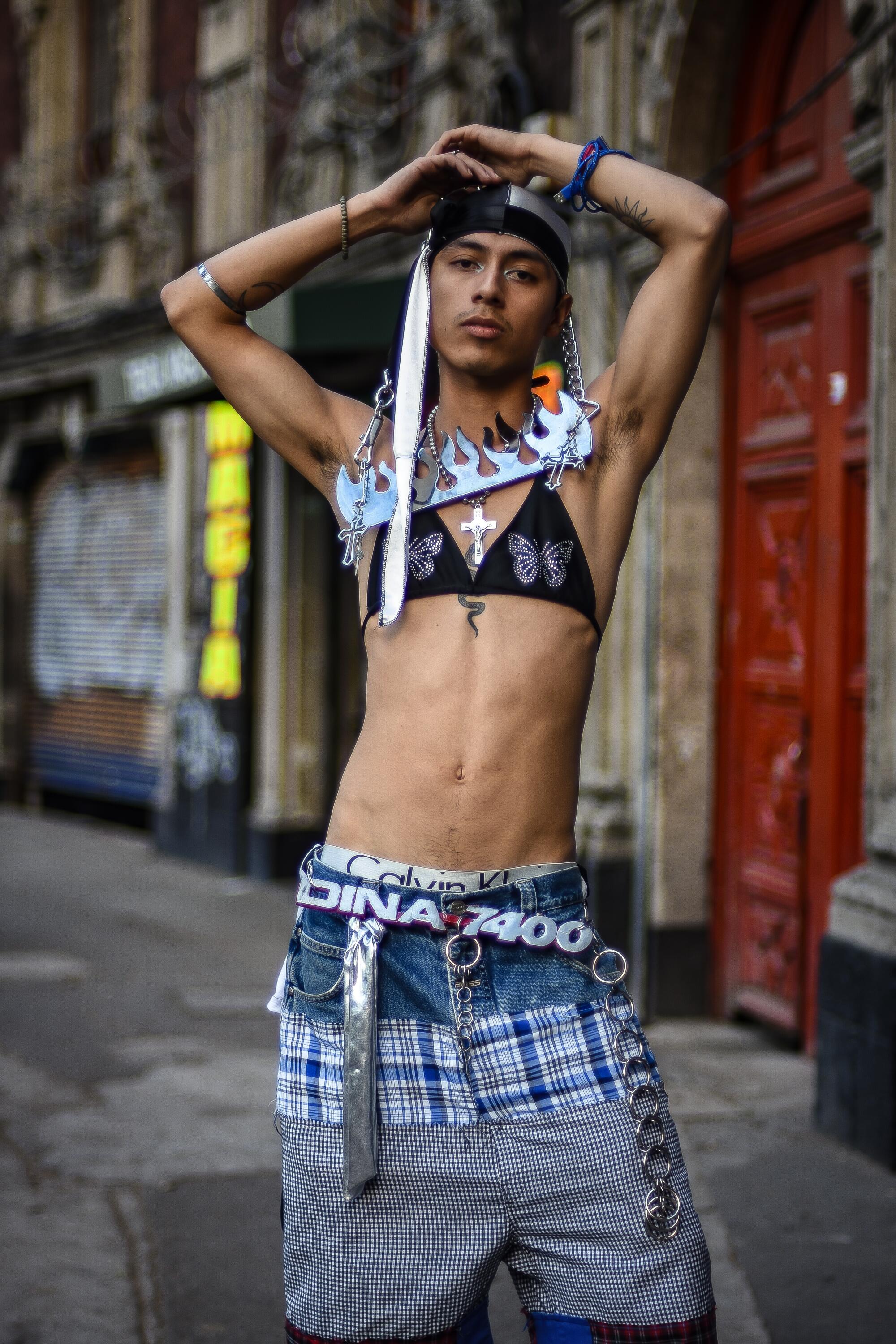
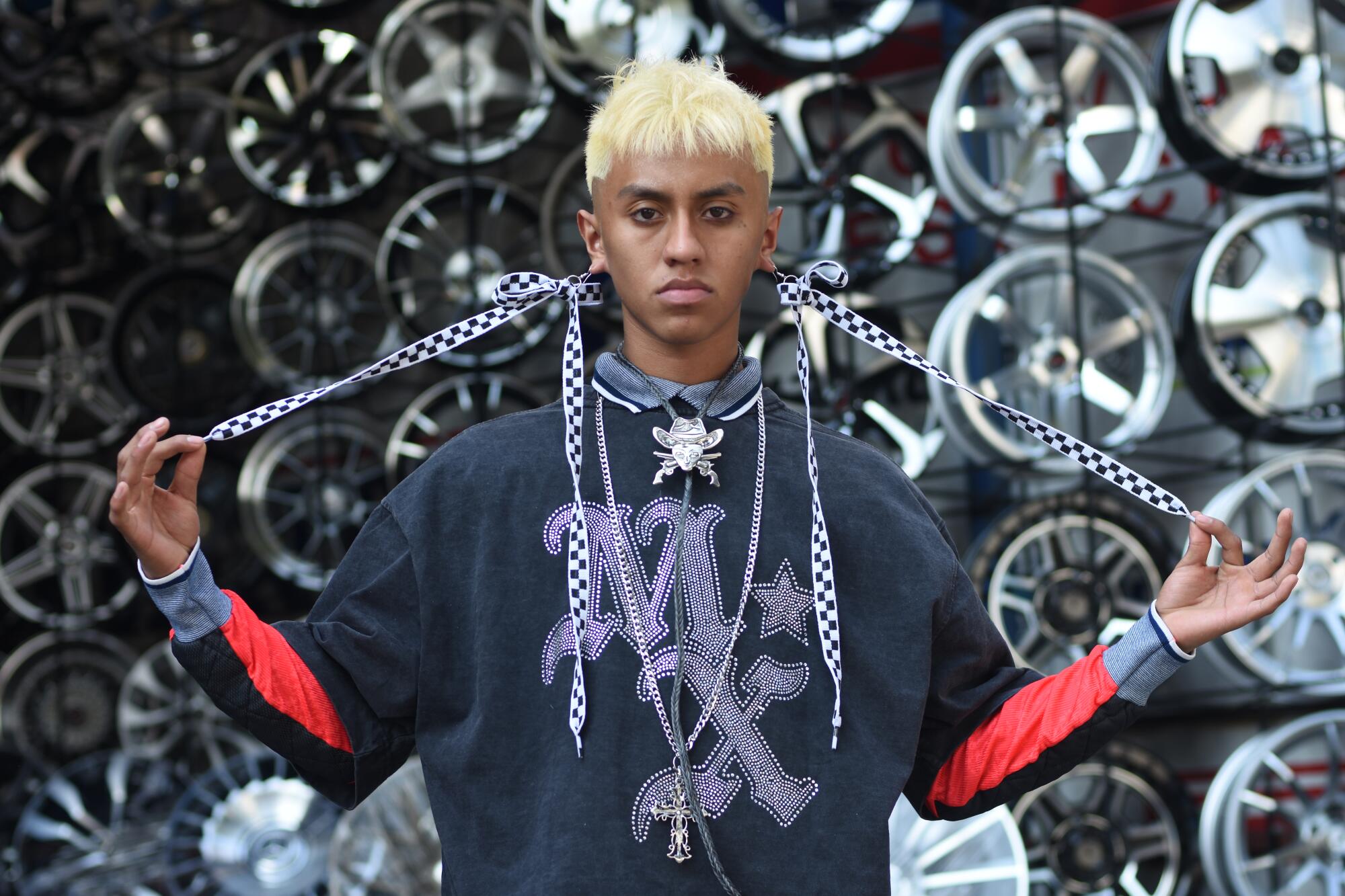
Solis wanted to highlight Planeta and Wavey because they felt like family in his mind — with a shared ethos, a look that felt like it was drawing from similar references. “To me, they’re like siblings, they’re like cousins,” Solis says. “They sort of talk to each other in terms of their style.” This is shown in the styling of one of the models, Jorge, who wears reworked checkered Dickies shorts from Planeta pointing to an early-2000s L.A. skater aesthetic, and a blinged-out shirt with the initials “MX” from Wavey as a nod to Mexico City. “It’s a new aesthetic,” Solis says. “It’s not California, it’s not quite Mexican. But it’s both, it’s something else.”
With the shoot, and with the pop-up, Solis says he wanted to show a “cross-section of Mexican youth, real Mexican youth.” He chose Colonia Juárez for the location, specifically an area that’s home to many auto body shops, because it felt true to where these looks would actually be worn. The environment and the clothes are in communion with each other, Solis says. “I also wanted to shoot it in a location that was authentically Mexican. Whereas I feel like La Condesa, or Roma, it can feel foreign, almost.”
“For me, that shoot, when I look at it, it brings some sort of happiness and some sort of truth of who we are as Latinos, as the LGBTQ community, and as human beings,” says Planeta co-founder Rodriguez, also the founder of L.A. brand Hologram City. “When I see that, it makes me happy to know what we really are: we’re talented, we’re creative, we look like superheroes, we’re the s—.”
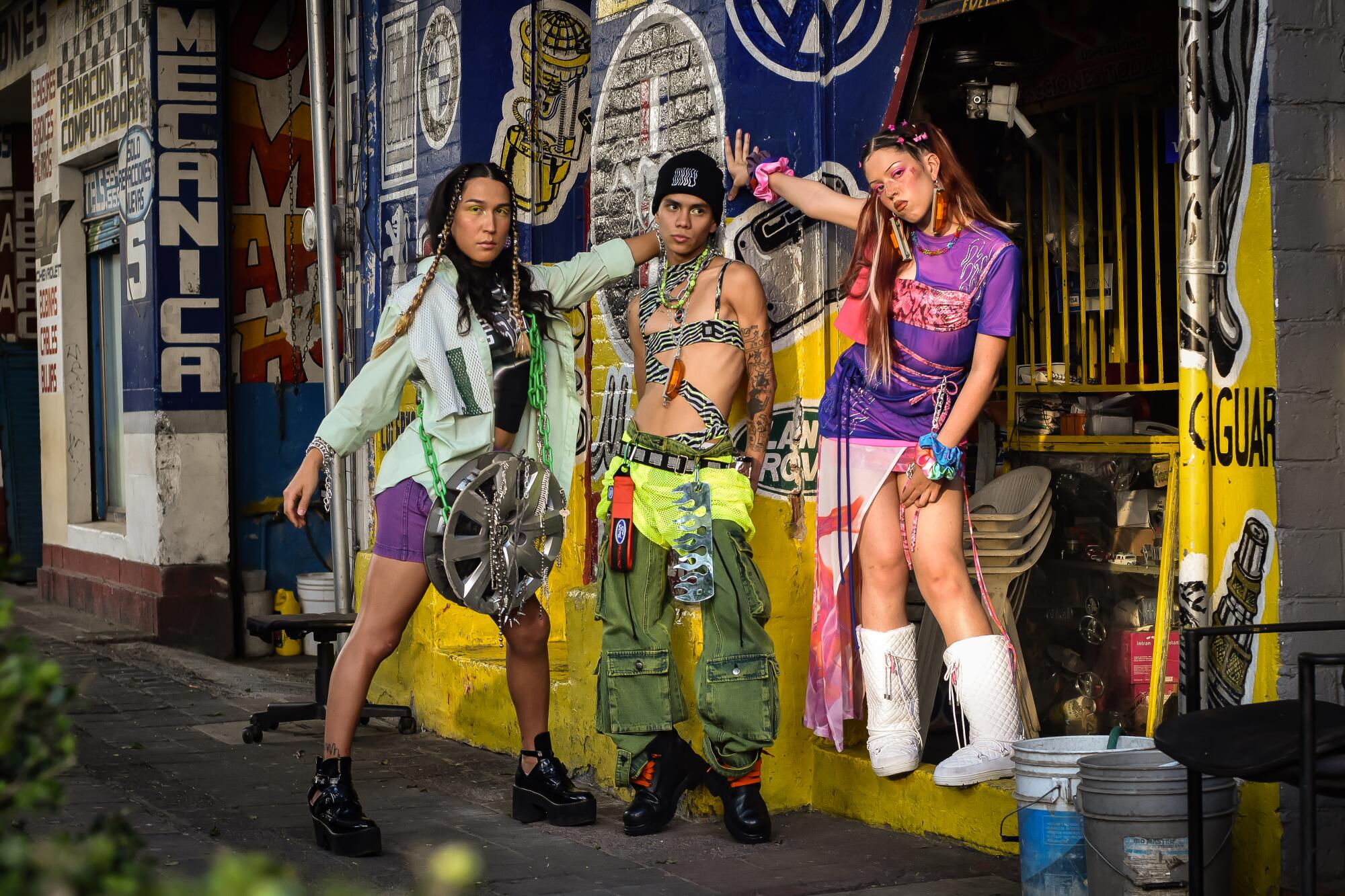
Ellie, left, wears Planeta button-up jersey shirt and biker vest, Wavey skirt, Tuzza custom rim bag. Israel, center, wears Wavey zig-zag top, beanie, acid cargo pants, chrome fanny pack, Planeta neon mesh shorts, Tuzza custom earring. Li, right, wears Planeta baby button-up shirt, Wavey purple flame dress, pink & white flame dress, snakeskin top, Tuzza custom reflector earrings.
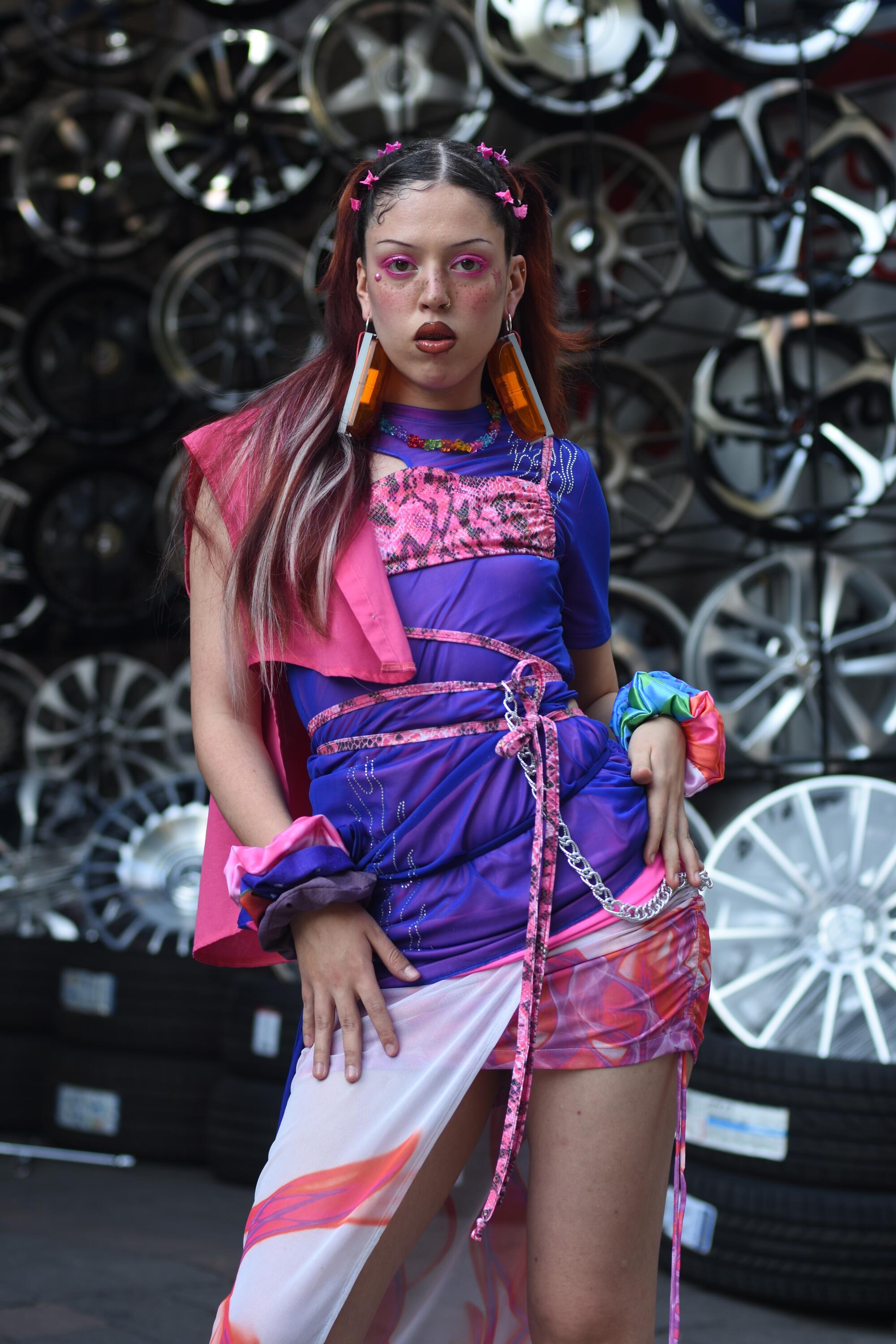
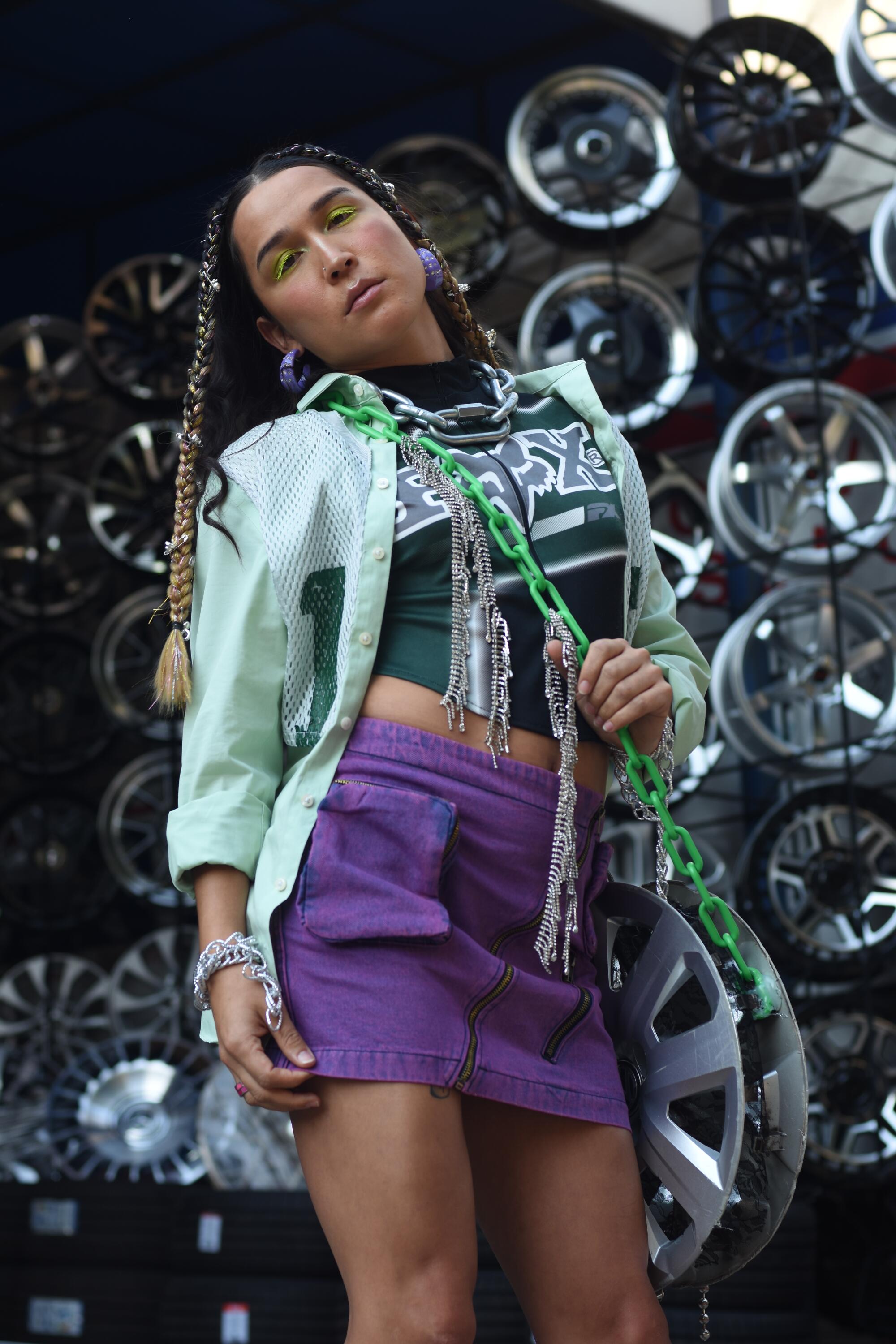
Even as an architect, Solis has always worked in creative or community realms. He was on the team of designers for the 6th Street Bridge — and curated the art, photography and architecture exhibit “Nuestre Puente,” in collaboration with Estevan Oriol, in celebration of the bridge’s opening. He’s also one of the founders of the DTLA Proud festival. When he moved to Mexico City, he wanted to find a way to blend his obsession with fashion, art and culture, and embed himself into the creative community there as much as possible. Solis frequents Tianguis La Lagunilla once a month, which is where he says he came to really understand Mexico City’s fashion youth culture and meet some of the brands he’s bringing to L.A.
“Moving to Mexico City four years ago and really starting to understand by living here and building community here, [I realized] how our communities are not quite as connected as they could be because of those political, policy barriers that separate communities,” Solis says. “I have a whole circle of friends here in Mexico City that are artists, designers. They have their own brands, very integrated in the creative community here, and many, almost all of my friends who want to expose their brand or expose themselves as artists in the United States, they can’t — because they literally can’t go.” He wants to create connections for these Mexican designers, and allow the people of L.A. to experience their work. As a Mexican and U.S. citizen, Solis feels like he’s able to bridge the two sides — bringing Mexican designers to L.A. through their artistry, even if they’re not able to come here themselves.
The collection of designers that Solis is bringing to his L.A. pop-up this month conjures some key phrases for him: “It’s queer as in f— you.” “Barrio bratz.” “Sin género.” “Mexa-core.” The designers include Ese Chico, known for its irreverent graphic T-shirts and slogan: “Locura sin piedad,” or “madness without piety” — Herrera included it in her “A Través de la Moda” exhibition when she brought it to L.A. earlier this year. Another is Squid, a brand “inspired by nature” that transforms garments through upcycling, airbrush and screen printing into one-of-a-kind works of art. It was crucial for Solis that the pop-up captured this moment in Mexico City’s fashion scene, which he describes as “infinite.”
Jorge Líos of Palida Studios — a brand with a style Líos describes as a balance of elegance and deterioration — is a native of Nezahualcoyotl, an area about an hour outside of Mexico City. The spirit of Mexico City’s street-level fashion scene is a mix of “vulgar, atrevido y chido,” he says. “Como que la gente justo está desmitificando esta idea de que lo que debes de usar solamente son marcas gabachas y ya está volteando a ver marcas Mexicanas. Sobre todo, la escena está construyendo o reafirmando la identidad de ser Mexicano.” (That is, people are demystifying the idea that you should only use foreign brands and are turning to Mexican brands. The Mexico City scene is building up and reaffirming Mexican identity.) Since he was a kid, it was Líos’ dream to travel to L.A. or New York. He loves hip-hop and was inspired by the music culture in both cities. The fact that he is now traveling to L.A. through his designs and that they’re reaching a new audience that might be moved by them? “Es una locura.”
The list of L.A.’s sister cities includes Salvador, Brazil; Busan, South Korea; Berlin; and, of course, Mexico City. For Solis, it’s more than just a connection or conversation: there are familial ties. “The shared passion through fashion is something that really connects us and really unites us,” he says. “I’ve begun to see how fashion can actually build an identity that is of neither place, but is of both places.”
Production Eric Solis
Models Axel, Ellie, Genesis, Israel, Jorge, Li
Makeup Beauty Dealers
Hair Ozmar Báez
Production assist Dennis Caasi




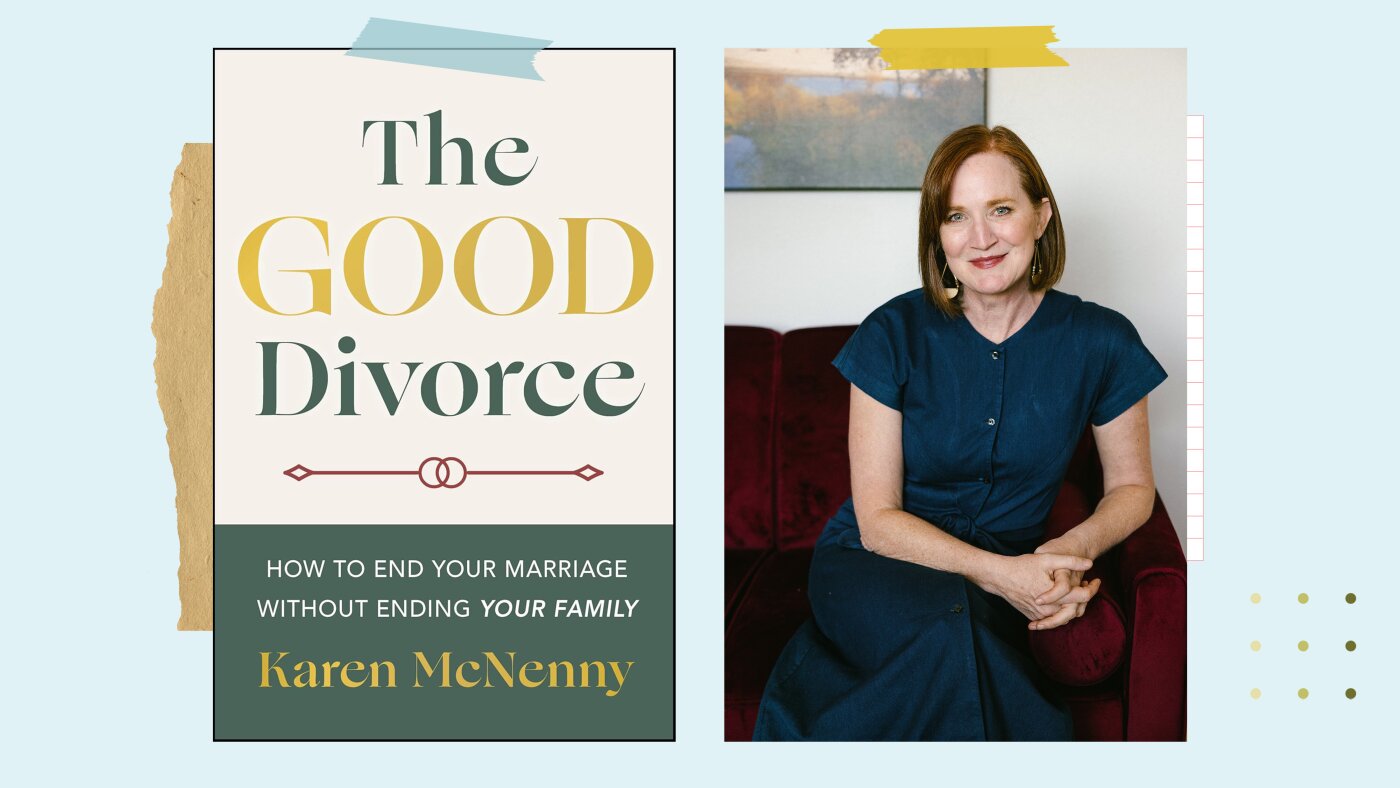
Karen McNenny is a certified divorce coach, certified co-parenting specialist and author of the book The Good Divorce: How to End Your Marriage Without Ending Your Family.
Wiley/Jossey-Bass/NPR, Nicole Wickens/NPR
hide caption
toggle caption
Wiley/Jossey-Bass/NPR, Nicole Wickens/NPR
When Karen McNenny was facing divorce about 15 years ago, she was afraid of what it would mean for her future: despair, debt and a lifetime of resentment, she says.
At the same time, she was thinking of her two children, she says. She didn’t want their father to become her enemy.
So she and her former husband chose to approach divorce differently as a couple. “We’re going to renovate and transform this family. We’re not going to destroy it,” she says. “The marriage is ending, not your relationship.”
For McNenny, a mediator, certified divorce coach and certified co-parenting specialist, divorce is a tool, not a weapon. She expands on this concept in The Good Divorce: How to End Your Marriage Without Ending Your Family, which came out this spring. The book offers guidance on how to maintain compassionate and respectful ties with a former spouse while also healing and moving forward.
According to Pew Research Center, a third of Americans who have ever been married had a first marriage that ended in divorce. For that reason, McNenny hopes her book becomes a must-read for couples before they get married. “The best time to talk about divorce is before you need to talk about it,” she says.
She shared insights from her book in a conversation with Life Kit. This interview has been edited for length and clarity.
The book is called The Good Divorce. What does that mean?
[For those with kids,] the good divorce is about protecting the future of the family while we dissolve the marriage.
After the paperwork is done and the assets have been divided, can you and your co-parent sit on the same side of the bleachers during the basketball game? Can you still see yourselves as a partnership, with the ability to have thoughtful conversations about your kids?
For those who don’t have kids, [the good divorce is] about protecting your health — your mental health and your physical health. If we are doubling down with resentment and bitterness, all of that gets stored in the body and shows up in different ways. You deserve a pathway that’s less destructive.
Let me also be clear: There are times when an amicable, collaborative process is not possible and maybe even inappropriate. For instance, where there’s active addiction, abuse, domestic violence, coercion or unmanaged mental health issues.
How do you get to a place where you don’t feel triggered by your partner, so you both can work together toward a good divorce?
That, my dear, does not happen overnight. That is more like a dimmer switch going up and down and up and down, and the gift of time helps to get there.
It’s a complex emotional journey because we do feel relief in walking away from our spouse and the challenges. But with it, there is extraordinary grief that comes with divorce that I think is often underestimated and undersupported.

If my spouse had died, people would’ve been checking in with me regularly. I never would’ve spent a holiday alone in that first year. There probably would’ve been a meal train.
But he didn’t die. My marriage died, my family structure died, my identity as a wife and a partner died. There’s so much grief through these transformations that come with divorce that we don’t see.
So supporting friends in all those ways that you would as if there had been an actual death is doing a lot for your friends who are going through divorce.
How do you let your friends, family and community know that you’re getting a divorce and that you might need support?
Put a communication strategy together. It’s not just for how we tell the kids. It’s also a communication strategy for the grandparents; to the circle of support around the kids, like teachers, coaches and mentors; and our shared community.
It’s extraordinary when a couple can write that message together, not unlike a marriage announcement. [You might say:] We’ve made a really difficult decision. We wanted to let you know. We’re not going to court. Don’t expect a battle. Please don’t ask us why. Just ask us how we’re doing. We’re on the same side as the kids. You don’t need to pick sides.
In doing so, we’ve given everyone the same information at once. It’s a unified message that comes from the parent team, and it allows your community to know how best to support you. And it takes out all the gossip and wonder about what is going on.
If you have kids and they’re splitting time between two homes, what are some ways to make that change easier for them?
Our kids were 5 and 7 when we divorced, so it was three or four nights at a time in each home. By the time they got to be about 8 or 10, it made sense to go a week in each residence. After COVID, the kids came to us and said, “Can we just have two weeks in a house? We wanna be able to settle in more.” [So we said] OK.
A lot of parents are so rigid about the schedule. There’s no flexibility. That doesn’t serve anyone. So I recommend liberating yourselves from the calendar and letting it grow and bend with your kids appropriately.
Knowing what you know now about divorce, what questions do you think couples should ask themselves before they get married?
So often when people arrive at the threshold of divorce, couples are like, “We don’t know what we’re doing.” Get educated about the business part of it.
There is no harm in having a prenuptial agreement. Even if you decided not to file it, have the conversation about the implications. What does it mean if we buy this house together? What does it mean if one of us works more and one of us works less?
We also underestimate what it means to be roommates. What are your value systems around cooking and cleaning? How much alone time do you need? It’s easy to fall in love and not know if you’re compatible.
Do you think you’d get married again?
I absolutely hope that I get to say yes to a lifelong commitment with a partner, as I believe we often are given the opportunity to become a better version of ourself through partnership.
The story was edited by Meghan Keane. The visual editor is CJ Riculan. We’d love to hear from you. Leave us a voicemail at 202-216-9823, or email us at LifeKit@npr.org.
Listen to Life Kit on Apple Podcasts and Spotify, and sign up for our newsletter. Follow us on Instagram: @nprlifekit.

In Alice and Steve, Jemaine Clement and Nicola Walker play long-time friends who turn on each other after he gets involved with her 26-year-old daughter.
Lara Cornell/Disney+
hide caption
toggle caption
Lara Cornell/Disney+
I grew up watching episodic shows on network TV, nearly all of them formulaic but some indelibly great. Then, like everyone else, I moved into the days of what my colleague David Bianculli dubbed Platinum TV, where series like The Sopranos and The Wire and Fleabag aspired to something higher. What both these eras had in common was that their shows were carefully crafted — they had an internal logic, and a tone, that held them together.
In recent years, though, there’s been a proliferation of shows that, possibly obeying some algorithm, care less for coherence than sensation. They lurch among tones, from cuteness to sentimentality to meanness, stirring in random plot twists along the way. Bouncing all over the emotional map, these shows depend on compelling actors and a few memorable scenes to make us overlook their loose construction.
A great example is Alice and Steve, an entertaining but sometimes exasperating six-part British comedy on Hulu about two 50-something best friends who turn on each other after he gets involved with her 26-year-old daughter.


While the premise is juicy, it’s also a tad yucky, and I mainly tuned in because its title characters are played by performers Jemaine Clement from Flight of the Conchords and Nicola Walker, whom I’ve raved up on this show more than once.
The series starts poorly with Steve and Alice going on a cutesy bender after a friend’s funeral. Now, I always hate drunk scenes, which are an invitation to overact. As Clement and Walker bray their lines, we learn that Steve’s a divorced celebrity hair stylist who can’t find a girlfriend while Alice is a clothes designer with a doting younger husband, nicely played by Joel Fry, a sweetie-pie of a teenage son — that’s Tyrese Eaton-Dyce — and, of course, that 26-year-old daughter, Izzy, who has inherited her mother’s willfulness. Played by Yali Topol Margalith, Izzy kickstarts the plot by flirting with Steve. Predictably, he succumbs.

Almost immediately, they think they’re in love. While the weak-willed Steve wants to hide their romance — he knows it’s inappropriate — Izzy just blurts out the facts to her mom. Alice flips. And from hereon out in this series where the women are as alpha as the men are hangdog, Alice drives the action. Betrayed and violently angry, she’ll do whatever it takes to break them up — no matter who gets hurt. Her antics unleash Steve’s own malice. We’re in Beef territory.
At its core, Alice and Steve hinges on the way that platonic friendships are often richer and more powerful than romantic ones. It’s a fascinating subject, which may be why I found the script by Sophie Goodhart so frustrating. I wanted her to dig deeper. While the show’s got some very funny bits — Alice’s sharp-tongued mother is a blast — it’s often annoyingly lax.

If Steve really does the hair of Charli XCX, how come he’s a clueless older guy whose pop culture references are Willie Nelson and Woody Allen? If Izzy truly adores her mother as she claims, why does she keep rubbing her relationship with Steve in her mom’s face? Halfway through, one character nukes the other’s career, but this life-shattering event has no real weight: It’s barely even mentioned for the rest of the series.
That said, Alice and Steve is worth seeing for scenes like the one in which Steve spinelessly sells Izzy out or the lacerating discussion between Alice and her husband when he fully grasps that he adores a woman who views him as a reliable but dull concierge, not a man she likes hanging with. Most touching of all may be the lovely sequence when Alice, wise for once, smooths a romantic crisis between her son and his would-be girlfriend, a pair who are the show’s emblem of hope. For once, we understand why people love her.

While most viewers will find Steve more likable than Alice — the show takes pains not to make him appear predatory or creepy — the role doesn’t give Clement a whole lot to do except play variations on shambolic dread and discomfort. The show gets its galvanizing zing from Walker, a beloved star in England with amazing, luminous eyes. Her Alice is the kind of complicated, volcanic heroine that you don’t see in movies and rarely see on TV, one who shows her apocalyptic rage freely and in many different forms.
At least once in every episode, something would lead me to say, “Man, is this show a mess.” But that wasn’t a deal breaker. I kept watching. After all, life is messy, too.


How to enter your Sporty Spice era.
Getty Images/quantic69/Olga Kurbatova/Anastasiia Zvonary/Photo Illustration by NPR
hide caption
toggle caption
Getty Images/quantic69/Olga Kurbatova/Anastasiia Zvonary/Photo Illustration by NPR
Reality dating and professional sports are not as different as you’d think.
Brittany is in her Sporty Spice era – she watched the NBA playoffs, she’s following World Cup games, and she’s watching the New York Liberty play their WNBA season. These games are daily – and so is the reality dating show Love Island. And she noticed that the two formats are not very different at all. Defector.com staff writer and co-owner Kelsey McKinney came to the same conclusion – so the two of them discuss why these games of athleticism and love can bring us together… and why they get valued differently in our culture.
For more episodes on sports and reality TV, check out:
Get rich or die trying: how sports betting is changing our love of the game
Is this the end of reality TV?
The ugly truth of America’s expensive homes
Support Public Media. Join NPR Plus.
Follow Brittany on Instagram: @bmluse
This episode was produced by Liam McBain. It was edited by Neena Pathak. Our Supervising Producer is Cher Vincent. Our Executive Producer is Barton Girdwood. Our VP of Programming is Yolanda Sangweni.
-

 Mississippi2 minutes ago
Mississippi Lottery Mississippi Match 5, Cash 3 results for July 6, 2026
-
Missouri5 minutes ago
Missouri teachers push back on governor’s A-F school grading plan
-

 Montana10 minutes ago
The Record is Clear: The Wilderness Society, Greater Yellowstone Coalition, and Montana Wilderness Association have Consistently Undermined the Roadless Rule
-

 Nebraska17 minutes ago
Pine-Richland receiver Khalil Taylor pulls hat trick, picks Nebraska over Penn State
-

 Nevada20 minutes ago
Nevada Youth Sports estimates $250K in damage after Fourth of July firework fire
-

 New Hampshire25 minutes ago
Suspected gunman in Hampton Beach shooting was in U.S. Navy
-

 New Jersey32 minutes ago
I took my kids to this New Jersey hotel and stopped making fun of the state (for now)
-

 New Mexico35 minutes ago
Storm chances continue all week for parts of New Mexico

