Lifestyle
Oliviero Toscani, Driving Force Behind Provocative Benetton Ads, Dies at 82


Oliviero Toscani, an Italian photographer who used images of an AIDS patient and death row inmates to break the boundaries of fashion imagery as the creative mastermind of Benetton’s advertising campaigns, died on Monday. He was 82.
His death was announced by his family on Instagram. They did not say where he died or cite a cause of death, but in August Mr. Toscani told the Italian newspaper Corriere della Sera that he had been diagnosed with amyloidosis, a rare and incurable condition in which there is a buildup of protein.
His shock-and-awe campaigns in the 1980s and ’90s helped turn Benetton from a small Italian brand into a global fashion powerhouse, with provocative advertisements that blurred the lines between marketing and activism, high art and consumer industry.
In one ad, an AIDS patient lay on his back, his mouth open, his hands curled on his chest. His dark eyes stared past his family, who had gathered around his deathbed. The patient, David Kirby, looked almost Christ-like.
And there, near the bottom right, a few words hung in a green box: “United Colors of Benetton.”
The advertisement, which ran in the 1990s, was one of the most provocative and divisive in recent fashion history, prompting furious debates over whether Benetton, and Mr. Toscani, were creating art, engaging in advocacy or exploiting the epidemic to sell its clothes.
Notably, Mr. Toscani had the Kirby family’s permission to use a colorized version of the image, which was shot in 1990 by the photographer Therese Frare. The Kirbys said the campaign had helped broaden awareness about AIDS.
“Benetton didn’t use us, or exploit us,” the Kirby family said, maintaining that this was a way for their son’s portrait to be “seen all over the world, and that’s exactly what David wanted.”
Mr. Toscani’s ads were often socially progressive, with images of racially diverse and gay families. They were also meant to shock. He used pictures of horses copulating. He used the bloodstained uniform of a soldier killed in Bosnia-Herzegovina. One ad featured actors dressed as a priest and a nun kissing.
“Advertising agencies make millions by repeating the same old thing,” he told The New York Times in 1995, adding, “We try to go another way.”
Mr. Toscani sometimes crossed the line even for Benetton. He joined the company in 1982 and left in 2000 amid an uproar over an ad campaign that featured photographs of death row inmates across the United States.
He returned as creative director in 2017. But his career at Benetton came to an end in 2020, not because of the calculated and daring risks he had taken in photography and advertising, in which he delighted in his broadside challenges to conventional ideas of respectability. Rather, it was because of an offhand comment he made in a radio interview about a bridge collapse in Italy in which more than 40 people died. “Who cares that a bridge collapsed?” he had said. Though he apologized, Benetton fired him.
Italian politicians and creative leaders honored him in social media tributes on Monday. The designer Valentino Garavani, the creator of Valentino, called him “a visionary who challenged the world through his lens.” The designer Giorgio Armani wrote that “the directness and visual impact of his language set a standard.”
Oliviero Toscani was born in Milan on Feb. 28, 1942. He followed in the footsteps of his father, Fedele Toscani, a photojournalist. Mr. Toscani trained at the Zurich School of Applied Arts and worked as a fashion designer before he joined the Benetton Group as art director in 1982.
His survivors include his wife, Kirsti Moseng Toscani, and their three children, Rocco, Lola and Ali. Mr. Toscani was married twice before and had three other children. Complete information on survivors was not immediately available.
In his final months, Mr. Toscani told the Corriere della Sera that he had lost weight while being treated for amyloidosis and that his sense of taste had declined. Wine tasted different to him, he said. “I am not interested in living like this,” he added.
But in September, he traveled to the Museum fur Gestaltung Zurich for a major retrospective of his work called “Oliviero Toscani: Photography and Provocation.” It closed just over a week before he died.
“I have found out that advertising is the richest and most powerful medium existing today,” he told The Times in 1991. “So I feel responsible to do more than to say, ‘Our sweater is pretty.’”
Elisabetta Povoledo and Matthew Mpoke Bigg contributed reporting.



Lifestyle
L.A. Affairs: I’m a black woman. He’s a white guy with a pickup truck. Here’s what happened

“That guy over there.”
I was talking to my friend, Kim, as we sipped cocktails at a bar in Hollywood. She followed my gaze. “The … bald … white guy?” she asked, her face scrunched up in disbelief. I nodded. She raised an eyebrow and slurped on her vodka cranberry.

Classic stories from the Los Angeles Times’ 143-year archive
Some background might be helpful here. I’m black and my friend Kim is white, as was the guy in question. He also shaved his head and, apparently, that threw my friend for a loop. I knew why.
Since I’d known her I’d mostly dated black guys. The real estate agent I’d met at the LACMA summer jazz series. The actor who’d given me his head shot as soon as he learned I was a TV writer. The musician who serenaded me at the Dresden between Marty and Elayne’s sets. All black. And the one or two white guys in the mix had hair.

Two weeks later, I climbed in the passenger seat of the bald white guy’s truck when he picked me up from my apartment in Miracle Mile. Hmm … he drove a pickup truck. And I knew from talking to him on the phone that he was from the South.
I smiled as he told me he’d made a reservation at Ammo. So far, so good. I liked that place. As we drove along, I surreptitiously glanced at him — he was wearing a nice suit, having come straight from his office to get me.
He had mentioned he was a lawyer, so I’d already mentally checked the box for gainfully employed. But something else was on my mind.
Here’s the truth: Race is still a thing.
No matter how advanced a society we think we are, the idea that we’re post-racial is laughable. Over the years working in numerous writers rooms as the only black writer, I’d become a pro at deciphering comments white guys made:
Interracial relationships aren’t a big deal nowadays.
Translation: I’d never do it but I think Halle Berry’s pretty.
I have a lot of friends in interracial relationships.
Translation: Some of my friends date Asian women.
Today, kids don’t care about race.
Translation: My kid listens to hip-hop.
This guy was from Georgia. “The heart of Klan activity,” one of my friends felt compelled to tell me. To be fair, I’m from the South. Raised in Florida, I know about chewing tobacco, gator farms, 2 Live Crew, y’all, and the Confederate flag. For that reason, I started getting nervous about this guy.
What if I were part of some Dixieland fantasy of his? After we were seated I asked him how many black girls he’d dated. “Why?” he asked. “Because maybe black girls are your thing,” I said. “I don’t want to be part of your chocolate fantasy.”
“Uh … I just think you’re hot,” he said.
We continued dating, and soon we were exclusive. This didn’t come without challenges.
Whenever we went somewhere with a lot of black people in attendance, I got the side eye from some of them. I understood. My dating outside the race was seen as a betrayal. Their thought bubble hovered, clear as day: “After everything they’ve done to us, you’re going to date one of them?”
And some days, it was tough because I felt guilty for not completing the picture of the strong black couple. Another time, my boyfriend got a call from his ex-girlfriend. “I heard you’re dating a black girl.” Yep. Word had spread through the Caucasian grapevine.
I was working on a sitcom at the time. When I told the writers on the show I was dating a white guy from the South who drove a pickup truck, I could tell they were skeptical.
The kicker was when we went to the wedding of one of his friends in Cape Girardeau, Mo. I’m not exaggerating when I say white people stared at us as we walked down the street.
See? Race is a thing.
The more serious the relationship got, the more I started thinking about kids.
If we had them, they would be “multiethnic” or “biracial” or “mixed heritage.” All terms that annoyed me. But I was getting ahead of myself, right? Was I in this or not? Was I ready to be committed to a guy whose family owned shotguns and went to the Waffle House?
My parents were both college professors. His parents hadn’t gone to college. My parents were Baha’is who didn’t celebrate Christmas. His dad played Santa Claus in various malls below the Mason-Dixon line during the yuletide season. My boyfriend listened to emo rock, for God’s sake!
This was bound to be a disaster.
But I didn’t break up with him.
I grew to love him more.
I loved that he shared a house off Sunset with a gay, Pakistani performance artist. I loved that he’d had the same Rottweiler for a pet since high school. I loved that he was a plaintiff’s attorney, helping clients who’d been discriminated against in the workplace.
I didn’t love his pickup truck — it was cramped and always had dog hair on the seat.
But no relationship’s perfect.
Fourteen years and two kids later, race is still a thing, in a growing list of things, that defines us.
Maisha Closson is a TV writer living in Los Angeles. She’s on Instagram as @maisha_closson
L.A. Affairs chronicles the current dating scene in and around Los Angeles. If you have comments or a true story to tell, email us at LAAffairs@latimes.com.
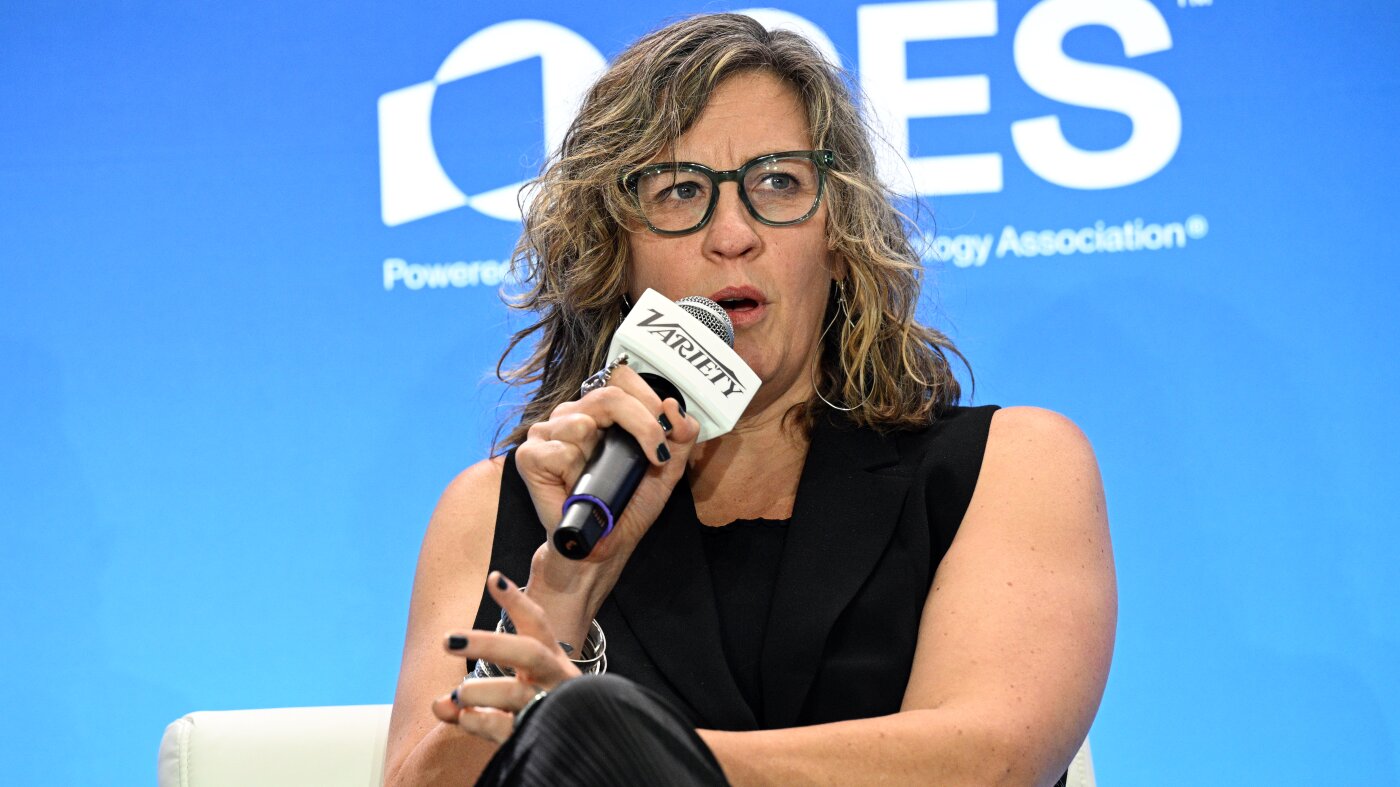
NPR has hired Nadine Zylstra to be its chief content officer. She is a veteran of Pinterest, YouTube and Sesame Workshop.
Variety via Getty Images/Variety
hide caption
toggle caption
Variety via Getty Images/Variety
NPR has hired a new chief content officer less than two weeks after overhauling its newsroom. Nadine Zylstra is tasked with expanding audiences for the public radio network’s news, entertainment and music in an increasingly digital world.
Zylstra comes to NPR from Pinterest, where she was the global programming chief. She previously was the global head of YouTube Originals and a top programming executive for Sesame Workshop, the nonprofit parent and producer of Sesame Street. She currently sits on the board of directors of PBS SoCal.
A native of South Africa, Zylstra says her first job in the U.S. was as a producer for the cable music channel VH-1 on celebrity news and wanted something different. She has since been hailed for her work promoting understanding across racial and ethnic divides for Sesame Street and programs for women at YouTube.
“I really feel like I’ve been training for this job my whole life,” Zylstra says in an interview. “I really do care about making the world a better place. When I am at my best, it’s when that connection between what I do and what I care about really comes together.”
NPR President and CEO Katherine Maher praised Zylstra, noting her work at Sesame and Pinterest’s reputation as a rare corner of relative kindness in the often harsh world of social media.
“In Nadine, we found somebody who comes out of public media… who understands the importance of media with a mission and a purpose, and as a tool for civic engagement,” says Maher in an interview. She says Zylstra will evaluate NPR’s portfolio of broadcast shows and podcasts in terms of whether they are fully reaching and serving audiences, and what might be missing from NPR’s offerings.
Additionally, Maher says, Zylstra understands the role of “joy and humor” in NPR’s programming, and how to create fresh content for new audiences as habits shift rapidly.
Zylstra will start in July and be based at NPR’s Culver City, Calif., office but come to NPR’s headquarters in Washington, D.C. at least once a month.
Gary Knell, a former chief executive of Sesame Workshop and NPR, calls Zylstra a dynamic figure who attracts brilliant colleagues.
“She’s a creative magnet for talent,” Knell says. “She has positive vibes.”
Knell says Zylstra came to work at Sesame in New York City after she collaborated with the company to develop a multiracial children’s show in her native South Africa. She later helped to create shows in tough spots, such as Kosovo, for the production company.
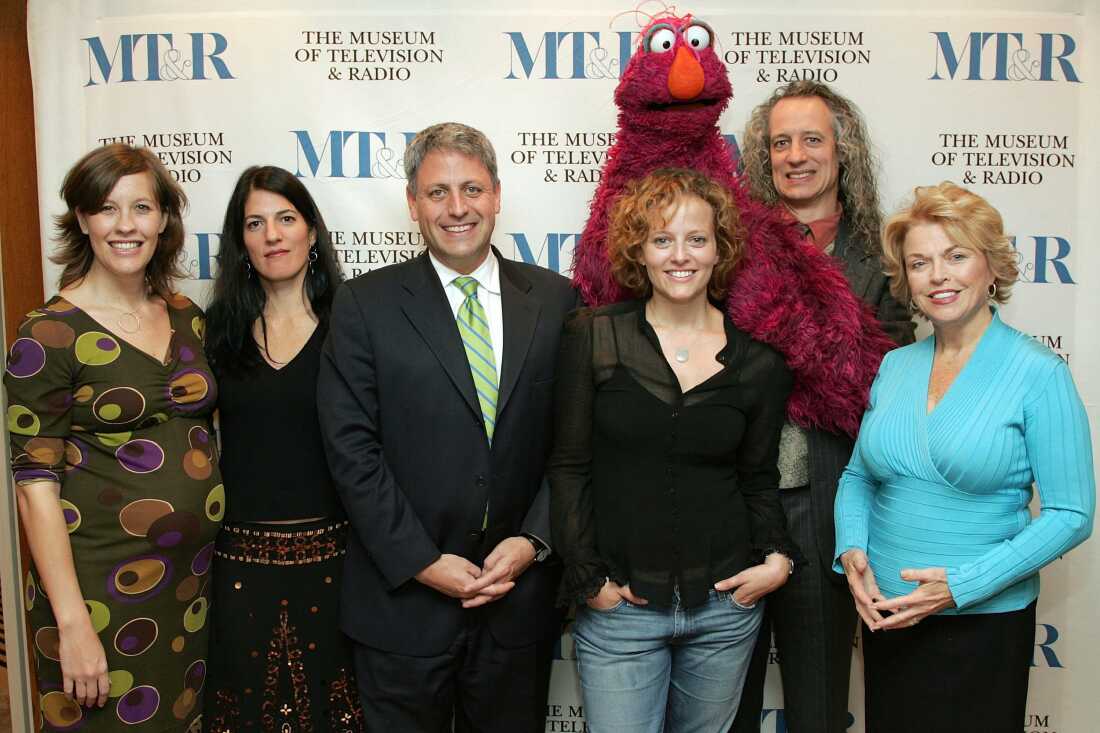
In this 2006 photo, Nadine Zylstra stands on the left, with filmmaker Linda Goldstein Knowlton, President and CEO of the Sesame Workshop Gary Knell, filmmaker Linda Hawkins Costigan, puppeteer Marty Robinson and President and CEO of the Museum of Television & Radio Pat Mitchell at the premiere of “The World According To Sesame Street.”
Bryan Bedder/Getty Images/Getty Images North America
hide caption
toggle caption
Bryan Bedder/Getty Images/Getty Images North America
“I would imagine this is an NPR move to bring in someone who is very familiar with social media platforms and YouTube content and is very able to drive content,” Knell says.
Pivotal moment for public media
Zylstra will oversee the leaders of NPR’s newsroom, music department, podcasts and related departments. But Maher stresses that Zylstra will not be involved in news decisions. While NPR Editor-in-Chief Tommy Evans will report to Zylstra on strategic matters, he will remain in charge of the journalism, Maher says. He will also remain part of Maher’s executive cabinet.
“I felt as though NPR’s journalism is rock solid and we’ve got great editorial leadership, and it was not probably the place where we needed additional layers,” Maher says. “I wanted someone who was really thinking about the expansiveness of public media’s mission and how we serve our audiences, how we encourage the innovations.”
NPR remains one of the most prestigious and wide-reaching outlets in broadcast news. More than 42 million people rely on it each week, on all its platforms, though that figure represents a drop from previous levels.
It continues to win awards for its news coverage, often conducted in concert with member stations around the country. NPR’s Planet Money has just spun off a best-selling book. NPR’s video series Tiny Desk Concert has 12 million subscribers on YouTube alone. The network created a weekly radio show around it and sold the rights to the format in Japan and South Korea.
Maher recently landed a pair of gifts totalling more than $113 million to improve NPR’s tech and distribution channels, strengthen its ties with member stations and market itself more effectively.
And yet, this is a daunting moment for NPR. Broadcast audiences are down throughout commercial and public media. News fatigue has set in. While NPR remains a top podcast producer, it lost its preeminent slot as iHeartRadio created hundreds of podcasts simply by repackaging all its radio shows. And then there’s the political backdrop.
President Trump and his allies have rallied supporters by accusing NPR and PBS of bias, a charge the networks deny. Last summer, the Republican-led Congress pulled funding from public media at Trump’s urging.
Before that happened, NPR received between 1 to 2% of its annual budget directly from the federal government. Its member stations had relied far more heavily on federal funds; They were, on average, roughly 10% of the stations’ revenues.
After losing the funds, layoffs rippled through public media. And because local public radio stations pay NPR to broadcast its shows, such as Morning Edition and All Things Considered, NPR recently determined it must cut about 30 newsroom positions through buyouts and layoffs. Greater cuts were forestalled in part by an anonymous $33 million gift — one of the two announced earlier this year.
The ferocity of changes buffeting the media industry is an opportunity Zylstra says she intends to embrace.
“Part of what’s exciting about the moment is putting the user at the center of the experience,” Zylstra says.
NPR’s track record with chief content officers
The position of chief content officer has a choppy record at NPR. Kinsey Wilson, an innovator in online news, was the first to hold the role nearly two decades ago. Wilson urged NPR to invest in digital content, acknowledging consumption of broadcast news was sliding.
Shortly after becoming NPR’s CEO in 2014, Jarl Mohn eliminated the job. He said at the time that he wanted to quell tensions between the radio and digital sides of the public media network. He also thought it important to strengthen relationships more directly with listeners. Mohn made clear he would be his own chief strategist.

His successor, the late John Lansing, sought to revive the chief content officer position but NPR struggled to fill the role. In 2023, Lansing named Edith Chapin, then NPR’s editor in chief, to become acting chief content officer, as well.
Chapin stepped down last summer just days after the Congressional vote to undo more than a half-century of supporting public media. She said the burden of simultaneously performing two grueling top-level jobs for two years had ground her down.
The way Zylstra sees it, content creation and distribution must go hand in glove.
“If somebody is searching for you, you’ve got to be there. And all the same, you’ve got to understand why are you there. How does that fulfill your mission? Who are you making this for and how are they experiencing it?” she says. “I think that’s how I can help our teams connect the dots across their individual workstreams that move us forward.”
Disclosure: This story was written and reported by NPR Media Correspondent David Folkenflik and edited by NPR Deputy Business Editor Emily Kopp and Managing Editors Vickie Walton-James and Gerry Holmes. Under NPR’s protocol for reporting on itself, no corporate official or news executive reviewed this story before it was posted publicly.

After stops in Dallas-Ft. Worth and the Bay Area, FuelFest, a global car-enthusiast festival, will cruise into the OC Fair & Event Center in Costa Mesa on June 13.
Those in attendance will get to watch the rubber hit the road on a drift course, gawk at more than 700 performance-built cars on display and behold some of the vehicles that introduced Japanese tuner cars to the American market in “Fast and Furious.”
“FuelFest is where good people, car-culture people, come to meet one another because they share a common interest, a common passion,” said Cody Walker, founder of FuelFest and the brother of late actor Paul Walker, who was known for his role in Universal Studio’s “Fast and Furious” franchise.
Audience members get to ride in the passenger seat of a professional driver’s drift car.
(FuelFest)
Organizers expect thousands of people to flock to the OC Fair & Event Center for FuelFest, moved not just by the sight and sounds of muscle cars, but by what surprises are in store to celebrate the 25th anniversary of the first “Fast and Furious” movie.
“This is a love letter to the city of Los Angeles and Orange County,” “Fast and Furious” actor Tyrese Gibson, a co-sponsor of the event, said on a recent video call about FuelFest.
The event will be something of a homecoming for Walker, Gibson and the “Fast” franchise. Walker, raised in the Sunland-Tujunga area, said the event will include tributes to cars made popular by the seminal Southern California car scene, including a lowrider and exotic car display.
Of course, FuelFest is also a tribute to Paul Walker. To continue his brother’s legacy, Cody Walker quit his job as a paramedic and took charge of Reach Out Worldwide, a disaster-relief charity founded by Paul in 2010, and he created FuelFest as a means to raise money for his brother’s initiatives.
“[Paul] was 40 years old, and we thought he had about 70 to go,” Walker said on a video call, referring to his brother’s fatal car crash in 2013. “He didn’t care about being this significant person; he didn’t see himself that way. The charity is the kind of stuff he cared about.”
As for this edition of FuelFest, Walker and Gibson said they didn’t want to spoil all of the surprises, but here are six things to know before you head to the event.
1. ‘Fast and Furious’ cars will be on display
Some of the Japanese Domestic Market and American muscle staples seen in the “Fast and Furious” films will be at FuelFest.
Gibson might not know specs like RPMs or cylinders, but he said he appreciates the “Fast and Furious” characters’ gorgeous cars, including Dominic Toretto’s 1970 Dodge Charger and Brian O’Connor’s late ’90s Mitsubishi Eclipse. Those cars and other iconic “Fast” wheels will be at the fest.
“It was because of these films that people in the United States became familiar with the tuner culture of Japan, which was super niche up until that point,” Walker said. “We’re talking about 25 years. There’s iconic cars from the franchise, from a bunch of the movies that will be there.”
2. Children age 12 and under get free admission
As children, Cody and Paul Walker were practically programmed to love cars. Their maternal grandfather was a race-car driver and mechanic, and their father was a photographer for Street Chopper Magazine. An event like FuelFest, Walker said, can be formative in fostering a lifelong passion and creative outlet for car-curious children.
Gibson said organizers wanted to make tickets free for children so that entire neighborhoods in the Los Angeles and Orange County areas could have a low-cost day out. Therefore, a general admission ticket for SoCal FuelFest costs $58.24 including tax and fees, but children age 12 and under get in free with a ticketed adult.
“If you’re a single mother and you have three kids all under 12 and you want to bring your friends in the neighborhood with you, whether they’re you’re kids or your neighbors, they’re getting in for free,” Gibson said.
If you want to splurge, there’s a meet-and-greet with Gibson plus VIP Platinum admission for $739.38, including tax and fees.

At FuelFest, a global car-enthusiast festival, more than 700 cars will be on display.
(FuelFest)
3. Performances by DJ Quik, Flesh-n-Bone and more
In addition to DJ sets and live performances, ’90s rap legends DJ Quik and Flesh-n-Bone will host an evening concert on the festival stage.
Walker and Gibson are mum about who else might show up during the concert, but they promised that audiences driving in from L.A. will find the trip down to Orange County worth it.
“There are no limits to the West Coast friends that DJ Quik has,” Gibson said.

During FuelFest, ’90s rap legends DJ Quik and Flesh-n-Bone will host an evening concert on the festival stage.
(FuelFest)
4. A Lucha Libre sideshow
If that’s not enough, there will also be a Lucha Libre show with, according to Walker, a “full-blown” story that has extended across FuelFest locations.
Lucha Libre Voz, an independent professional wrestling company based in California and Arizona, will host its worldwide championship match between Tigre Uno and Septimo Dragon.
“It’s gonna be insane,” Walker said. “Best show of the year.”
5. Ride passenger in a drift car (with a helmet)
After signing a waiver, strapping on a helmet and paying a $30 fee, audience members can ride along in the passenger seat of a professional driver’s drift car. Walker calls it: A “full-blown throttle therapy session.”
Reservations for the drift car ride-along will be handled on-site. Pro tip: Get there early to beat the lines.
6. Reach Out Worldwide’s event goal
A portion of the revenue from the event, mostly from on-site activities such as the drift car ride-along, will go to charitable efforts at Reach Out Worldwide, which has assisted with cleanup, repair and resource efforts for victims of natural disasters, including Hurricane Melissa in Jamaica and the Los Angeles County fires in 2025.
FuelFest has raised about $1 million for Reach Out Worldwide since the charity resumed in 2024, more than a decade after Paul Walker’s death paused the group’s work. Cody Walker predicts the revenue from the SoCal show will help Reach Out Worldwide pass the $1-million milestone.
“I gave up everything to make sure that Reach Out Worldwide could function,” Walker said. “FuelFest started as this simple idea, but now we’ve held over 30 events and we’re in 11 markets. … Paul would be very happy with where this has all gone.”
Festival
2026 FuelFest Southern California
When: 2 to 9 p.m. June 13
Where: OC Fair & Event Center, 88 Fair Drive, Costa Mesa
Tickets: Prices for general admission and VIP Platinum vary. Children age 12 and under are free.
Parking: $15
Info: fuelfest.com
-

 Technology9 minutes ago
Instagram is finally letting everyone reorganize their profile grid
-

 World12 minutes ago
Finland’s foreign minister says Ukraine ‘is now holding the cards’ as Russia signals talks
-

 Politics17 minutes ago
Massachusetts lawmakers pass bill to scrap ‘offensive language’ from state’s General Laws
-

 Health24 minutes ago
Why do some people get sepsis while others don’t? Scientists point to the gut
-

 Sports27 minutes ago
Victor Wembanyama puts hand on Jalen Brunson’s head, pushes him down as refs look the other way in Game 3
-

 Technology32 minutes ago
Robot pets with AI could soon live with you
-
 Business39 minutes ago
Musicians shortchanged by AI deals with labels, lawsuit alleges
-
 Entertainment42 minutes ago
Of course, Supergirl can have pierced ears. James Gunn explains it again for those who forgot ‘Superman’

