Lifestyle
Mundane, magic, maybe both — a new book explores ‘The Writer’s Room’


There’s a three-story house in Baltimore that looks a bit imposing. You walk up the stone steps before even getting up to the porch, and then you enter the door and you’re greeted with a glass case of literary awards. It’s The Clifton House, formerly home of Lucille Clifton.
The National Book Award-winning poet lived there with her husband, Fred, starting in 1967 until the bank foreclosed on the house in 1980. Clifton’s daughter, Sidney Clifton, has since revived the house and turned it into a cultural hub, hosting artists, readings, workshops and more. But even during a February visit, in the mid-afternoon with no organized events on, the house feels full.

The corner of Lucille Clifton’s bedroom, where she would wake up and write in the mornings
Andrew Limbong/NPR
hide caption
toggle caption
Andrew Limbong/NPR
“There’s a presence here,” Clifton House Executive Director Joël Díaz told me. “There’s a presence here that sits at attention.”
Sometimes, rooms where famous writers worked can be places of ineffable magic. Other times, they can just be rooms.

Princeton University Press
Katie da Cunha Lewin is the author of the new book, The Writer’s Room: The Hidden Worlds That Shape the Books We Love, which explores the appeal of these rooms. Lewin is a big Virginia Woolf fan, and the very first place Lewin visited working on the book was Monk’s House — Woolf’s summer home in Sussex, England. On the way there, there were dreams of seeing Woolf’s desk, of retracing Woolf’s steps and imagining what her creative process would feel like. It turned out to be a bit of a disappointment for Lewin — everything interesting was behind glass, she said. Still, in the book Lewin writes about how she took a picture of the room and saved it on her phone, going back to check it and re-check it, “in the hope it would allow me some of its magic.”
Let’s be real, writing is a little boring. Unlike a band on fire in the recording studio, or a painter possessed in their studio, the visual image of a writer sitting at a desk click-clacking away at a keyboard or scribbling on a piece of paper isn’t particularly exciting. And yet, the myth of the writer’s room continues to enrapture us. You can head to Massachusetts to see where Louisa May Alcott wrote Little Women. Or go down to Florida to visit the home of Zora Neale Hurston. Or book a stay at the Scott & Zelda Fitzgerald Museum in Alabama, where the famous couple lived for a time. But what, exactly, is the draw?

Lewin said in an interview that whenever she was at a book event or an author reading, an audience question about the writer’s writing space came up. And yes, some of this is basic fan-driven curiosity. But also “it started to occur to me that it was a central mystery about writing, as if writing is a magic thing that just happens rather than actually labor,” she said.
In a lot of ways, the book is a debunking of the myths we’re presented about writers in their rooms. She writes about the types of writers who couldn’t lock themselves in an office for hours on end, and instead had to find moments in-between to work on their art. She covers the writers who make a big show of their rooms, as a way to seem more writerly. She writes about writers who have had their homes and rooms preserved, versus the ones whose rooms have been lost to time and new real estate developments. The central argument of the book is that there is no magic formula to writing — that there is no daily to-do list to follow, no just-right office chair to buy in order to become a writer. You just have to write.



Bruce Johnston
I’m Riding My Last Wave With The Beach Boys
Published
Bruce Johnston is riding off into the California sunset … at least for now.
The Beach Boys legend announced Wednesday he’s stepping away from touring after six decades with the iconic band. The 83-year-old revealed in a statement to Rolling Stone he’s hanging up his touring hat to focus on what he calls part three of his long music career.

“It’s time for Part Three of my lengthy musical career!” Johnston said. “I can write songs forever, and wait until you hear what’s coming!!! As my major talent beyond singing is songwriting, now is the time to get serious again.”
Johnston famously stepped in for co-founder Brian Wilson in 1965 for live performances, becoming a staple of the Beach Boys’ touring lineup ever since. Now, he says he’s shifting gears toward songwriting and even some speaking engagements … with occasional touring member John Stamos helping him craft what he’ll talk about onstage.
“I might even sing ‘Disney Girls’ & ‘I Write The Songs!!’” he teased.
But don’t call it a full-on farewell tour just yet. Johnston made it clear he’s not shutting the door completely, saying he’s excited to reunite with the band for special occasions, including their upcoming July 2-4 shows at the Hollywood Bowl as part of the Beach Boys’ 2026 tour. The run celebrates both the 60th anniversary of “Pet Sounds” and America’s 250th birthday.
“This isn’t goodbye, it’s see you soon,” he wrote. “I am forever grateful to be a part of the Beach Boys musical legacy.”
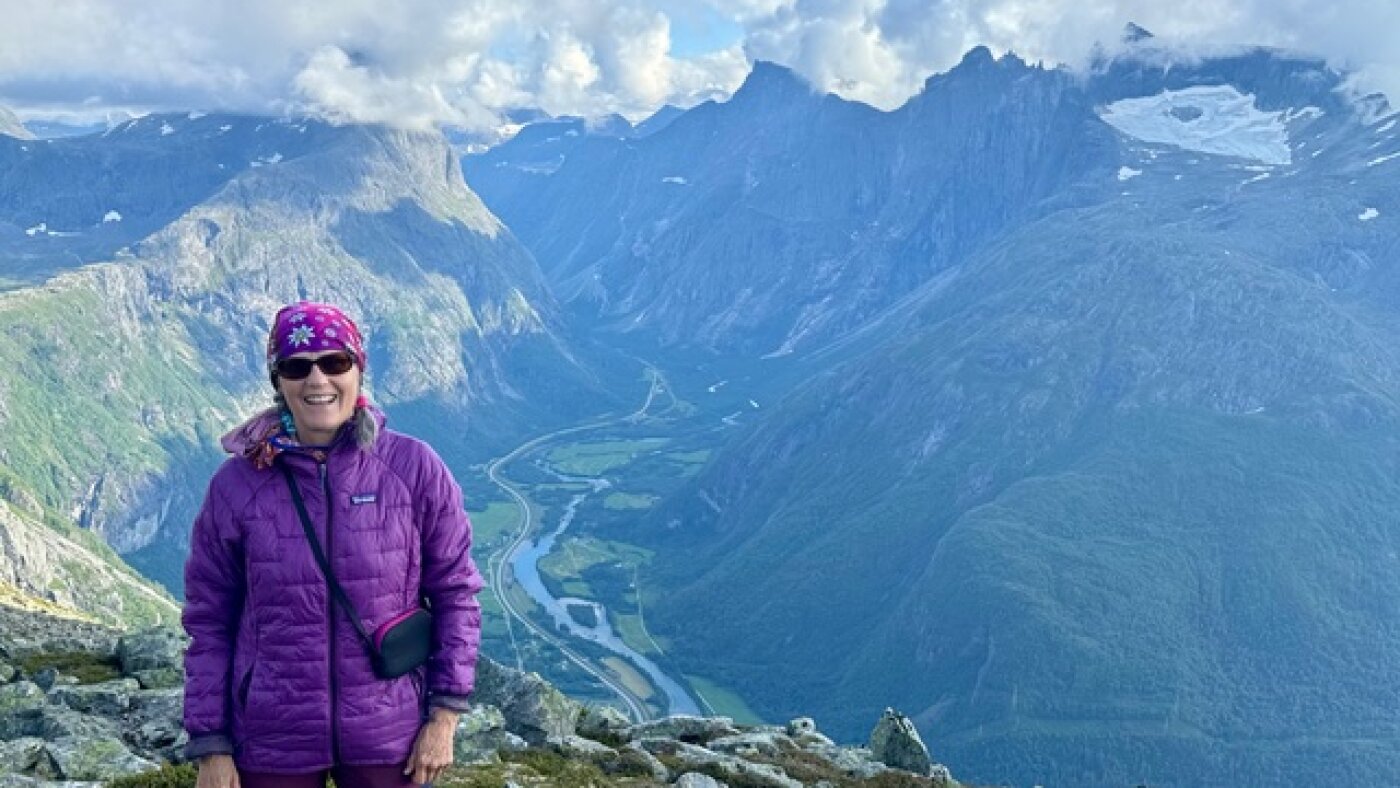
In 1982, Jean Muenchrath was injured in a mountaineering accident and on the brink of death when a stranger and his family went out of their way to save her life.
Jean Muenchrath
hide caption
toggle caption
Jean Muenchrath
In early May 1982, Jean Muenchrath and her boyfriend set out on a mountaineering trip in the Sierra Nevada, a mountain range in California. They had done many backcountry trips in the area before, so the terrain was somewhat familiar to both of them. But after they reached one of the summits, a violent storm swept in. It began to snow heavily, and soon the pair was engulfed in a blizzard, with thunder and lightning reverberating around them.
“Getting struck and killed by lightning was a real possibility since we were the highest thing around for miles and lightning was striking all around us,” Muenchrath said.
To reach safer ground, they decided to abandon their plan of taking a trail back. Instead, using their ice axes, they climbed down the face of the mountain through steep and icy snow chutes.
They were both skilled at this type of descent, but at one particularly difficult part of the route, Muenchrath slipped and tumbled over 100 feet down the rocky mountain face. She barely survived the fall and suffered life-threatening injuries.

This was before cellular or satellite phones, so calling for help wasn’t an option. The couple was forced to hike through deep snow back to the trailhead. Once they arrived, Muenchrath collapsed in the parking lot. It had been five days since she’d fallen.
”My clothes were bloody. I had multiple fractures in my spine and pelvis, a head injury and gangrene from a deep wound,” Muenchrath said.
Not long after they reached the trailhead parking lot, a car pulled in. A man was driving, with his wife in the passenger seat and their baby in the back. As soon as the man saw Muenchrath’s condition, he ran over to help.
”He gently stroked my head, and he held my face [and] reassured me by saying something like, ‘You’re going to be OK now. I’ll be right back to get you,’” Muenchrath remembered.
For the first time in days, her panic began to lift.
“My unsung hero gave me hope that I’d reach a hospital and I’d survive. He took away my fears.”
Within a few minutes, the man had unpacked his car. His wife agreed to stay back in the parking lot with their baby in order to make room for Muenchrath, her boyfriend and their backpacks.
The man drove them to a nearby town so that the couple could get medical treatment.
“I remember looking into the eyes of my unsung hero as he carried me into the emergency room in Lone Pine, California. I was so weak, I couldn’t find the words to express the gratitude I felt in my heart.”

The gratitude she felt that day only grew. Now, nearly 45 years later, she still thinks about the man and his family.
”He gave me the gift of allowing me to live my life and my dreams,” Muenchrath said.
At some point along the way, the man gave Muenchrath his contact information. But in the chaos of the day, she lost it and has never been able to find him.
”If I knew where my unsung hero was today, I would fly across the country to meet him again. I’d hug him, buy him a meal and tell him how much he continues to mean to me by saving my life. Wherever you are, I say thank you from the depths of my being.”
My Unsung Hero is also a podcast — new episodes are released every Tuesday. To share the story of your unsung hero with the Hidden Brain team, record a voice memo on your phone and send it to myunsunghero@hiddenbrain.org.

By day, you’d be forgiven for walking past the newest theater in downtown L.A.
It isn’t hidden in an alley or obscured via a nameless door. No, this performance space is essentially a theater in disguise, as it’s designed to look like an electrical box — a fabrication so real that when artist S.C. Mero was installing it in the Arts District, police stopped her, concerned she was ripping out its copper wire. (There is no copper wire inside this wooden nook.)
Open the door to the theater, and discover a place of urban enchantment, where a red velvet door and crimson wallpaper beckon guests to come closer and sit inside. That is, if they can fit.
With a mirror on its side and a clock in its back, Mero’s creation, about 6 feet tall and 3 feet deep yet smaller on its interior, looks something akin to an intimate, private boudoir — the sort of dressing room that wouldn’t be out of place in one of Broadway’s historic downtown theaters. That’s by design, says Mero, who cites the ornately romanticized vibe and color palette of the Los Angeles Theatre as prime inspiration. Mero, a longtime street artist whose guerrilla art regularly dots the downtown landscape, likes to inject whimsy into her work: a drainage pipe that gives birth, a ball pit for rats or the transformation of a dilapidated building into a “castle.” But there’s just as often some hidden social commentary.
With her Electrical Box Theatre, situated across from the historic American Hotel and sausage restaurant and bar Wurstküche, Mero set out to create an impromptu performance space for the sort of experimental artists who no longer have an outlet in downtown’s galleries or more refined stages. The American Hotel, for instance, subject of 2018 documentary “Tales of the American” and once home to the anything-goes punk rock ethos of Al’s Bar, still stands, but it isn’t lost on Mero that most of the neighborhood’s artist platforms today are softer around the edges.
Ethan Marks inside S.C. Mero’s theater inside a fake electrical box. The guerrilla art piece is near the American Hotel.
(Kayla Bartkowski / Los Angeles Times)
“A lot of galleries are for what can sell,” Mero says. “Usually that’s paintings and wall art.”
She dreamed, however, of an anti-establishment place that could feel inviting and erase boundaries between audience and perfomer. “People may be intimidated to get up on a stage or at a coffee shop, but here it’s right on street level.”
It’s already working as intended, says Mero. I visited the box early last week when Mero invited a pair of experimental musicians to perform. Shortly after trumpeter Ethan Marks took to the sidewalk, one of the American Hotel’s current residents leaned out his window and began vocally and jovially mimicking the fragmented and angular notes coming from the instrument. In this moment, “the box,” as Mero casually refers to it, became a true communal stage, a participatory call-and-response pulpit for the neighborhood.

Clown Lars Adams, 38, peers out of S.C. Mero’s theater inside a fake electrical box. Mero modeled the space off of Broadway’s historic theaters.
(Kayla Bartkowski / Los Angeles Times)
A few days prior, a rideshare driver noticed a crowd and pulled over to read his poetry. He told Mero it was his first time. The unscripted occurrence, she says, was “one of the best moments I’ve ever experienced in making art.”
“That’s literally what this space is,” Mero says. “It’s for people to try something new or to experiment.”
Marks jumped at the chance to perform for free inside the theater, his brassy freewheeling equally complementing and contrasting the sounds of the intersection. “I was delighted,” he says, when Mero told him about the stage. “There’s so much unexpectedness to it that as an improviser, it really keeps you in the moment.”
A downtown resident for more than a decade, Mero has become something of an advocate for the neighborhood. The area arguably hasn’t returned to its pre-pandemic heights, as many office floors sit empty and a string of high-profile restaurant closures struck the community. Mero’s own gallery at the corner of Spring and Seventh streets shuttered in 2024. Downtown also saw its perception take a hit last year when ICE descended on the city center and national media incorrectly portrayed the hood as a hub of chaos.

Artist S.C. Mero looks into her latest project, a fake electrical box in the Arts District. Mero has long been associated with street art in the neighborhood.
(Kayla Bartkowski / Los Angeles Times)
“A lot has changed in the 13 years when I first got down here,” Mero says. “Everybody felt like it was magic, like we were going to be part of this renaissance and L.A. was going to have this epicenter again. Then it descended. A lot of my friends left. But I still see the same beauty in it. The architecture. The history. Downtown is the most populous neighborhood in all of L.A. because it belongs to everybody. It’s everybody’s downtown, whether they love it or not. And I feel we are part of history.”
Art today in downtown ranges from high-end galleries such as Hauser & Wirth to the graffiti-covered towers of Oceanwide Plaza. Gritty spaces, such as Superchief Gallery, have been vocal about struggles to stay afloat. Mero’s art, meanwhile, remains a source of optimism throughout downtown’s streets.
At Pershing Square, for instance, sits her “Spike Cafe,” a mini tropical hideaway atop a parking garage sign where umbrellas and finger food props have become a prettier nesting spot for pigeons. Seen potentially as a vision for beautification, a contrast, for instance, from the nature intrusive barbs that aim to deter wildlife, “Spike Cafe” has become a statement of harmony.
Elsewhere, on the corner of Broadway and Fourth streets, Mero has commandeered a once historic building that’s been burned and left to rot. Mero, in collaboration with fellow street artist Wild Life, has turned the blighted space into a fantastical haven with a knight, a dragon and more — a decaying castle from a bygone era.
“A lot of times people are like, ‘I can’t believe you get away with that!’ But most people haven’t tried to do it, you know?” Mero says. “It can be moved easily. It’s not impeding on anyone. I don’t feel I do anything bad. Not having a permit is just a technicality. I believe what I’m doing is right.”

Musician Jeonghyeon Joo, 31, plays the haegeum outside of S.C. Mero’s latest art project, a theater in a faux electrical box.
(Kayla Bartkowski / Los Angeles Times)
After initially posting her electrical box on her social media, Mero says she almost instantly received more than 20 requests to perform at the venue. Two combination locks keep it closed, and Mero will give out the code to those she trusts. “Some people want to come and play their accordion. Another is a tour guide,” Mero says.
Ultimately, it’s an idea, she says, that she’s had for about a decade. “Everything has to come together, right? You have to have enough funds to buy the supplies, and then the skills to to have it come together.”
And while it isn’t designed to be forever, it is bolted to the sidewalk. As for why now was the right time to unleash it, Mero is direct: “I needed the space,” she says.
There are concerns. Perhaps, Mero speculates, someone will change the lock combination, knocking her out of her own creation. And the more attention brought to the box via media interviews means more scrutiny may be placed on it, risking its confiscation by city authorities.
As a street artist, however, Mero has had to embrace impermanence, although she acknowledges it can be a bummer when a piece disappears in a day or two. And unlike a gallerist, she feels an obligation to tweak her work once it’s out in the world. Though her “Spike Cafe” is about a year old, she says she has to “continue to babysit it,” as pigeons aren’t exactly known for their tidiness.
But Mero hopes the box has a life of its own, and considers it a conversation between her, local artists and downtown itself. “I still think we’re part of something special,” Mero says of living and working downtown.
And, at least for now, it’s the neighborhood with arguably the city’s most unique performance venue.

New Data Shows Oregon E-Scooter Injuries on the Rise

3 dead in apparent murder-suicide spanning from Pennsylvania to Illinois, police say
RI Lottery Powerball, Numbers Midday winning numbers for March 4, 2026

South Carolina Lottery Powerball, Pick 3 results for March 4, 2026
SD Lottery Powerball, Lotto America winning numbers for March 4, 2026

Florida High School Football Rankings: Top 25 teams – Oct. 21

Cleary's 21 help Le Moyne down Central Connecticut State 69-64 in OT

How old is Bo Nix? What to know about Oregon quarterback ahead of 2024 NFL Draft

99th annual Pony Swim held in Virginia

Indiana Members Credit Union announced as new anchor tenant at Bottleworks District

DHS defends McLaughlin against allegations husband’s company profited millions from ad contracts: ‘Baseless’

Sánchez defies Trump in political gamble as Madrid say no to war

Satellite images show Iran school strike hit more buildings than earlier reported

US submarine sinks Iranian warship by torpedo in a first since World War II

Which oil and gas facilities in the Gulf have been attacked?
-

 World1 week ago
Exclusive: DeepSeek withholds latest AI model from US chipmakers including Nvidia, sources say
-

 Massachusetts1 week ago
Mother and daughter injured in Taunton house explosion
-

 Wisconsin3 days ago
Setting sail on iceboats across a frozen lake in Wisconsin
-

 Maryland4 days ago
AM showers Sunday in Maryland
-

 Denver, CO1 week ago
10 acres charred, 5 injured in Thornton grass fire, evacuation orders lifted
-

 Florida4 days ago
Florida man rescued after being stuck in shoulder-deep mud for days
-

 Oregon6 days ago
2026 OSAA Oregon Wrestling State Championship Results And Brackets – FloWrestling
-

 Massachusetts2 days ago
Massachusetts man awaits word from family in Iran after attacks