Lifestyle
Meghan McCain Doesn't Talk To Main Hosts From 'The View,' Won't Return


Meghan McCain‘s done with “The View” … saying producers wouldn’t bring her back to the show, and frankly she wouldn’t want to do it even if they asked.
The television personality and podcaster sat down with Page Six for an interview — published Saturday — and opened up about her time on the hit talk show … and she says she’s leaving that all in the past.

MM says there’s “not a chance in hell” producers will ask her to come back to the show … and, adds she doesn’t really wanna ’cause she feels people are finally starting to take her seriously.
McCain says she thinks it’s because people see the work she’s putting in … putting out podcast episodes while still taking care of two kids at home — saying, it’s kinda gotten the whole “nepo baby” insinutation to die down.
Meghan joined “The View” back in 2017 and became a permanent fixture on it for the next four years before quitting in 2021.
CNN
5/10/24
Plus McCain says she’s not on great terms with her former costars … saying she doesn’t really talk to anyone she hosted with — like Whoopi Goldberg or Joy Behar. That said, she plans to have Rosie O’Donnell on an upcoming episode of her podcast, who hosted before her time — so, she still has some ties.
Bottom line … Meghan’s got no nostalgic feelings for “The View” — and, no reason to pop back on anytime soon.



Corey Feldman
I’m the Emperor of Caesars Palace …
Crashes Club, Performs ‘Jessie’s Girl’
Published
Jessie had better watch it because Corey Feldman‘s coming for his girl — the star sang all about it after crashing a show in Las Vegas Friday night!
The actor pulled up to Caspian’s Rock & Roe, a speakeasy-style rock lounge inside Caesars Palace … where he jumped onstage and belted out Rick Springfield‘s hit song “Jessie’s Girl.”
Feldman kicks off his appearance by saying he can’t believe he got talked into performing … before calling Springfield a friend and singing his dang heart out.
At the end, CF jokingly asks for tips … cradling a bucket with the word painted on the side.
Feldman pulled up to the spot with his girlfriend Adrien Skye and Caesars executive Justen Crews before playing with the house band.
Caspian’s is a hit spot in Vegas BTW … Macy Gray has performed in the joint — while Van Halen star Sammy Hagar christened the venue at its opening.
First Rick Springfield, now Corey Feldman … man, Jessie can’t catch a break!
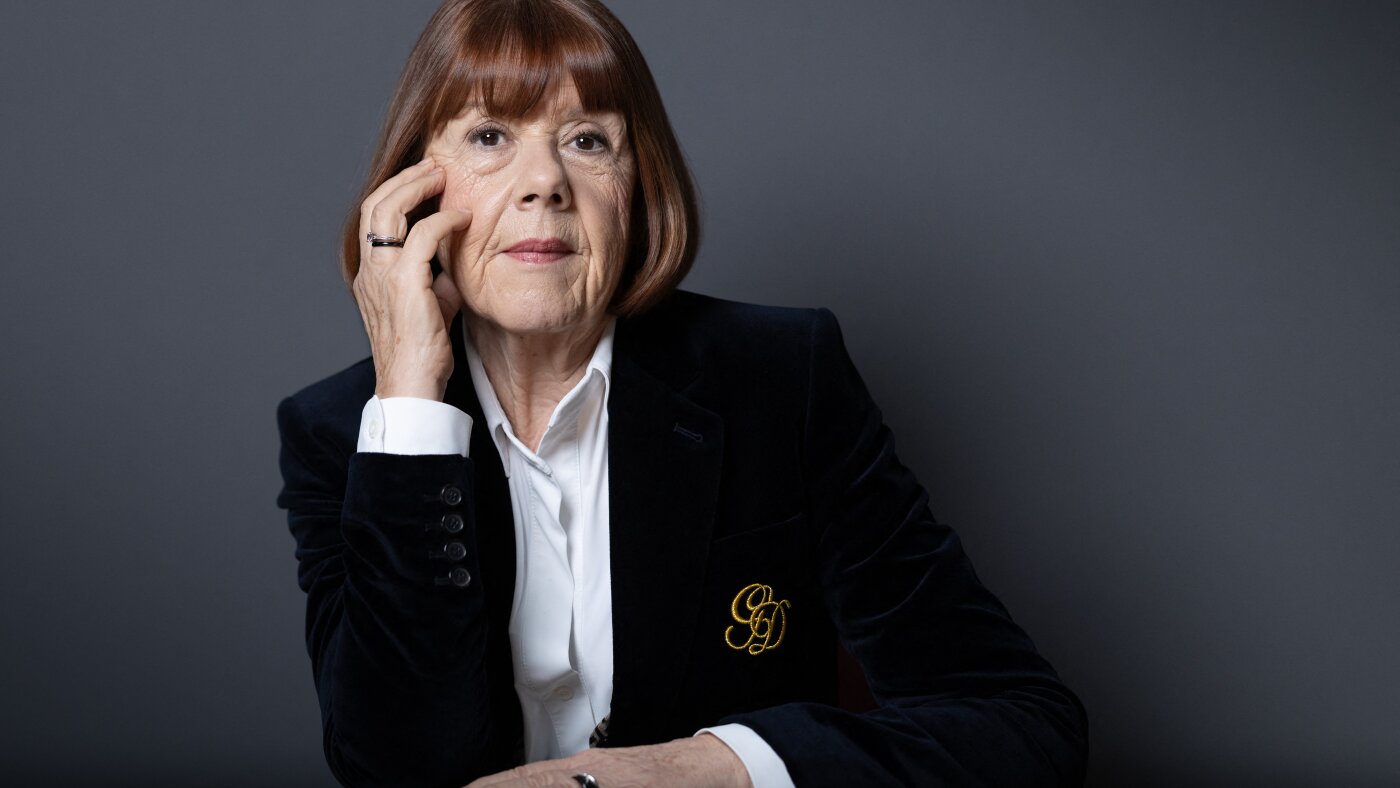
Gisèle Pelicot poses during a photo session in Paris on February 4, 2026.
Joel Saget/AFP via Getty Images/AFP
hide caption
toggle caption
Joel Saget/AFP via Getty Images/AFP
In September of 2020, Dominique Pelicot, a man in his 60s, was caught filming up women’s skirts at a supermarket in southeastern France. Reports of his behavior led to an investigation that unearthed troves of graphic videos of a heavily sedated woman being sexually abused by him and dozens of other men over the span of nearly a decade.
The woman in the video was his wife of nearly 50 years, Gisèle Pelicot. Her story made headlines around the world after Gisèle opted for a public trial — exposing both the breadth of her abuse and the identities of most of the men responsible for it.

Gisèle Pelicot’s memoir, A Hymn to Life, written by Gisèle Pelicot, with journalist and novelist Judith Perrignon, was released on February 17, 2026.
Flammarion
hide caption
toggle caption
Flammarion
In December of 2024, Dominique Pelicot was found guilty of all charges and received the maximum sentence of 20 years. The 50 other defendants were also found guilty of rape or other sex crimes. Another 20 or so men seen in the tapes were unidentifiable and remain at large.
Gisèle wrote about this experience in a new book, A Hymn To Life. She spoke with NPR’s Morning Edition host Michel Martin from Paris, France, through an interpreter.
Below are four takeaways from this conversation.
She says she “did not recognize” herself in the images
When French police called Gisèle Pelicot in to notify her of her husband’s abuse, she was confronted with graphic images of events she did not recall because her husband drugged her.
“I did not recognize that woman,” she said. “It was like some rag doll disguised and I didn’t recognize the people. Like, my brain just wouldn’t, couldn’t understand it.”
Gisèle said it took her “a long time” to use the word rape to describe what was done to her.
She says “shame needed to change sides,” when it came to having an open trial
In the lead-up to the trial against her husband and the other defendants, Gisèle Pelicot said she planned to have a closed tribunal.
Yet, “little by little,” she said the decision to make the trial public came to her.
“I said to myself that shame needed to change sides and by having the closed trial, I was giving them a gift,” she said. “All these men, their names wouldn’t have been known and what they did wouldn’t have been known.”
The trial was closely followed by international media and Gisèle was often greeted by scores of supporters who thanked her for her bravery in exposing how she had been harmed — which sparked larger conversations about rape and sex assault across the world.
She was accused of being a willing participant, but video evidence proved otherwise
“I experienced total humiliation. I was considered consenting, complicit, a suspect,” she said of having to defend herself in court and in the public eye.
Unlike many other sexual assault cases, hers was well documented thanks to the video evidence Dominique Pelicot kept for years and used to recruit other men on the dark web.
She still believes in the strength of love
In the midst of grappling with her husband’s abuse, Gisèle met a new man who she writes about in the book, sharing that he was part of her support system throughout the legal proceedings. She concludes A Hymn to Life with her thoughts on the power of love.
“I still need to believe in love. … I even believe that I knew how to give it. I now know that it comes from a deep wound within me that makes me vulnerable. But I accept that fragility, that risk, still. To fight the emptiness I need to love,” she wrote.
She closed our conversation by saying, “I think love can save the world. And I’ve just had the great fortune of being in love again. And I think if you don’t love, you don’t exist. If I don’t love, I don’t exist. And I need to keep on loving.”
For more on Gisèle Pelicot’s case, Morning Edition also spoke to Lisa Fontes, an expert in coercive control and sexual violence.
Tamara McGinnis provided the interpretation for this interview.
You can hear the full conversation with Gisèle Pelicot on NPR’s The Sunday Story.
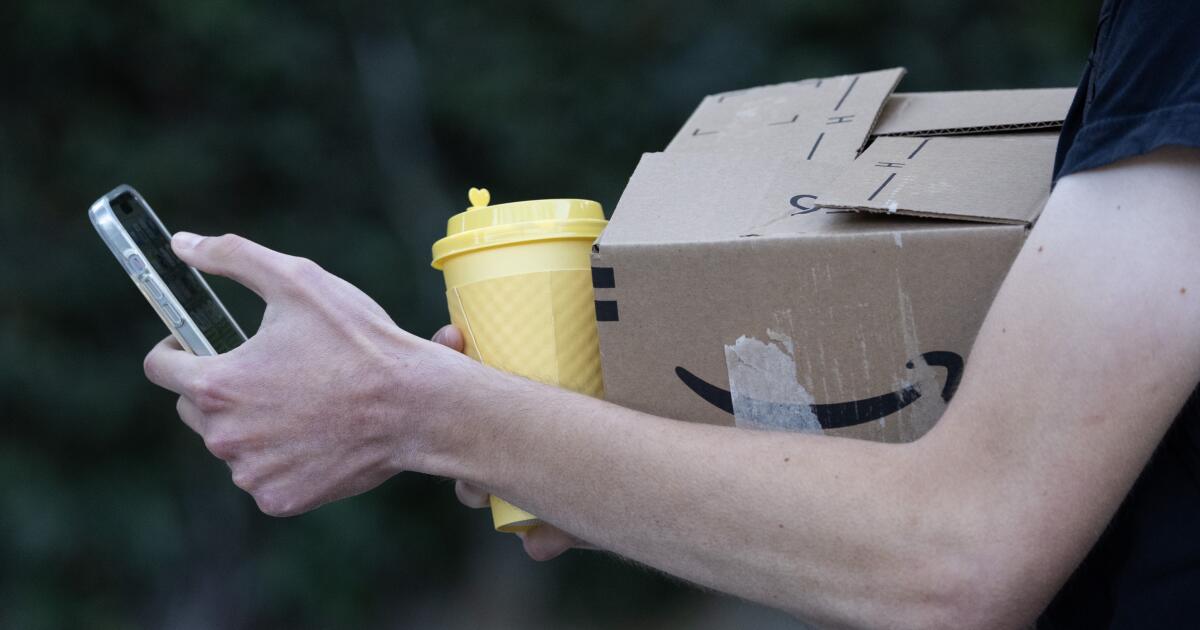
At the dawn of 2026, social media influencers at home and abroad proclaimed it the year of the “analog lifestyle,” a call to reduce digital connectivity as smart tech and screen time dominate a person’s attention span.
Selly Tan, an influencer from California, said people are “craving something real again,” and vowed to print her photos, read more books and magazines and take up hobbies that don’t need Wi-Fi.
Rosie Okatcha, an influencer from the U.K., proclaimed the year would be “The Age of Analog” with consumers swapping music streaming for iPods and vinyl records, and choosing crafting over doomscrolling.
Sanchi Oswal, an influencer from Germany, said in a post she felt going analog would reduce her “exposure and reliance on digital stimuli” and, in particular, to her phone.
For a generation that grew up in an entirely digital world, dependence on technology is a familiar habit that some are trying to break.
-
Share via
“From noon to 5 p.m., I’m looking at screens all day and then I’m going home and I’m just looking at my phone, scrolling on social media,” said Lillie Beacope, a senior at USC enrolled in a class on entertainment, marketing and culture. “I just feel like there’s not a chance for us within our day-to-day lives, to really get a break from technology.”
Spend any time outside, and you’ll see people of all ages are constantly on their smartphone or other digital devices for day-to-day tasks including communication, translation, navigation, delivery services, planning and entertainment. According to Pew Research Center data released in 2025, an estimated 91% of U.S. adults own a smartphone, up from 35% when the center first surveyed smartphone ownership in 2011.
The goal of the “analog lifestyle” trend is to wean people off constant digital connectivity by doing tangible activities that help a person reclaim their time.
But the smartphone isn’t the villain in this story, it’s a tool, said Natalia Khodayari, a postdoctoral researcher in the UC Davis Department of Psychiatry and Behavioral Sciences.
“It’s a handy tool, but this tool can be challenging to manage,” she said.
Why now?
Smartphone dependence has existed for years, but experts say it was compounded for people when the COVID-19 pandemic forced people indoors for weeks and months on end.
“People were upset, depressed and scared,” and all they had were their phones, Zoom and immediate family, said Karen North, a professor of digital social media and psychology at USC.
But years removed from the lockdowns, people are starting to notice how compelled they still are to look at their phones for information, to shop, or for nothing at all.
“It’s almost like biting your nails or another nervous habit,” North said.
Not only can the device itself be addictive, but many phone apps are designed to capture and keep a person’s attention, though people are becoming increasingly aware of this, said Dr. Anna Lembke, professor of psychiatry and behavioral sciences at Stanford.
“There are enormous opportunity costs to engagement on these platforms that suck [people] in, where they end up spending way more time than they plan to or want to,” Lembke said. “It’s very clear from survey studies that people are less happy now than they were 15 to 20 years ago.”
This, however, won’t be the first time people have tried to exit the online world, even if just temporarily.
In 2010, Mintel, a global market intelligence and research agency, promoted a “switching off” trend because it anticipated consumers would want to take significant breaks from their digital devices because modern technology had created “inescapable levels of connectivity.”
But the fear of missing out, or “FOMO,” that comes with disconnecting can be equally daunting, some say.
“It kind of sucks to be accessible all the time and having to reply to everything, but at the same time I think in the digital age where you are so readily accessible, to not respond is then to not be a part of a community,” said USC senior Maya Din.
Experts say these feelings are coinciding with the advent of the internet, digital media and this concept of 24/7 access.
People are trying to make sense of their unhappiness, which is leading them to “making a valid connection between their online lives and their overall psychological state of being, which is not good,” Lembke said.
Studies have shown a correlation between heavy digital dependence and mental health challenges including depression, anxiety and stress.
Even though the concept of stepping away from our digital lives isn’t new, North said TikTok challenges and social media trends “tell us, ‘It’s not just you, it’s everybody,’” and here’s what you can do about it.
How is the ‘analog lifestyle’ trend different?
The analog trend is a different way to kick the digital habit because by embracing old technology and spending time on crafting projects experts say people are trying to be entertained or relax in ways that don’t involve being online.
The goal of this trend “is a desire to rebalance time and energy and reduce distractability and related stress,” said Khodayari, whose research focuses on the mechanisms of attention and emotion.
Generally, it’s really easy to get distracted given the diversity and convenience modern-day life offers.
“Imagine when there exists one space which houses your work, relaxation, communication, music, daily planner and food services, it can be quite challenging for individuals to really stay present towards one activity or one goal on a day-to-day basis,” she said.
In 2018, a study published in the National Library of Medicine observed how many times 216 participants checked their smartphones over the course of 56 days. The study led by Dr. Larry Rosen, professor emeritus and past chair of the psychology department at Cal State Dominguez Hills, found that participants unlocked their phones more than 60 times a day for three to four minutes each time, which equaled a total of 220 daily minutes of use.
Not surprisingly, the analog lifestyle is being adopted by young adults and younger generations as a way to be more mindful, more intentional.
“I think that’s a really big theme here, is creating boundaries,” Khodayari said.
How to reduce your digital connectivity
There isn’t a one-size-fits-all approach to reducing or creating a boundary with your digital life. But as it happens, sometimes suggestions on how to go about it have to be spread online.
Influencers are posting about their “analog bag,” a canvas bag filled with craft supplies or purchasing a refurbished iPod to participate in this trend.
The recommendation has increased the search for “iPods” on EBay more than 1,200 times an hour globally between January and October 2025, according to the company. The iPod third-generation models saw a 50% increase in average sales price from global EBay users in 2025 compared with 2023. The iPod Nano third generation saw a 60% increase, while the iPod Classic sixth generation had a 40% increase.
In terms of crafting, Market Research Future, a global market research company, is projecting the craft supplies market to steadily grow from $42.83 billion globally in 2025 to $64.95 billion by 2035 that’s due in part to “individuals seeking creative outlets.”
You don’t have to spend money to participate in the analog lifestyle trend because making a drastic change or taking up a trendy hobby might not be helpful because it’s not something you’ll stick with long term, Khodayari said.
If you want to really stick with reducing your overall digital use, start with small adjustments to your habits, she said.
“Do something that makes a change that you really feel you can be consistent with,” she said.
Here are some common small adjustments people make to their routines to live the analog lifestyle:
- Remove your phone from view when you’re working on another task. Put it in a drawer or in another room entirely.
- Remove an app from your phone’s home screen or delete it entirely.
- Mute or stop unnecessary notifications.
- Swap your doomscrolling time on social media with another activity such as a walk, a craft, reading or cooking.

Global leaders and businesses react to more U.S. tariff swings

Snoop Dogg embraces NBC Olympic ambassador of joy role as Games shift to his hometown

Corey Feldman Performs ‘Jessie’s Girl’ at Las Vegas Club, on Video

Democrats’ fear rising that too many candidates in governor’s race could lead to a Republican victory

USC basketball fumbles lead, suffers devastating loss to Oregon

Florida High School Football Rankings: Top 25 teams – Oct. 21

Cleary's 21 help Le Moyne down Central Connecticut State 69-64 in OT

How old is Bo Nix? What to know about Oregon quarterback ahead of 2024 NFL Draft

99th annual Pony Swim held in Virginia

Indiana Members Credit Union announced as new anchor tenant at Bottleworks District

EU ministers to question Šuica over Trump’s Board of Peace launch

NASA’s Artemis II lunar mission may not launch in March after all

OpenAI didn’t contact police despite employees flagging mass shooter’s concerning chatbot interactions: REPORT

Iran demands ‘evidence’ as Trump, UN experts highlight protest killings

World reacts as US top court limits Trump’s tariff powers
-

 Oklahoma4 days ago
Wildfires rage in Oklahoma as thousands urged to evacuate a small city
-

 Culture1 week ago
Romance Glossary: An A-Z Guide of Tropes and Themes to Find Your Next Book
-

 Technology1 week ago
HP ZBook Ultra G1a review: a business-class workstation that’s got game
-

 Montana2 days ago
2026 MHSA Montana Wrestling State Championship Brackets And Results – FloWrestling
-

 Politics1 week ago
Tim Walz demands federal government ‘pay for what they broke’ after Homan announces Minnesota drawdown
-

 Science1 week ago
What a Speech Reveals About Trump’s Plans for Nuclear Weapons
-

 Culture1 week ago
Video: How Much Do You Know About Romance Books?
-
News1 week ago
Second US aircraft carrier is being sent to the Middle East, AP source says, as Iran tensions high

