Lifestyle
In Berlin, there are movies, there’s politics and there’s talk about it all

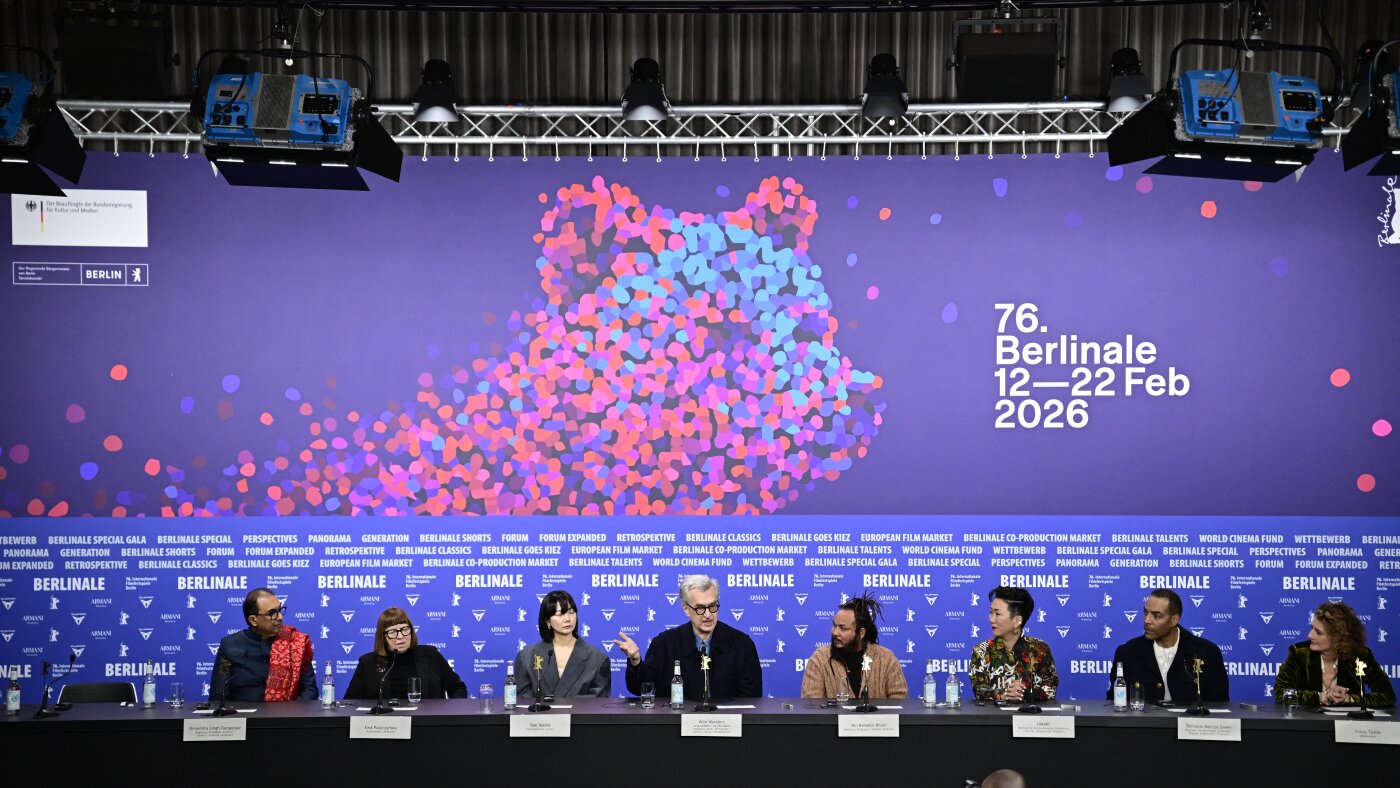
The Berlinale’s international jury at a press conference on the festival’s opening day on Feb. 12. The jury fielded questions about Gaza and, more broadly, about politics and film.
John MacDougall/AFP via Getty Images
hide caption
toggle caption
John MacDougall/AFP via Getty Images
The biggest talk at the Berlin International Film Festival in recent days wasn’t about which film would take home the prestigious Golden Bear award, but a remark made on opening day by the festival’s jury president, German filmmaker Wim Wenders. When a journalist asked the jury about human rights and Gaza, Wenders replied, “We have to stay out of politics.”
He called filmmakers “the counterweight to politics.” Over the course of the festival, multiple films pulled out of the program, citing solidarity with Palestine; author Arundhati Roy dropped out due to what she called “unconscionable statements” made by members of the jury; Kaouther Ben Hania, director of the Oscar-nominated film The Voice of Hind Rajab, refused to accept an award at a gala hosted by the Cinema for Peace Foundation.
Trisha Tuttle, the festival’s director, released a lengthy statement titled, “On Speaking, Cinema and Politics,” writing, “We do not believe there is a filmmaker screening in this festival who is indifferent to what is happening in this world, who does not take the rights, the lives and the immense suffering of people in Gaza and the West Bank, in the Democratic Republic of the Congo, in Sudan, in Iran, in Ukraine, in Minneapolis, and in a terrifying number of places, seriously.”
She wrote, “Artists are free to exercise their right of free speech in whatever way they choose.”
Still, more than 100 artists, including Tilda Swinton, Javier Bardem, and Adam McKay, have signed an open letter published in Variety condemning the Berlinale for “censoring artists who oppose Israel’s ongoing genocide against Palestinians in Gaza and the German state’s key role in enabling it.”
(The German government provides significant funding for the festival.)
In an interview with The Hollywood Reporter, Tuttle said she understood the “pain and anger and urgency” behind the letter, but rejected any allegations of censorship. “It’s not true that we are silencing filmmakers. It’s not true that our programmers are intimidating filmmakers. In fact, the opposite,” she said.
Unlike sun-drenched Cannes or the lakeside charm of Locarno, the Berlinale unfolds in the depths of winter at Berlin’s Potsdamer Platz, arriving on the heels of Sundance Film Festival. And since its founding in 1951 during the Cold War, the Berlinale has gained a reputation as the most overtly political of the major festivals, not only for its programming choices, but for its history of engaging with global crises, as in 2023, when it condemned Russia’s war on Ukraine and expressed solidarity with protesters Iran. Critics say that despite being vocal on other issues, the Berlinale has not spoken out about Gaza.
Between it all, movies at the festival spoke for themselves. This year’s slate blended the personal and the political, telling stories of bustling Lagos, 1930s Australia, and family traditions in Guinea-Bissau.
I was there for the entirety. These stories stood out.
Rose
YouTube
The best film that I saw in the festival’s competition was one that I didn’t expect. Markus Schleinzer and Alexander Brom’s black-and-white period piece is very serious, and very German, but also unexpectedly funny. Set in the early 17th century Germany, Sandra Hüller (who you’ll recognize from Anatomy of a Fall and The Zone of Interest) plays a mysterious soldier named Rose, who arrives at an isolated Protestant village claiming to be the heir to an abandoned farm. In order to build a life for herself and fit in, she disguises herself as a man. She quickly emerges as one of the community’s strongest leaders, but lives in constant fear that her secret will be exposed. Hüller’s performance is brilliant and triumphant, bringing to life a story about gender, privilege, and belonging.
Lady

Peter Okosun/Ossian International Limited
Olive Nwosu’s debut feature radiates a restless, pulsing energy — both through the thrum of Lagos and the courage of its women. The film focuses on Lady, one of Lagos’ few female cab drivers, who dreams of leaving the city. So when her childhood friend Pinky, now a sex worker, offers her a well-paying gig chauffeuring her and her friends to their nighttime appointments, it’s hard for Lady to refuse. But the experience opens up old wounds, and as Lady is drawn deeper into their orbit, she is forced to confront the ways in which their shared past looms larger than any one person’s will. Nwosu’s portrait of Lagos is filled with care and nuance, with an eye to the complicated solidarities that bind its people together.
Wolfram

Director Warwick Thornton’s latest is a sweet and tender story of redemption, set against the backdrop of a searing Australian desert landscape. The Western, a sequel to the 2017 film Sweet Country, centers two adorable Aboriginal children in colonial 1930’s Australia, who have escaped from a mining camp where they were forced to work by their white masters. In their search for safety, they are hunted by two outlaws on horseback who want nothing more than to see them dead. But Thornton is less interested in portraying his characters as victims than survivors, bound together by the strength of love and resilience.
Dao

Mike Etienne and D’Johé Kouadio.
Les Films du Worso – Srab Films – Yennenga Productions – Nafi Films – Telecine Bissau Produções – Canal+ Afrique
hide caption
toggle caption
Les Films du Worso – Srab Films – Yennenga Productions – Nafi Films – Telecine Bissau Produções – Canal+ Afrique
It wasn’t until more than halfway through director Alain Gomis’ sprawling film that I realized it wasn’t a documentary. In an on-screen process, Gomis brings professional actors and non-actors together, casting them as members of the same extended family. Spanning nearly three hours and unfolding across two ceremonies, a wedding in France and a ritual in Guinea-Bissau, Dao dissolves the boundaries between reality and fiction to offer a meditation on the cyclical nature of life, people and traditions. The question of whether the film is “truly” a documentary is by design. It is precisely this uncertainty that Gomis invites us to sit with, blurring categories so completely that the distinction begins to feel beside the point.
Two Mountains Weighing Down My Chest

Viv Li in Two Mountains Weighing Down My Chest.
Corso Film
hide caption
toggle caption
Corso Film
What does it mean to search for oneself? In her charming debut feature documentary, Viv Li turns the question inward, tracing her own coming-of-age across two sharply contrasting worlds: Berlin and China. Stuck in Berlin after the pandemic, Li oscillates between new ideas of freedom and old forms of expectations. But does the search ever truly end? Li asks. Full of vulnerability, whimsy, and surprise, Li films herself over several years, as we see her in intimate moments with friends, exploring Berlin’s queer scene, and in candid discussions with relatives in China over dinner. In the end, Li suggests that perhaps resolution is overrated — and the willingness to stay curious, no matter what, might be the only thing we need.
Chronicles From the Siege

Even when a city is under siege, survival means more than just staying alive, but also finding ways to remain fully, stubbornly human. Drawn from his own experiences during the siege of the Palestinian refugee camp of Yarmouk in Syria, Abdallah Al-Khatib’s debut film follows five interwoven stories in a city under fire. In one thread, two lovers risk everything for a fleeting moment together and in another, a former video store owner struggles simply to stay alive. Across these intersecting stories, Al-Khatib looks beyond the spectacle of war, resisting the notion that lives can be reduced to headlines and politics.
Mouse

Katherine Mallen Kupferer and Chloe Coleman in Mouse.
Go Cats Go
hide caption
toggle caption
Go Cats Go
Kelly O’Sullivan and Alex Thompson, known for their films Saint Frances and Ghostlight, have always been experts at making humanity feel precious with stories that always loom much larger than their loglines. Their newest is a festival favorite. Mouse follows two best friends, Minnie and Callie, in their senior year in North Little Rock, Arkansas. But when their friendship falters, Minnie is forced to navigate her own identity. Delicate yet heartbreaking, the film is driven by two filmmakers who understand what real life actually feels like, showing that what is big doesn’t require drama and that grief is never small, never solitary, and always different.



Ken Marino loves living in L.A.
Living here has certainly been good for his acting career. Though he broke into the business as a member of NYC-turned-MTV sketch comedy group the State in 1994, he moved to L.A. in the fall of 1997 when he landed a role in the second season of “Men Behaving Badly,” an NBC sitcom. Marino shot just 13 episodes before the show was canceled. Still, he stayed in L.A., landing roles in much-loved shows like “Veronica Mars,” “Party Down,” “The Residence” and “Running Point.” He’s also co-written a few things, including “Role Models” and “Gail Daughtry and the Celebrity Sex Pass,” out July 10, which was filmed in and around Los Angeles.
In Sunday Funday, L.A. people give us a play-by-play of their ideal Sunday around town. Find ideas and inspiration on where to go, what to eat and how to enjoy life on the weekends.
“Working around L.A. and running around to jobs is how I got to understand L.A.,” Marino says. “It’s just a very comfortable city to live in. I just think it’s fun to be able to bounce around and do anything you feel like doing.”
Here’s how Marino would spend his perfect, carefree Sunday in Los Angeles.
This interview has been edited for length and clarity.

6 a.m.: Dog walking, coffee and flowers
We have two dogs. They need to go outside in the morning and eat, and they are very vocal about it. For a while, every morning at 5:58 my one dog, Dot, would start whining and moving around until I’d go “yeah, OK, let’s feed you.”
In our family, I’m the one who feeds the dogs and takes them out, because I’m a morning person. I enjoy it when it’s not fully light out, maybe making myself a coffee or taking a walk to this place called Project Bloom Coffee. It’s a little mom and pop kind of place and they have terrific coffee and breakfast sandwiches. They’re also a florist. Sometimes they even use this cool paper holder with a handle where, on one side you put the coffee and then on the other side you put your beautiful flower display. So then you get to walk home with your coffee and your flowers together and it’s something I’ve never seen anywhere else.
7:30 a.m.: Online chess
After I go get my coffee and walk the dogs, I’ll still be the only person up so I’ll get on my computer and get a couple of games of chess in. I play people from around the world online on Chess.com, and I usually either get frustrated or feel like I’m the best chess player in the world. Anyway, I’m getting my rating up on the app and I’m very excited about it. I’ve gone down the rabbit hole of chess tutorials on TikTok and YouTube that teach me how to play better.

9 a.m.: More coffee and “911”
If I go to Project Bloom, I’ll bring my wife a coffee and some flowers but if not, we have a little espresso and cappuccino maker so I’ll use that to make her a cappuccino, which I’ll bring to her in bed. She’s always very happy about that and then I’ll go try to wake my [16-year-old] daughter up, which usually takes about two or three tries until I take her phone, set the timer for five minutes, and then put it on the other side of her room so she has to get out of her bed to turn it off when it sounds.
She and I have been religiously watching “911” recently. We started with Season 1 and now we’re about six or seven seasons in so I’ll make her breakfast — maybe a Nutella crepe with some little cherry tomatoes on the side, which is weird but she likes it or maybe some oatmeal — and then we’ll watch “911” and talk about our favorite characters, like Buck, Chimney and Bobby.

Noon: Lunch on the Westside
We have a little apartment in Marina Del Rey that’s right by the beach so sometimes I’ll go out there with the dogs, just to sit for a while and enjoy. I usually walk between the Venice pier and Washington Street, but sometimes I’ll go further north and walk along Venice Beach if I want to hang out with some freaky deakies.
When I’m over on that side of town, there’s a couple of places that I might go for food, like this Italian restaurant called Ospi that’s in Venice. They’re incredible. They make their own homemade pasta and it’s delicious. There’s also this chain called Guisados, and I love their tacos so sometimes I’ll do that too. Venice Ramen is good too, and they do these things called jumbo gyoza that are absolutely delicious. They’re like 2.5 times bigger than a normal gyoza, like palm-sized, and I really like them.
2 p.m.: Play practice and a pint
My daughter is in two plays right now at this place called the Morgan-Wixson Theatre in Santa Monica, so it’s my responsibility to take her over there and drop her off for practice. When I do that, if it’s a Sunday, I might want to grab a Guinness somewhere and watch basketball. There’s a bar called Weary Livers down the street that has a lot of board games and it feels like you’re in somebody’s basement, which is good. It’s also right next to the Brixton, which is another nice bar that I’ll go to from time to time if I’m waiting for my daughter to finish rehearsal because it’s a lot of driving otherwise.

4 p.m.: Garage band practice
Typically on Sunday, we’ll also have a rehearsal for the Middle Aged Dad Jam Band. [Editor’s note: Marino co-founded the group with David Wain, whom he’s known since “The State” and who co-wrote “Wet Hot American Summer.”) We’ll play for a couple of hours in David’s garage, trying out new songs and working out what we’re going to do at our next live show.

6 p.m.: Guerilla promotion
Right now, David [Wain] and I are trying to figure out different promotional things we can do for our movie, “Gail Daughtry and the Celebrity Sex Pass,” so maybe we’d do some more of that. It’s a really funny movie and we sold it at Sundance.
Anyway, two Sundays ago we walked around with our friend Frank Barrera, who is also one of the camera operators on “Gail Daughtry.” We went to the Hollywood Walk of Fame and we shot promos for the movie where we were talking to different people and pretending that the Gail Daughtry cinematic universe is vast and has been around for decades, like we were asking people what their favorite Gail Daughtry movie is. It confused a lot of them, but every once in a while somebody would say something so we’re using those for promo spots.
I also spent some time just running up and down the street being very overly enthusiastic and screaming “the new Gail Daughtry movie is coming out!” and then we shot people’s reactions, which were typically “confusion” and “not caring.” Like, “Stop yelling at me, weirdo.”
7:30 p.m.: Thai takeout
On weekends, my wife and I like to order from a specific Thai place that’s won many awards. It’s called Luv 2 Eat Thai Bistro and it’s absolutely fantastic. The crab curry is so delicious and they do these street food sausages that we crave. They come with ginger and peanuts and garlic, plus a big slab of raw cabbage and some hot peppers and we’ll eat them like popcorn, just throwing them in our mouths while we catch up on “Survivor.” The flavor is just insane, and we think about how good they are all the time.

9:30 p.m.: Checkmate
After we watch “Survivor,” usually what happens next is that we’ll end up going, “Should we watch a movie?” Then we’ll look around for a movie for a while and then my daughter will be like, “Hey, Mom! Come in here and watch this YouTube show with me” so my wife will get pulled away, and I’ll immediately pick up my computer and start playing chess again. I like to bookend my day with a quiet chess game in the morning and another quiet game at night. It’s a nice way to wind down.
I’ll typically play a minimum of about three games before my eyes start to close because they’re trying to fall asleep. That’s when I’ll quit because I’ll be making stupid moves and it affects my rating, like “Oh, I just lost that game because I fell asleep while my computer was on,” so that’s how I know when I’m done.

People visit the Liberty Bell on the eve of Independence Day in Philadelphia on July 3, 2025. The crack in this symbol of U.S. freedom echoes the paradox between national pride and civic ignorance revealed in a new national poll.
Juan Mabromata/AFP/Getty Images
hide caption
toggle caption
Juan Mabromata/AFP/Getty Images
A new national poll reveals a striking paradox in public sentiment ahead of America’s 250th anniversary: a disconnect between Americans’ strong patriotic pride and their lack of civic knowledge.
According to a survey from the libertarian Cato Institute think tank of more than 2,000 U.S. adults conducted in late June, 86% of respondents said they are grateful to be American and 70% believe the nation’s founding principles remain relevant.
However, nearly half of Americans (46%) don’t know that America’s 250th anniversary commemorates the adoption of the Declaration of Independence.
This civic ignorance extends to basic governance: Nearly 60% do not know the main purpose of the U.S. Constitution is to limit government power, and do not know why the colonies declared independence from Great Britain.
Furthermore, the report highlights deep anxieties about the future of American liberty.
The majority of those surveyed believe the country has strayed from its founding principles, and more than half fear the U.S. could cease to be a free country within the next 50 years, citing corruption and the abuse of power as primary threats. The majority of both Republicans and Democrats share these fears.
The concerns are especially pronounced among Gen Z respondents, who exhibited both the lowest levels of civic knowledge and the least favorable views of the nation’s founders. The majority of Gen Z failed to cite the adoption of the Declaration of Independence as the source of the 250th anniversary.
“The lack of civic knowledge is a great disaster,” said Coe Professor of History and American Studies and Professor of Political Science Emeritus at Stanford University Jack Rakove. “Any democratic system of government to succeed requires having an informed electorate.”
The Pulitzer Prize-winning authority on the drafting of the Constitution and the Declaration of Independence blamed the problem on the fragmented media landscape and schools prioritizing STEM subjects over civics and history.
“Our educational system is highly decentralized. So the idea that you could have one clean, neat, sweeping educational reform that will cope with the problem is hard,” Rakove said. “And of course, and we do live in this disaggregated information environment where people pick the sources they like. If you assume that a Democratic society depends upon well-rounded deliberation of being exposed to the views of other people, the information environment itself is not conducive to the underlying foundation of Democratic debate.”

Unpacking my third suitcase in our new West Hollywood home, a sharp pain shot through my chest. I felt dizzy and short of breath before sprawling out on our mattress, which was still covered in plastic.
“What’s wrong?” David asked.
An hour later, on a gurney in the emergency room at Cedars-Sinai, I waited to be admitted overnight. What a great start to our new life — back in L.A. after seven years in New York City — David sleeping alone at our apartment while I was to keep close to the paddles and operating room in case what had just happened was a heart attack.
I was 33, practicing yoga and exercising almost daily. A few months earlier, my New York doctor noticed I had high blood pressure, and I was feeling terrible, so something clearly was going on. Was an artery blocked? Nope, the tests revealed; physically, I was fine. What had happened was a panic attack.
“Your health will be better in L.A.,” David had promised before returning to L.A.
Now I took no pleasure in his being wrong.
After growing up in Temple City (hardly L.A.), I went on a high school trip to the Big Apple and knew it was where I needed to be.
Exactly five years later, the time to escape California arrived after a miserable breakup from a three-year relationship with a guy that I hid entirely from my family. I was desperate and depressed, down 15 pounds from not eating much, my diet consisting largely of cigarettes and red wine. At the Archstone, my Studio City apartment, I did ecstasy alone on a Wednesday. One has to take a good look at himself when he’s in his bedroom, by himself, rolling, and so I decided it was time to start over in New York.
On the other side of the country, I thought it was normal to hook up with a new guy every third night. Which I suppose, for a gay man who’d spent the first 27 years of his life denying his sexuality to a family he feared wouldn’t understand, it was. My self-esteem was in the gutter, though you wouldn’t have known it from the outside.
After a three-digit number of hookups on Grindr, I met David, a guy who lived on the same Manhattan corner as I did. We did what people do on Grindr and hooked up a couple of times.
But one morning, we bumped into each other on 9th Avenue. I left our short chat feeling uplifted by how smiley and polite he was in daylight and while we were sober. That night, we went on our first date, and the rest is history. But I hid what I assumed wouldn’t be well-received.
“Let’s move back to L.A.,” he said after four years of life together in New York.
“I’m really not ready,” I said. I loved living in New York and never, ever expected to leave. He understood, but he wanted to return to “the coast.” I knew that in a healthy relationship, it couldn’t be just what I wanted. So eventually, we packed up and moved to an apartment on North Flores Street in West Hollywood.
And now, I was in the hospital.
After having to cancel the welcome home party our L.A. friends had planned for us, and being released from Cedars, my life fell apart. But being the one who kept everything together, I kept it together better than most would, at least in the presence of others.
I’m fine, I told myself, but I worried my heart was broken, and there was something medically wrong with it. To heal it, I’d need to accept truths that I didn’t want to.
Growing up was devastatingly hard for me. Being gay and misunderstood, with the unacknowledged pain of it kept inside, was quite literally eating me alive. Being back in L.A. meant being near my past. I told my mom I was gay before leaving for New York. She said she still loved and accepted me, but to this day, the struggle has never been discussed or acknowledged. I knew I was a disappointment to my family.
I went to Westwood what felt like 70 times, and after visiting a bunch of UCLA’s specialists, I found myself in the office of a neurosurgeon who took one look at me and said, “You don’t belong here. What you’re suffering from is plain old anxiety, and you’re going to have to work with your therapist on this.”
“I have been,” I said, “and it’s not helping.” But before I finished, he had walked out the door.
Before long, the panic attacks got so bad, I could hardly drive. David chauffeured me, under the palm trees and bright sun, around as much as his schedule allowed, and when he couldn’t, I made the best of it, lugging my laptop with me for the hour-long trek to yoga-teacher training at Equinox in the South Bay, using that extra time in the back of an Uber to write.
For almost my entire adult life, I’d been in therapy, but it was couples therapy with David where I felt supported enough to admit, first to myself, that I’d been terrified of being fully myself. I was afraid he’d leave me if he saw the real me. Secretly I had been keeping a lifetime of pain bottled up inside because of fear — I didn’t want to risk losing him by being too emotional or having too many feelings.
Three months after that therapy session, the pandemic arrived, and being together 100% of the time for the next year, I let him in fully. He didn’t run — instead, he proposed.
It’s been eight years since that neurologist, and six since I’ve been able to fully drive again. And here in L.A., in a city characterized by its distance, I have, with David, built a close chosen family that supports and fully understands me.
Now, I feel “at home” at our Spanish-style Hancock Park house, the one we bought because we wanted to start a family of our own, only after L.A. allowed me to heal and live peacefully, and now, anxiety free.
Had David not dragged me back, I wouldn’t have learned what I did about myself, my story of origin and living a life that’s so beautiful and that’s so true to me.
And certainly, we wouldn’t be bringing our baby daughter, Lucy, named after Lucille Ball (who’s more Hollywood?), home in mid-July by way of surrogacy.
The author is a writer and coach who helps established business owners build lives that feel as good as they look. He lives in Hancock Park. He’s on Instagram: @iammattgerlach.
L.A. Affairs chronicles the search for romantic love in all its glorious expressions in the L.A. area, and we want to hear your true story. We pay $400 for a published essay. Email LAAffairs@latimes.com. You can find submission guidelines here. You can find past columns here.
-

 Technology2 minutes ago
Zoox robotaxi redesign brings big rider upgrades
-
 Business7 minutes ago
Commentary: It’s not just vaccines — from infancy to adolescence, Republicans are waging war on children’s health
-
 Entertainment14 minutes ago
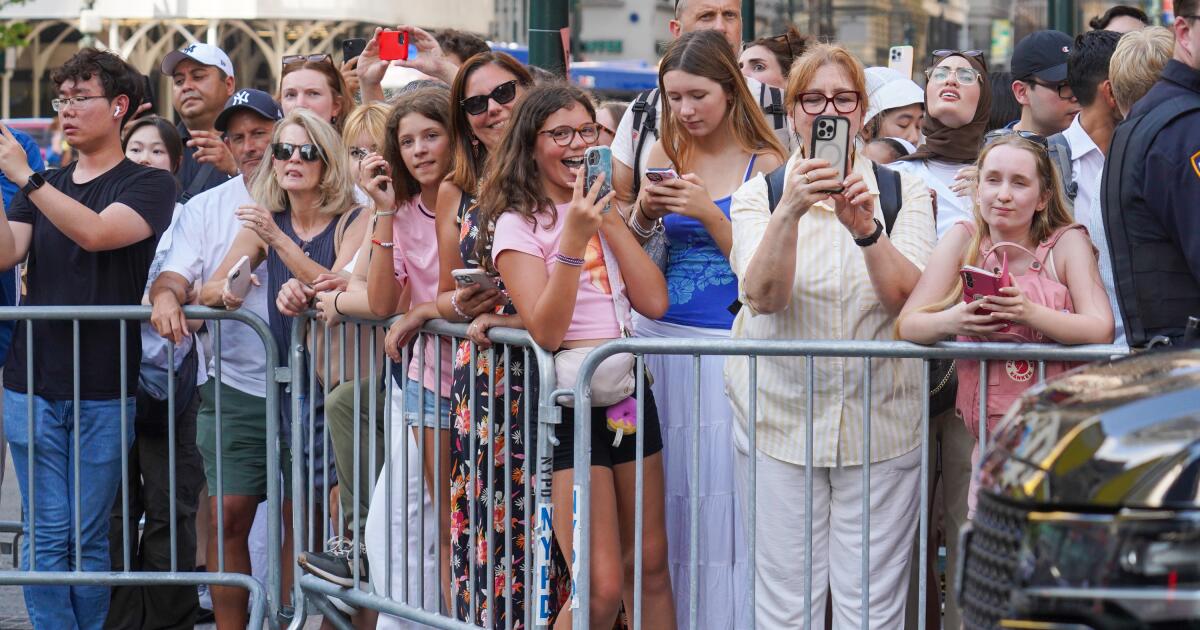
Taylor Swift, Travis Kelce married at lavish Madison Square Garden wedding
-
Lifestyle17 minutes ago
How to have the best Sunday in L.A., according to Ken Marino
-
Politics22 minutes ago
Trump administration sues California over ‘Glock ban’ law targeting machine gun pistols
-
 Sports32 minutes ago
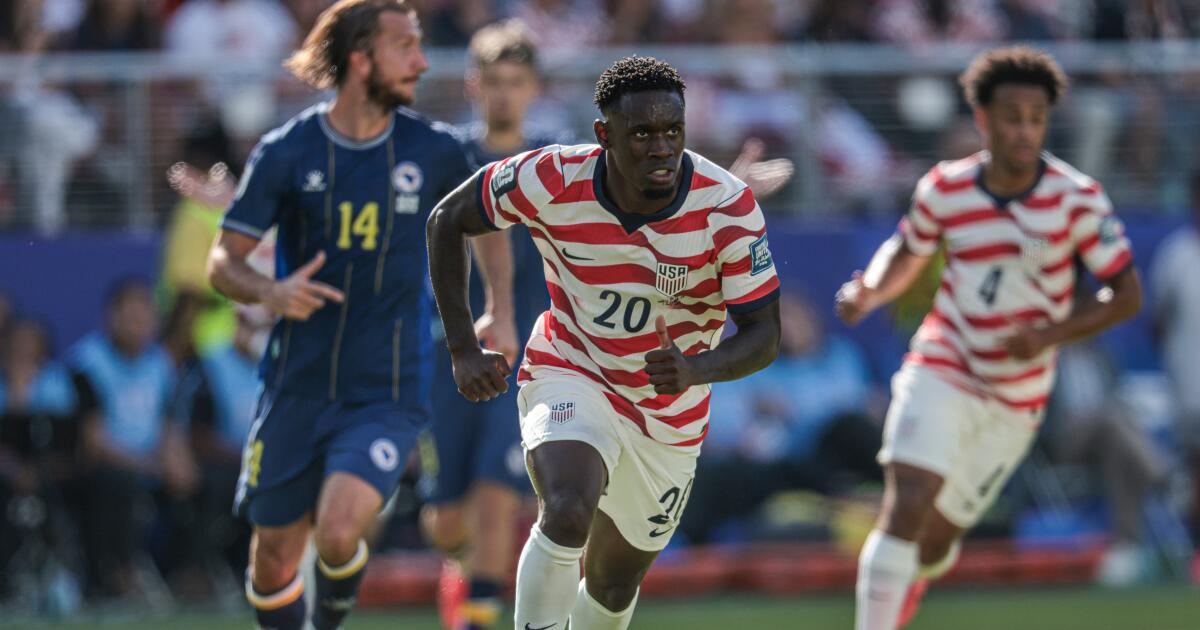
Folarin Balogun urges U.S. to focus on beating Belgium despite red card he calls unjust
-

 World44 minutes ago
Belgian diamond group that won tariff relief gifts Trump ring
-

 News1 hour ago
Family-owned company prepares to put on the largest fireworks display in history: “It is the biggest show that we’ve ever done”

