Lifestyle
Knicks fans jeer Trump as Spurs take Game 3 in NBA Finals


Victor Wembanyama, #1 of the San Antonio Spurs, reacts during the second quarter against the New York Knicks in Game 3 of the 2026 NBA Finals at Madison Square Garden on June 8 in New York City.
Dustin Satloff/Getty Images
hide caption
toggle caption
Dustin Satloff/Getty Images
The New York Knicks lost Game 3 of the NBA Finals to the San Antonio Spurs last night, breaking their 13-game postseason winning streak.
Knicks coach Mike Brown criticized referees for the disparity between free throw attempts between the two teams. But fans online drew alternate theories as to why the Knicks lost: President Trump was at the game. This was the first time a sitting president attended an NBA Finals game.
“When Trump showed up on the jumbotron during the national anthem, [the crowd] booed louder than when the Spurs came on the court,” sports journalist Albert Samaha told Morning Edition.
President Trump later told reporters, “It was, I think, mostly cheers. It was loud, and very enthusiastic.”
NPR’s Michel Martin spoke with Samaha about Game 3, New York City’s reaction to having Trump in attendance and predictions for Game 4 of the NBA Finals.
Listen to the full interview by clicking on the blue play button above.



Zegna, the venerable brand known for its unparalleled fabrics, is as Italian as it gets. So Italian that I couldn’t help but feel transported away from Malibu, still recovering from the 2025 wildfires, and dropped right into the universe of Oasi Zegna, the nature preserve the company endows in the Piedmont region of Italy. It is a large part of the brand’s front-facing image, and to that end, Zegna is partnering with California State Parks to help with wildfire recovery in Southern California.
Zegna came to Malibu to make entreaties to the American fashion market with its colorful, louche new wares. Seersucker jackets, moccasins without socks, and dress shirts designed to expose just enough of the body to be sensual. They all felt like a nod to romance. Julie Ragolia, the stylist who helped Zegna artistic director Alessandro Sartori shape the show’s aesthetic, said of the choice of venue: “Malibu is a symbol for the creative dream, from timeless films to its architectural splendor. It is an area built around nature, where all that is public and private somehow converge contemplatively.”
But it wasn’t long ago that the Pacific Coast Highway was closed to incoming traffic, and the area around the pier where Zegna hosted the show was inaccessible. But life goes on, and the mood was celebratory. Zegna’s clothes offered clothing in vibrant, carnival colors that reminded me of the turning of the seasons, of moments of change. For Zegna, this is one of those moments. Zegna used to be a simpler house, run privately as a family concern. But that family is growing. For the last few years, Zegna has held the keys to the palaces of two of the biggest names in fashion: Tom Ford and Thom Browne. What it does with those names next could have far-reaching effects on the industry. But the question remains, how does one keep a legacy alive?


The house started as an Italian supplier of fine fabrics, sourcing raw wool from around the world and then processing it into the materials needed for bespoke tailoring houses to build the most sumptuous luxury suits imaginable. Founder Ermenegildo Zegna built his empire not by selling to the customer, but to the companies who would. This changed in the 1960s, when Ermenegildo’s sons, Aldo and Angelo, would take over the business. They reimagined Zegna as a brand, not just a supplier. They created ready-to-wear suits, opened retail stores and created a reputation for unparalleled craftsmanship at a far lower price point than the tailors of Savile Row. Zegna successfully turned its name into more than just a brand. It became something like a promise.
But what’s in a name? In an era of super-conglomerates like Kering and LVMH rapidly gobbling up brands and growing their portfolios to capture as many consumer segments as possible, keeping up means expanding the concept of a “brand.” That led Zegna Group Executive Chairman and Executive Director Gildo Zegna (Ermenegildo’s grandson) to inject capital into the company through an initial public offering in December 2021, which valued Zegna at over $3 billion. That allowed it to purchase Thom Browne and Tom Ford, brands that, just like Zegna, carry the name of their founder.
I met Gildo Zegna by the pool at the Chateau Marmont, which the previous night had hosted the after-party for the Malibu show. After being led through the fashion house’s nostalgic pop-up retail activation, Villa Zegna, I was plopped down at a table in the back of the pool deck. Gildo Zegna has the air of a man with the supreme confidence of someone who’s sorted out all the answers. When I asked him how he approaches the stewardship of two houses synonymous with their founders’ creative visions, he offered a personally chilling analogy. “ It’s like if I throw you in the pool, you don’t know how to swim.” For the record, I don’t know how to swim. “I’m there to help, but you can’t pretend you’ll become a record swimmer.”


It’s a process to integrate these brands into a larger conglomerate. With that process comes expansion and reinvention. “On Tom Ford, I would say the challenge there is to develop a strong women business,” Zegna said. For the leadership of each brand (and with Thom Browne continuing on at his namesake house), he said, “ they have to respect the legacy of this brand, but understanding the opportunity to utilize the shared services of the group and the supply chain.”
Perhaps the drastic differences between the aesthetics and the customers of Ford and Browne from Zegna are what will make this work. Other huge fashion conglomerates like LVMH and Kering have grown in such a way that sometimes the individual brands lose their distinctiveness. But Zegna has stayed on course, keeping its identity clear, rather than pushing to be trendy. The buttery soft moccasins, flowing knitwear and tailoring that looks like it could be as cozy as a bathrobe all fit into that philosophy of being out in sun and nature — on the beach, by the pool, living a life of slow comfort.
Browne and Ford are different, though. They are supremely American, even if their loyal customer bases are more centered in Europe or Asia. Ford is sexy, full of posturing and swagger. Browne is intellectual, playful, cheeky — the domain of schoolboy dreams and art world fancy. These aren’t just brand identifiers. They’re the individual worldviews of the houses’ founders. Like all publicly-traded companies, the focus is on growth, specifically the American luxury market. But with that is a remarkable amount of creative stability. Their sales remain robust, as other brands falter and scramble for answers, and Alessandro Sartori has led Zegna since 2016, which feels like an entire lifetime compared to the musical chairs at other brands.
That stability, Gildo Zegna said, comes from “ meritocracy. This is something I learned in America. If you’re good, you go. If you’re not good, you go back. If you fail, America gives you the opportunity to try again. T his Americanized way to see things constructively with an open mind and to try all over again. I think that is very much part of our DNA.”

Brands can evolve, but can they change? There are things that must stay the same, that can’t be touched. As brands go through creative directors like tissues, the connection to what made a house beloved seems to get fainter and fainter. Fashion can feel chaotic right now. Maybe the answer to slumping sales and customer fatigue isn’t splashy, headline-grabbing hires or empty collabs. Maybe the key is to hold steady, stay focused and deliver clothes that are, above all, wearable. Simplicity has never sounded so appealing.


Adrien Wulf, Stefano Tonchi and Giampiero Tagliaferri.


Lifestyle
‘Office Romance’ stars J.Lo as a CEO with a bad case of Brett Goldstein : Pop Culture Happy Hour

Jennifer Lopez and Brett Goldstein in Office Romance.
Ana Carballosa/Netflix
hide caption
toggle caption
Ana Carballosa/Netflix
The new Netflix film Office Romance pairs rom-com veteran Jennifer Lopez with Brett Goldstein in a story about the hazards of falling for your boss. But is the on-screen chemistry there? And how does it fit into J.Lo’s rom-com history? Directed by Ol Parker (Mamma Mia! Here We Go Again), the film was written by Goldstein and Joe Kelly, one of the writers he worked with on Ted Lasso.
If you need another Jennifer Lopez fix, check out these episodes:
Can Jennifer Lopez’s ‘This Is Me… Now’ say anything new?
A silly ‘Shotgun Wedding’ sends J.Lo on an adventure
Connect with Pop Culture Happy Hour:
Letterboxd / Facebook
Our weekly newsletter
Support Pop Culture Happy Hour+
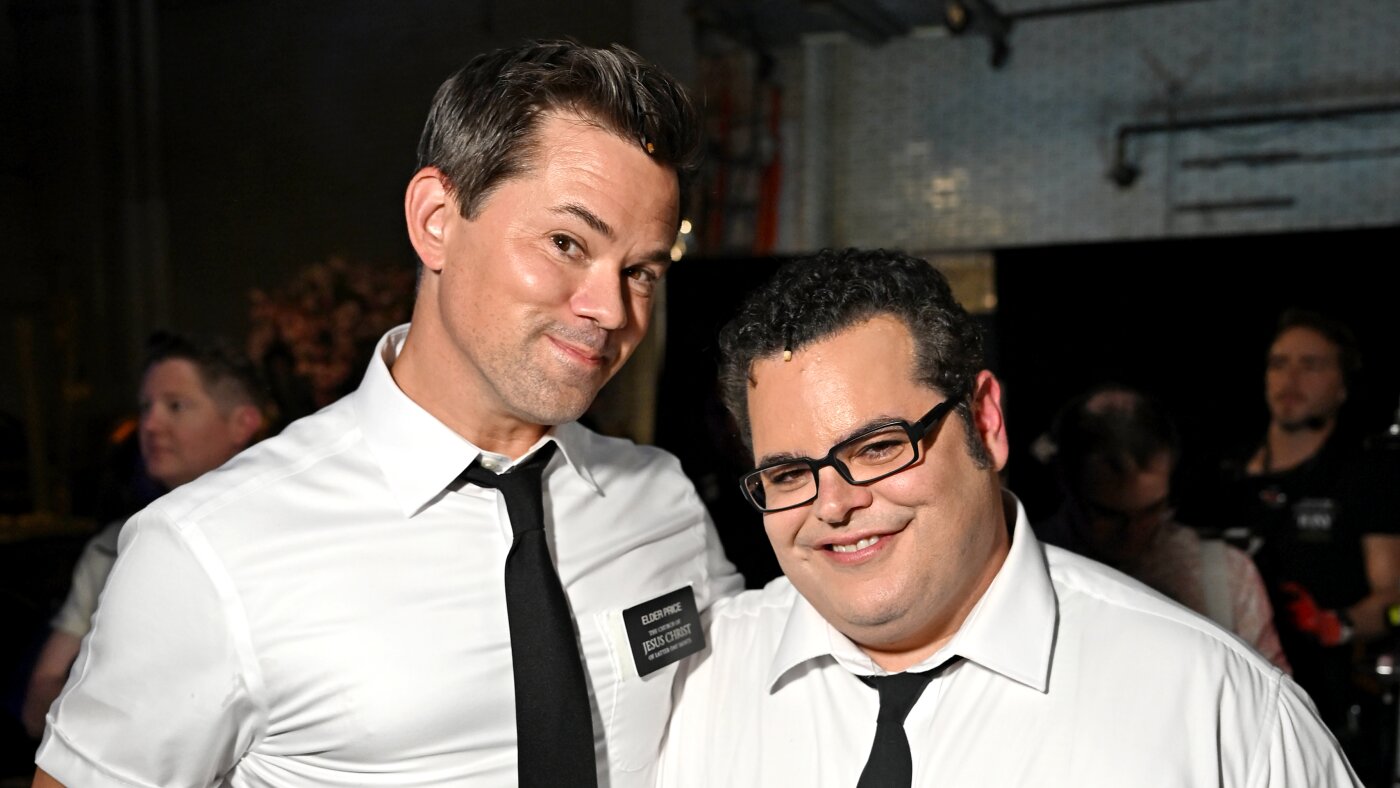
Andrew Rannells and Josh Gad performed at the Tony Awards at Radio City Music Hall on June 7, 2026 in New York City.
Jenny Anderson/Getty Images North America
hide caption
toggle caption
Jenny Anderson/Getty Images North America
Fifteen years after The Book of Mormon made its Broadway debut, original cast members Andrew Rannells and Josh Gad once again took the stage as Mormon missionaries — this time at the 2026 Tony Awards.
Created and written by Trey Parker and Matt Stone (the duo behind South Park), along with veteran Broadway composer Robert Lopez, The Book of Mormon follows two young missionaries sent to try and bring Mormonism to a Ugandan village that’s struggling with the AIDS epidemic, war and famine. The musical is a satirical — sometimes affectionate, sometimes offensive — look at Mormonism and youthful naïveté. It was clear from the very first number — “Hello!” — that the show would cause a stir when it debuted in 2011.

Gad, who played Elder Cunningham in the original Broadway cast, remembers “laugh[ing] my butt off” when he first heard “Hello!” Then Gad listened to “Hasa Diga Eebowai,” a song in which the Ugandan villagers curse God, and he called his agent.
“I said, ‘I don’t think I can do this show,’” Gad recalls. “And he said, ‘Why?’ And I said, ‘Because I don’t want to get killed.’”
Meanwhile, Rannells, who played Elder Price, wasn’t phased by the material: “I heard the humor in it and I felt very confident that people were going to think it was funny,” Rannells says. “I certainly didn’t think it would be still running on Broadway after 15 years and would have toured to Salt Lake City. I didn’t think that they would have done that, but it did.”

The Book of Mormon received nine Tony Awards in 2011, including best musical and best score. To celebrate its Broadway anniversary, Gad and Rannells will be making cameo appearances in every show this week — along with the show’s creators and several other original cast members. Gad says that behind the satire, The Book of Mormon is actually a “very pro-faith show.”
“If you stick with the craziness and chaos … the end is very uplifting,” he says. “It’s actually quite emotional and soaring. And so you get this sense that there is something positive to come out of this hellscape that the show depicts.”

Andrew Rannells and Josh Gad starred in The Book of Mormon when it premiered on Broadway in 2011.
Joan Marcus
hide caption
toggle caption
Joan Marcus
Interview highlights
On connecting with Mormon missionaries in New York City while in rehearsal for The Book of Mormon
Rannells: When we were in rehearsals for the workshop, I decided that I should be a good little actor, and I should go to the Mormon temple and I should meet with some Mormon missionaries. So I got myself ensnared in a very strange relationship with these two young men, who I met with a handful of times and they were so excited that someone wanted to talk to them and that I solicited them. We met twice, like out near Lincoln Center where there is the big Mormon church. And then they said, “Can we come to your home?” …
So these two Mormon missionaries came over and immediately there’s a picture of my boyfriend and I like on the mantel and so I had to explain to them that I was like, I’m actually in a musical about the Mormon church and they were sort of shocked. But then they really … opened up to me about how scary and disappointing it was to be a missionary at times, and especially being a missionary in New York City. They were like, “No one will speak to us. People are very mean to us.” And then I was like, “Well, where are you hanging out?” And they’re like, “They send us to Times Square,” and I was like, “You’ve got to get out of Times Square. You cannot be hanging out in Times Square, boys. You should go someplace else. Don’t try to talk to people there. It’s not safe for you.”
YouTube
On how their voices have changed in the past 15 years
Gad: I was insulted yesterday when our producer came up to me and said “You sound so much better than you did back when you first did it.” I was like what did I really not sound good when I first did it?
Rannells: No you sounded great. … I think you sound the same. I mean, look, our voices are different. Fifteen years, there’s a lot of wear and tear. But some of it is muscle memory, I would say, some of it comes back. I got to perform this number, “I Believe,” on Stephen Colbert’s show. That was the number that I sang on the Tony Awards… It was still somewhere like lodged in my voice.
Gad: When I found out I was doing this I played the album in the car, and I started to sing along, and some of those high notes, I just was like, “Oh my god I can’t! How am I gonna hit these?” And I actually asked them to lower it, and they laughed and said no, and then I started to sort of do it on my feet. And just like you said, something clicks. It’s like riding a bike. It’s just sort of in there somewhere
Rannells: Now the physical side of it, Terry, is a little different. Physically doing some of these numbers, that’s where the aging process really catches up to you. … I can’t dance as much as I used to. The singing part is a little easier to control. The physical, the knees, the getting up and down off the ground, that’s all a little bit different.
On losing his voice during a show
Rannells: That happened many times.. … Over the course of my career, that’s something that happens, not just in The Book of Mormon, but in other shows. You learn to sing through sickness. I think there are nights where there are certain notes missing in your voice all of a sudden, and you don’t find out until you’re on stage in front of 1,200 people, and you’re like, “Oh boy.” And you just have to figure out a way to sing around it. After previews, after opening, after the Tony Awards, I hadn’t missed any performances. And I started my career as a replacement, as an understudy. I was not accustomed to the idea that I could call out of a show. I probably shouldn’t have done the show that night, but I remember it was like a couple weeks after the Tony Awards and I sang this duet that that Josh and I sing called “You and Me (But Mostly Me)” and it was kind of a disaster, but I just continue with the show and I was like, I’m gonna try to make this work.
Gad: It was actually remarkable to watch.
Rannells: I got through “I Believe,” somehow and sang the whole thing and I amazed myself that I could do it. And then I got to another song that’s called “Orlando,” I’m not sure if you remember this Josh, and it’s supposed to end with a little falsetto thing … and instead I went [low] … and the curtain flew up and all the missionaries come out and everyone was laughing and it was not great. But after the bows that night, I walked off stage and I remember Karen Moore, our stage manager, was standing there and I burst into tears, and I said, “I have to miss a show.” And she said, “You’re allowed to miss a show.” And I just cried and cried about it. It had never occurred to me.
On the songs in The Book of Mormon being a tribute to musical theater, influenced by Wicked, The King and I, The Lion King and The Music Man

Gad: The influences of each of these songs [come] from a place of absolute weird devotion to musical theater on the part of Trey Parker and Matt Stone. Obviously Bobby Lopez comes from that world. But when you look at Trey and Matt, the first thing you think of is not necessarily, like, musical theater acumen. And these are two guys that people forget when they wrote South Park: Bigger, Longer & Uncut, the feature film adaptation of the Comedy Central show, they got a letter from Stephen Sondheim, who’s probably the most acclaimed composer and lyricist of the 20th century. And he basically said this is one of the top 10 most brilliantly realized musicals he’s ever seen.
And I really do think that part of the reason this show endures is because each one of these songs is instantaneously hummable. … Each one of these songs reminds you of something, but it’s never pastiche. It’s never sort of making fun of a genre. It is fully embracing it and earning its space. So you have an 11 o’clock number in “I Believe” that is as powerful, potent, and as mesmerizing and memorable as an 11 o’clock number from Guys and Dolls.
Rannells: Well, I think, and a lot of people would come to see The Book of Mormon and say, “Ah, I don’t really like musicals, but I do like this one.” Which is always funny to me, because every number was — I don’t wanna say a ripoff — but was a tribute.
On making the decision to leave the show and later regretting it
Rannells: We did leave at the same time. Josh and I both had this very unique experience where we opened The Book of Mormon, we were both nominated for Tony Awards, we both lost those Tony Awards. … We then went out to Los Angeles. … We had a bunch of meetings in LA. We were very popular. These two guys from the biggest Broadway hit, everyone wanted to meet with us. We both got TV shows for NBC. Josh’s was called 1600 Penn. Mine was called The New Normal. They both aired the same week. We went to the up fronts together. They were both canceled.
Gad: Same week. … I was definitely, I think, more done than Andrew was by that point. … I had checked out at that point, and I felt like I was doing a disservice to myself and the audience.
Rannells: You didn’t seem like you were checked out.
Gad: No, but I started forgetting lines on stage. I wasn’t present. … I had also been doing it for so long, from its origin. I wanted to try new things. When I sort of do the same thing again and again, I start to get bored. … I look back at that now with a lot of regret. Because I don’t think I appreciated this incredible moment until I was able to reflect on it, actually, years later. Because when you’re in it, when you are in the eye of the hurricane there’s a lot going on that you can’t stop and settle yourself and go, oh my God, this is a moment that I’ll never have again. This is so unbelievably unique. …
Rannells: I wish that I had stayed longer.
Gad: I wish we had done another year.
Susan Nyakundi and John Sheehan produced and edited this interview for broadcast. Bridget Bentz, Molly Seavy-Nesper and Beth Novey adapted it for the web.
-

 Kansas2 minutes ago
Southwest Kansas county votes to recall sheriff
-
 Kentucky7 minutes ago
Kentucky gas tax break to expire in most of the state Thursday, extend in over 30 cities or counties
-

 Louisiana14 minutes ago
Louisiana shop owner says inspection sticker law puts 20-year business in danger
-

 Maine17 minutes ago
Maine Democratic gubernatorial primary race remains close as vote totals begin to roll in
-

 Maryland22 minutes ago
Maryland official denies receiving warning over alleged nude photos to deputies
-

 Michigan29 minutes ago
Michigan court overturns man’s conviction in plot to kidnap Gov. Whitmer
-

 Massachusetts32 minutes ago
Massachusetts man who killed ‘remarkable young woman’ in wrong-way crash is sentenced to prison
-

 Minnesota37 minutes ago
Minnesota Medicaid revalidation: Families of disabled adults fear losing services

