Lifestyle
HBO's new Billy Joel documentary is revelatory — even if it pulls some punches


Billy Joel in 1973.
Don Hunstein/Sony Music Archives/HBO
hide caption
toggle caption
Don Hunstein/Sony Music Archives/HBO
HBO’s two-part documentary Billy Joel: And So It Goes is a revealing look at a complicated music star who has been at the center of pop music for decades.
But it’s also a good example of the challenge filmmakers face in making the modern celebrity biography: a tension between access and objectivity.
To be sure, this project — directed and produced by Susan Lacy and Jessica Levin, veterans of the PBS series American Masters, with superstar executive producers like Tom Hanks and Sean Hayes on board — walks that line very well. The documentary, which debuts Friday with a second part coming July 25, benefits from access to Joel, 76, his family, friends, songs and a tremendous amount of archival material.
When the documentary premiered earlier this year at the Tribeca Film Festival, headlines focused on the admission that Joel had an affair with the wife of a longtime friend and bandmember when he was in his early 20s, attempting suicide twice after the relationship was revealed.
Somehow, the filmmakers got ex-bandmate Jon Small to talk on camera about the moment he learned of the affair — he says “these [were] my two best friends” — alongside extensive interviews with Small’s ex-wife Elizabeth Weber. She eventually married Joel and managed his career through some of his biggest successes in the late 1970s and early 1980s.
There are stars on hand to talk about Joel’s impact, including Paul McCartney (he admits wishing he had written the 1977 ballad hit “Just the Way You Are”), Pink, Nas, Garth Brooks and Bruce Springsteen, who says Joel writes better melodies than he does. But the real revelations come from those who are much closer: his grown children, sister, former bandmates, and his former wives, including supermodel Christie Brinkley.

Billy Joel in 1977.
Art Maillet/Sony Music Archives/HBO
hide caption
toggle caption
Art Maillet/Sony Music Archives/HBO
Weber speaks about how Joel’s increased drinking — and motorcycle-riding — during his major success in the early 1980s led her to leave him after he was in a terrible accident. Both Joel and Weber talk about how spiky lyrics in early songs like “Big Shot” and “Stiletto” were references to their relationship. And other stories about the genesis of his hits sound like stuff scripted for a biopic: He wrote the classic “Piano Man” while working in a piano bar in Los Angeles trying to get out of a terrible recording/publishing contract; “New York State of Mind” came to him quickly on the bus ride to New York City after his time in California.
Still, for me, there is still a slight sense of punches pulled. Joel admits to a lot of terrible behavior during the documentary, from affairs to out-of-control partying, firing longtime bandmembers, writing autobiographical songs with insulting lines about people in his life, burying himself in work and neglecting his loved ones.

But the people on the receiving end of this stuff are mostly shown forgiving Joel for his transgressions and expressing their love and admiration for him — leading this critic to wonder if the picture would have a been a little different if he hadn’t been so intimately involved, to the point where new interviews with him are essentially used as narration for the documentary.
This is a question that surfaces regularly regarding modern documentaries on big stars. When Steve Martin opens up his personal archives for Morgan Neville’s Apple TV+ documentary STEVE! (martin) a documentary in 2 pieces or Michael Jordan’s production company partners with ESPN to create The Last Dance, it’s impossible not to wonder how the story might have been affected by efforts to keep the celebrity excited and involved with the project.
Of course, this can feel like nitpicking. Particularly regarding And So It Goes, which ultimately provides an important reassessment of an artist often given short shrift by music critics during his big pop successes.
The documentary even talks about how Joel would rip up negative reviews from critics onstage back in the day. (Full disclosure: Joel once ripped up a newspaper onstage with a negative review I wrote about his first joint concert with Elton John in the 1990s, though we laughed about it when I interviewed him a few years later, and he didn’t even remember doing it.)

Ultimately, And So It Goes is an expansive, excellent look at Joel’s story – from his early days growing up Jewish in Long Island, right up until the end of his residency last year at Madison Square Garden, which concluded after a decade of performances. (The early screener I saw doesn’t address Joel’s recent announcement that he was diagnosed with a rare brain condition called normal pressure hydrocephalus, leading to cancellation of his concert dates this year.)
And it drops at an important time: A few years past his biggest hits, it’s the perfect moment to look at Joel’s career to see songs with an enduring appeal and impact beyond the trends and concerns of the time when they were first released.

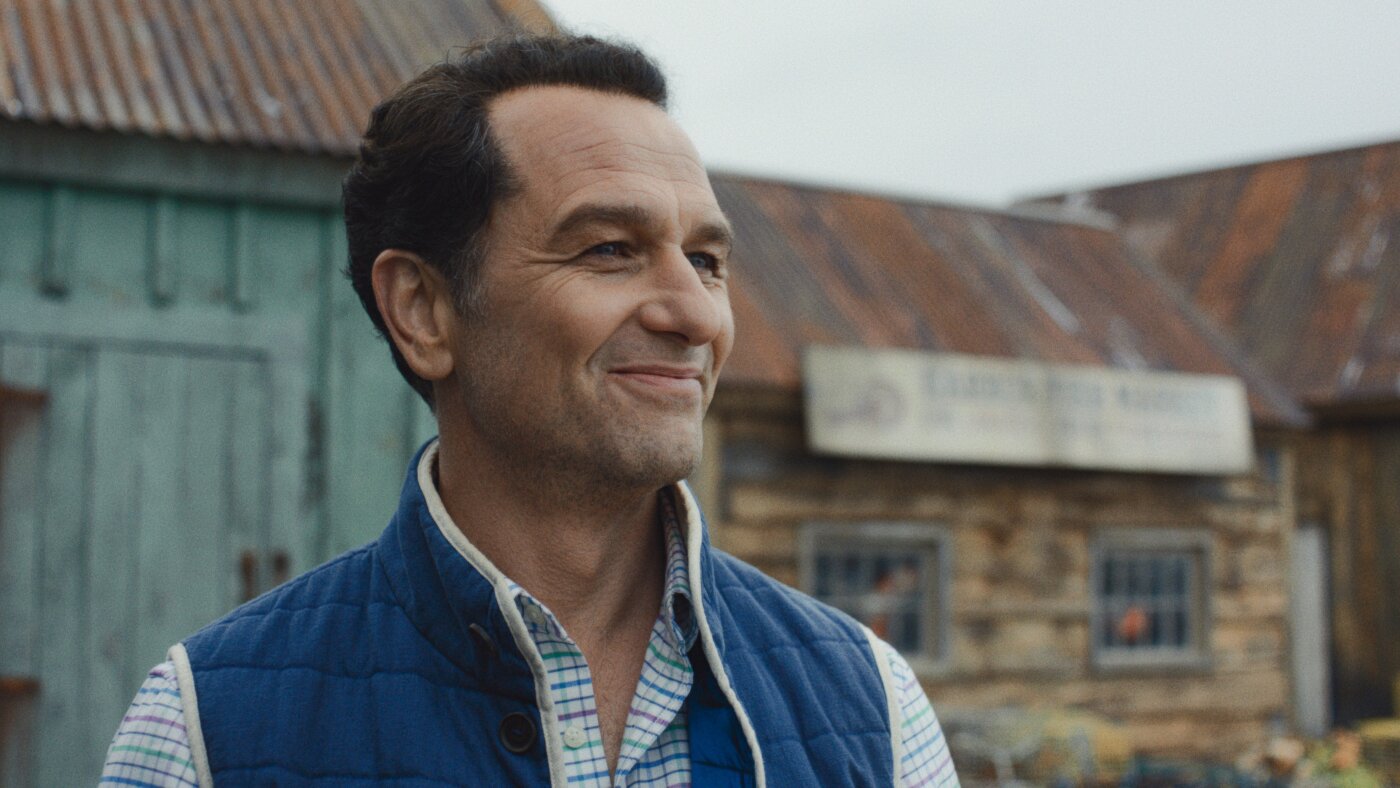
Matthew Rhys was nominated for his role in Widow’s Bay.
Apple TV
hide caption
toggle caption
Apple TV
The 2026 Emmy nominations are here. We’re unpacking the record-breaking nominations for Hacks, plus a big day for Widow’s Bay, The Pitt, and The Bear. We’ll also talk about the snubs and make some early predictions of who will win.
Connect with Pop Culture Happy Hour:
Letterboxd / Facebook
Our weekly newsletter
Support Pop Culture Happy Hour+


Can you say no to a friend’s wedding?
Getty Images/Getty images
hide caption
toggle caption
Getty Images/Getty images
Are we spending too much on other people’s weddings?
Going to a friend’s weddings can be so fun and meaningful… but it can also really hurt your wallet. A survey by LendingTree found that 31% of people who had been to a wedding in the past five years had accrued debt to attend. So what’s driving up the cost of weddings for guests? And what makes it so hard to say no to these expenses?
Brittany breaks it down with Allyson Rees, senior analyst at trend forecasting firm WGSN, and Annie Joy Williams, assistant editor at The Atlantic.
This episode was produced by Liam McBain, with additional support from Corey Antonio Rose. It was edited by Neena Pathak. Our Supervising Producer is Cher Vincent. Our Executive Producer is Barton Girdwood. Our VP of Programming is Yolanda Sangweni.
-

 Los Angeles, Ca28 minutes ago
Loved ones search for missing 34-year-old Southern California woman
-

 Detroit, MI48 minutes ago
Chickens, geese found at vacant home after nonprofit reports them stolen
-

 San Francisco, CA58 minutes ago
What’s next for San Francisco Giants as MLB trade deadline approaches?
-
 Dallas, TX1 hour ago
Dallas millionaire files lawsuit against groundwater district
-

 Miami, FL1 hour ago
7 more women arrested at southwest Miami-Dade massage parlors, accused of prostitution in undercover sting
-

 Boston, MA1 hour ago
‘They’re my buddies’: 96-year-old Back Bay woman befriends French soccer team
-

 Denver, CO1 hour ago
Denver officers cited for separate incidents, 1 fired
-

 Seattle, WA1 hour ago
Study finds dangerous chemicals in the breast milk of Seattle moms

