Lifestyle
From Pop-Tarts to Happy Meals, a food writer recreates American classics with an Asian flavor

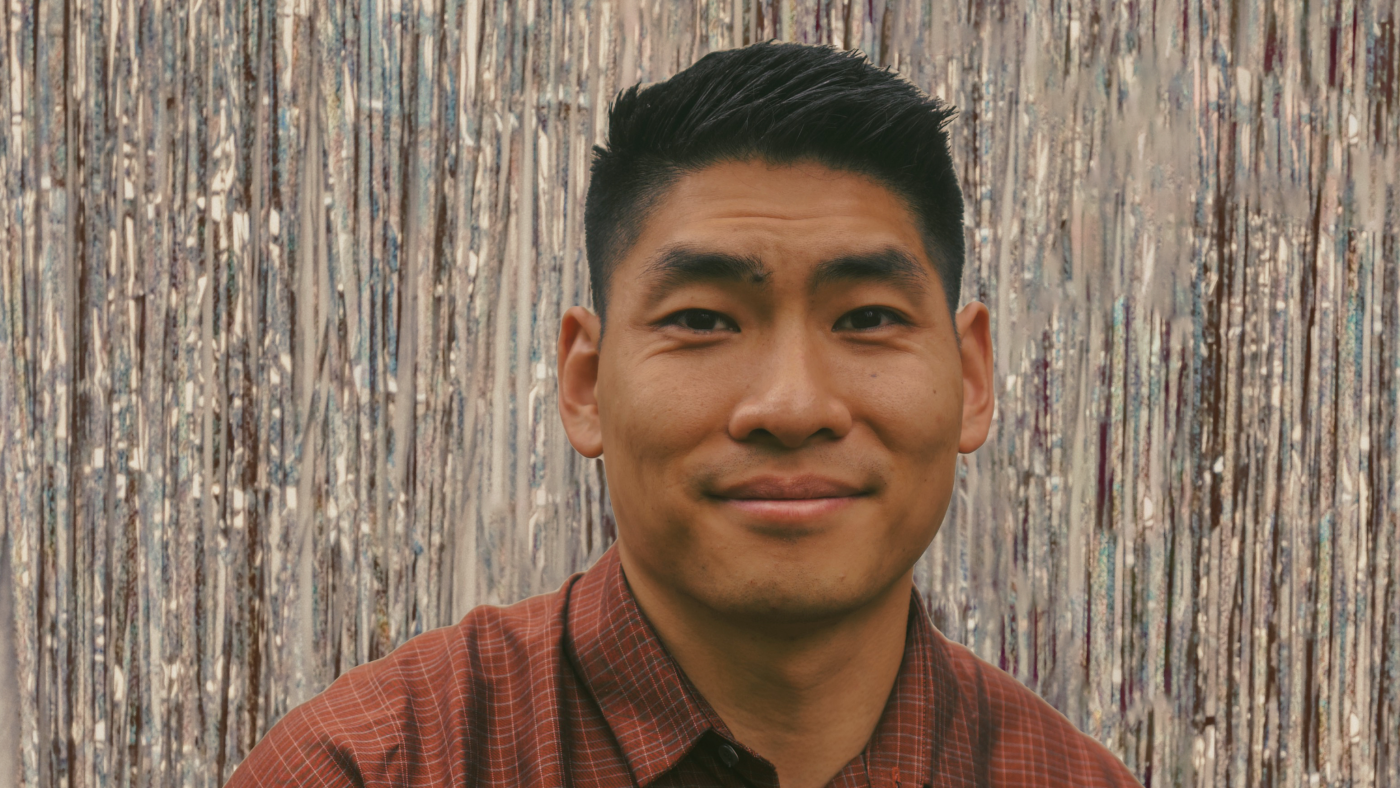
The cooking series is as playful as it is cathartic. Frankie Gaw conjured up fun brand names and designs to go with each meal.
Frankie Gaw
hide caption
toggle caption
Frankie Gaw
Toasted sesame flavored Cheerios. A Pop-Tart topped with strawberry lychee frosting. And a Lunchable that includes a fried pork gua bao, cucumber salad and a Yakult.
Frankie Gaw’s social media page is filled with videos of creations like these — items you won’t usually find at your local American grocery store.
That’s the whole point, says Gaw, a Taiwanese American food creator and author of the cookbook First Generation.
“I asked myself, in an alternate universe, where the world is much more inclusive and embraced all of these diverse flavors, what are the things that Asian Americans would want to see?” he said.
Gaw talked with NPR about how his hit social media cooking series “Turning American classics Asian” came to be, and its origin as a tribute to his family and his Midwest upbringing.
The grocery store seemed stuck in time
The idea sprouted after a trip to his local supermarket. Traversing through the aisles, Gaw noticed that much of the food stocked on the shelves resembled what he saw as a kid 20 years ago. Meanwhile, ingredients like soy sauce and miso were still strictly grouped in “Asian” or “International” aisles.
“Restaurants have been embracing more Asian ingredients, and it feels like grocery stores have remained the same,” Gaw said.

For many immigrants and children of immigrants, food is an intimate part of identity. For Gaw, straddling between the “Asian” aisle and the rest of the grocery store was also symbolic of his upbringing in Cincinnati, Ohio.
Growing up, Gaw felt like he was living a double life. In public, Gaw enjoyed McDonald’s chicken nuggets and fries. At home, he feasted on his grandmother’s beef noodle soup. It took time for him to embrace his dual-taste palette.
Years later in his Seattle apartment, Gaw began experimenting with his childhood favorites. He tinkered with Campbell’s cream of mushroom soup and turned it into congee. He infused mac and cheese with miso. He went as far as designing the packaging for each meal as if he owned a food company.
Gaw shared his concoctions on social media. It took off. His food and his experiences at the grocery store resonated with people, especially other Asian Americans.
“It was a surprise. I didn’t realize how many people had similar experiences as me,” he said.
A love letter to his kid self
“Turning American classics Asian” is not just about Gaw’s appreciation for Asian flavors and ingredients, or a diss to American staples. Instead, it’s Gaw’s way of paying homage to both — and on a larger scale, to the experiences of Asian Americans.
“I have always straddled this sort of in-between space,” he said. “Growing up in the Midwest, I never felt Asian enough. But then, being with my Asian family, I didn’t feel American enough.”
Had matcha flavored Twinkies or strawberry lychee Pop-Tarts been around when Gaw was younger, he thinks it would’ve helped him embrace that in-between experience.
“If I was in a generic American grocery store and then I saw rice cakes, I think that would’ve allowed me to break down the walls of, ‘Oh this only exists within my home,’ ” he said. “And I could’ve existed as my whole self out in the world.”
The project also relates back to his family and growing up in the Midwest
Gaw’s journey into cooking and his first cookbook were motivated by his father, who died in 2014 from lung cancer. Revisiting his father and his paternal grandmother’s old dishes was a way to grieve and keep his father’s memory alive, Gaw said.
In this cooking series, he also reminisces about the time spent with his mother. It’s because of her that Gaw was able to indulge on Lunchables, Twinkies and Pop-Tarts as a kid. She wanted to make sure he would fit in and make friends.
“My mom would stock the entire pantry so that when I go into lunch period, I was like the number one kid in the cafeteria with the best lunch,” he said.
The project also stems from Gaw’s Midwestern roots. In his neighborhood, restaurants were synonymous with fast food and Olive Garden was the place to go on special occasions.
Late nights with his parents at the McDonald’s drive-through were common as a kid, Gaw said, because his parents were often exhausted after long hours at work. “It was a reminder of how much they had to hustle,” he said.
In Gaw’s version of a Happy Meal, he steams buns and marries ground pork with scallions and ginger, topping it off with a chili crunch ketchup.
As he cooks, he thinks about his father, his mother, his grandparents — and the comfort that these dishes would’ve brought them as they were adjusting to life in America.
“I think they always felt like they were on the outside breaking in,” he said. “To see their food at a fast food institution, I think it would’ve made them feel like they have a seat at the table.”



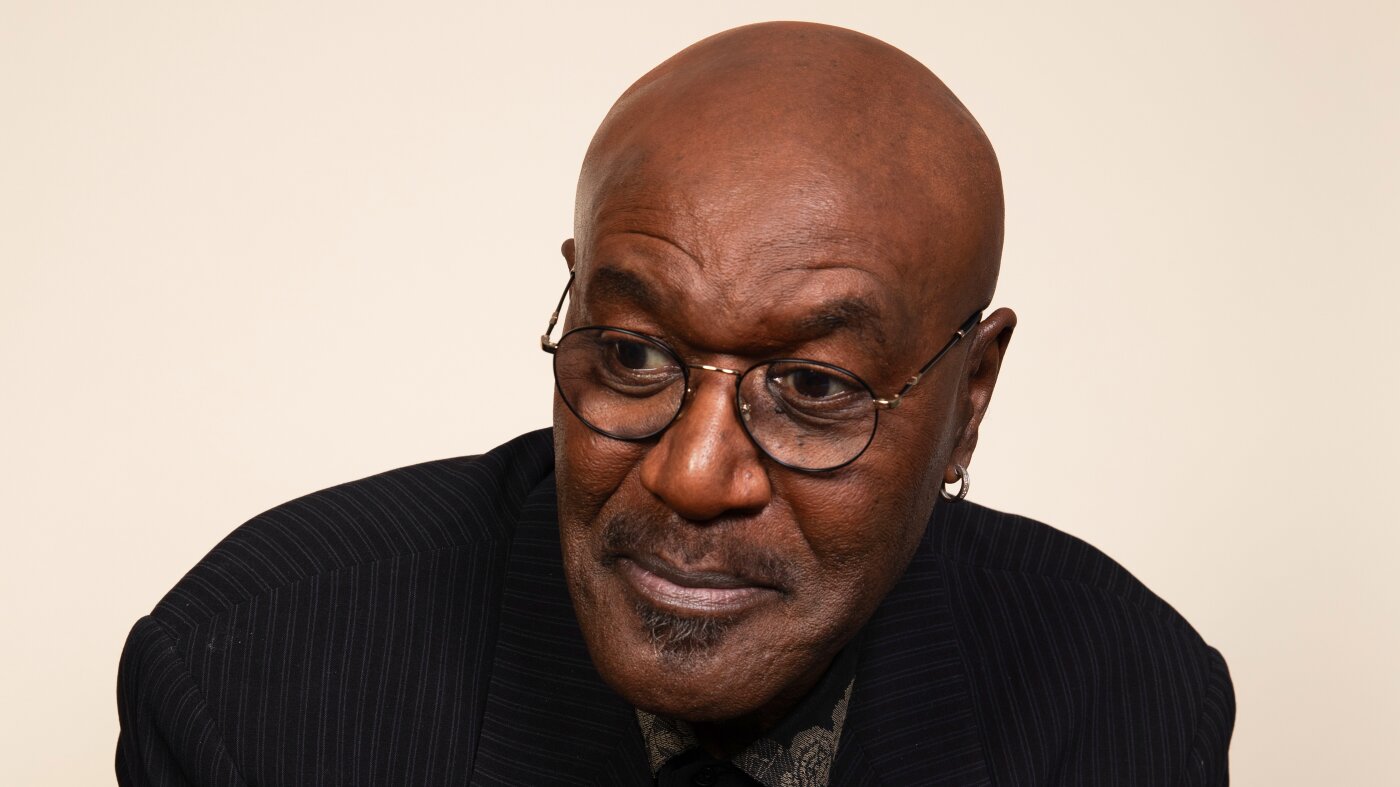
Delroy Lindo is nominated for an Oscar for best supporting actor for his role in Sinners.
Rebecca Cabage/Invision/AP
hide caption
toggle caption
Rebecca Cabage/Invision/AP
Over the course of his decades-long career on stage and in Hollywood, Sinners actor Delroy Lindo has experienced firsthand what he calls the “disappointments, the vicissitudes of the industry.”
On Feb. 22, at the BAFTA awards in London, Lindo and Sinners co-star Michael B. Jordan were the first presenters of the evening when a man with Tourette syndrome shouted a racial slur.
Initially, Lindo says, he questioned if he had heard correctly. Then, he says, he adjusted his glasses and read the teleprompter: “I processed in the way that I process, in a nanosecond. Mike did similarly, and we went on and did our jobs.”
Lindo describes the BAFTA incident as “something that started out negatively becoming a positive.” A week after the BAFTAs, he appeared with Sinners director Ryan Coogler at the NAACP awards.

“The fact that I could stand there in a room predominantly of our people … and feel safe, feel loved, feel supported,” he says. “I just wanted to officially, formally say thank you to our people and to all of the people who have supported us as a result of that event, that incident.”
Sinners is a haunting vampire thriller about twins (both played by Jordan) who open a juke joint in 1930s Mississippi. The film has been nominated for a record 16 Academy Awards, including best actor for Jordan and best supporting actor for Lindo, who plays a blues musician named Delta Slim.

This is Lindo’s first Oscar nomination; five years ago, many felt his performance in the Spike Lee film Da 5 Bloods deserved recognition from the Academy. When that didn’t happen, Lindo admits he was disappointed, but he had no choice but to move on.
“I have never taken my marbles and gone home,” he says. “And I want to claim that I will not do that now. I will continue working.”
Interview highlights
On his preparation to play Delta Slim

Various people have mentioned … [that] my presence reminds them of an uncle or their grandfather, somebody that they knew from their families, and that is a huge compliment, but more importantly than being a compliment, it’s an affirmation for the work. My preparation for this started with Ryan sending me two books, Blues People, by Amiri Baraka — who was [known as] LeRoi Jones when he wrote the book — and Deep Blues, by Robert Palmer.

Lindo, shown above in his role as Delta Slim, says director Ryan Coogler “created a sacred space for all of us” on the Sinners set.
Warner Bros. Pictures
hide caption
toggle caption
Warner Bros. Pictures
In reading those books and then referencing those books, continuing to reference those throughout production, I was given an entrée into the worlds, the lifestyles of these musicians. There’s a certain kind of itinerant quality that they moved around a lot. The constant for them is their music, so that there is this deep-seated connection to the music.
On being Oscar-nominated for the first time — and thinking about other Black actors, including Halle Berry and Lou Gossett Jr., who had trouble getting work after their wins
I will not view it as a curse, because I am claiming the victory in this process, no matter what happens. … In terms of this moment, I absolutely am claiming, as much as I can, the joy of this moment. I’m not saying I don’t have trepidation, I do. It’s the reason I was not listening to the broadcast this year when the nominations were announced. I did not want to set myself up. But I’m … attempting as much as I can to fortify myself and know in my heart that I will continue working as an actor. I absolutely will.
On being “othered” as a child because of his race
Because my mom was studying to be a nurse they would not allow her to have an infant child with her on campus, so as a result of that, I was sent to live with a white family in a white working class area of London. … I was loved, I was cared for, but as a result of living with this family in this all-white neighborhood, I went to an all-white elementary or primary school. And I was literally the only Black child in an all-white school.
So one afternoon, after school had ended, I was playing with one of my playmates … And at a certain point in our game, a car pulls up, and this kid that I was playing with goes over to the car and has a very short conversation with whomever was in the car, which I now know was his parent, his father. He comes back and he … says, “I can’t play with you.” And that was the end of the game.
On the experience of writing his forthcoming memoir
It’s been healing, actually. I’m not denying that it has opened me up. I’ve been compelled to scrutinize myself. I’m using that word very advisedly, “scrutinized.” It’s a scrutiny, it’s an examination of oneself. But in my case, because a very, very, very significant part of what I’m writing has to do with re-examining my relationship with my mom. And so my mom is a protagonist in my memoir. I’m told by my editor and by my publisher that one of the attractions to what I’m writing is that it is not a classic “celebrity memoir.” I am examining history. I’m examining culture. I’m looking at certain passages of history through the lens of the “Windrush” experience [of Caribbean immigrants who came to the UK after World War II].
On getting a masters degree to help him write his mother’s story
My mom deserved it. My mom is deserving. And not only is my mom deserving, by extension, all the people of the Windrush generation are deserving. Stories about Windrush are not part of the global cultural lexicon commensurate with its impact. The people of Windrush changed the definition of what it means to be British. There are all these Black and brown people, theretofore members of what used to be called the British Commonwealth. And they were invited by the British government to come to England, the United Kingdom, to help rebuild the United Kingdom in the aftermath of the destruction of World War II. My mom was part of that movement. They helped rebuild construction, construction industry, transportation industry, critically, the health industry, the NHS, the National Health Service. My mom is a nurse.
The reason that I went into NYU was because my original intention was to write a screenplay about my mom. I wanted to write a screenplay about my mom because I looked around and I thought: Where are the feature films that have as protagonist a Caribbean female, a Black female, where are they? … I wanted to address that, I wanted to correct that, what I see as being an imbalance.
Ann Marie Baldonado and Susan Nyakundi produced and edited this interview for broadcast. Bridget Bentz, Molly Seavy-Nesper and Beth Novey adapted it for the web.


Britney Spears
Open to Treatment Plan After DUI Arrest, Source Says
Published
Britney Spears‘ team is hoping the judge mandates treatment for the pop star over jail time following her Wednesday DUI arrest … and Britney isn’t fighting them on that, TMZ has learned.
Sources familiar with the situation tell TMZ … Britney is willing to comply with a treatment and support plan.
We’re told her team is in the early stages of developing a plan and they’re exploring multiple options, including mental health services, detox, and dual-diagnosis programs.
It’s unclear whether she would do inpatient or outpatient treatment, and it’s also unclear whether she would enter treatment before her May 4 court date.
Broadcastify.com
We broke the story … Britney was pulled over by California Highway Patrol officers around 9:30 PM Wednesday in Westlake Village, CA, not far from her home. She was later taken to a hospital — not for any injuries, because we’re told she didn’t sustain any — but to draw her blood to determine her blood alcohol content.
According to CHP, she was arrested for “driving under the influence of a combination of drugs and alcohol.”
Sources familiar with the investigation told us an unknown substance was found in Britney’s car, which was sent to be tested.
Britney’s manager, Cade Hudson, previously told TMZ … “This was an unfortunate and inexcusable incident. Britney will take the right steps, comply with the law, and we hope this marks the start of long-overdue change in her life. She needs help and support during this difficult time. Her boys will be spending time with her, and her loved ones are putting a plan in place to set her up for success and well-being.”

Michael B. Jordan plays twin brothers Smoke and Stack in Sinners.
Warner Bros. Pictures
hide caption
toggle caption
Warner Bros. Pictures
Ryan Coogler’s supernatural horror stars Michael B. Jordan playing twin brothers who open a 1930s juke joint in Mississippi. Opening night does not go as planned when vampires appear outside. “In a straightforward metaphor for all the ways Black culture has been co-opted by whiteness, the raucous pleasures and sonic beauty of the juke joint attract the interest of a trio of demons … they wish to literally leech off of the talents and energy of Black folks,” writes critic Aisha Harris. The film made history with a record 16 Academy Award nominations.

We asked our NPR audience: What movie would you recommend to someone who loved Sinners? Here’s what you told us:
Near Dark (1987)
Directed by Kathryn Bigelow; starring Adrian Pasdar, Jenny Wright, Lance Henriksen
If you want another cool vampire movie with Western kind of vibes, check out Kathryn Bigelow’s Near Dark — super underseen and kind of hard to find, but really gritty and sexy and another very different take on what you might think is a genre that had been wrung dry. – Maggie Grossman, Chicago, Ill.
30 Days of Night (2007)
Directed by David Slade; starring Josh Hartnett, Melissa George, Danny Huston
It follows a group of people in a small Alaskan town as they struggle to survive an invasion of vampires who have taken advantage of the month-long absence of the sun. Both this and Sinners revolve around a vampire takeover and the people’s fight to outlast the “night.” – Nathan Strzelewicz, DeWitt, Mich.
The Wailing (2016)
Directed by Na Hong-jin; starring Kwak Do-won, Hwang Jung-min, Chun Woo-hee, Jun Kunimura
In this South Korean supernatural horror film, a mysterious illness causes people in a quiet rural village to become violent and murderous. A local police officer investigates while trying to save his daughter, who begins showing the same disturbing symptoms. The film blends folk horror, religion, and psychological dread, exploring themes of faith, evil, and moral weakness. Like Sinners, it centers on a supernatural force corrupting a close-knit community, builds slow-burning tension, and examines spiritual conflict and human frailty. – Amy Merke, Bronx, N.Y.
Fréwaka (2024)
Directed by Aislinn Clarke; starring Bríd Ní Neachtain, Clare Monnelly, Aleksandra Bystrzhitskaya
In this Irish folk horror film, a home care worker, Shoo, is assigned to stay with an elderly woman who’s convinced she’s under siege by malevolent fairies. Like Sinners, Fréwaka blends folk traditions and social commentary with horror. The social failures Shoo copes with (untreated mental health issues, religious abuse) are just as frightening as the supernatural forces. – Kerrin Smith, Baltimore, Md.
And a bonus pick from our critic:
Ma Rainey’s Black Bottom (2020)
Directed by George C. Wolfe; starring Viola Davis, Chadwick Boseman, Glynn Turman
This is an adaptation of August Wilson’s play about a legendary blues singer (Viola Davis) muscling through a recording session with white producers who want to control her music. Chadwick Boseman’s blistering in his final role. – Bob Mondello, NPR movie critic
Carly Rubin and Ivy Buck contributed to this project. It was edited by Clare Lombardo.

U.S. Postal Service could run out of money within a year

All Aboard the 67, San Francisco’s Most Delayed Bus | KQED

We don’t know why Dallas elected Amber Givens for DA either

Firefight at NW Miami-Dade warehouse enters 2nd day: ‘It burned it all up’

Poor Clares’ monastery a case study in why Boston is short on housing – The Boston Globe

Florida High School Football Rankings: Top 25 teams – Oct. 21

Cleary's 21 help Le Moyne down Central Connecticut State 69-64 in OT

How old is Bo Nix? What to know about Oregon quarterback ahead of 2024 NFL Draft

99th annual Pony Swim held in Virginia

Indiana Members Credit Union announced as new anchor tenant at Bottleworks District

DOJ continues Biden autopen probe despite former president unlikely to face charges
Fact check: Did French border guards mock influencers returning from Dubai amid Iran war?

Iran’s fight for survival / The widening war / Trump’s nebulous goals : Sources & Methods

Map: 4.9-Magnitude Earthquake Shakes Louisiana

Paxton vows he’s ‘staying in this race’ even if Trump backs Cornyn in Texas GOP clash
-

 World1 week ago
Exclusive: DeepSeek withholds latest AI model from US chipmakers including Nvidia, sources say
-

 Wisconsin4 days ago
Setting sail on iceboats across a frozen lake in Wisconsin
-

 Massachusetts1 week ago
Mother and daughter injured in Taunton house explosion
-

 Massachusetts3 days ago
Massachusetts man awaits word from family in Iran after attacks
-

 Maryland5 days ago
AM showers Sunday in Maryland
-

 Florida5 days ago
Florida man rescued after being stuck in shoulder-deep mud for days
-

 Denver, CO1 week ago
10 acres charred, 5 injured in Thornton grass fire, evacuation orders lifted
-

 Oregon7 days ago
2026 OSAA Oregon Wrestling State Championship Results And Brackets – FloWrestling